Most visitors arrive at the Trocadéro Neighbourhood for one reason: that wonderful view of the Eiffel Tower. From the great terrace overlooking the Seine, the Iron Lady appears almost perfectly framed between the two wings of the Palais de Chaillot.
But I think it would be a shame to take a few photographs and leave straight away. Beyond the esplanade lie museums, leafy avenues, a little cemetery and an old village.
Here are twelve places worth discovering in and around the Trocadéro neighbourhood.
Where Is the Trocadéro Neighbourhood?
The Trocadéro lies on the Right Bank of the Seine, in Paris's elegant 16th arrondissement, directly opposite the Eiffel Tower. Its focal point is the Place du Trocadéro-et-du-11-Novembre, served by Métro lines 6 and 9.
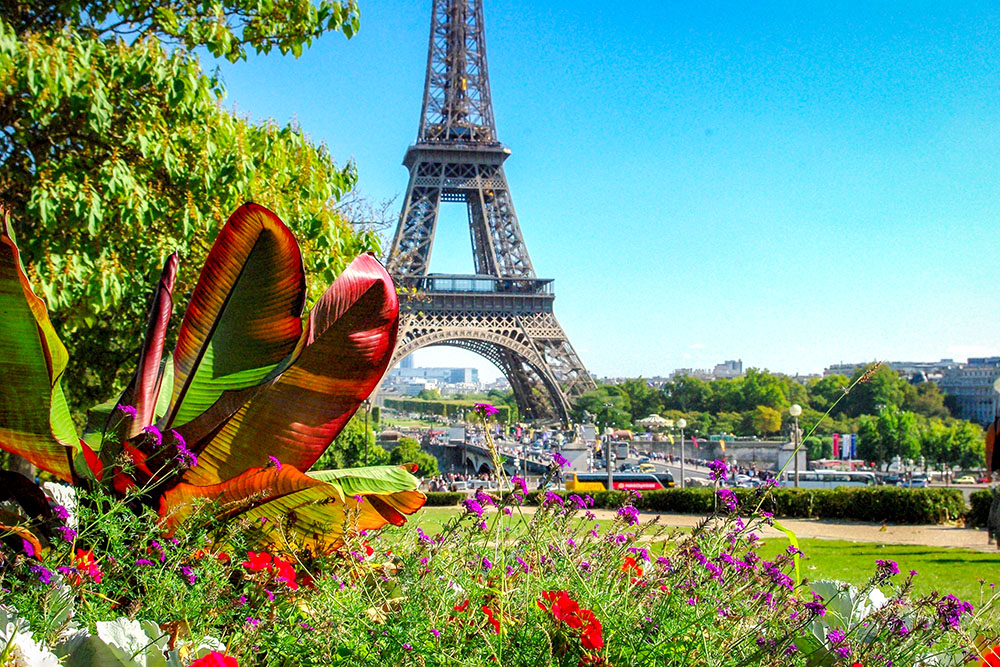
Trocadéro Neighbourhood - the gardens © French Moments
The name recalls an 1823 battle in Spain. The present-day square is dominated by the Palais de Chaillot, built for the 1937 International Exhibition on the site of an earlier palace.
For this guide, I am using “Trocadéro neighbourhood” in a generous sense. We will also venture into nearby Passy and towards the museums around the Avenue du Président-Wilson. These detours are well worth making.
12 Places to Discover in the Trocadéro Neighbourhood
1. The Palais de Chaillot
Start on the terrace of the Palais de Chaillot. Its curved wings open towards the Seine, creating one of the most recognisable panoramas in Paris.

Palais de Chaillot seen from the Eiffel Tower© French Moments
The building dates from 1937 and replaced the fanciful Palais du Trocadéro, which had stood here since the 1878 Universal Exhibition.
Admire the long colonnades, sculptures and broad steps. This is a place that can feel rather theatrical, especially as the late afternoon light begins to soften.
2. The Trocadéro Gardens
Below the terrace stretch the Jardins du Trocadéro. The centrepiece is the Fontaine de Varsovie, or Warsaw Fountain, whose long basin draws the eye towards the Eiffel Tower.

The Eiffel Tower seen from the Trocadéro Gardens © French Moments
When the fountains are operating, the jets of water bring movement to the otherwise formal landscape. Paths among the trees offer respite from the crowds.
I have spent time photographing these gardens myself. You can see more pictures in my earlier article, Discovering the Trocadéro in Paris.
3. The Pont d'Iéna
Continue downhill to the Pont d'Iéna, which connects the gardens to the foot of the Eiffel Tower. Napoleon I ordered the construction of the bridge, named after his victory at Jena in 1806.

Pont d'Iéna in the Trocadéro neighbourhood © French Moments
Crossing the Seine here gives you a different perspective on both banks. Turn around to appreciate the symmetry of the Palais de Chaillot above the gardens. Then look towards the tower, whose iron structure seems to grow taller with every step. The crossing is a highlight of the walk.
4. The Eiffel Tower
Strictly speaking, the Eiffel Tower stands in the 7th arrondissement, across the river. Yet it is impossible to separate it from the Trocadéro experience.
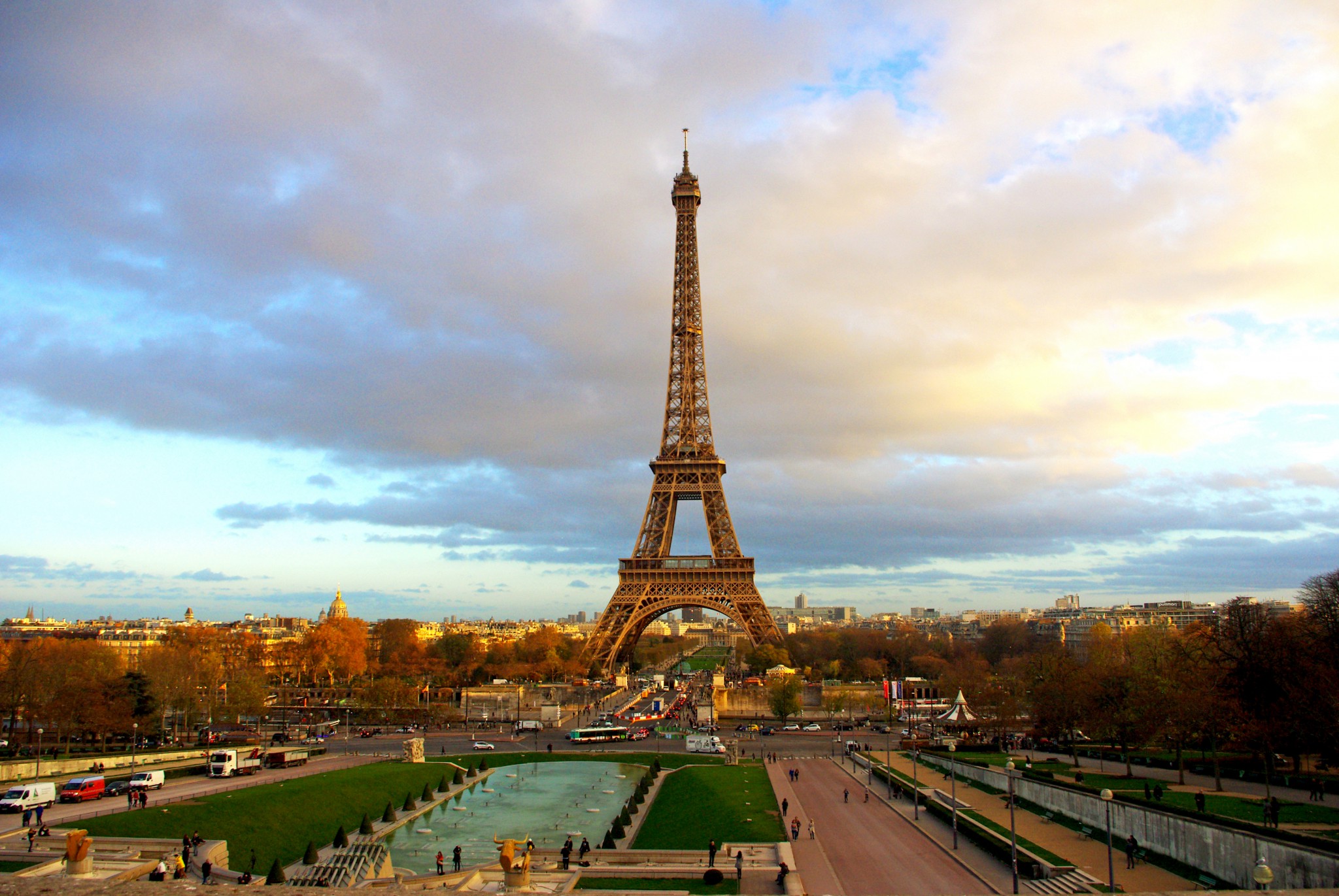
The Eiffel Tower seen from the Trocadéro neighbourhood © French Moments
Built for the 1889 Universal Exhibition, Gustave Eiffel's tower was not universally admired when it first appeared on the Paris skyline. Today, it is the city's most famous landmark.
If you intend to go up, check the official Eiffel Tower website and book ahead where possible. Otherwise, enjoy the views from the Champ de Mars.
5. The Passy Cemetery
A few steps from the bustling square, the Cimetière de Passy offers a striking change of atmosphere. Behind its walls and chestnut trees lies one of Paris's smaller, more intimate cemeteries.

Passy, one of the most well-known French cemeteries © French Moments
Among those buried here are the painter Édouard Manet and the composer Claude Debussy. The elaborate tombs evoke Parisian artistic history.
It is a peaceful place to wander respectfully, and in places you can even glimpse the Eiffel Tower beyond the monuments. Admission is free.
6. The Musée Guimet
Walk towards the Place d'Iéna and you will find the Musée Guimet, France's national museum of Asian arts. Its collections take visitors far beyond Paris, with works from countries including India, China, Japan and Cambodia.
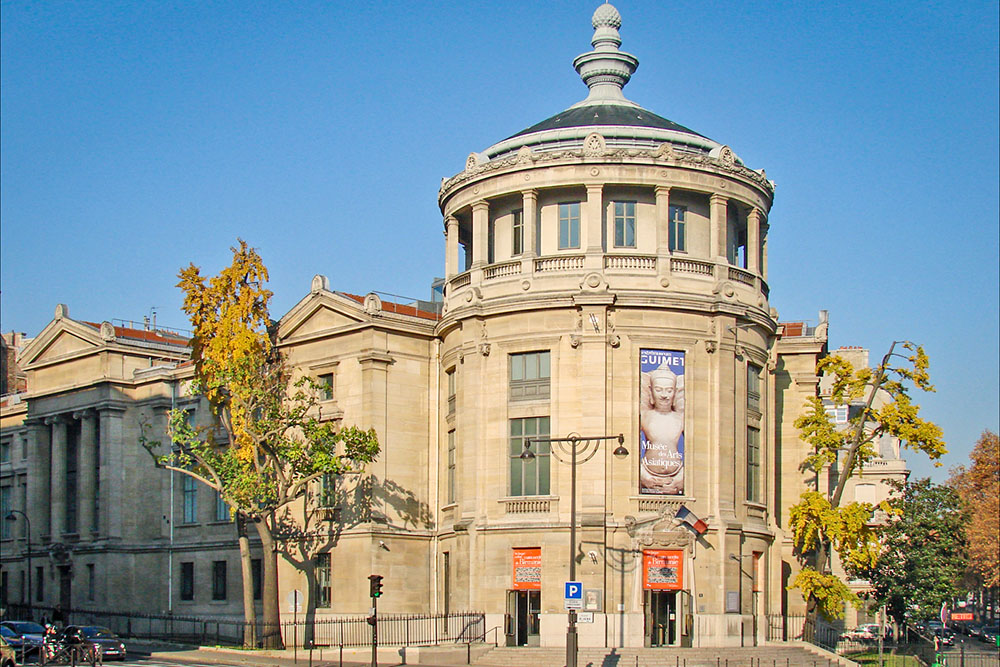
Musée Guimet Paris - photo by Jean-Pierre Dalbéra - licence [CC BY 2.0] from Wikimedia Commons
I like the contrast this creates within the neighbourhood. Outside, you are surrounded by monumental Parisian avenues; inside, you can explore artistic traditions developed thousands of miles away.
The building itself deserves a look. Consult the museum's official website for current exhibitions.
7. The Palais Galliera

The garden of Palais Galleria on Avenue du Président Wilson © French Moments
Fashion lovers should make a detour to the Palais Galliera, the City of Paris Fashion Museum. Its handsome nineteenth-century building stands in a garden near the Avenue du Président-Wilson.
The museum explores the history of clothing and fashion through exhibitions that can range from historic garments to contemporary designers. Its stone façades are worth admiring too.
Check the exhibition programme before visiting, as access to collections and displays can change.
8. The Palais de Tokyo
Not far away is the Palais de Tokyo, one of Paris's best-known venues for contemporary art. Its exhibitions often offer a very different experience from the more traditional museums of the capital.

Palais de Tokyo © Guilhem Vellut - licence [CC BY 2.0] from Wikimedia Commons
The building, created for the 1937 International Exhibition, has a monumental exterior but a more experimental spirit inside. You may encounter installations, large-scale works or unexpected uses of space.
It makes a refreshing change from traditional museums.
9. The Village of Passy
To see a more everyday side of the 16th arrondissement, head west towards Passy. Before becoming part of Paris in 1860, Passy was an independent village on the slopes above the Seine.
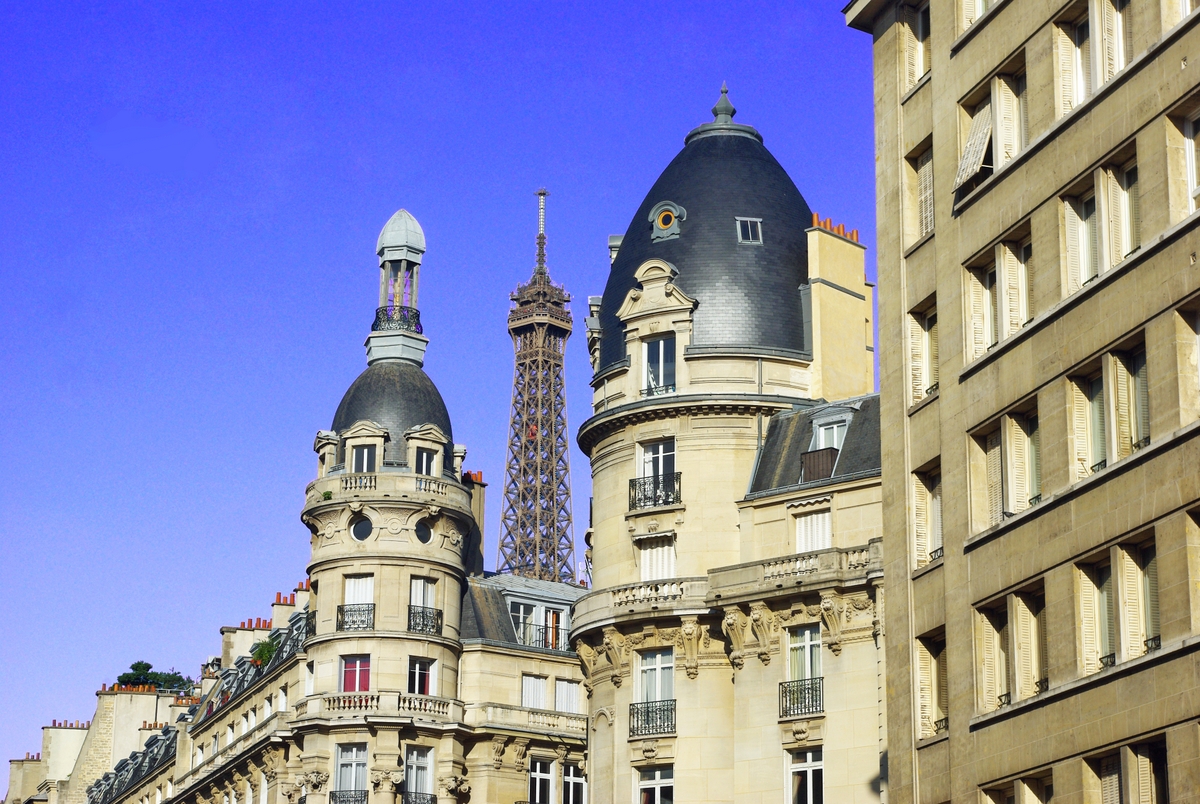
The neighbourhood of Passy in the 16th arrondissement © French Moments
The Rue de Passy is now a lively shopping street, but venture into the smaller streets around the Rue de l'Annonciation and you may still sense something of the old neighbourhood.
Food shops, cafés and local businesses make a pleasant contrast with the tourist crowds near the Eiffel Tower. It is also a good area to stop for lunch or buy something for a picnic.
10. The Rue de Camoëns
The Rue de Camoëns is short, but photographers will understand why it deserves a place on this list. Its staircase and elegant buildings frame a charming view of the Eiffel Tower in the distance.

Avenue de Camoëns, 16th arrondissement of Paris © French Moments

Avenue de Camoëns © French moments

Cherubs and Eiffel Tower © French Moments
You are still close to the Trocadéro, yet the surroundings feel more secluded. The street is named after the Portuguese poet Luís de Camões, whose monument can be seen here.
Come in the softer light of morning or late afternoon if you enjoy taking photographs, and remember that people live in these buildings. A little consideration goes a long way.
11. The Museums Inside the Palais de Chaillot
The Palais de Chaillot is more than a magnificent backdrop for photographs. Its wings contain several important cultural institutions, including the Musée de l'Homme, the Musée national de la Marine and the Cité de l'architecture et du patrimoine.

Palais de Chaillot, Trocadéro Neighbourhood © French Moments
Depending on your interests, you can explore human societies, maritime history or the story of French architecture. The latter is particularly rewarding for architecture enthusiasts.
If the weather turns wet, these museums provide an excellent reason to stay in the neighbourhood a little longer.
12. The Maison de Balzac
Our final stop takes us further into Passy, to the Maison de Balzac on the Rue Raynouard.
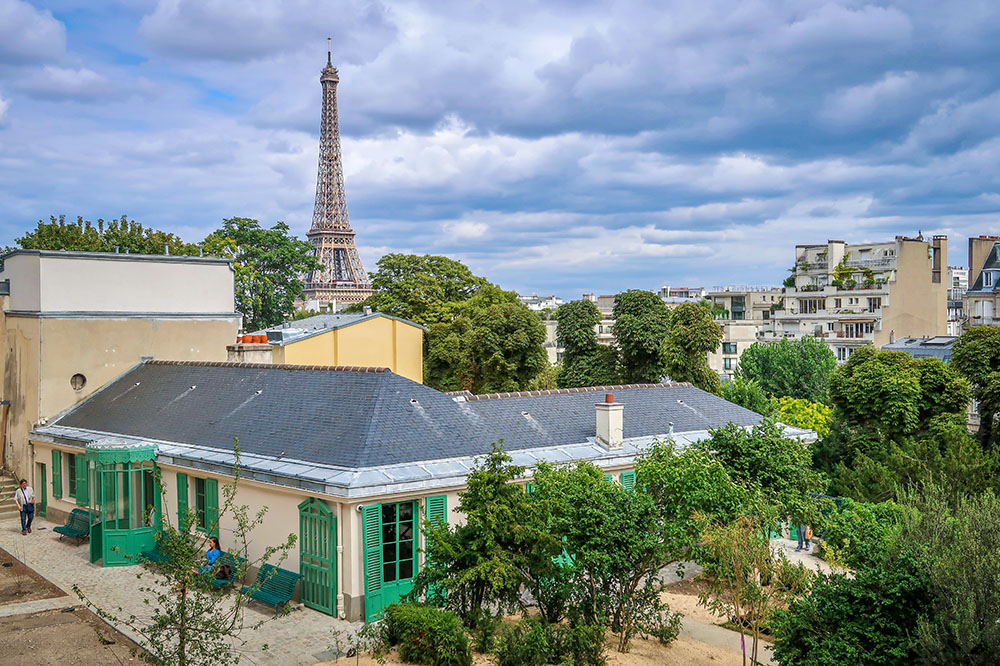
Maison de Balzac Paris - photo by Celette - licence [CC BY-SA 4.0] from Wikimedia Commons
The novelist Honoré de Balzac lived here between 1840 and 1847, when this part of Paris still retained much of its village character.
Today, the house is a museum devoted to his life and work. Its garden offers another welcome pause from the busy city. The permanent collection and garden are normally free to visit, although temporary exhibitions may have different arrangements.
It is a lovely reminder that Paris's quieter streets have literary stories to tell, too.
Where to Stay in the Trocadéro Neighbourhood
If you want to explore this part of Paris at a leisurely pace, staying nearby has obvious advantages. You can visit the gardens early, return for the illuminated Eiffel Tower after dark, and spend time in Passy's shops and cafés between sightseeing stops.
Accommodation ranges from traditional hotels to furnished apartments. For a special stay, an apartment to rent with an Eiffel Tower view allows you to enjoy the famous Parisian landmark without having to join the crowds on the esplanade every time you want to admire it.
Practical Tips for Visiting the Trocadéro Neighbourhood
The easiest starting point is Trocadéro Métro station, served by lines 6 and 9. From there, it is only a short walk to the Palais de Chaillot terrace.
Allow two or three hours for the principal outdoor sights, or most of a day if you want to explore Passy and visit a museum. There is no need to tackle all twelve places in one outing.
The terrace can be particularly busy around sunset. Early morning is generally a better choice if you prefer quieter photographs. Wear comfortable shoes, as the route includes slopes, steps and several long avenues. Check museum opening days before setting off.


Final Thoughts on the Trocadéro Neighbourhood
The Eiffel Tower may be the reason you first come to the Trocadéro, but it need not be the only memory you take away. I hope you will make time for the cemetery, the museums and the streets of Passy too.
They reveal a different side of western Paris, just a short walk from one of the most photographed views in the world.