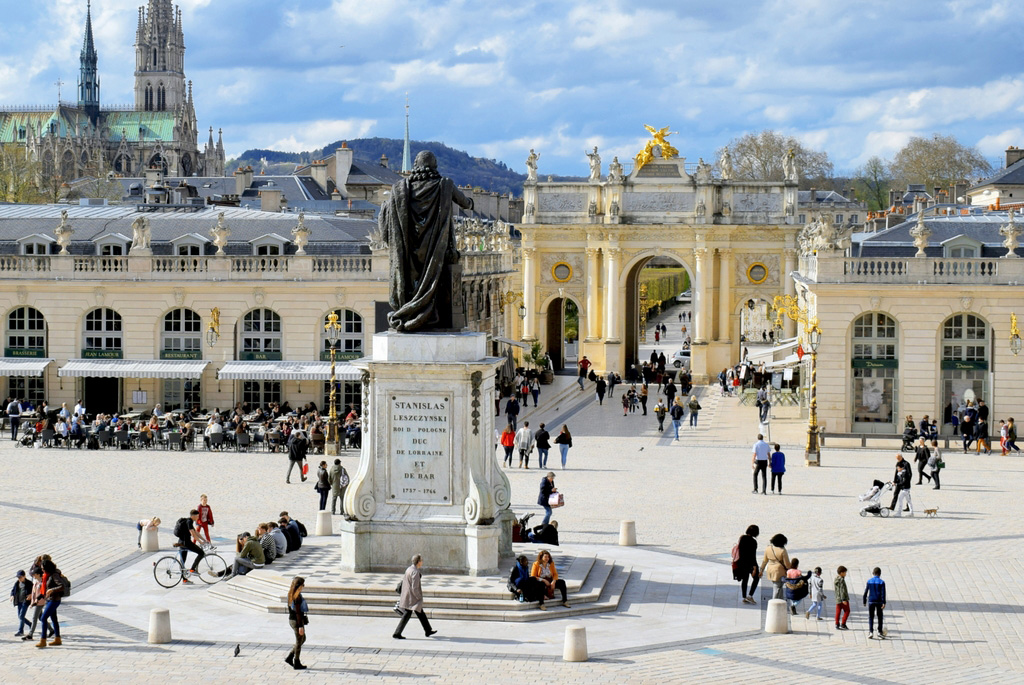


When we stroll through the ancient streets of Paris, enjoy the Bordeaux wine hills, or watch the sunset over the Côte d’Azur, each photo becomes a precious digital memory. For many travellers, these travel photos preserve moments of joy, real emotions, and personal stories.
At the same time, sharing photos on global social media platforms is becoming more automatic and therefore thoughtless.
We are less and less likely to think about who we are giving control over our travel photos to.
Travelling to France and Travel Photos Security
More Than Just a Visual Memory
French locations have as much cultural and historical value as they do emotional value for travellers discovering them for the first time.
Every photo taken during your French travel experiences will preserve not only a part of the place, but also your mood.
These images are mostly not intended for millions of strangers who may accidentally or even maliciously use them for their own purposes.
In France, the issue of privacy in photography is primarily regulated by the right to image (droit à l’image).
It gives a person the right to control the public use of their photo.
Although photography in public places is generally permitted, publishing photos of recognisable people without their consent may have civil law consequences.
The main risks of oversharing
When you post images in real time or with wrong privacy settings, you may reveal information that you did not mean to publish.
Even if you do not share your travel images with the wider public, the simple presence of metadata can pose a concern.
Even a profile with secret settings may have weaknesses.
In particular, geotags are automatically applied to photographs by many current cameras and cellphones.
This data may mistakenly reveal your location.
Such metadata can create an unnecessary digital trail.
It attracts not only the attention of bots, but also real people with potentially malicious intentions.
Hackers and malicious actors can also use publicly available photos for reverse location searches.
That’s why more and more travellers are thinking not only about what to post, but also about how to safely store and control access to their photos outside of social networks.
When I began to value my own travel photos as part of my personal history, rather than as “content” to be shared immediately, I started researching how to actually store my photos safely.
That is, not under the control of social networks, but under my own.
From this perspective, it is important to understand the key points to know about services that help hide private photos directly on your device or in secure storage.
On Moonlock, I found a review and explanation of various photo-hider apps.
These are third-party applications designed to hide private photos.
The review describes in detail the mechanisms used by such solutions.
These include protection via PIN codes, biometric authentication, and hidden or protected albums.
It also discusses other ways to restrict access to images in case of third-party viewing or device loss.
This approach to private photo sharing allows travellers to independently control who has access to their travel photos and under what conditions.
That is, without depending on social network settings.

How Social Platforms Limit Your Control Over Travel Photos
After uploading, a social network may use your photos for:
- Training models;
- Automatic tagging;
- Creating advertising profiles;
- Algorithmic reposting without your knowledge or explicit permission.
Why travel photo privacy ≠ social media privacy
Even the best privacy settings on social media platforms do not guarantee complete privacy.
Platforms can change their data usage policies without warning.
They can experience data leaks or account hacks. As a result, your travel photos may end up in the hands of third parties.
The platform’s algorithms analyse content to determine interests, recommendations, advertising, and personal profiles.
This means that your digital memories of travel are becoming less and less “private memories” and more and more a part of the social network’s analytical models.

Practical Strategies for Protecting Travel Photos Privacy
- Create your own rules for private photo sharing.
Be mindful of what you post and when. Plan to post travel photos after you return home. Doing so can significantly reduce security risks and home burglaries.
- Use technology.
In addition to platforms for secure private photo sharing, the devices themselves have tools that should be configured before travelling.
- Turn off the automatic geotagging feature for photos.
- Use a VPN when connecting to public Wi-Fi networks.
- Restrict access to photos on your device to only certain apps.
Personal travel reflections
Every time I look through my photos from my French travels, I realise the following.
Travelling beyond social media allows me to focus more on my own emotions, rather than on the reactions of others.
When I don’t think about how an algorithm will rate my photo, I get real pleasure from the moment that was saved for me, not for “likes.”
It is also important to remember that travel photos do not belong only to you.
When you photograph even random passers-by while walking through French streets, they may not know that their image has ended up in the vast space of the internet.
Adhering to the basics of privacy when sharing photos is also about respect for others.
Conclusion
In a world where travel images are increasingly used for self-expression and as a means of asserting oneself on social media, we must remember the next truth.
The true value of travel is not just what is in the photos, but what they mean to you personally.
Protecting your trip images’ privacy entails making an intentional decision about who you trust with your memories.
And also, where will they go in your life and beyond.
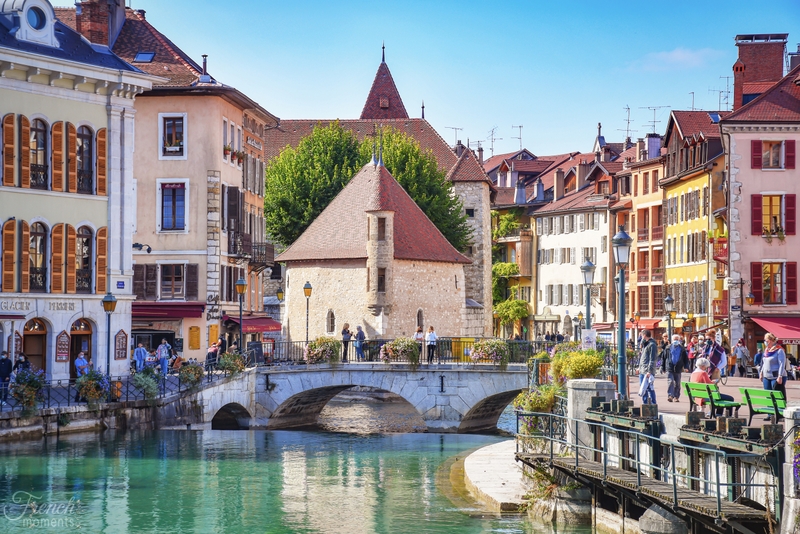
So, the next time you take a shot in front of the Eiffel Tower or in a tiny Montmartre cabaret, remember that your photos need to be protected just as much as the emotions they contain.