

I have just returned home to England after an 18-day journey across France.
And when I say “across France”, I really mean it.
This second part of my spring 2026 trip took me from Portsmouth to London Gatwick, then to Geneva, Annecy, Alsace, Strasbourg, Metz, Nancy, Reims, Caen, and finally back across the Channel by ferry from Ouistreham to Portsmouth.
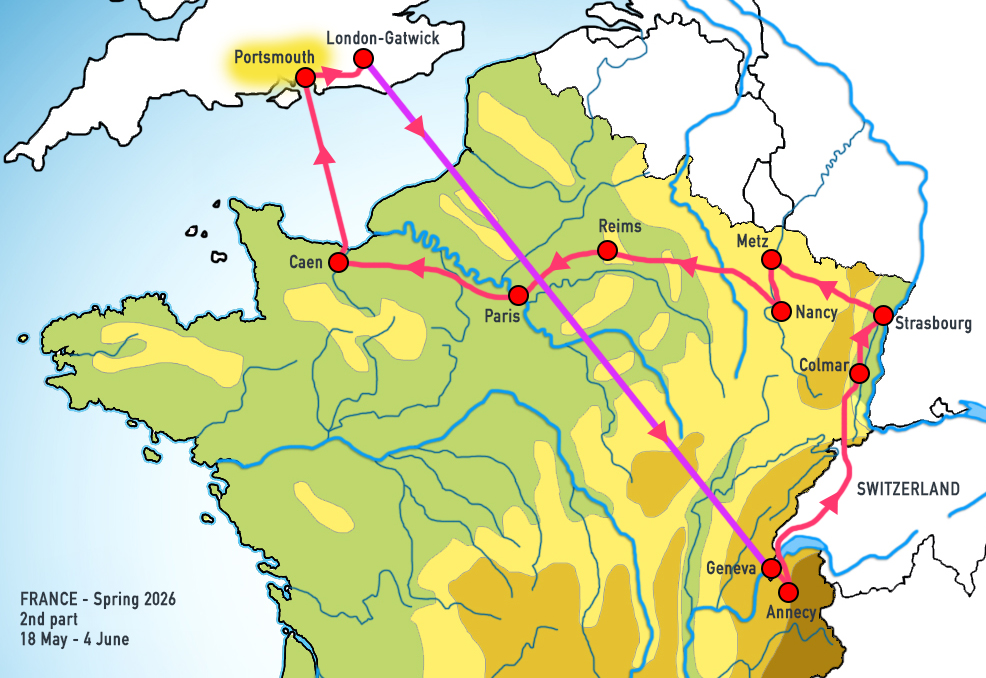
The second half of my Spring trip to France
It was the kind of trip I love: beautiful towns, cathedral façades glowing in the evening light, railway stations, bakeries, medieval streets, Art Nouveau details, museum visits, and quite a few moments when I asked myself the very important travel question: “Where on earth am I, and where is the nearest café?”
But this was not a holiday. It was a professional travel and content-gathering trip for French Moments.
I was taking photographs, filming short videos, sharing updates, researching future articles, answering emails, checking transport information, and staying in touch with my readers while moving from one place to the next.
It was also the first time I had ever used an eSIM while travelling.
Roambit invited me to try their service during this trip, so I used a Roambit travel eSIM throughout my journey to manage my mobile data while keeping my usual UK number active.
In other words, it became my travel eSIM for France during this very busy and varied itinerary. What follows is my honest experience of using it on the road, in real travel conditions.
Transparency note: Roambit invited me to test their eSIM service during this trip. I retain full editorial independence, and this article reflects my own experience using the service while travelling in France.
Why I Needed a Travel eSIM for France
When I travel for French Moments, reliable mobile data is not a luxury. It is part of the work.
Of course, there are still moments when I like to put the phone away, look up at a cathedral, listen to the sound of a fountain, or simply enjoy the view without wondering whether I should film it vertically, horizontally, or not at all.
But in practical terms, travelling as a writer and content creator means using mobile data constantly.
Sharing the journey as it happened
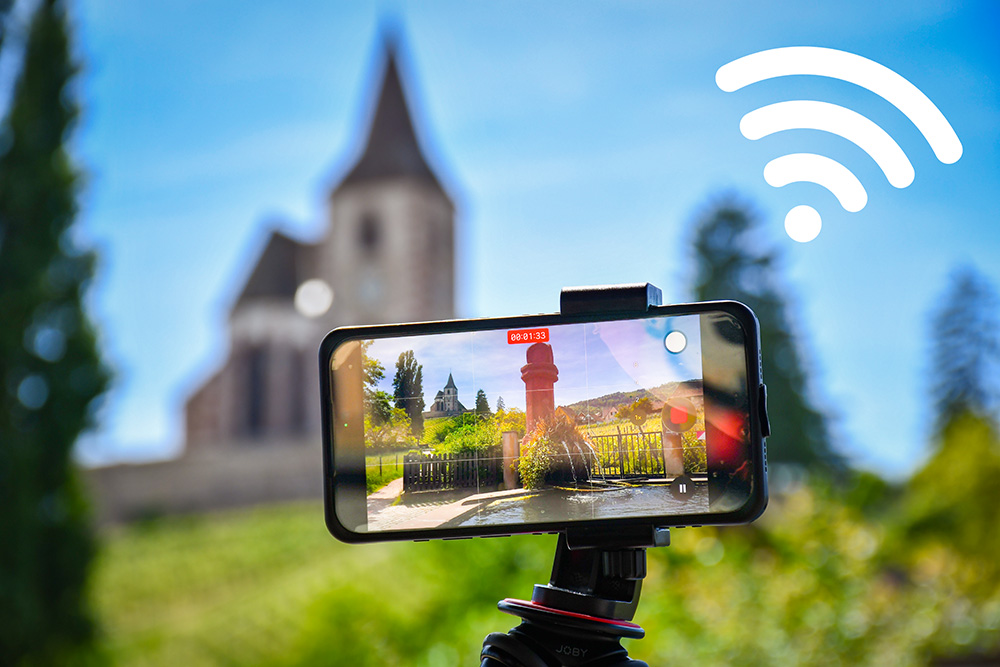
During this journey, I used it to publish short videos and updates on Substack Notes, often while the trip was unfolding.
If I had just visited a beautiful street in Strasbourg, crossed the Moselle in Metz, or stood in front of Reims Cathedral for the first time in my life, I could share a glimpse of it almost immediately.
I shared this video on Substack Notes nearly in real time from Caen:
When I had a quiet moment, I could also reply to comments and interact with subscribers. That direct connection with readers is one of the things I enjoy most about sharing travel content.
It makes the journey feel less solitary, even when I am technically travelling alone with a suitcase, a camera, and far too many charging cables.
Mobile data was also essential for the less romantic side of travel: emails.
While I was away, business did not stop. Messages kept arriving. Some could wait until my return. Others needed a quick reply. Being able to check my emails regularly meant I could decide what needed attention and what could safely be left for later.
Finding my way in unfamiliar places
And then there were maps.
I know some people enjoy getting lost in old French towns. I do too, up to a point. But there is a difference between “getting charmingly lost in a medieval lane” and “having no idea how to find the railway station with a train leaving in 22 minutes”.
In places I did not know well, especially Reims and Caen, I relied on Google Maps and Apple Maps to find museums, streets, stations, restaurants, and my accommodation.
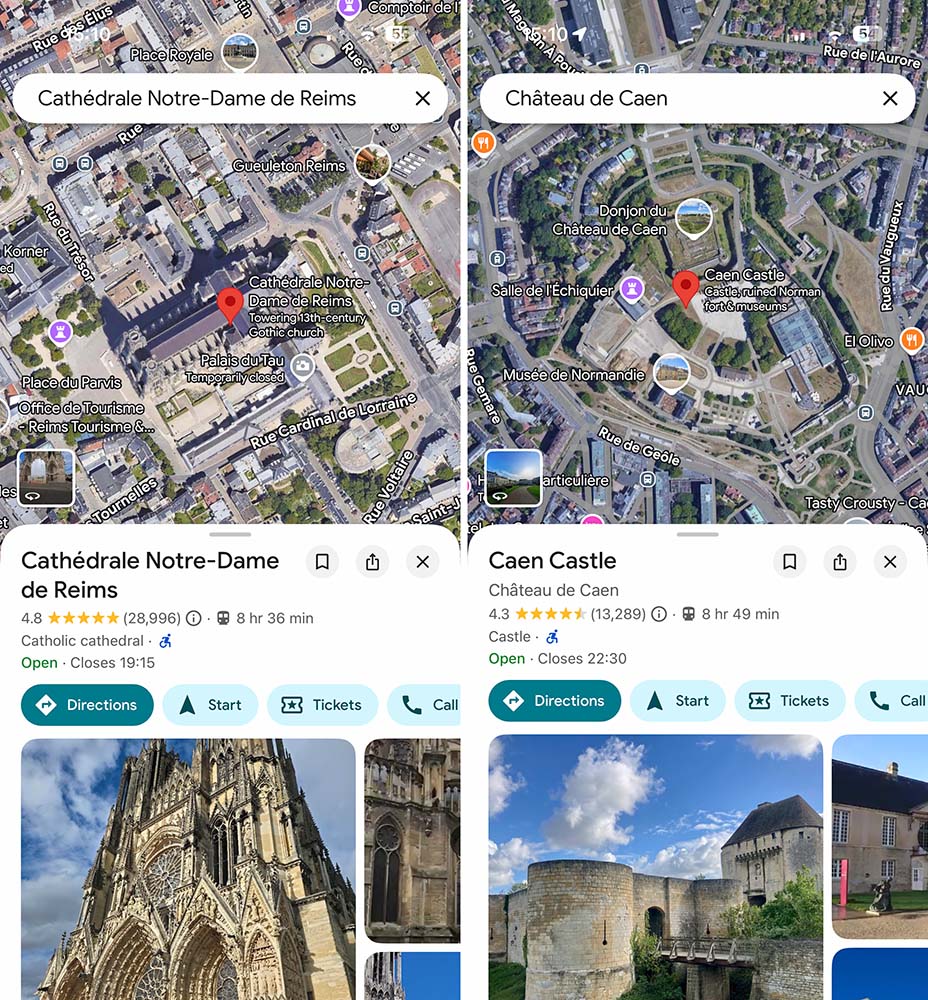
Google Maps of Reims and Caen
In Reims, this was particularly helpful because it was my very first visit to the city. I knew the cathedral from photographs, guidebooks, and history. But knowing where you are in relation to it, in real time, is another matter entirely.
Mobile data also helped with all the small practical tasks that make independent travel easier: finding a bakery, locating a convenience shop, checking ferry details, confirming train routes, looking up opening hours, or visiting the official websites of places such as the Musée de la Reddition and the Musée-Abbaye Saint-Remi in Reims.
Avoiding data limits while travelling
Could I have relied only on my UK mobile provider? Possibly.
My regular UK operator is Giffgaff, and I kept it active throughout the trip for calls and text messages. However, Giffgaff currently limits EU roaming data usage to 5 GB.
During the first part of my France travels in April, I reached that allowance surprisingly quickly and would have needed to pay extra to continue using mobile data at the same level.
That was one of the reasons why using a travel eSIM for France made sense for this second part of the journey.
When you are spending only one or two nights in a city, the last thing you want is to waste half an hour searching for reliable Wi-Fi just to check a map, upload a short video, or look up a museum’s opening times.
Reliable mobile data makes travel simpler. And on this trip, that made a real difference.
My 18-Day France Itinerary: Testing Mobile Data Across Regions
This journey began, as many of my French adventures now do, on the south coast of England.
From England to the Alps
I travelled from Portsmouth to London Gatwick, then flew to Geneva before continuing towards Annecy. There is something rather wonderful about arriving in Geneva and knowing that the Alps are waiting just beyond the airport.
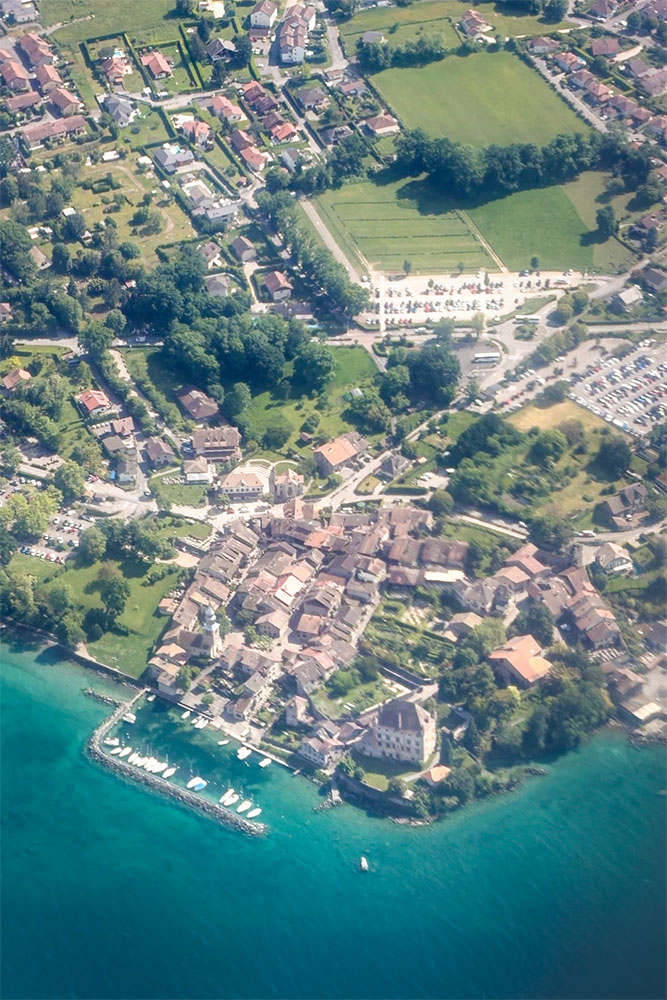
The village of Yvoire by Lake Geneva seen from my flight © French Moments
For me, Annecy and Haute-Savoie are never just another destination. They are tied to family memories, mountain landscapes, and that particular mixture of lake, stone, and snow-capped horizons that always feels like a return.
A week along the Alsace Wine Route
From Annecy, I travelled north-east to Colmar via Switzerland, then settled for a week in Turckheim, one of those Alsatian towns that seem almost too picturesque to be real.
Turckheim made an excellent base for exploring the Alsace Wine Route, with visits to Colmar, Bergheim, Ribeauvillé, Hunawihr, Riquewihr, Kaysersberg, and Eguisheim.

On my visit to Kaysersberg © French Moments
In that part of France, every village appears to have half-timbered houses, flower-filled streets, vineyards rising behind the rooftops, and at least one view that makes you stop walking without warning.
Strasbourg, Metz and Nancy
After Alsace came Strasbourg, where I spent three nights exploring the Grande Île, the German imperial quarter, and the European institutions district, including the Parc de l’Orangerie.

Petite-France, Strasbourg © French Moments
Strasbourg is one of those cities where French and German histories do not simply meet; they overlap, argue, blend, and create something entirely distinctive.
Then I travelled to Metz for two nights. There, I took a short cruise on the Moselle in the city centre, visited the Musée de La Cour d’Or and its new biodiversity exhibition, spent time in and around the cathedral, explored the old town, and walked through the German imperial quarter.
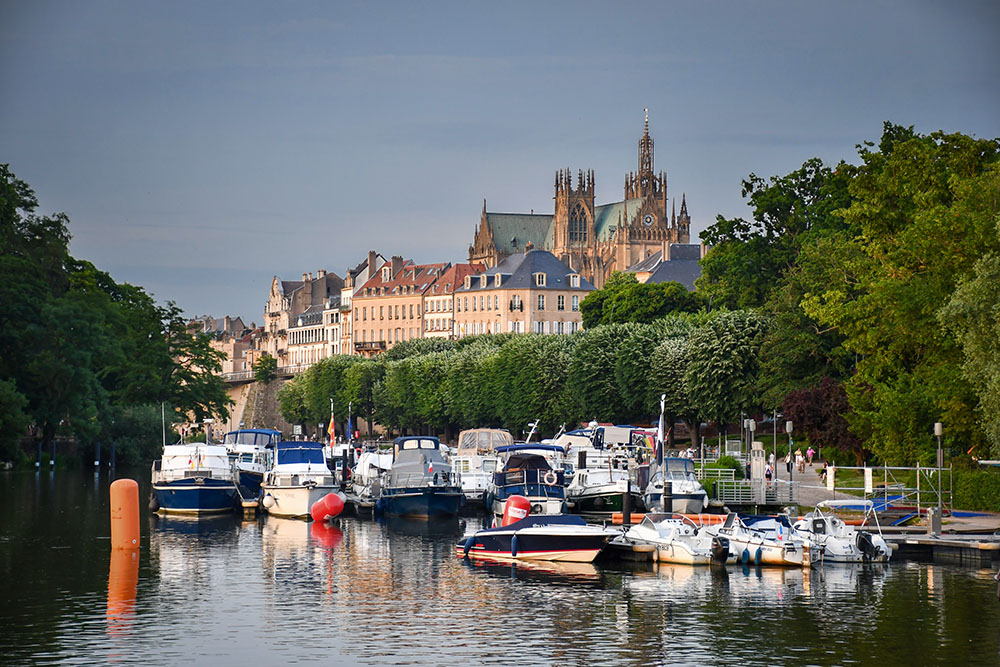
On my cruise in Metz © French Moments
From Metz, I continued to Nancy for one night. Nancy is a city close to my heart, and I never need much of an excuse to return to Place Stanislas. During this visit, I explored the UNESCO-listed squares, visited the Villa Majorelle, and wandered through the Ville-Vieille.

Place Stanislas, Nancy © French Moments
Reims, Caen and the ferry home
Then came Reims, where I spent two nights — and somehow, despite all my years writing about France, this was my first visit.
I finally saw Reims Cathedral with my own eyes, admired some of the city’s Art Deco buildings, visited the Musée de la Reddition, and explored the Abbey of Saint-Remi and its museum.

On my visit to Reims Cathedral © French Moments
From Reims, I took the train via Paris to Caen for the final night of the trip. In Caen, I explored the historic centre, the Abbaye aux Dames, the Abbaye aux Hommes, the castle, several churches, and the picturesque Vaugueux quarter.
The journey ended with the ferry from Ouistreham to Portsmouth, with views towards the D-Day landing beaches, including Sword Beach.

Normandy Beaches (Sword) © French Moments
So this was not a simple city break. It was a multi-stop journey across regions, networks, hotels, trains, old towns, museums, riverbanks, ferry terminals, and unfamiliar streets.
In other words, it was a very good test for a travel eSIM for France.
Using a Travel eSIM for France Alongside My UK SIM
My setup was simple.
I used Roambit for mobile data and internet. I kept my UK operator, Giffgaff, for calls and text messages.
That meant I did not need to remove my usual SIM card, change my phone number, or tell anyone to contact me differently while I was away. My normal UK number remained active, but my internet connection in France went through the Roambit eSIM.
For me, this was the ideal arrangement.
Giffgaff remained my regular UK line. Roambit handled the data.
So when I used WhatsApp, checked emails, browsed the web, uploaded short videos, searched for directions, or looked up opening times, I was using the Roambit data connection. But if someone needed to call or text me on my UK number, that still worked through Giffgaff.
This is one of the main advantages of using an eSIM for France. It does not necessarily replace your usual mobile operator. It can simply sit alongside it.
For UK-based travellers going to France, this can be very practical. Many of us want to keep our normal number active for bank verification messages, family contact, business calls, or text messages. At the same time, we may want more mobile data than our regular roaming allowance provides.
Using a travel eSIM means you can separate the two.
Your normal SIM remains your identity line. The eSIM becomes your travel data line.
And when you are moving from place to place, staying in different hotels, catching trains, and visiting unfamiliar towns, not having to depend on public Wi-Fi is a real comfort.
Setting Up the Roambit Travel eSIM on My iPhone
I used Roambit on an iPhone 17 Pro Max.
As this was my first time using an eSIM, I was slightly curious to see whether the installation would feel complicated. In the end, the process was quite straightforward.
Installing the eSIM
Roambit provided the eSIM details with a QR code. I scanned the QR code and followed the instructions on my iPhone. Once installed, the eSIM appeared in the phone’s mobile data settings.
There is one useful thing to know if you are installing an eSIM for the first time. If the installation screen seems to load for a long time or looks as if it has become stuck, it is worth checking your phone settings before panicking.
In some cases, the eSIM may already have been added, even if the loading screen does not finish neatly.
Choosing Roambit for mobile data
I landed in Geneva, Switzerland, before continuing towards France, so I waited until I was properly across the border and well inside French territory before activating Roambit for mobile data.
At that point, the important step was to choose the Roambit eSIM as the line used for mobile data. On an iPhone, this is done in the Mobile Data or Cellular settings. You simply select which SIM should be used for internet access.
I then made sure that Data Roaming was switched on for the Roambit eSIM. This point matters because travel eSIMs usually need roaming enabled in order to connect abroad.
After that, the phone connected and I was online.
What to do if it does not connect immediately
If the connection does not start immediately after arrival, the usual mobile phone trick can help: turn Airplane Mode on for about ten seconds, then turn it off again. This forces the phone to search for the network again.
If that still does not work, restart the phone and check three things:
- Roambit is selected for mobile data.
- Data roaming is switched on for the Roambit eSIM.
- Wi-Fi is off while testing the mobile connection.
In my case, once everything was set correctly, the eSIM did exactly what I needed it to do.
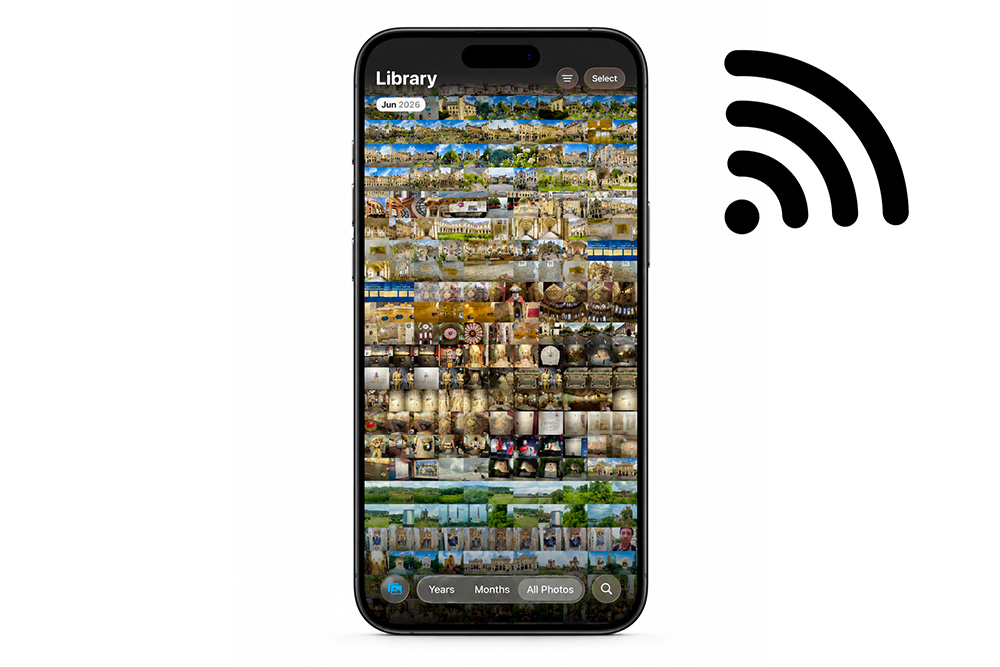
My iPhone photo library just for one day!
How My Travel eSIM for France Performed During the Trip
The best thing I can say about the Roambit eSIM is that, most of the time, I did not have to think about it.
And that is exactly what I want from travel technology.
When travel technology disappears into the background
When a service works well, it should disappear into the background. It should not become the main character of the journey.
France should remain the main character — the villages, the cathedrals, the railway platforms, the riverbanks, the museum courtyards, the cafés, the unexpected street corners, and the slightly dramatic weather.
The eSIM simply allowed me to do what I needed to do.
Staying connected from Alsace to Normandy
In Alsace, I could move between towns and villages while checking routes, posting short updates, and looking up practical information.
In Strasbourg, it helped me navigate between the Grande Île, the Neustadt, and the European quarter.
In Metz, I used it while exploring the old town, the cathedral area, and the banks of the Moselle.
In Nancy, it helped with the usual combination of maps, messages, emails, and quick searches.
In Reims, where I was discovering the city for the first time, it was especially useful. I could check walking directions, confirm museum details, and look up information as I moved between the cathedral, Art Deco streets, the Musée de la Reddition, and Saint-Remi.
In Caen, on the final day, it was again useful for navigating a city I did not know well, from the abbeys to the castle and down towards the old quarter of Vaugueux.
Maps, WhatsApp, emails and travel updates
I also used it for WhatsApp, web browsing, email, and social posting throughout the trip. It meant I could share short videos and travel updates without waiting to return to a hotel.
It also meant I could keep an eye on work messages without needing to sit in a café pretending that I had only come in for the Wi-Fi.
Though, to be fair, I am never against sitting in a French café. 
Overall, my experience was smooth and practical. This travel eSIM for France kept me connected across a varied itinerary, from the Alps and Alsace to Lorraine, Champagne, Normandy, and the ferry route back to England.
If a trip to France is on your horizon and you would like to try Roambit for yourself, they have kindly offered French Moments readers a personal discount code for 10% off: FRENCH10.
A Note About My Previous Connectivity Issues in France
There is one point worth mentioning, honestly.
During the first part of my spring travels in France, in April, I did not use Roambit. During that trip, I experienced serious connectivity problems with my iPhone 17 Pro Max while in France.
At times, the phone struggled with roaming data and cellular connection in a way that made travel more frustrating than it needed to be. I later saw that other UK users in France had reported similar issues, possibly linked to an iOS modem bug or roaming configuration conflicts with French carriers.
I cannot say with certainty what caused the issue. Nor can I say with certainty why the second part of my trip went so much better.
It may have been an Apple update. It may have been a change in roaming configuration. It may have been the Roambit setup. It may have been a mixture of things.
What I can say is this: during this 18-day journey, while using Roambit for mobile data, my experience was smooth and reliable. I did not have the same frustrating connection problems I had experienced during the earlier part of my travels.
For me, that was a very welcome change.
Who Is a Travel eSIM for France Useful For?
Based on my experience, a travel eSIM for France can be useful for several types of travellers.
UK travellers who want to keep their number active
First, it is useful for UK travellers going to France who want to keep their normal number active while using a separate data connection.
This was exactly my situation. I wanted Giffgaff to remain available for calls and text messages, but I wanted Roambit to handle my internet access.
For me, that was one of the main advantages of the setup: I could keep my usual UK number while using a dedicated travel eSIM for France for mobile data.
Travellers who use their phones on the road
Second, it is useful for people who use their phone actively while travelling: maps, WhatsApp, emails, social media, train information, museum websites, restaurant searches, and the occasional urgent need to find a bakery.
Third, it can be particularly helpful for multi-stop trips. If you are staying in one hotel for a week and barely leaving the swimming pool, your needs may be different.
But if you are moving between cities, taking trains, changing accommodation, and exploring unfamiliar places, reliable mobile data becomes much more important.
Arrived in Nancy! It’s time to head to the famous Place Stanislas before the weather gets too cloudy! 
- Pierre Guernier
Read on SubstackContent creators and regular data users
It is also useful for content creators, bloggers, photographers, remote workers, and anyone who needs to stay connected for professional reasons while travelling.
Of course, not everyone will need a separate eSIM. If you use very little data and your regular mobile provider already gives you enough roaming allowance, you may be perfectly fine without one.
But if you use maps, messaging, emails, uploads, video, and web browsing regularly while travelling, then a dedicated travel eSIM can make life much easier.
One thing to keep in mind, though, is that system updates can consume a lot of data, especially if your phone or apps are set to download updates automatically. Before travelling, it is worth checking your settings so that large updates do not quietly eat through your mobile data allowance in the background.
For me, on this particular trip, it was exactly the right solution.
Final Thoughts: Was a Travel eSIM for France Worth It?
Looking back, the story of this journey is not really about mobile data.
It is about France.
It is about arriving near the Alps, walking through Alsatian wine villages, returning to Strasbourg, exploring Metz and Nancy, discovering Reims for the first time, ending in Caen, and crossing the Channel back to Portsmouth with the Normandy coast behind me.

Reims © French Moments

Hunawihr © French Moments
It is about cathedrals, abbeys, rivers, railway stations, half-timbered houses, Art Deco façades, medieval streets, and the quiet satisfaction of finding your way in a place you have never visited before.
But staying connected made all of that easier.
The Roambit eSIM helped me travel, work, share, navigate, and stay in touch without constantly worrying about data limits or searching for Wi-Fi.
For a travel writer moving from city to city, that peace of mind matters. I want the technology to disappear into the background — and on this trip, that is exactly what happened.
So, was using a travel eSIM for France worth it?
For this trip, absolutely.
If you are planning your own trip to France and would like to give Roambit a try, they have kindly provided French Moments readers with a personal discount code giving you 10% off: FRENCH10.