


The monuments of France range from the Eiffel Tower and the Palace of Versailles to Roman aqueducts, Gothic cathedrals and castles overlooking small provincial towns.
Some need little introduction. Others may give you a reason to take a detour.
I have brought together 50 places to help you explore that variety, beginning with ten well-known monuments and continuing with discoveries around the country.
Paris belongs here, of course, but so do the glazed roofs of Beaune, the fortified bridge at Cahors and the Lion of Belfort.
This is a personal selection, not an official ranking of visitor numbers. It includes individual buildings, engineering works, memorials and a few larger historic ensembles, such as the fortified city of Carcassonne.
Use it for inspiration, then follow the regional guides to plan a journey that leaves time to look around.
Ten famous monuments of France at a glance
If you are looking for a short list, start with these ten. The order is a way to organise the article, rather than a verdict on which monument deserves first place.
| Monument | Location | What makes it distinctive |
|---|---|---|
| Eiffel Tower | Paris | Iron architecture and views over the capital |
| Notre-Dame de Paris | Paris | Gothic architecture beside the Seine |
| Louvre Palace | Paris | A former royal palace surrounding courtyards and a glass pyramid |
| Palace of Versailles | Versailles, Île-de-France | Royal apartments, the Hall of Mirrors and gardens |
| Mont-Saint-Michel | Normandy | An abbey and village rising above a tidal bay |
| Château de Chambord | Centre-Val de Loire | Renaissance architecture and an elaborate roofline |
| Château de Chenonceau | Centre-Val de Loire | A château extending across the River Cher |
| Pont du Gard | Occitanie | A Roman aqueduct bridge above the Gardon |
| Cité of Carcassonne | Occitanie | Towers, walls and a fortified historic town |
| Reims Cathedral | Grand Est | Gothic sculpture and the history of French coronations |
1. Eiffel Tower
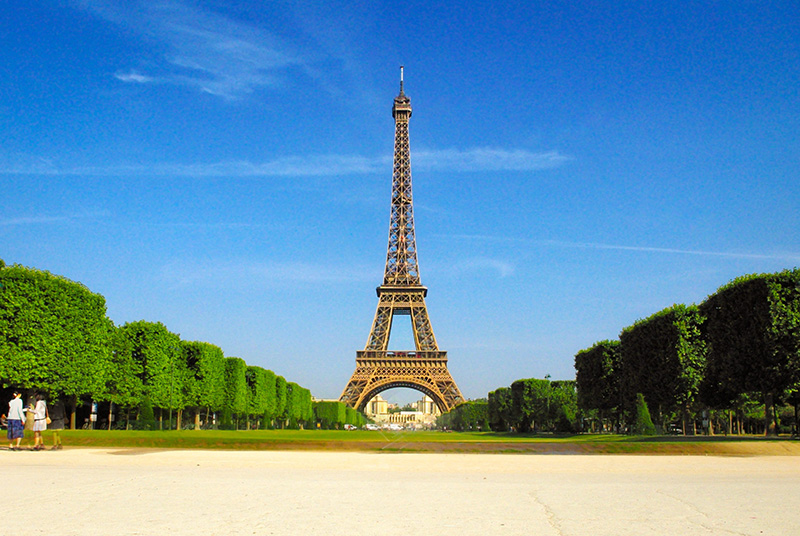
Monuments of Paris - Eiffel Tower © French Moments
Built for the Paris World's Fair of 1889, the Eiffel Tower has become one of the most recognisable symbols of France. Its iron structure is worth examining as well as photographing: from beneath it, the arches and latticework make quite a different impression from the familiar distant silhouette.
Decide whether your priority is going up the tower or seeing it within the Paris skyline. Those are two different experiences, and it is possible to enjoy the second without booking the first. The banks of the Seine and the Trocadéro offer contrasting perspectives.
2. Notre-Dame de Paris
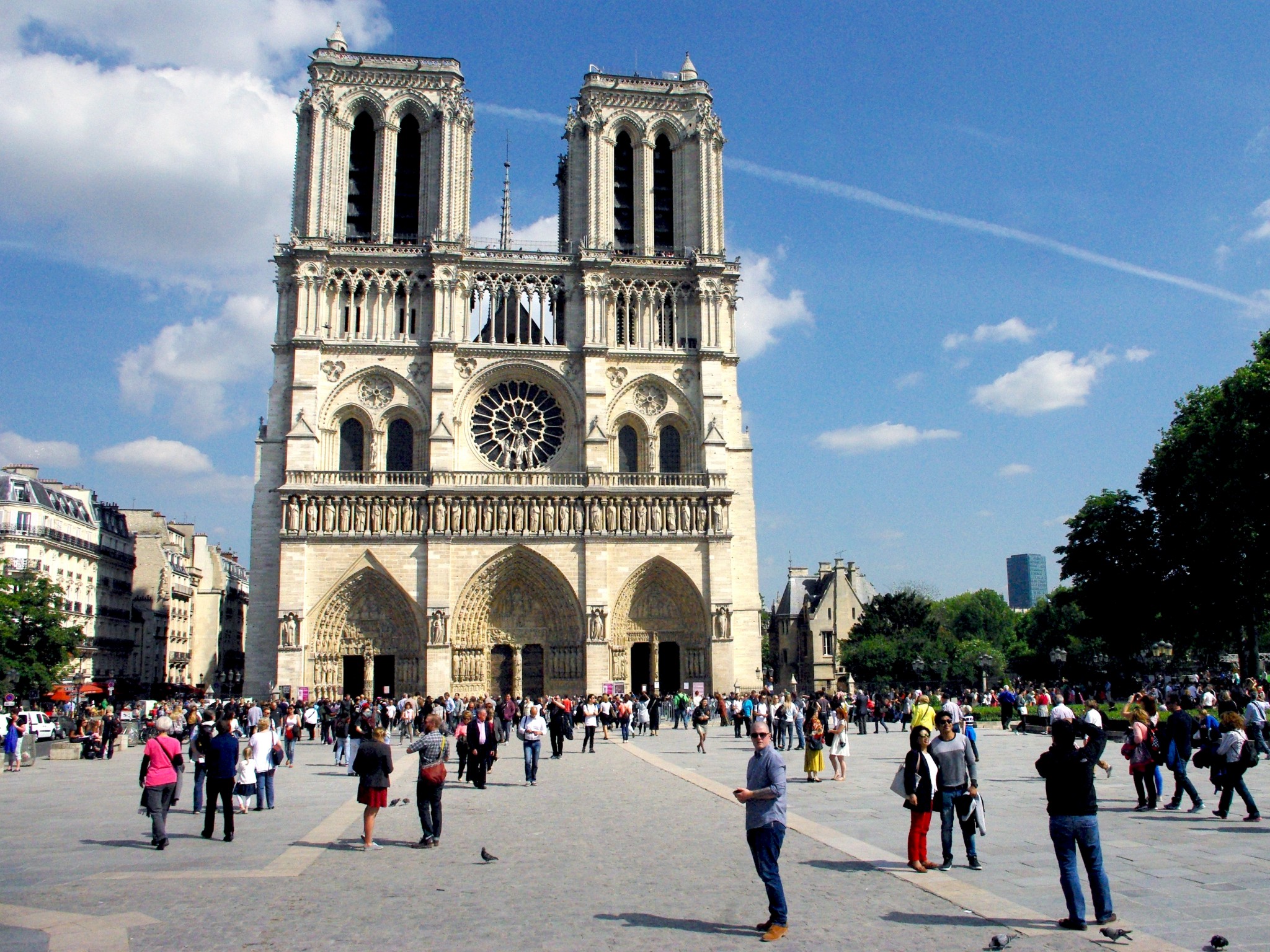
West façade of Notre-Dame © French Moments
Notre-Dame stands on the Île de la Cité, at the historic heart of Paris. The towers, sculpted portals and flying buttresses reward a slow circuit of the building as well as a visit inside.
Give the exterior time of its own. The view from the front is only one part of the cathedral: from the riverside, its length and the structure supporting the choir become much easier to appreciate. Check the cathedral's official website for current visiting arrangements, and check tower access separately.
Read more about the history and architecture of Notre Dame Cathedral.
3. Louvre Palace

The Louvre at sunset © French Moments
The Louvre belongs in this selection for its architecture as well as its museum. The former royal palace brings together long façades, courtyards and the modern glass pyramid, offering a reminder that French monuments have often changed purpose over time.
Separate a walk around the palace from a museum visit when planning your day. Looking at the courtyards is a different undertaking from exploring the collections, where choosing a few priorities can make the visit more manageable.
4. Palace of Versailles
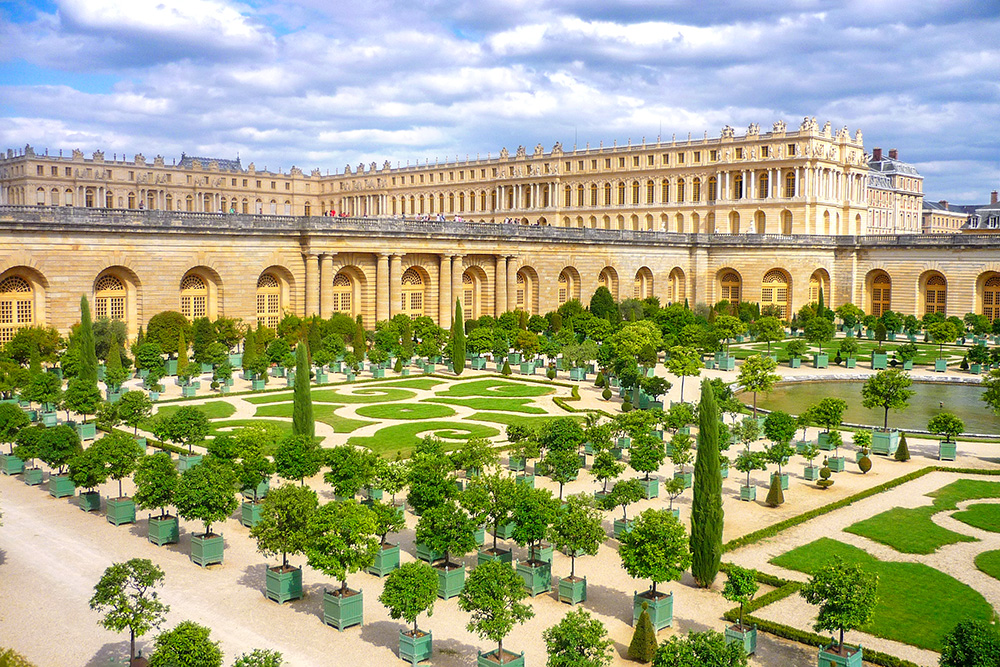
The orangerie © French Moments
Versailles combines a royal palace with gardens and a much wider estate. The Hall of Mirrors is its best-known room, but the relationship between the palace and the landscape is just as important to understanding the place.
Avoid treating Versailles as a quick stop between Paris attractions. Decide which parts of the estate you want to explore, and allow for the walking involved. Check the official ticket descriptions carefully, as access depends on the areas and activities included.
Explore more of the capital in my guide to the monuments of Paris.
5. Mont-Saint-Michel
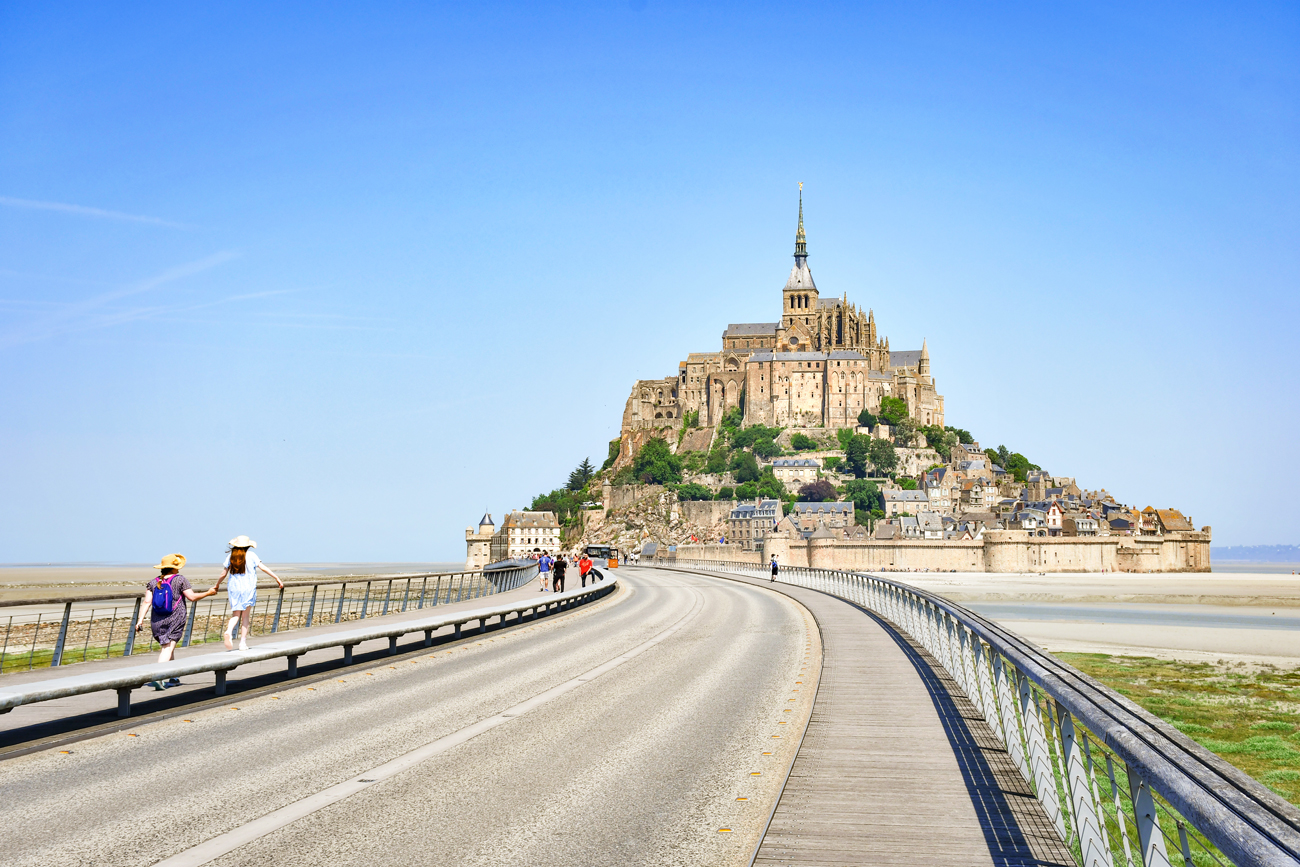
The footbridge of Mont-Saint-Michel © French Moments
From across the bay, Mont-Saint-Michel appears as a rocky island crowned by an abbey. Closer up, that silhouette separates into walls, lanes, houses and the buildings of the monastery above them.
The distant view, the village and the abbey are three parts of the experience. Leave time for each rather than thinking only about reaching the top.
If you want to walk out into the bay, arrange a guided crossing: a view of the sands from the approach is not an indication that they are safe to explore independently.
More info:
6. Château de Chambord

The castle's North Facade © Nono vlf [CC BY-SA 4.0] from Wikimedia Commons
Chambord is one of the defining sights of the Loire Valley, with towers, chimneys and roof terraces creating a skyline quite unlike an ordinary country house. Its Renaissance architecture makes it a natural choice for a first exploration of the region's châteaux.
Look at it from a distance before concentrating on individual details. The broader setting reveals the scale of the building, while the interior and terraces offer a closer encounter with its design. Resist squeezing too many other châteaux into the same day.
Explore Chambord and its château.
7. Château de Chenonceau

Chenonceau Castle © Yvan Lastes - licence [CC BY-SA 3.0] from Wikimedia Commons
Chenonceau's gallery stretches across the River Cher, giving it one of the most distinctive settings among French châteaux. Water is central to the view, rather than simply a decorative feature in the grounds.
Chambord and Chenonceau make an interesting contrast: one has a commanding, intricate roofline, while the other creates its most familiar image across the river. If you include both in a Loire Valley stay, give each enough time for its grounds as well as its rooms.
Get your skip-the-line ticket to the Castle of Chenonceau
Get your ticket to a roundtrip of 3 Loire castles from Paris!
8. Pont du Gard

Most famous monuments of France: Pont du Gard © French Moments
The Pont du Gard is a Roman aqueduct bridge, built to carry water as part of the system supplying Nîmes. Its stacked arches cross the Gardon valley, combining a practical purpose with an extraordinary sense of proportion.
It is worth distinguishing an aqueduct from a road bridge when explaining the monument to children or students. Look at how the upper level carried the water, then step back to see how the structure fits into the landscape.
9. Cité of Carcassonne

Carcassonne Walls copyright French Moments
Carcassonne's fortified city is an ensemble of walls, towers, gates and streets rather than a single building. Its appearance also reflects the major restoration associated with Viollet-le-Duc in the nineteenth century.
Allow time both for the wider townscape and for any ticketed visit to the castle and ramparts. Seeing the fortifications from outside helps explain their scale; walking through the streets provides a different impression of the place within them.
Discover the sights of the Cité of Carcassonne.
Get your ticket to a Guided Tour of Carcassonne: visit the castle and the ramparts
10. Reims Cathedral
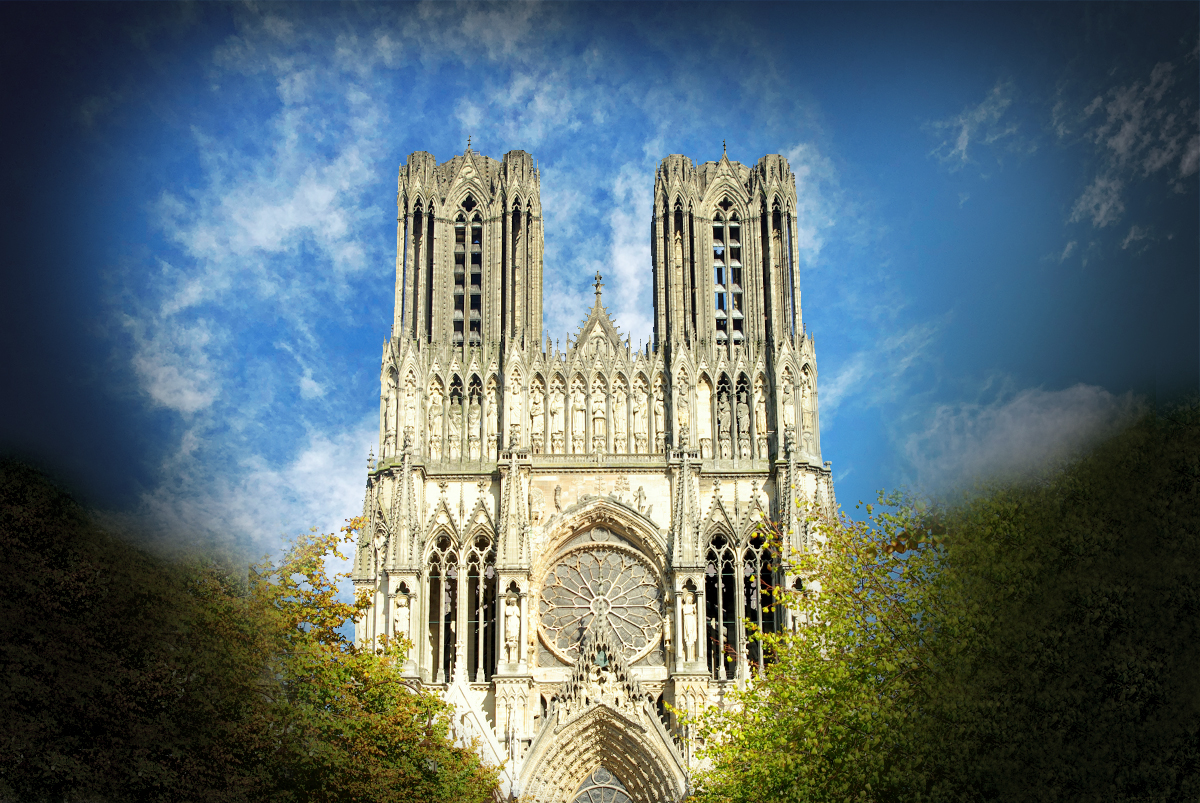
Discover the historic Reims Cathedral © French Moments
Reims Cathedral is closely associated with the coronation of French kings. Its Gothic architecture and sculpted façade make it one of the great monuments of Champagne, with the Smiling Angel among its best-known details.
Rather than trying to take in the whole façade at once, choose a few sculptures to examine. Then step back again: the contrast between an individual carved face and the scale of the cathedral is part of its appeal.
Read more about the history and architecture of Reims Cathedral.
More monuments in Normandy, northern France and around Paris
11. Abbaye aux Hommes, Caen
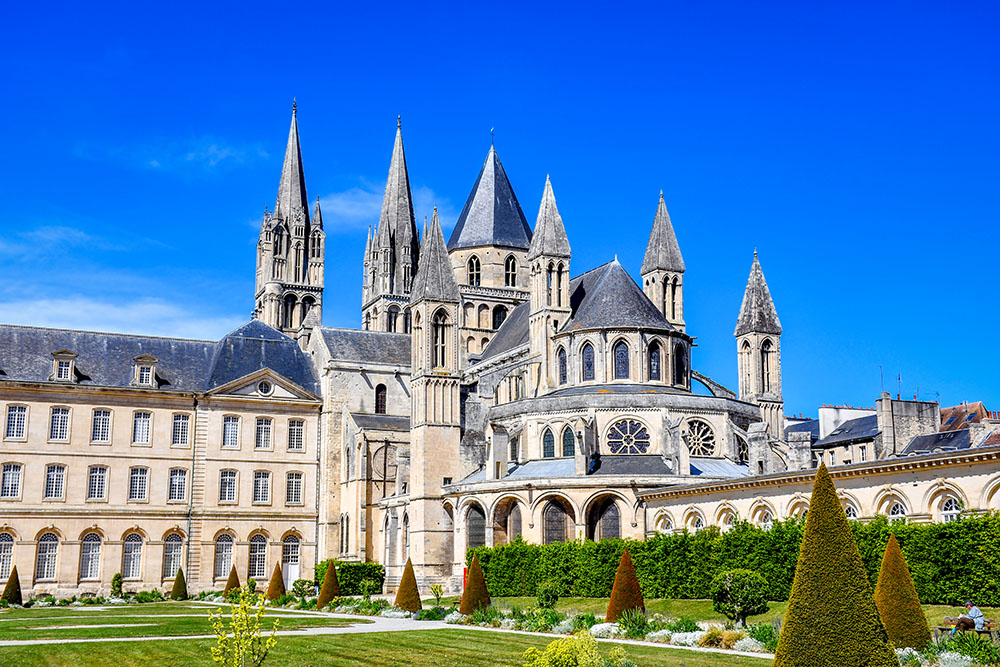
Abbaye aux Hommes, Caen © French Moments
Founded by William the Conqueror, the Abbaye aux Hommes connects Caen with the history of medieval Normandy. The abbey church and adjoining buildings deserve attention as an ensemble. It also makes a useful starting point for exploring the city's other surviving historic monuments.
12. Rouen Cathedral
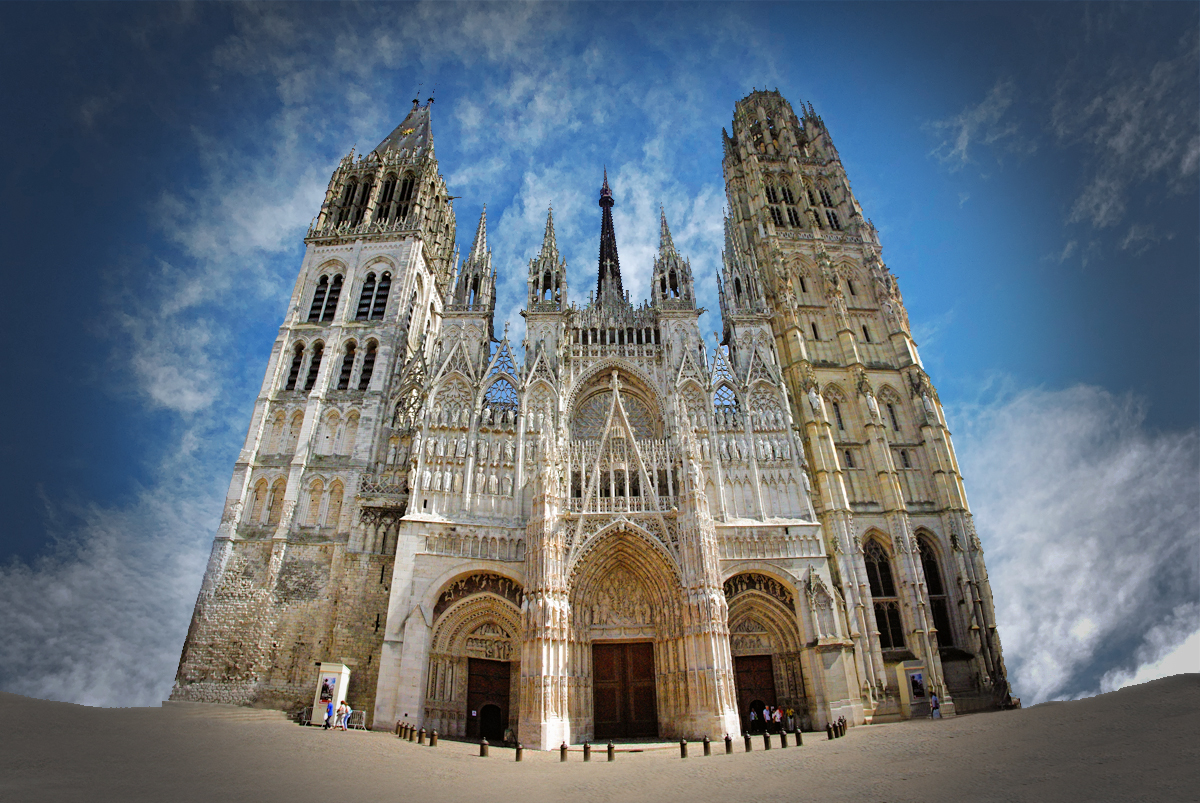
Discover Rouen Cathedral © French Moments
Rouen Cathedral has a richly worked façade and a prominent spire. Its association with Monet gives visitors another way to approach it: look at how the light changes the appearance of the stone. Leave time to explore the surrounding streets as well as the cathedral itself.
Discover more about Rouen Cathedral.
13. Amiens Cathedral

Amiens Cathedral © Thierry80 - licence [CC BY-SA 4.0] from Wikimedia Commons
Amiens Cathedral rewards anyone interested in the scale and structure of Gothic churches. The west front is full of sculptural detail, while the interior offers a very different sense of space. Compare the small carved figures with the height of the building around them.
Discover more about Amiens Cathedral.
14. Pierrefonds Castle

Pierrefonds Castle © Elisa11 - licence [CC BY-SA 3.0] from Wikimedia Commons
Pierrefonds is particularly interesting if you want to understand nineteenth-century ideas about the Middle Ages. Its imposing silhouette owes much to Viollet-le-Duc's restoration. Approach it as both a medieval castle and a later interpretation of what such a castle could look like.
15. Chantilly Castle

The chateau of Chantilly seen from the gardens © French Moments
Chantilly combines a château, the Condé Museum and extensive grounds. The setting beside the water is part of its appeal, but this is also a place for visitors interested in painting and collections. Decide which aspects matter most before planning the length of your visit.
16. Vieille Bourse, Lille
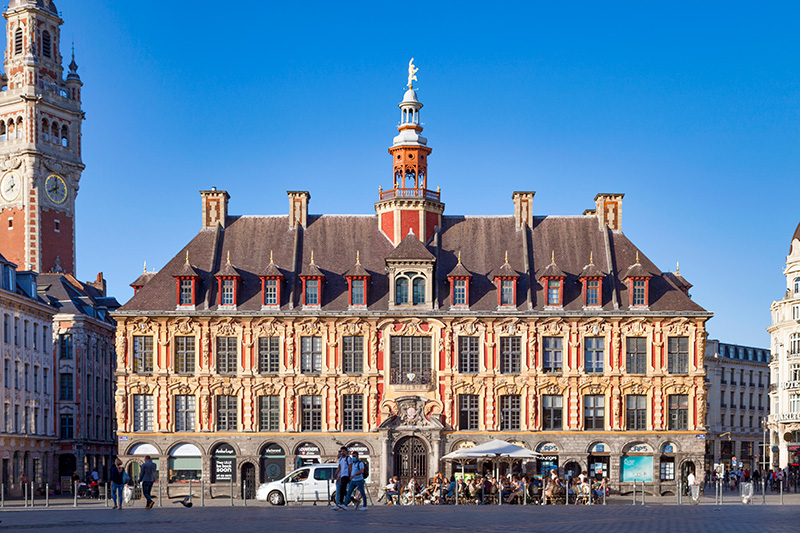
Vieille Bourse, Lille. Source: Depositphotos.com
Lille's Vieille Bourse offers an urban contrast to the castles and cathedrals in this list. Its seventeenth-century façades bring colour and ornament to the city centre. Look closely at their details rather than using the building only as a backdrop to the square.
17. Chartres Cathedral

Chartres © Marianne Casamance - licence [CC BY-SA 3.0] from Wikimedia Commons
Chartres Cathedral is renowned for its stained glass and its two contrasting western spires. Begin with the silhouette from outside, then allow your eyes time to adjust inside. The windows deserve an unhurried visit, with attention to individual scenes as well as the overall colour.
Monuments of France in Alsace, Lorraine, Burgundy and Franche-Comté
18. Strasbourg Cathedral

Strasbourg Cathedral © French Moments
Strasbourg Cathedral rises above the old town with its distinctive single spire. The sculpted façade, stained glass and astronomical clock offer several reasons to linger. To appreciate its place in the city, approach through the surrounding streets before emerging onto the cathedral square.
Explore Strasbourg Cathedral in more detail.
19. Haut-Kœnigsbourg Castle

Haut-Kœnigsbourg Castle © French Moments
Above the Alsace plain, Haut-Kœnigsbourg combines a fortified setting with views of the surrounding landscape. Its early-twentieth-century restoration is part of its story. A visit provides a useful contrast to the wine villages below, where the scale of the architecture is much more domestic.
20. House of Joan of Arc, Domrémy-la-Pucelle

House of Joan of Arc in Domrémy © French Moments
The house associated with Joan of Arc's birth is modest beside the royal palaces on this list. That difference is precisely what makes it interesting. Its setting in Domrémy offers a more intimate starting point for exploring her story than a large commemorative statue or grand civic monument.
21. Charles de Gaulle Memorial, Colombey-les-Deux-Églises

Memorial Charles de Gaulle © French Moments
The memorial and the monumental Cross of Lorraine make Colombey an important destination for visitors interested in twentieth-century France. This is a different kind of heritage stop, centred on political history and remembrance. Allow time to engage with that history rather than stopping only for a photograph.
22. Lion of Belfort
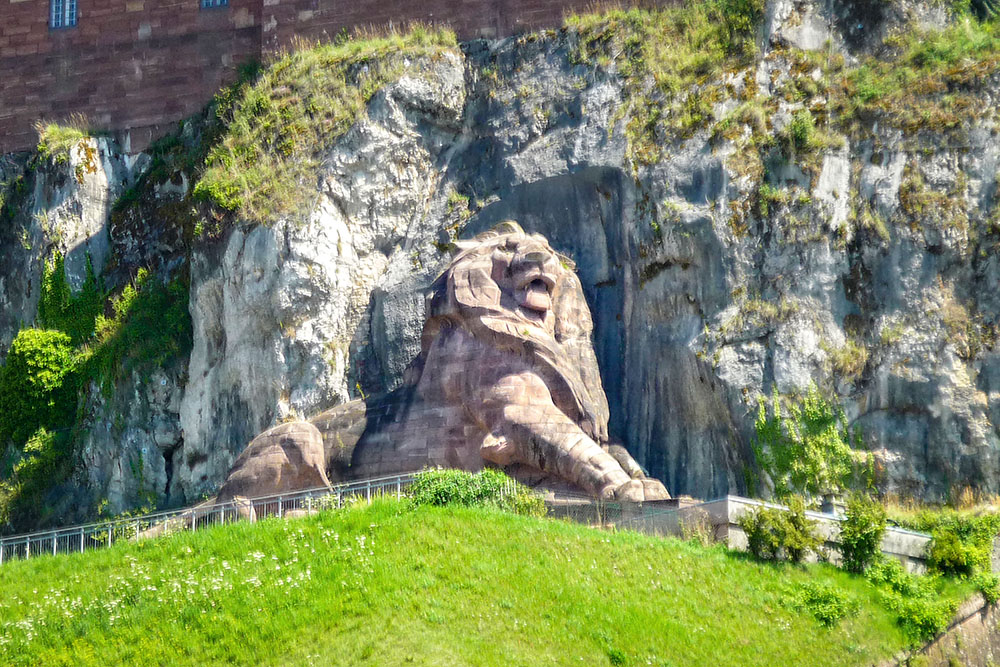
Lion de Belfort, France © French Moments
Bartholdi's Lion of Belfort commemorates the city's resistance during the Franco-Prussian War. Set beneath the citadel, the sculpture gains much of its impact from its surroundings. Look at the relationship between the lion, the rock and the fortifications above it.
Discover more about the Lion of Belfort
23. Citadel of Besançon

Besançon Citadel © French Moments
Vauban's citadel occupies a commanding position above Besançon. It is a good choice for understanding how fortifications respond to terrain. Consider the wider city setting as well as the walls themselves, and check access arrangements before deciding how to reach it.
24. Abbey of Fontenay

Fontenay Abbey © Jean-Christophe BENOIST - licence [CC BY 2.5] from Wikimedia Commons
Fontenay offers a quieter architectural experience, centred on a former Cistercian abbey. The restrained forms make an interesting contrast with the elaborate decoration of royal palaces. Pay attention to the arrangement of buildings and spaces, which helps explain the organisation of monastic life.
25. Hospices de Beaune

The courtyard of the Hospices de Beaune © French Moments
The former hospital in Beaune is instantly recognisable for its patterned glazed roofs. Yet the building's original purpose is worth keeping in mind: it belongs to the history of care as well as to the architectural heritage of Burgundy. Look beyond the roofline to the rooms beneath it.
Châteaux and engineering landmarks in the Loire Valley and Atlantic west
26. Château of Azay-le-Rideau

Azay-Le-Rideau © GuyFrancis - licence [CC BY-SA 3.0] from Wikimedia Commons
Azay-le-Rideau stands beside the waters of the Indre, with reflections contributing to its familiar image. It offers a more compact impression than Chambord. Give the approach and the grounds some time: the relationship between the building and the water is central to its appeal.
27. Château of Blois

Blois Castle © Tango7174 (CC BY-SA 4.0-3.0-2.5-2.0-1.0) via Wikimedia Commons
Blois is particularly rewarding for visitors who enjoy comparing architectural styles. Its different wings bring several periods together around one courtyard. Instead of looking for a single uniform design, notice how the château records changing tastes and successive phases of construction.
28. Briare Aqueduct

Pont-Canal of Briare © Jean-Christophe BENOIST - licence [CC BY 4.0] from Wikimedia Commons
The Briare canal bridge carries a waterway across the Loire. It is a reminder that a French monument can be a working piece of infrastructure as well as a palace or church. Look at the meeting of river, canal and bridge to understand what the engineers achieved.
29. Cordouan Lighthouse

Cordouan Lighthouse. Source: Depositphotos.com
Cordouan stands in the Gironde estuary, giving it a setting very different from a lighthouse reached by a coastal road. Treat the journey as part of the visit. Check official excursion arrangements and conditions before planning around it, rather than assuming straightforward access from the shore.
30. Fort Boyard

Fort Boyard. Source: Depositphotos.com
Fort Boyard stands at sea between Île-d'Aix and Île d'Oléron. Its television fame can obscure its original military purpose. Think of it primarily as a monument to see from the water, and verify exactly what any excursion offers rather than assuming it includes landing inside.
Historic monuments in south-western France and Occitanie
31. Rocamadour Sanctuary

Rocamadour © French Moments
Rocamadour's buildings climb a cliff, creating a striking relationship between the settlement and its religious sites. Distant views help explain that arrangement before you explore it at closer quarters. Take account of the changes in level when planning a visit.
Discover more about Rocamadour.
32. Amphitheatre of Nîmes

Amphitheatre of Nîmes. Source: Depositphotos.com
The arena of Nîmes is one of the major Roman monuments of southern France. Looking at its tiers, arches and circulation routes helps turn it from an impressive shell into a building designed for crowds. Pair it with the Maison Carrée to compare two very different Roman functions.
33. Maison Carrée, Nîmes

Maison Carrée, Nîmes. Source: Depositphotos.com
The Maison Carrée is a Roman temple in Nîmes. Its columns and proportions make it a useful companion to a visit to the city's amphitheatre. Walk around the building as well as viewing the front: its form is easier to understand in three dimensions.
34. Millau Viaduct

Millau Viaduct at dusk. Photo by Image-Source via Envato Elements
The Millau Viaduct carries modern engineering into the landscape of the Tarn valley. A distant viewpoint reveals the relationship between its slender supports and the terrain. Crossing the bridge and looking at it from outside are different experiences; decide which best fits your route.
35. Fonserannes Locks, Béziers

Fonserannes Locks, Béziers. Source: Depositphotos.com
The staircase locks at Fonserannes illustrate how the Canal du Midi deals with a change in height. This is a monument whose purpose becomes clearer when you understand the movement of water and boats. It is a useful contrast to the aqueducts and bridges elsewhere in this selection.
36. Capitole, Toulouse
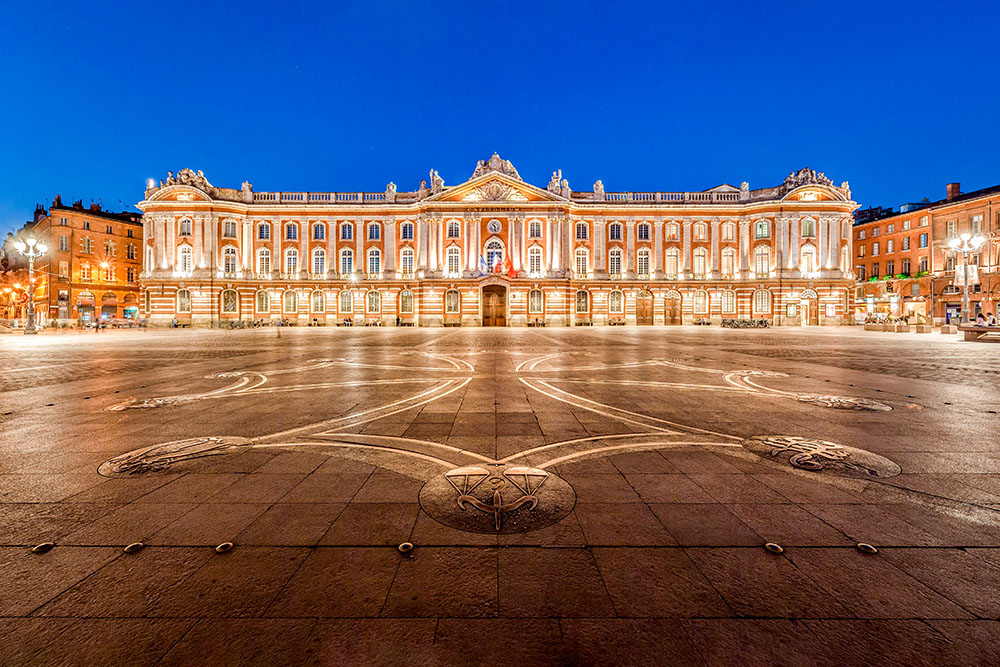
Toulouse Capitole. Photo by Benh LIEU SONG - licence [CC BY-SA 3.0] from Wikimedia Commons
The Capitole gives Toulouse's central square its monumental backdrop. Its façade is part of the city's everyday life rather than an isolated attraction. Look at it from across the square, then explore the surrounding streets to place the building within the wider city.
37. Saint-Front Cathedral, Périgueux

St Front Cathedral, Périgueux. Source: Depositphotos.com
Saint-Front's domes make it immediately distinctive among the cathedrals in this article. It offers a useful architectural contrast to the soaring Gothic buildings of northern France. Include it in a walk through Périgueux rather than approaching it as a completely separate stop.
38. Castillet, Perpignan

The Castillet, Perpignan. Source: Depositphotos.com
The red-brick Castillet is one of Perpignan's best-known landmarks. Its compact, fortified form gives it a different character from the grand gateways and triumphal monuments of larger cities. Look at how the surviving structure sits within the modern town around it.
39. Pont Valentré, Cahors

Valentré Bridge, Cahors. Source: Depositphotos.com
With its three fortified towers, the Pont Valentré is a distinctive medieval bridge across the Lot. Views from the riverbank help explain its structure, while a closer look reveals its defensive character. Allow time to see it within the river landscape as well as crossing it.
40. Monument aux Girondins, Bordeaux
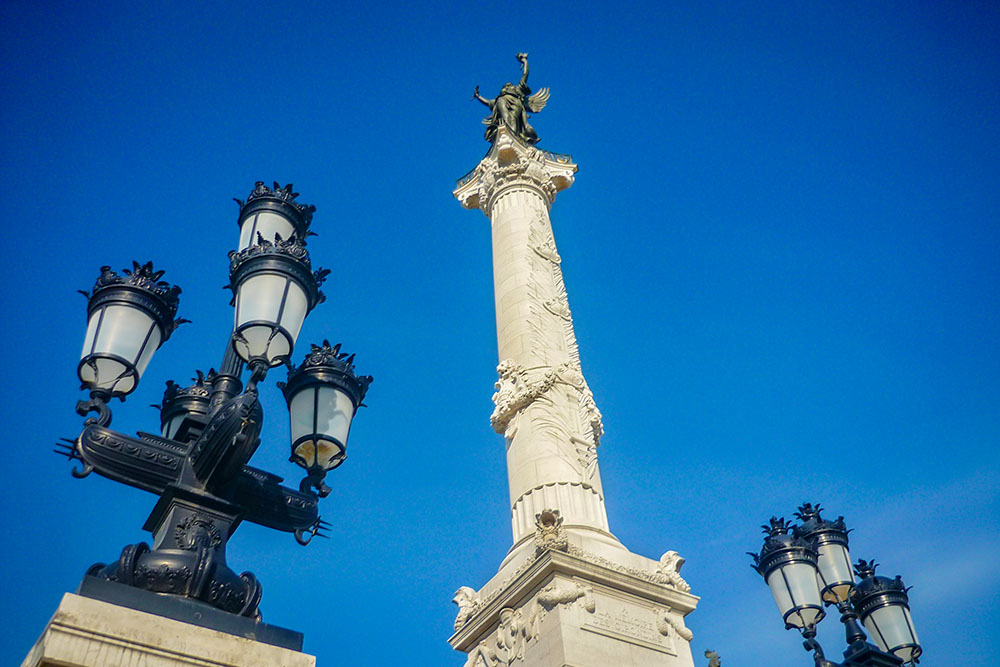
Monument aux Girondins, Bordeaux © French Moments
The Monument aux Girondins combines a tall column with elaborate fountains on the Esplanade des Quinconces in Bordeaux. It is worth looking at the sculpture at ground level before lifting your eyes to the figure above. The monument connects a major public space with the memory of the French Revolution.
Monuments in Provence, Lyon, the Alps and Auvergne
41. Arles Amphitheatre

Arles. Photo by PierreSelim - licence [CC BY 3.0] from Wikimedia Commons
Arles's amphitheatre belongs to the city's Roman heritage. Its arcades and setting among the streets make it a rewarding building to examine from outside as well as within.
42. Palais des Papes, Avignon

The famous Popes' Palace in Avignon © French Moments
The Palace of the Popes reflects Avignon's importance as a papal centre in the fourteenth century. Its imposing walls give the building a fortress-like presence. Consider it alongside the surrounding squares and streets to appreciate how strongly it shapes the historic city.
43. Roman Theatre of Orange

Orange Theatre © French Moments
Orange's Roman theatre is notable for its surviving stage wall. Compare its layout with an amphitheatre: the relationship between stage and audience is quite different. This is a useful place to understand that Roman entertainment buildings were designed for different kinds of performance.
44. Notre-Dame de la Garde, Marseille

Marseille. Photo: Grigory_bruev via Envato Elements
The basilica occupies a prominent hill above Marseille and is closely associated with the city's identity. Its setting matters as much as its decoration. Take time to relate the view to the harbour and the surrounding districts, rather than treating the panorama as an anonymous cityscape.
45. Trophy of Augustus, La Turbie

General view of La Turbie and the Trophy of Augustus © Berthold Werner - licence [CC BY-SA 3.0] from Wikimedia Commons
The Trophy of Augustus is a Roman monument above the Mediterranean coast. Its purpose was commemorative, making it a useful contrast to the aqueducts, theatres and temples elsewhere in this list. The setting at La Turbie also allows it to be combined with an exploration of the village.
46. Fourvière Basilica, Lyon
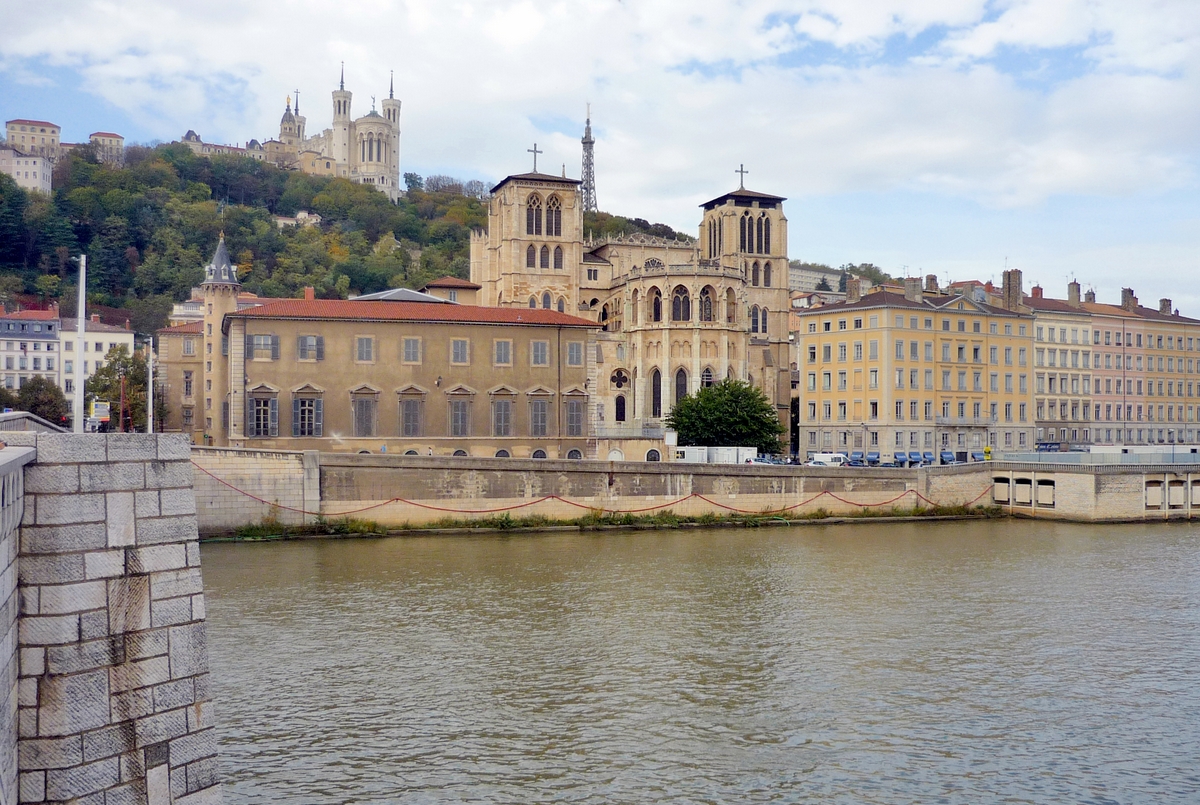
The cathedral and the Fourvière Hill from Pont Bonaparte, Lyon © French Moments
Fourvière Basilica overlooks Lyon from its hilltop setting. Its richly decorated architecture contrasts with the cathedral below in the old town: they are different buildings. Consider visiting the hill and the riverside districts together to understand the relationship between them.
47. Royal Monastery of Brou

Brou © French Moments
At Bourg-en-Bresse, Brou is known for its late Gothic architecture and carved tombs. It rewards close looking rather than a hurried glance at the exterior. Focus on a few details of the stone carving, then step back to see how they fit within the church.
48. Château of Vizille

Vizille Castle. Source: Depositphotos.com
Vizille brings together a château, park and the Museum of the French Revolution. It is a useful choice for visitors who want to connect an architectural setting with a particular period of history. Decide how to divide your time between the museum and the grounds.
49. Saint-Michel d'Aiguilhe

Le Puy-en-Velay. Source: Depositphotos.com
The chapel of Saint-Michel d'Aiguilhe stands on a volcanic rock beside Le Puy-en-Velay. Its extraordinary setting is clear from below, while reaching the chapel involves a climb. Check the access requirements before deciding whether the ascent suits everyone in your party.
50. Garabit Viaduct

Garabit Viaduct. Source: Depositphotos.com
The Garabit railway viaduct spans the Truyère valley with a great iron arch. It provides a fitting counterpart to the Eiffel Tower at the beginning of this selection: metal construction adapted to a very different landscape and purpose. Seek out a designated viewpoint to appreciate the whole structure.
How to choose which French monuments to visit
Fifty monuments are far too many for one holiday. I would use this selection to choose a region, then build a manageable itinerary around a few places that interest you most.
For a first stay in Paris, combine the city's monuments with a separate day for Versailles. In the Loire Valley, choose a small number of châteaux and leave room for their towns and gardens. In southern France, the Pont du Gard, Nîmes, Arles and Orange provide several ways to explore Roman architecture across a longer trip.
You can also organise a journey around a theme. Compare cathedrals at Reims, Strasbourg and Chartres; look at defensive architecture at Carcassonne, Besançon and Pierrefonds; or follow the history of engineering through the Pont du Gard, Briare, Garabit and Millau.
Before booking, check the official site for each monument. Opening arrangements, access to particular areas and ticket conditions can change. A photograph of a building does not tell you whether its interior is open, how many steps are involved or how long it takes to reach it.
For photography, allow time to walk around a monument where access permits. The view that explains the building best may be from across a river, another street or the edge of its grounds. A close-up of carved stone can tell a different story from a photograph of the whole façade.
A short English–French glossary
| English | French |
|---|---|
| Abbey | Abbaye |
| Amphitheatre | Amphithéâtre |
| Aqueduct | Aqueduc |
| Basilica | Basilique |
| Bridge | Pont |
| Castle / château | Château |
| Cathedral | Cathédrale |
| Church | Église |
| Lighthouse | Phare |
| Palace | Palais |
| Ramparts | Remparts |
| Stained glass | Vitraux |
Which monument would you add?
There is no single list that can do justice to the monuments of France. Which one has stayed in your memory, and which would you like to discover next? Let me know in the comments.
For more stories, photographs and discoveries from around the country, join me on Substack's French Moments.
Most of the photos published on this site are ours (© French Moments). However, I have selected some photos (including the Featured Image of this article) from Depositphotos, a commercial platform that brings authors of high-quality licensed stock photos, graphics, vectors and videos together with appreciative buyers.
I’m meant to be visiting Paris in Match for my annual trip – it’s my girlfriend’s 40th – but it looks like she’ll be going by herself (as a French national) whilst I rebook my Eurostar ticket again…
I forgot to mention, I’d love to visit the upstairs of Au Père Tranquille, opposite Forum Les Halles.
As a writer, to sit amongst the books and feel the historicity of the city would be an absolute dream
Thank you Johnnie, that’s a great place to be indeed! 🙂
Bonjour Pierre! This is a tough question since France is loaded with so many wonderful treasures. I think for me I would want to be in Paris and simply be a flaneuse in the LeftBank. I’d like to walk around and look through the windows of art galleries, old book shops, admire the architecture, buy a delicious pastry, and visit a garden or two. I would have a long pause at a terrace cafe for a drink and people watching. I am looking forward to the day when we can do these sorts of things again.
Flâner in the Left Bank of Paris is a GREAT idea!!
I would like to visit the French Basque Country and learn about their culture.
Yes! It’s a very beautiful corner of France!
Thank you for your posts.
All the way from Wollongong, Australia after COVID,. I would like to spend time in Annecy.
Also if you know anything about Auxerre I would be keen to here for you please.
I would like to attempt to spend 3 months in a small town so as to improve my language skills.
You’re welcome. I’ve never been to Auxerre but it is a place in Burgundy on my to-do-list! It’s a medium-sized town with a nice historic centre. If I manage to go there in the near future I will post on it! 🙂
If I am allowing myself to dream, I would love to live in France, preferably in Paris. I have a creative skill set: I write, draw, illustrate, do photo and video. So, ideally, I would live in Paris doing something creative. Is that possible? Or what would be the first steps to take? I think the first step would be to establish myself and willing to work any job. Anyway, may as well start the ball rolling. I know it would not be easy.
That’s a fantastic dream Henry… I guess your thought of establishing yourself first and look for any job opportunity is a great way to start. Unfortunately Paris is a very expensive place to live… unless you choose a smaller historic town in “la France profonde”.
June 6th of 2020 was our 50th anniversary and my husband and I had plans to spend it in Paris. We have been to France on a number of occasions and have loved everywhere we went, from Strasbourg, to Eze, Nice, Dijon, Beaune, Lyon and on. This time we had plans to tour Monet’s gardens in Giverny. So disappointing about the necessary delay but hopeful for a better 2021.
Oh, I do hope that during 2021 we’ll all be able to travel back to France… And yes, Giverny is a beautiful place!
Dreaming of Provence, was slated for Summer 2020….now looking ahead. Thank you for all of your great emails this year, has helped us keep the hopes alive 🙂
Paris Opera house tour at night. Chenonceau, Palais de Versailles, danse by river Seine, plage ou mon ancetre a left Dieppe, France in 1650. On a Friday afternoon, where Joan of Arc was imprisoned and burned at stake. To dine inside restaurant in that same city where Joan died, where Julia Child was inspired to cook. Anne is cooking at Monmartre, Paris. St. Malo, Valence Auberge ( central S France), Monet gardens for the afternoon. Building in Paris where Benny Hinn and David Herzog have hosted meetings. Jersey Island manoir of Charles Robin, plaque on St. Aubin about fishery business ties between Jersey Island and Gaspe. Jersey where daffodils grow in April. Chartres where saint Caron was killed by two robbers. Cathedral of Chartres. A business in South France where they make perfumes, I want to make some. Cobbled streets. A little downtown apartment in Paris I can rent and live or inherit from relatives. A house in France country with a big back yard where I can garden. Italy. Hot sunny days from a 2nd floor of a home in Italy. Rides on a motorbike in France. Driving in the countryside. Notre Dame Cathedral. Cathedral in Dieppe where my ancestor would have been baptised as a baby, same with Rouen but that one is maybe gone. Old flour mill. Vineyard. Fields of lavender and sunflowers, every kind of crop.
Knights templar of paris, what is left
Where would I like to be now?
Exploring the Bordeaux wine estates and chateaux OR having lunch in one of the Paris brasseries.
Thanks for all your efforts this year – and we look forward to more exploration and discoveries in 2021,.
It was very upsetting to have our trip to France cancelled early in 2020 We are from Australia and international travel is not allowed at the moment but, hopefully, mid 2021.
Anyway. I realise that your favourite areas are in Northern France but I have to mention that my favourite area in France is the Languedoc. We stayed in Pezenas (best Saturday markets in France) in 2007 for the World Cup and I fell in love with Pezenas and the surrounding districts. It is only 1/2 hour from Cap D’Agde ad Sete and the best oyster area next to Cancale , a town called .Bouziques. A day’s trip can easily include Carcassonne, Aigues Mortes, Nimes, Arles and many other villages in Provence so I can thoroughly recommend the Pezenas area for a holiday..
Last time in France I found, with 3 friends, a real treat. The town of Troyes just one hour by train from Paris. And it’s a different time period.
I love Lyon too and the bird sanctuary on the Camargue with the pink flamingos!!