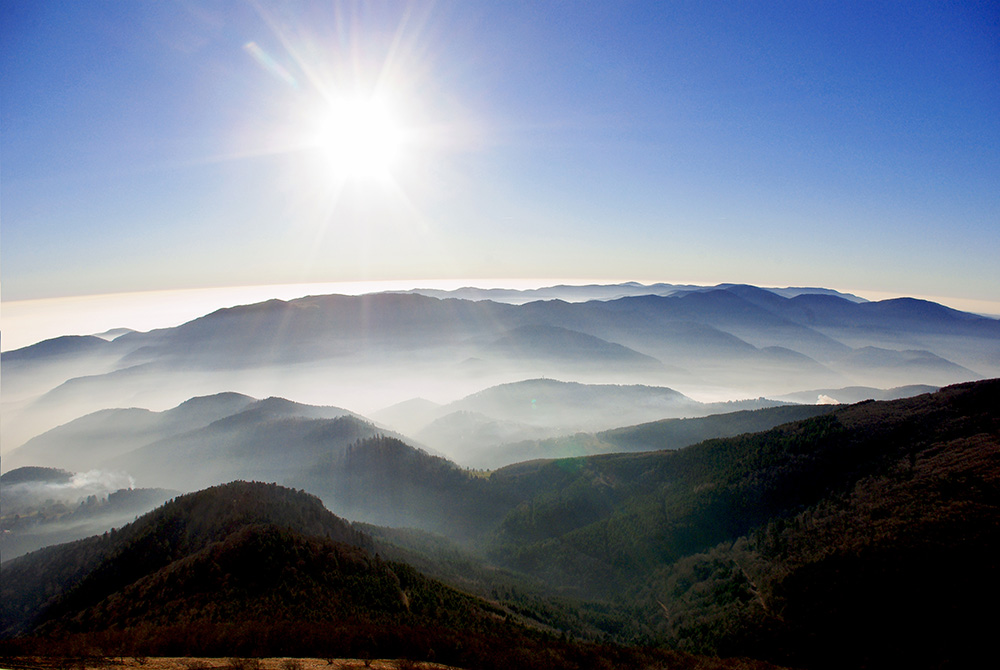


The Thur Valley is one of those Alsatian valleys you think you know because you have driven through it. Classic mistake.
You follow it up from the plain, pass Thann, then Saint-Amarin, then Kruth, and eventually realise that this valley is not simply a road into the Vosges. It is a world of its own.
Together with its neighbour, the Doller Valley, it was, for me, the quintessential Vosges valley when I lived in southern Alsace as a teenager. Almost every week, we would go hiking on the heights: sometimes towards the Thanner Hubel, the Rossberg or the Lac des Perches; sometimes towards the Molkenrain, the Grand Ballon or the high pastures.
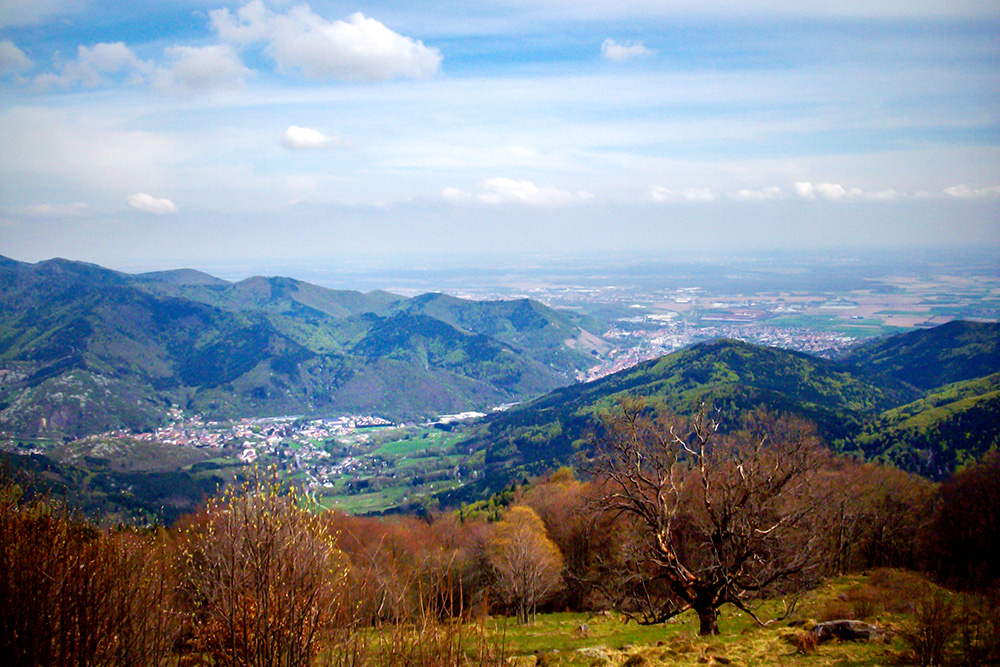
Thur Valley © French Moments
At the time, I did not have a camera. A serious strategic mistake, especially when you grow up surrounded by landscapes like these. The images therefore remained more in my memory than in my archives.
The Thur Valley is all of this at once: a river, villages, ancient history, a textile adventure, routes of passage, major tourist sites and magnificent access to the Alsatian High Vosges.
Where is the Thur Valley?
The Thur Valley is located in the Haut-Rhin, in southern Alsace, between the Doller Valley to the south and the Lauch Valley to the north.
It forms one of the great natural corridors that lead from the Alsace Plain into the High Vosges. From Cernay and Thann, the valley pushes westwards towards Saint-Amarin, Oderen, Kruth, Wildenstein, and then towards the passes and ridges.
This gradual progression is part of its appeal. You do not move abruptly from lowland Alsace into the mountains. The valley prepares the eye. Little by little, it narrows the landscape, brings the slopes closer, darkens the forests, and then opens the gateway to the high pastures.
![La Thur à Kruth © Railwayfan2005 - licence [CC BY-SA 4.0] from Wikimedia Commons](https://frenchmoments.eu/wp-content/uploads/2026/07/River-Thur-at-Kruth-©-Railwayfan2005-licence-CC-BY-SA-4.0-from-Wikimedia-Commons.jpg "River Thur at Kruth © Railwayfan2005 - licence [CC BY-SA 4.0] from Wikimedia Commons")
River Thur in Kruth © Railwayfan2005 - licence [CC BY-SA 4.0] from Wikimedia Commons
The Thur Valley between Wildenstein and Thann
In this article, I am focusing mainly on the Vosges section of the Thur Valley, between Wildenstein and Thann.
This is where the valley takes on its most mountainous character. Upstream, towards Kruth and Wildenstein, you are already in the atmosphere of the High Vosges. Downstream, towards Thann, the valley gradually opens towards the Alsace Plain, the vineyards and the Mulhouse area.
Thann therefore acts as the gateway. Wildenstein, by contrast, gives the impression of being at the end of the valley, on the threshold of the mountains.
![Bassin Versant de la Thur © Rémiparmentelat - licence [CC BY-SA 4.0] from Wikimedia Commons](https://frenchmoments.eu/wp-content/uploads/2026/07/Bassin-Versant-de-la-Thur-©-Remiparmentelat-licence-CC-BY-SA-4.0-from-Wikimedia-Commons.jpg "Bassin Versant de la Thur © Rémiparmentelat - licence [CC BY-SA 4.0] from Wikimedia Commons")
Thur Watershed © Rémiparmentelat - licence [CC BY-SA 4.0] from Wikimedia Commons
The River Thur, from the Vosges to the Ill
The Thur rises in the Vosges at an altitude of 1,195 metres, on the heights above Wildenstein, before descending the valley and joining the Ill near Ensisheim.
![Source de la Thur © Rémih - licence [CC BY-SA 4.0] from Wikimedia Commons](https://frenchmoments.eu/wp-content/uploads/2026/07/Source-de-la-Thur-©-Remih-licence-CC-BY-SA-4.0-from-Wikimedia-Commons.jpg "Source de la Thur © Rémih - licence [CC BY-SA 4.0] from Wikimedia Commons")
Source of the Thur at an altitude of 1,195 metres © Rémih - licence [CC BY-SA 4.0] from Wikimedia Commons
As often in the Vosges valleys, the river gives unity to the territory. Without it, the communes would simply be lined up between mountain and plain. With it, they form a story unfolding along the water.
The Thur has shaped the landscapes, accompanied the villages, powered human activity and played an important role in the industrialisation of the valley. It is therefore not merely a river. It is the backbone of the place.
Thur Valley, Saint-Amarin Valley or Thann Valley?
The names can sometimes be confusing.
We speak of the Thur Valley to refer to the whole valley followed by the river. But the expressions Saint-Amarin Valley and Thann Valley are also used, depending on the section.
The Saint-Amarin Valley, the mountain heart
The Saint-Amarin Valley generally refers to the upper, more mountainous part.
It includes Saint-Amarin, of course, but also Moosch, Malmerspach, Ranspach, Husseren-Wesserling, Fellering, Oderen, Kruth and Wildenstein. Here, the mountains are more present. Roads climb towards Le Markstein, the Grand Ballon, the Lac de Kruth-Wildenstein and the high pastures.
It is a valley of forests, slopes, former factories, tightly packed villages and hiking trailheads.
The Thann Valley, the gateway
The Thann Valley generally refers to the lower section, around Thann, Vieux-Thann and Cernay.
This is where the valley meets the Alsace Plain. Thann occupies a remarkable position: mountain town, historic town, gateway to the Vosges and point of contact with the Alsatian vineyards all at once.
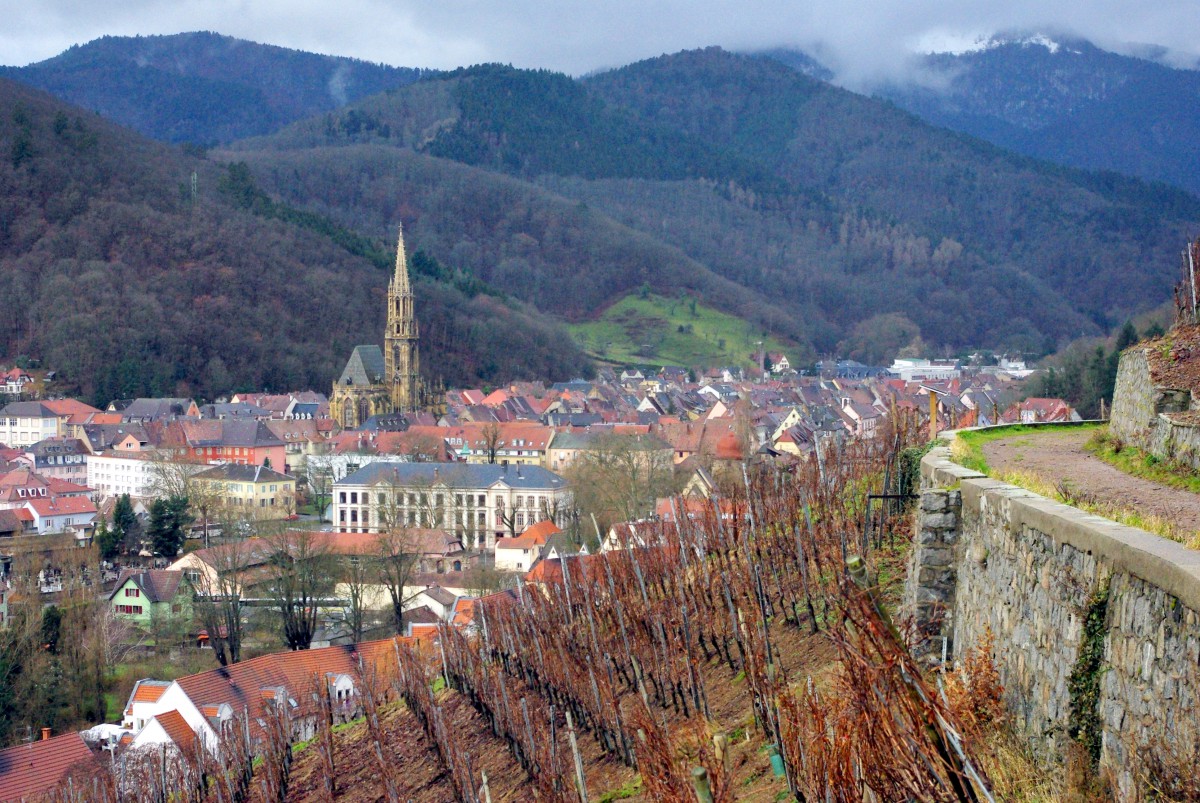
Thann at the entrance to the Thur Valley © French Moments
Few towns announce a valley so well. With its Collegiate Church of Saint-Thiébaut, Thann does not merely open the road: it sets the tone.
The Thur Valley, an old route of passage
The Thur Valley has also played an important role as a route of passage.
Via the Col de Bussang, it connects Alsace with Lorraine, and more broadly with the routes leading towards north-western Europe. It is no coincidence that this valley has long been a corridor of movement, trade, industry and contact.
You can still sense this today when you travel up the valley. It is not only a tourist valley. It remains a valley of passage, with a real function linking plain, mountain and neighbouring regions.
The communes of the Thur Valley
The Thur Valley cannot be reduced to a single place. It is best understood through its communes, each of which brings its own nuance.
Thann marks the entrance. Bitschwiller-lès-Thann and Willer-sur-Thur announce the climb towards the interior of the valley. Moosch, Saint-Amarin, Ranspach, Husseren-Wesserling, Fellering, Oderen, Kruth and Wildenstein then give the valley its more Vosges character.
These are not always postcard villages like those on the Alsace Wine Route. Here, Alsace is more mountainous, sometimes more industrial, and also more discreet.
But that is precisely what makes it interesting.
Thann, the great gateway
Thann is one of the most beautiful gateways to the Alsatian Vosges.
Its Collegiate Church of Saint-Thiébaut, visible from afar, immediately gives the town a monumental dimension. You arrive from the plain, and suddenly the mountain begins.
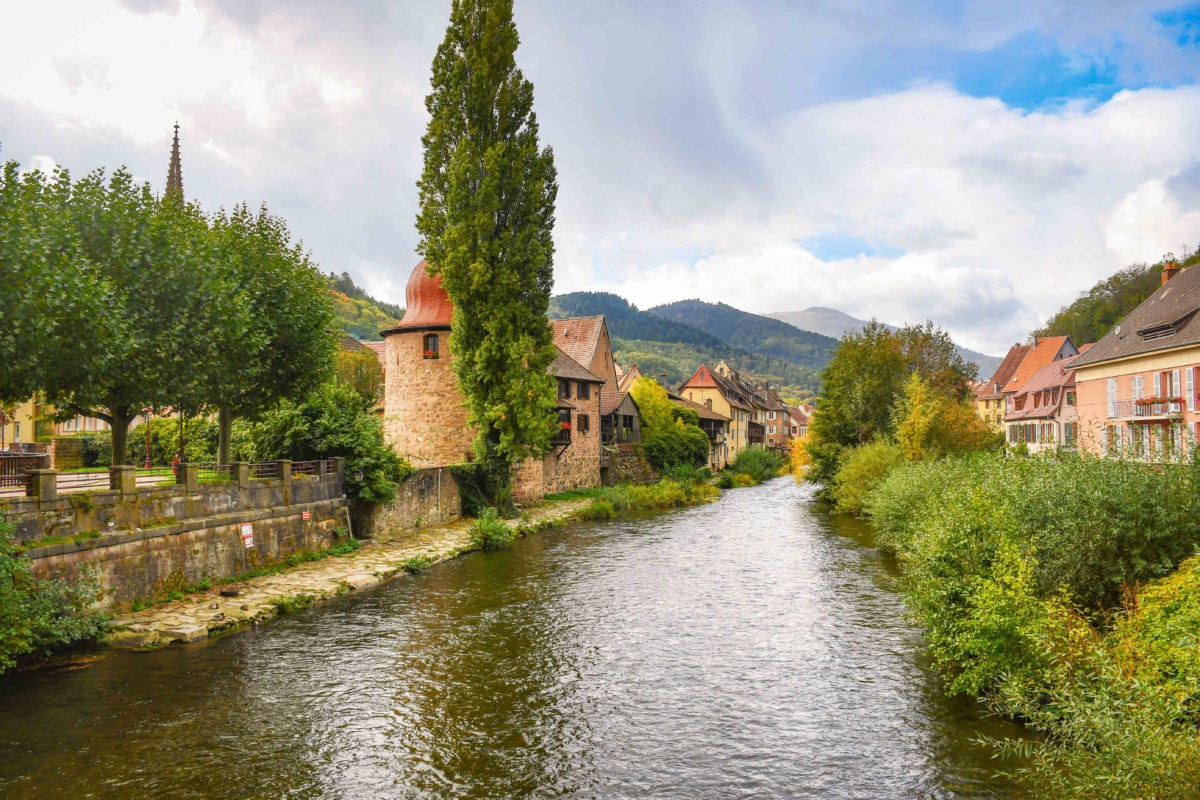
Thann beside the Thur © French Moments
Thann is Alsatian, Vosges and wine-growing all at once. It has that rare position between vineyards, river and relief. It is a threshold town, and threshold towns always have something special about them: they look in two directions at once.
Saint-Amarin and the villages of the upper Thur Valley
Higher up the valley, Saint-Amarin plays the role of a historic and local centre.
![Saint-Amarin. Photo by Patschw [Public Domain via Wikimedia Commons]](https://frenchmoments.eu/wp-content/uploads/2026/07/Saint-Amarin.-Photo-by-Patschw-Public-Domain-via-Wikimedia-Commons.jpg "Saint-Amarin. Photo by Patschw [Public Domain via Wikimedia Commons]")
Saint-Amarin. Photo by Patschw [Public Domain via Wikimedia Commons]
The upper valley has a different atmosphere from Thann. The villages are closer to the slopes. The industrial heritage can still be sensed. Hiking routes multiply. You feel that the ridges are not far away.
Oderen, Kruth and Wildenstein already evoke another world: deep forests, lakes, mountain passes and roads climbing towards the heights.
The history of the Thur Valley
The Thur Valley has a rich history, but it has not always formed a single homogeneous territory.
A valley between Murbach and the Habsburgs
The upper valley, around Saint-Amarin, was long linked to the influence of the Abbey of Murbach, one of the great religious and seigneurial powers of Alsace.
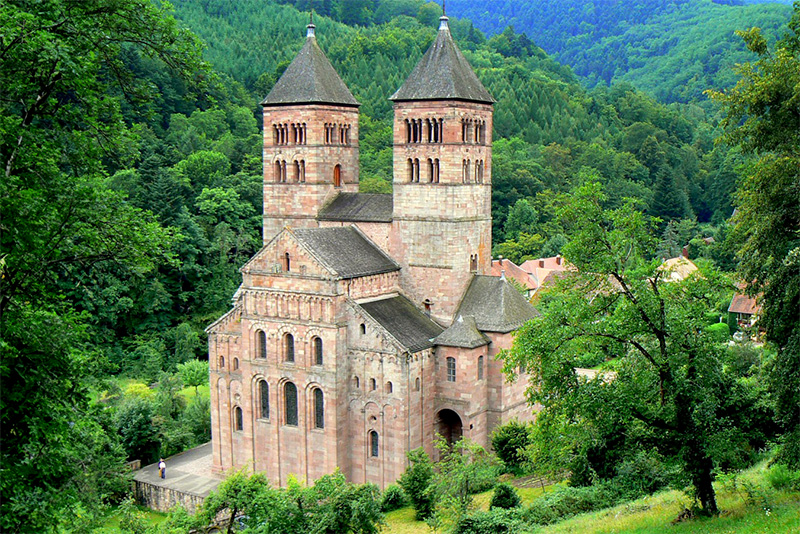
The abbey of Murbach © French Moments
Thann, for its part, belongs more closely to the history of the Habsburgs and Upper Alsace.
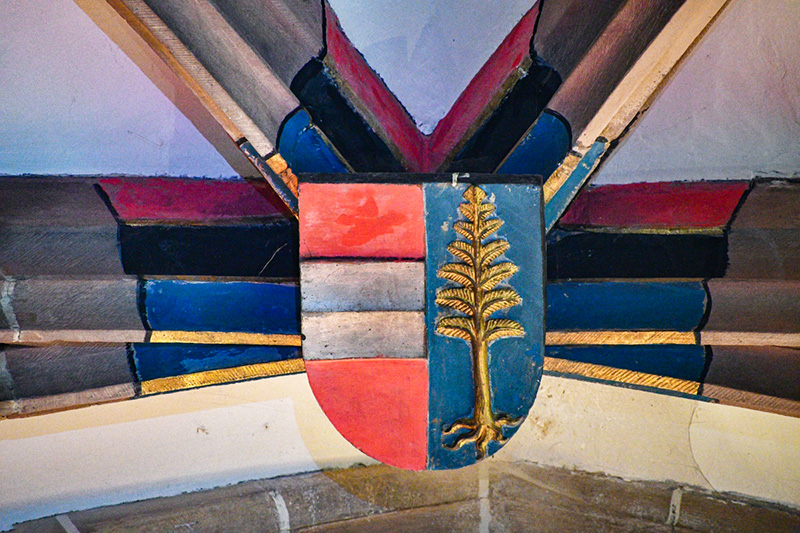
The coat of arms of Thann on a keystone in the collegiate church © French Moments
This shows clearly that the valley has not always been a simple administrative unit. It has been shaped by different allegiances, varied powers, and complex political and economic logics.
Beneath its appearance as a peaceful valley, the Thur therefore carries a history of borders, influences and authority.
From rural world to textile valley
From the modern period onwards, and especially with industrialisation, the valley changed profoundly.
Textiles played a major role in this transformation. Water, communication routes, labour and proximity to Mulhouse encouraged the development of manufactures and industrial activity.
This history has left visible traces in the landscape: buildings, workers’ housing, converted industrial sites and social memory. The Thur Valley is not only a mountain valley. It is also a workers’ and industrial valley.
And that gives it an identity very different from valleys that are purely tourist-oriented.
What to see in the Thur Valley
The Thur Valley offers several major sites to discover, as well as landscapes that reveal themselves gradually.
The Lac de Kruth-Wildenstein
At the very end of the valley, the Lac de Kruth-Wildenstein forms one of the great water landscapes of the Alsatian Vosges.
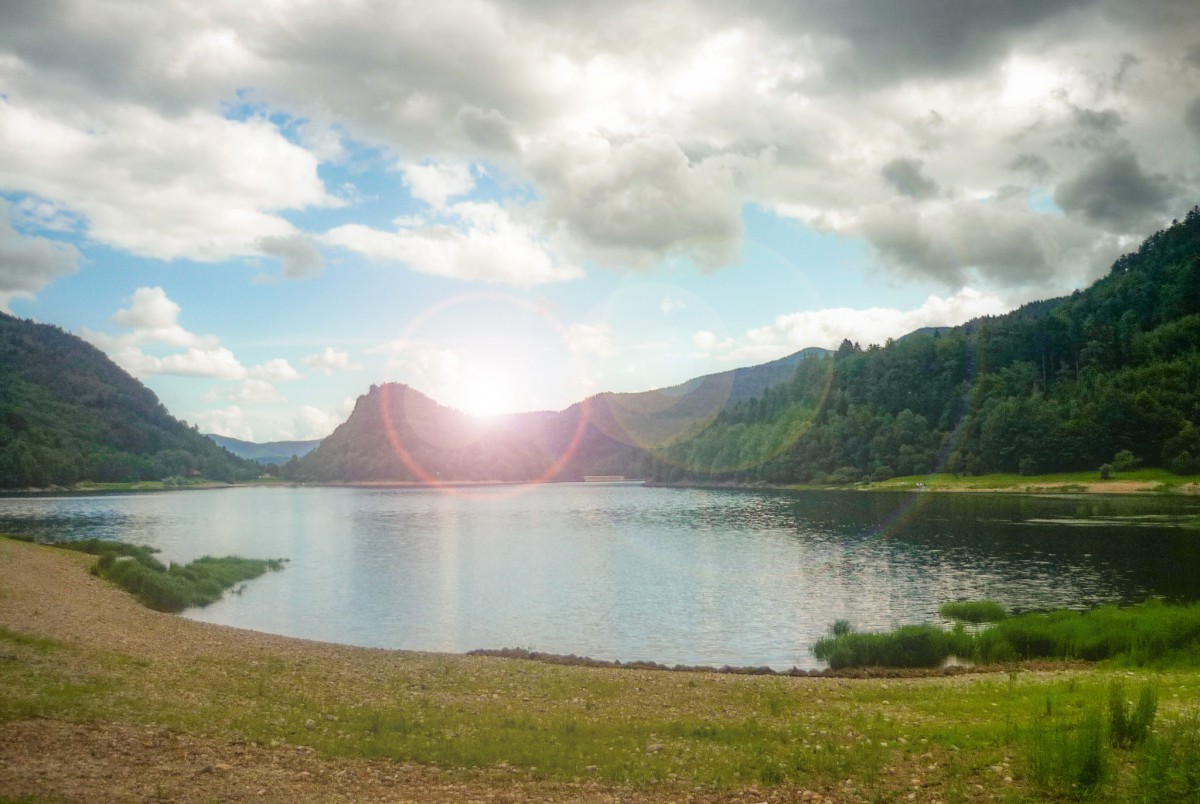
Lac de Kruth-Wildenstein © French Moments
It is a reservoir, but its setting feels deeply natural: water, forests, steep slopes and roads climbing towards the heights. It deserves a visit in its own right, and indeed a full article of its own.
For me, it represents one of the most spectacular gateways to that mountain side of Alsace which is sometimes forgotten when the region is reduced to vineyards and half-timbered houses.
The Parc de Wesserling, between textile heritage and gardens
Already mentioned for its role in the valley’s textile history, the Parc de Wesserling also deserves a visit in its own right.
![Jardins de Wesserling © Parcdewesserling - licence [CC BY-SA 4.0] from Wikimedia Commons](https://frenchmoments.eu/wp-content/uploads/2026/07/Jardins-de-Wesserling-©-Parcdewesserling-licence-CC-BY-SA-4.0-from-Wikimedia-Commons.jpg "Jardins de Wesserling © Parcdewesserling - licence [CC BY-SA 4.0] from Wikimedia Commons")
Jardins de Wesserling © Parcdewesserling - licence [CC BY-SA 4.0] from Wikimedia Commons
Set on the site of a former textile manufacture, it brings together industrial heritage, workers’ memory, a textile museum and gardens. It is one of the most interesting places for understanding how the valley has changed over the centuries.
It is not merely a place to visit “when it rains”, as people sometimes say of museums. It is a true summary of the valley: industry, landscape, creativity, transmission and regeneration.
The Grand Ballon, Le Markstein and the high pastures
From the Thur Valley, it is easy to reach the wide open spaces of the High Vosges.
The Grand Ballon, the highest summit in the Vosges massif, dominates the sector. Le Markstein is a well-known mountain crossroads: a resort, a point of passage, a hiking area and a venue for major sporting events all at once.
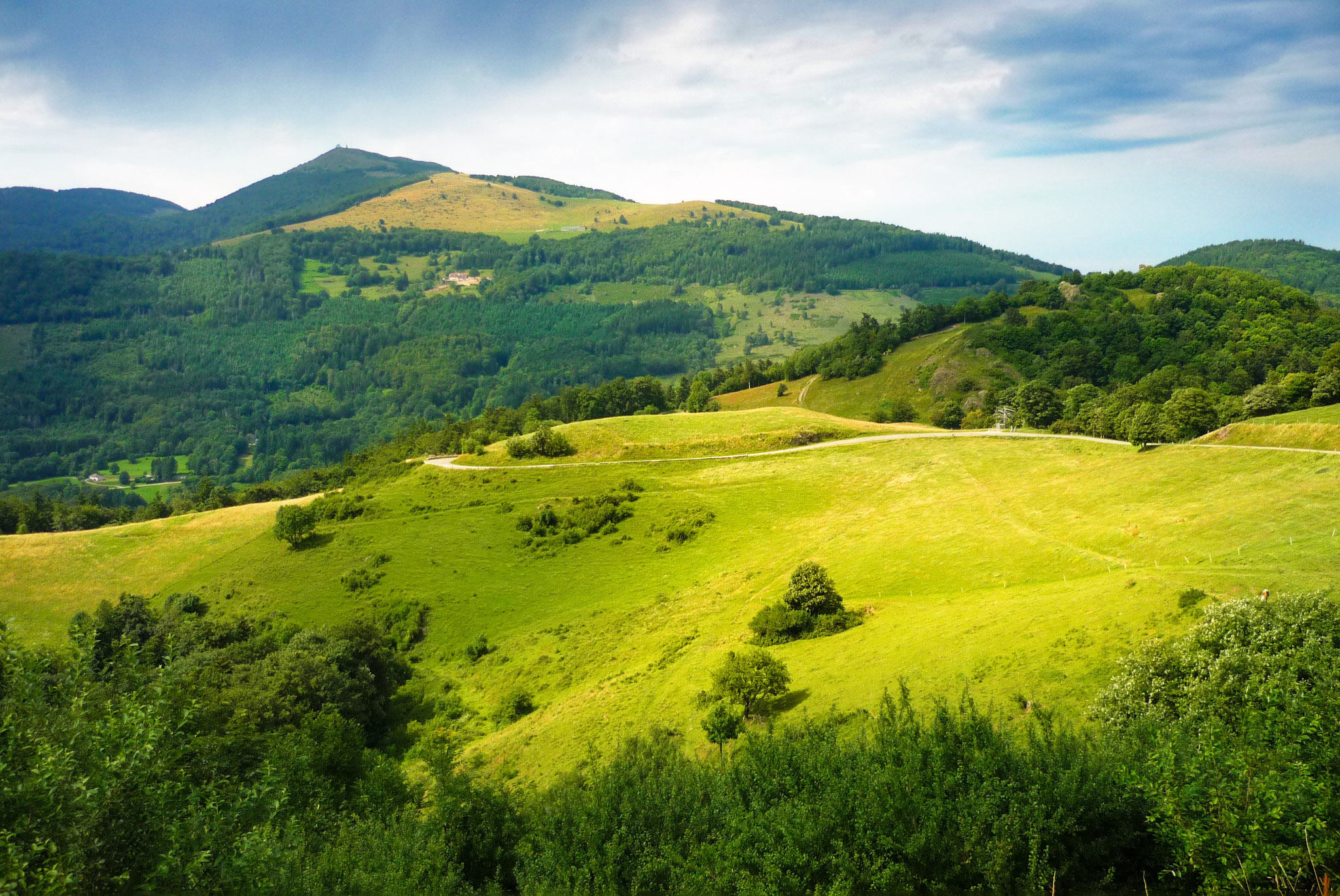
Grand Ballon © French Moments
And then there are the high pastures (Hautes-Chaumes), those open upland landscapes that give the Vosges so much of their charm: meadows, ridges, winds, distant views, farm inns and paths that always seem to invite you to go a little further.
Hiking in the Thur Valley
Hiking is one of the finest ways to understand the Thur Valley.
You can walk in the valley floor, of course, but it is often by gaining height that the landscape reveals its real strength.
My hiking memories in the Thur Valley
For me, the Thur Valley is inseparable from the family hikes of my teenage years.
Almost every week, we would head into the Vosges. On one side, there were the Thanner Hubel, the Rossberg and the Lac des Perches. On the other, the Molkenrain, the Grand Ballon and the ridges overlooking the valley.
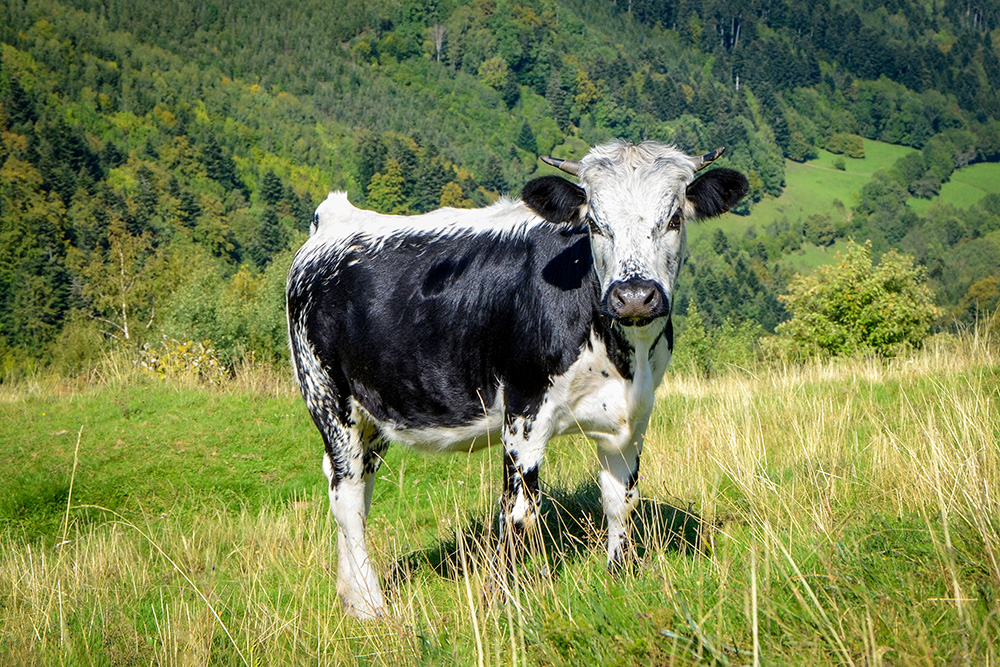
The Vosges cow - la Vosgienne © French Moments
These names are not simply geographical markers. They evoke Sundays, forest paths, summit breaks, picnics, sudden views over the Alsace Plain and, sometimes, that happy tiredness only good trails can offer.
The high pastures above the Thur Valley
The high pastures are one of the valley’s great treasures.
They give a sense of space and freedom that you do not always expect in the Vosges. After the climb through the forest, the landscape suddenly opens. The trees become fewer, the wind arrives, and the views widen.
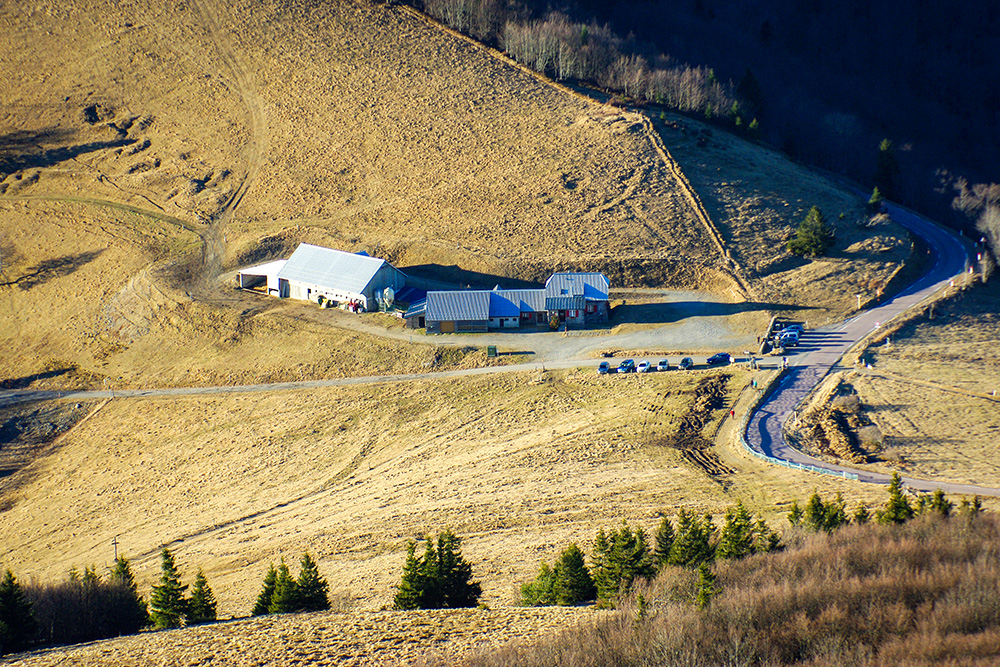
Col du Haag © French Moments
This is where the Vosges almost become aerial. You do not need Alpine altitudes to feel the mountains. Sometimes all it takes is a path, an open pasture, a clear horizon and a good sandwich in your rucksack.
The Thur Valley by bike and the Tour de France
The Thur Valley is also an important area for cycling.
The Thur Valley, gateway to the Vosges climbs
The valley gives access to several major cycling areas in the Vosges: the Grand Ballon, Le Markstein, the Hundsruck, the Col de Bussang, and the roads that climb towards the ridges.
For cyclists, it is both an approach valley and a valley of effort. The slopes are never far away, and a gentle ride can quickly take on a much more serious character.
In the Vosges, the roads know how to appear friendly. Then they rear up. It is something of a speciality.
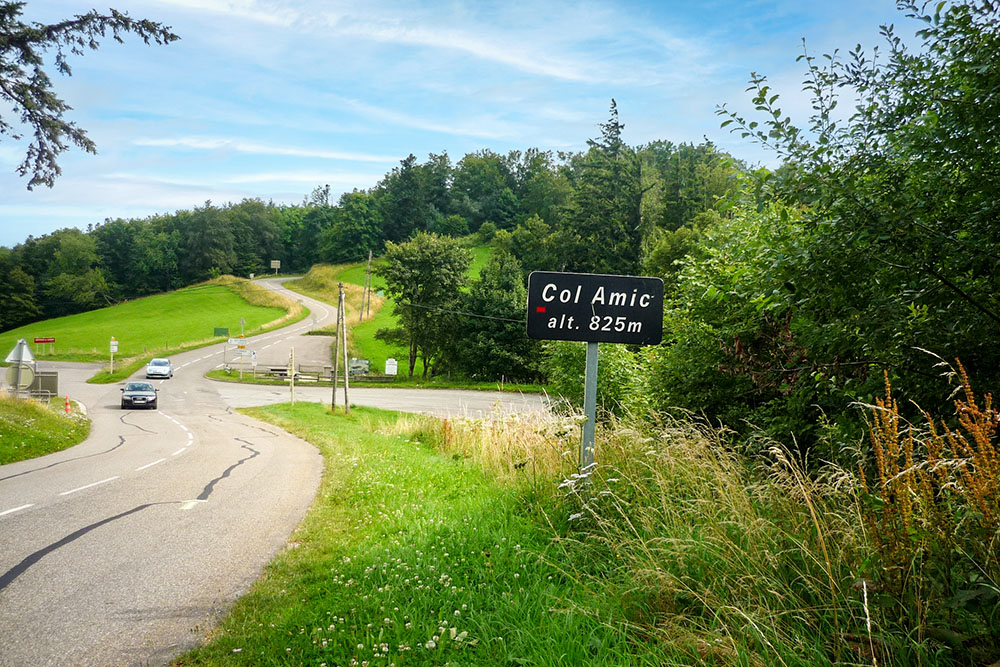
Col Amic, Vosges © French Moments
The Tour de France 2026 in the Thur Valley
In 2026, the Tour de France will once again put the Thur Valley and the High Vosges in the spotlight with the Mulhouse – Le Markstein Fellering stage.
This mountain stage will pass through several major climbs in the massif and finish at Le Markstein. For television viewers, it will be a fine showcase for the Vosges landscapes. For the riders, it will probably be a rather different story.
The Thur Valley does not need the Tour to exist. But when the Grande Boucle passes through, it reminds all of France that the Vosges can be magnificent… and formidable.
My view of the Thur Valley
The Thur Valley holds a very special place for me.
It belongs to those familiar landscapes you think you possess because you have travelled through them so often. Then, years later, you realise that you are missing photos, traces, precise images.
When I hiked there as a teenager, I did not think about documenting those outings. I simply lived them. That was already a great deal. But today, I sometimes wish I could find more photos of those ridges, those paths, those high pastures and those views over the valley.
Fortunately, a few royalty-free images help illustrate this article. But it is not quite the same.
During my most recent stay in Alsace, based in Turckheim, I would have loved to return to the Thur Valley. Time ran out. It is always the same: you think you have several days ahead of you, and then the diary collapses like a soufflé taken out of the oven too early.
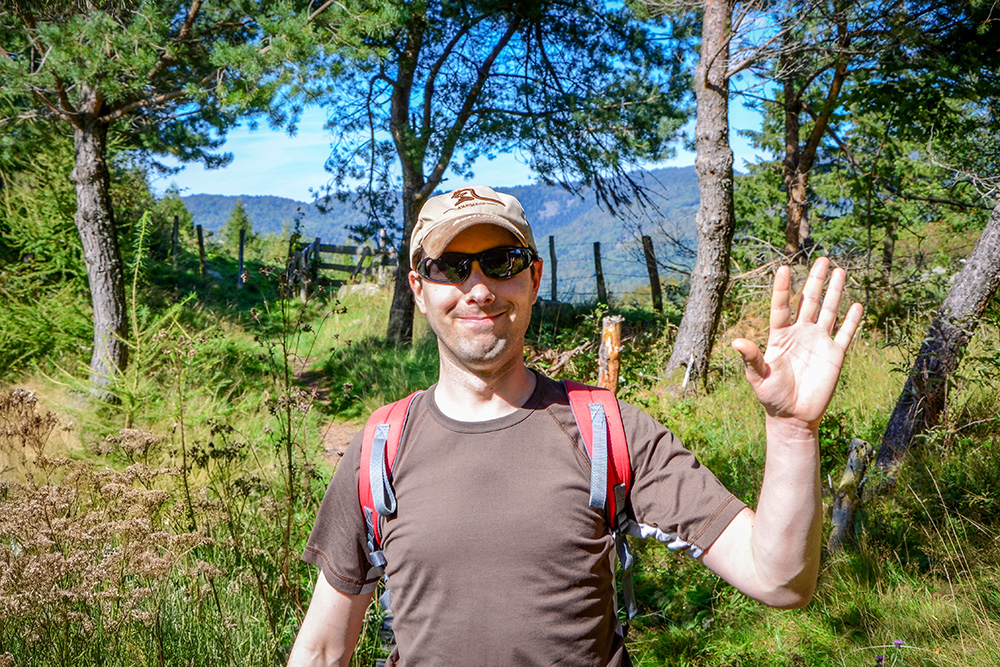
Me walking in the Vosges © French Moments
So I shall have to go back. This time, with my camera.
Because the Thur Valley deserves more than a simple memory. It deserves to be explored again, looked at carefully, photographed and told.
It is one of the great valleys of the Alsatian High Vosges: a valley of rivers and roads, villages and factories, lakes and ridges, textile heritage and hiking trails.
A valley that does not reveal itself completely at first glance.
But when you take the time to follow it upstream, understand it and walk on its heights, it reveals one of the most beautiful facets of mountain Alsace.