Renting a car at Geneva Airport is a practical option if you want to explore Haute-Savoie beyond Annecy, including the mountains, villages and lakes surrounding the city.
Annecy is often the first destination that comes to mind. With its canals, colourful old town and beautiful lakeside setting, it is easy to understand why the city is sometimes called the “Venice of the Alps”. But Annecy is only one part of the story. Once you leave the town, the landscape quickly changes. Within a relatively short drive, you can find yourself on a mountain plateau, beside Lake Geneva or in a quiet village with the Alps in the background.
I have spent time in the Annecy region and have explored several of its most attractive destinations, including Talloires, La Roche-sur-Foron and the shores of Lake Geneva.
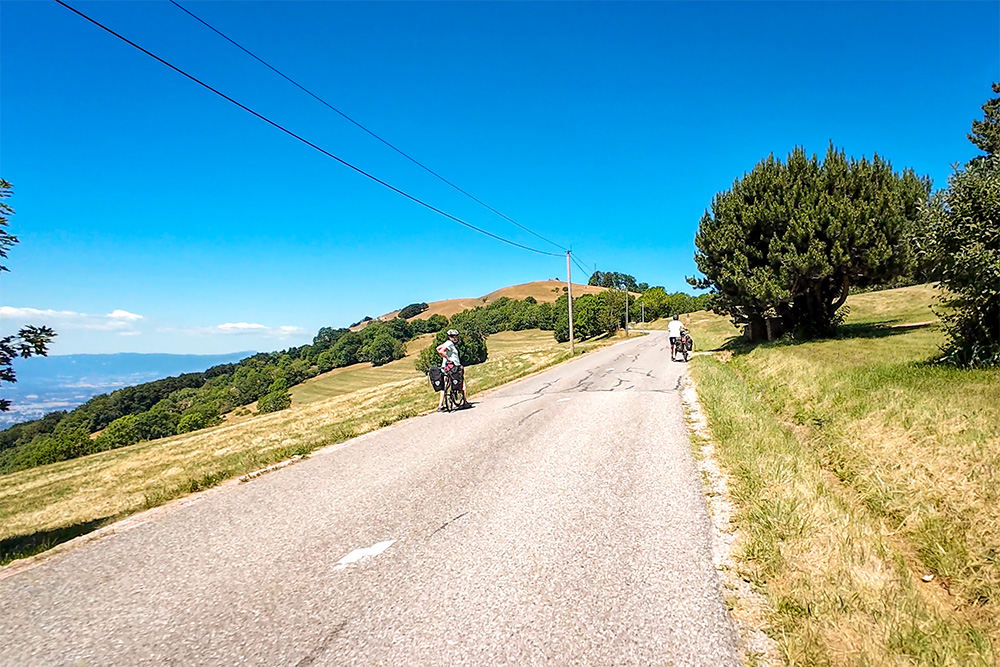
A few metres from Col de la Croisette © French Moments
Talloires remains one of my favourite places around Lake Annecy, particularly outside the busiest summer weeks. La Roche-sur-Foron, meanwhile, offers a very different experience, with its medieval centre and mountain setting between Annecy, Geneva and Chamonix.
This is why I would not plan a trip around Annecy as though the city were the only destination. A rental car gives you the freedom to combine a lakeside stay with mountain scenery, historic towns and some of the quieter corners of Haute-Savoie.
In this article, I suggest a flexible road trip beginning at Geneva Airport and extending through Chamonix, Annecy, Lake Annecy, the Plateau des Glières, La Roche-sur-Foron and the French shore of Lake Geneva. I also share practical advice about choosing a rental car, driving on mountain roads, finding parking and organising your days at a comfortable pace.
You do not need to follow the itinerary exactly. In fact, I would advise against trying to see everything too quickly. The pleasure of travelling through Haute-Savoie often lies in having enough time to stop at a viewpoint, take a short detour or linger in a village that was not originally on the plan.
Why Rent a Car at Geneva Airport for a Haute-Savoie Road Trip?
Geneva Airport is a convenient gateway to the French Alps. For many international visitors, it is easier to reach than the smaller airports in the region, and it places several very different destinations within reach of one road trip.
A car is particularly useful if you want to visit places that are not connected by frequent public transport. Chamonix, the Plateau des Glières, the Plateau des Bornes and the villages around Lake Annecy are all more easily combined when you are not dependent on bus timetables.
There is also a simple practical advantage. Haute-Savoie is a region of contrasts, and each change of landscape takes time. One morning, you might be admiring Lake Annecy from the Col de la Forclaz. Later that day, you could be walking through the medieval streets of La Roche-sur-Foron or looking across Lake Geneva from Yvoire.
A rental car makes this variety possible, but it does not mean that you should spend the whole holiday behind the wheel. Annecy itself is best explored on foot, and some of the most enjoyable moments on a road trip happen after parking the car and slowing down.
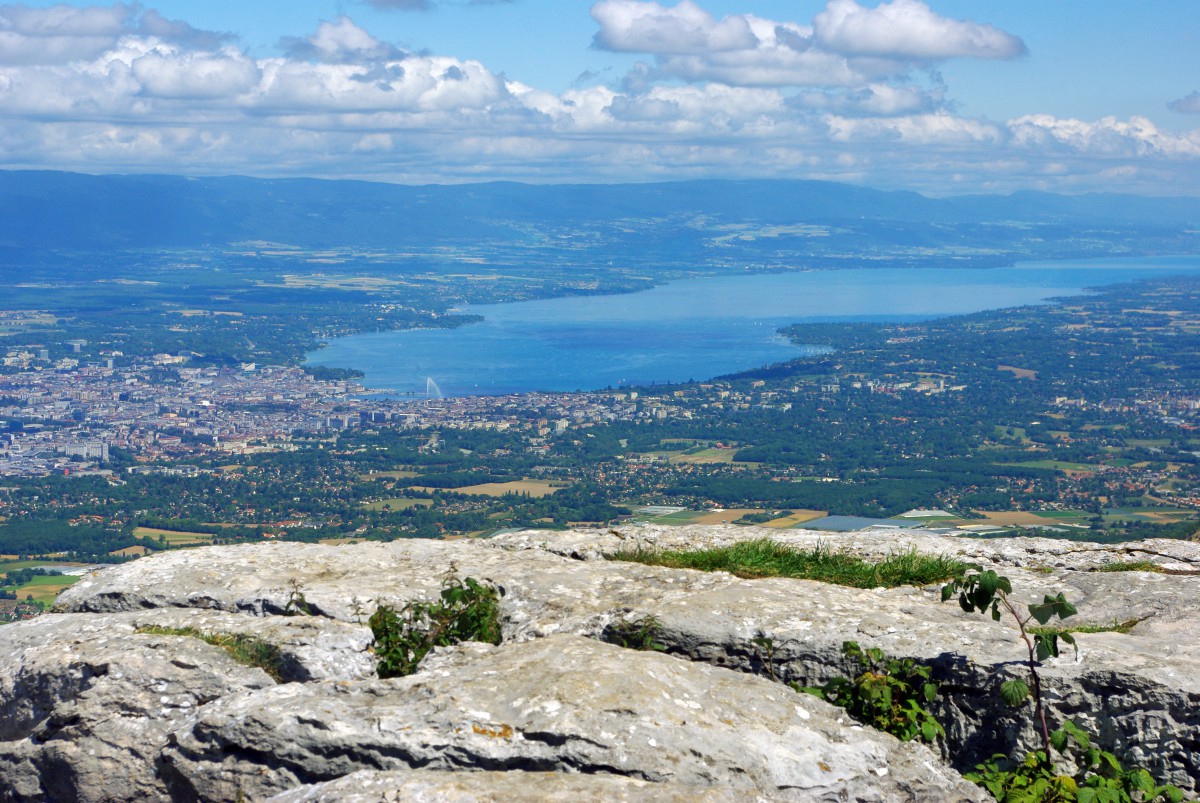
Lake Geneva from the Salève mountain © French Moments
Renting a Car at Geneva Airport: How Many Days Should You Allow?
If you are renting a car at Geneva Airport to follow the whole itinerary, I would allow at least a week.
You could shorten it to five days by concentrating on Chamonix, Annecy and the surrounding lake, but that would leave little time for the northern part of Haute-Savoie.
With seven or eight days, the journey becomes more relaxed. You can spend a couple of nights around Annecy, include a mountain excursion and then continue towards Lake Geneva. This also gives you some flexibility if the weather changes — which it can do rather quickly in the Alps.
The route below is best seen as a framework rather than a strict schedule. You might decide to stay longer in Annecy, remove one of the mountain stops or spend a night near Thonon-les-Bains or Évian-les-Bains. There is no prize for ticking every destination off a list.
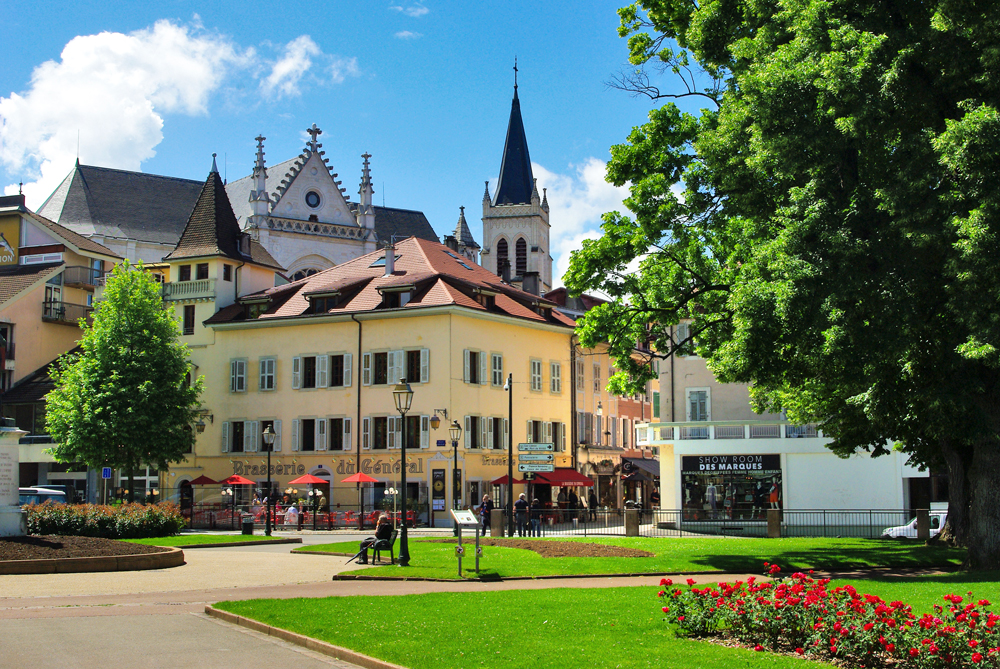
Thonon-les-Bains © French Moments
My Suggested Itinerary After Renting a Car at Geneva Airport
Day 1: Geneva Airport to Chamonix
After collecting your rental car at Geneva Airport, Chamonix makes a memorable first stop. The drive takes you towards the higher Alps, where the scenery becomes increasingly dramatic as you approach the Mont Blanc massif.
Chamonix is one of those places whose reputation precedes it. It is famous, busy and undeniably touristy, but the setting is difficult to dismiss. Surrounded by some of the highest peaks in Europe, the town has a sense of scale that you do not experience around Lake Annecy.
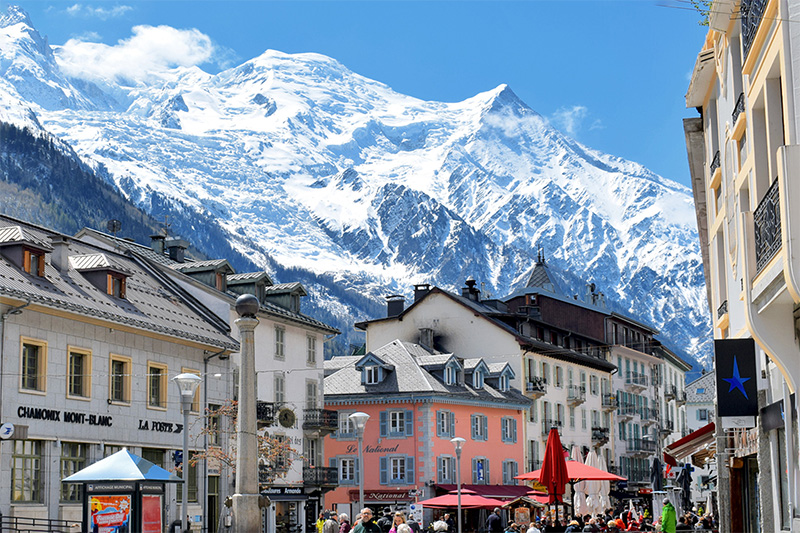
Chamonix © French Moments
I would plan to arrive with enough time to explore the town and enjoy the mountain views rather than treating Chamonix as a quick photo stop. Depending on the season, you might take a mountain excursion, walk along the river or simply find a quiet terrace away from the busiest streets.
Parking and traffic require a little patience, especially during the summer months. It is worth checking your accommodation’s parking arrangements before you arrive. A smaller rental car can also be an advantage here, particularly if you intend to continue into smaller mountain villages.
If the weather is poor, do not be too disappointed. Mountain scenery can disappear behind cloud, but Chamonix remains an attractive place to explore. And, of course, the weather may change by the following morning.
Day 2: From Chamonix to Annecy
The next stage takes you from the high mountains towards Annecy and its lake. This is not a day to rush. The journey itself is part of the experience, and there will be plenty of opportunities to stop for coffee, photographs or a short walk.
Once you reach Annecy, I would leave the car parked and explore the centre on foot. The old town is compact enough to discover without driving from one attraction to another. Its canals, arcades and narrow streets are best enjoyed slowly, especially in the early evening when many day visitors have left.
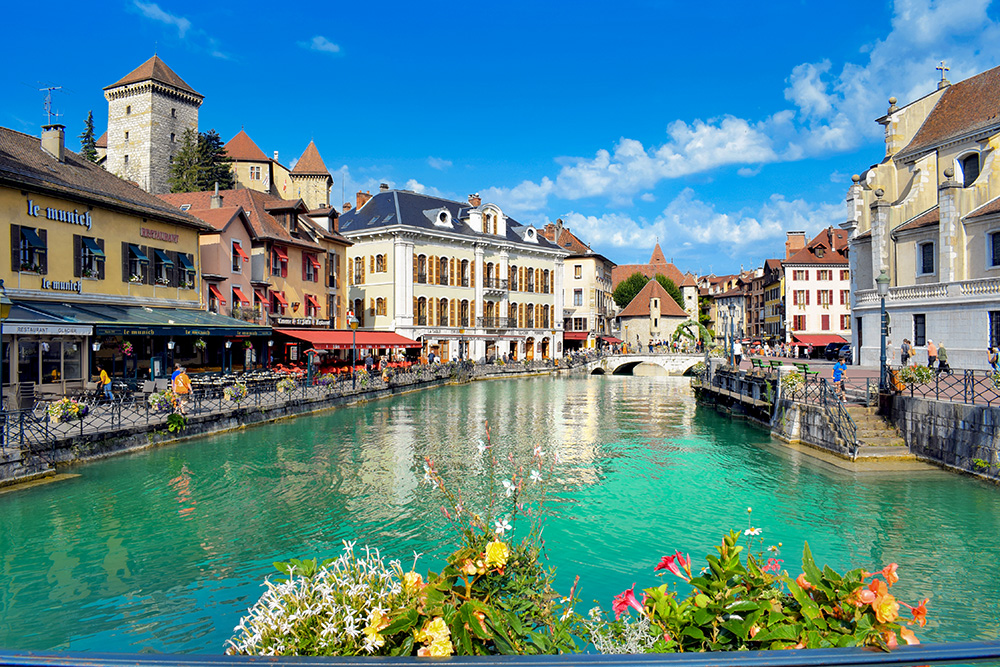
Annecy, The Venice of the Alps © French Moments
The lakeside is equally inviting. Annecy is often presented through its postcard views, but what I enjoy most is the way the town opens towards the water and the surrounding mountains. You can move from a busy street to a quiet section of the lakeshore within a few minutes.
This is also a good moment to settle into a slower rhythm. The car will be useful again tomorrow, but there is no need to use it simply because you have one.
Day 3: Exploring the Eastern Shore of Lake Annecy
Lake Annecy has been one of my favourite places in France for many years. Even after seeing it several times, I still find myself stopping to admire the water, the mountains and the small villages along its shores.
For this reason, I would devote a full day to the eastern shore. From Annecy, the road leads towards Menthon-Saint-Bernard and Talloires, with the mountains rising steeply on the opposite side of the lake.
Menthon-Saint-Bernard makes a pleasant first stop. From there, continue towards Talloires, one of my favourite destinations around the lake. The village has a peaceful waterfront, a small port and beautiful views across the water towards the surrounding peaks.
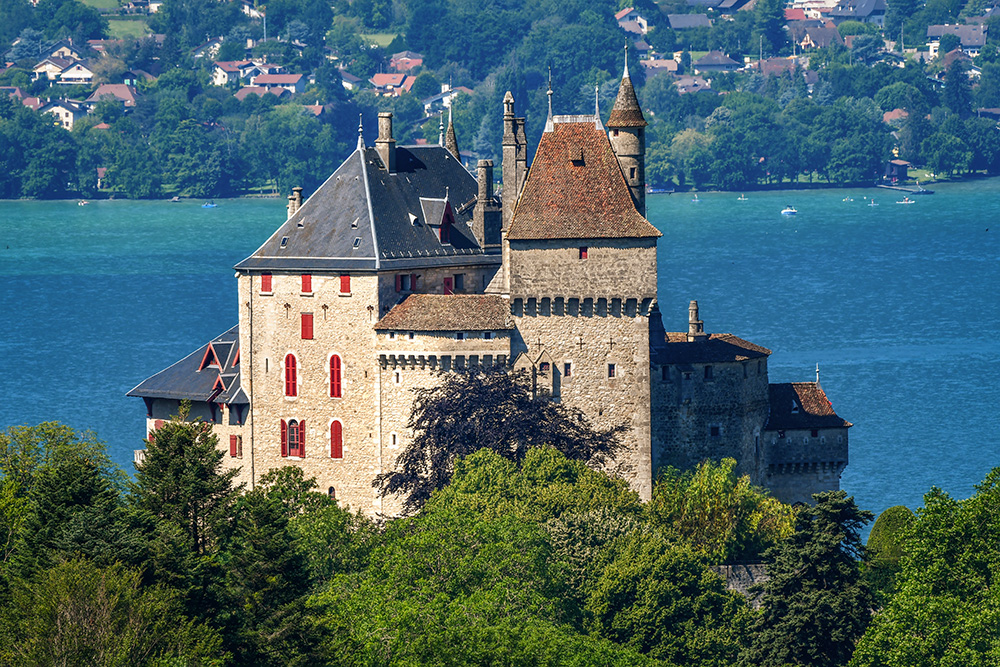
The Castle of Menthon-Saint-Bernard and Lake Annecy © French Moments
Talloires is at its most enjoyable when you are not in a hurry. I have visited it in different seasons, and spring and autumn remain my favourite times to come here. The atmosphere is generally calmer than in the height of summer, when the lakeside and car parks can become very busy.

The Bay of Talloires © French Moments
You could also allow time for the Roc de Chère, the wooded peninsula between Talloires and Menthon-Saint-Bernard. Its paths offer attractive views over the lake and Talloires Bay. Another worthwhile detour is the Ermitage Saint-Germain, above Talloires. From its terrace, you can look across the lake towards Talloires, Duingt and the mountains beyond.
From Talloires, continue towards the Col de la Forclaz. The road climbs away from the lakeside and eventually opens onto one of the finest viewpoints over Lake Annecy.
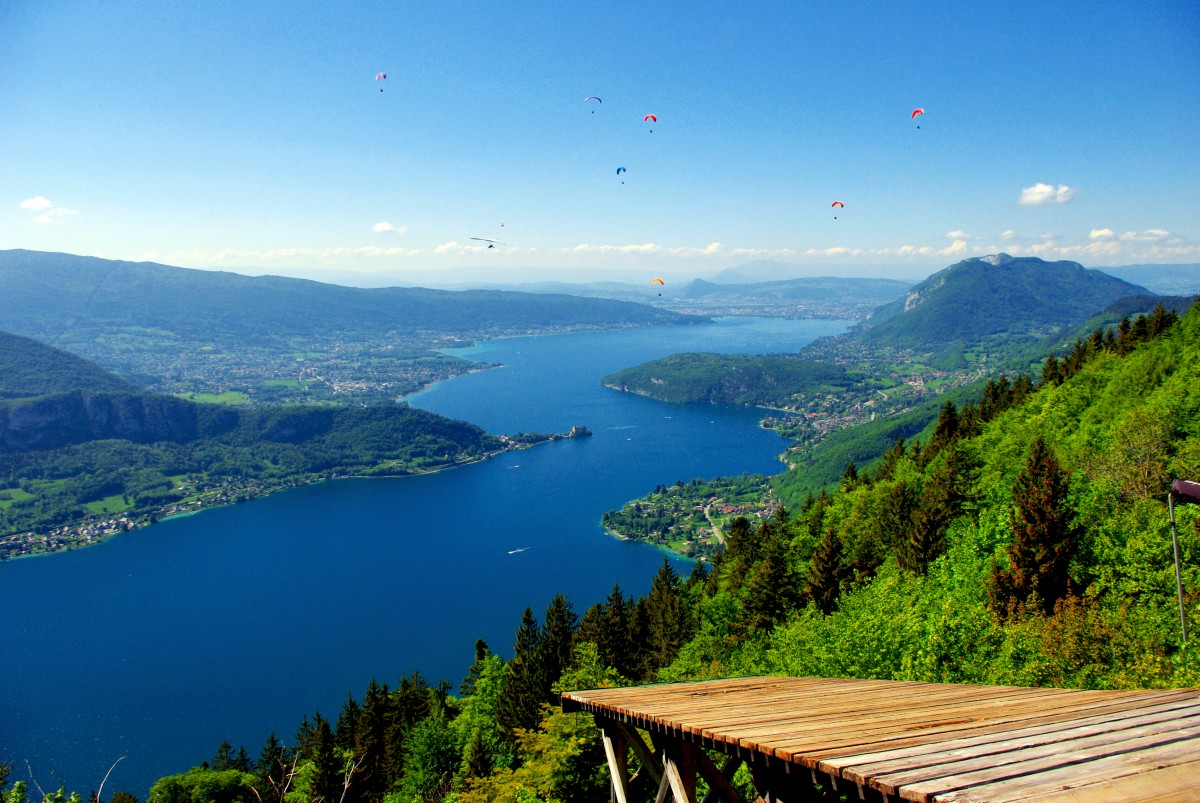
Lake Annecy seen from the Col de la Forclaz © French Moments
The view from the pass is impressive in itself, but there is often another spectacle taking place above the lake. Paragliders launch from the mountainside and float over the turquoise water below. Even if you have no intention of joining them, it is enjoyable to watch them preparing their flights.
Allow more time than you think you will need for this part of the itinerary. The distance may look modest on a map, but you will want to stop regularly, and the roads around the lake can be busy during the summer.
Day 4: Duingt and the Semnoz
The southern end of Lake Annecy offers a slightly different atmosphere. Duingt is a picturesque Savoyard village on a narrow stretch of land between the lake and the mountains. Its waterside château, set on a rocky promontory, is one of the most recognisable sights in this part of the lake.
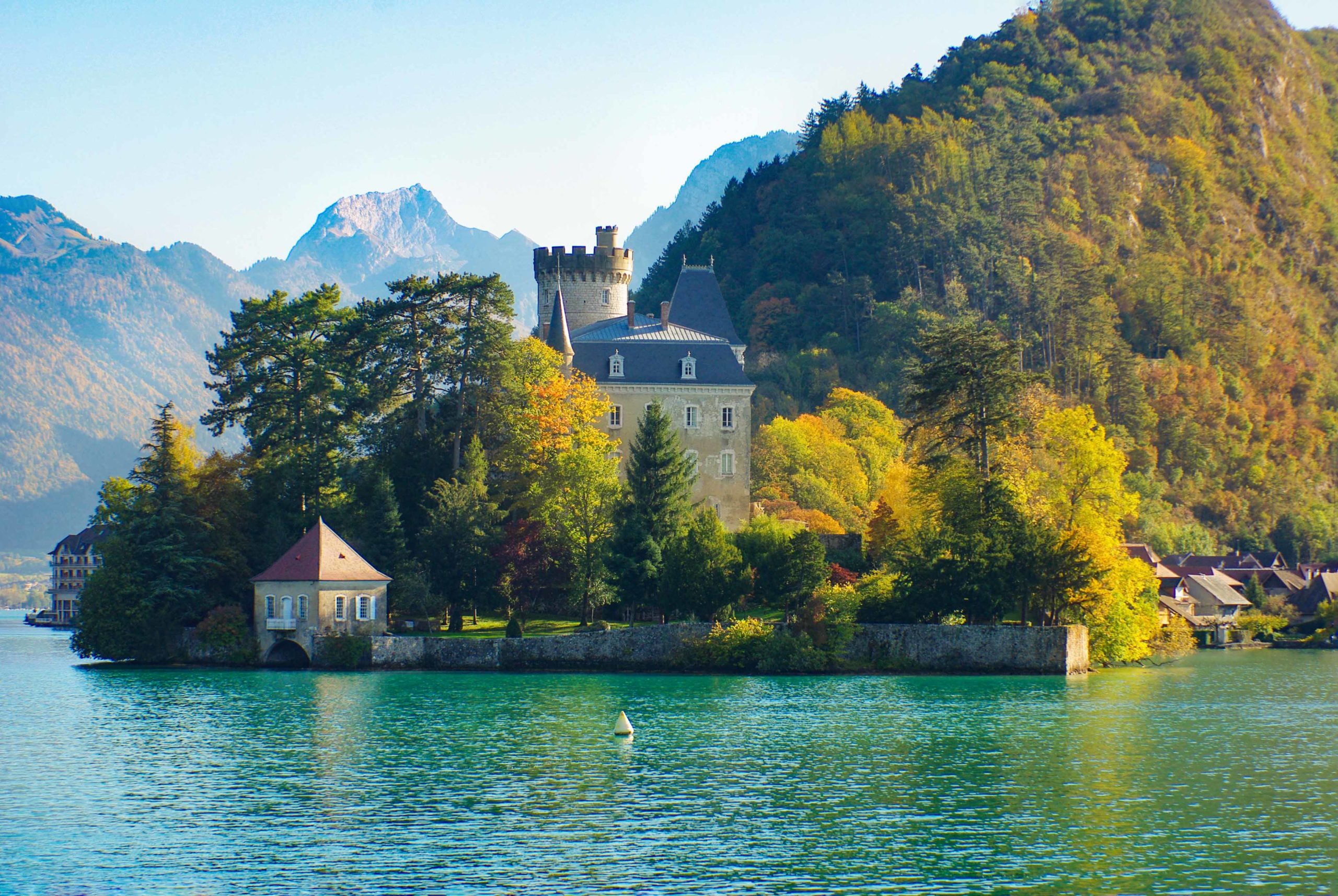
Duingt © French Moments
Duingt is a good place to pause rather than rush through. You can wander through its lanes, admire the traditional houses and take in the changing views of the water. The lake feels broader here, and the surrounding landscape gradually becomes wilder as you approach its southern end.
If you have time, the Bout du Lac nature reserve provides another way to experience the landscape. Otherwise, continue towards the Semnoz, the mountain overlooking Annecy.
The climb is remarkably varied. As you leave the town behind, the road passes through forest before reaching open mountain pastures and wide views across the Alps. There are places to park at the summit, and short walks make it possible to explore the landscape without planning a serious hike.
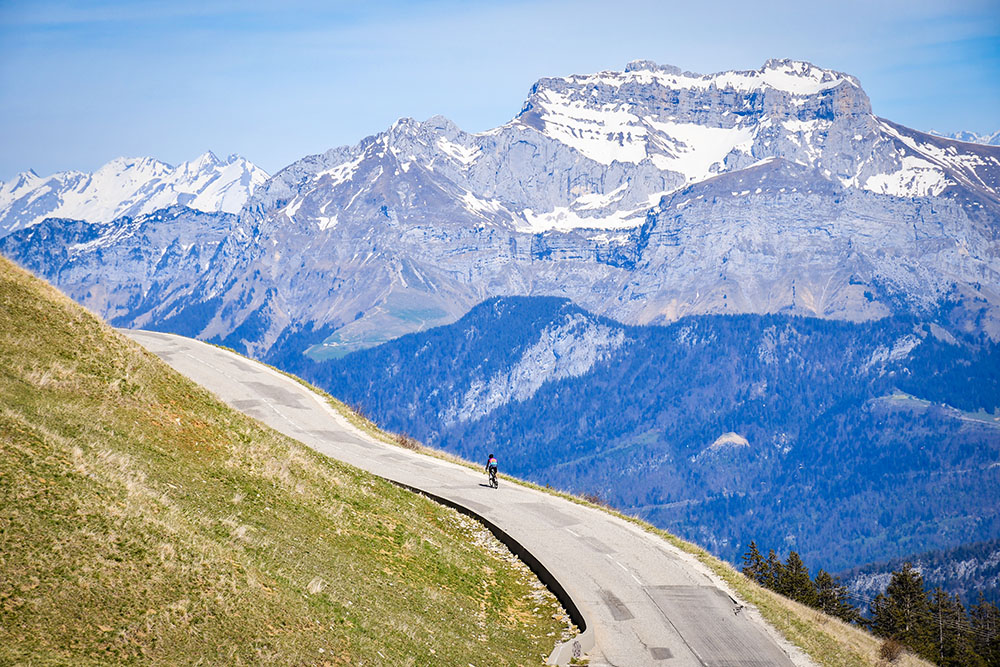
The view from the Semnoz © French Moments
On a clear day, the panorama extends towards Mont Blanc and other Alpine ranges. Lake Annecy is visible too, although from the summit only a small part of the lake can be seen. The view changes quickly with the weather, so do not be surprised if the mountains disappear behind cloud during your visit.
The Semnoz is a useful reminder that a Haute-Savoie road trip is not simply a series of famous towns. Sometimes the pleasure lies in leaving the car, walking for a few minutes and allowing the landscape to speak for itself.
Day 5: The Plateau des Glières and La Roche-sur-Foron
After the lake and the Semnoz, I would head towards a very different landscape: the Plateau des Glières.
The road takes you away from the busy shores of Lake Annecy and into a quieter mountain setting of forests, open pastures and wide horizons. It is a beautiful place to slow down and take a walk, but the plateau also has an important place in French history.
During the Second World War, the Plateau des Glières became a major centre for the French Resistance. A visit here is therefore more than a scenic mountain excursion. The landscape is peaceful today, but knowing what happened here adds another layer to the experience.
This is not a road to tackle in a hurry. Check the weather before setting off and allow extra time for the bends and slower sections. Conditions at the top can be quite different from those around Annecy, especially outside the summer months.
From the plateau, continue towards La Roche-sur-Foron. I have enjoyed walking through the town and photographing its historic centre. It does not attract the same crowds as Annecy or Chamonix, which is part of its appeal.
La Roche-sur-Foron has a medieval core, colourful façades and a pleasant mountain setting. Its location is also interesting: the town lies between Annecy, Geneva and Chamonix, making it a practical stop on a wider Haute-Savoie road trip.
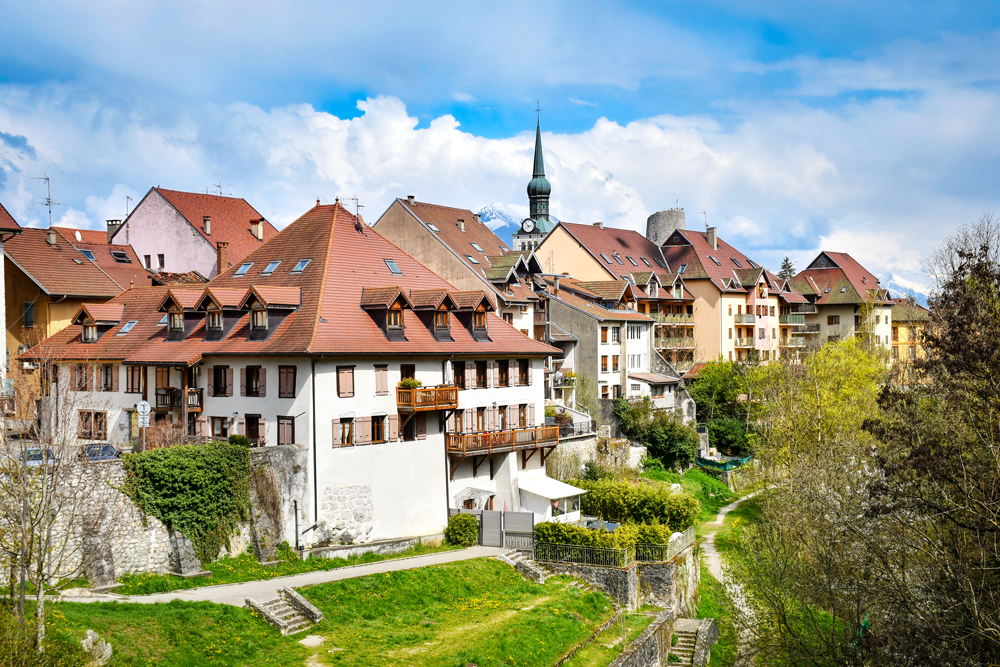
A view of La Roche-sur-Foron © French Moments
You can visit La Roche-sur-Foron in a few hours, but I would not dismiss it as merely a place to stop for lunch. Take time to explore the old streets and look beyond the most obvious route. The town rewards a little curiosity.
Day 6: The Plateau des Bornes
The Plateau des Bornes offers another change of scenery. Here, the pleasure lies less in reaching one famous attraction than in travelling through a landscape of fields, farms, small villages and mountain views.
This is exactly the sort of area where having a car is useful. Public transport may take you to the larger towns, but it would be difficult to link the smaller places together at your own pace.
I would keep this day flexible. Stop when a view catches your attention, look for a village café or take a short walk if the weather is pleasant. One of the risks of planning a road trip too precisely is that you can pass through attractive places without really seeing them.
The Plateau des Bornes also shows that Haute-Savoie is not made up exclusively of dramatic peaks. The gentler landscapes between the mountains are just as important to the character of the region. They provide a welcome change after the more spectacular scenery of Chamonix, the Semnoz and the Plateau des Glières.

The countryside of Thorens-Glières © French Moments
Depending on the length of your stay, you could spend another night around La Roche-sur-Foron or continue towards the shores of Lake Geneva. The choice will depend on your preferred pace and on whether you want to return to Geneva Airport at the end of the trip.
Day 7: Yvoire, Thonon-les-Bains and Évian-les-Bains
The final part of the itinerary takes you towards Lake Geneva and the French Chablais.
Yvoire is one of the best-known villages on the French shore. Its medieval streets, stone houses and position beside the lake make it an obvious addition to a Haute-Savoie road trip. It is also a popular destination, so I would try to arrive early, particularly during the summer.
The village is relatively small, which means that you can explore it on foot without needing the car once you have parked. Take your time. Look at the details of the old houses, walk down towards the lake and allow yourself to wander without turning the visit into a race around the main sights.
From Yvoire, continue towards Thonon-les-Bains, a larger lakeside town with views across Lake Geneva. It has a different atmosphere from Yvoire, and makes a useful contrast after the compact medieval village.
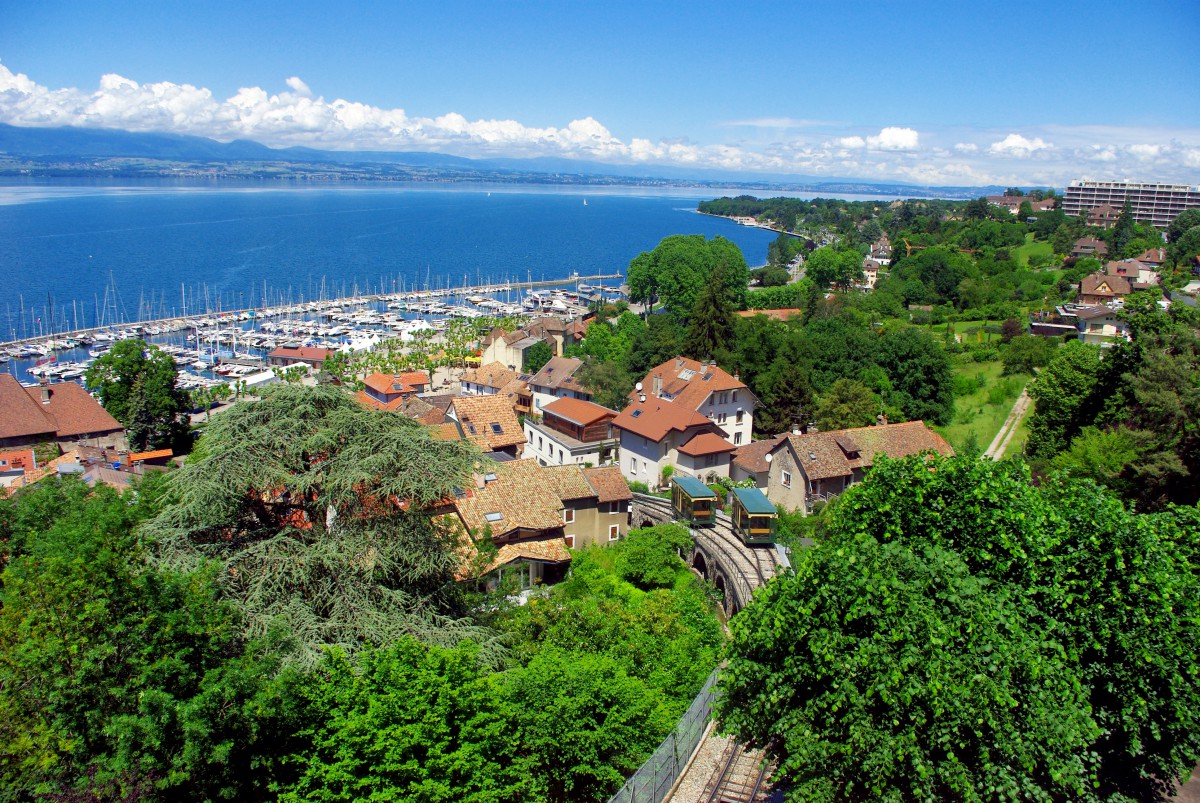
Thonon-les-Bains © French Moments
The final stop is Évian-les-Bains, famous for its mineral water and elegant thermal heritage. The town has promenades, grand buildings and views towards the opposite shore of the lake. It feels different again from both Yvoire and Thonon.
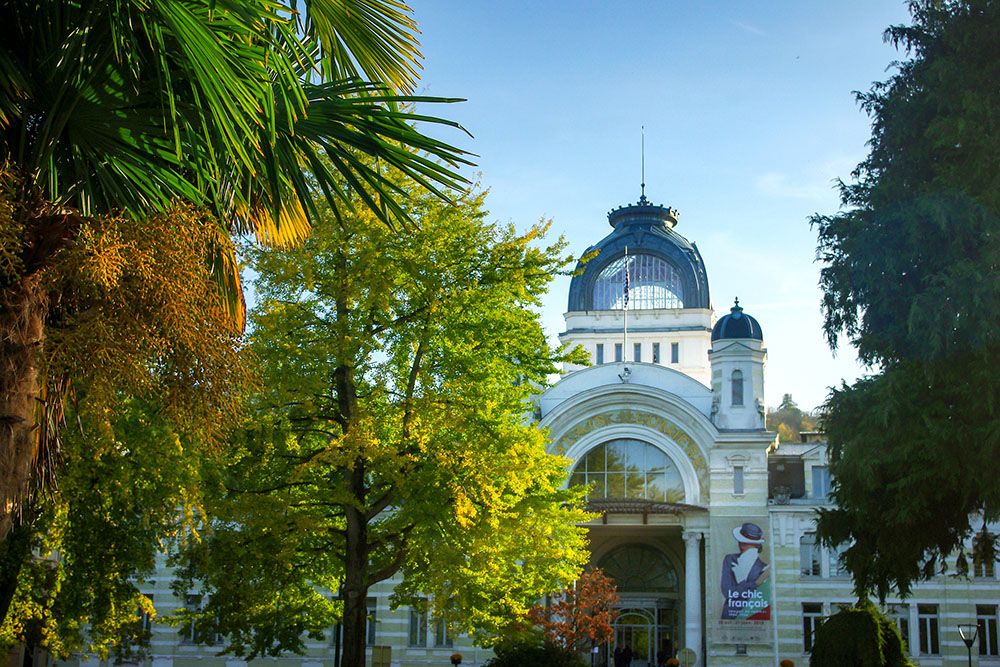
Palais Lumière © French Moments
If your rental period allows it, you could spend a night in this area before returning to Geneva Airport. Otherwise, check the journey carefully and allow plenty of time for traffic, refuelling and returning the vehicle.
The return journey is not the moment to discover that the airport has several access points or that you have left too little time before your flight. A little preparation at the beginning can save unnecessary stress at the end.
Renting a Car at Geneva Airport: Which Vehicle Should You Choose?
Before renting a car at Geneva Airport, think about how many people will be travelling and how much luggage you need to fit in the boot. A car that looks spacious in a photograph can feel rather different once the suitcases are inside.
You do not need a large SUV for this itinerary. In fact, a compact or medium-sized car may be more convenient, especially when driving through historic centres or looking for a parking space beside the lake. I would choose something comfortable, with enough room for passengers and luggage, but not unnecessarily large.
For this particular road trip, I would personally choose a petrol, diesel or hybrid car rather than a fully electric vehicle. This is not because electric cars are unsuitable for Haute-Savoie. They can certainly be used here. However, mountain roads, changing weather conditions and a varied itinerary can make charging and range calculations slightly more complicated.
A hybrid could be a good compromise. It is comfortable on longer journeys, economical around towns and less dependent on finding a charging point at precisely the right moment.
If you prefer an electric rental car, check its real-world range and identify charging points along your route before setting off. It is also important to read the rental company’s charging and return policy. The last thing you want at the end of a long road trip is to discover that returning an electric car involves more than simply handing over the keys.
Whatever type of vehicle you choose, check the fuel or charging arrangements before leaving the rental station. In France, petrol is generally referred to as essence or sans plomb, while diesel is called gazole. It is worth checking the label carefully before filling up.
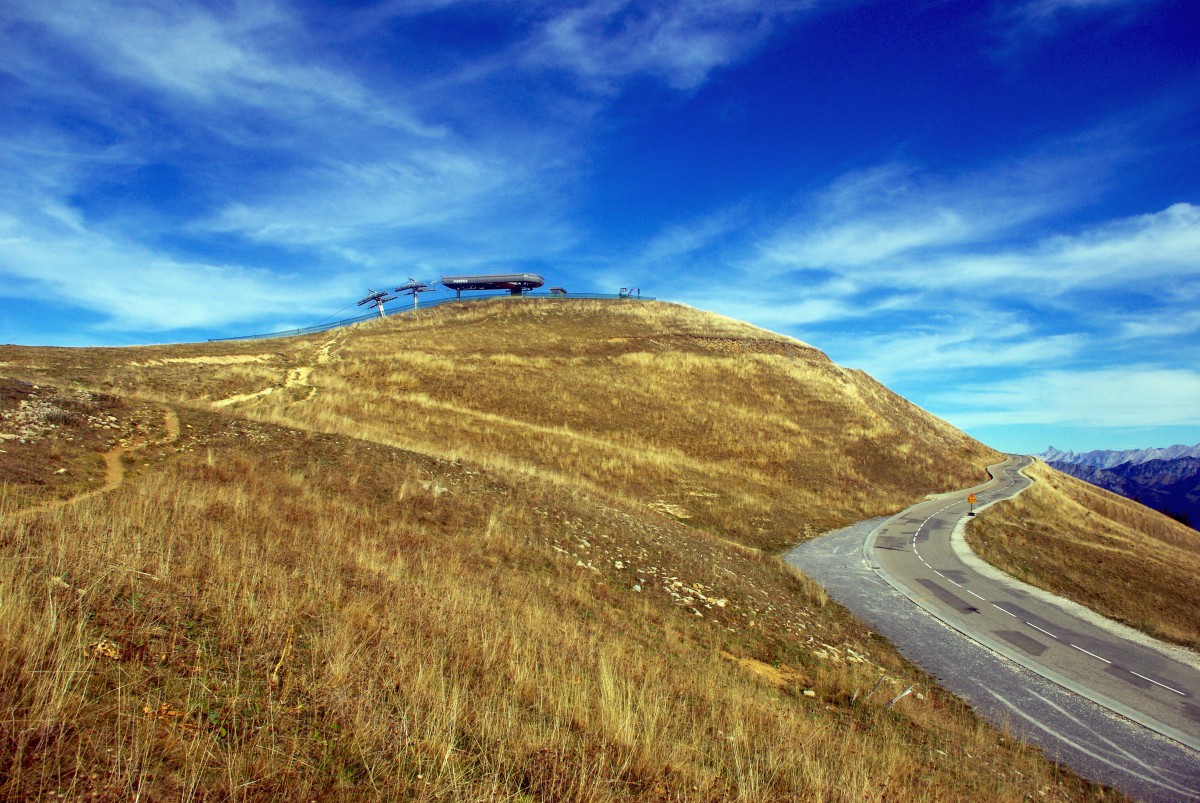
The road leading to the summit of the Semnoz © French Moments
Driving in Haute-Savoie After Renting a Car at Geneva Airport
Driving in Haute-Savoie is generally straightforward, but the mountains introduce a few additional considerations.
First, allow more time than the distance on the map might suggest. A route of a few dozen miles can take much longer than expected once you include bends, slower traffic, stops and changes in altitude. The journey is rarely just about getting from one town to the next.
Take mountain roads at your own pace. There is no need to imitate local drivers who know every bend by heart. Remain patient behind slower vehicles, watch out for cyclists and motorcyclists, and use passing places when necessary.
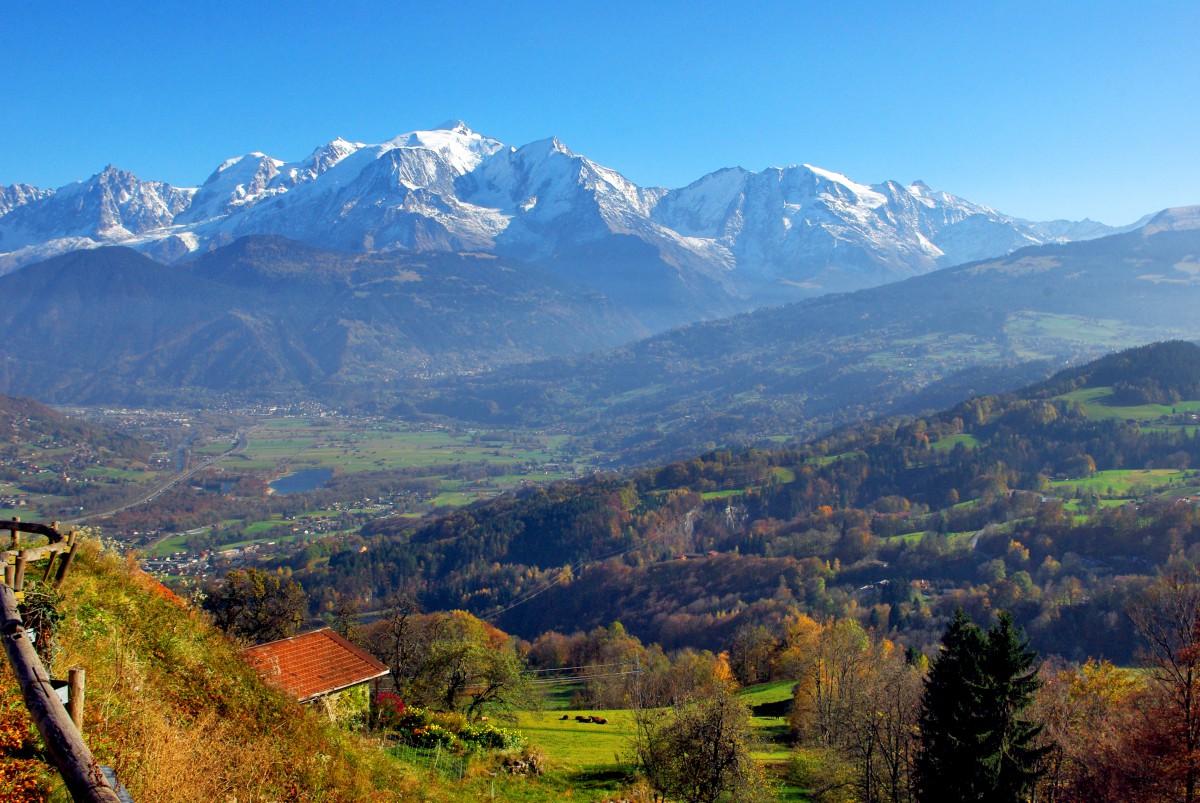
Département of Haute-Savoie - Mont-Blanc from Lintre (Sallanches) © French Moments
On descents, lower gears can help you control the car without relying entirely on the brakes. On narrow roads, take extra care when meeting another vehicle. It is better to stop and allow the other driver to pass than to squeeze through an awkward corner simply to save a few seconds.
It is also worth checking the forecast before leaving for the higher roads. Conditions around Lake Annecy can be bright and warm while the weather on the Semnoz or the Plateau des Glières is cooler, cloudier or more unsettled.
If you are travelling outside summer, check the seasonal driving requirements and make sure the rental vehicle is properly equipped for the conditions. Your rental company should be able to explain what is included and what you may need to request.
Finally, do not follow your GPS blindly. Navigation apps are very useful, but they sometimes suggest minor roads simply because they look shorter on the map. In the mountains, the quickest-looking route is not always the most comfortable one.
Renting a Car at Geneva Airport: Parking and Traffic Tips
A car is extremely useful for exploring the region, but it is not always the best way to move around Annecy itself.
Once you arrive in the city, I would leave the car in a designated car park and continue on foot. The old town is compact, and walking allows you to notice the canals, arcades and small details that are easy to miss from behind a windscreen.
The same principle applies to Talloires, Yvoire and other popular destinations around the lakes. Try to arrive early, particularly during the summer or at weekends. Parking can become difficult, and searching for a space is not the most enjoyable way to begin a visit.
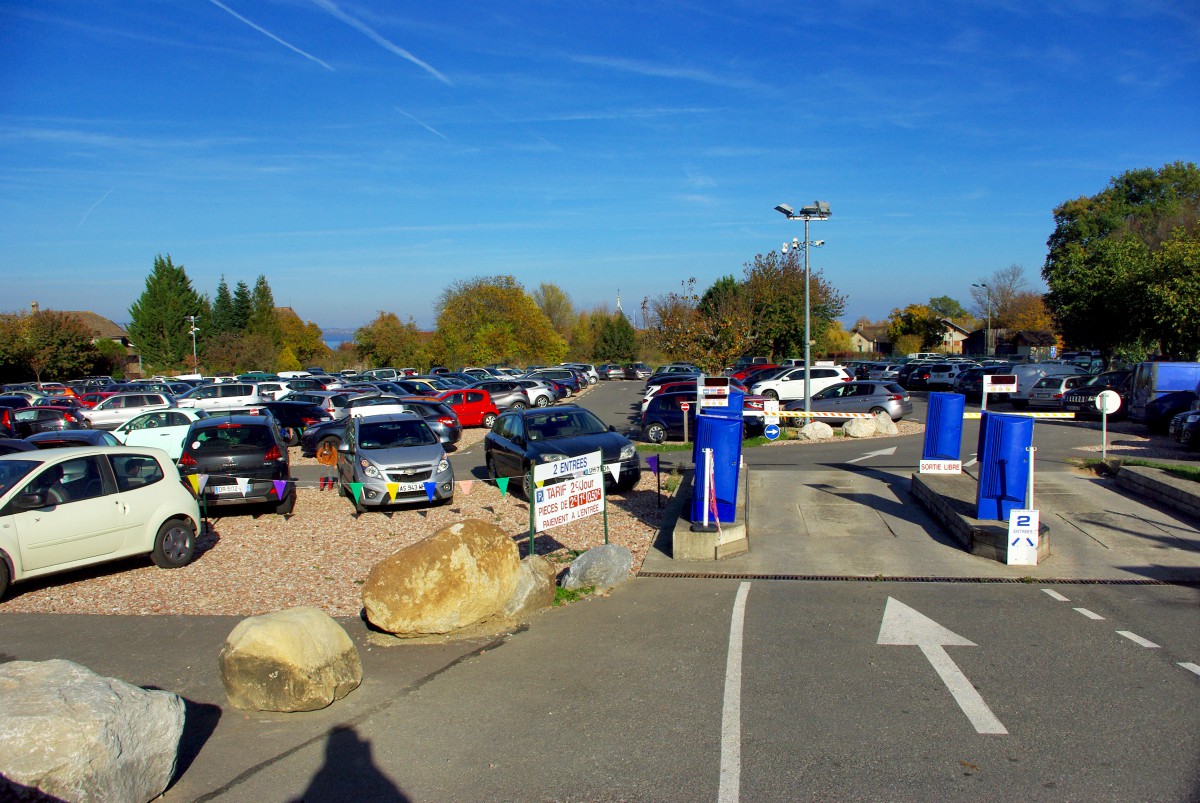
The car park of Yvoire © French Moments
Always check the signs before leaving the car. Some spaces are paid, while others are limited to a particular length of stay. In smaller French towns, you may also come across blue-disc parking areas, where you display your arrival time on the dashboard.
Before setting off, check whether your accommodation offers parking. This can make a considerable difference, especially if you are staying in a historic centre where access by car may be restricted.
Final Thoughts on Renting a Car at Geneva Airport
Renting a car at Geneva Airport can open up a much wider experience of Haute-Savoie.
You could spend several days around Lake Annecy, head towards Chamonix or continue north to Yvoire and Évian. I would leave some room for the smaller places too. La Roche-sur-Foron deserves a walk, and Talloires certainly deserves more than a quick photograph.
If you are planning a similar trip, you can compare car rental options at Geneva Airport with my partner DiscoverCars. Before booking, check the collection location, permission to drive into France and the conditions attached to your chosen offer. These details matter just as much as the price.
Then give yourself enough time to enjoy the region. Lake Annecy is somewhere I have returned to many times, and I would happily spend another afternoon around Talloires rather than squeeze an extra destination into the day.
*This article contains affiliate links. If you book through them, I may earn a commission at no extra cost to you.
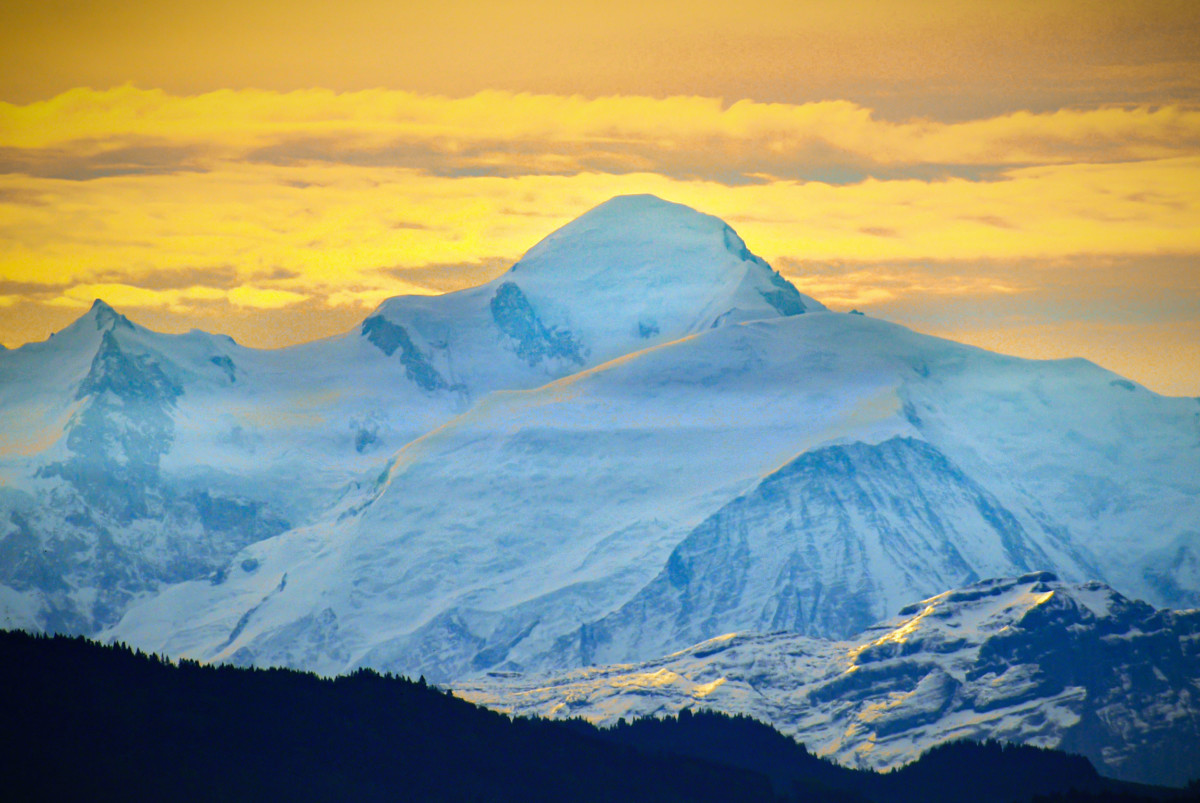
Sunrise at Mont Blanc, French Alps © French Moments