The Lac de Kruth-Wildenstein is one of those places that always comes as a bit of a surprise.
You know you are in Alsace. You know the classic image of half-timbered villages, vineyards, storks and flower-filled lanes. And then, suddenly, at the end of the Thur valley, the landscape changes.
Here, Alsace takes on the feel of deep mountain country.
The lake appears between wooded slopes, Vosges summits and dark forests. The atmosphere is wilder, cooler, almost Alpine at times. We are a long way from the usual Alsatian postcard, and that is precisely what makes the place so charming.
The Lac de Kruth-Wildenstein is often described as the largest lake in Alsace. But what strikes you most is its setting. A broad stretch of water lying at the foot of the mountains, surrounded by forests, with the impression of having reached the end of a valley.
A kind of Vosges end of the world, in other words. With a car park, pedal boats and a tree-top adventure park, admittedly. The Alsatian version of the end of the world remains rather well organised.
Where is the Lac de Kruth-Wildenstein?
The Lac de Kruth-Wildenstein is located in the Haut-Rhin, in the upper Thur valley, between the communes of Kruth and Wildenstein.
Here we are in the Alsatian Vosges, in the heart of a mountain landscape that contrasts strongly with the Alsace Plain. The road climbs up the valley from Thann, passes through the villages of the upper valley, and then reaches this more enclosed, more wooded and more mountainous sector.
The lake lies at an altitude of around 545 metres / 1,788 ft. It is surrounded by reliefs that announce the High Vosges, the high pastures, the ridges and the wide open spaces of the massif.
It is also a beautiful gateway to higher areas, including the Grand Ventron, the farm inns and the hiking routes that climb above the valley.
A reservoir that became a mountain landscape
The Lac de Kruth-Wildenstein is not a natural lake.
It is a reservoir, created on the Thur in the 1960s. Its purpose was practical: to regulate the water, support the river’s flow and protect the valley from flooding.
On paper, that may sound rather technical. A dam, a reservoir, figures, hydraulics… Not necessarily the stuff of dreams at first glance.
And yet the result has become one of the most appealing landscapes in the Alsatian Vosges.
Over time, the lake has blended into its surroundings. Forests descend towards its shores, summits frame it, and the reflections change with the weather and the seasons. You know it is a human-made landscape, but the emotion of the place feels entirely natural.
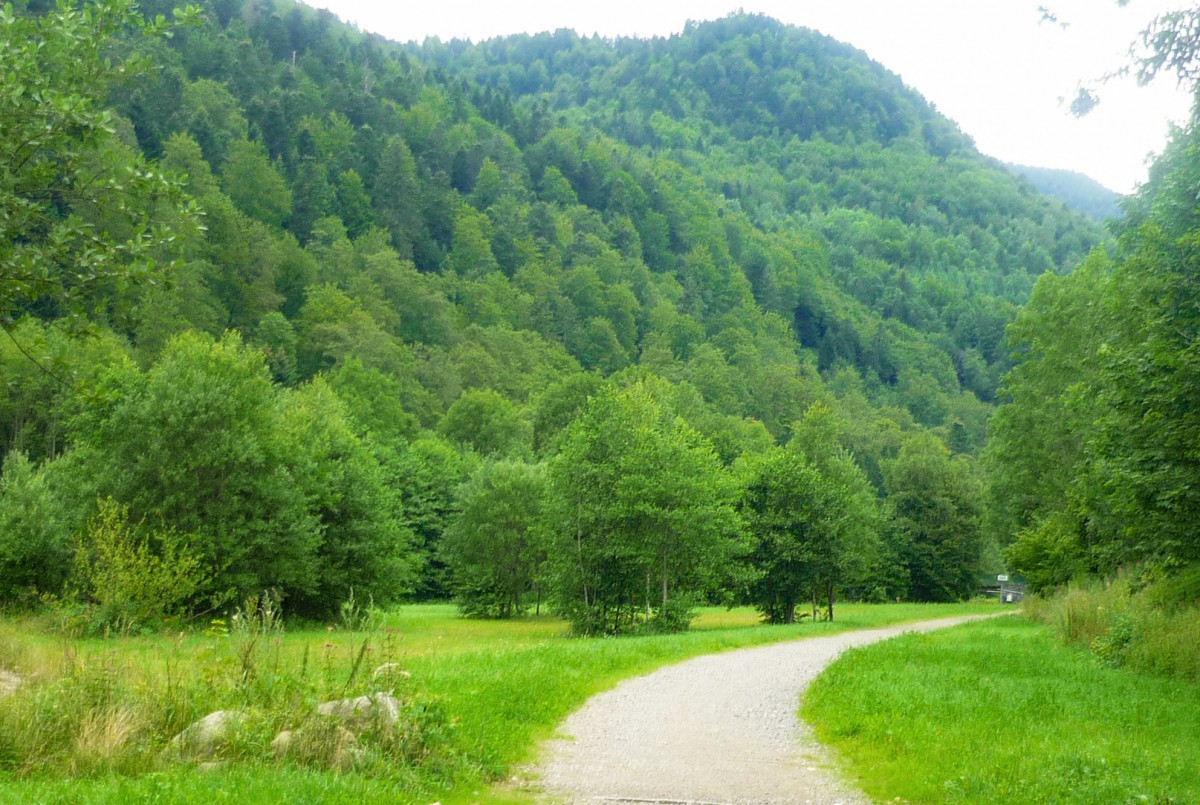
Near Wildenstein © French Moments
That is often the case in the Vosges: the history of the landscapes is sometimes more complex than it appears. You admire a peaceful view, and behind it lie human choices, engineering works, economic needs and transformations of the territory.
Walking around the lake: the essential first discovery
For a first visit, the simplest thing is to walk around the lake.
It is the obvious walk, accessible and pleasant, allowing you to understand the site without necessarily setting off on a major hike. You walk along the water’s edge, watch the reflections, enjoy the openings towards the wooded slopes, and gradually discover the lake’s different moods.
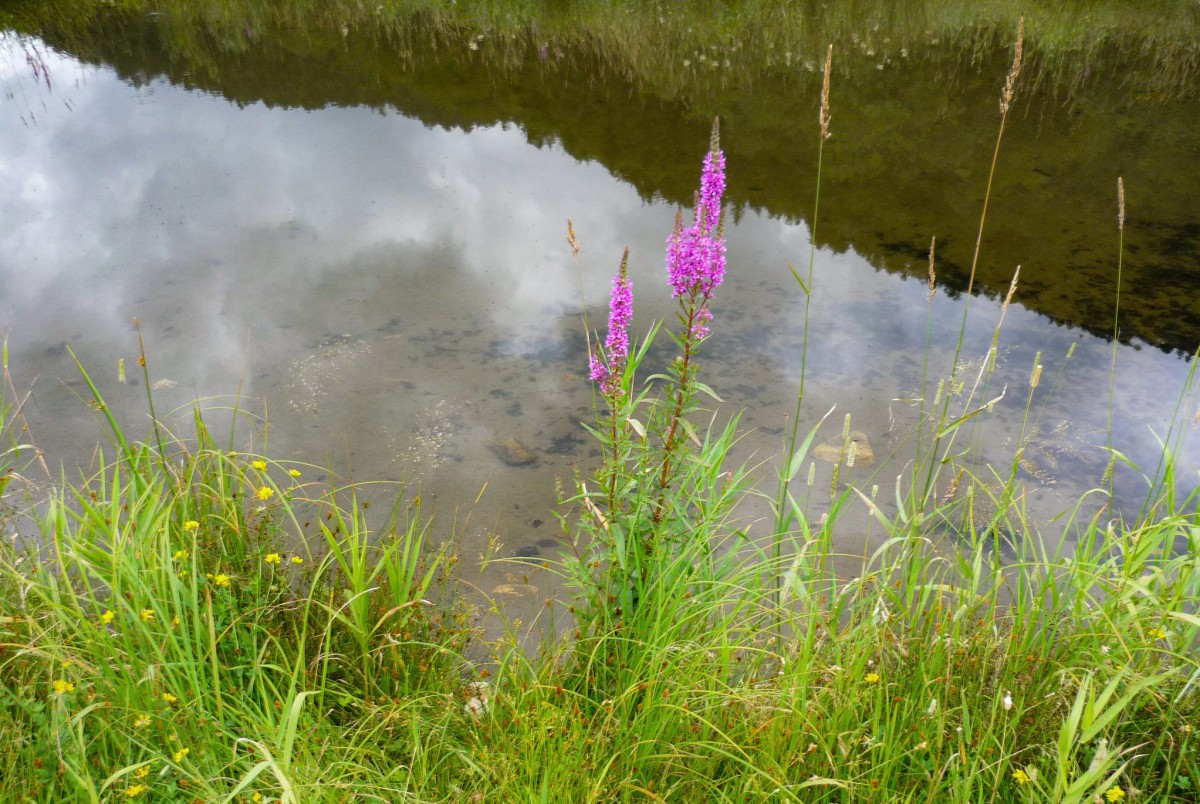
By the lake © French Moments
Depending on the season, the scenery changes completely.
In spring, the vegetation comes back to life and the slopes are covered in tender green. In summer, the lake becomes a leisure area, with families, walkers and water-based activities. In autumn, the forests take on magnificent colours, and the reflections in the water can be superb. In winter, the atmosphere becomes quieter and harsher, especially when snow appears on the heights.
The walk around the lake is therefore a good introduction. But it would be a shame to stop there.
The Lac de Kruth-Wildenstein reveals itself even more beautifully when you gain a little height.
Hiking on the heights above the lake
I mainly got to know the Lac de Kruth-Wildenstein from above.
I used to hike above the lake, starting from Oderen. From there, you gradually leave the valley, climb into the wooded slopes, and the landscape opens up at times over the floor of the Thur valley.
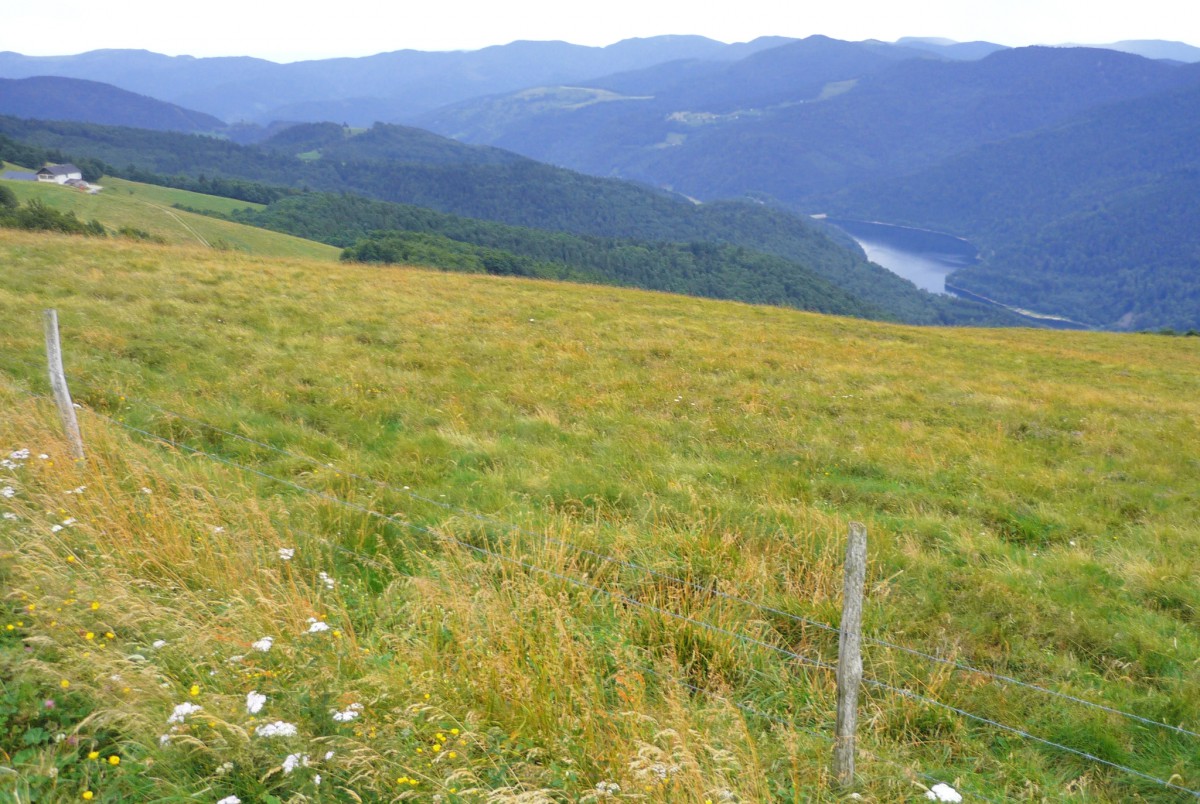
Lac de Kruth and the Upper Thur Valley seen from the Rainkopf © French Moments
What I love about this area is the sense of real Alsatian mountain country.
We are in the Southern Vosges, but the atmosphere can feel very mountainous: forest paths, sustained slopes, glimpses towards the ridges, the silence of the woods, the scent of resin and, sometimes, that damp freshness so typical of the Vosges valleys.
From the heights, the lake takes on another dimension. It is no longer just a place for a waterside stroll. It becomes a landmark in the landscape, a blue patch at the bottom of the valley, surrounded by forests and relief.
It is often from these viewpoints that you best understand the beauty of the site.
Via the Col de Blamont: my finest memory of the lake
My strongest memory, however, remains an arrival by road.
I remember the only time I crossed the Col de Blamont before descending towards the Thur valley and arriving at the lake. It was one of those moments when the landscape reveals itself almost as a surprise.
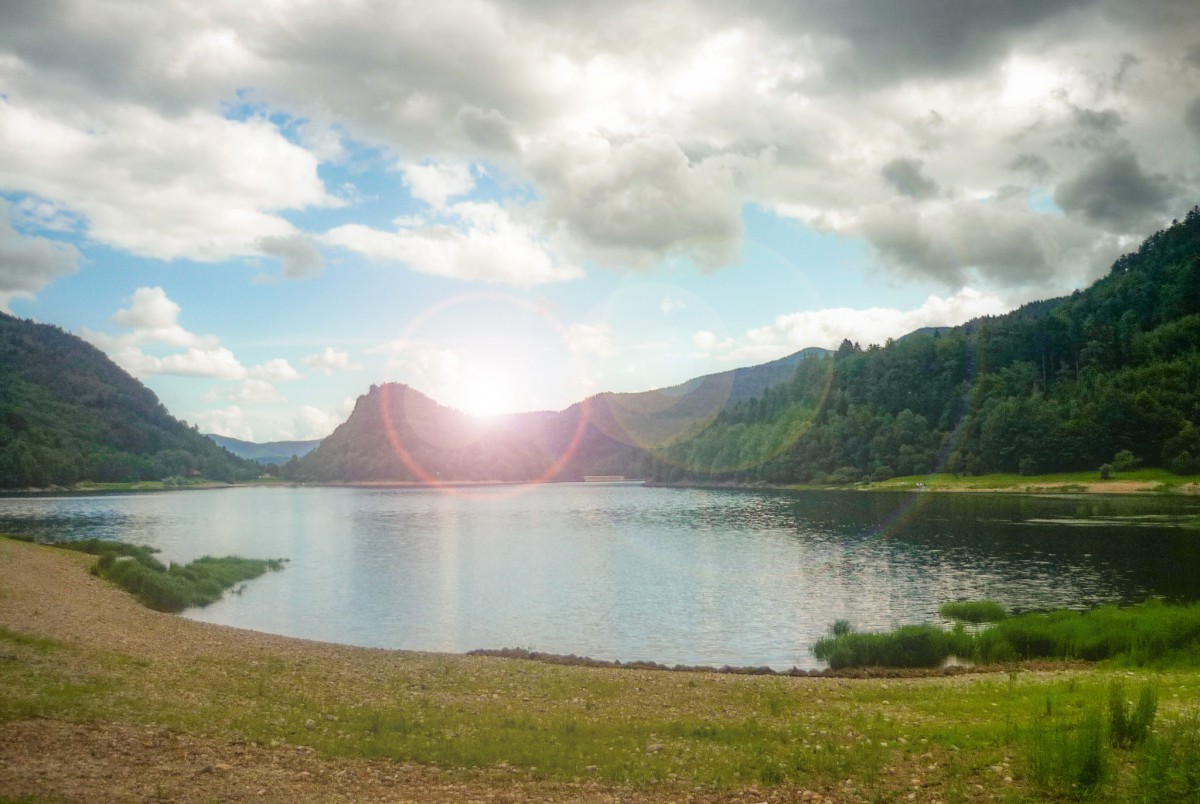
Lac de Kruth-Wildenstein while descending from the col de Blamont © French Moments
The road, the slopes, the forest, then suddenly the opening towards the lake: it was sublime.
There are places you discover gradually, by studying them on a map or carefully preparing a hike. And then there are those that simply appear around a bend in the road, without warning, with perfect light and scenery that seems to have been waiting for you to arrive before putting on its performance.
The Lac de Kruth-Wildenstein belongs to that second category.
In my memory, the arrival from the heights had something almost theatrical about it. We descended towards the valley, and the lake appeared like a reward. A great blue breath in the middle of the Alsatian Vosges.
The Château de Wildenstein: a medieval touch above the lake
The lake is not the only reason to visit the site.
On the heights stand the ruins of the Château de Wildenstein, also known as the Château du Schlossberg.
![Schlossberg - Lac de Kruth-Wildenstein © Espirat - licence [CC BY-SA 4.0] from Wikimedia Commons](https://frenchmoments.eu/wp-content/uploads/2026/07/Lac-de-Kruth-Wildenstein-©-Espirat-licence-CC-BY-SA-4.0-from-Wikimedia-Commons.jpg "Lac de Kruth-Wildenstein © Espirat - licence [CC BY-SA 4.0] from Wikimedia Commons")
The Schlossberg and Lac de Kruth-Wildenstein © Espirat - licence [CC BY-SA 4.0] from Wikimedia Commons
This medieval site reminds us that the valley does not only have a natural or hydraulic history. It also has historical depth.
The castle occupied a strategic position, overlooking the surrounding area. Today, its ruins add an almost romantic touch to the landscape. You come for the lake, and discover that the heights also tell a story of lords, crossings and control of the territory.
A discovery trail leads to the site and offers more information about the historical and natural heritage of the Schlossberg.
It is a lovely idea for a visit, especially if you want to combine nature, walking and history. And let’s be honest: a mountain lake with castle ruins above it always works. Even the most jaded visitors eventually reach for their camera.
What to do at the Lac de Kruth-Wildenstein
The Lac de Kruth-Wildenstein is also a leisure destination.
You can simply walk there, have a picnic, sit by the water and enjoy the scenery. But the site also offers several activities, especially during the warmer months.
There are water-based activities such as canoeing and pedal boats, as well as fishing opportunities. The area is also known for its tree-top adventure park, its high-rope courses and its outdoor activities.
![Lac de Kruth-Wildenstein Pedalo © Tanja Hess - licence [CC BY-SA 4.0] from Wikimedia Commons](https://frenchmoments.eu/wp-content/uploads/2026/07/Lac-de-Kruth-Wildenstein-Pedalo-©-Tanja-Hess-licence-CC-BY-SA-4.0-from-Wikimedia-Commons.jpg "Lac de Kruth-Wildenstein Pedalo © Tanja Hess - licence [CC BY-SA 4.0] from Wikimedia Commons")
Lac de Kruth-Wildenstein © Tanja Hess - licence [CC BY-SA 4.0] from Wikimedia Commons
Swimming is possible, but it is not supervised. That is an important point to remember, especially for families. As always in the mountains, the setting can give an impression of total freedom, but that does not remove the need for caution.
Around the lake, the possibilities vary according to what you feel like doing: a gentle walk, a more demanding hike, a visit to the castle, water activities, a family outing or simply a pause by the water.
It is this mix that makes the site so interesting. You can come for an hour, half a day or a full day.
Practical tips for visiting the Lac de Kruth-Wildenstein
To make the most of the Lac de Kruth-Wildenstein, the important thing is to adapt your visit to what you want to do.
For a simple discovery, the walk around the lake is ideal. It allows you to enjoy the landscape without too much difficulty. For a more complete outing, bring good shoes and head up onto the heights, towards the forest paths, the ridges or the Château de Wildenstein.
![Lac de Kruth-Wildenstein © Tanja Hess - licence [CC BY-SA 4.0] from Wikimedia Commons](https://frenchmoments.eu/wp-content/uploads/2026/07/Lac-de-Kruth-Wildenstein-©-Tanja-Hess-licence-CC-BY-SA-4.0-from-Wikimedia-Commons.jpg "Lac de Kruth-Wildenstein © Tanja Hess - licence [CC BY-SA 4.0] from Wikimedia Commons")
Lac de Kruth-Wildenstein © Tanja Hess - licence [CC BY-SA 4.0] from Wikimedia Commons
In summer, it is better to arrive early if you are looking for a little peace and quiet. The site can get busy, especially in fine weather. And, as so often in the Vosges, it is always wise to check the weather before setting out. Conditions can change quickly once you gain altitude.
Finally, even if the lake invites you to relax, it is worth remembering that this is still a mountain site. Slopes, water, weather and outdoor activities all require a minimum of caution.
Nature is beautiful. But it never promised to be an air-conditioned waiting room.
My view of the Lac de Kruth-Wildenstein
For me, the Lac de Kruth-Wildenstein is linked to hiking, the heights above Oderen and that more mountainous side of Alsace that people sometimes forget.
It is a place that reveals another face of the region. Not the vineyards and flower-filled villages, but the deep valleys, forests, dams, ridges and climbing paths.
I also like the fact that this lake feels both developed and wild. There are activities, car parks, families, pedal boats and a tree-top adventure park. And yet, as soon as you lift your eyes towards the slopes or take a path, you very quickly recover the spirit of the Vosges.
The Lac de Kruth-Wildenstein is therefore not just a blue dot on a map. It is a landscape you approach, walk around, sometimes look down upon from the heights, and remember for a long time.
And if one day you arrive via the Col de Blamont, with the valley opening before you and the lake appearing around a bend in the road, you may understand why that memory stayed with me.