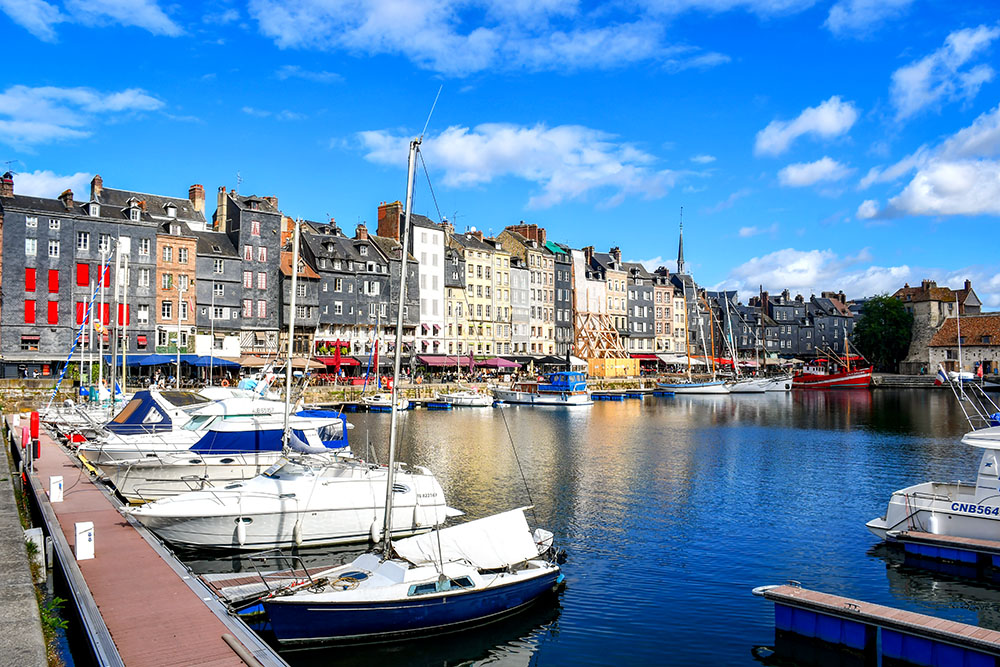


Honfleur had been on our list of places to visit for years. We knew the photographs, of course, especially those tall, narrow houses overlooking the old harbour. But we had never been there ourselves.
During our September stay in the Pays d’Auge, we finally had the opportunity. We waited for a promising weather forecast, then set off from our countryside base on 9 September 2026 with our cameras and a little excitement. At last, we were going to see it for ourselves.
I had done quite a bit of research beforehand. Alongside the famous Vieux-Bassin and Sainte-Catherine church, I had noted down a few streets I wanted to explore and photograph.
We had much of the day ahead of us, although I knew that taking photographs and filming would occupy a fair amount of it. That is usually how these visits go!
My First Impressions of Honfleur
Coming from the quiet countryside of the Pays d’Auge, Honfleur felt busy.
Around the harbour, we found ourselves among visitors from France, Britain, Germany, the Netherlands and Canada. It was quite a change from our rural base near Livarot.
Still, this was a weekday in September. There were plenty of people, but we could walk around and enjoy the town without the crowds becoming a nuisance. I was glad we had waited until after the summer holidays.
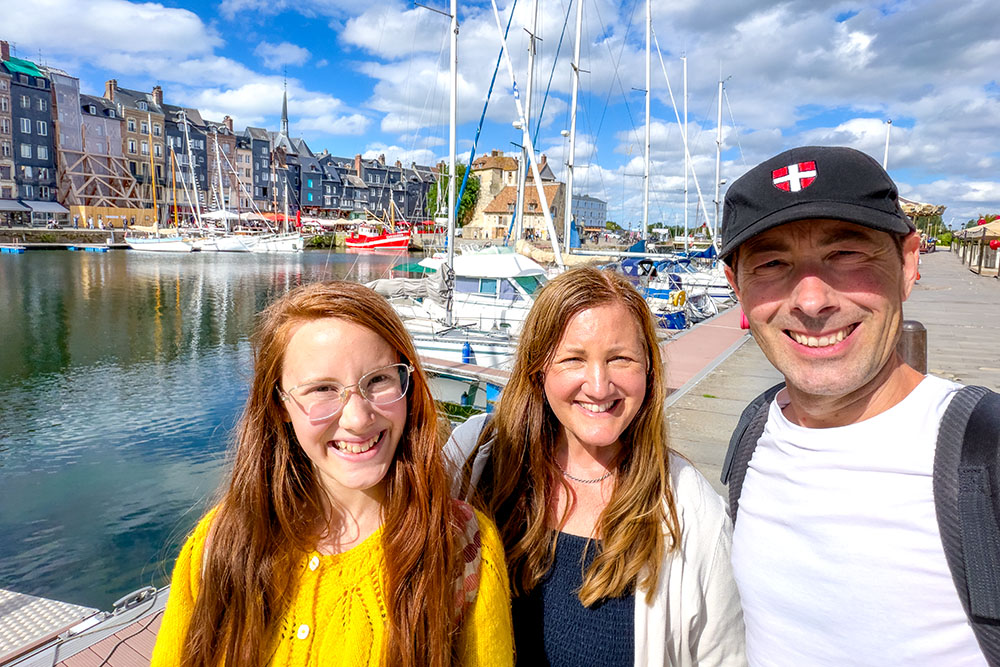
Pierre, Rachel and Aimée visiting Honfleur © French Moments
And the Vieux-Bassin? My first thought was that it seemed a little smaller than I had imagined. Some of the façades were undergoing work, which took away a little of the charm. Even somewhere you have seen in countless photographs has to fit scaffolding into its daily life.
Then the sun came out and lit up the tall houses along Quai Sainte-Catherine.
That was the view I had come to see. From Quai Saint-Étienne, across the water, I spent a long time photographing the façades and the boats moored below them.
The masts gave the scene a seaside feel that reminded me a little of Saint-Tropez… although we were very much in Normandy.
Around Honfleur’s Old Harbour
Watch our Guided Walk in Honfleur on YouTube:
The Vieux-Bassin from Quai Saint-Étienne
If I had to choose just one view from our day in Honfleur, it would be the Vieux-Bassin seen from Quai Saint-Étienne.
You look straight across towards the tall houses of Quai Sainte-Catherine, with the boats in front of them. It is a familiar composition, but I was more than happy to take my own photographs of it.
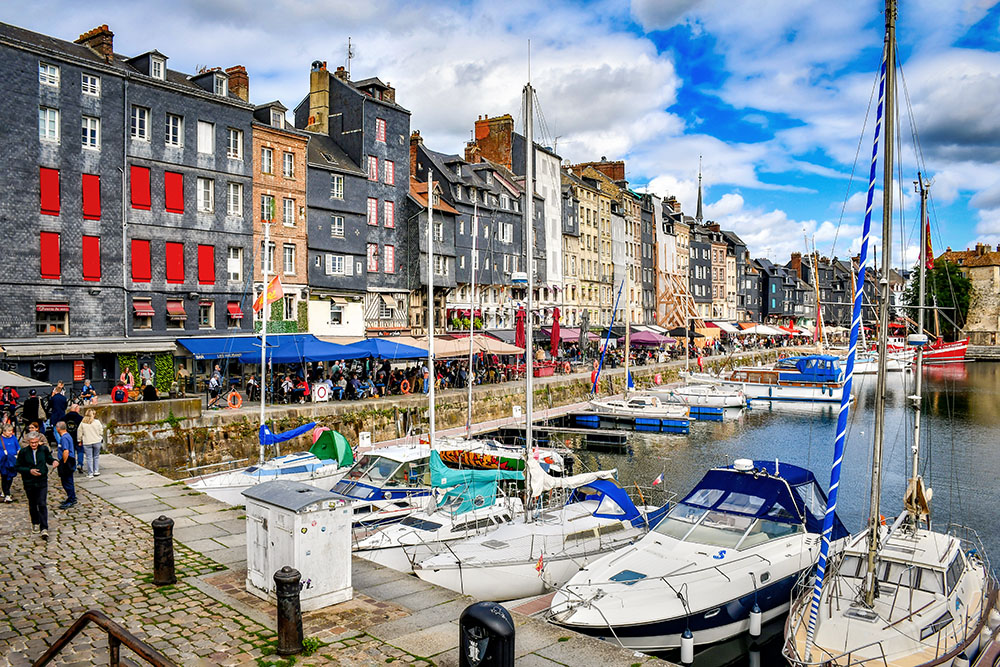
Honfleur: the Vieux-Bassin © French Moments
For anyone coming with a camera, my advice is to visit in the morning. The sun lights these façades from the east, bringing out details that become less easy to capture when the light moves round.
A Little History: Le Vieux-Bassin
Honfleur’s harbour has medieval origins, but the Vieux-Bassin we recognise today took shape under Louis XIV. In 1681, his minister Colbert ordered its development, and part of the town’s fortifications was removed to make room for the enlarged basin.
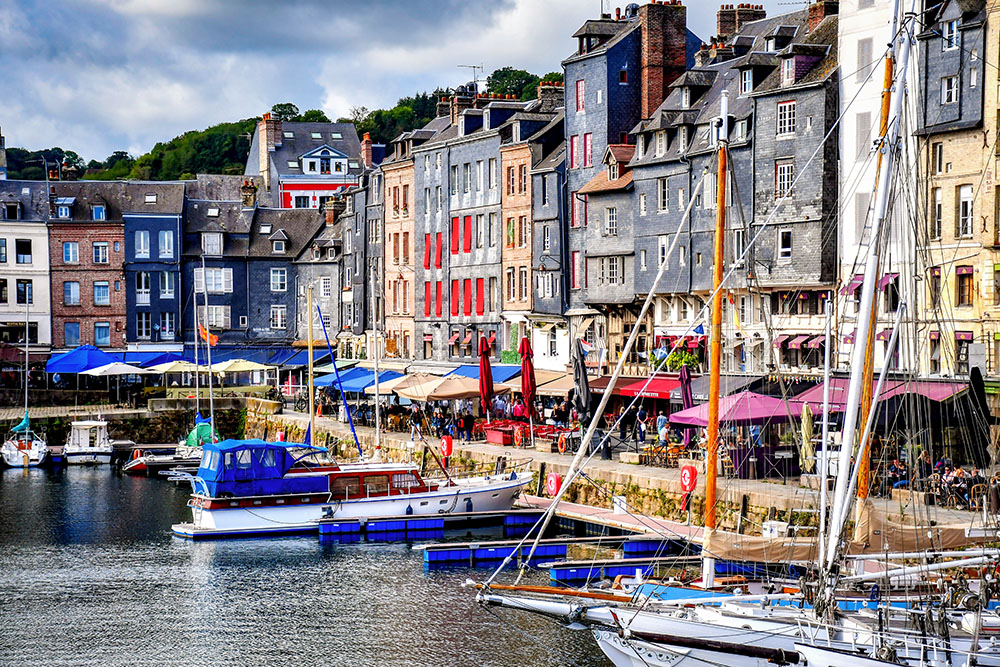
The harbour had already supported generations of seafarers, with ships sailing from Honfleur towards Newfoundland and Canada. Its quays were working spaces long before they became favourite places for a stroll.
Today, the tall, narrow houses along Quai Sainte-Catherine form its most familiar backdrop. At the entrance, the Lieutenance recalls the fortified town that once stood around this stretch of water.
The Lieutenance: A View Worth Waiting For
I paid to visit the Lieutenance mainly for its view over the Vieux-Bassin. I wanted to photograph the harbour from above, and the terrace did not disappoint.
The clouds, however, had other ideas. I had to wait patiently for a gap that would let the sun reach the houses opposite. When the façades finally brightened, I was ready with the camera.
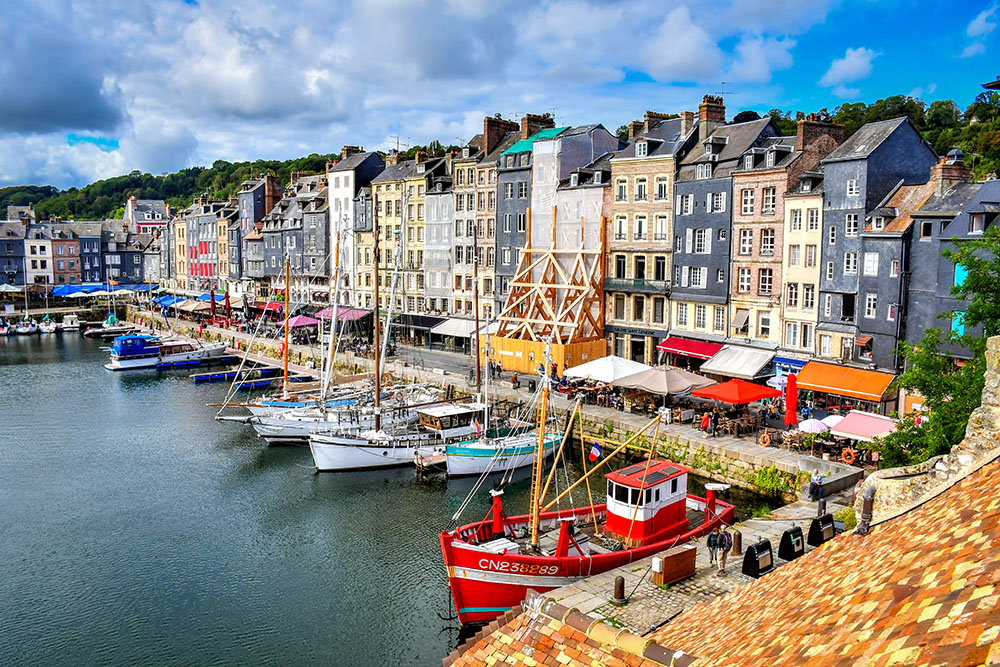
The view of the Vieux-Bassin of Honfleur from the Lieutenance © French Moments
There was plenty to interest me inside too. The building itself is a surviving part of Honfleur’s old fortifications. Once known as the Porte de Caen, it controlled access to the enclosed town. Its present name comes from the king’s lieutenant, whose accommodation was created here towards the end of the 17th century.
The information panels helped put the town into context, covering its history, its heyday as a port and its connections with the Impressionists. I had come for the panorama, but was pleased to spend time reading about the place I had been photographing.
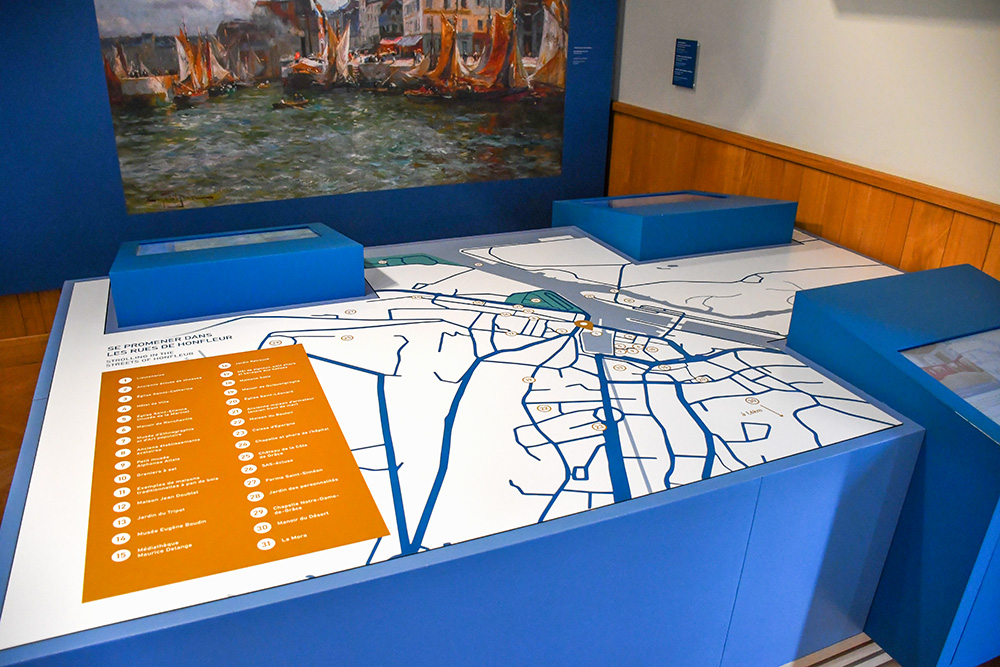
The museum inside the Lieutenance © French Moments
This was the only museum visit I fitted into our day. For a first discovery of Honfleur, the combination of local history and harbour views made it a good choice.
A Little History: La Lieutenance
Standing at the entrance to Honfleur’s Vieux-Bassin, the Lieutenance is the last surviving part of the town’s old fortifications. It incorporates the former Porte de Caen, a gateway that controlled access to the fortified Enclos quarter.
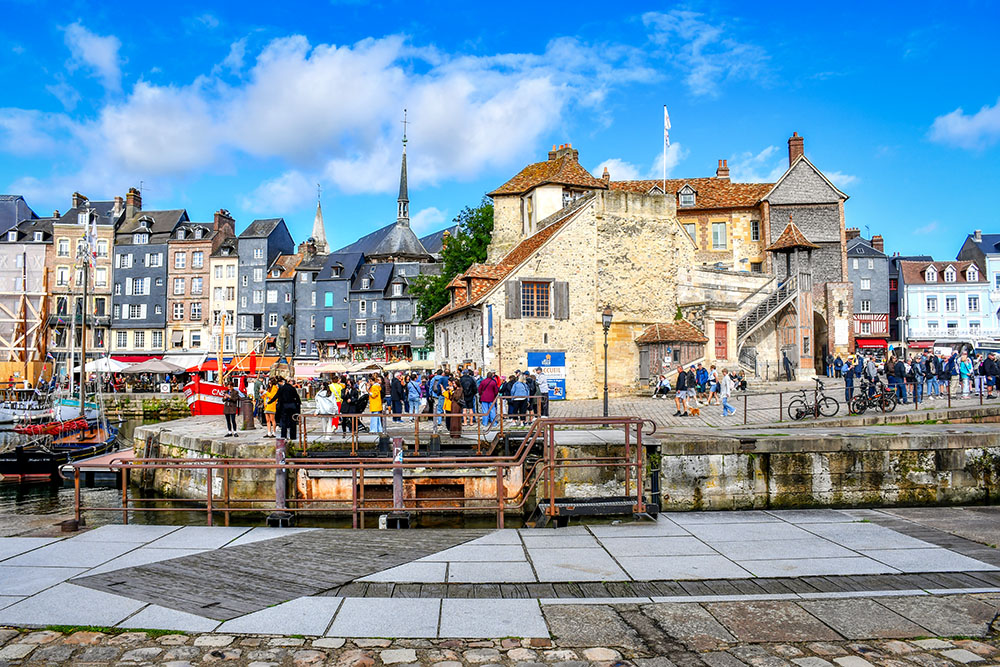
Its name comes from the lieutenant du roi, the king’s representative, whose accommodation was created here towards the end of the 17th century. As the town’s defences were dismantled and the harbour developed, the building took on the appearance we recognise today.
Once a gateway into a fortified town, it now welcomes visitors to explore Honfleur’s history, with exhibitions inside and views across the harbour from its terraces.
Exploring Honfleur Beyond the Harbour
Before coming to Honfleur, I had spent quite some time researching its streets. The harbour was always going to occupy a large part of the visit, but I also wanted to explore the historic quarters around it.
A few streets had caught my attention in photographs, and I was curious to see what I would find there.
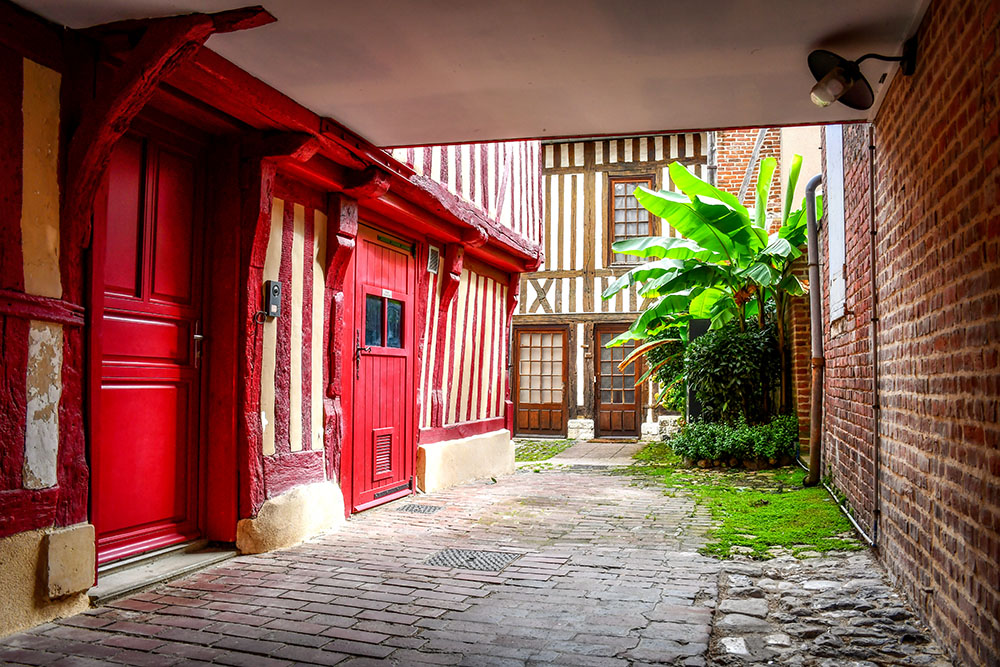
Secret courtyard in the old town © French Moments
Old Streets in the Enclos Quarter
In the Enclos quarter, I was particularly interested in the Rue des Petites Boucheries. I had seen it in a coffee-table book and liked its “old France” character. It was one of those photographs that makes you think: I would quite like to go there myself.
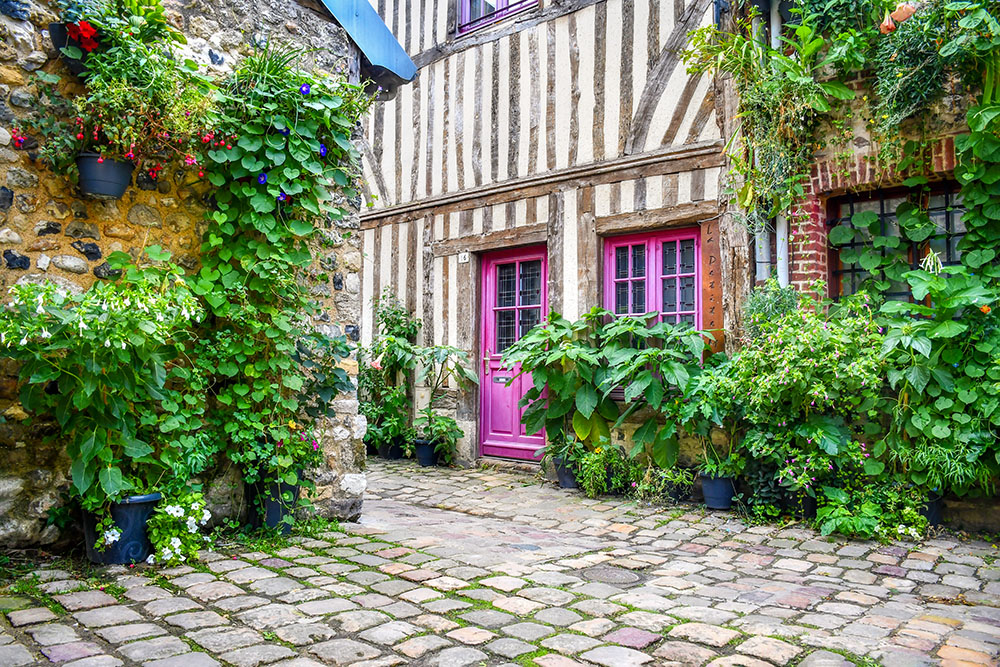
Rue des Petites Boucheries © French Moments
There were few visitors in the street when I explored it. After the activity around the Vieux-Bassin, I enjoyed having a little more space to stop and look. It was also satisfying to find the place I remembered from the book and choose my own view of it.
A Little History: The Enclos Quarter
The name Enclos means “enclosure” and recalls this quarter’s position within Honfleur’s former town walls. It formed the fortified centre, with the faubourgs of Sainte-Catherine and Saint-Léonard developing outside its defences.
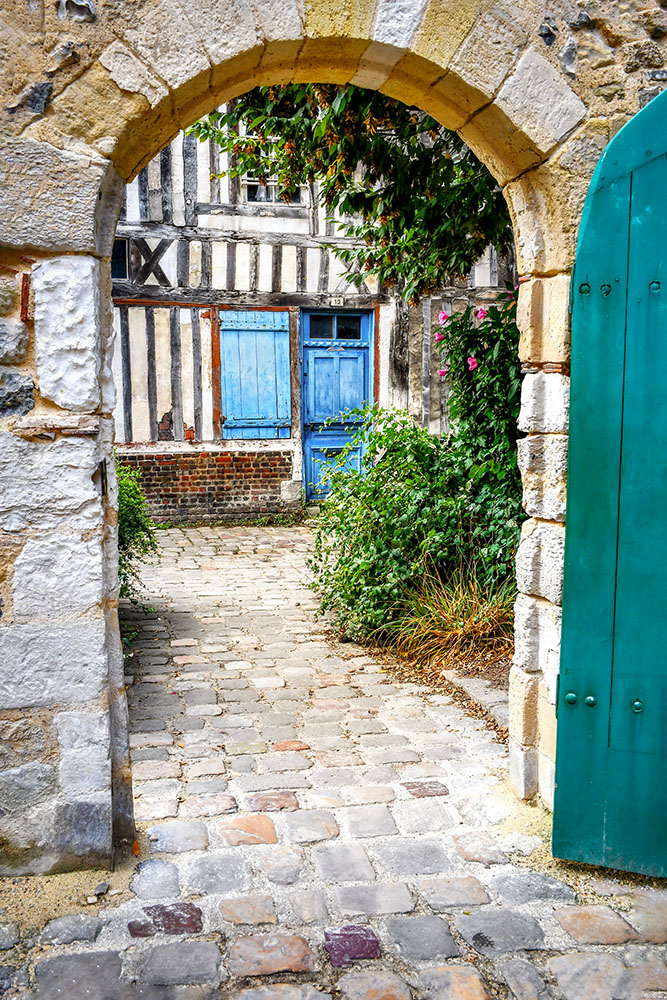
The ramparts enclosed the quarter until the late 17th century, when harbour improvements transformed this part of town. The Lieutenance, incorporating the old Porte de Caen, remains a reminder of that fortified past.
Among the quarter’s notable buildings are the Greniers à Sel, built in 1670 to store salt associated with the gabelle, the royal salt tax. Two of the original three survive, adding another chapter to the history found along these old streets.
Saint-Léonard and the Jardin du Tripot
Around Saint-Léonard, I found more timber-framed houses to photograph, notably along Rue Saint-Léonard. These were among the quieter streets during our visit, although they were still very much part of the historic town.
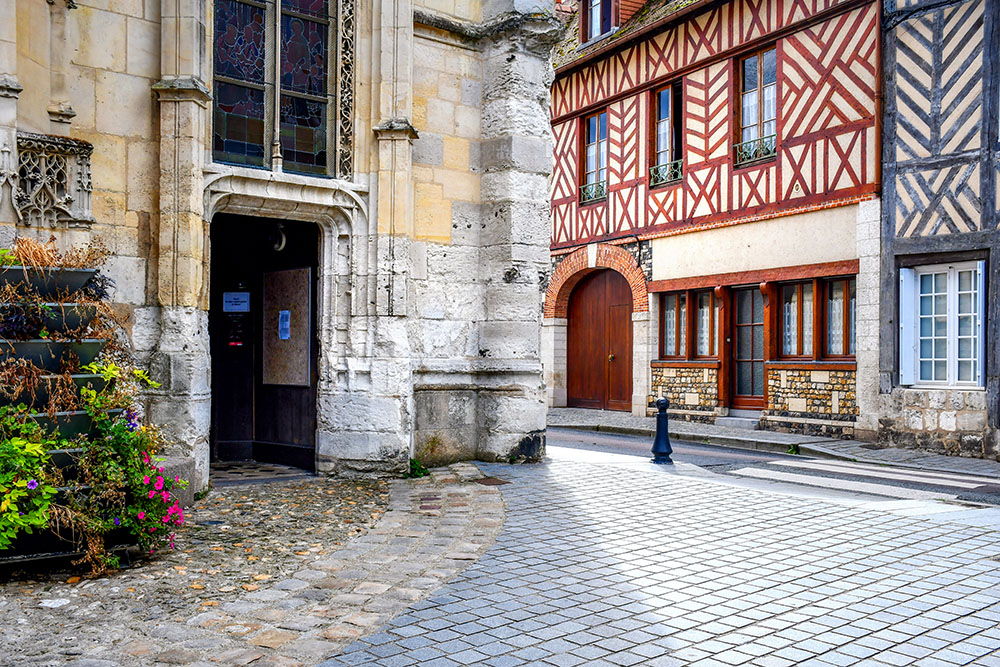
Rue Saint-Léonard and the parvis of the church © French Moments
I went inside Saint-Léonard church, but it was the exterior that held my attention most, especially its unusual bell tower. Sainte-Catherine would make a stronger impression on me inside; here, I was more interested in looking up from the street.
A Little History: Saint-Léonard
The Saint-Léonard quarter grew around its church, with the parish already established by the 12th century. During the 19th century, the neighbourhood expanded as industries, docks and the railway brought new activity to this part of Honfleur.
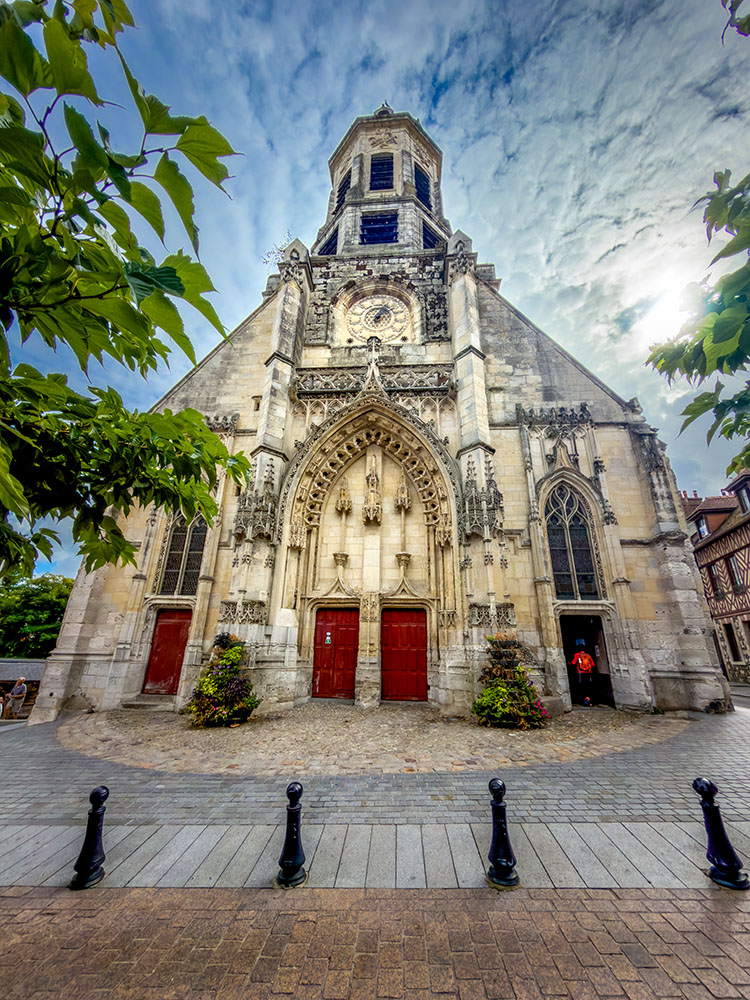
The church has had a turbulent history. Rebuilt after the Hundred Years’ War, it was partly burnt in 1562 during the French Wars of Religion. Its ornate Flamboyant Gothic entrance survives from the earlier building, while much of the church dates from the 17th century. The distinctive octagonal bell tower was added in 1760.
Look closely at the tower: its carved decoration includes musical instruments, an unexpected detail above the rooftops.
The Jardin du Tripot was another place I was pleased to have included. I liked finding this patch of greenery in the heart of Honfleur, with passages and terraces arranged around the water channels. The space felt thoughtfully laid out, with different places from which to look at the water and the surrounding buildings.
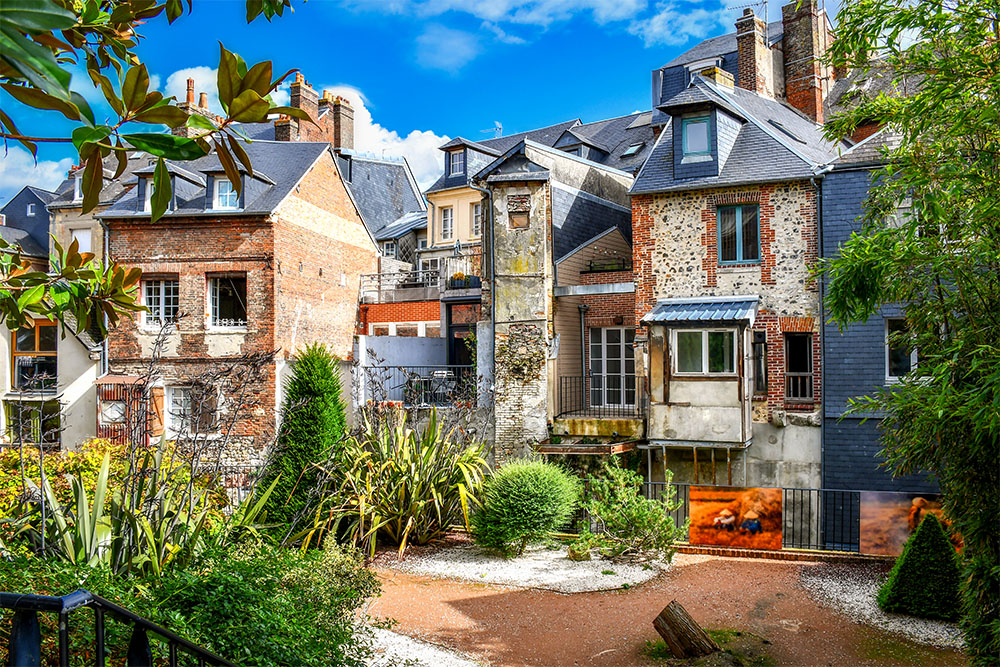
The Jardin du Tripot © French Moments
It made a pleasant pause during a visit in which I spent rather a lot of time pointing my camera at houses.
A Little History: Le Jardin du Tripot
Opened in December 2013, the Jardin du Tripot reveals traces of Honfleur’s working past. It occupies a site beside a branch of the Claire stream, where it meets the Mordouet. These waterways once supplied the local tanning and dyeing trades.
Work to create the garden uncovered remains of the old dye works. Dyeing vats and a network of water channels were incorporated into the design, while materials found on site were reused to restore the low walls.
Some of the former industrial remains now hold aquatic plants. As you follow the paths beside the water, you can still see how this quiet corner once served a very practical purpose.
Rue Brûlée and Rue du Puits
Rue Brûlée and Rue du Puits were both on my list before we arrived. Their timber-framed houses had attracted my attention during my research, and I wanted to leave enough time to explore them.
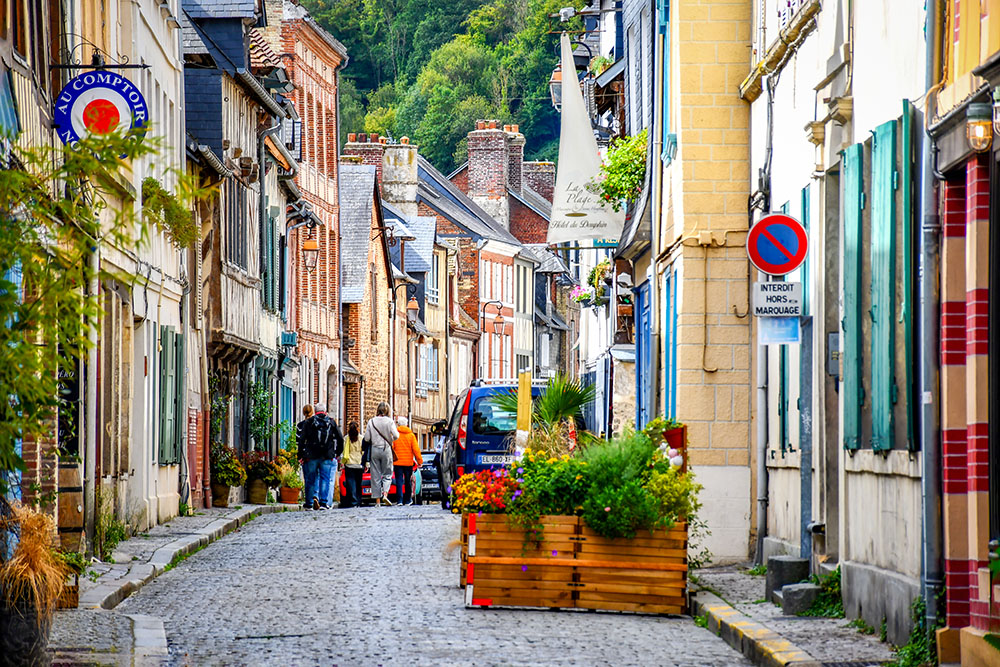
A picturesque view of Rue Brûlée © French Moments
I particularly enjoyed taking photographs and filming along Rue Brûlée. Although the Vieux-Bassin remained the highlight of the day, this was another part of Honfleur where I was happy to spend time with the camera.
There were fewer tourists here when I passed through, making it easier to stop without getting in anyone’s way.
I had also noted down Rue des Capucins, but never got round to exploring it. Even with six hours in town, there were limits to what I could fit in while taking photographs and video. Still, I was glad I had prepared this small list of streets: it encouraged me to keep exploring.
Exploring the Sainte-Catherine Quarter
The Sainte-Catherine quarter took up a good part of my walk around Honfleur.
This former seafarers’ neighbourhood stretches behind Quai Sainte-Catherine, from the old harbour towards the wooden church and the streets beyond.
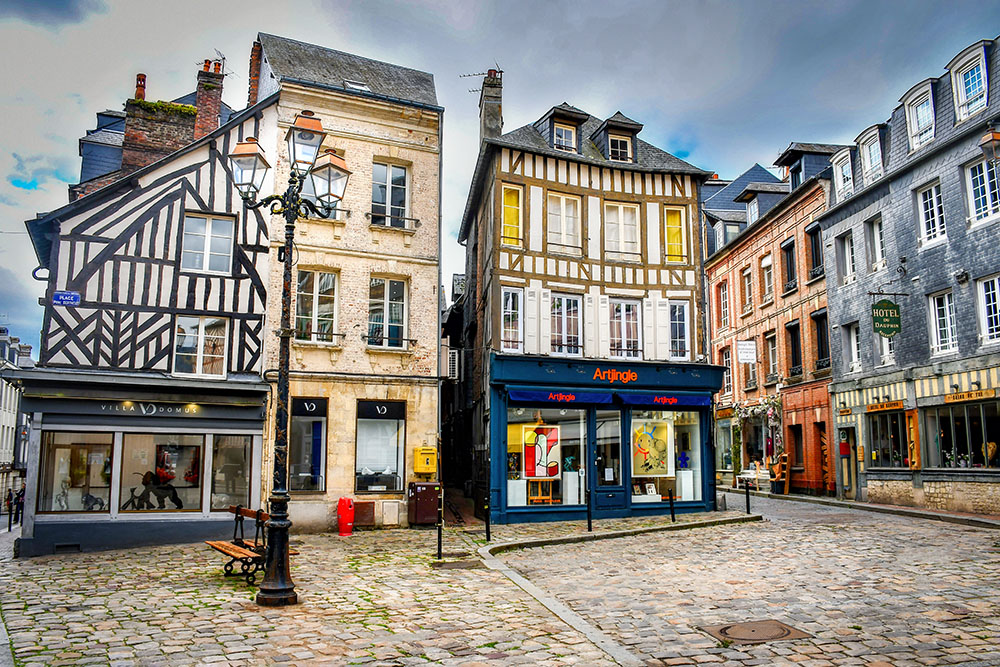
Place Pierre Berthelot © French Moments
I had already marked several of them on my list before coming. With its timber-framed houses and narrow lanes, it was a part of town I particularly wanted to explore with my camera.
The church was an obvious stop, but I also walked further through the quarter, eventually reaching the Phare de l’Hôpital before making my way back to the Vieux-Bassin.
A Little History: Faubourg Sainte-Catherine
Sainte-Catherine developed outside the walls of Honfleur’s fortified centre, known as the Enclos. The word faubourg describes a neighbourhood beyond the town’s gates. This was the seafarers’ quarter, closely connected to the harbour and the livelihoods of its sailors and fishermen.
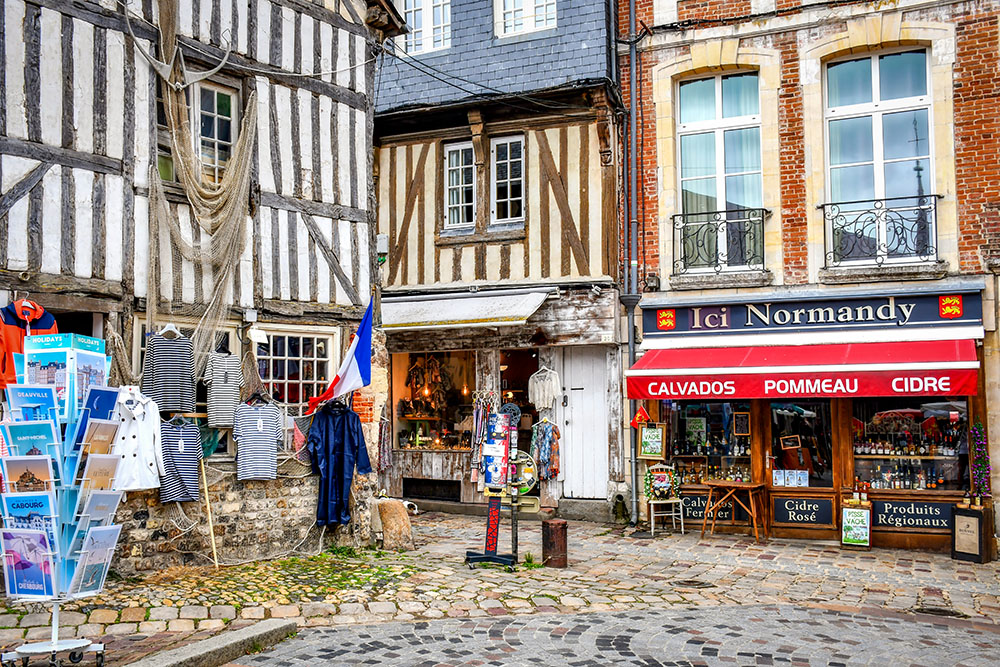
Its wooden church, built by shipwrights in the second half of the 15th century, is a striking reminder of those maritime skills. Around it, narrow cobbled streets and timber-framed houses preserve much of the character of old Honfleur.
Streets such as Rue du Puits, Rue des Capucins and Rue de l’Homme de Bois belong to this historic quarter, which extends well beyond the familiar harbour façades.
Sainte-Catherine's Bell Tower
One unusual feature is easy to spot before you even enter Sainte-Catherine: its bell tower stands on its own, across the square from the church. With its timber structure and wooden cladding, it is quite a sight in its own right.
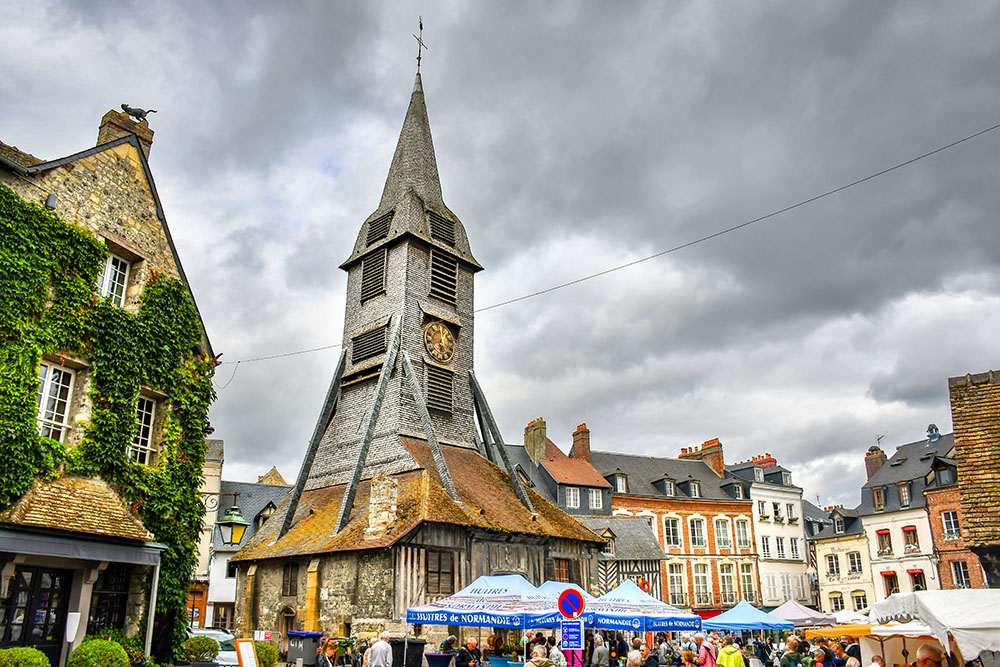
.The wooden and isolated bell tower of Sainte-Catherine church © French Moments
On the morning of our visit, a small market had gathered at its foot, with a greengrocer and stalls selling oysters and other seafood. I stopped to photograph it, although the clouds were still refusing to cooperate.
Sainte-Catherine: Honfleur’s Wooden Church
Sainte-Catherine dates from the second half of the 15th century, when it replaced a stone church destroyed during the Hundred Years’ War. Built by local shipwrights, its timber structure is closely connected to the skills of this maritime town.
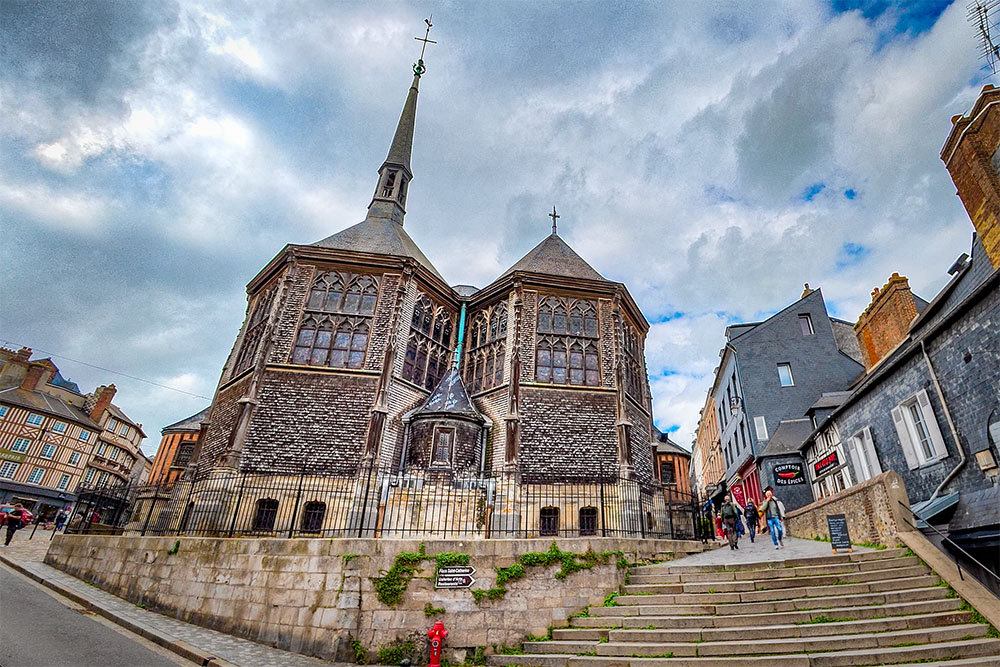
The rear of Sainte-Catherine Church © French Moments
I knew it was a wooden church, but I was still surprised when I stepped inside. I had imagined a much darker interior. Instead, I could appreciate the woodwork and the unusual arrangement of two naves side by side. Tourist brochures say that this is France's largest wooden-built church.
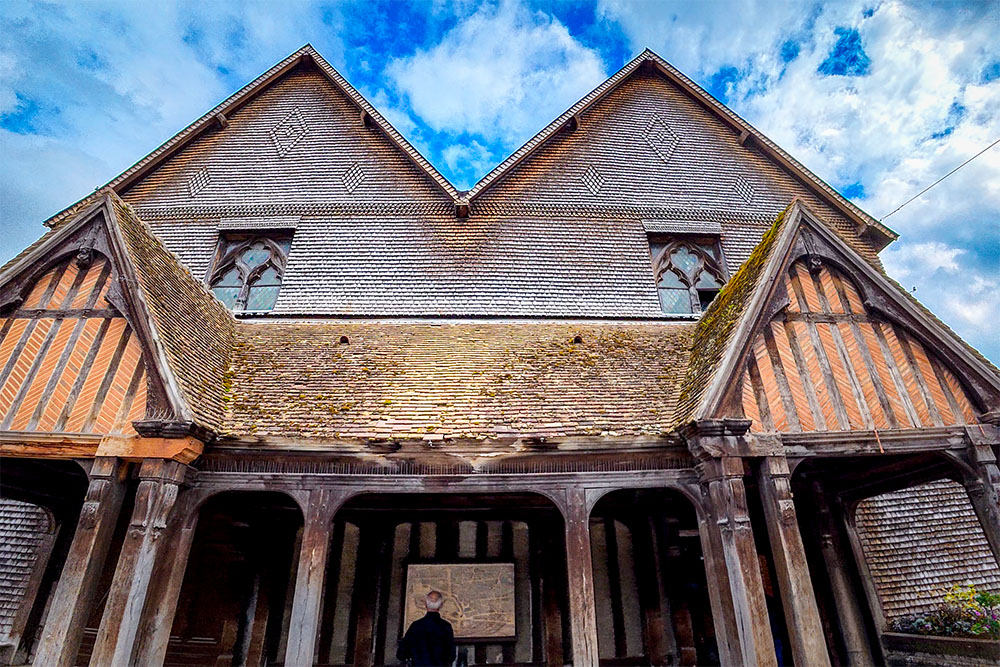
Sainte-Catherine Church © French Moments
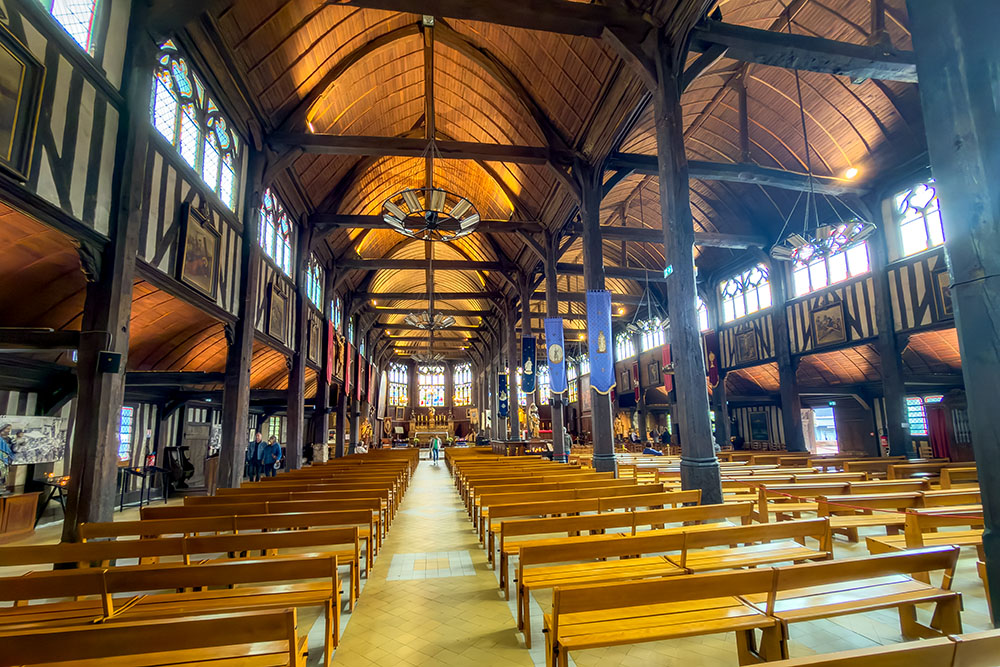
The surprising interior of Sainte-Catherine Church © French Moments
There were plenty of other visitors looking around too. This was certainly one of the busier places we entered that day, but I would not have wanted to miss it.
At Saint-Léonard, it was the exterior and the bell tower that interested me most. Here at Sainte-Catherine, the interior made the strongest impression.
A Little History: Sainte-Catherine Church
Sainte-Catherine owes its unusual appearance to Honfleur’s shipwrights. In the second half of the 15th century, they built a wooden church to replace the stone building destroyed during the Hundred Years’ War.
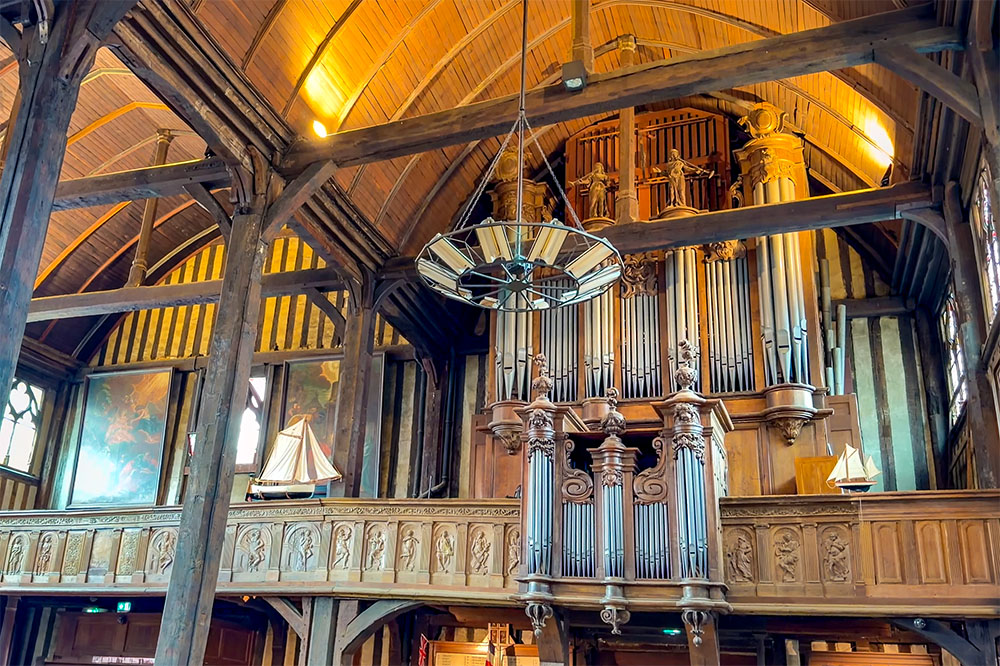
The church grew in stages. Its first nave was followed by a second alongside it as more space was needed for the parish. This explains the distinctive double nave you see today, with timber vaults resembling the upturned hulls of ships.
The bell tower stands separately across the square. Together, church and tower offer a remarkable example of how the skills of a seafaring community shaped its place of worship.
Rue des Lingots, Rue de l’Homme de Bois and Rue Haute
From Sainte-Catherine church, I continued along Rue des Lingots, then followed Rue de l’Homme de Bois towards the Phare de l’Hôpital.
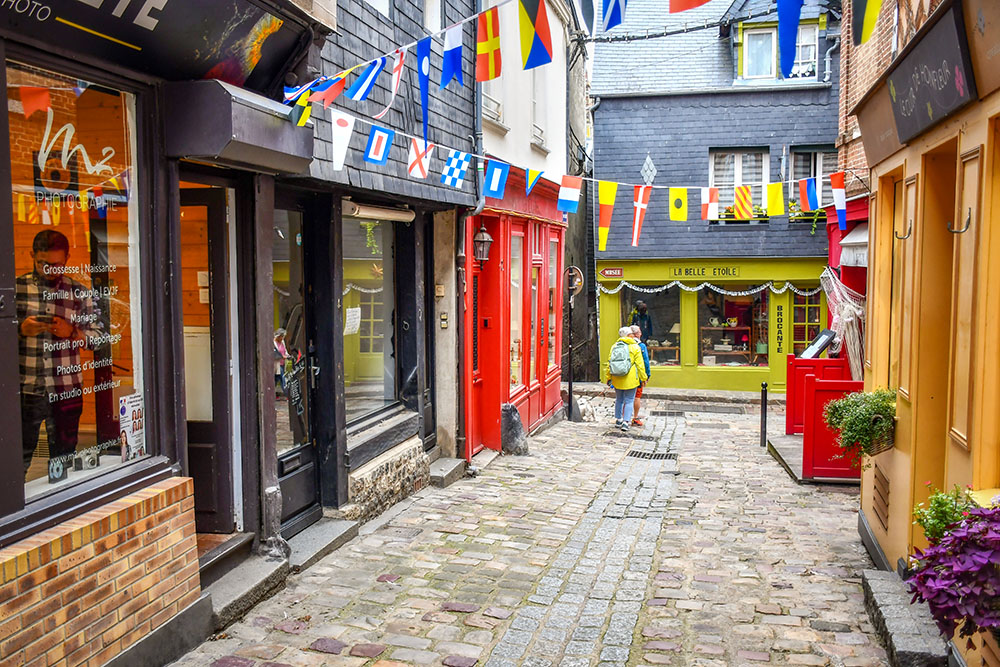
Rue des Lingots leading to Rue de l'Homme de Bois © French Moments
These streets run through the Sainte-Catherine quarter, beyond the immediate surroundings of the Vieux-Bassin, with old houses and narrow frontages giving plenty of reasons to look up along the way.
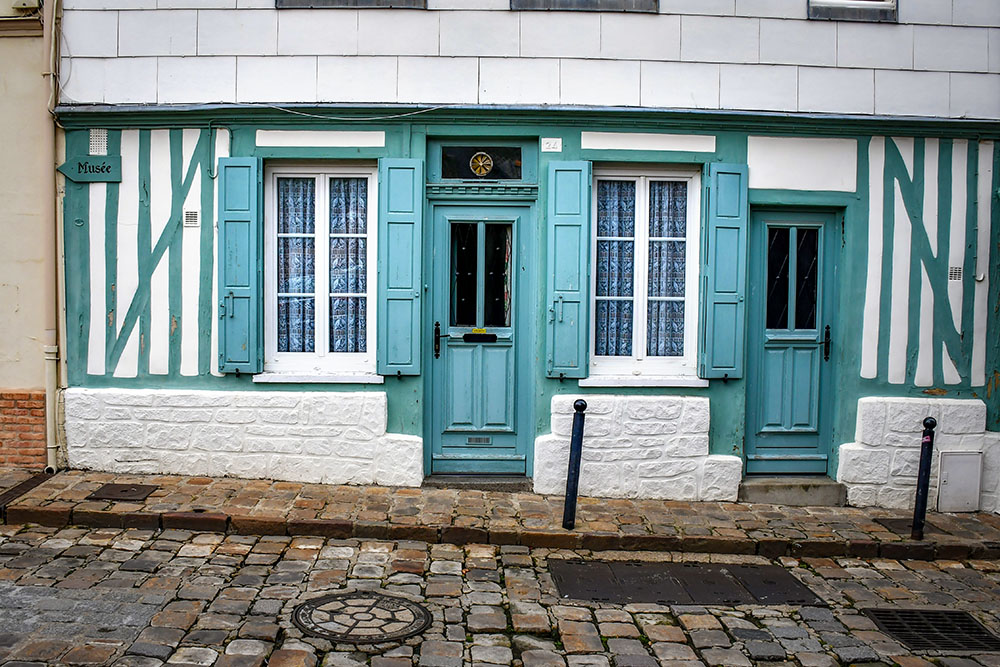
An old house in Rue de l'Homme de Bois © French Moments
Rue de l’Homme de Bois is also home to the Musée Eugène-Boudin, whose collections explore Honfleur’s artistic connections through works by Boudin and other painters inspired by the region.
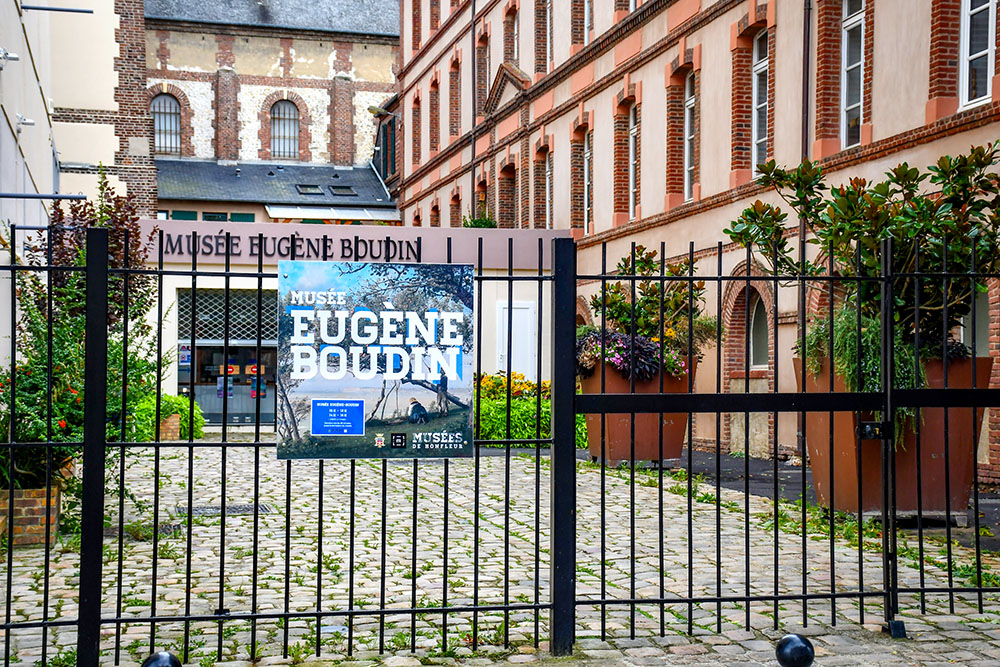
The entrance to the Eugène Boudin Museum © French Moments
My walk took me as far as the lighthouse before I turned back towards the centre along Rue Haute.
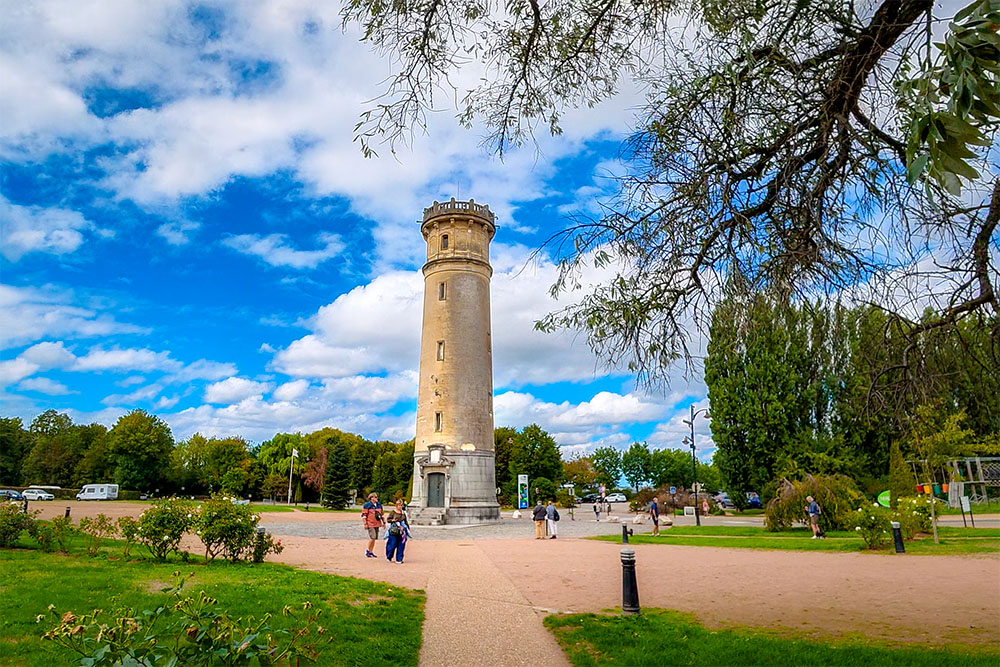
The lighthouse known as Phare de l'Hôpital © French Moments
Here, the Maisons Satie celebrate the life and work of composer Erik Satie, born in Honfleur in 1866.
I did not have time to visit either museum that day, but both fit naturally into a longer exploration of the quarter. I continued along Rue Haute to the Lieutenance and the old harbour, completing my circuit through this part of Honfleur.
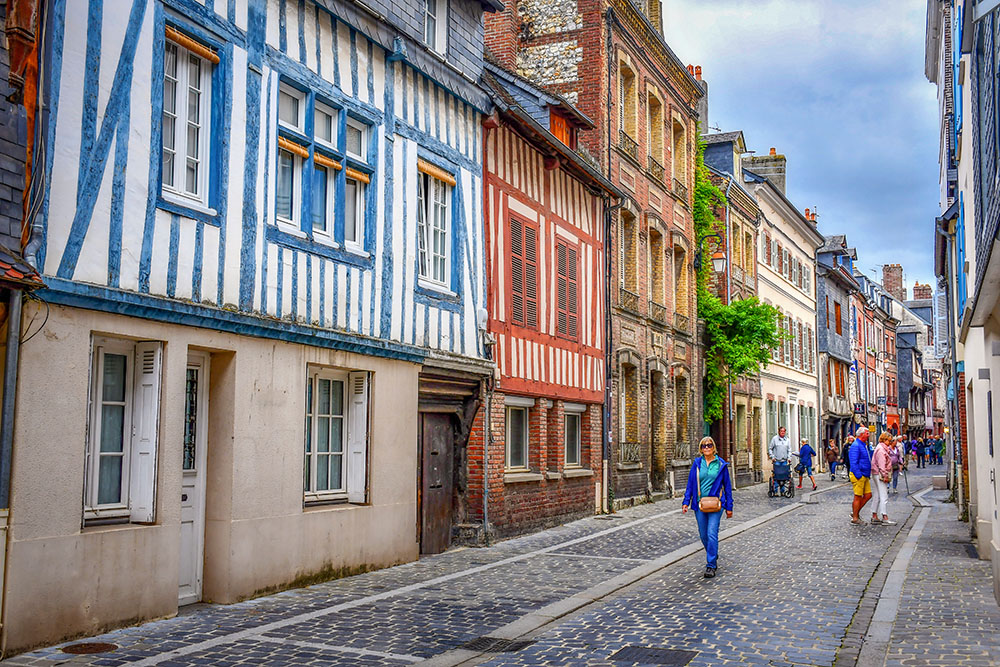
The picturesque Rue Haute © French Moments
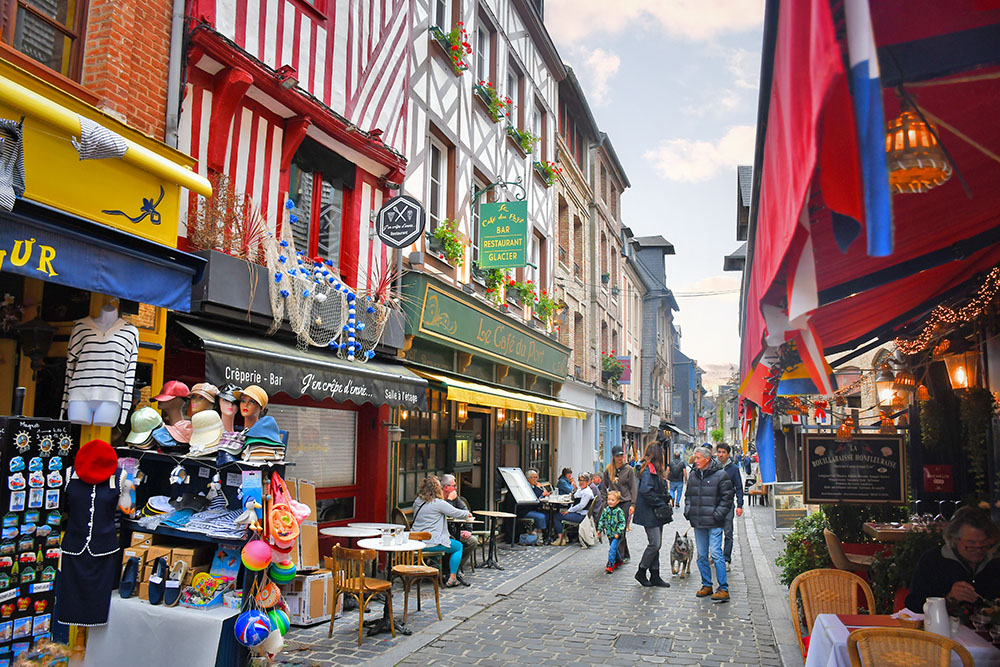
Rue Haute © French Moments
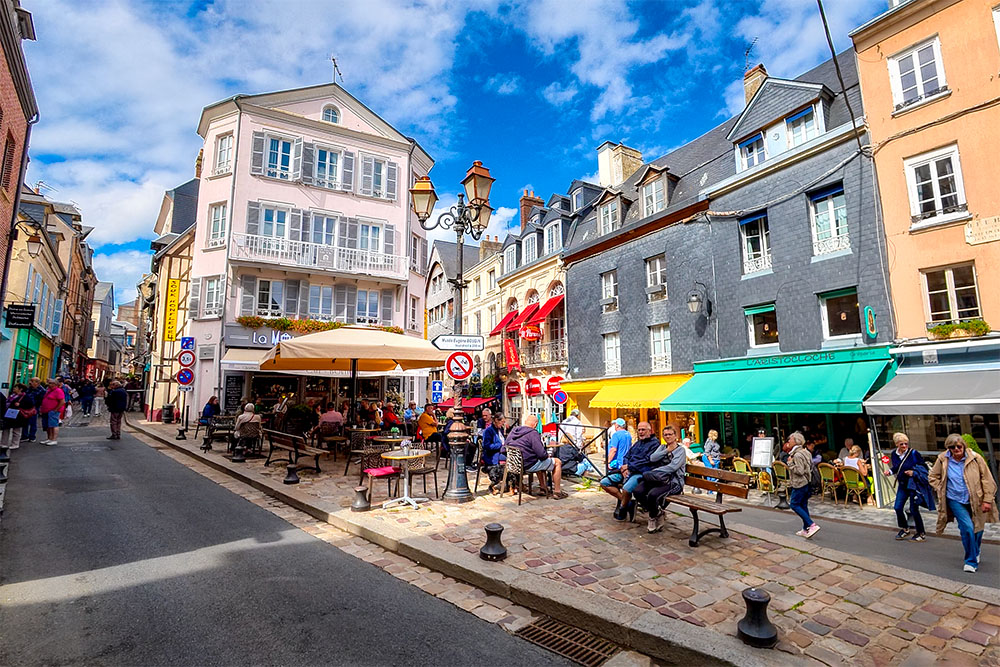
Place Hamelin © French Moments
The People We Met Along the Way
Some of my fondest memories of Honfleur come from conversations we had during the day.
We chatted with a woman working in a jewellery shop, a member of staff at a museum reception and an employee at the médiathèque, the public library. We talked about their lives in Honfleur, our work and what had brought us to the town. All three were friendly and helpful.
The médiathèque gave Rachel and Aimée a chance to enjoy some quiet time during our visit. It also led to a conversation about books, with the member of staff suggesting French titles for young readers. When you spend much of a day exploring streets and taking photographs, a pause like this is very welcome.
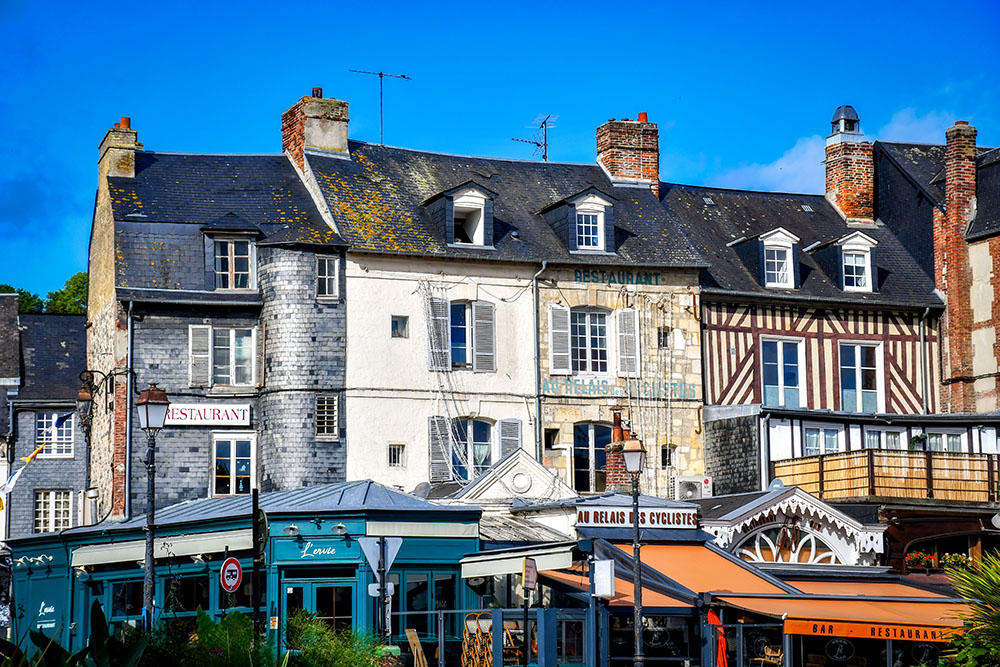
Quai de la Quarantaine © French Moments
We were also recommended places to eat away from the Vieux-Bassin, although we did not have time to try them. I cannot pass on a personal recommendation, but I appreciated people taking the trouble to offer advice.
Then someone recognised us.
Among all the visitors in Honfleur that day was Aimée’s former ballet teacher, who lives in the Portsmouth area, as we do. We certainly had not expected to bump into her during our first visit to a Norman harbour town.
There may have been people from all over the world around us, but for a moment the world felt rather small.
Planning a Day in Honfleur: Notes from Our Visit
Parking in Honfleur
We left the car at the Parking de l’Est, near the big wheel that wasn't there during our September visit. It was convenient for walking into the centre and made a useful starting point for our day.
Parking was one of the less appealing aspects of visiting Honfleur: I found it expensive. We chose this car park with both price and location in mind. If you are arriving by car, it is worth checking the current charges before choosing where to leave it, especially for a longer visit.
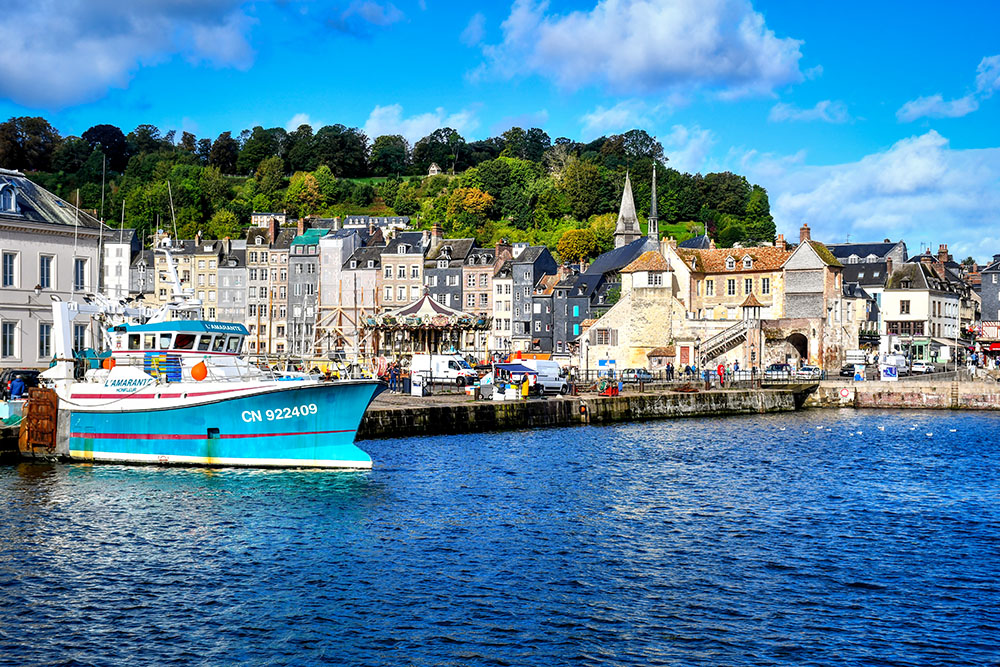
The view from the Jetée du Transit near the Parking de l'Est © French Moments
How Much Time Do You Need?
We arrived at about 10 am and left around 4 pm. Those six hours gave us time to explore the historic quarters, visit both churches and go inside the Lieutenance. We also spent a considerable amount of time taking photographs and filming.
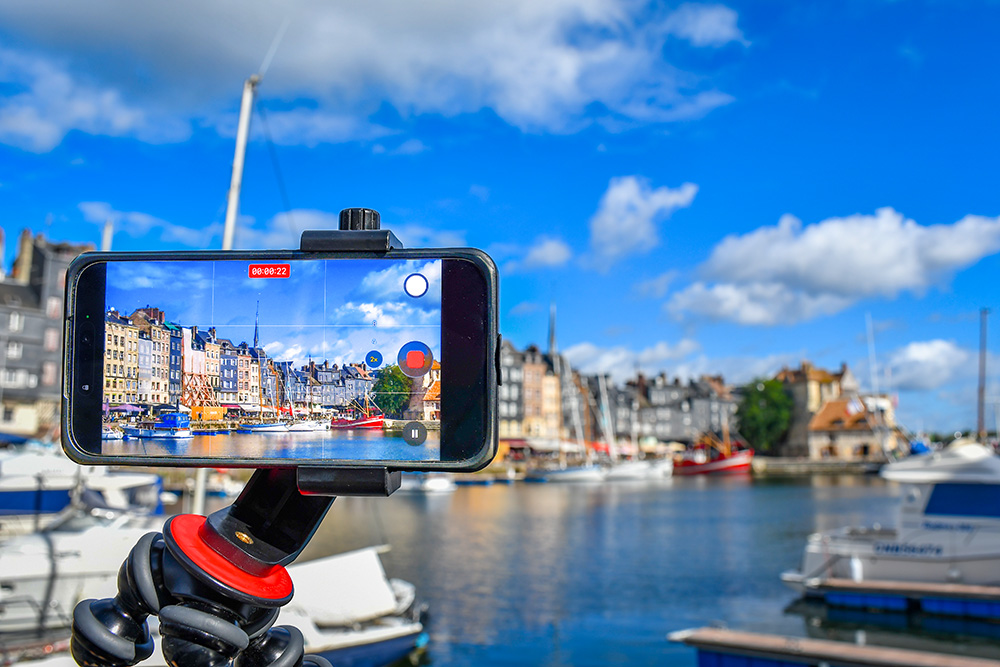
On a mission in Honfleur: taking photos and films for the purpose of this article! © French Moments
Ours was therefore a slightly unusual visit. I might spend ages waiting for sunlight on a façade, then move fairly quickly through somewhere else. Rachel and Aimée also had their quiet break at the médiathèque.
For a first visit, we covered a fair amount of ground, but we did not visit the other museums or sit down to a leisurely restaurant lunch. If we had included either, I would have wanted longer. A full day would have suited us well at a more relaxed pace.
After leaving Honfleur, we stopped at Villerville on the way back to our base in the Pays d’Auge.
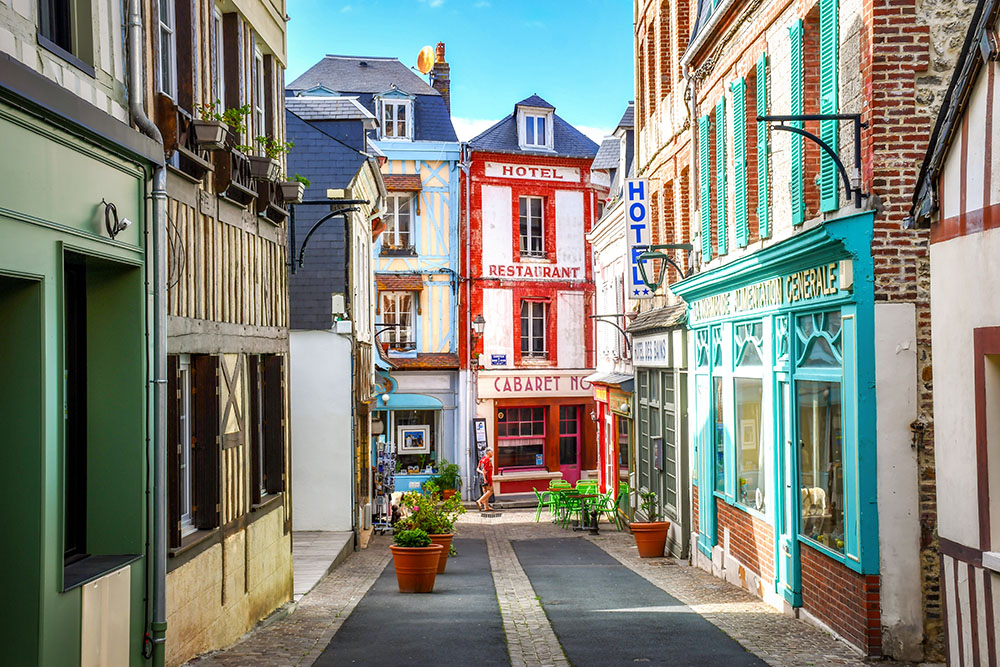
The centre of Villerville © French Moments
Where to Stay in Honfleur
We stayed in the countryside near Livarot, but if I were to spend a night in Honfleur, I would look for somewhere within walking distance of the Vieux-Bassin.
Staying around the Sainte-Catherine quarter would make it easy to explore on foot and return to the harbour with the camera towards evening. If you are driving, check the parking arrangements and any extra charges before booking.
One hotel worth considering is La Maison de Lucie, an 18th-century property in the historic centre, close to the old harbour. Its excellent guest reviews caught my attention: at the time of writing, it held a Booking.com score of 9.6 out of 10 from more than 500 reviews. I have not stayed there myself, but it would certainly be on my shortlist.
Use the map below to compare hotels and holiday rentals for your dates. Check the total price, parking options and cancellation conditions, as well as the location.
Visiting Honfleur in September
I was glad we visited on a weekday in September. Honfleur was still lively, with plenty of visitors around the harbour and inside Sainte-Catherine, but the crowds did not spoil our day. In several of the smaller streets, we encountered far fewer people.
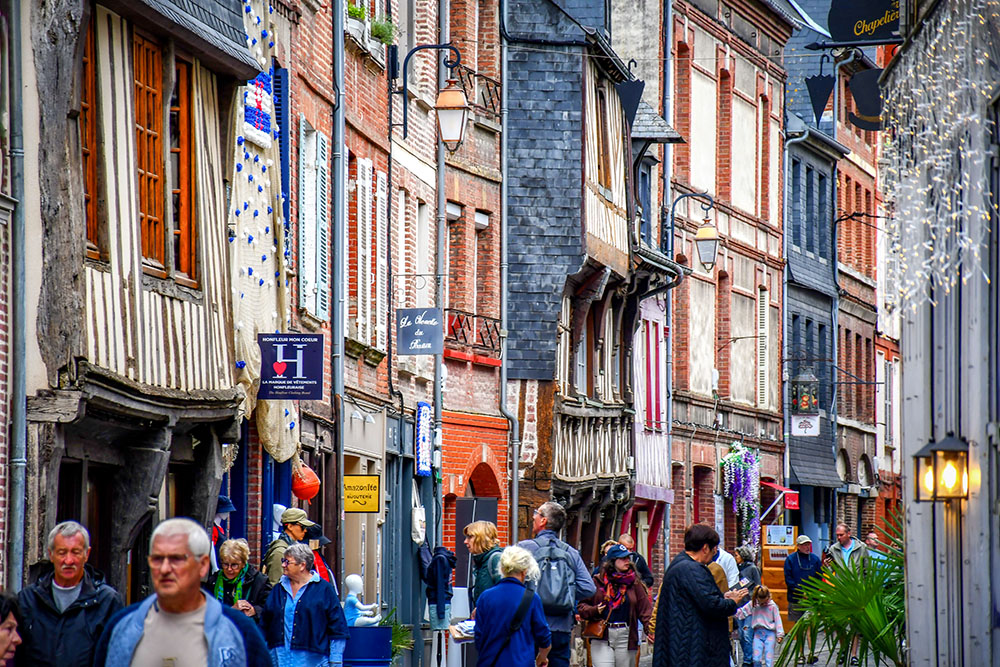
The narrow Rue Haute in the Sainte-Catherine District © French Moments
Coming from the countryside, I certainly noticed how busy and cosmopolitan the town felt. That is part of the experience of visiting somewhere so well known. On this particular day, we could enjoy the atmosphere and still find quieter places when we wanted them.
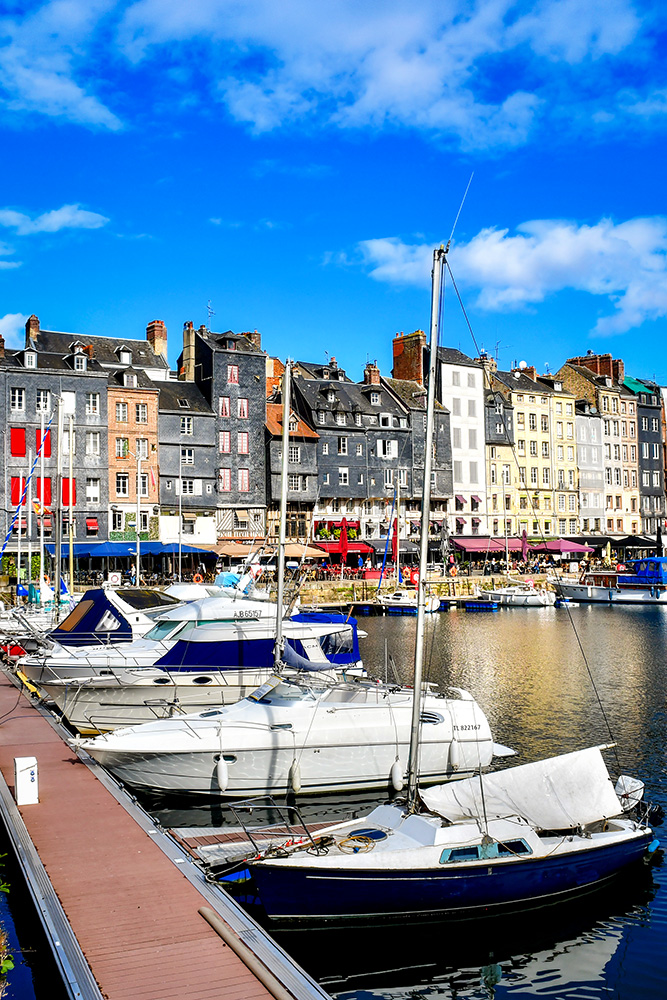
The Vieux-Bassin of Honfleur © French Moments
Would I Return to Honfleur?
I am glad we finally made it to Honfleur. After knowing its harbour through photographs for so long, I now have my own memories of standing beside it, watching the clouds and waiting with my camera.
The Vieux-Bassin remains my strongest image of the day, particularly from Quai Saint-Étienne. But I also remember Rue Brûlée, the wooden interior of Sainte-Catherine and the people who took time to talk to us.
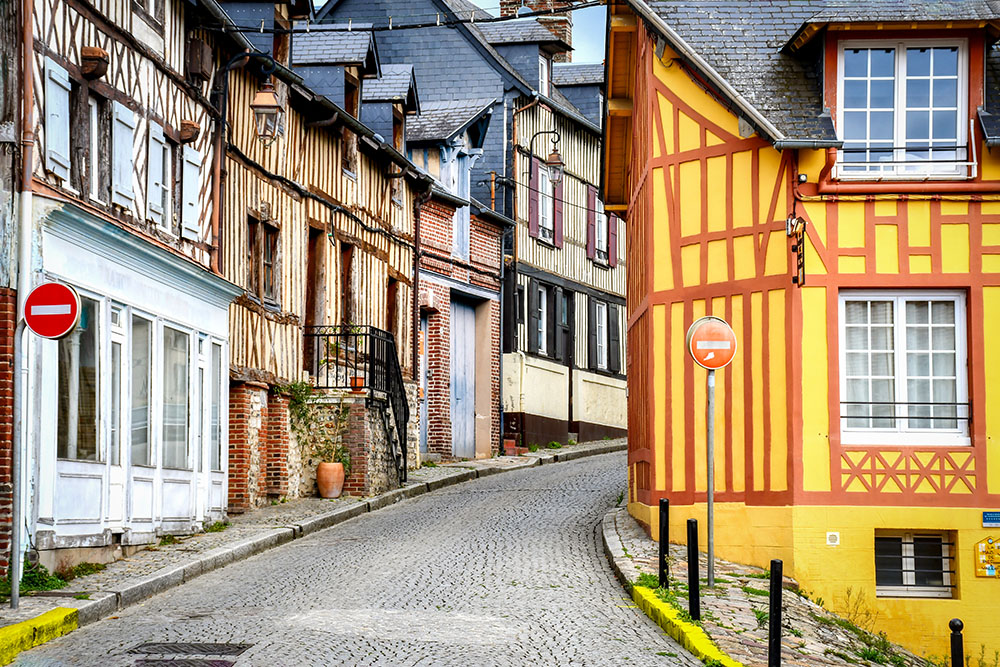
Half-timbered houses in Rue Bucaille in Honfleur © French Moments
I did not leave with an urgent desire to arrange another visit. We had enjoyed our day, and there were other places in Normandy we wanted to explore.
However, I could be tempted by a night in Honfleur. I would like to walk through the streets towards evening and see the Vieux-Bassin as daylight fades. We were already on our way back via Villerville by then, so that is a side of the town I have yet to discover.
That is the amateur photographer in me talking, of course. Apparently, six hours with a camera was not quite enough.
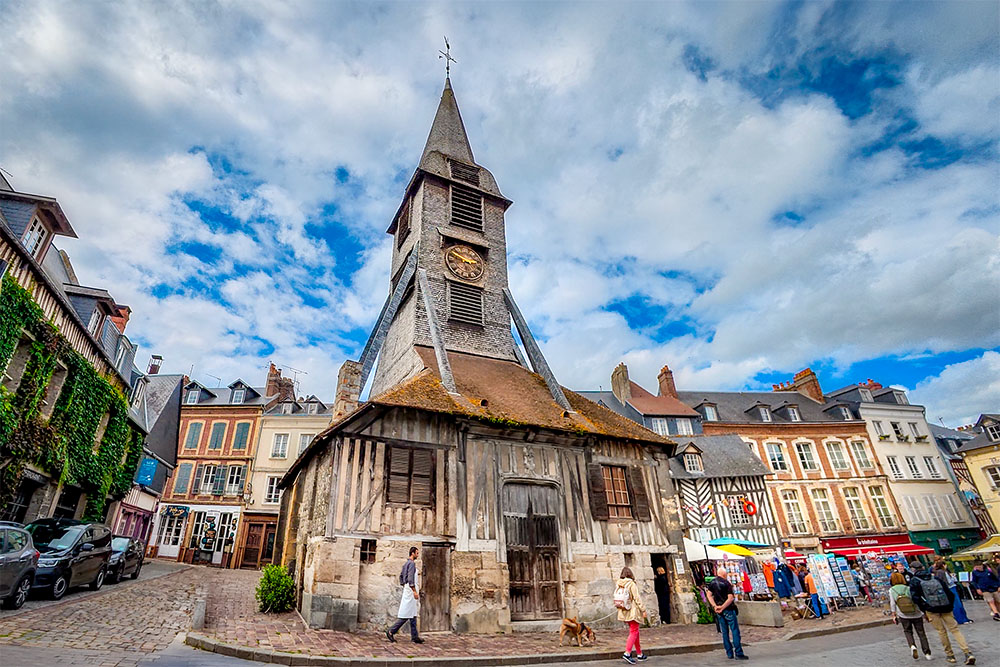
The bell tower of Sainte-Catherine Church © French Moments
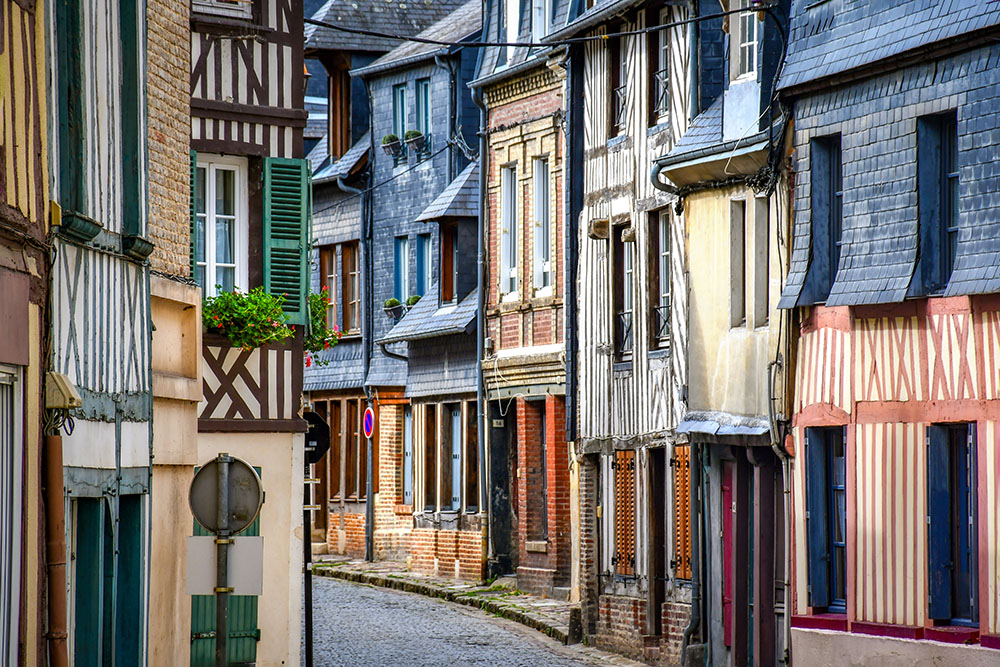
Rue de la Bavole © French Moments
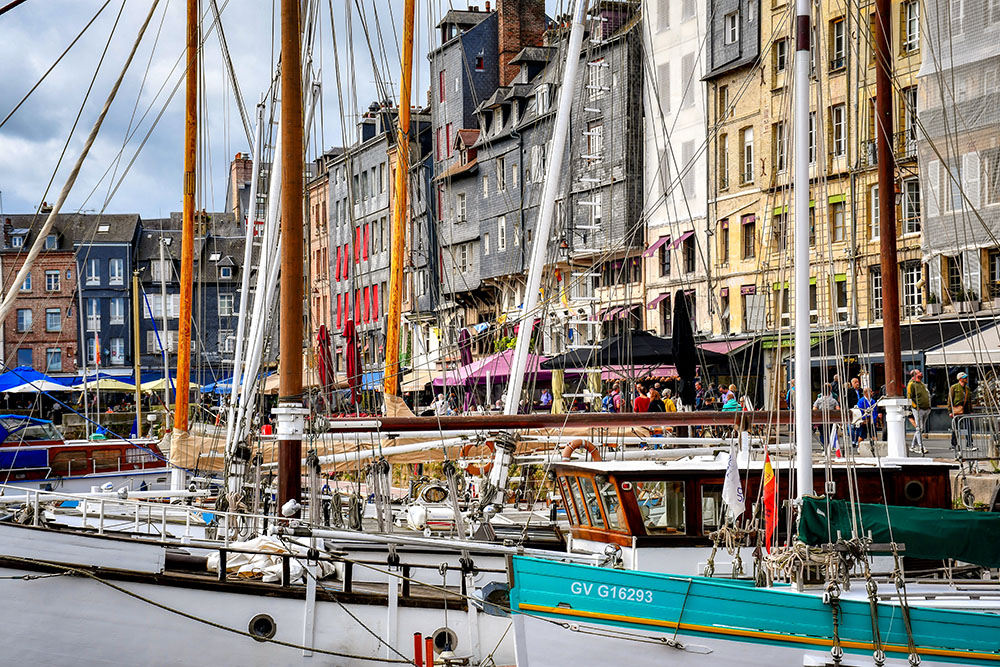
Vieux-Bassin © French Moments
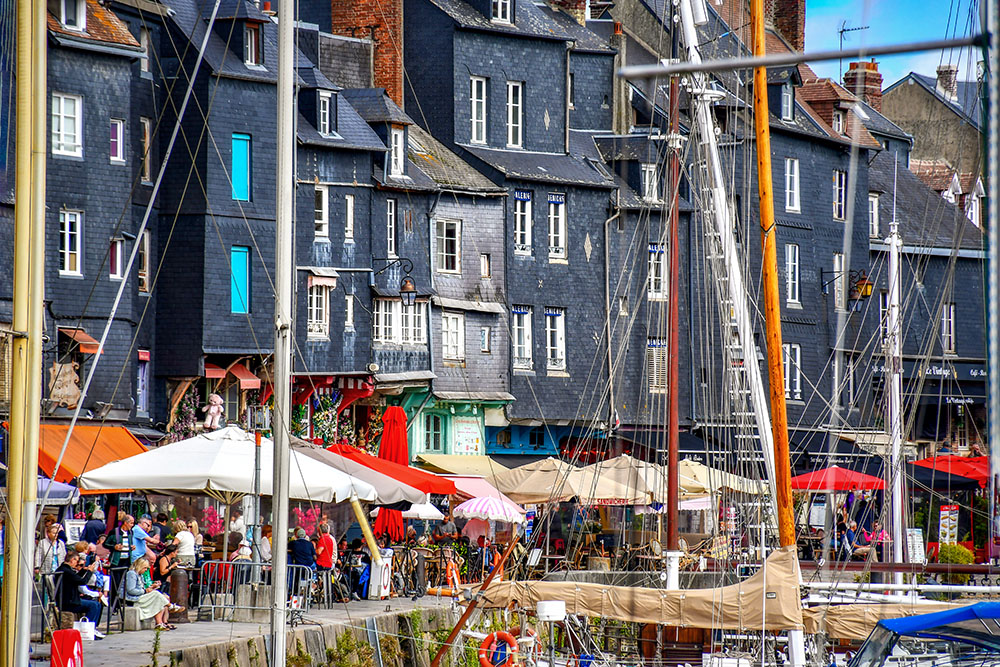
Vieux-Bassin © Honfleur
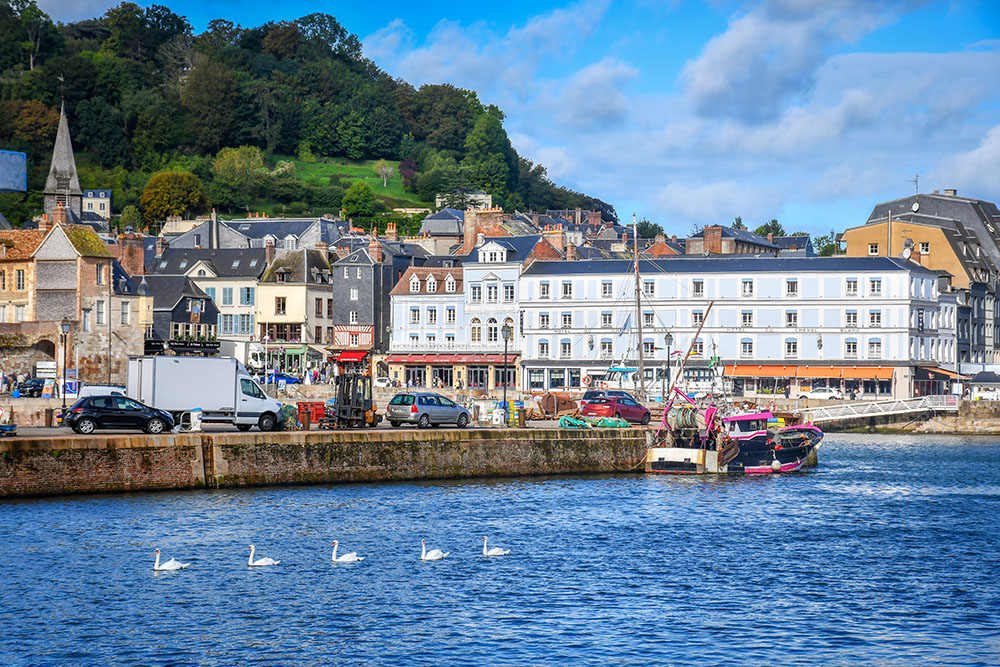
Bassin de l'Est © French Moments