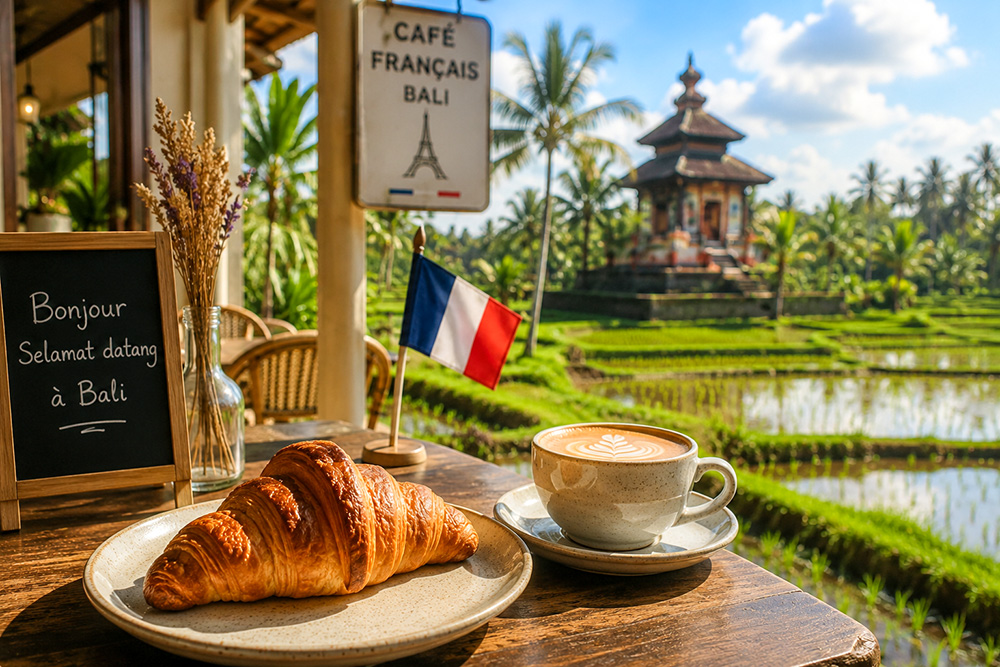


France in Bali might sound like an unlikely combination, but France has a habit of travelling well.
Wherever the French settle in numbers, a certain infrastructure of daily life follows them: a bakery that opens before sunrise, a bistro with a handwritten menu, somewhere to argue about pétanque.
Bali, of all places, has become one of the more surprising examples.
On an island better known for rice terraces, surf breaks and temple ceremonies, you can now start the morning with a croissant that would not embarrass a Parisian boulangerie, and end the day with steak frites and a glass of red.
For anyone who loves France, tracing its footprint across the Island of the Gods makes for an unusual and rather charming travel theme.
Here is how the French ended up in Bali, where to taste their influence, and how to plan a trip around it.
Finding France in Bali
France in Bali is more than a collection of bakeries and restaurants: it is the result of a French community that has gradually made the island home.
How Bali Became a French Address
The French connection to Bali did not appear overnight.
Surfers and artists began drifting to the island decades ago, drawn by the waves around Uluwatu and the creative scene in Ubud.
Restaurateurs, designers and hoteliers followed, and the rise of remote work brought a younger generation of French professionals who found they could keep their careers and swap Lyon winters for the tropics.
Today the francophone community is well established enough to support its own institutions.
There is a French school serving expat families in the Umalas area, an Alliance Française offering language classes and cultural events, and an active network of French associations and community groups.
Around Seminyak, Umalas and Canggu in particular, it is entirely normal to hear French spoken at the next table, and Bastille Day does not pass unnoticed on the island.
What makes this interesting for visitors is that the community has shaped the food scene in its own image.
The French did not come to Bali to open souvenir shops. They came, in large part, to cook.
The Croissant Test: Bakeries Worth Crossing the Island For
Any French community can be judged by its viennoiserie, and Bali passes the test more convincingly than you might expect.
The best-known name is Monsieur Spoon, a bakery founded by French friends that has grown into several locations across the south of the island and Ubud.
Its croissants, pains au chocolat and tartes au citron have become something of a ritual for expats and travellers alike, and the queues on weekend mornings tell their own story.
What is easy to miss is how difficult this is to pull off in the tropics.
Laminated dough is temperamental at the best of times; in Bali’s heat and humidity, keeping butter layers cold and crisp is a genuine technical battle, and good bakeries work around it with imported butter, air-conditioned pastry rooms and very early starts.
That a proper croissant exists on the island at all is a small act of stubbornness, which is perhaps the most French thing about it.
A few practical notes for the pastry-minded traveller.
Go early: the best items are often gone by mid-morning, and a croissant eaten at 7am before the day heats up is a better experience than one at noon.
Look beyond the famous names too.
Canggu and Ubud both have smaller French-run or French-trained bakeries and pastry counters inside cafés, and half the pleasure is finding your own.
Bistros, Wine Lists and Island Produce
Beyond breakfast, Bali’s French tables range from casual bistros to serious fine dining.
Métis, a long-standing French-Mediterranean restaurant in the Kerobokan area, has been a fixture of the island’s dining scene for years, with a garden setting and a menu built around classic technique.
Elsewhere you will find duck confit, moules frites and onion soup on menus from Seminyak to Ubud, often reworked with Indonesian produce: local seafood, Balinese vanilla, tropical fruit in the desserts.
One thing worth knowing before you order: wine in Indonesia is expensive.
Import duties push prices well above what you would pay in France, so a modest bottle can cost what a very good one costs at home.
Many residents treat wine as an occasional pleasure rather than a daily habit, and some restaurants offer Balinese-grown labels that are worth trying at least once, if only for curiosity’s sake.
The overall effect is not a replica of France, and it is better for it.
What you get is French technique in conversation with Balinese ingredients and an island pace of life: dinner served barefoot-casual, frangipani trees where the plane trees would be.
French Life Beyond the Table
If you want to see the community rather than just taste it, there are ways in.
The Alliance Française runs cultural events and screenings that are open to visitors. Around the 14th of July, restaurants and community groups organise Bastille Day dinners and parties.
Pétanque, improbably, has a foothold on the island, and you may stumble across a boules pitch attached to a café or beach club in the south.
French-run businesses also extend well beyond food: surf schools, yoga studios, interior design shops and villa companies among them.
For francophone travellers, or French Moments readers practising their French, these are easy places to strike up a conversation.
Most expats are happy to talk about how they ended up on the island; almost nobody’s answer is boring.
Planning a French-Flavoured Bali Trip
A little geography helps. The French food scene clusters in the south and centre of the island: Seminyak, Umalas, Kerobokan and Canggu on the coast, and Ubud inland.
These areas are not far apart on the map, but Bali traffic is slow, so it is wiser to base yourself in one or two places and explore locally than to criss-cross the island chasing bakeries.
Day-to-day logistics run on your phone far more than they do in France.
Restaurant reservations here usually happen over WhatsApp rather than by telephone, drivers and villa hosts coordinate by message, and the Gojek and Grab apps handle everything from airport pickups to food delivery; arranging an eSIM Bali before departure means all of that works from the moment you clear immigration at Ngurah Rai, instead of beginning your holiday in a queue at a SIM card counter.
It is a small piece of preparation that makes the first day feel considerably less improvised.
Two more practical points. Carry some cash: smaller warungs and markets do not always take cards, even in areas where the French cafés do.
And book the popular tables ahead, especially in high season around July, August and the Christmas holidays, when both tourists and the expat community are out in force.
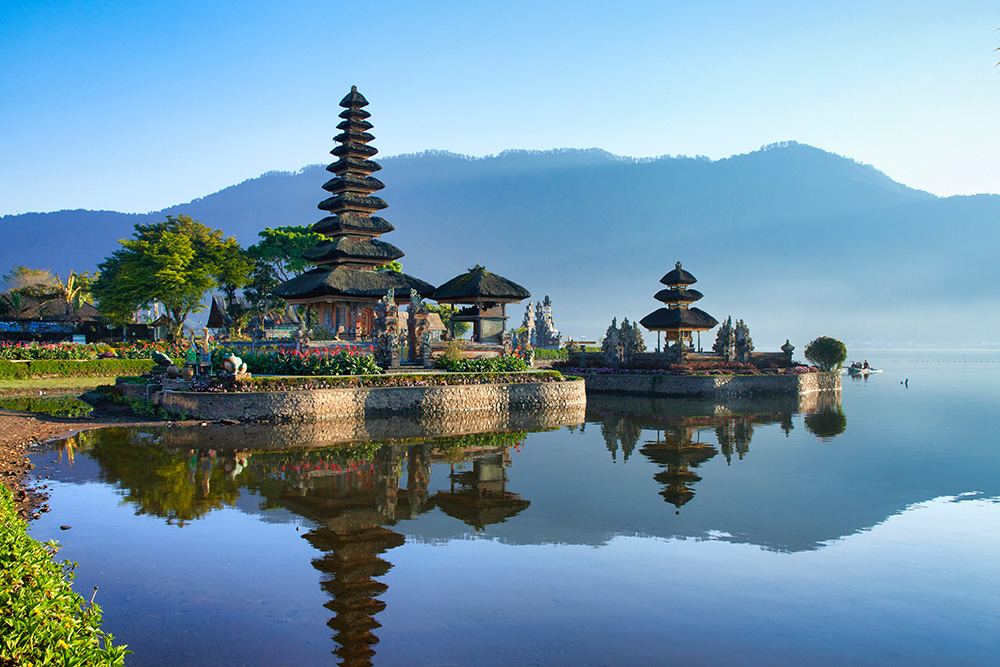
France in Bali: A Little Piece of France in the Tropics
There is something quietly moving about finding France in Bali, so far from home: the early-morning smell of butter and flour, the unhurried lunch, the insistence that a proper dessert is not optional.
Bali has absorbed all of it without losing its own character, which is exactly what the island has always done with outside influences.
For travellers who love France, it is also a reminder that French culture is not fixed to the hexagon.
It moves with its people, adapts to new climates and ingredients, and still recognisably remains itself.
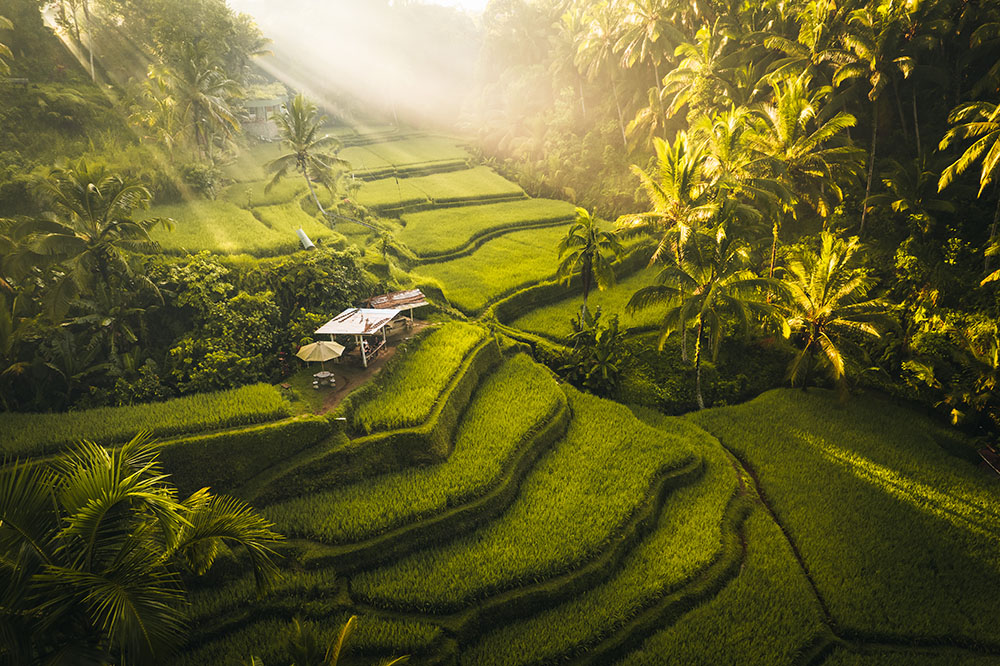
Eating a croissant while the mist lifts off a Balinese rice field, you could be forgiven for thinking the French might be onto something.