

This Colmar travel guide brings together everything you need to plan a first visit to one of the most distinctive towns in Alsace.
Colmar lies in eastern France, between Strasbourg and Mulhouse, close to the German and Swiss borders and at the foot of the Vosges Mountains.
The town is compact enough to explore on foot, yet rich enough in architecture, museums, wine culture and food to deserve far more than a hurried stop. Its historic centre is filled with colourful half-timbered houses, cobbled streets, canals and Renaissance merchants’ homes. But there is more to Colmar than a collection of photogenic façades.
The town is home to the Unterlinden Museum and the remarkable Isenheim Altarpiece, while its position among the Alsace vineyards makes it an excellent base for exploring the Wine Route, nearby villages and the Vosges Mountains.
I have known Colmar since childhood and later lived for more than a decade in the Haut-Rhin, the same department as the town. When I returned in May 2026 after almost ten years away, I followed a familiar route through the old centre, from Place Rapp to Pont Saint-Pierre.
The streets were busier than I remembered, particularly around the most photographed parts of Colmar. Yet I was also reminded that the experience changes considerably according to the time of day. Early in the morning and later in the afternoon, it becomes much easier to slow down, look above the shopfronts and appreciate the details that make the town so interesting.
In this Colmar travel guide, I will show you the best things to see and do in the Alsatian town, how long to stay, when to visit and how to get there.
You will also find a suggested itinerary, accommodation advice, practical information and ideas for day trips around Alsace.
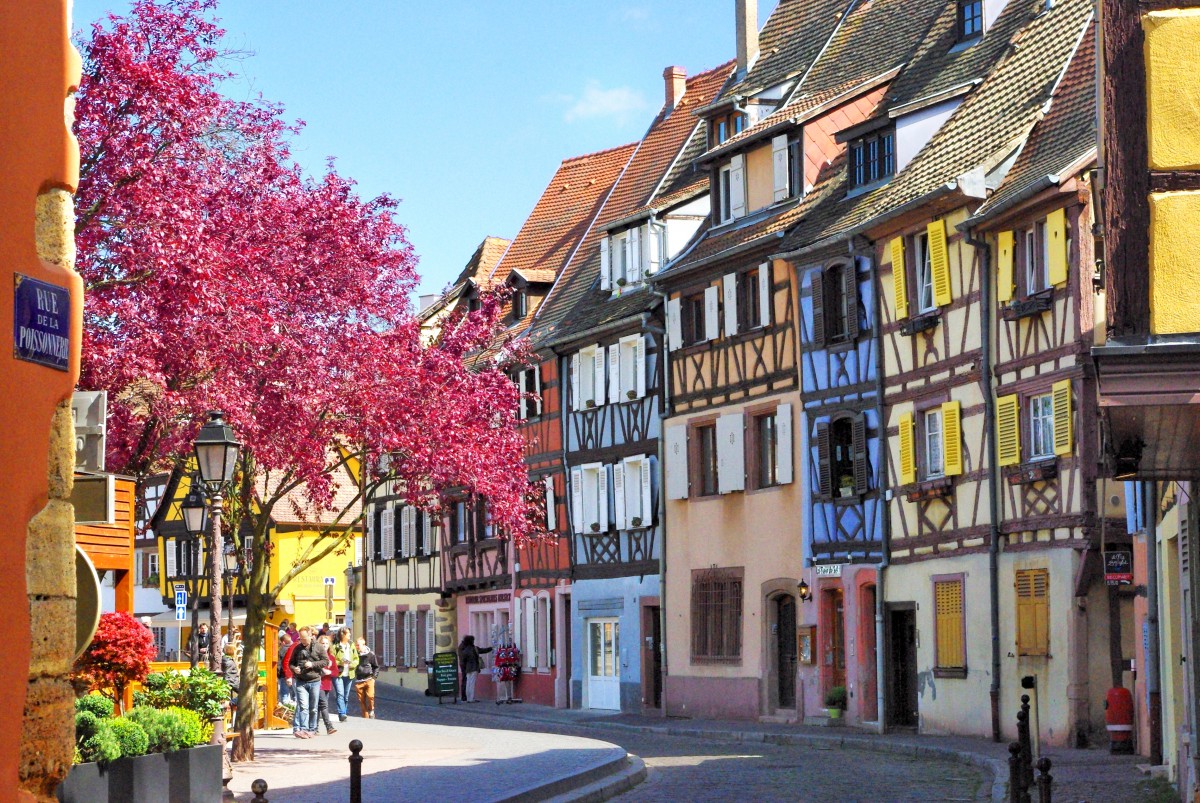
Photos of Spring in Alsace - Colmar © French Moments
Colmar travel guide at a glance
Colmar is one of the most popular destinations in Alsace, but its historic centre remains relatively compact. Most of the main sights can be reached on foot, and you do not need a car to explore the town itself.
| Location | Alsace, eastern France, between Strasbourg and Mulhouse and close to Germany and Switzerland |
| Population | 66,970 inhabitants in the municipality and 113,413 in Colmar Agglomération, according to 2023 census figures |
| How long to stay | One full day at a minimum; two days for a more relaxed visit |
| Best for | Historic architecture, museums, Alsatian food and wine, Christmas markets and exploring the Alsace Wine Route |
| Main sights | Colmar Old Town, Little Venice, the Unterlinden Museum, Saint Martin’s Collegiate Church, the Pfister House, the Koïfhus and the Tanners’ District |
| Getting there from Strasbourg | Direct trains usually take about 30 minutes |
| Getting there from Paris | Allow approximately 2½ to 3 hours by train; some services are direct |
| Nearest airports | Strasbourg Airport and EuroAirport Basel–Mulhouse–Freiburg, both approximately 70 km (44 miles) from Colmar |
| Do you need a car? | No for central Colmar; useful for exploring the vineyards, mountains and more remote villages |
| Best time to visit | Late spring and early autumn offer a good balance of pleasant weather and manageable crowds; Christmas is magical but exceptionally busy |
| Where to stay | The historic centre for atmosphere, near the train station for convenience, or in a nearby village for a quieter stay |
| Good to know | Colmar receives around 3.5 million visitors a year, including approximately 1.5 million during the Christmas market period |
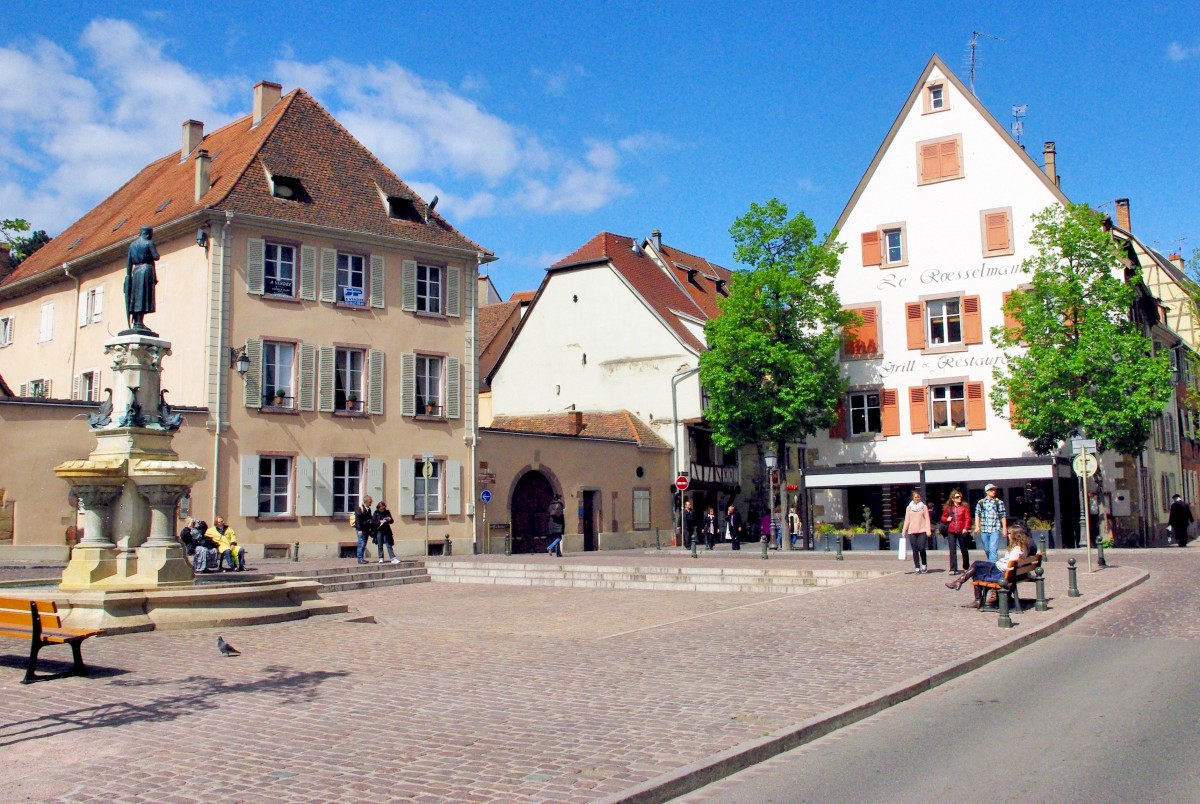
Place des Six Montagnes Noires, Colmar © French Moments
Where is Colmar?
Colmar is in eastern France, in the Haut-Rhin département and the historic region of Alsace. Administratively, it is part of the wider Grand Est region, but its landscape, architecture, food and cultural identity are unmistakably Alsatian.
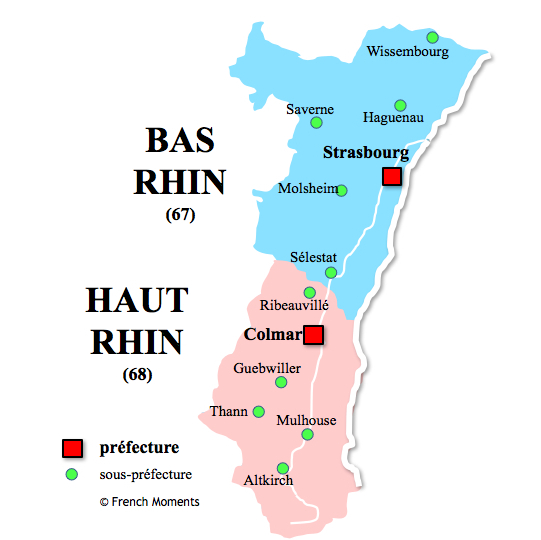
Alsace Administrative Map © French Moments
The town stands on the Alsace Plain, between the Vosges Mountains to the west and the Rhine to the east.
Strasbourg lies to the north and Mulhouse to the south, while the German border is only about 24 km (15 miles) away and Switzerland approximately 64 km (40 miles) away.
This position helps explain why Colmar can feel different from many other French towns. French is the everyday language, but the region’s long and complicated history has left strong Germanic influences in its place names, traditional architecture, food and local culture.
For international visitors, Colmar is also well placed for a wider European itinerary. It can be reached relatively easily from Paris, Strasbourg or Basel, while Germany and Switzerland are close enough to include in the same journey.
This geographical context is important when using this Colmar travel guide to plan a wider journey through Alsace, Germany or Switzerland.
Yet Colmar is not simply a convenient overnight stop between larger cities. It is a destination in its own right and one of the best bases for exploring central Alsace.
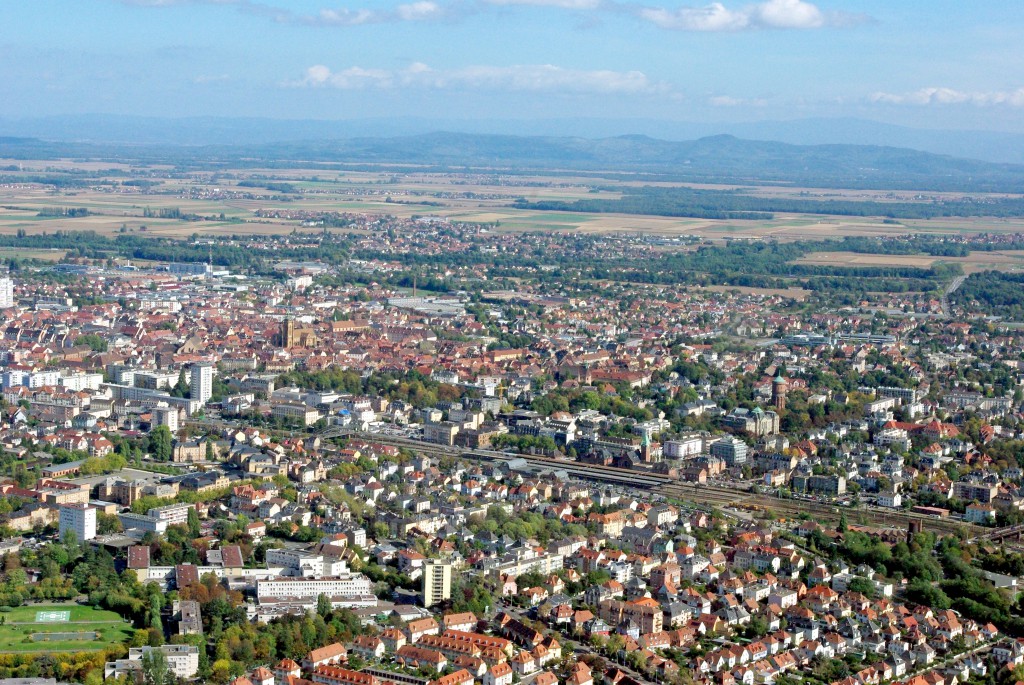
Colmar from above © French Moments
Colmar and the Alsace Wine Route
Colmar lies at the heart of the Alsace wine-growing region and is often described as the capital of Alsace wines.
The Alsace Wine Route extends for more than 170 km (106 miles), passing through vineyards, historic villages, medieval towns and wine-producing estates. Colmar stands close to its central section, with Eguisheim, Turckheim, Kaysersberg and Riquewihr all nearby.

Around Colmar: Ammerschwihr © French Moments
This makes the town a practical base if you do not want to change accommodation every night. You can explore the vineyards and villages during the day, then return to Colmar for dinner and an evening walk.
However, I would resist the temptation to treat Colmar merely as a starting point for visiting the prettier villages nearby. The town has enough museums, historic buildings and distinctive neighbourhoods to deserve at least one complete day of its own.
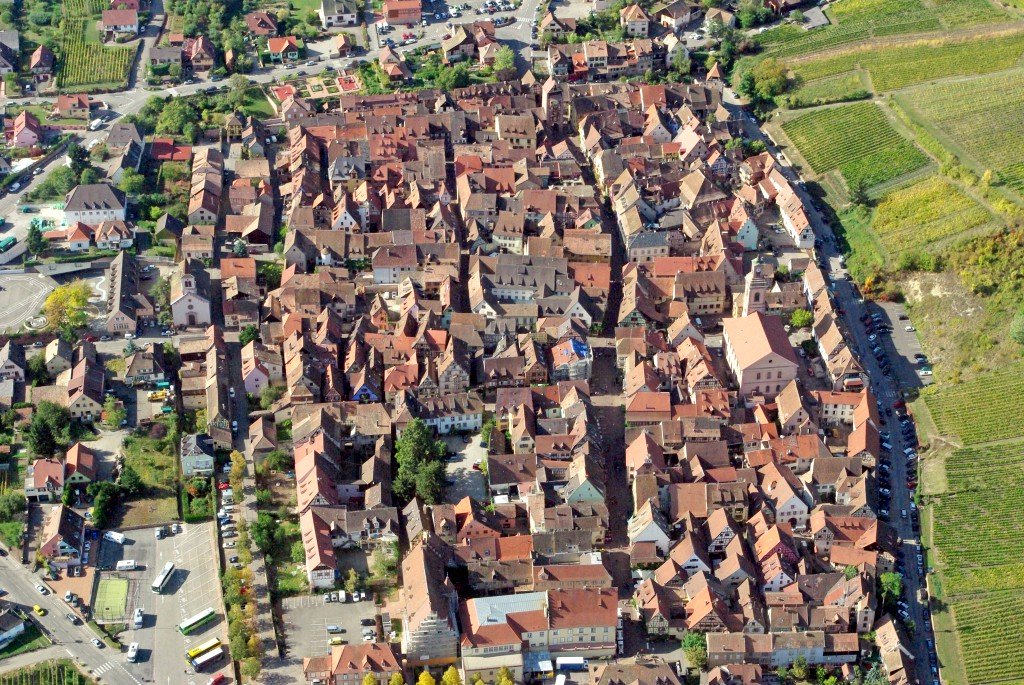
Around Colmar - Riquewihr © French Moments
Why Colmar’s location matters
The surroundings of Colmar change surprisingly quickly. Travel a short distance west and the flat Alsace Plain gives way to vineyards, wooded foothills and then the Vosges Mountains. Head east and the landscape opens towards the Rhine, Germany and the Black Forest beyond.
This variety allows you to combine several different experiences during the same stay:
- a historic town centre that can be explored on foot;
- vineyard villages and wine estates;
- castles overlooking the Alsace Plain;
- mountain lakes, forests and panoramic roads in the Vosges;
- day trips to Strasbourg, Mulhouse, Basel or Freiburg.
You do not need a car if you only plan to visit Colmar, and several nearby towns can be reached by train or bus. A car becomes more useful when you want the freedom to explore smaller villages, isolated castles and mountain landscapes at your own pace.
Colmar Travel Guide: the best things to do
This section of my Colmar travel guide covers the principal attractions in and around the historic centre. You can see many of the best-known sights in a single day, but allowing more time gives you the opportunity to visit a museum and explore beyond the busiest streets.
Walk through Colmar Old Town
The best introduction to Colmar is simply to walk through its old town.
A good route begins around Place Unterlinden and continues towards the Dominican Church and Saint Martin’s Collegiate Church. From there, follow the rue des Marchands past the Maison Adolph and the Pfister House before reaching the Koïfhus, Colmar’s former customs house.
The route then leads through the Tanners’ District towards the Covered Market, the quai de la Poissonnerie and Little Venice.
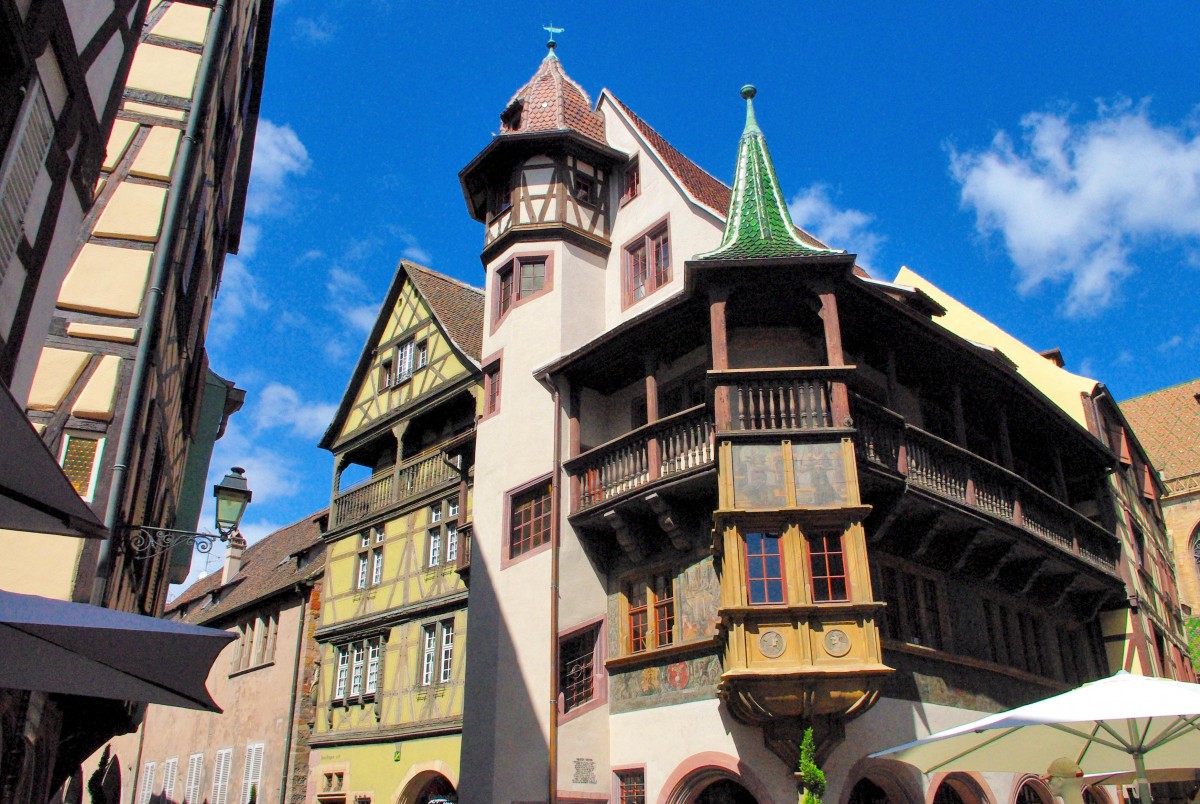
Pfister House, Colmar © French Moments
Although the centre is compact, do not rush through it. Some of the most interesting architectural details are above eye level: carved beams, painted decorations, projecting windows and old trade signs are easily missed when the streets are crowded.
For a more detailed route, see my guide to Colmar Old Town.
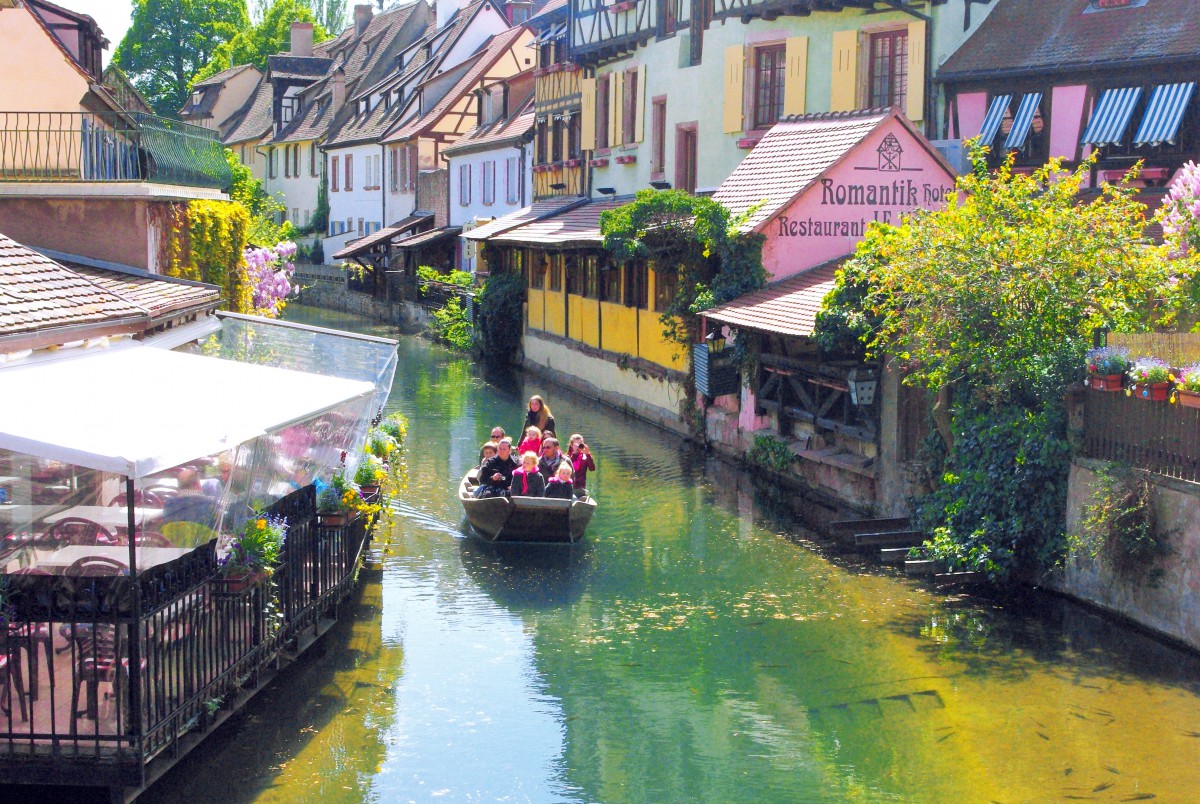
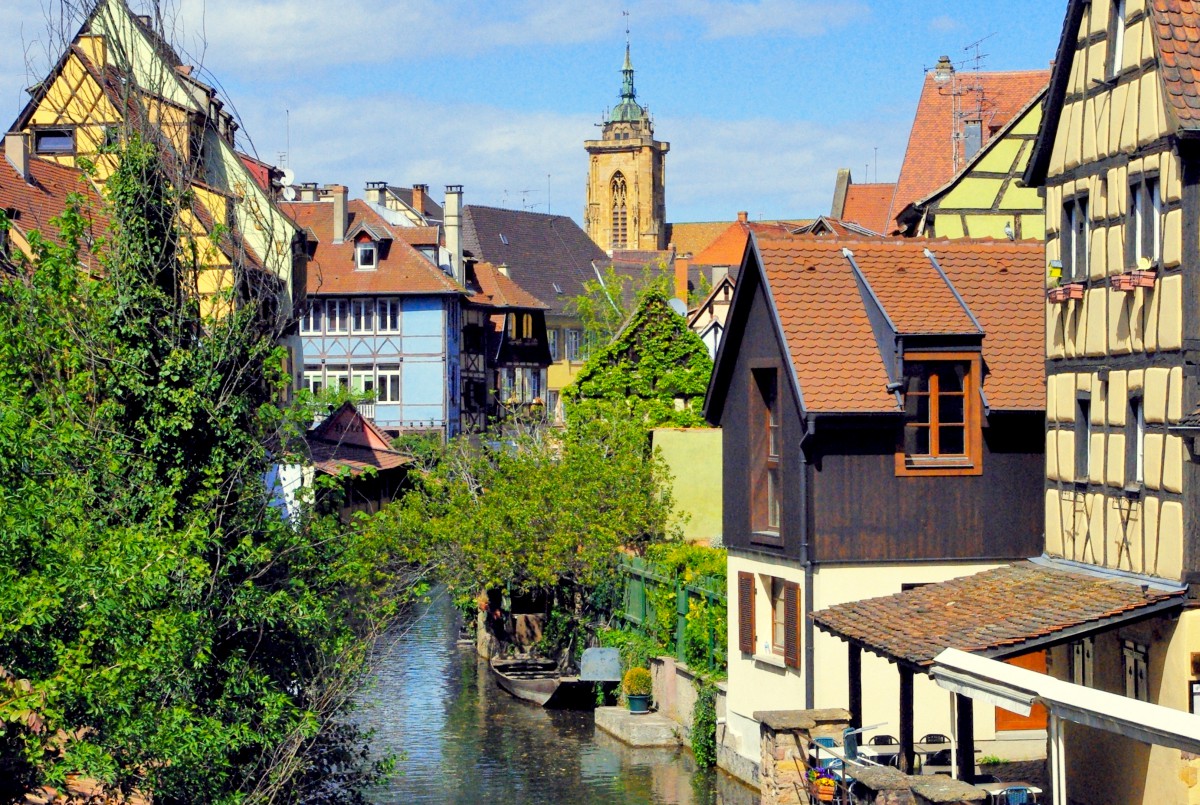
View from Pont de l'abreuvoir, Colmar © French Moments
Visit the Unterlinden Museum
The Unterlinden Museum is one of the most important museums in Alsace and should not be treated merely as an activity for a rainy day. It occupies a former thirteenth-century Dominican convent that has been extended into a larger museum complex combining historic architecture with contemporary design.
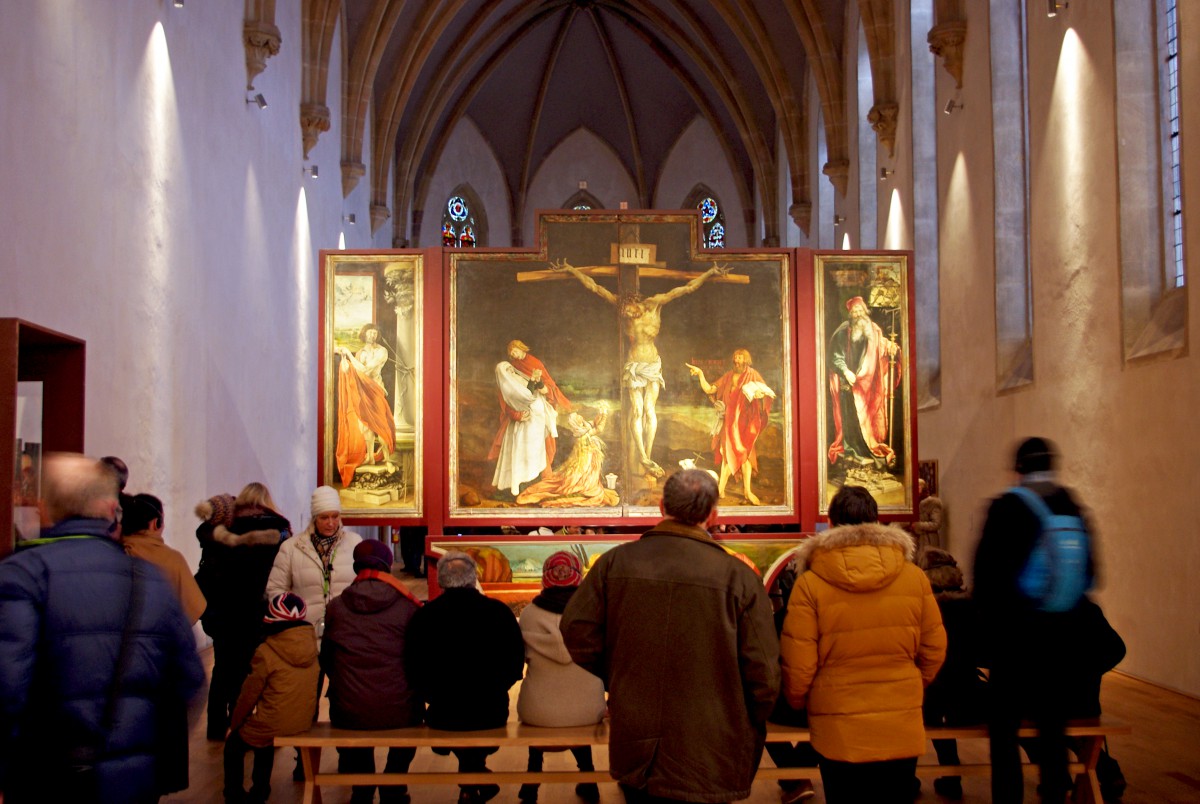
Unterlinden Museum in Colmar © French Moments
Its collections span several centuries and include archaeology, medieval sculpture, decorative arts and modern painting. However, the museum is best known for the Isenheim Altarpiece, which alone makes the visit worthwhile.
Allow at least two hours if you want to explore the museum properly. Visitors with a strong interest in art or history may easily spend longer.
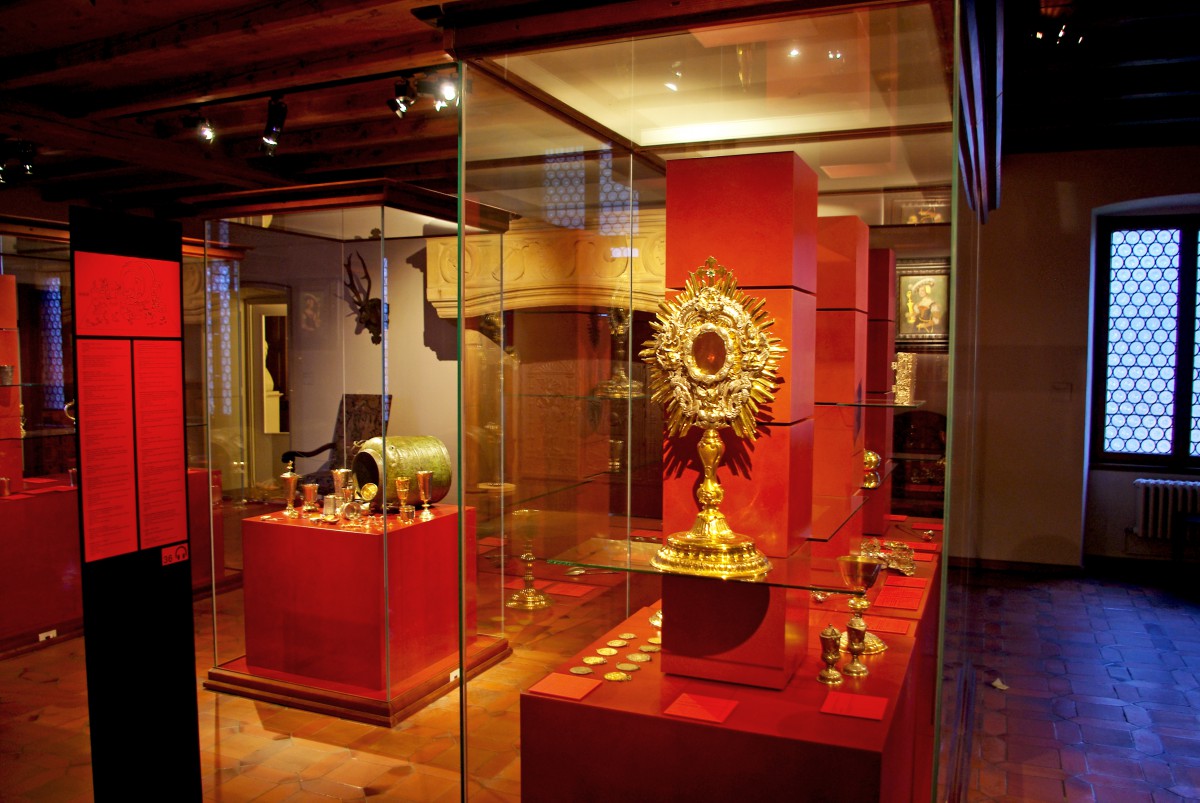
Collection of works in gold and silver from the Renaissance era © French Moments
The museum stands close to the northern entrance to the old town, making it convenient to visit at the beginning or end of a walking tour. Opening days and hours can change, so check the official website before your visit.
You can read more in my complete guide to the Unterlinden Museum in Colmar.
See the Isenheim Altarpiece
The Isenheim Altarpiece is the masterpiece of the Unterlinden Museum and one of the most powerful works of European religious art.
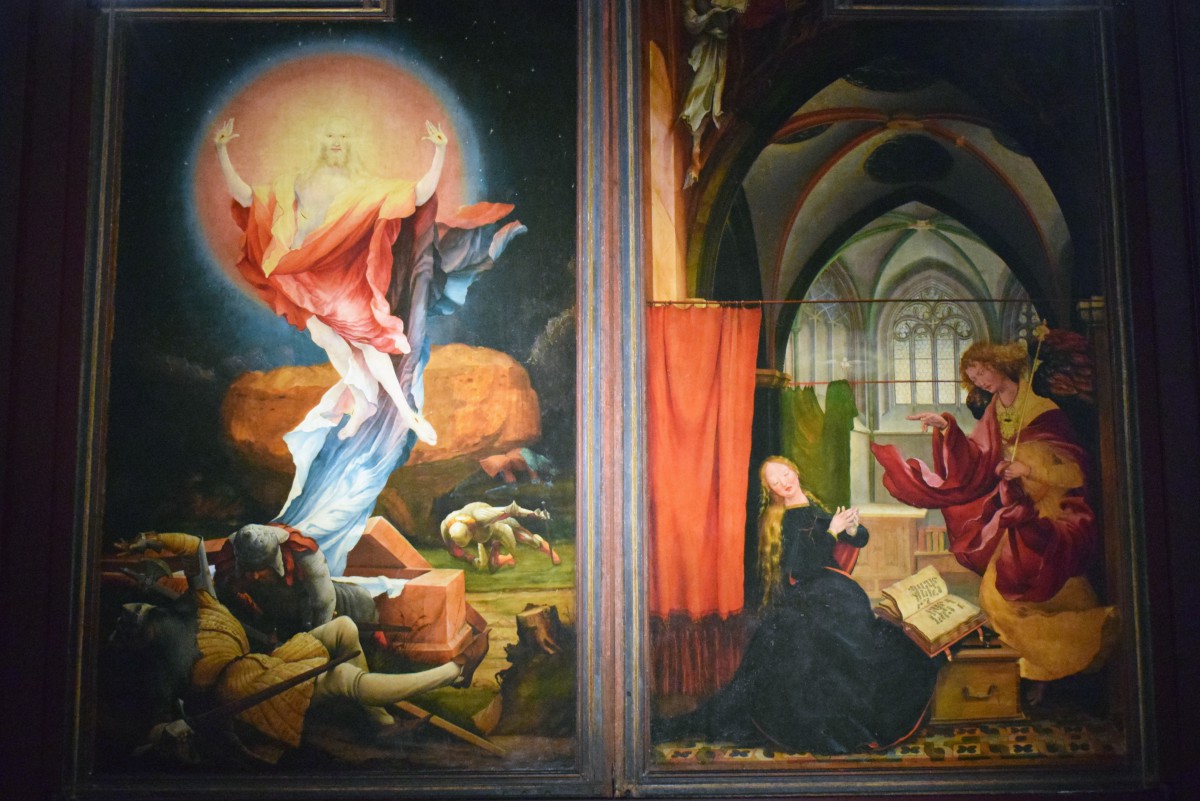
The Isenheim Altarpiece © French Moments
It was created in the early sixteenth century for the Antonite monastery at Isenheim, south of Colmar. The painted panels are associated with Matthias Grünewald, while the sculpted elements were produced by Nicolas de Haguenau and his workshop.
The altarpiece was designed for a hospital caring for people suffering from serious illnesses. This context helps explain the emotional intensity of its scenes, particularly the Crucifixion, in which Christ’s body is shown with extraordinary physical suffering.
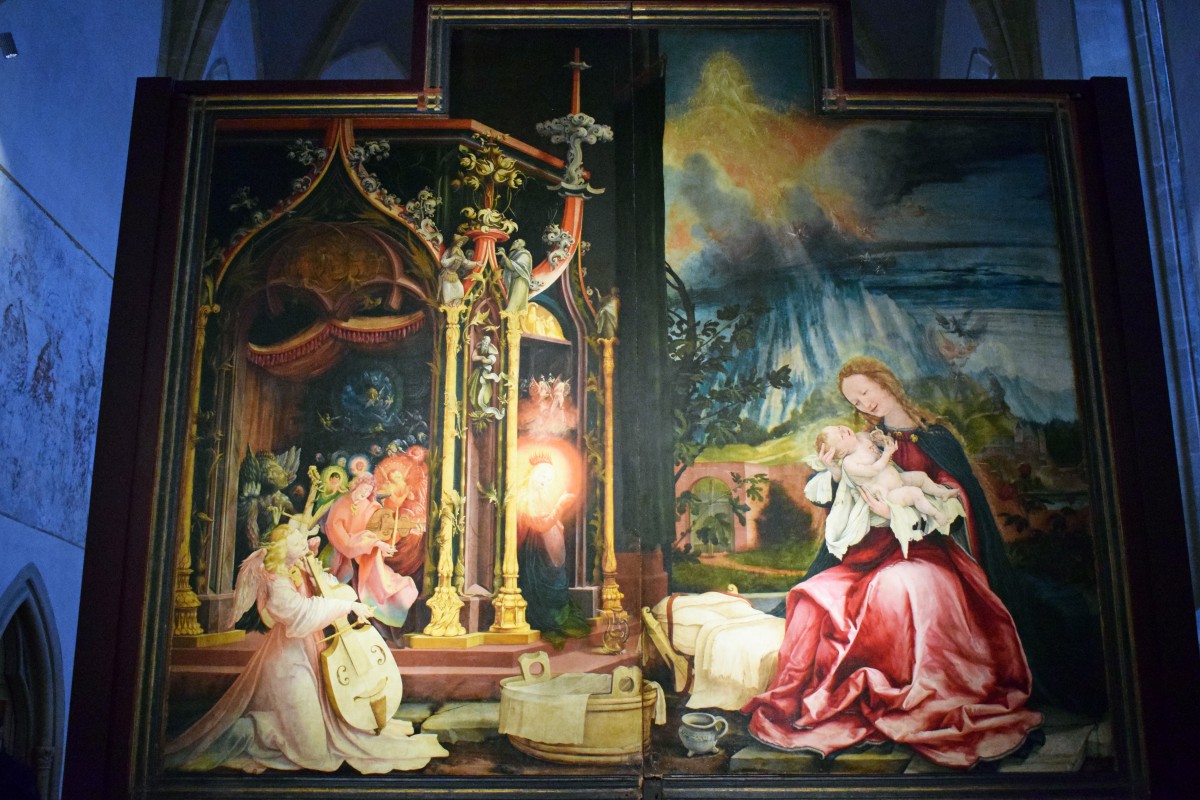
The Isenheim Altarpiece © French Moments
Other panels offer a striking contrast through their use of colour and light, particularly the Resurrection and the Concert of Angels.
Even visitors who do not normally spend much time looking at religious art may find the work memorable.
Explore Little Venice
Little Venice is the most famous and most photographed part of Colmar.
The name refers to the section of the old town where the River Lauch flows past colourful houses, narrow quays and former market-gardening districts.
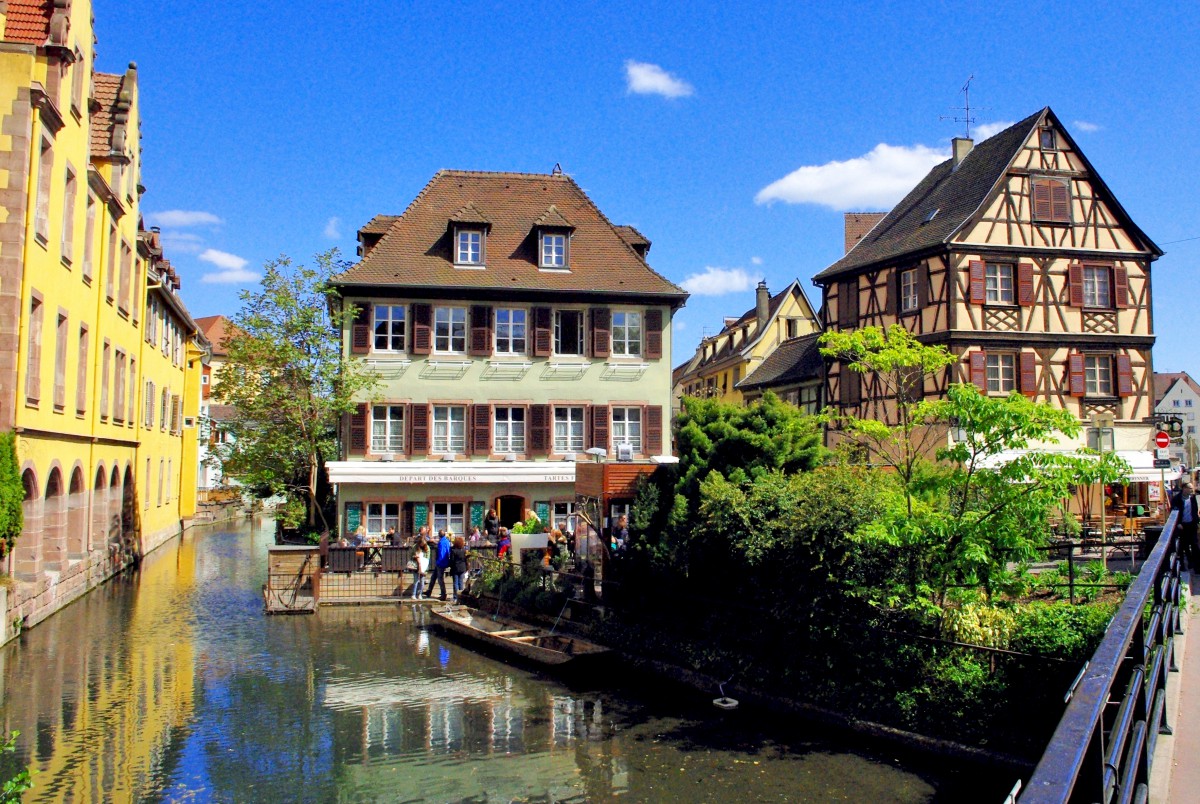
View from the Pont de l'abreuvoir, Colmar © French Moments
The best-known views are found around the rue de la Poissonnerie, the Covered Market and Pont Saint-Pierre. From the bridge, you can look back towards the houses lining the canal, a scene that has become one of the defining images of Colmar.
This part of town is undeniably attractive, but it is also where visitor numbers are most noticeable. During busy periods, the bridges and narrow pavements can become crowded, particularly in the middle of the day.
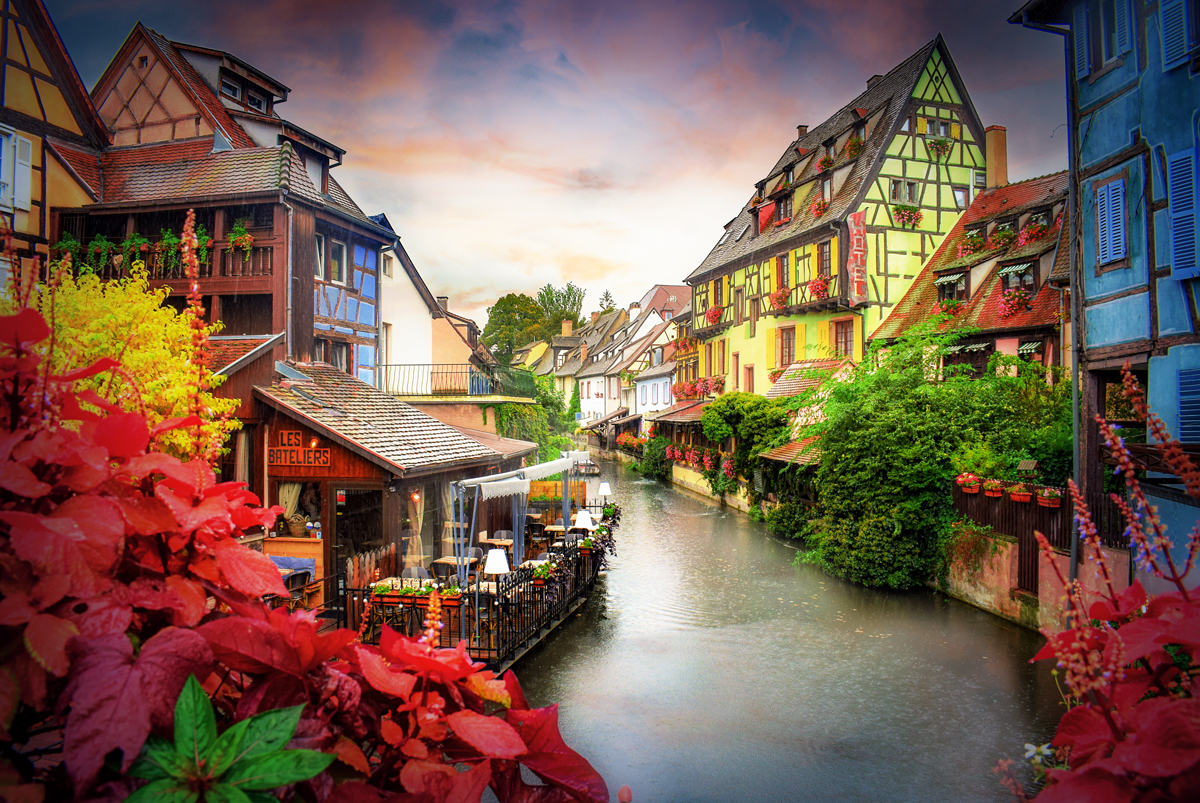
Around Colmar - Photo: Petite Venise © French Moments
For a quieter experience, arrive early in the morning or return later in the afternoon. The changing light and reflections on the water can make the area even more appealing outside the busiest hours.
You can also take a short boat trip along the Lauch. These flat-bottomed boats offer a different view of the houses and canals, although departures may be seasonal and can fill quickly during busy periods.
My detailed walking guide to Little Venice in Colmar explores the district in greater depth.
Visit Saint Martin’s Collegiate Church
Saint Martin’s Collegiate Church dominates the historic centre with its red and golden sandstone walls and tiled roof. It is often described informally as Colmar Cathedral, but it is technically a collegiate church rather than the seat of a bishop.
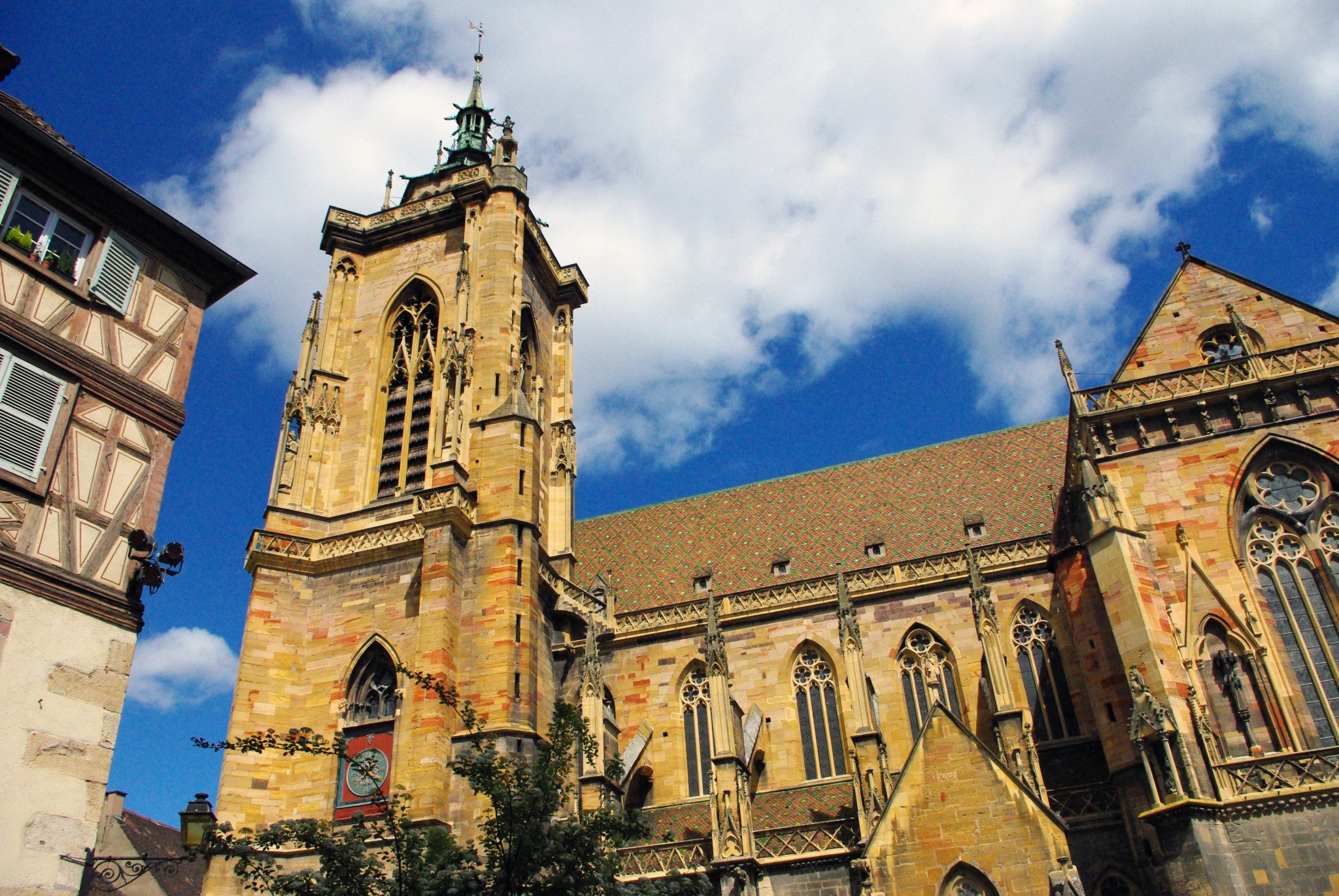
Colmar Collegiate church © French Moments
Most of the present building dates from the thirteenth and fourteenth centuries. Its size reflects Colmar’s importance during the Middle Ages, when the town was a prosperous centre of trade within the Holy Roman Empire.
The exterior is worth examining carefully. Look for the sculpted portals, the massive west front and the colourful tiled roof visible from several streets around the old town.
Inside, the atmosphere is much more restrained than the richly decorated façades outside. The church offers a welcome pause during a walk through the centre and helps place Colmar’s commercial architecture within its religious and medieval context.
The surrounding area is also worth exploring. The nearby Place de la Cathédrale contains several historic houses, including the Maison Adolph, one of the oldest surviving buildings in Colmar.
For more history and architectural detail, see my article about Saint Martin’s Collegiate Church.
Admire the Pfister House
The Pfister House is one of Colmar’s most recognisable buildings. Standing at the corner of the rue des Marchands, it immediately catches the eye with its wooden gallery, corner oriel, painted façades and steeply pitched roof.
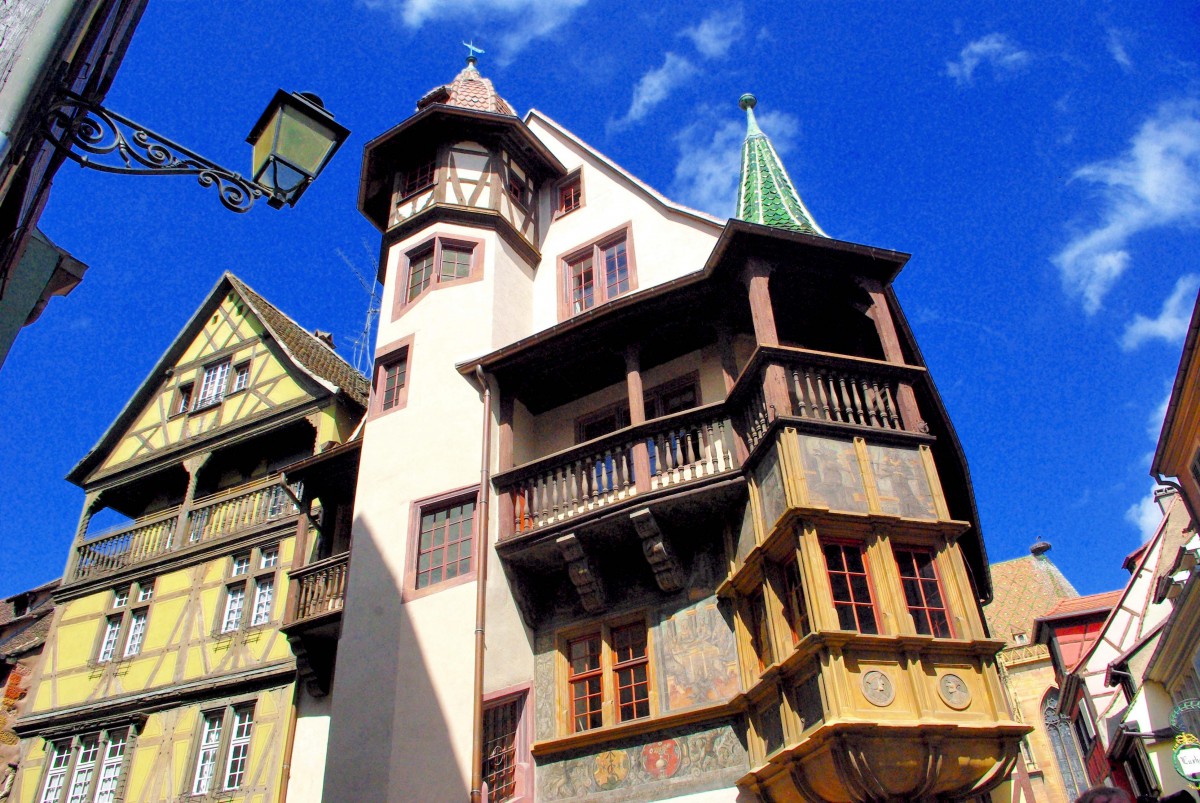
Pfister House, Colmar © French Moments
Despite its medieval appearance, the house was built in 1537 for Ludwig Scherer, a wealthy hatter and merchant. Its architecture reflects the transition from the late Middle Ages to the Renaissance, combining traditional features with decorative influences that had spread north from Italy.
The building later took the name of the Pfister family, who owned it during the nineteenth century. Its painted exterior includes biblical scenes, allegorical figures and portraits of Germanic emperors.
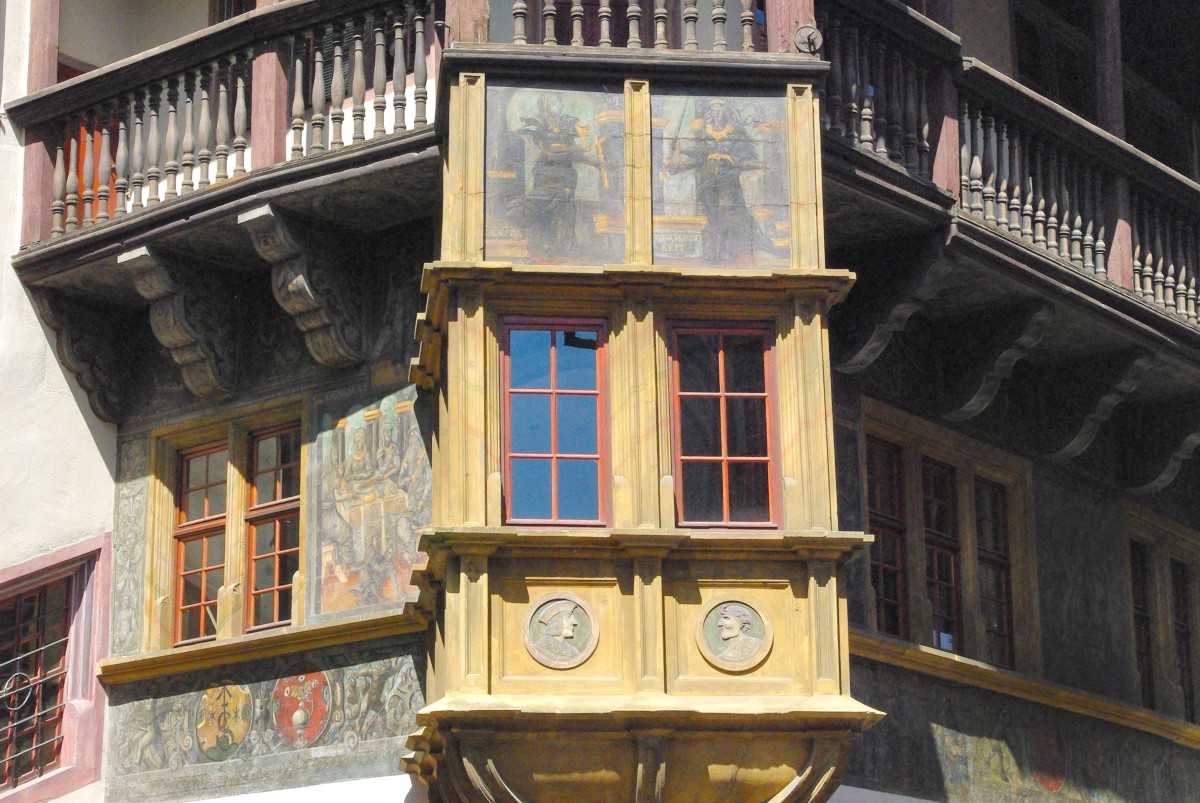
Pfister House, Colmar © French Moments
The house is privately owned and is generally admired from the street. Because it stands on one of the busiest routes through the old town, the area can become crowded. Visit early or wait patiently for a clearer view of the façade.
Do not look only at the projecting corner window. Walk a few steps along both adjoining streets to appreciate the unusual shape of the building and the way it fits into the surrounding townscape.
See the Koïfhus, Colmar’s Old Custom House
The Koïfhus, or Ancienne Douane, was once at the heart of Colmar’s commercial and political life.
Situated between the rue des Marchands and the former trading districts beside the Lauch, it was ideally placed to control goods entering and leaving the town.
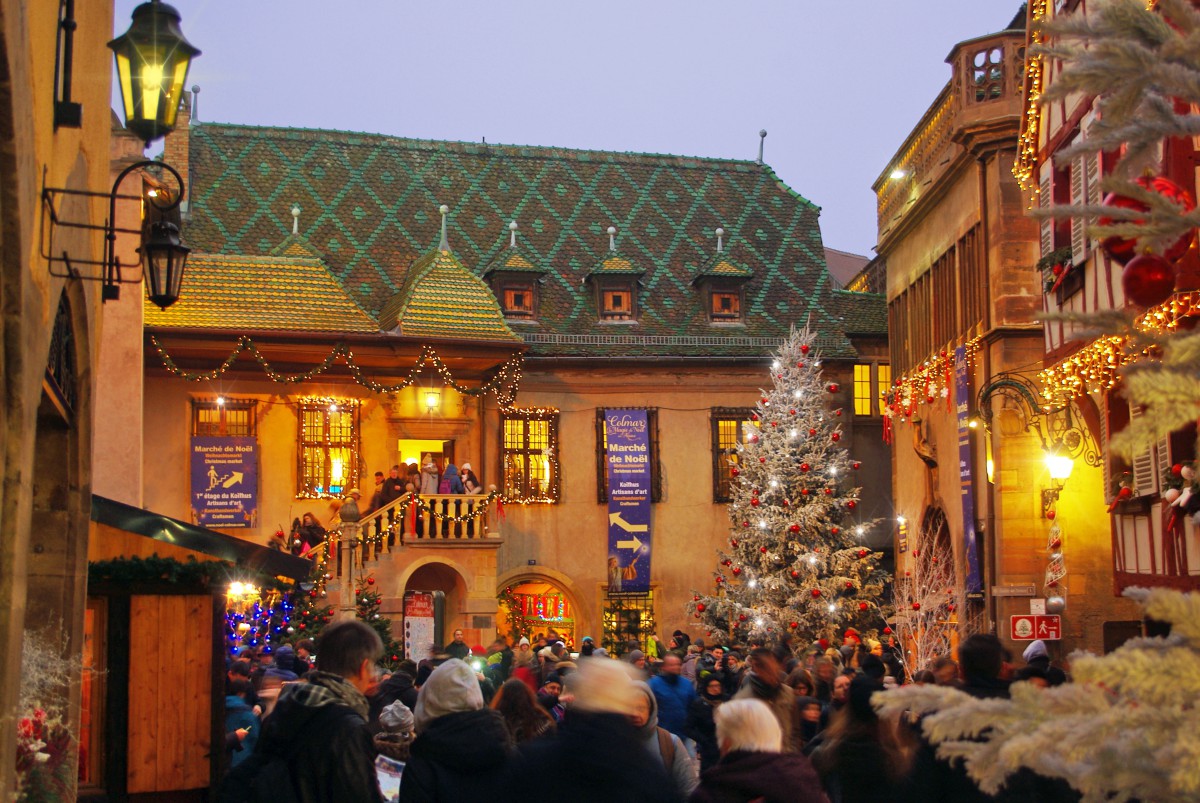
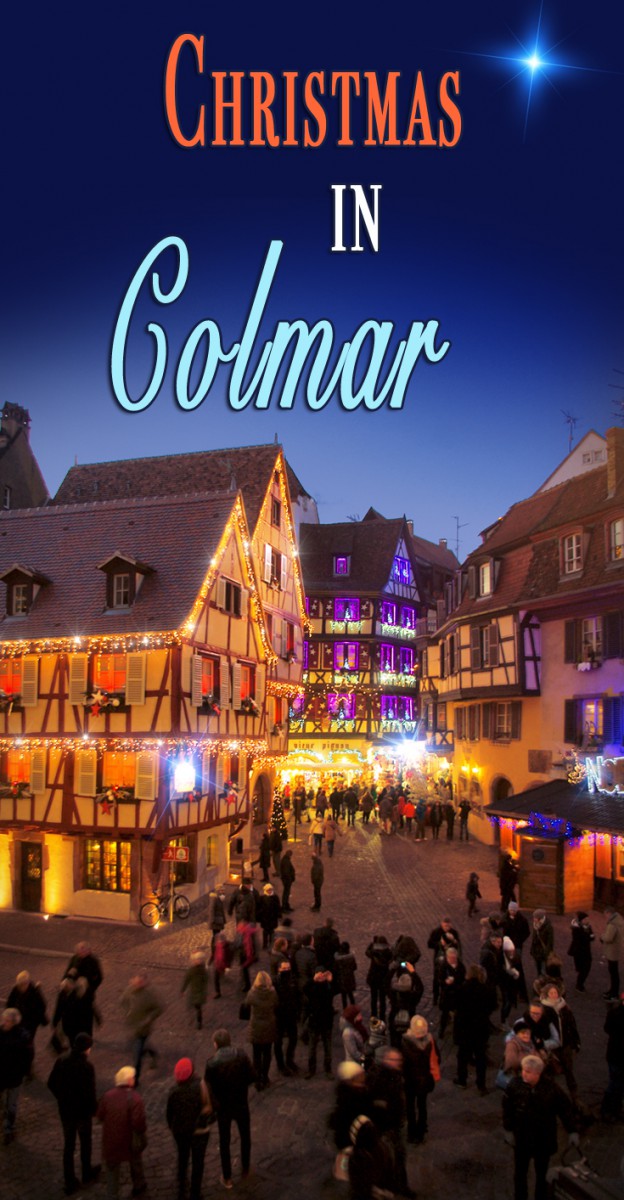
Christmas in Alsace - Colmar © French Moments
Construction began during the fifteenth century, making it the oldest surviving public building in Colmar. Merchants paid customs duties and stored goods on the ground floor, while meetings and official ceremonies took place in the rooms above.
The building is easily recognised by its arcades, colourful glazed roof tiles and the adjoining structures that form a passage between two streets. Its appearance has changed over the centuries, but it remains one of the clearest reminders of Colmar’s importance as a trading centre.
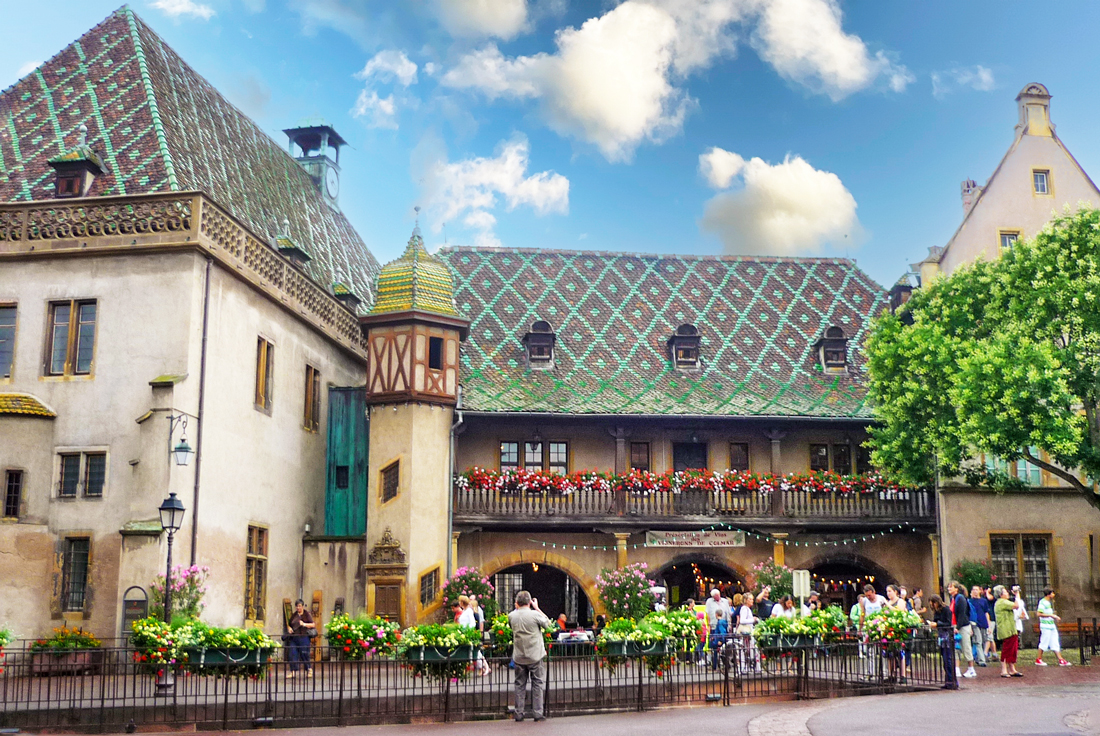
Ancienne Douane, Colmar © French Moments
The square around the Koïfhus is often lively, with café terraces, shops and seasonal decorations. At Christmas, it becomes part of one of the busiest areas of the town.
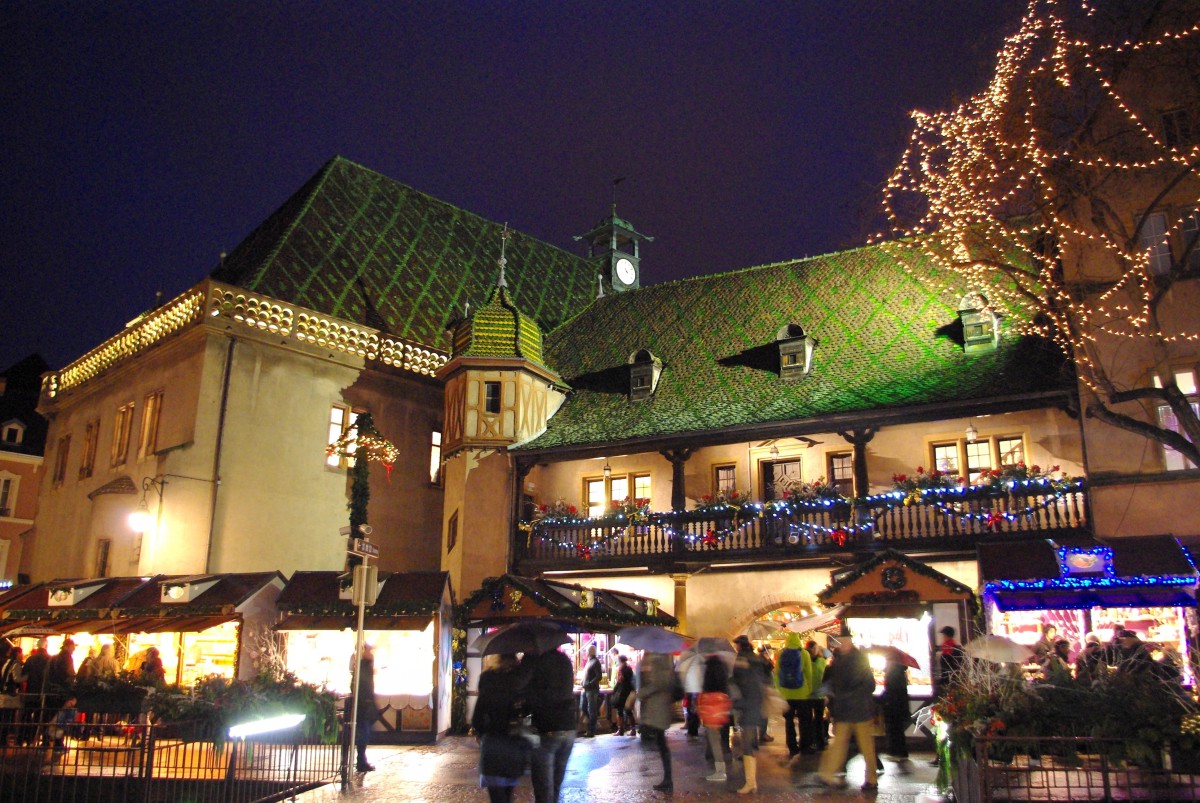
Ancienne Douane at Christmas © French Moments
Rather than treating the building as another quick photograph, walk beneath its passage and look at it from both sides. The view towards the rue des Marchands is very different from the broader perspective from the Place de l’Ancienne Douane.
Walk through the Tanners’ District
From the Koïfhus, continue towards the Tanners’ District, known in French as the quartier des Tanneurs. Its tall, narrow houses once belonged to families who processed and dried animal hides.
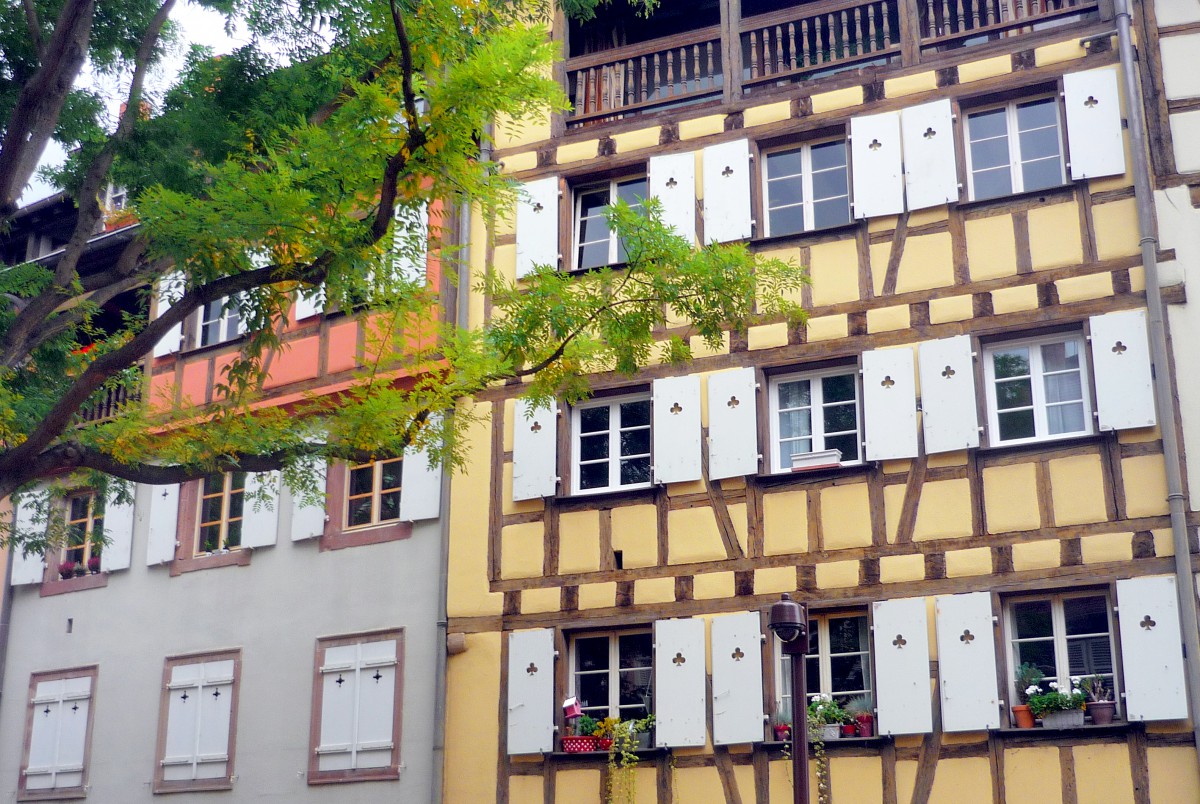
Rue des Tanneurs, Colmar © French Moments
The upper floors were designed with open or ventilated spaces where the hides could dry. Many of the buildings were restored during the twentieth century, when later additions were removed and their traditional timber-framed appearance was revealed once again.
Today, the district no longer feels industrial. Its restored façades, narrow streets and proximity to Little Venice make it one of the most attractive parts of central Colmar.
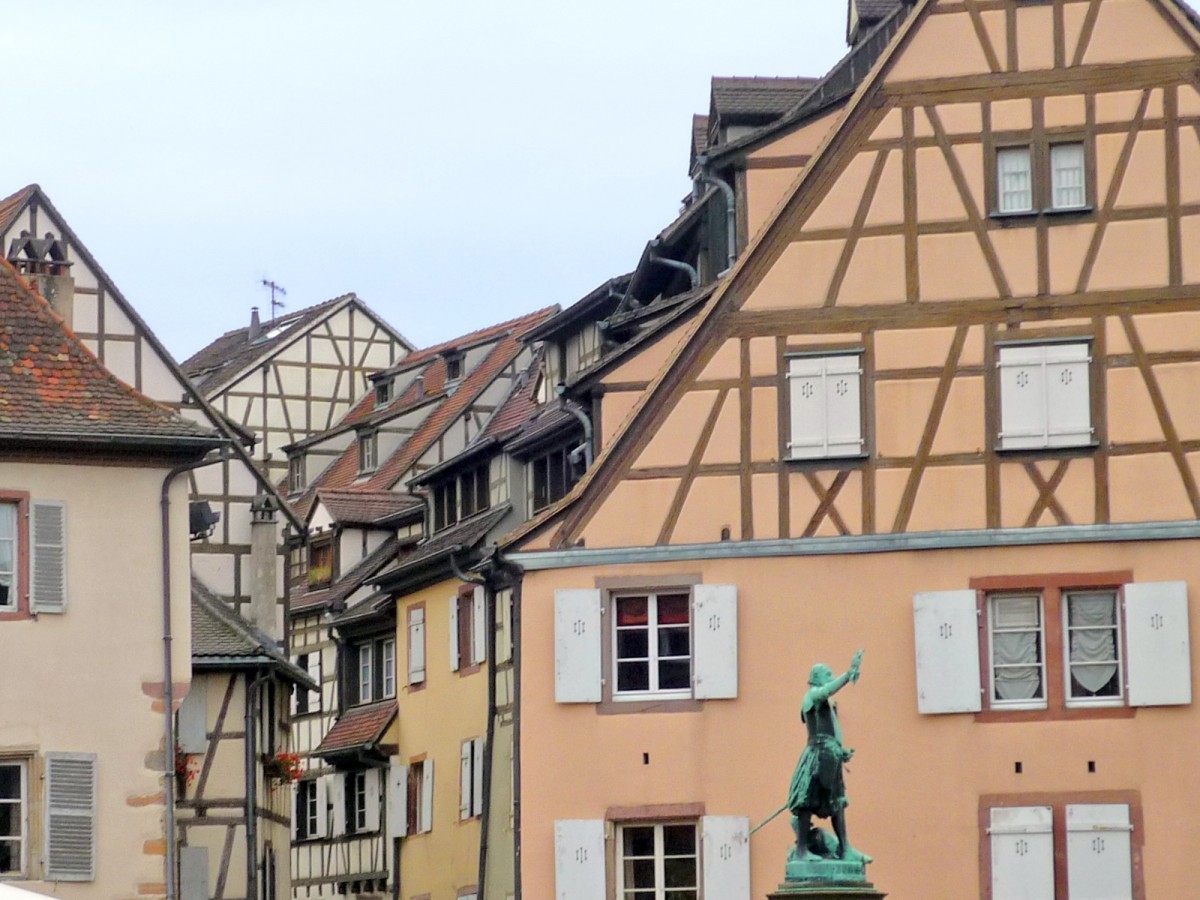
The Tanners' district in Colmar © French Moments
Yet understanding its former purpose changes the way you see it. These were not originally picturesque houses created for visitors. They were working buildings shaped by a trade that was noisy, labour-intensive and probably far less pleasant-smelling than the neighbourhood is today.
The rue des Tanneurs is the main route through the district, but it is worth exploring the adjoining streets rather than following the crowds directly towards Little Venice.
Visit Colmar’s Covered Market
Colmar’s Covered Market (marché couvert) stands beside the Lauch, between the Tanners’ District and Little Venice.
Built in the nineteenth century from brick, stone and metal, it reflects a very different architectural period from the timber-framed houses nearby.
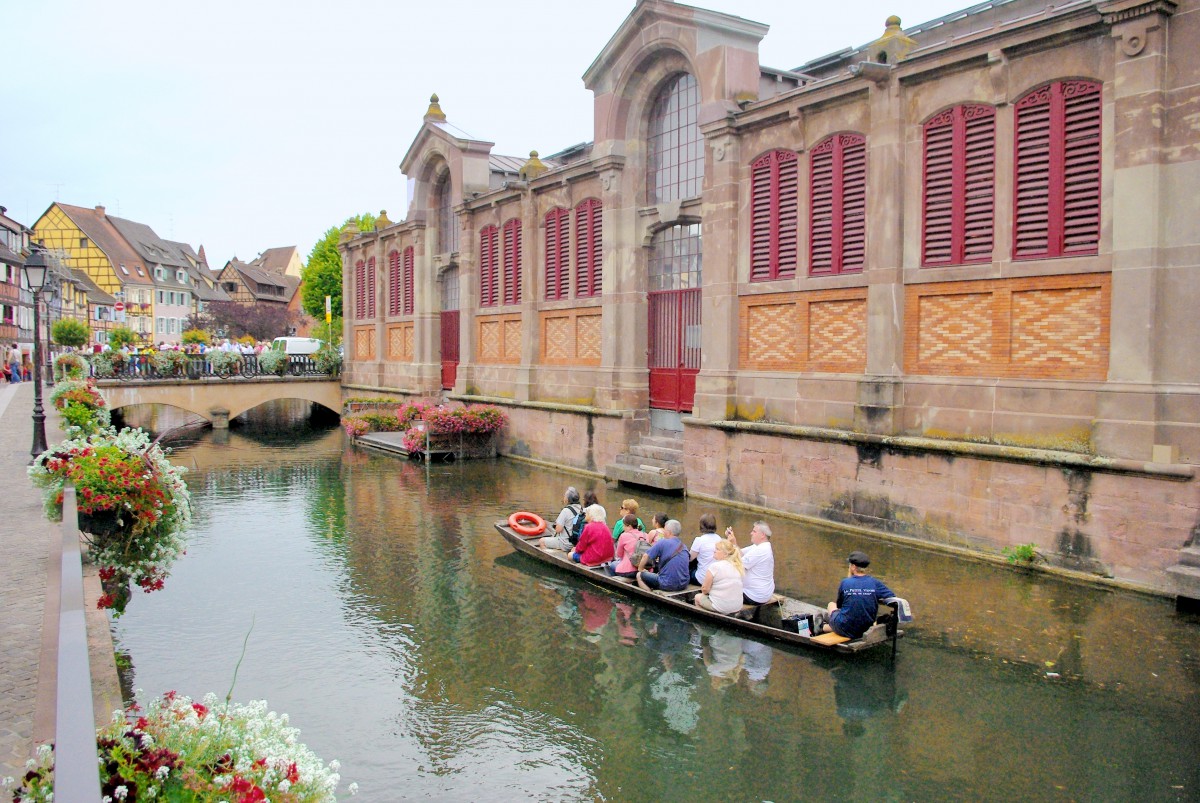
The covered market of Colmar © French Moments
The market continues to sell food and regional produce. Depending on the day and season, you may find cheese, charcuterie, bread, fruit, vegetables, wine and prepared dishes.
It is a useful place to pause during a walking tour, especially if you want a lighter lunch or the chance to look at local ingredients. However, opening hours vary, and some stalls may close earlier than visitors expect.
The riverside position is also significant. Goods could once be brought directly to the market by boat along the Lauch. A small statue on the corner of the building recalls this connection with the waterways.
Even when the market is closed, the exterior and its location beside the canal make it worth including in your route.
Discover Colmar’s connection with the Statue of Liberty
Auguste Bartholdi, the sculptor best known for creating the Statue of Liberty, was born in Colmar in 1834. His former family home in the rue des Marchands now houses the Bartholdi Museum.
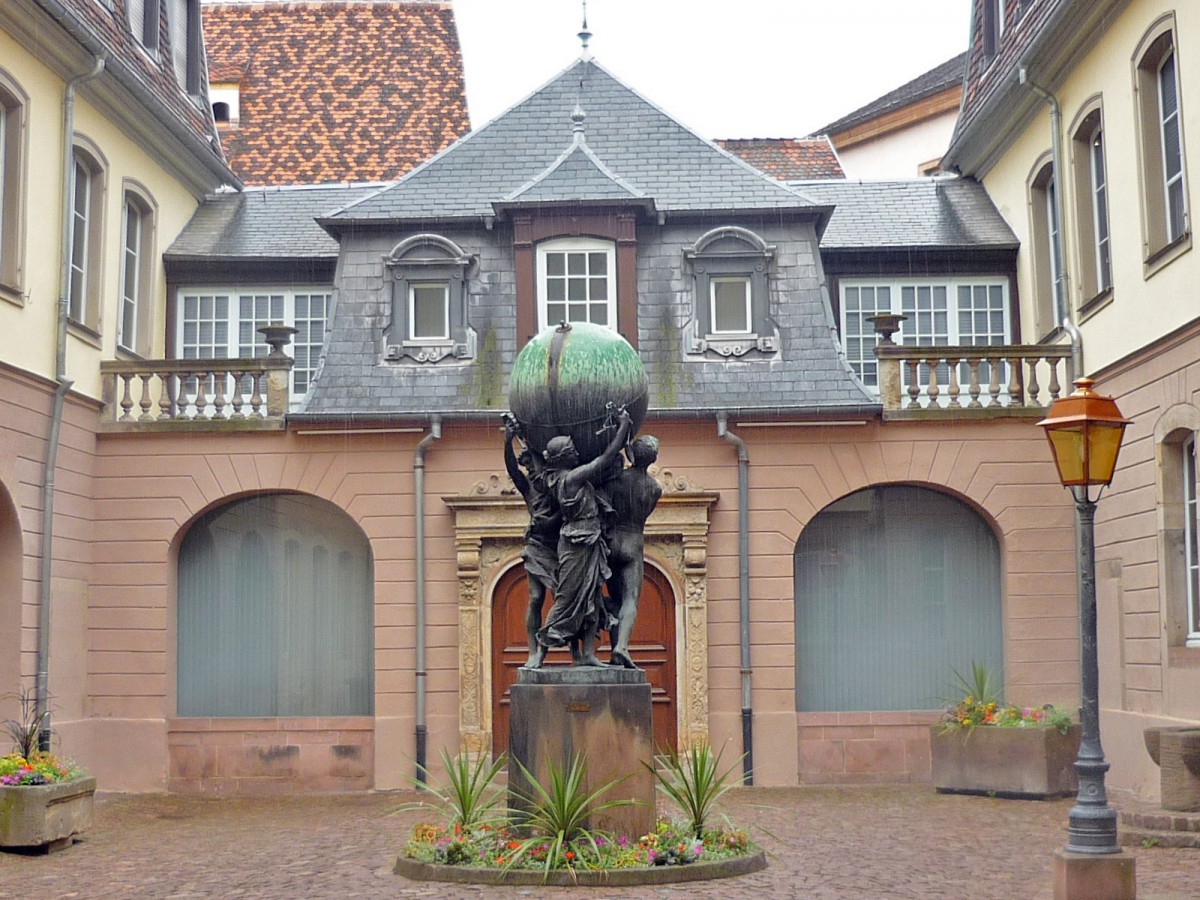
Bartholdi museum, Colmar © French Moments
The museum explores his life, his working methods and the wide range of monuments he created in France and abroad. Drawings, models, sculptures and personal objects reveal that his career extended far beyond the statue standing in New York Harbor.
This connection is likely to be particularly interesting for American visitors. The Statue of Liberty was a gift from France to the United States, and discovering its sculptor’s Alsatian background adds another layer to its history.
Bartholdi’s presence can also be seen throughout Colmar. Several of his fountains and monuments stand in public spaces around the town, including the Schwendi Fountain near the Koïfhus.
A much larger replica of the Statue of Liberty stands on a roundabout at the northern entrance to Colmar. It is not within the historic centre and is surrounded by traffic, so I would not consider it an essential attraction unless you are arriving by car or have a particular interest in Bartholdi.
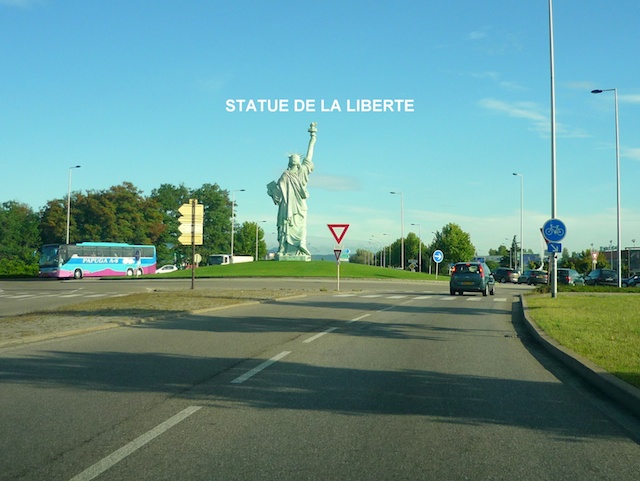
Statue of Liberty in Colmar © French Moments
Follow my walking route through Colmar
On my most recent visit, I followed a route that provides a natural introduction to the old town without requiring any complicated navigation.
The walk begins on Place Rapp, a large square on the western edge of the historic centre. From there, it continues towards the Unterlinden Museum and the Dominican Church before entering the oldest streets around Saint Martin’s Collegiate Church.
The route then follows the rue des Marchands past the Maison Adolph, the Pfister House and the Bartholdi Museum. After reaching the Koïfhus, it continues through the Tanners’ District to the Covered Market and the quai de la Poissonnerie.
The final section passes through Little Venice and ends at Pont Saint-Pierre, where you can look back towards one of Colmar’s best-known canal views.
Without museum visits or long stops, the route can be completed comfortably in around one and a half hours. In reality, I would allow at least half a day so that you can examine the architecture, enter the churches, stop for refreshments and explore some of the quieter side streets.
This is also the route featured in my guided video walk through Colmar, which allows you to follow the streets with me and hear more about the buildings along the way.
Colmar Travel Guide: How many days do you need?
One full day is enough to see the main sights in Colmar, but two days provide a more complete and enjoyable experience.
With an overnight stay, you can visit a museum, explore the old town without rushing and enjoy the streets after many day visitors have left.
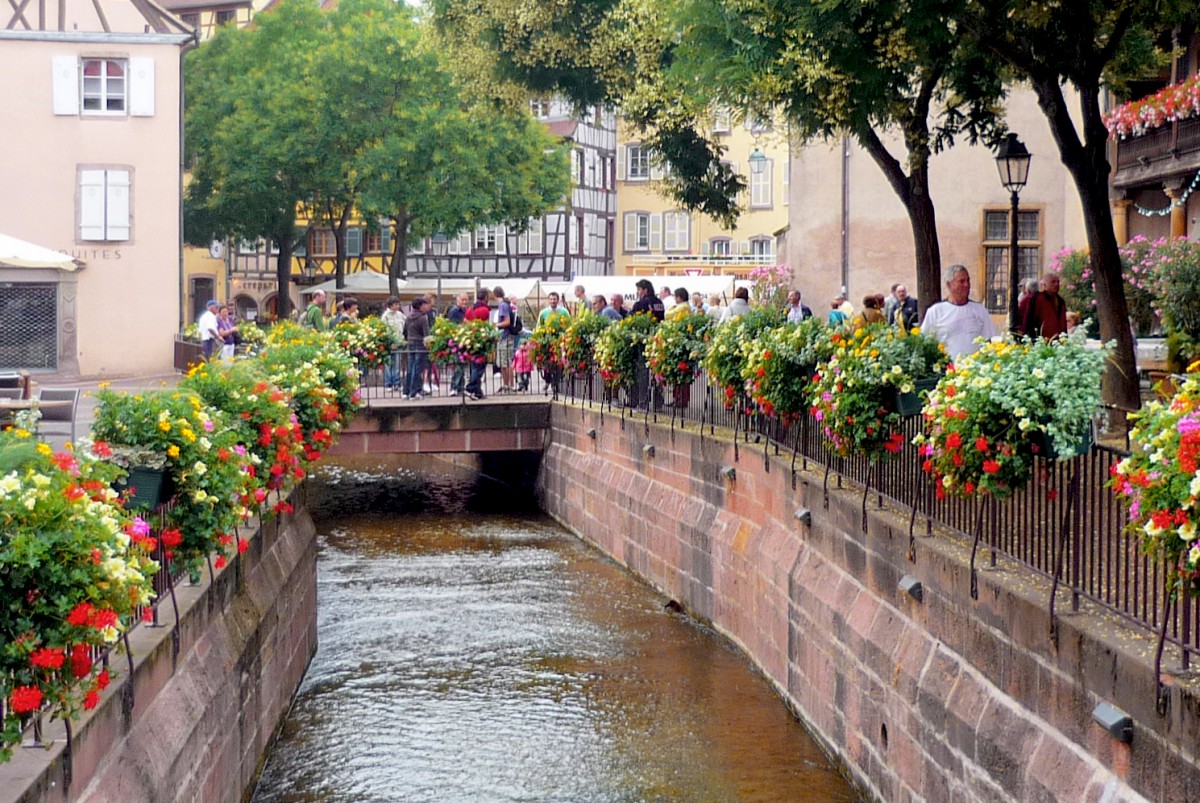
Place de l'Ancienne Douane, Colmar © French Moments
Visiting Colmar in half a day
A half-day visit is possible, particularly if Colmar forms part of a longer itinerary through Alsace.
In three or four hours, you can walk through the historic centre and see Saint Martin’s Collegiate Church, the Pfister House, the Koïfhus, the Tanners’ District and Little Venice.
However, you will probably not have enough time for the Unterlinden Museum or a relaxed meal.
When you only have a few hours, focus on Colmar rather than attempting to add several nearby villages.
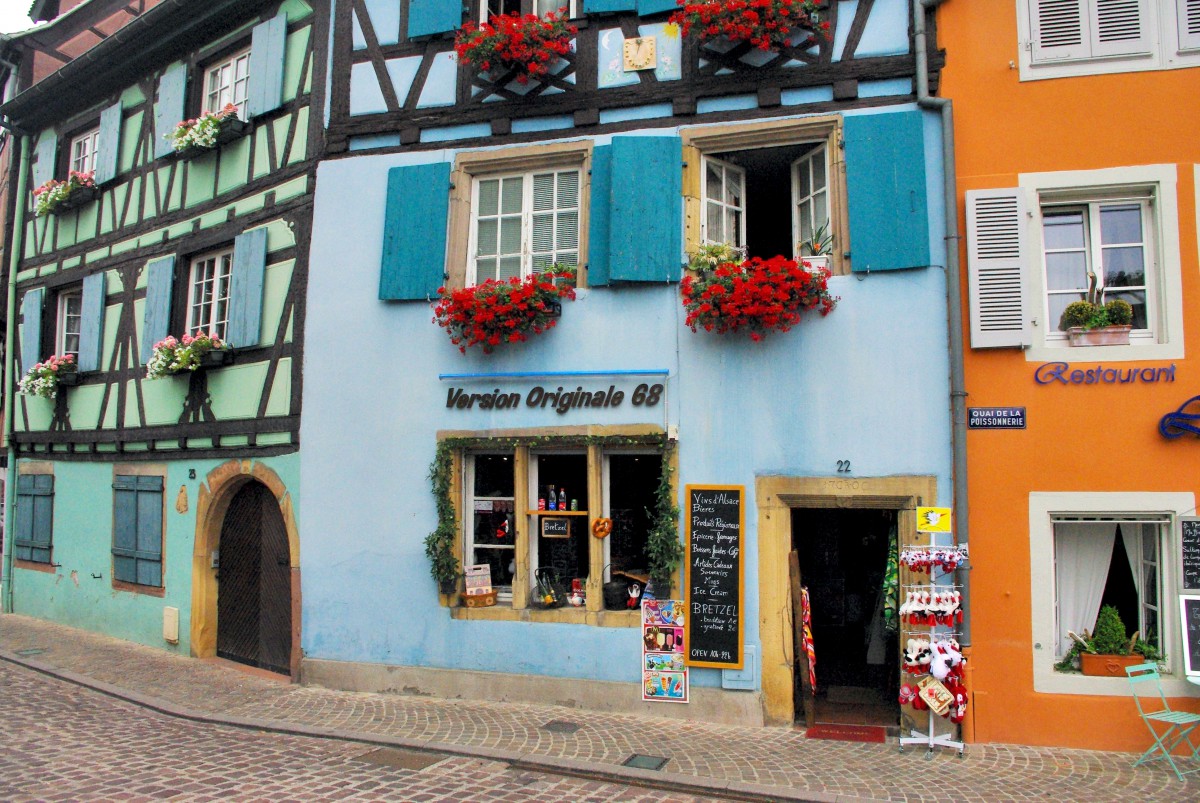
Quai de la Poissonnerie, Colmar © French Moments
Spending one day in Colmar
One full day is the minimum I would recommend for a first visit.
It gives you time to follow a complete walking route, visit one major museum or church and stop for lunch without constantly checking the time.
You could visit the Unterlinden Museum in the morning and walk through the old town after lunch. Alternatively, explore outdoors while the streets are quieter and visit the museum later in the day.
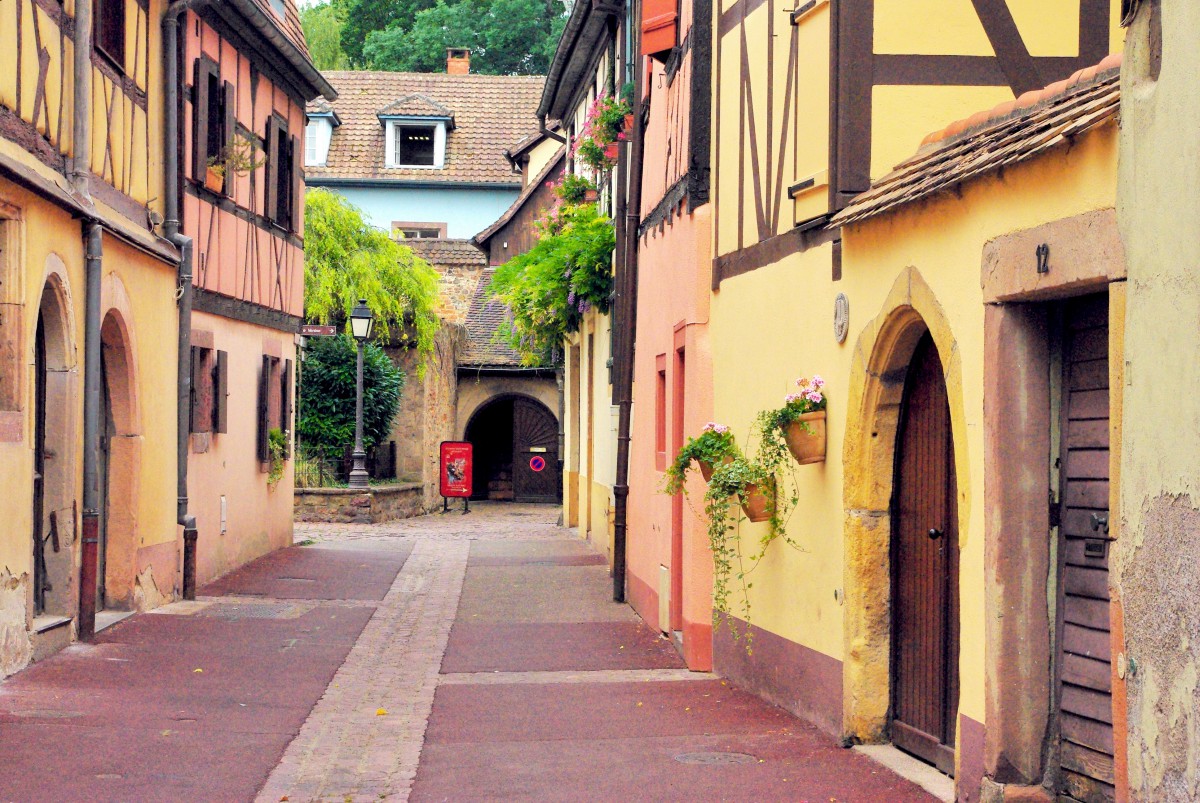
Rue de la Herse, Colmar © French Moments
Spending two days in Colmar
Two days offer the best balance for most first-time visitors.
You can see the architectural landmarks, explore Little Venice, visit the Unterlinden Museum and include the Bartholdi Museum or a boat trip without turning the visit into a strict timetable.
Staying overnight also gives you the opportunity to experience Colmar early in the morning and in the evening.
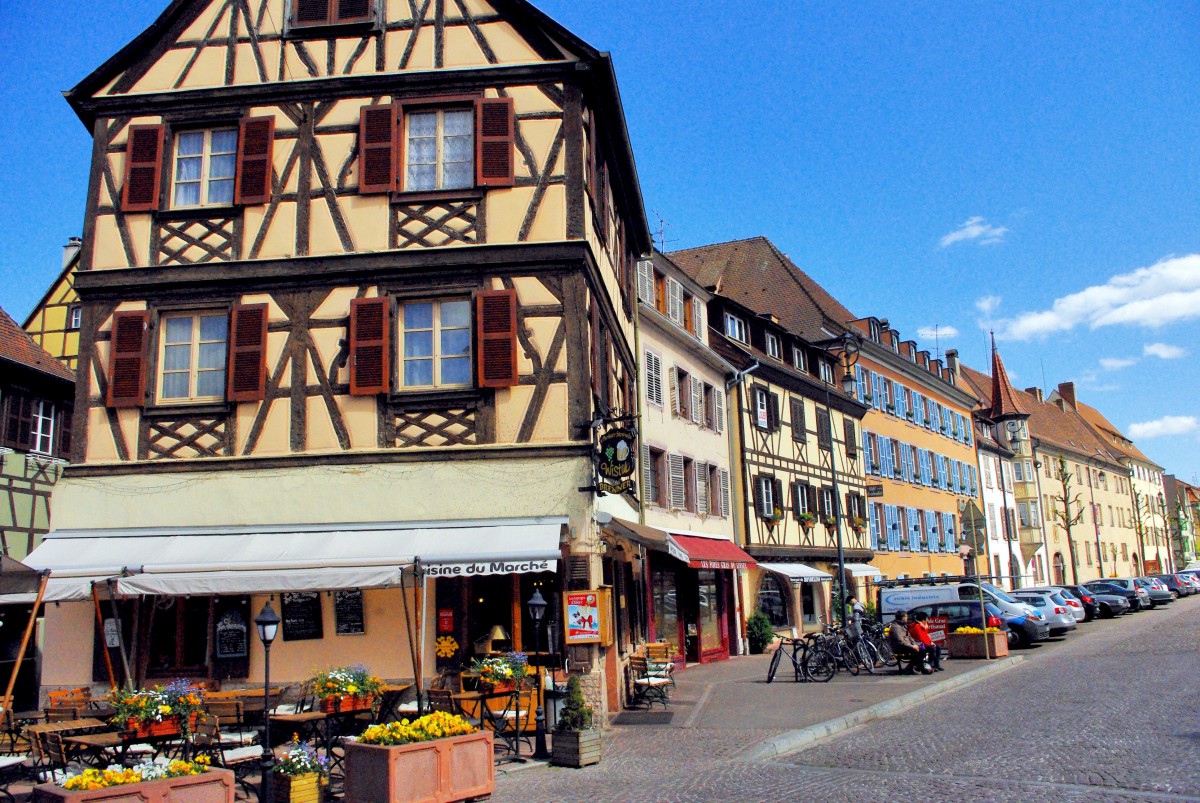
Rue de Turenne, Colmar © French Moments
Staying three days or longer
A longer stay makes sense if you plan to use Colmar as a base for exploring central Alsace.
You could devote one or two days to the town itself and use the remaining time for excursions to nearby villages, vineyards, castles or the Vosges Mountains.
Be careful not to fit too many destinations into a single day. I would rather visit two villages properly than rush through five of them simply to say that I had been there.
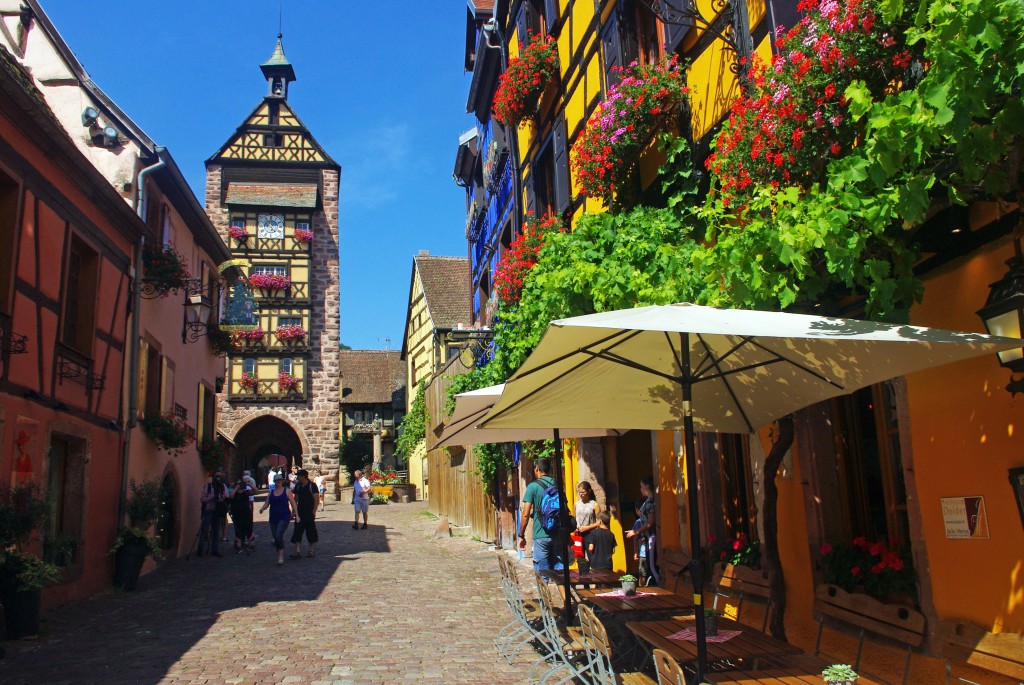
Riquewihr in Alsace © French Moments
Colmar Travel Guide: A one-day itinerary
One day is enough to see Colmar’s principal landmarks, visit one major museum and enjoy the historic centre at a reasonable pace.
The key is to begin early, follow a logical route and avoid adding several Wine Route villages to the same day.
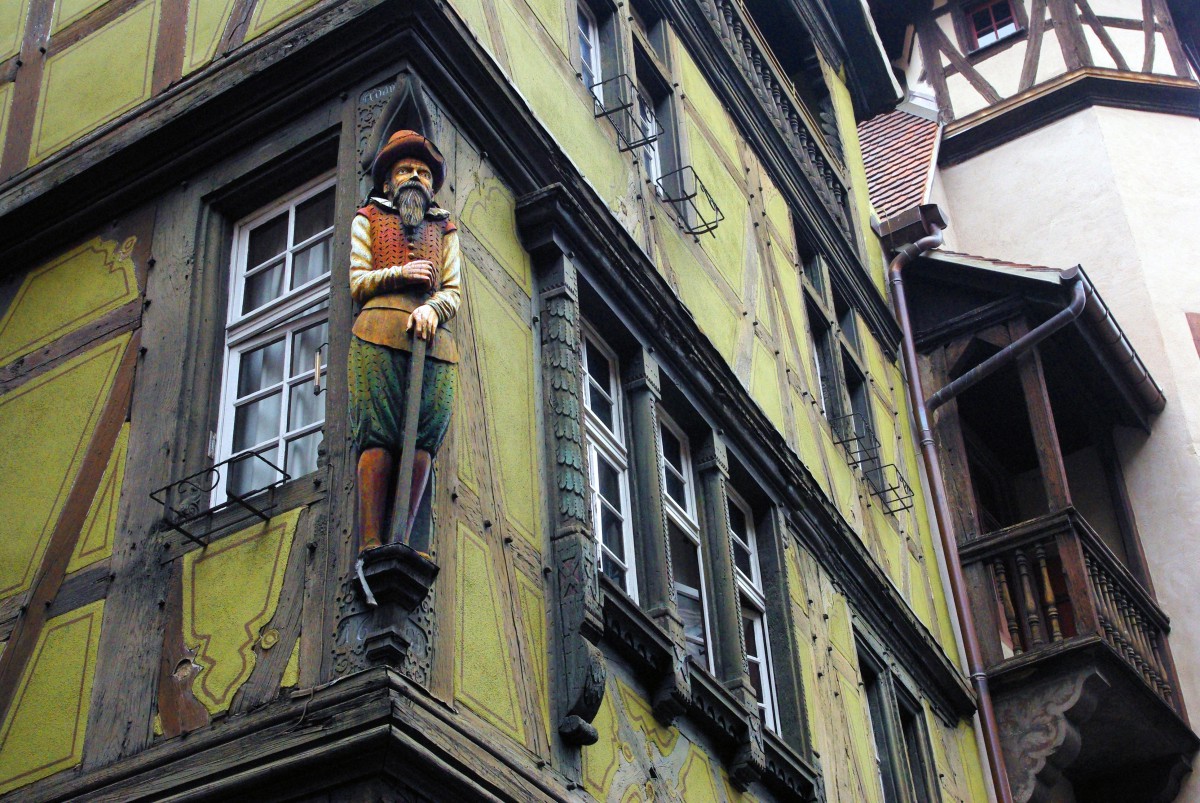
The Zum Kragen house, Colmar old town © French Moments
Morning: begin around Place Unterlinden
Begin around Place Unterlinden.
When art and history are priorities, visit the Unterlinden Museum first and allow around two hours. Otherwise, continue towards the Dominican Church and see Martin Schongauer’s Madonna of the Rose Bower.
Walk towards Place de la Cathédrale and Saint Martin’s Collegiate Church, examining the exterior before entering.
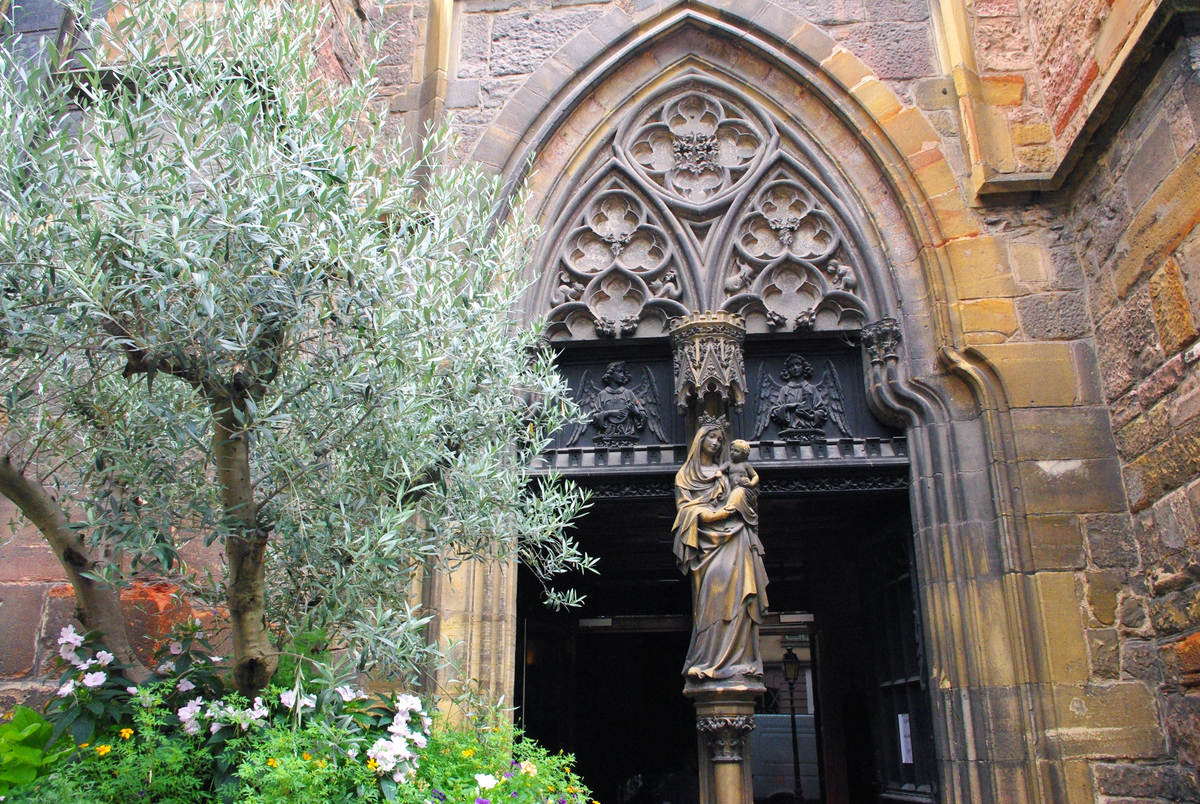
Portal of the former Dominican church in Colmar old town © French Moments
Late morning: explore the rue des Marchands
Follow the rue des Marchands past the Maison Adolph, the Pfister House and the Bartholdi Museum.
The street then leads towards the Koïfhus. Walk beneath its passage and view it from both sides.
Nearby, the Schwendi Fountain depicts another work by Bartholdi.
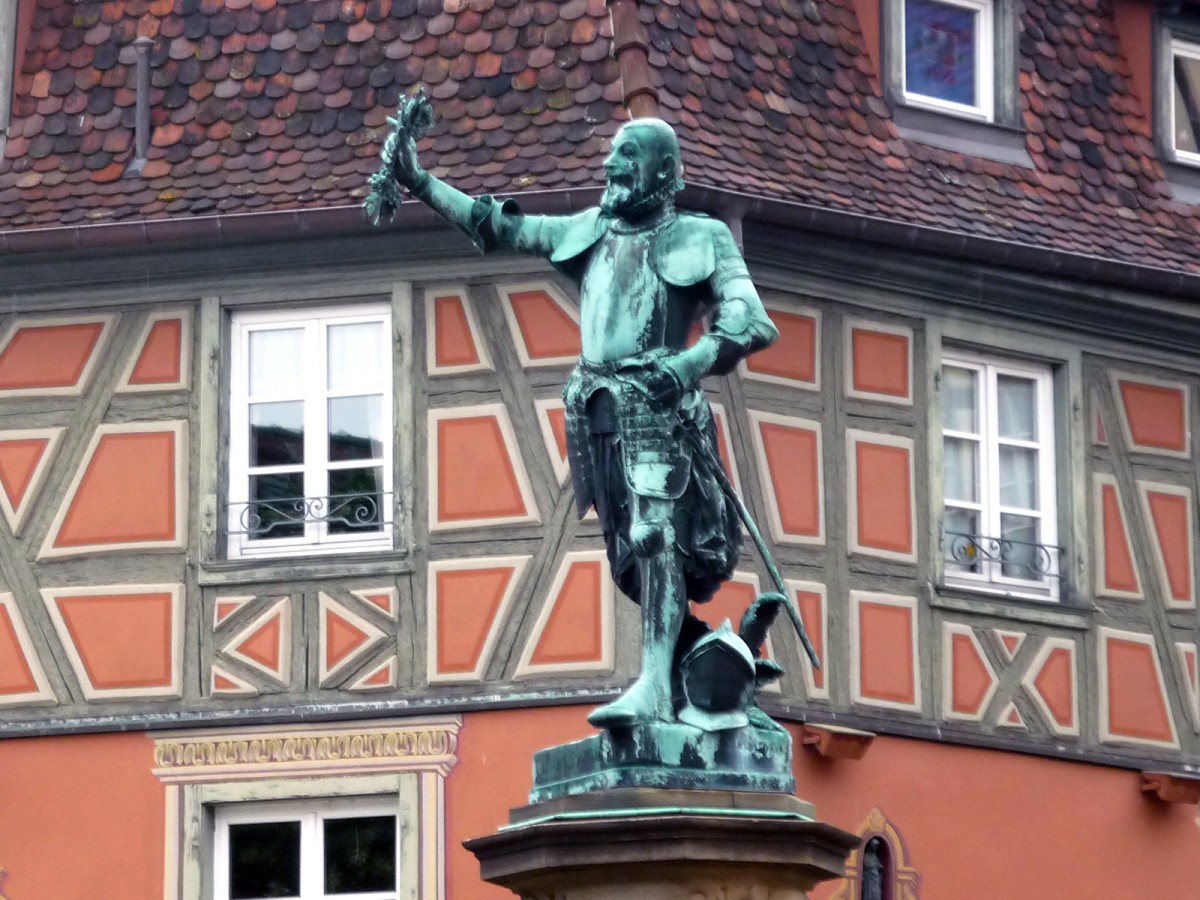
Place Schwendi, Colmar © French Moments
Lunch: pause before the busiest part of the route
Plan to eat between approximately midday and 1.30 pm.
Many French restaurants operate within defined lunch hours rather than serving continuously throughout the afternoon.
The area around the Place de l’Ancienne Douane offers plenty of choice, although it is also highly tourist-oriented. The Covered Market may provide an alternative for a lighter meal when it is open.
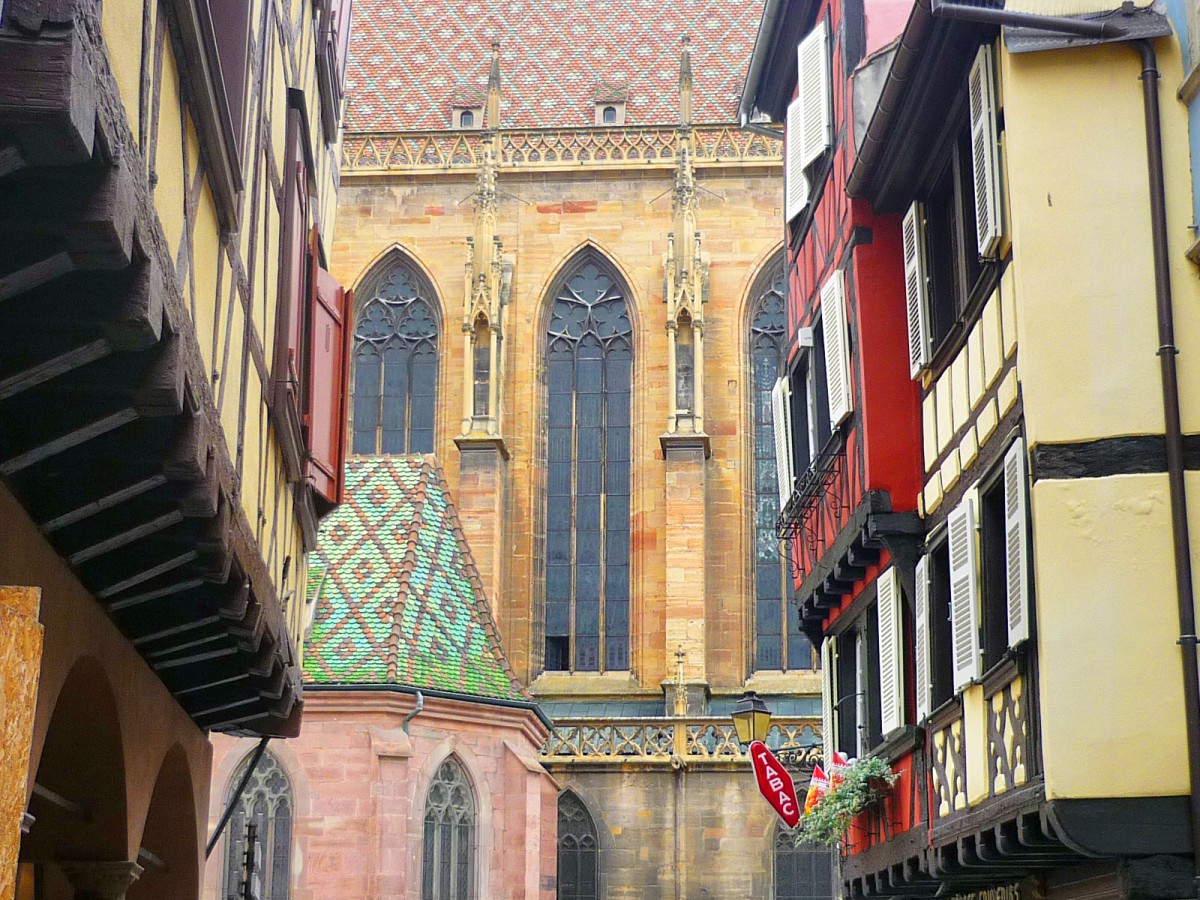
Rue Mercière, Colmar old town © French Moments
Afternoon: Tanners’ District and Little Venice
After lunch, continue through the Tanners’ District towards the Covered Market and the quai de la Poissonnerie.
From there, explore Little Venice and walk towards Pont Saint-Pierre. A boat trip can be included when queues are reasonable.
Rather than leaving immediately, return slowly through the centre. Once you know where the principal landmarks are, you can stop concentrating on navigation and begin noticing smaller architectural details.
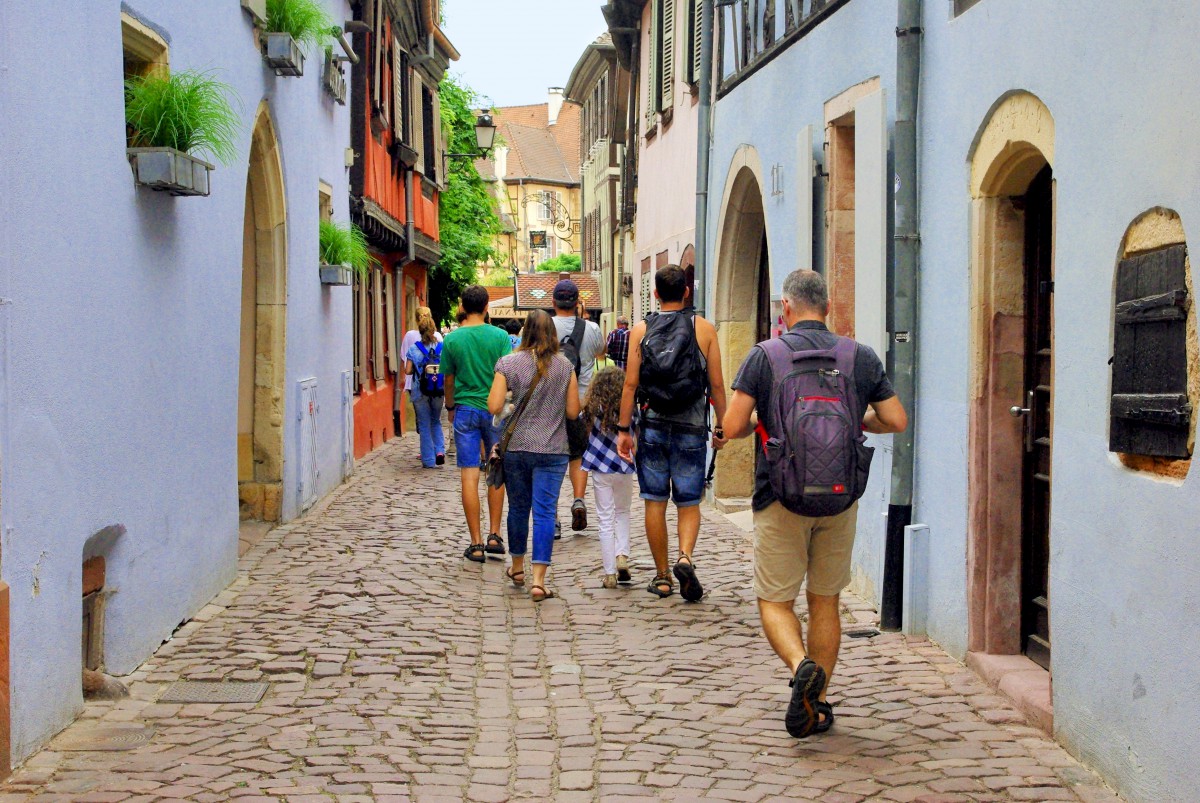
Rue de la Poissonnerie, Colmar © French Moments
Evening
Staying for dinner is one of the best ways to improve a one-day visit.
Many excursion groups leave before the evening, and the old town can become easier to appreciate around the rue des Marchands, the Koïfhus and the canals.
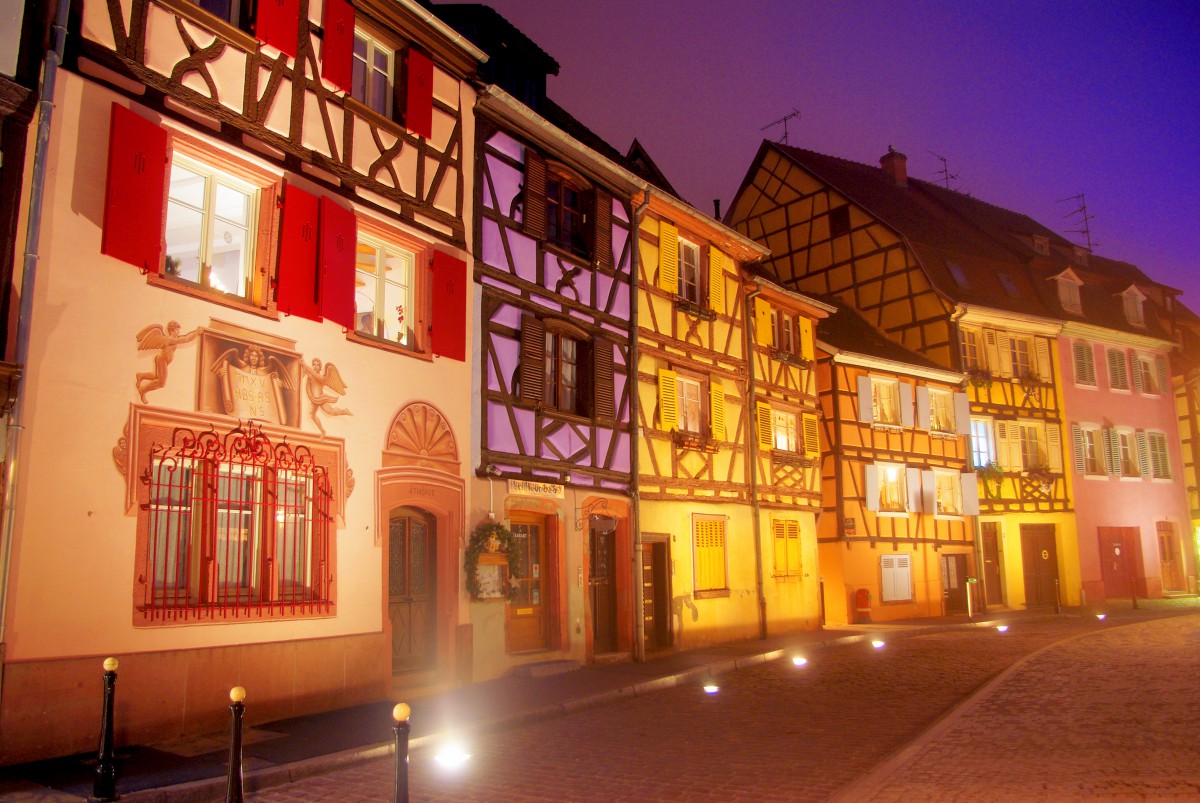
Quai de la Poissonnerie, Colmar © French Moments
Colmar Travel Guide: The best time to visit
The best time to visit Colmar is generally from late April to June or from September to early October.
These periods usually offer a good balance between pleasant weather, attractive vineyard landscapes and visitor numbers that are more manageable than during the height of summer or the Christmas markets.
Colmar in spring
Spring is one of my favourite times to visit Colmar.
The trees and flowerbeds return to life, café terraces reopen and the vineyards gradually turn green.
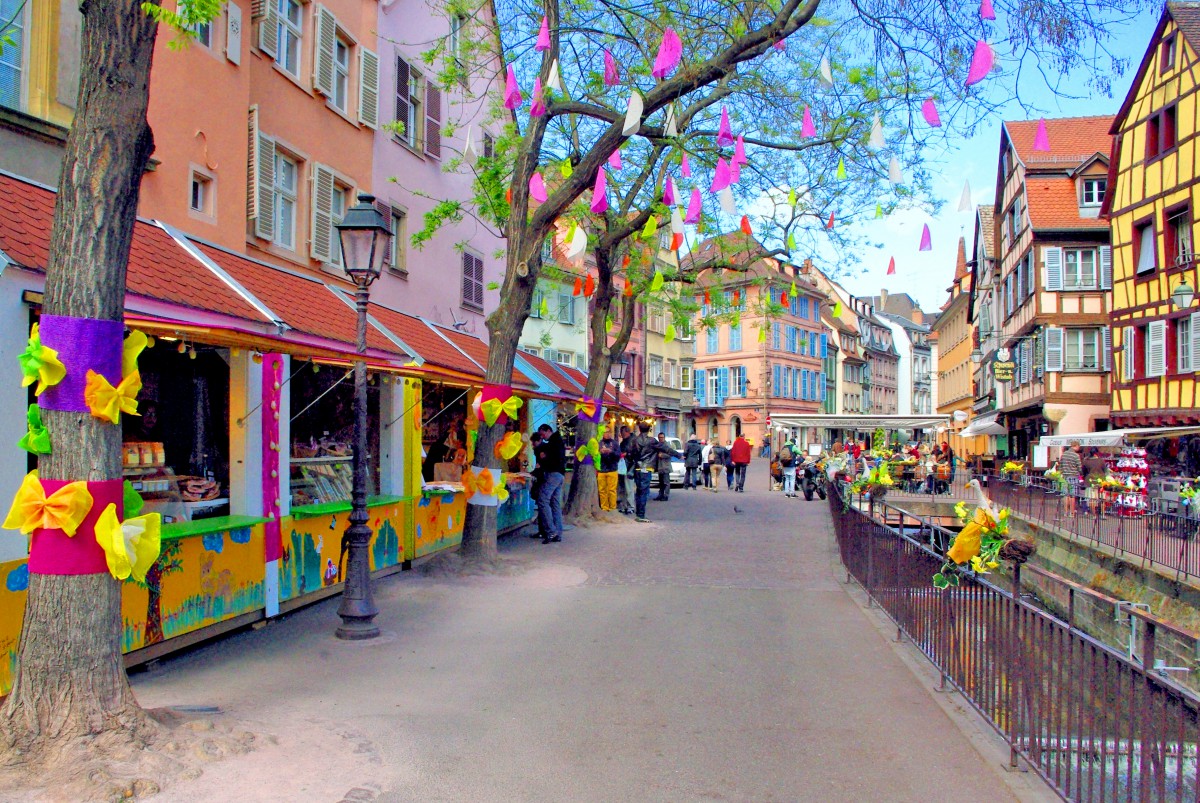
Easter market of Colmar © French Moments
April can be unpredictable, but May and June usually bring longer and warmer days. Spring should not be considered completely quiet, however. Fine weather, public holidays and weekends can attract large numbers of visitors.
Around Easter, Colmar hosts the Easter Market.
Colmar in summer
Summer provides long daylight hours, lively terraces and plenty of time for evening walks.
July and August are also among the busiest months. Temperatures may rise above 30°C (86°F), and the heat can feel stronger in the narrow streets of the old town.
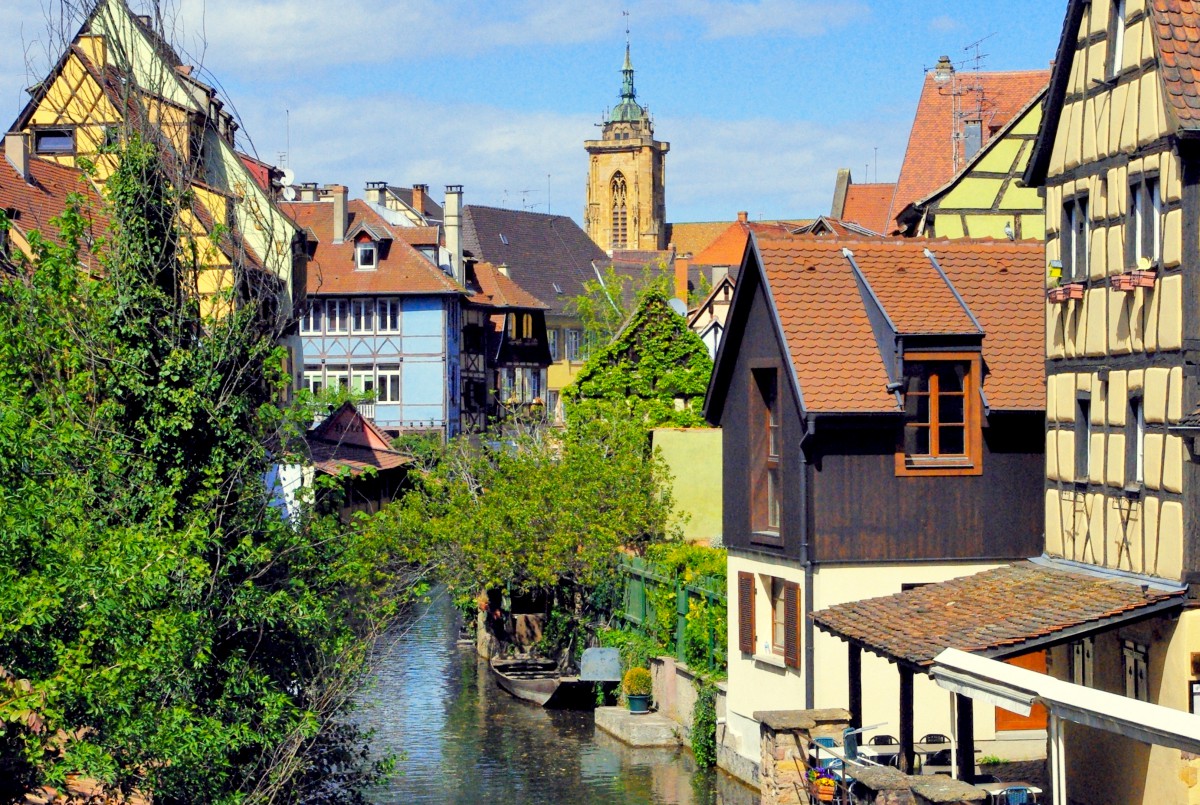
The Little Venice of Colmar © French Moments
Air conditioning is not guaranteed in every hotel or apartment, which is worth checking carefully when visiting during summer.
Colmar in autumn
September and early October are particularly attractive in Colmar and the surrounding wine region.
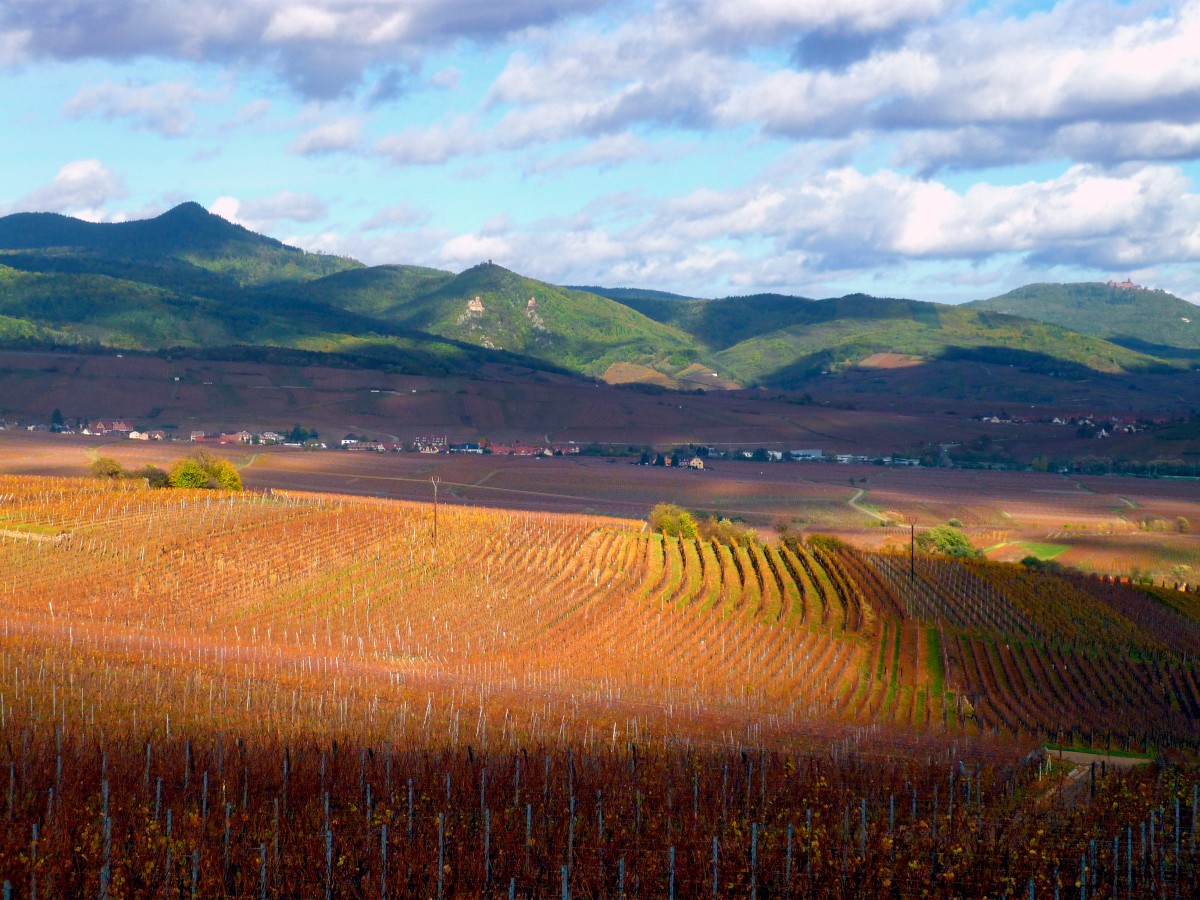
The vineyards of Alsace, Autumn in France © French Moments
The vineyards gradually change colour, and the grape harvest gives the area a strong sense of seasonal activity.
This is one of the best periods for combining the town with the Wine Route. Days are often still mild enough for outdoor visits, while evenings become cooler.
Colmar at Christmas
Christmas is the most famous and spectacular time to visit Colmar. Streets, squares and façades are decorated with lights, garlands and elaborate displays, while several Christmas markets operate across the historic centre.
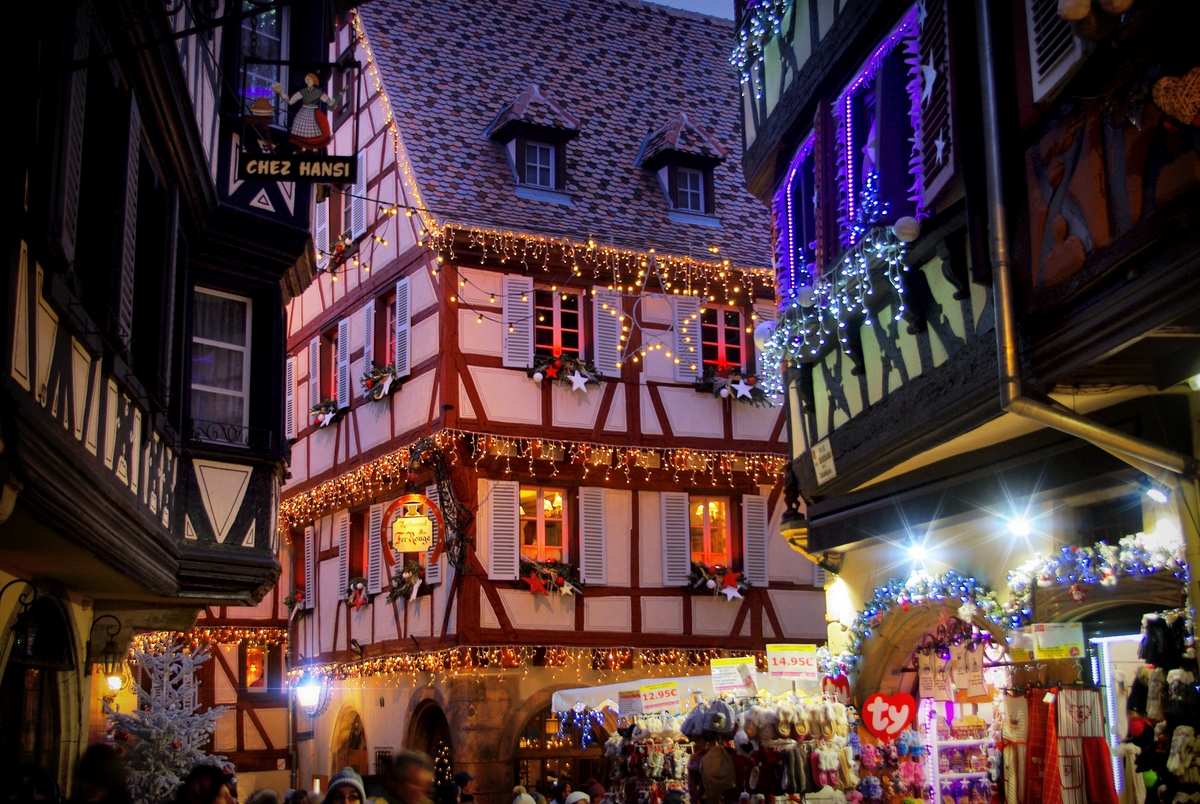
Christmas in Alsace (Rue des Marchands, Colmar) © French Moments
The atmosphere can be magical, but this is also the busiest and most expensive period. Accommodation should be booked well in advance, particularly for weekends.
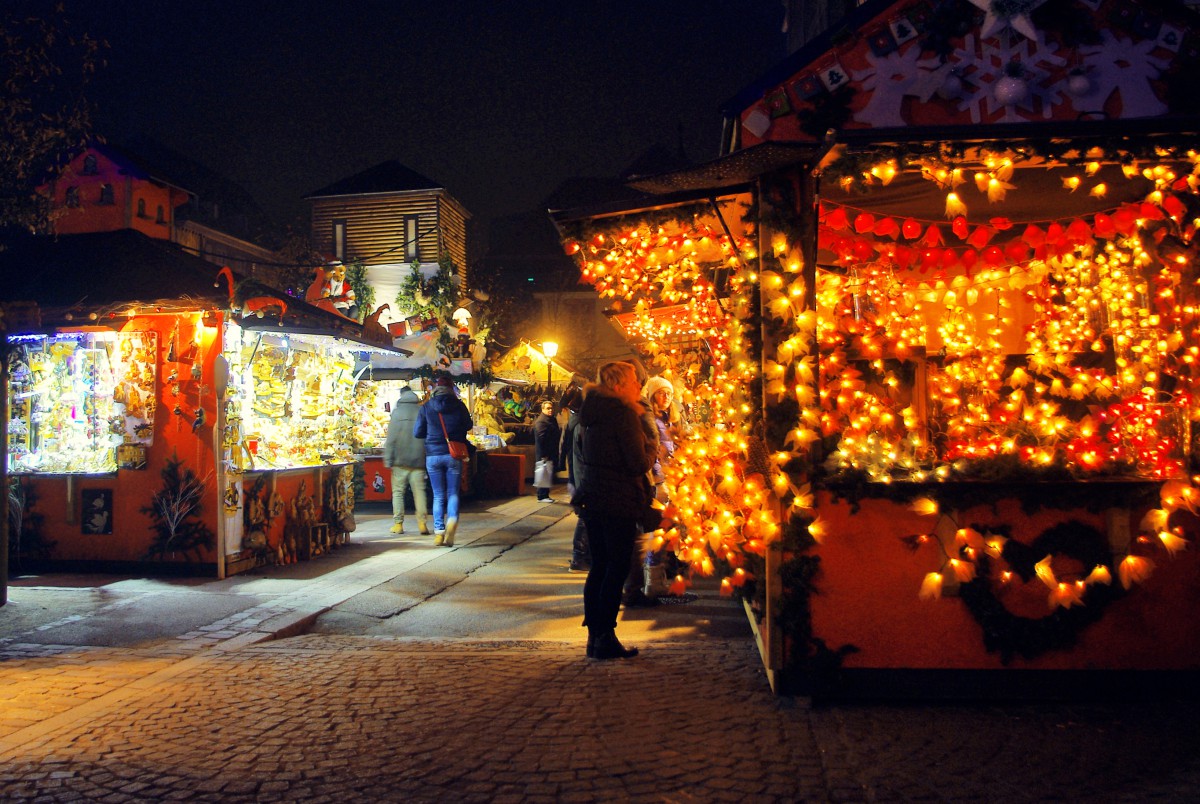
At the Petite Venise Christmas market, Colmar © French Moments
Colmar at Christmas deserves its own planning, which is why I have written a separate guide to the Colmar Christmas markets.
Colmar in winter after Christmas
January and February receive far less attention than December. Once the Christmas decorations and markets have disappeared, Colmar becomes considerably quieter.
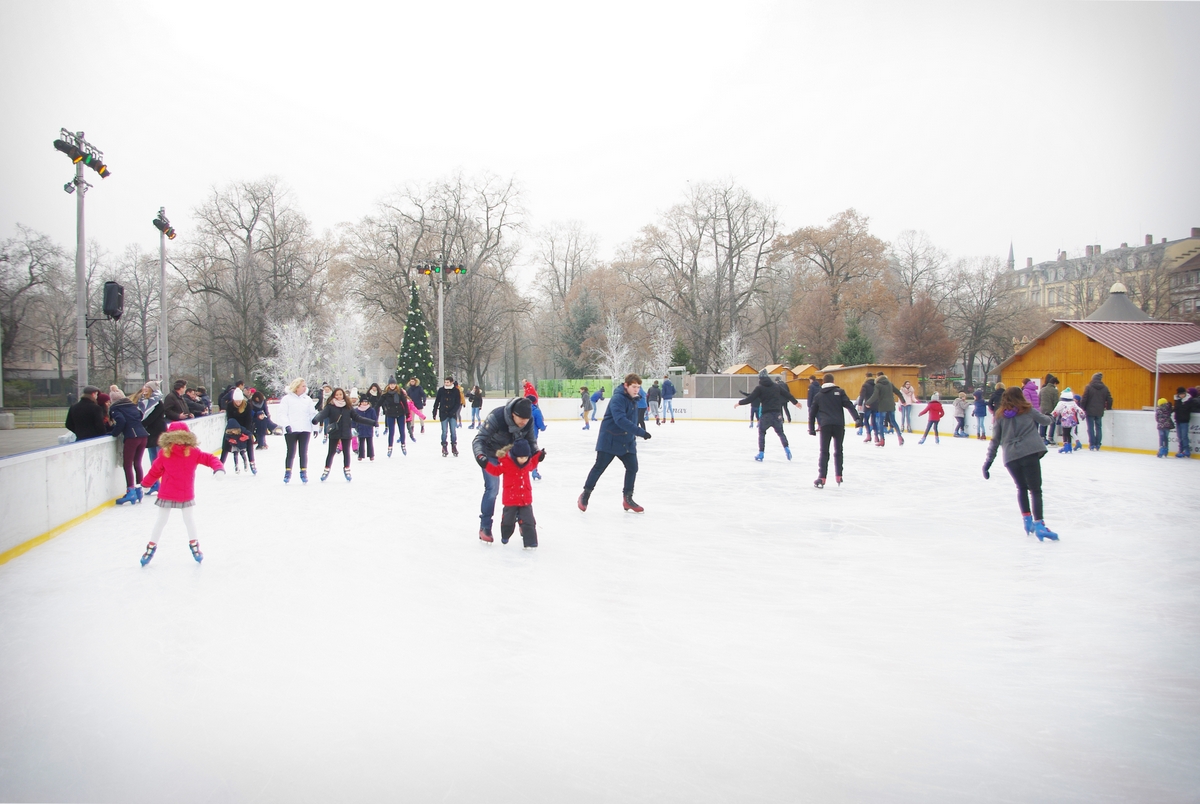
The ice-skating rink in Place Rapp, Colmar © French Moments
This can be an advantage if your priority is architecture, museums and uncrowded streets rather than festive entertainment. Hotel prices may also be more attractive.
The disadvantages are shorter days, cold weather and a less colourful landscape. Some businesses may close temporarily after the Christmas season, and the vineyards are dormant.
Snow is possible but should never be expected. Winter conditions in the Alsace Plain are often cold and grey rather than consistently snowy.
When is Colmar least crowded?
Colmar is usually quietest from January to March, excluding holidays and special events.
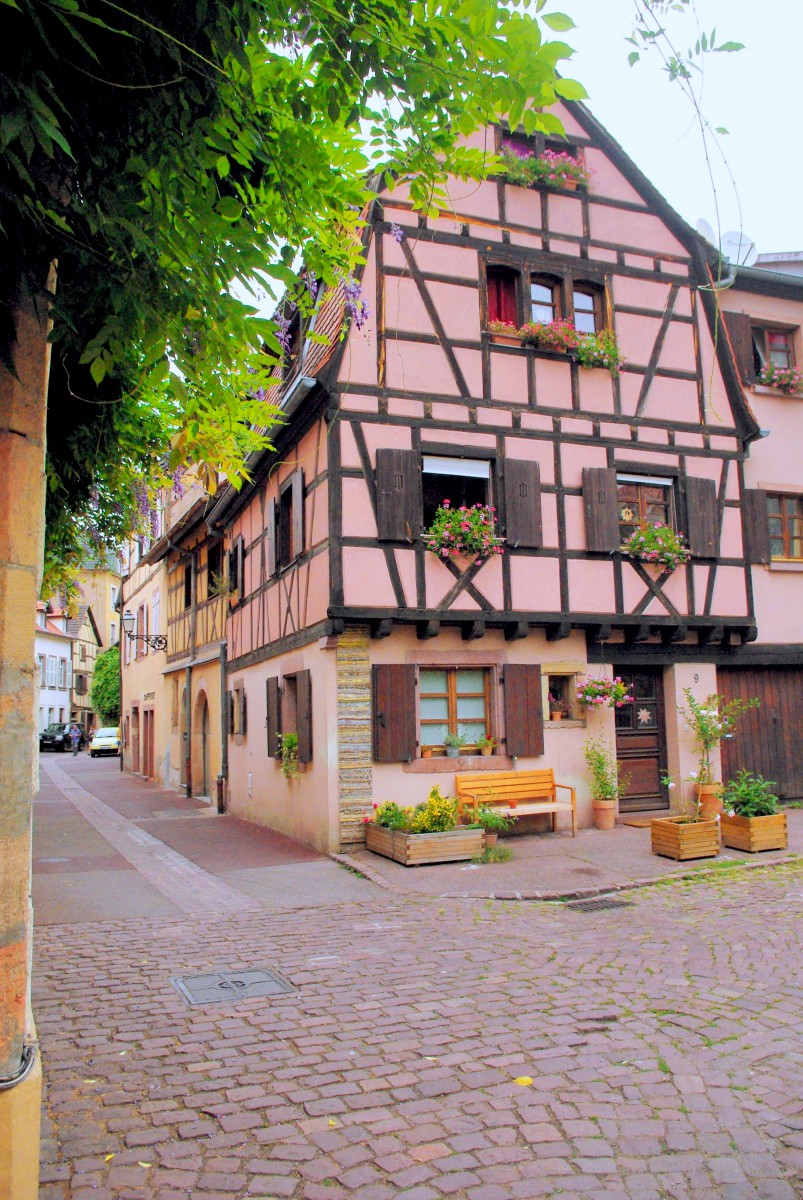
Half-timbered house in Colmar © French Moments
For a better combination of atmosphere and manageable crowds, I would consider:
- weekdays in late April or May;
- weekdays in June outside major holidays;
- September after the main summer season;
- early October on non-festival weekdays;
- early December from Monday to Thursday.
Whatever the season, early morning generally provides the calmest experience.
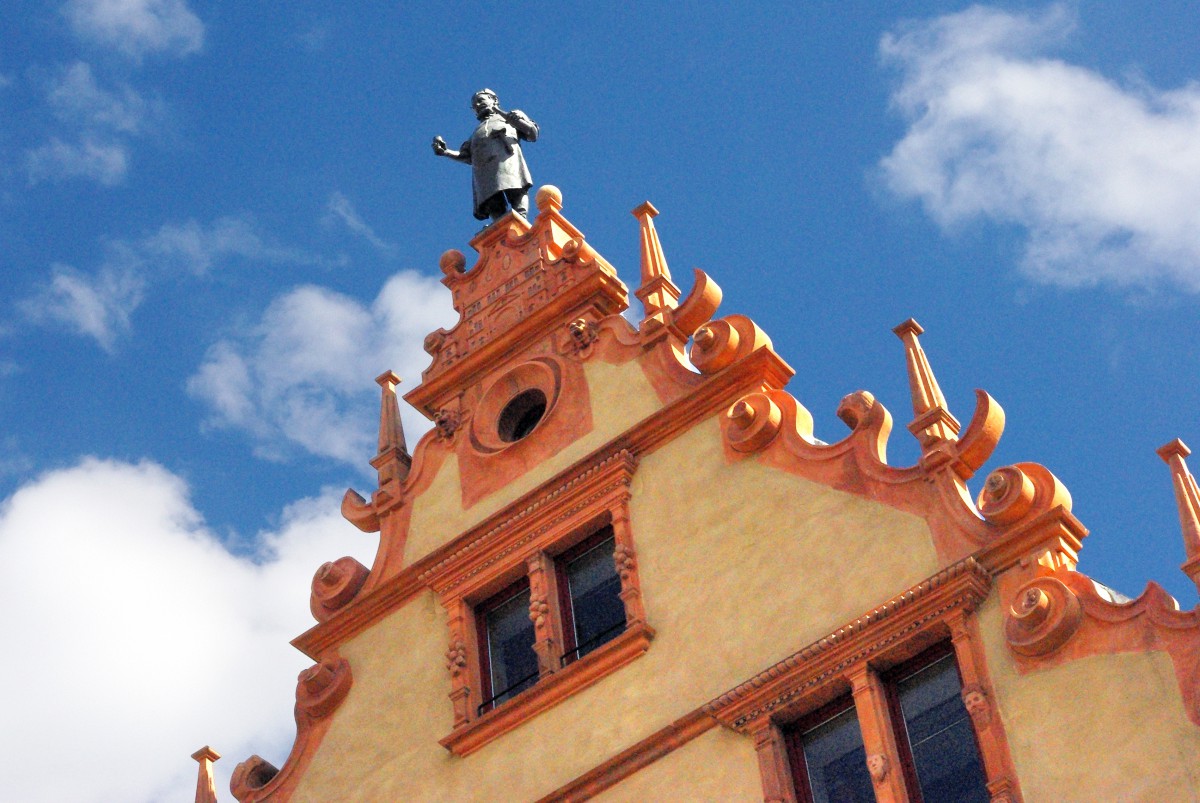
Maison des Têtes, Colmar © French Moments
Colmar Travel Guide: Where to stay
The best place to stay depends on whether you value historic atmosphere, access to the train station, convenient parking or a quieter setting outside the town.
For a first visit, I would generally choose accommodation within walking distance of the old centre.
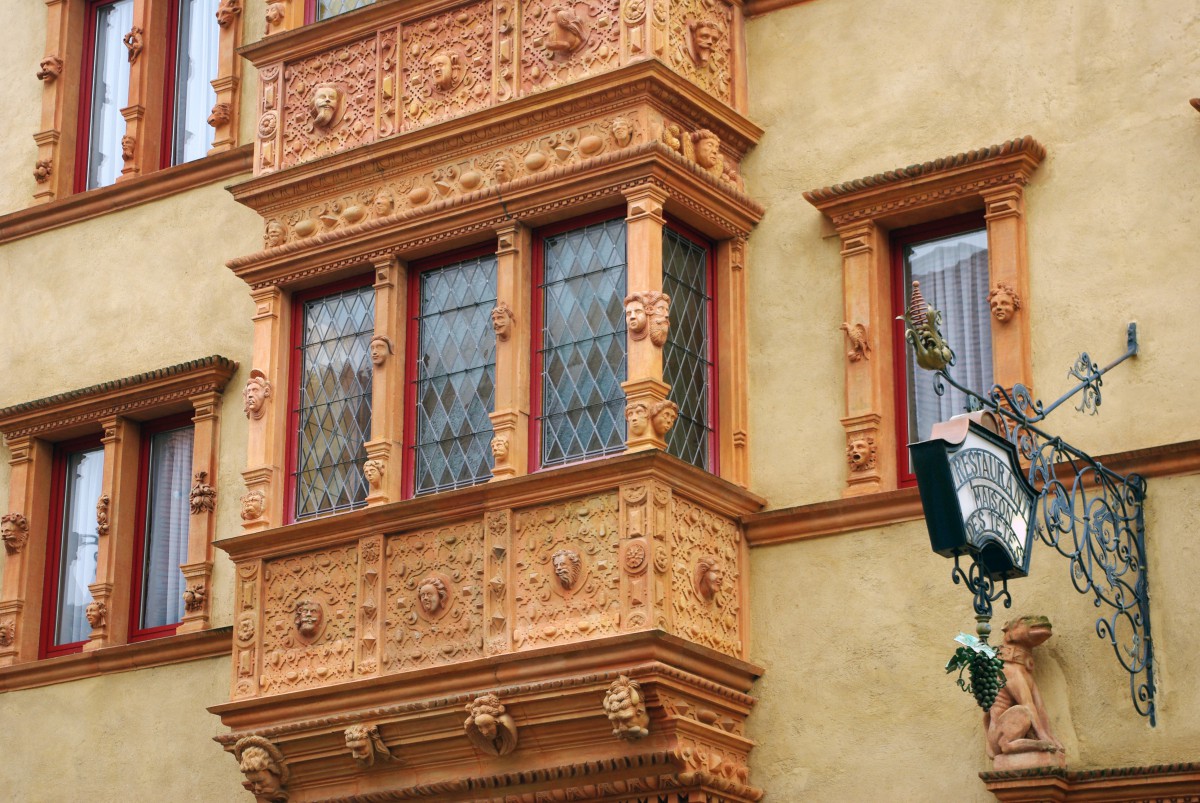
Detail of the sandstone oriel of the Maison des Têtes in Colmar © French Moments
Staying in Colmar Old Town
The historic centre is the most atmospheric place to stay.
You will be close to the principal sights, restaurants and evening walks, and you will not need public transport to explore the town.
Historic buildings may, however, have narrow staircases, small rooms or no lift. Air conditioning is not always available.
Noise may also be a consideration when the room overlooks a pedestrian street, restaurant terrace or Christmas market square.

Discover the Colmar Christmas market in Alsace © French Moments
Staying near Colmar train station
The area between the station and historic centre is practical for travellers arriving by rail.
The station is approximately a 15- to 20-minute walk from Place Rapp. Staying nearby is especially useful when you plan to take day trips by train or arrive with heavy luggage.
Place Rapp and the western side of the centre provide a good compromise between access to the station and proximity to the old town.
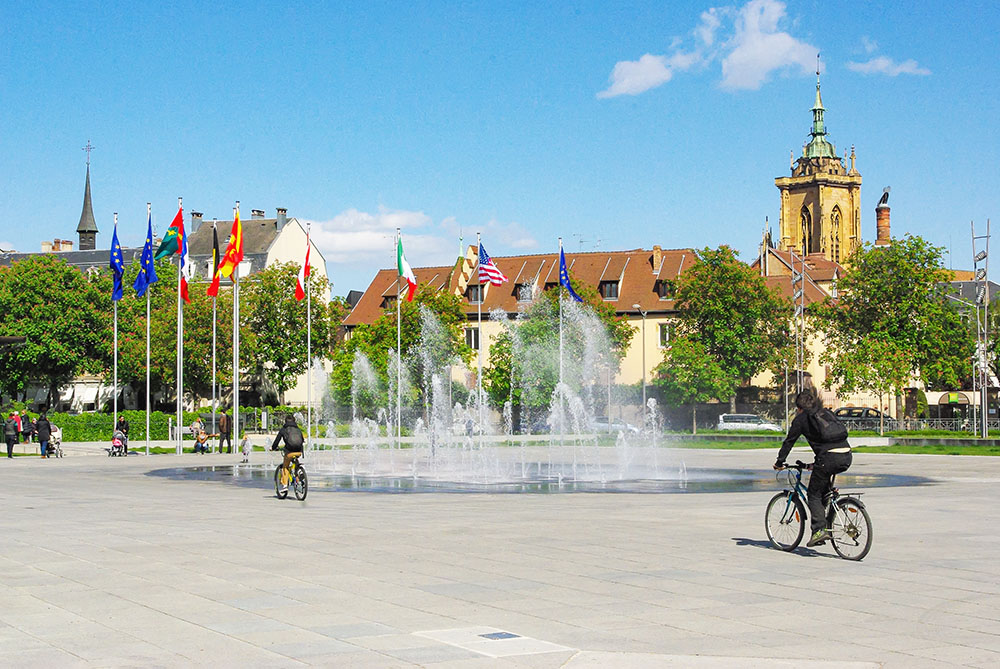
Place Rapp, Colmar © French Moments
Staying outside the historic centre
Accommodation outside central Colmar can be sensible if you are driving or looking for modern facilities and easier parking.
Check the actual distance before booking. A hotel may describe itself as being in Colmar while still being several kilometres from the principal sights.
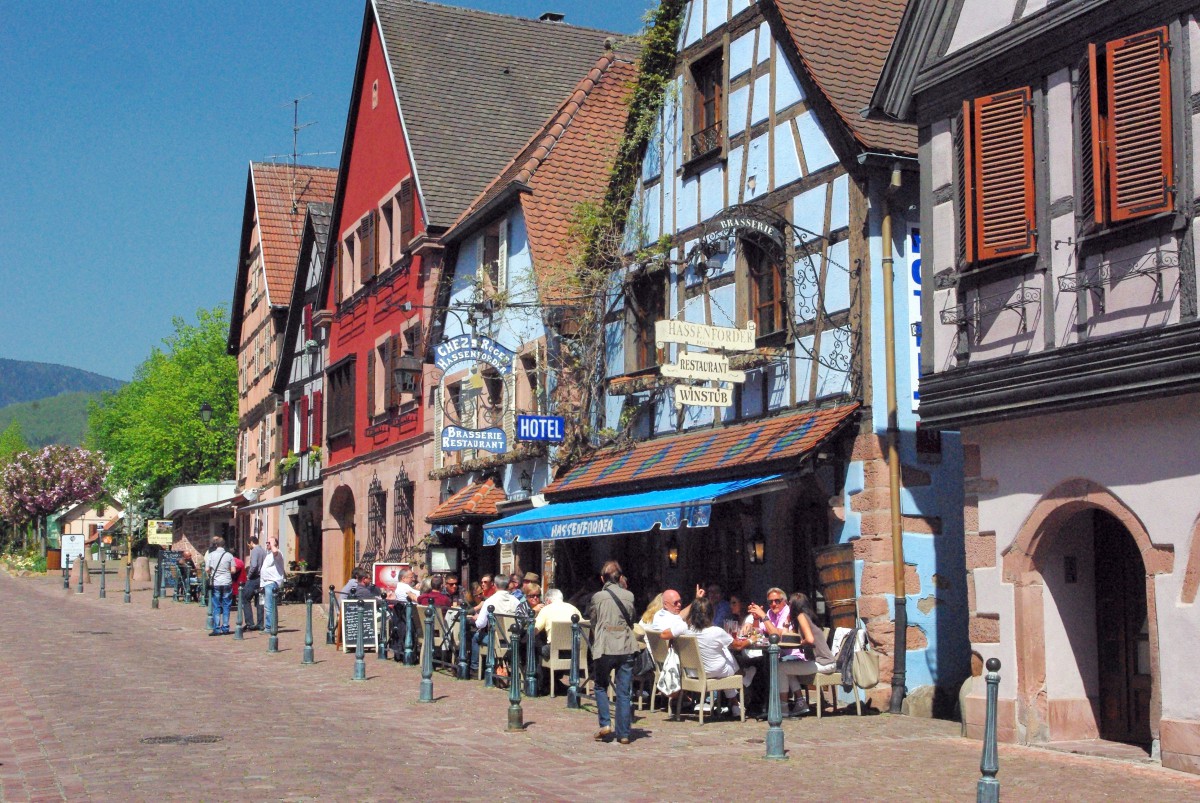
Kaysersberg © French Moments
Staying in a village near Colmar
A nearby village can provide a quieter and more rural base, particularly when your journey focuses on the Wine Route.
Eguisheim and Turckheim are among the closest choices. Turckheim is especially practical because it has a railway station connected with Colmar.
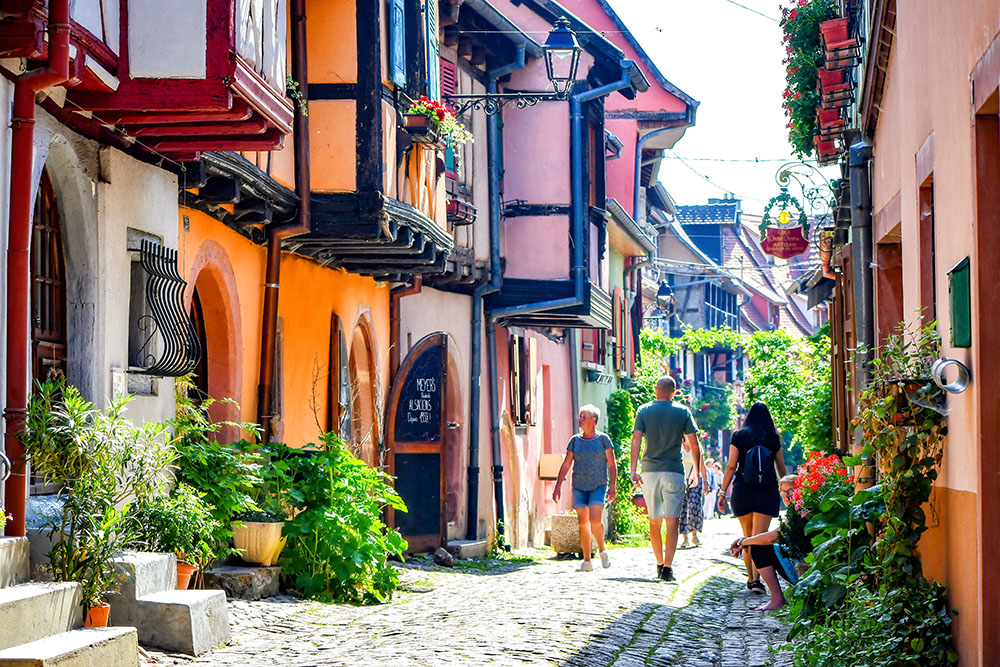
Rue du Rempart, Eguisheim © French Moments
However, staying in a village is less convenient without a car, particularly in the evening.
For a first journey to Alsace, Colmar is usually the more versatile base.

Turckheim Alsace France © French Moments
What to eat and drink in Colmar
Colmar is an excellent place to discover Alsatian food and wine.
The town has a wide choice of restaurants, winstubs, bakeries, market stalls and wine bars, although the most central streets can be highly tourist-oriented.
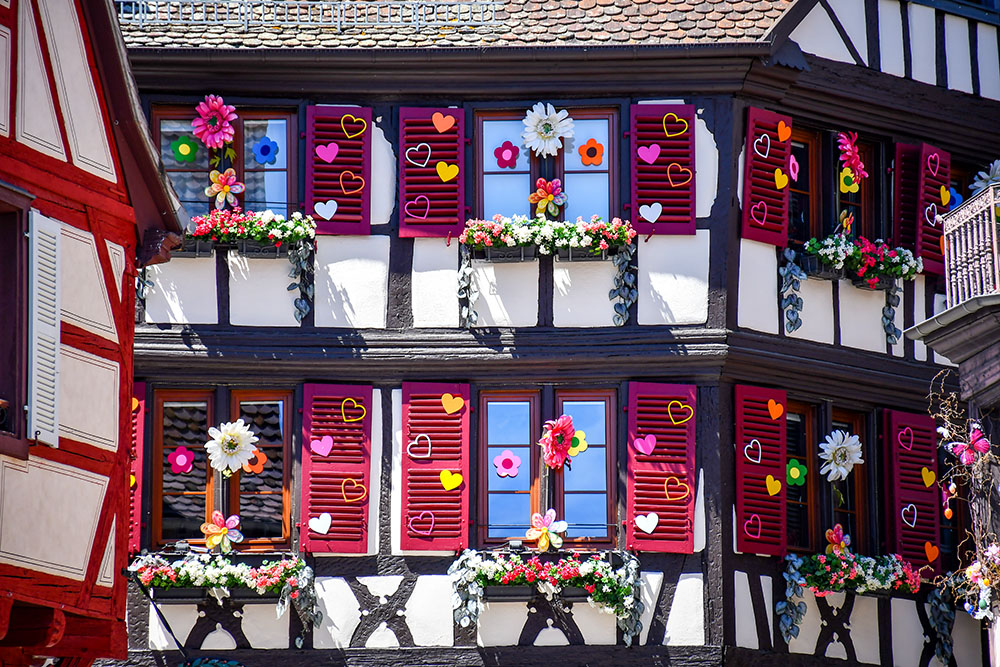
Colmar © French Moments
Alsatian dishes to try
One of the best-known dishes is tarte flambée, or flammekueche, made with a thin base traditionally topped with cream, onions and bacon.

Choucroute garnie © French Moments
Other regional specialities include:
- choucroute garnie, fermented cabbage served with sausages, smoked meats and potatoes;
- baeckeoffe, a slow-cooked casserole containing meat, potatoes, onions and wine;
- spaetzle, small soft noodles;
- fleischnacka, rolled pasta filled with meat;
- munster cheese;
- kougelhopf, a ring-shaped yeast cake.
Alsatian cuisine is generous and often rich, so consider the portion sizes before ordering several courses.

Kugelhopf © French Moments
Eating in a traditional winstub
A winstub is a traditional Alsatian wine tavern.
Some remain intimate and traditional, while others are larger establishments aimed partly at visitors. A winstub can be a good place to try regional dishes, but do not assume that every restaurant using the name is automatically authentic or inexpensive.
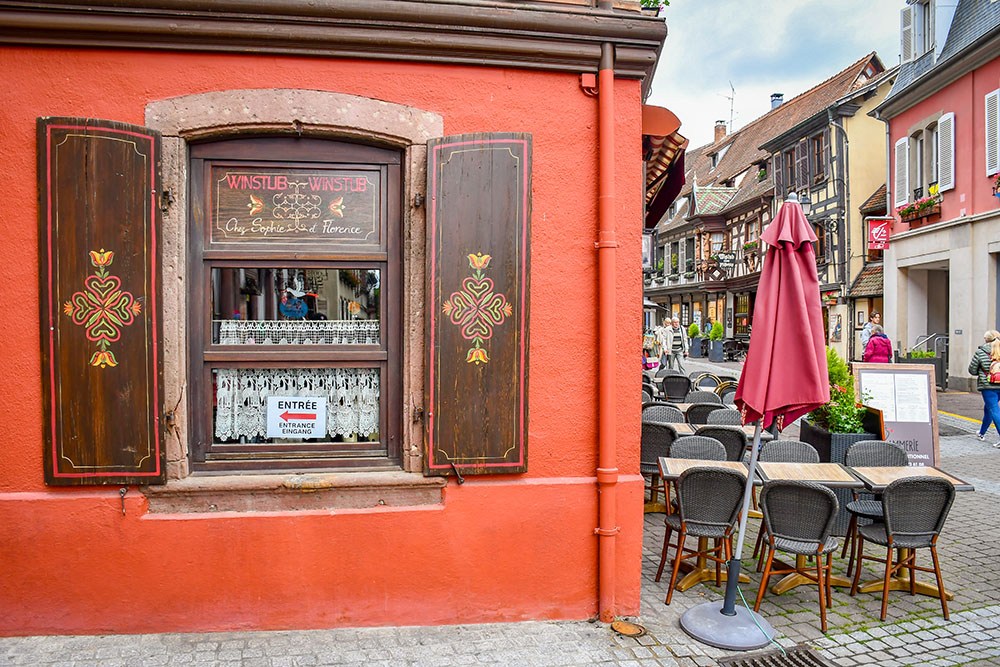
An Alsatian Winstub © French Moments
Alsace wines to try
Alsace is particularly known for white wines produced from grapes including Riesling, Gewurztraminer, Pinot Gris, Pinot Blanc, Muscat and Sylvaner.
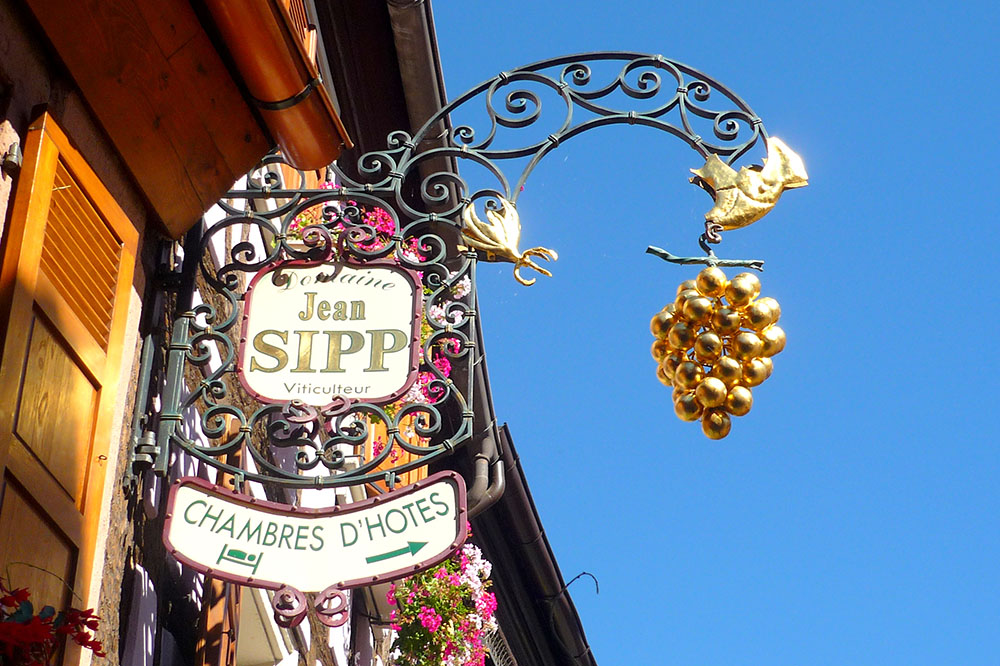
Alsace Wines © French Moments
Riesling is often dry and fresh, while Gewurztraminer is usually more aromatic. You may also see Crémant d’Alsace, a sparkling wine widely served as an aperitif.
The sweetness of Alsace wines varies, so ask for advice when ordering by the glass.
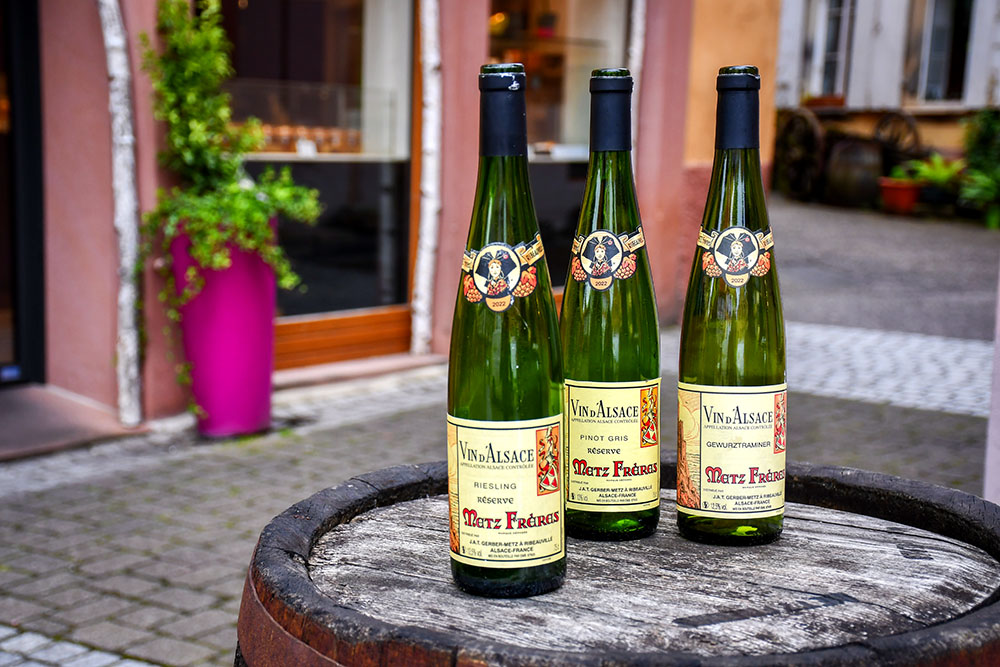
Alsace Wines © French Moments
Restaurant hours and tipping
Meal times in France can be more restricted than many American visitors expect.
Lunch is commonly served from midday until around 1.30 or 2 pm. Dinner often begins at approximately 7 pm. Between these periods, many kitchens close.
Restaurant prices include taxes and service. You are not expected to add a tip of 15 or 20 per cent. When service has been good, rounding up the bill or leaving a few euros is appreciated but not compulsory.
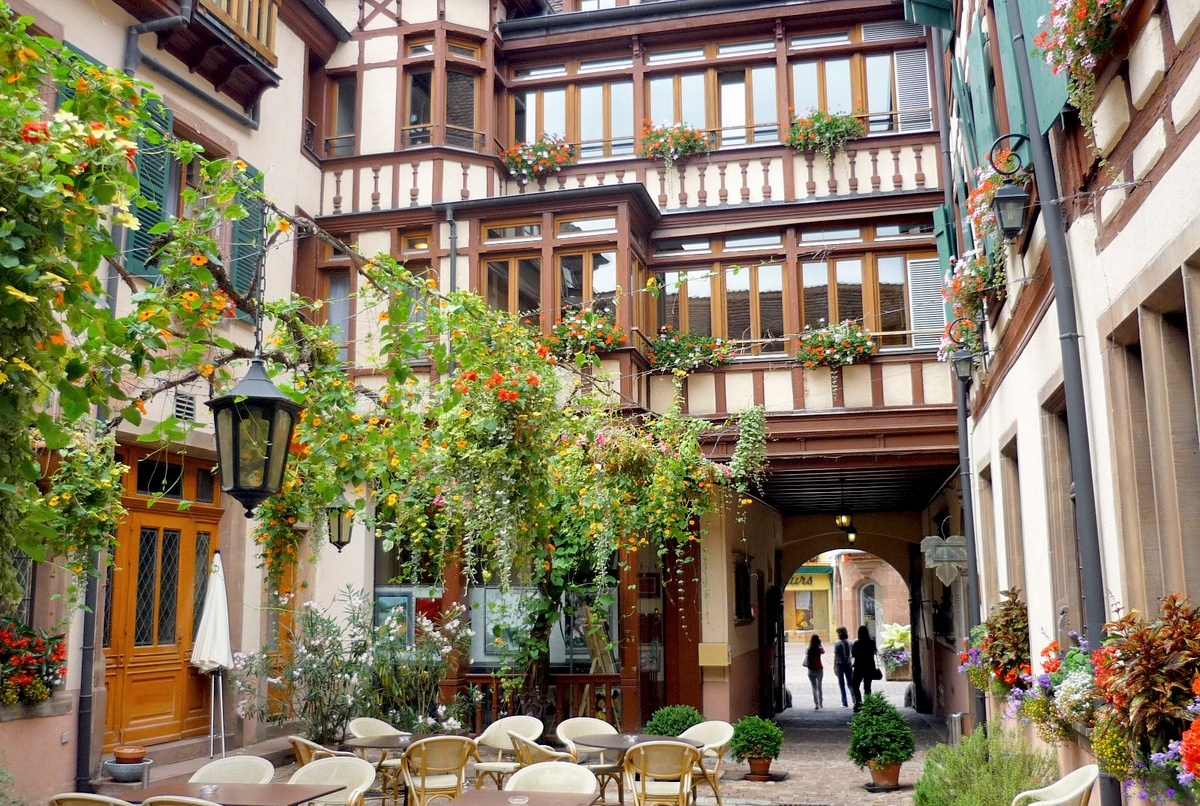
Hotel des Têtes in Colmar © French Moments
How to get to Colmar
Colmar is well connected by train and road, despite not having a major passenger airport of its own.
For most visitors, the easiest options are the train from Strasbourg or Paris, or a flight to EuroAirport Basel–Mulhouse–Freiburg followed by public transport or a rental car.
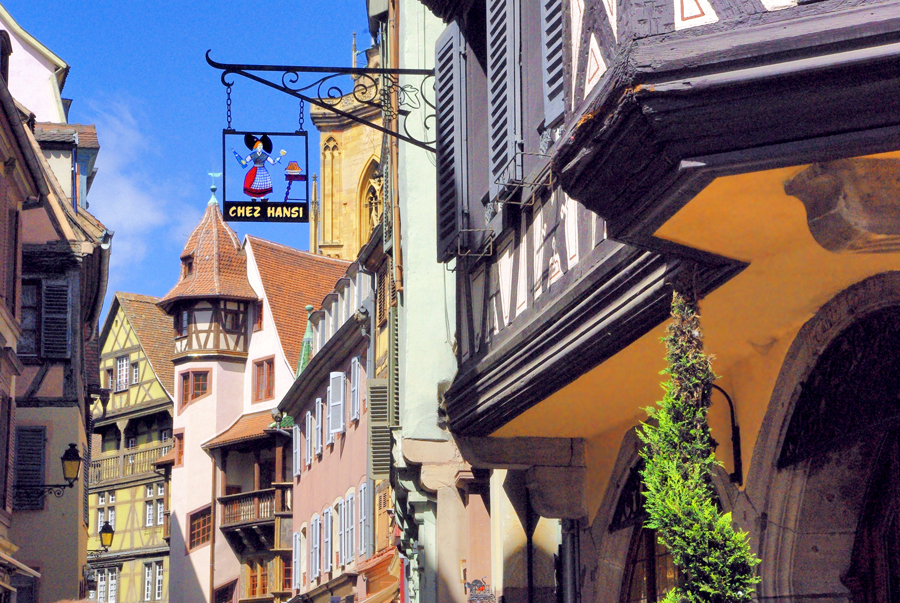
Rue des Marchands © French Moments
Travelling to Colmar by train
Colmar station lies southwest of the historic centre.
Direct regional trains connect the town with Strasbourg, Mulhouse and Basel. Long-distance services also link Colmar with Paris, either directly or with a change.
Strasbourg is approximately 30 minutes away by train. From Paris Gare de l’Est, allow approximately 2½ to 3 hours.
Train schedules change, so always verify the journey for your exact date.
Travelling from Strasbourg to Colmar
Strasbourg is one of the easiest starting points for reaching Colmar.
Direct TER regional trains run frequently between the two towns. The journey generally takes around 30 minutes, with the fastest services completing it in approximately 26 minutes.
Because the connection is fast and frequent, it is possible to visit Colmar as a day trip from Strasbourg. However, staying overnight provides a much better opportunity to see the old town before and after the busiest daytime hours.
Regional trains can become crowded during commuting periods, summer weekends and the Christmas market season. Arrive at the station with enough time to locate the platform, particularly when travelling with luggage.
Travelling to Colmar by car
Colmar lies close to the A35 motorway, which connects Strasbourg, Mulhouse and Basel.
A car is not useful for exploring the historic centre, but it becomes valuable when visiting smaller villages, vineyards, castles and the Vosges Mountains.
When renting, choose the smallest vehicle that comfortably accommodates your passengers and luggage. Historic streets, access ramps and parking spaces are often narrower than many American drivers expect.
Automatic vehicles may also need to be reserved in advance.
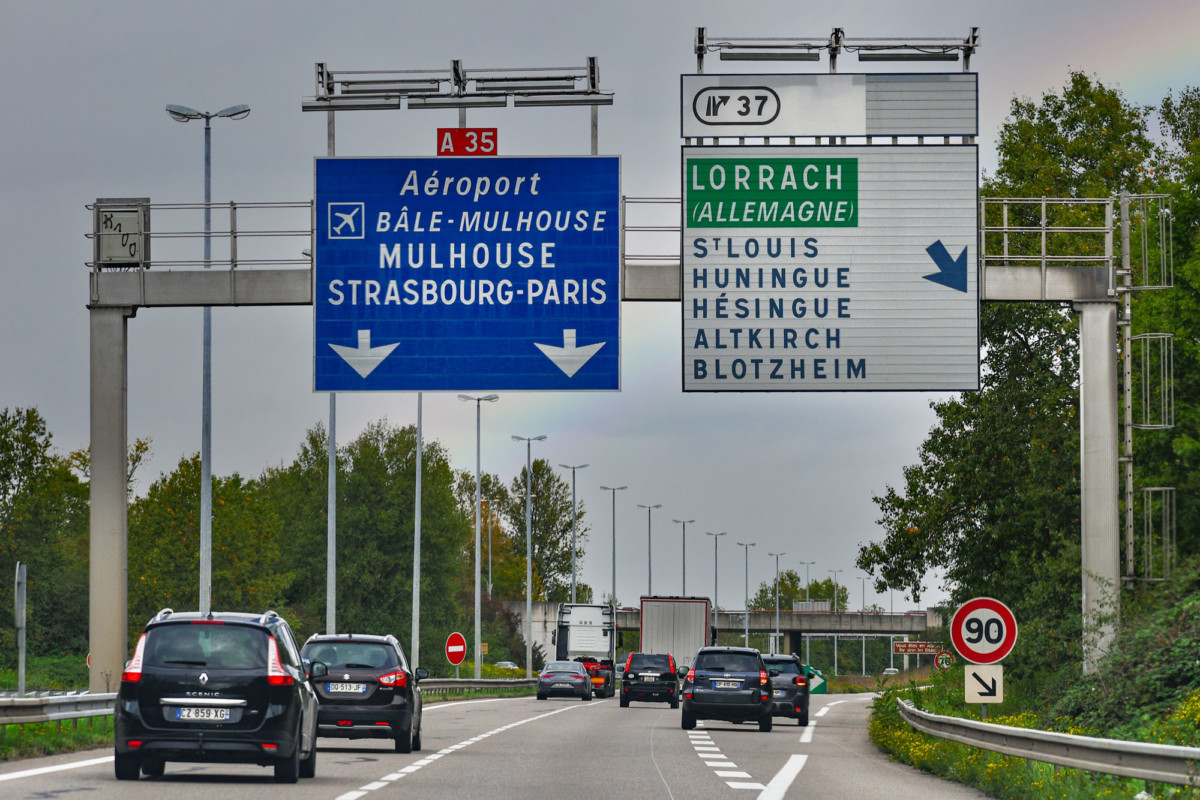
The A35 motorway in Alsace © French Moments
The nearest airports to Colmar
The closest airports are:
- Strasbourg Airport, approximately 70 km (44 miles) north of Colmar;
- EuroAirport Basel–Mulhouse–Freiburg, approximately 70 km south.
Zurich and Frankfurt may also be useful depending on flight availability and the wider itinerary.
EuroAirport does not currently have a railway platform directly beside the terminal. Public transport generally involves taking a bus to Saint-Louis station and continuing by train.

At the airport © French Moments
Travelling to Colmar from the United States
For most American visitors, the principal options are:
- fly to Paris and continue by train;
- fly to EuroAirport via a European hub;
- fly to Zurich and continue through Basel.
Paris usually offers the widest choice of transatlantic flights. However, allow generous time between landing and departing from Gare de l’Est.
I would avoid booking a tightly timed train immediately after an overnight flight. Immigration, baggage collection and the transfer across Paris can take longer than expected.
How to get around Colmar
The best way to explore Colmar is on foot.
The historic centre is compact, and most principal sights are situated between the Unterlinden Museum, the rue des Marchands and Little Venice.
Comfortable footwear is advisable because of the cobbles and uneven surfaces.
TRACE operates the local bus network, while a free electric shuttle connects parts of the centre with several car parks. These services are most useful when your accommodation or parking place lies outside the pedestrian area.
A bicycle can be a good choice for exploring the vineyards and nearby countryside, although walking remains easier inside the old town.
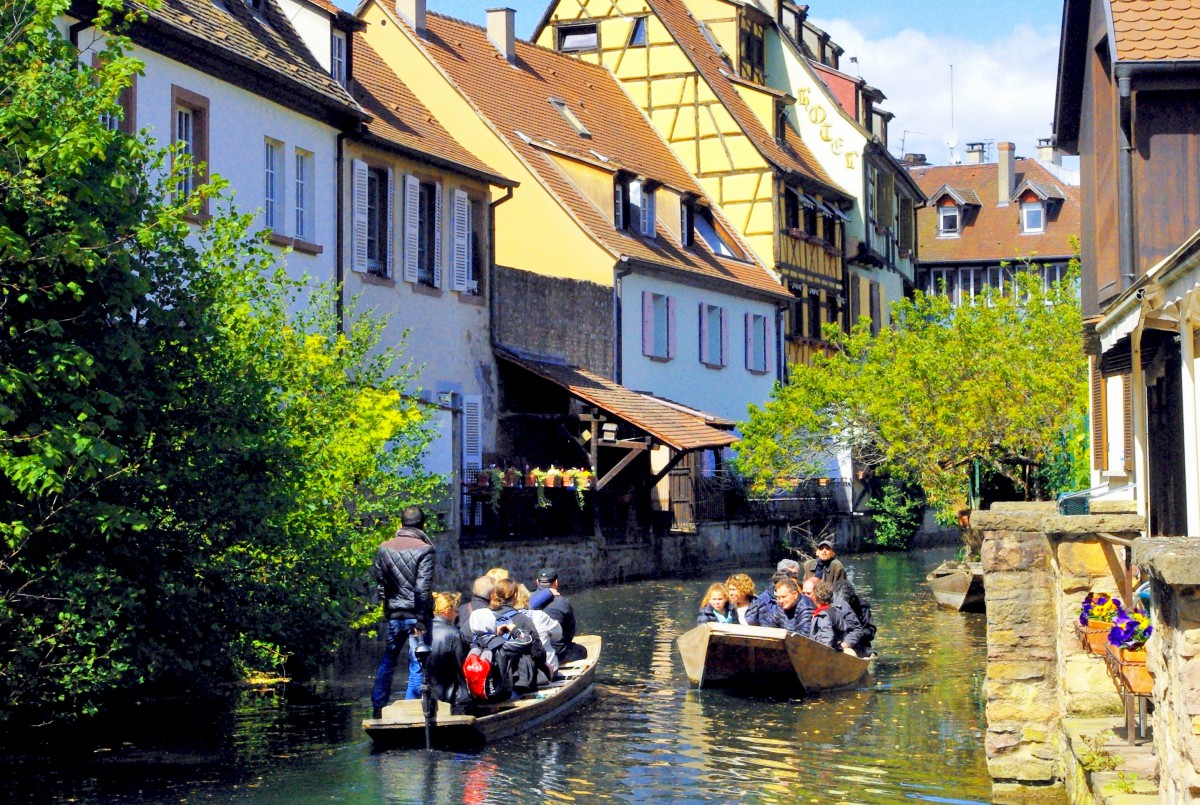
The Little Venice of Colmar © French Moments
Parking in Colmar
Colmar has a mixture of underground, covered, open-air and on-street parking. Several car parks are positioned around the edge of the historic centre, allowing you to leave the vehicle and continue on foot or by free shuttle.
Useful central options include:
Parking Montagne Verte, southeast of the old town;
Parking Rapp, close to Place Rapp;
Parking Lacarre, north of the centre;
Parking Saint-Josse, east of the historic district;
parking areas around the cathedral and town hall.
Montagne Verte is particularly well placed for reaching the Covered Market, the Tanners’ District and Little Venice. Rapp is convenient for the western entrance to the old town and the route towards the Unterlinden Museum.
Do not select a car park solely because it appears closest on a map. Consider which part of the centre you intend to visit first and how easily you will be able to return to the vehicle at the end of the day.
Parking charges, access arrangements and opening hours can change. The City of Colmar maintains current information about its car parks and accepted mobile payment services.
The best day trips from Colmar
Colmar is one of the best bases for exploring central Alsace.
However, I would avoid turning the Wine Route into a race from one famous village to another. Two or three carefully chosen stops usually provide a more enjoyable day.
Eguisheim
Eguisheim lies just southwest of Colmar.
Its historic centre is built around concentric streets surrounding the former castle. The circular layout gives it a very different character from Colmar.
The smallest streets can become crowded, so arrive early when possible.
Turckheim
Turckheim Alsace France copyright French Moments
Turckheim has a historic centre enclosed by medieval gates and often feels less overwhelmed than Eguisheim or Riquewihr.
It is also one of the easiest Wine Route villages to reach without a car because it has a station connected with Colmar.
Kaysersberg
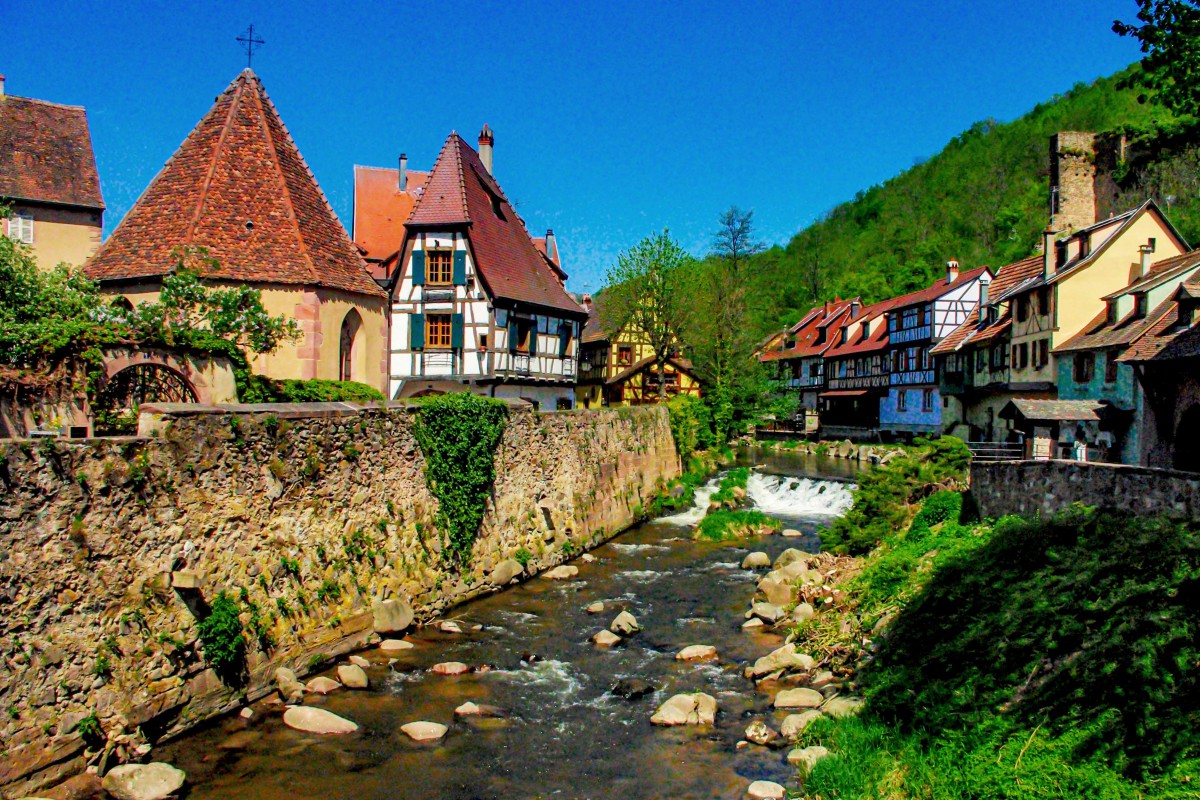
Kaysersberg © French Moments
Kaysersberg stretches along the River Weiss, with colourful houses, a fortified bridge and castle ruins overlooking the town.
The main street can become busy, but the town rewards visitors who continue towards the river and quieter lanes.
Allow at least half a day rather than treating Kaysersberg as a quick photographic stop.
Riquewihr
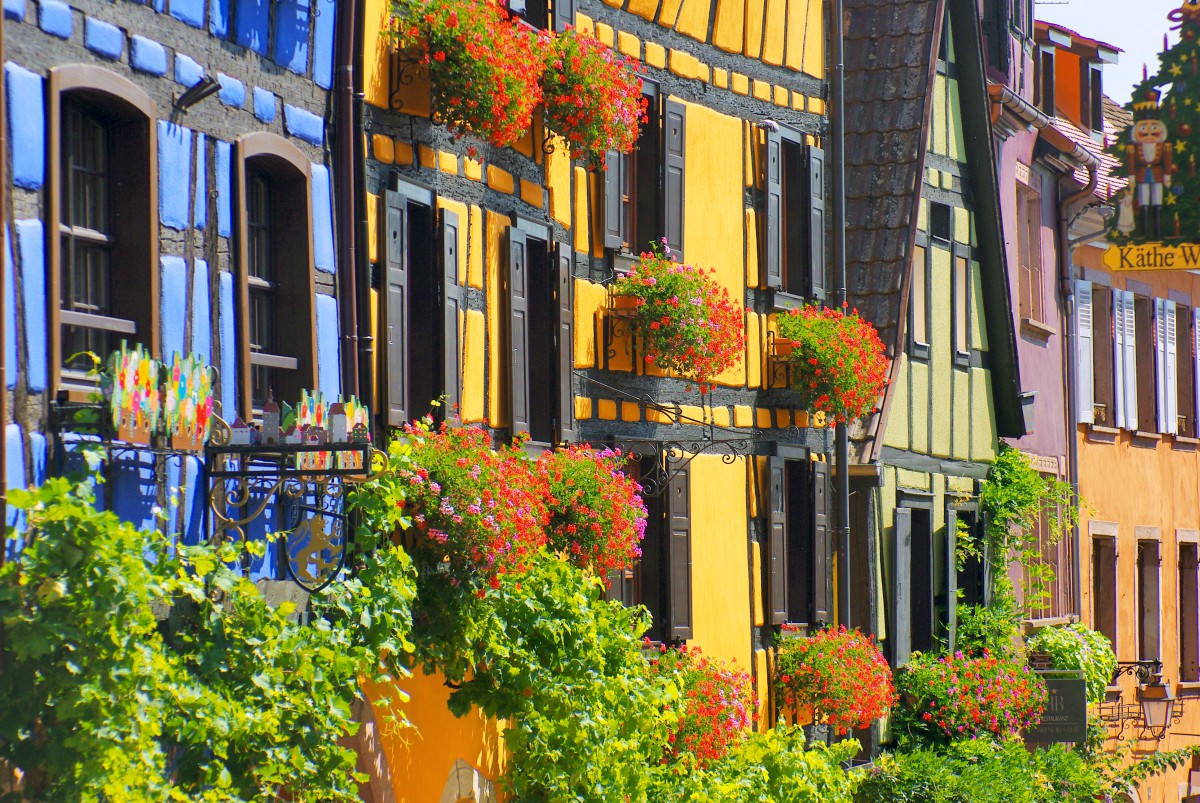
Riquewihr © French Moments
Riquewihr is exceptionally picturesque but intensely tourist-oriented.
Its main street rises towards the Dolder, a medieval gate tower. Timber-framed houses, fountains, courtyards and wine shops line the route.
Arrive early and explore the side streets rather than judging the village solely by its busiest section.
Ribeauvillé
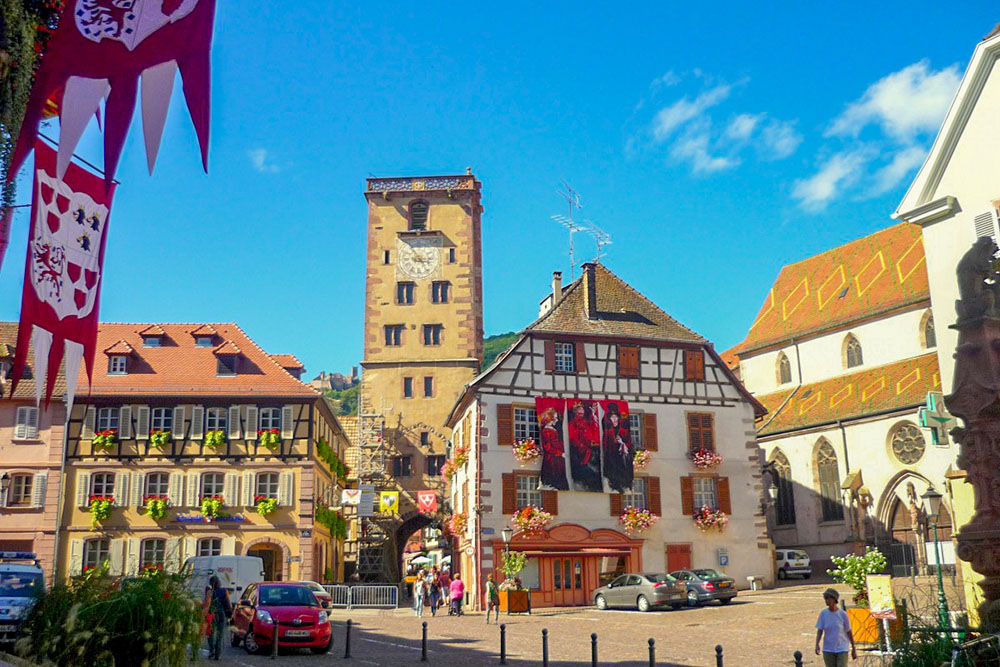
Ribeauvillé © French Moments
Ribeauvillé is larger and more spread out than many neighbouring villages.
Its historic centre follows a long main street lined with inns, fountains and towers. Above the town stand three ruined castles, reached by a demanding walking route.
The Vosges Mountains
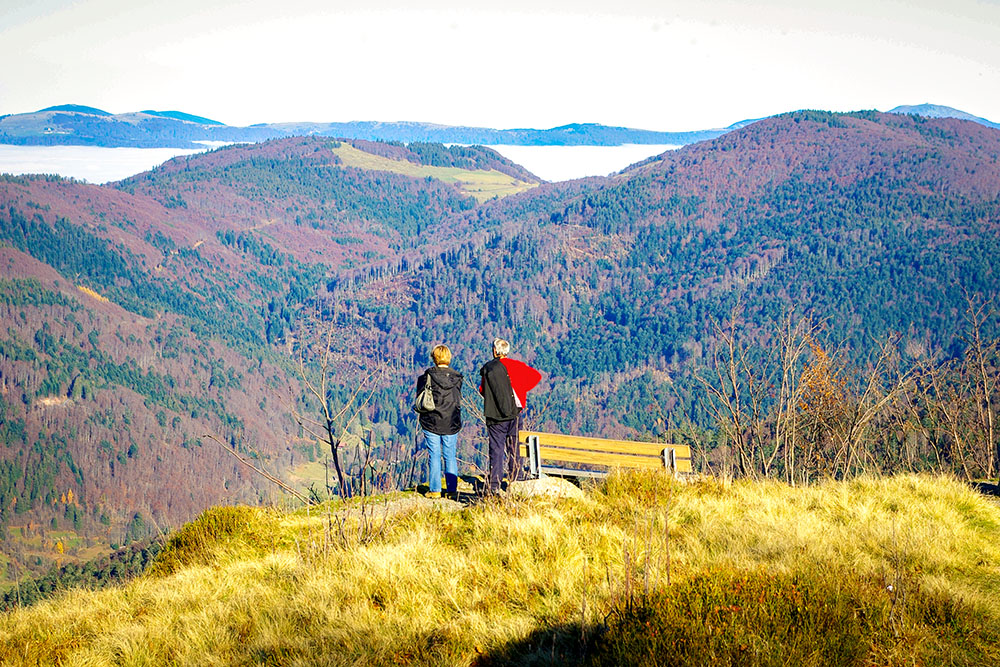
Vosges © French Moments
The Vosges provide a complete change of landscape from Colmar.
Possible excursions include mountain lakes, forests and the Route des Crêtes. The higher areas can be considerably cooler than the Alsace Plain, even during summer.
A car is generally the easiest way to explore the mountains.
How many villages should you visit in one day?
For most visitors, two villages provide a satisfying day trip. Three may be manageable when they are close together and you begin early.
A balanced day might combine:
- Eguisheim and Turckheim;
- Kaysersberg and Riquewihr;
- Riquewihr and Ribeauvillé;
- one village with a castle or vineyard visit.
For a broader selection, see my guide to 20 places to visit around Colmar.
Visiting Colmar at Christmas
Christmas is one of the most spectacular times to visit Colmar.
The historic centre is decorated with lights, garlands and elaborate displays, while several markets operate across different squares.
The atmosphere can be genuinely magical, but Christmas also requires more planning than a visit at any other time.

Rue des Marchands, Colmar © French Moments
Accommodation and restaurants should be booked early. Weekends can be exceptionally crowded, and temporary traffic restrictions may affect parking and access.
A weekday visit is preferable, particularly during the first half of December. Staying overnight also allows you to see the centre before day visitors arrive.
You can find dates, market locations and more detailed advice in my complete guide to the Colmar Christmas markets.

Christmas market of place des Dominicains © French Moments
Colmar Travel Guide: Practical tips
A few practical decisions can considerably improve your experience.
Book your accommodation early
Accommodation in and around Colmar can fill quickly during popular periods, particularly:
- the Christmas market season;
- summer weekends;
- French and European public holidays;
- the grape harvest period;
- major festivals and events.
Use the map below to compare hotels and other accommodation in Colmar and the surrounding area.
Staying within walking distance of the historic centre makes it easier to begin sightseeing early and return after many day visitors have left.
Check the facilities carefully
Before booking accommodation, confirm:
- the walking distance to the old town;
- whether parking is included;
- whether the room has air conditioning;
- whether the building has a lift;
- the size and configuration of the beds;
- the check-in arrangements.
European hotel rooms can be smaller than many American visitors expect, particularly inside historic buildings.
Understand French restaurant customs
Restaurants do not necessarily serve food continuously.
Check the kitchen’s service times rather than only the general opening hours.
Prices already include taxes and service. A large additional tip is not expected.
Bring the correct adaptor
France uses European two-pin electrical sockets and a higher voltage than the United States.
Most modern phone and laptop chargers accept different voltages, but hairdryers and styling appliances may not.
An adaptor changes the shape of the plug; it does not necessarily convert the voltage.
Check museum opening days
Museums and historic sites do not all follow the same schedule.
Some close on Mondays, others on Tuesdays, and opening hours may change seasonally. Check the official website of any attraction that is particularly important to you.
Wear comfortable shoes
A full day in Colmar involves more walking and standing than the compact map suggests.
Cobbles and uneven surfaces make comfortable footwear particularly important.
Learn a few French phrases
English is commonly understood in hotels, museums and tourist-oriented restaurants, but a few simple phrases are useful:
- Bonjour — Hello
- S’il vous plaît — Please
- Merci — Thank you
- Parlez-vous anglais ? — Do you speak English?
- L’addition, s’il vous plaît — The bill, please
- Une carafe d’eau, s’il vous plaît — A jug of tap water, please
In France, it is polite to say bonjour before asking a question, even when you continue in English.
Is Colmar worth visiting?
Yes, Colmar is worth visiting, particularly if you are interested in historic architecture, art, Alsatian food and the landscapes of the Wine Route.
The town is visually striking, easy to explore on foot and home to several attractions of genuine cultural importance.
Colmar has changed since my childhood. It is busier than I remember, and some streets now feel almost permanently organised around visitors. Around Little Venice and the rue des Marchands, the crowds can make the experience feel hurried.
Yet this is not the whole town.
Walk a few streets away from the main route, visit a museum or remain until the evening, and Colmar begins to reveal another side. You notice the former merchants’ houses, carved façades, quiet courtyards and details that are easily missed when everyone is concentrating on the same canal view.
Colmar is undoubtedly touristy, but touristy does not necessarily mean that a place lacks authenticity or historical value.
Do not come expecting an empty fairy-tale village. Come for a historic Alsatian town whose streets reflect centuries of trade, religion, art and wine production.
Give it enough time, choose your visiting hours carefully and look beyond the most obvious façades.
Under those conditions, Colmar is not only worth visiting. It is one of the most rewarding places to use as an introduction to Alsace.
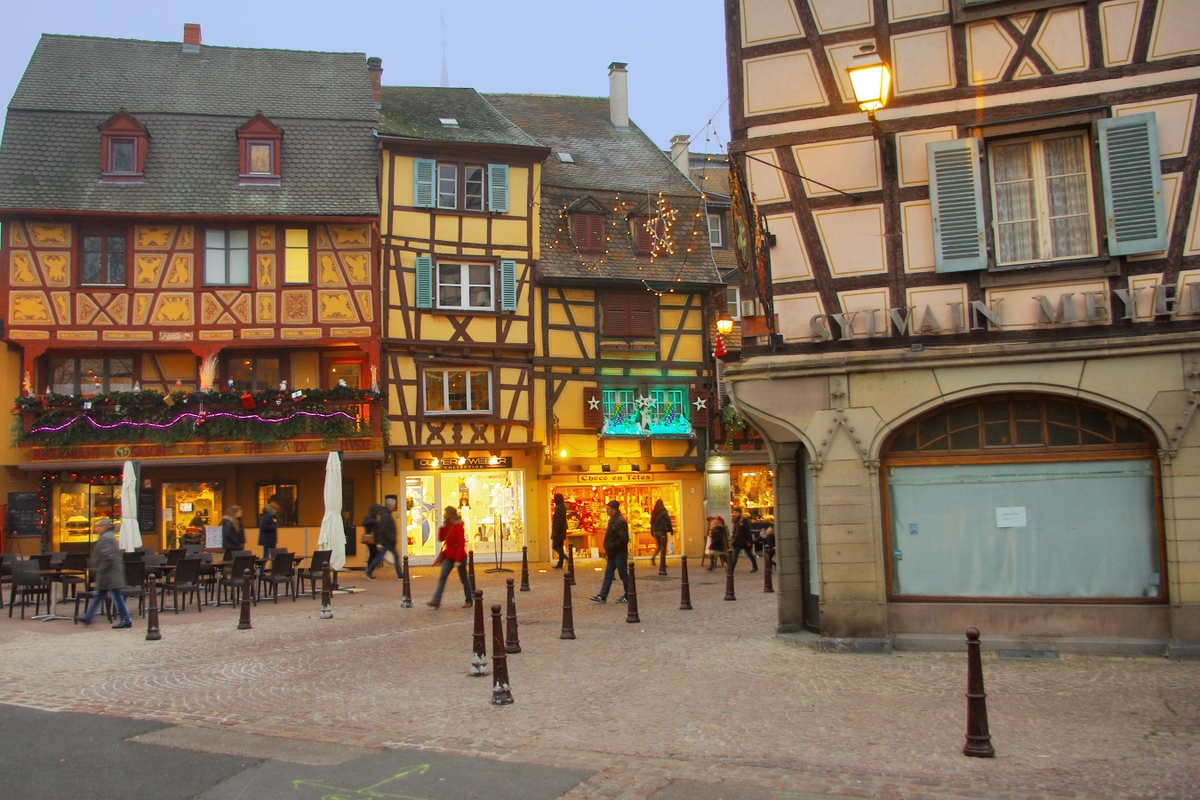
A street in the old town of Colmar © French Moments
Colmar Travel Guide: Frequently asked questions
Is one day enough for Colmar?
One full day is enough to see the main sights and visit one museum. Two days provide a more relaxed experience and allow you to enjoy the town in the evening.
Is Colmar walkable?
Yes. The historic centre is compact and best explored on foot. Expect cobbled and uneven surfaces.
Do you need a car to visit Colmar?
No. A car is unnecessary for the town itself but useful for vineyards, castles, mountain areas and smaller villages.
What is Colmar famous for?
Colmar is famous for its colourful half-timbered houses, canals, Little Venice, the Unterlinden Museum and its position on the Alsace Wine Route.
It is also the birthplace of Auguste Bartholdi, creator of the Statue of Liberty.
Is Colmar worth visiting outside Christmas?
Yes. Spring and early autumn are especially attractive, while the museums, architecture and historic neighbourhoods can be visited throughout the year.
Can you visit Colmar from Strasbourg?
Yes. Direct trains generally take around 30 minutes, making Colmar an easy day trip from Strasbourg.
Can you visit Colmar from Paris in one day?
It is technically possible but not ideal. The journey takes approximately 2½ to 3 hours each way, creating a long and rushed day.
Which is better: Colmar or Strasbourg?
Colmar is smaller and closer to the vineyards and famous villages. Strasbourg is a larger city with more neighbourhoods, museums and a monumental cathedral.
For a first journey to Alsace, the two destinations complement each other.
What are the best villages near Colmar?
Eguisheim, Turckheim, Kaysersberg, Riquewihr and Ribeauvillé are among the most popular choices.
Can you visit the Wine Route without a car?
Yes, although it requires planning. Turckheim can be reached by train, while buses, guided tours and bicycle hire provide other options.
What language is spoken in Colmar?
French is the everyday language. English is commonly understood in hotels, museums and tourist-oriented businesses.
What currency is used?
Colmar uses the euro. Cards are widely accepted, although carrying a small amount of cash remains useful.
Is tap water safe to drink?
Yes. In restaurants, ask for une carafe d’eau when you want free tap water.
Is Colmar accessible by train?
Yes. Direct regional trains connect Colmar with Strasbourg, Mulhouse and Basel, while long-distance services link the town with Paris.