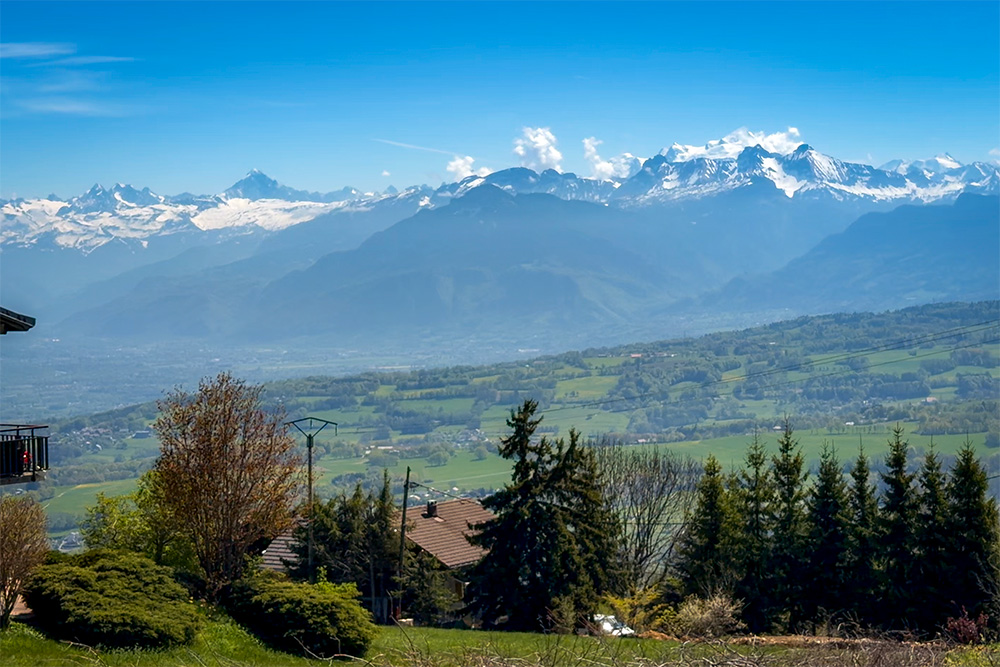


Col de la Croisette is one of the most striking mountain passes on the Salève, the great limestone balcony rising above Geneva.
It is not the most famous “Croisette” in France — Cannes can keep the red carpet, the film stars and the yachts.
This Croisette belongs to Haute-Savoie: a place of hairpin bends, open pastures, forest roads, weekend walkers, determined cyclists and Alpine horizons that make you stop mid-sentence.
I know this pass very well. Whenever American friends visit the region and I am there too, I often bring them up here.
It is one of those places where the landscape explains itself before you have had time to give a proper introduction.
Where Is the Col de la Croisette?
The Col de la Croisette sits on the Salève, in Haute-Savoie, just above the French-Swiss border and within easy reach of Geneva.
For many visitors, the Salève is “Geneva’s mountain”, even though it is firmly on the French side.
It rises abruptly behind the city, forming a long natural balcony between the Geneva basin and the first folds of the Alps.
The pass lies at about 1,175 metres above sea level. It is a meeting point between several routes across the mountain: from Collonges-sous-Salève and Le Coin, from La Muraz, from Mornex and from the Cruseilles side.
Personally, I think of the Croisette as a middle point. It sits between two different Salève experiences: the Cruseilles–Croisette section, more open and pastoral, and the Croisette–Mornex section, closer to the Geneva-facing side.
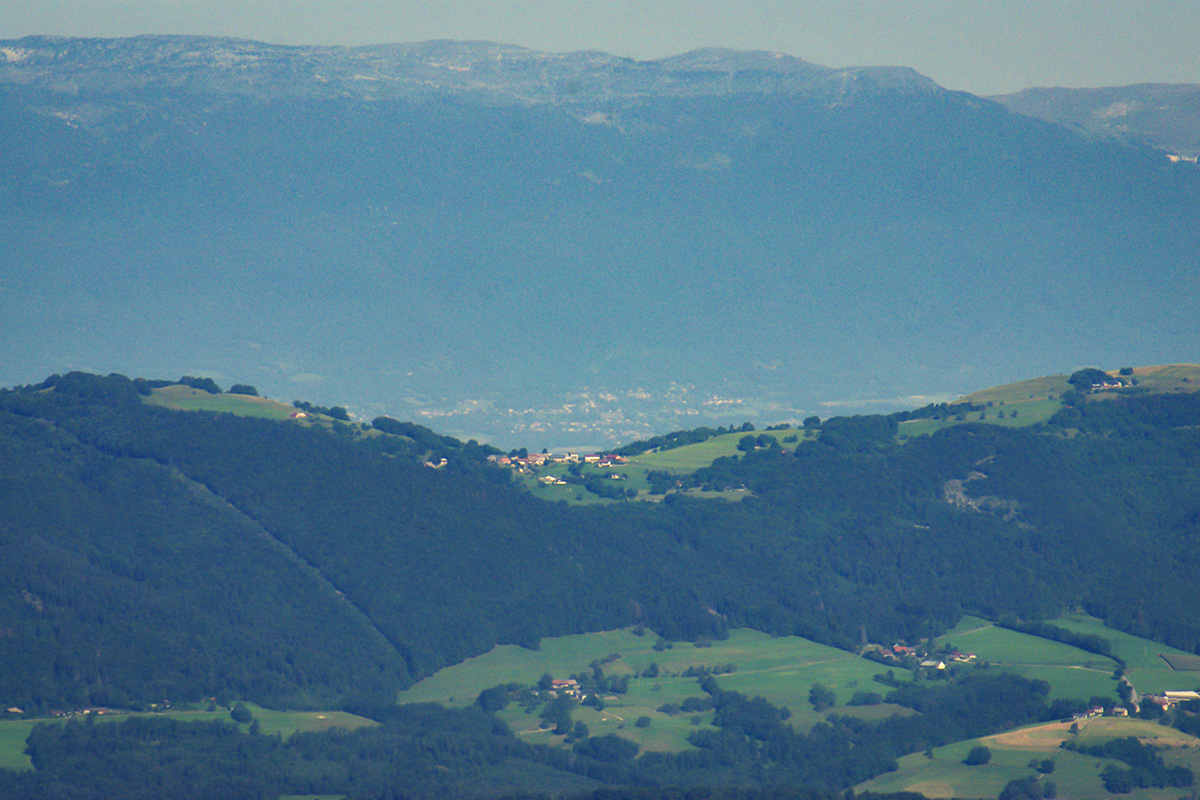
View of La Croisette from Sous Dine © French Moments
The Other Croisette: No Red Carpet Here
Mention “La Croisette” to many people, and they immediately picture Cannes: palm trees, luxury hotels, film stars and photographers shouting names across a red carpet.
The Salève version is slightly different.
Here, the glamour comes with walking boots, cowbells, cyclists gasping for mercy, and families searching for the best picnic spot.
There are no yachts at the Col de la Croisette, unless someone has taken a very wrong turn from the Mediterranean.
And that is exactly the charm. This Croisette is not about being seen. It is about looking out: towards the Aravis, the Mont Blanc massif, the Geneva basin and the rolling landscapes of Haute-Savoie.
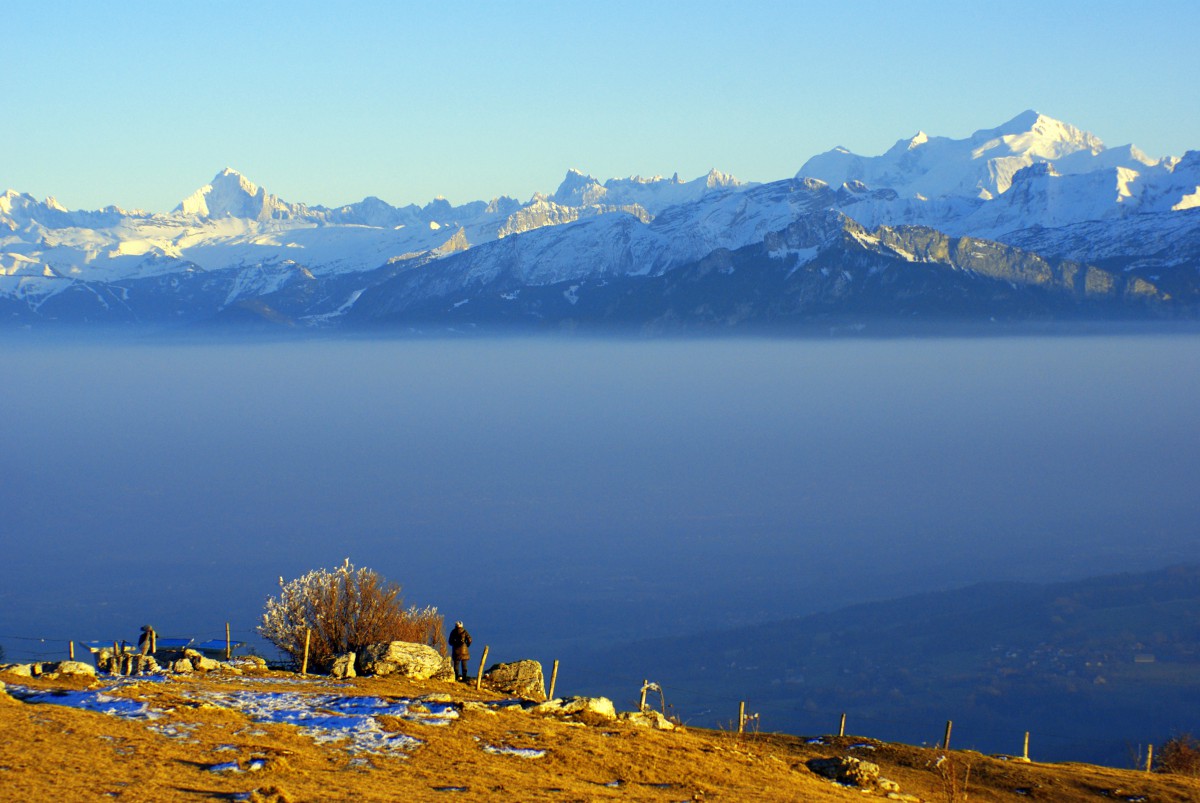
Mont-Blanc seen from the Salève in Winter © French Moments
Why the Col de la Croisette Matters on the Salève
The Col de la Croisette is one of the emblematic sites of the Salève because it is both a destination and a passage.
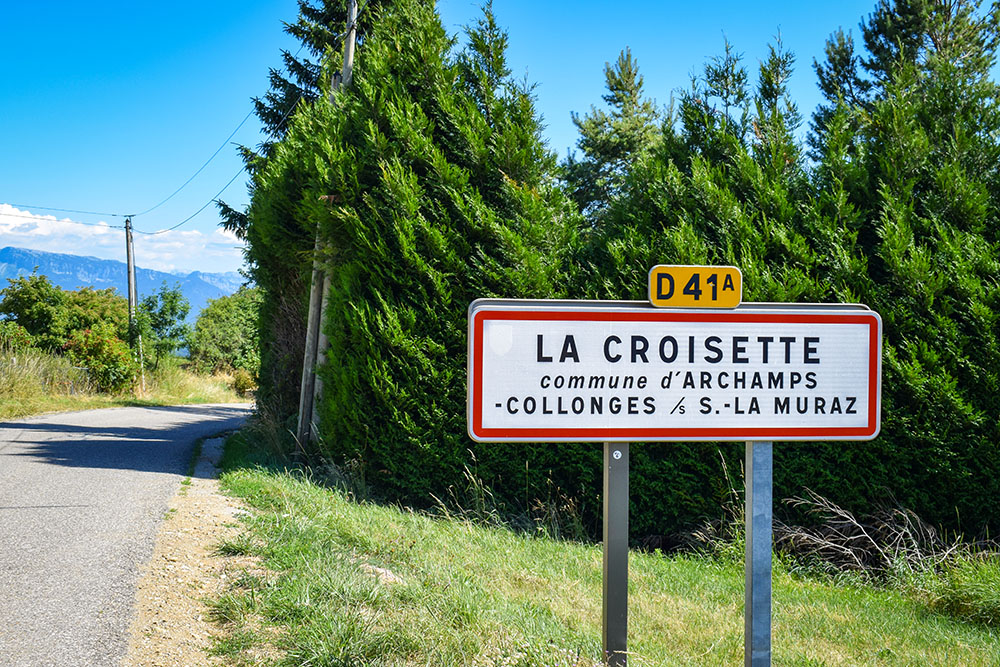
Arriving at Col de la Croisette © French Moments
During the week, it belongs partly to local life, with cross-border workers and residents using the mountain roads.
At weekends, it becomes a gathering place for walkers, cyclists, nature lovers and families escaping the lower valleys.
That mixture is part of its appeal — and sometimes part of its problem. The mountain pass is popular, but it has not always been designed for the number of people who use it.
Too many cars, limited visitor space, ageing facilities and a lack of comfortable areas for cyclists and pedestrians have made the site feel less welcoming than it should.
Yet the setting remains extraordinary. You are close to Geneva, Annemasse and the motorway network, and yet the moment you step out of the car, the air and light seem to belong to a different world.
My Favourite Way to Experience the Col de la Croisette
I like bringing first-time visitors here because the effect is immediate.
You do not need to be a mountain expert to understand why the Salève matters.
The road climbs, the views open, the air changes, and suddenly the busy world below feels surprisingly far away.
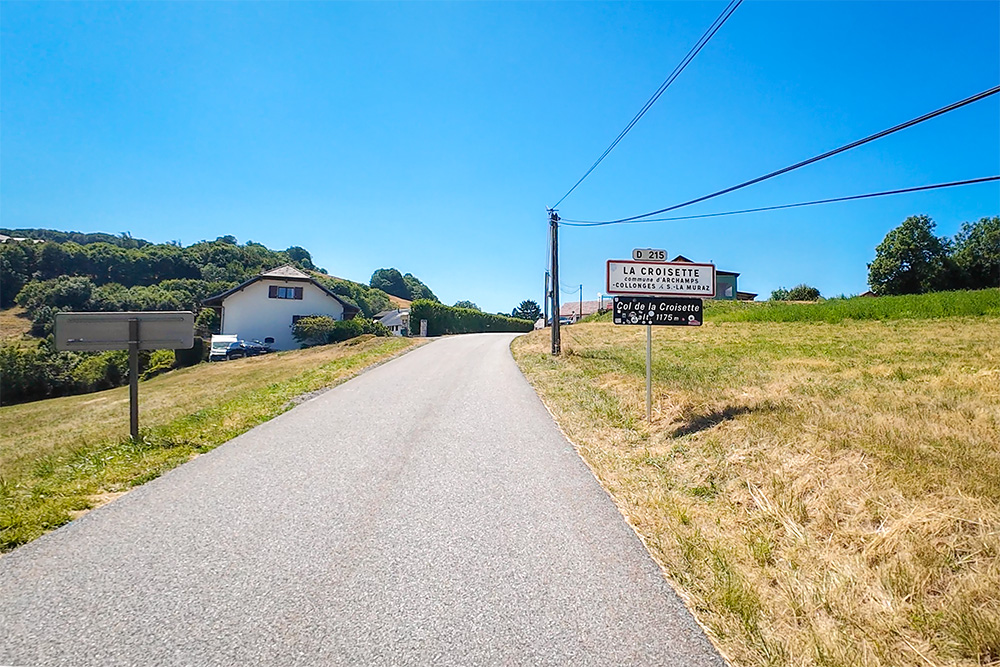
Arriving at Col de la Croisette © French Moments
For American visitors especially, the geography is fascinating. In a short drive from Geneva, you pass from an international city to a rural mountain landscape, with France on one side, Switzerland below, and the Alps ahead.
It is a compact lesson in European geography — with better scenery than most classrooms.
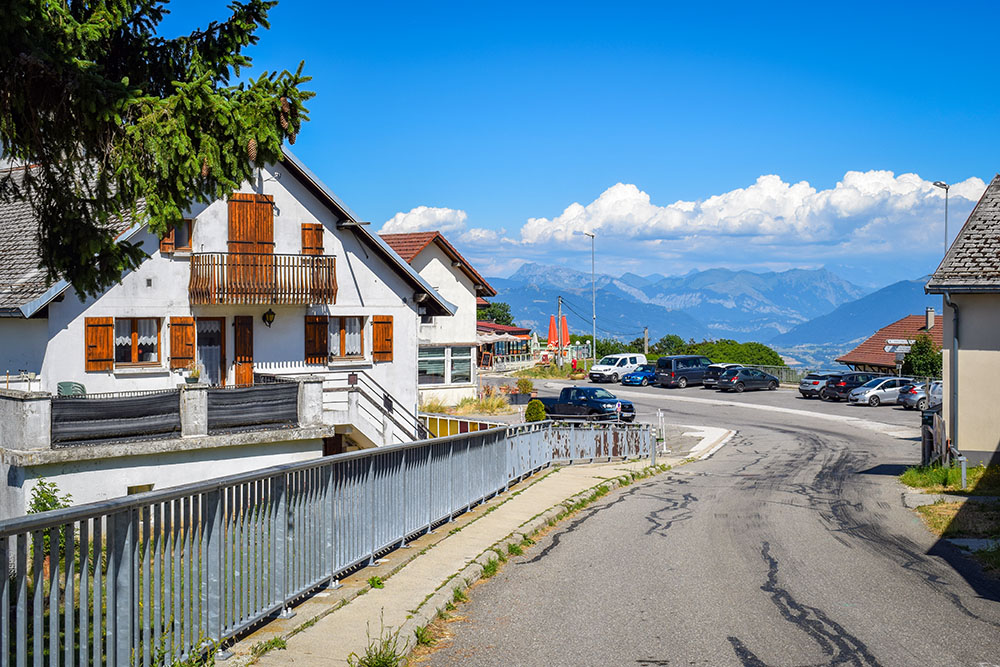
The hamlet of La Croisette © French Moments
Views from the Col de la Croisette
The great reward of the Col de la Croisette is the sense of space.
Depending on where you stand and how clear the weather is, you may catch views towards the Bornes massif, the Aravis, the Mont Blanc massif and the broader Alpine horizon.
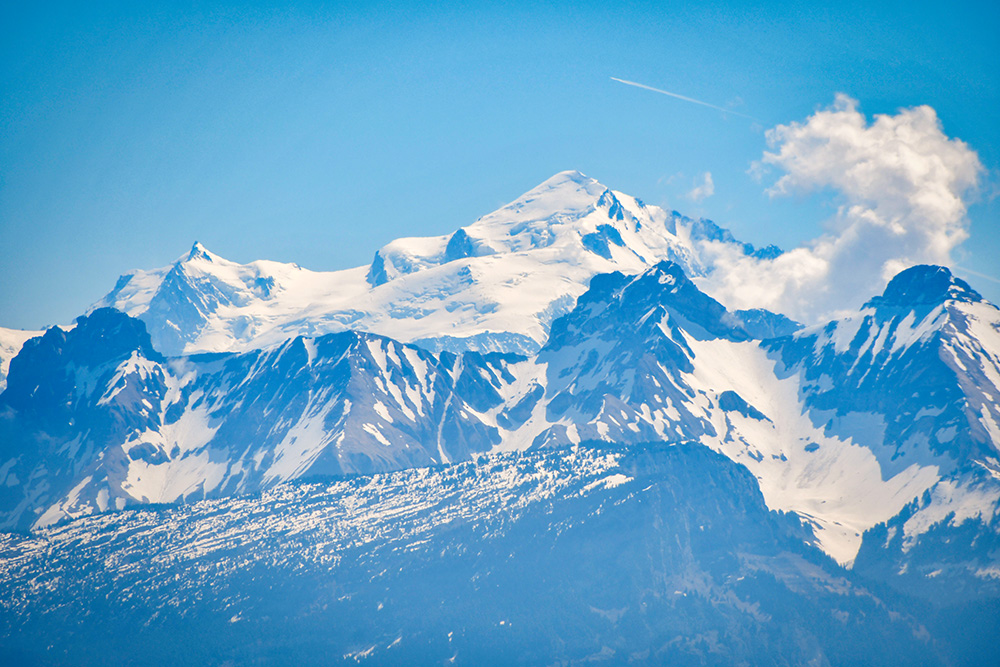
Mont Blanc from Col de la Croisette © French Moments
The light changes everything. Summer softens the pastures; winter sharpens the higher peaks; sunset can turn even a simple roadside stop into something memorable.
For the best experience, do not treat the col as a place where you arrive, take one photo and leave. Move around a little. The Salève reveals itself gradually.
Col de la Croisette by Bike: A Serious Climb
The Col de la Croisette is not just scenic. It is hard.
From Collonges-sous-Salève, via Le Coin, the climb is often described as around 7.8 kilometres with roughly 698 metres of elevation gain and an average gradient close to 8.9%.
Those figures already sound demanding. The reality can feel worse, because parts of the climb are much steeper.
The most famous section, from Le Coin to the top, is a brutal 4.7-kilometre effort at an average gradient of 11.2%.
This is not a gentle Sunday spin unless your Sundays usually include voluntary suffering. It is the kind of road where confident cyclists become quiet, and very confident cyclists begin negotiating privately with their legs.
For amateur riders, the key word is respect. The climb is short compared with some great Alpine passes, but its steepness makes it unforgiving. Good gearing, good brakes and a sensible sense of your own limits are essential.
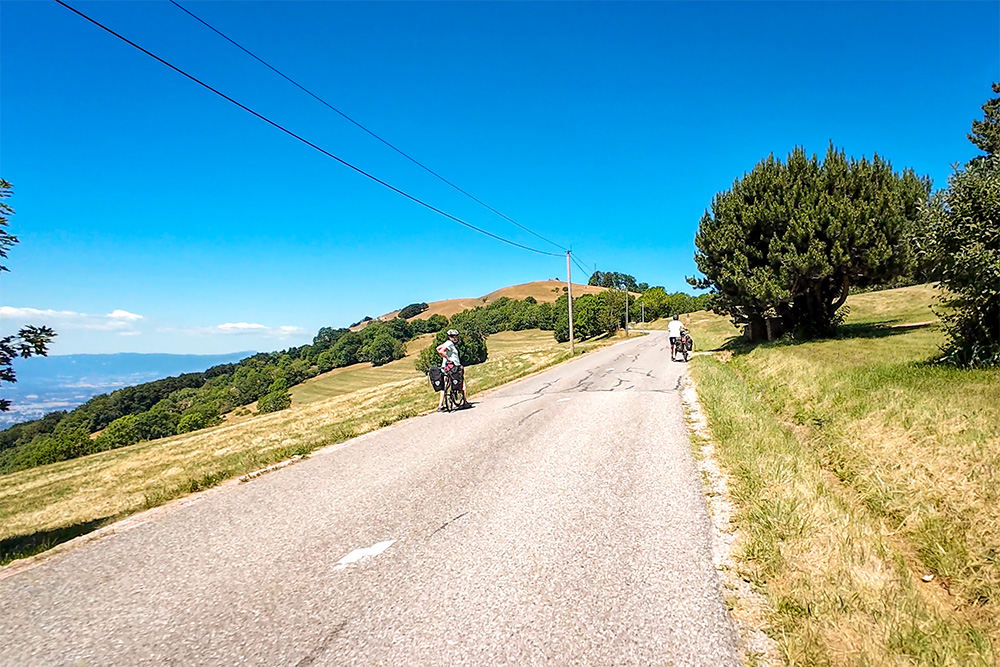
A few metres from Col de la Croisette © French Moments
The Col de la Croisette and the Tour de France 2026
The Tour de France 2026 will bring the Col de la Croisette into the spotlight during Stage 15, from Champagnole to the Plateau de Solaison. It will not be the final climb of the day, but it may still be one of the stage’s most striking moments.
On the official route, Le Salève – Col de la Croisette is listed as a Category 1 climb at 1,175 metres, coming after 136 kilometres of racing. With its 4.7 kilometres at 11.2%, it is exactly the kind of ascent that looks beautiful on television and rather less poetic to the riders.
The Salève has appeared in Tour de France history before, but only occasionally.
The mountain was climbed in 1973, 1974, 1981 and 1992, with the 2026 route bringing the race back to this dramatic balcony above Geneva.
This time, the spotlight falls clearly on Le Salève – Col de la Croisette, a Category 1 climb placed late in Stage 15 before the riders continue towards the final ascent to the Plateau de Solaison.
That rarity gives the 2026 passage extra interest: for many television viewers, it may be their first real glimpse of the “mountain of the Genevans”.
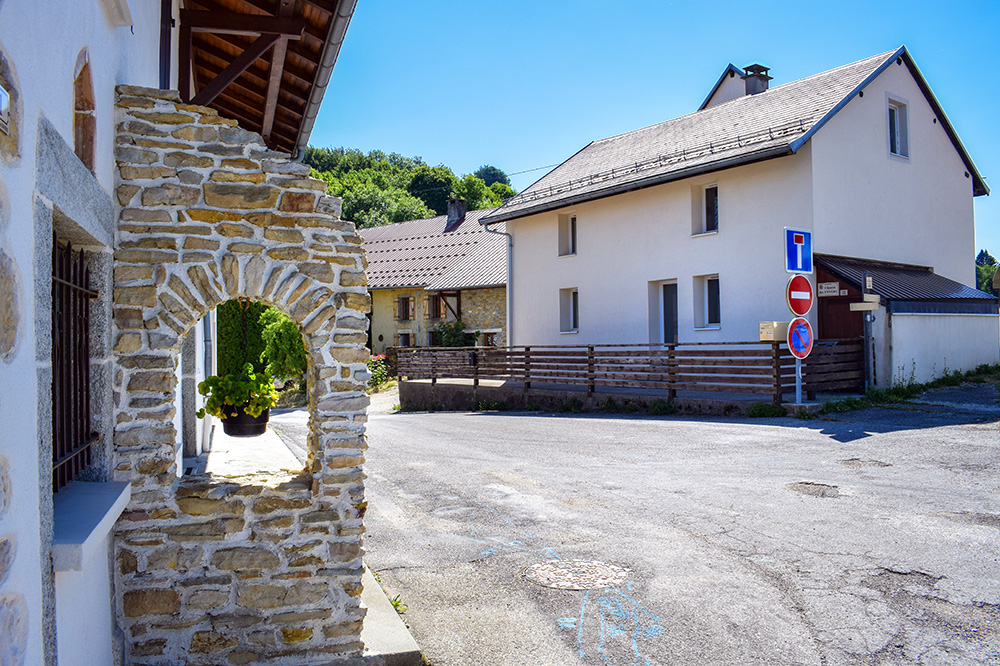
The hamlet of La Croisette © French Moments
A Pass Being Reimagined for Visitors
The Col de la Croisette is also changing. Local authorities have planned a redevelopment of the site to make it calmer, more attractive and better suited to the people who use it.
The idea is to reduce the dominance of cars, organise parking more effectively, improve the welcome for visitors, and give more space back to pedestrians and cyclists.
A belvedere is also planned, designed to showcase the view towards the Aravis and Mont Blanc.
This matters because the col deserves better than a functional layout. It is too beautiful to be treated simply as a crossroads with parking.
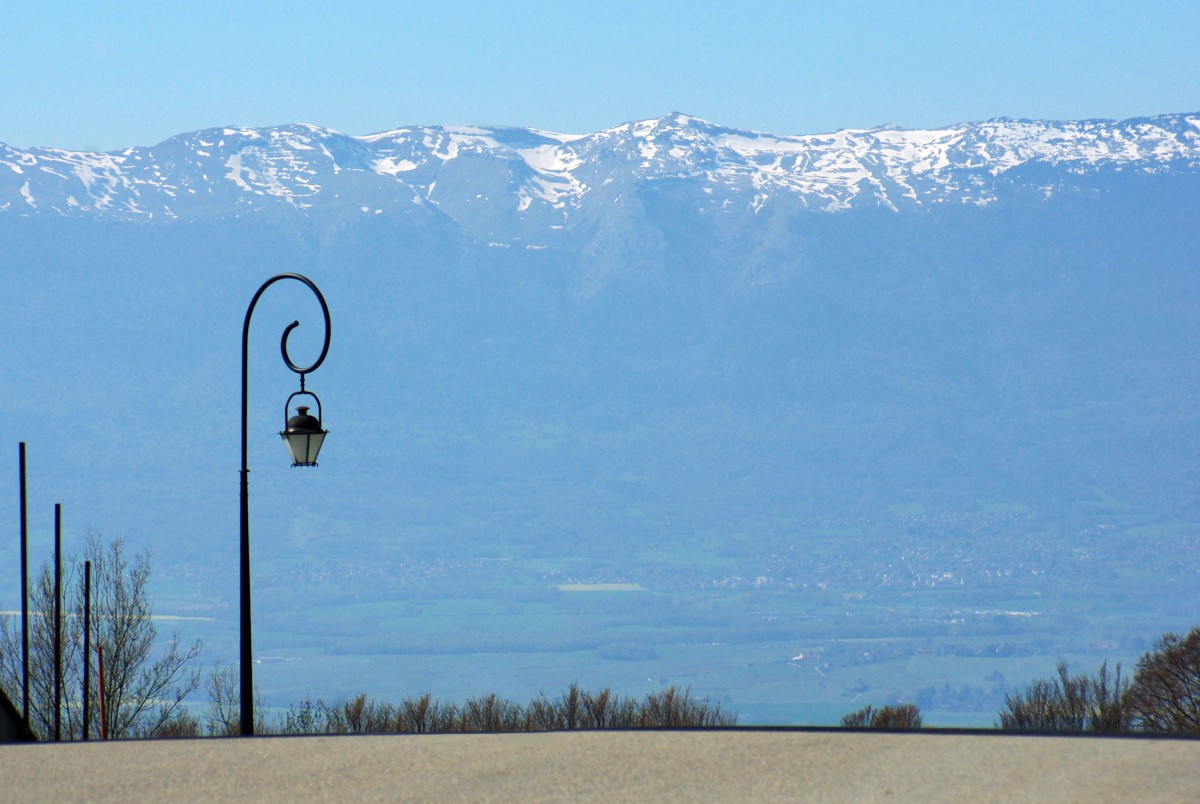
The Monts Jura seen from La Croisette (Salève mountain) © French Moments
How to Visit the Col de la Croisette
The easiest way to visit the Col de la Croisette is by car, either from the Geneva and Annemasse side or from the Cruseilles side. The roads are mountain roads, so allow time, drive carefully and remember that conditions can change quickly.
Weekends and fine-weather days can be busy, especially when locals head up to the Salève for fresh air. Arriving earlier in the day is usually a good idea. Even in summer, take an extra layer: the temperature at the col can feel very different from the valley below.
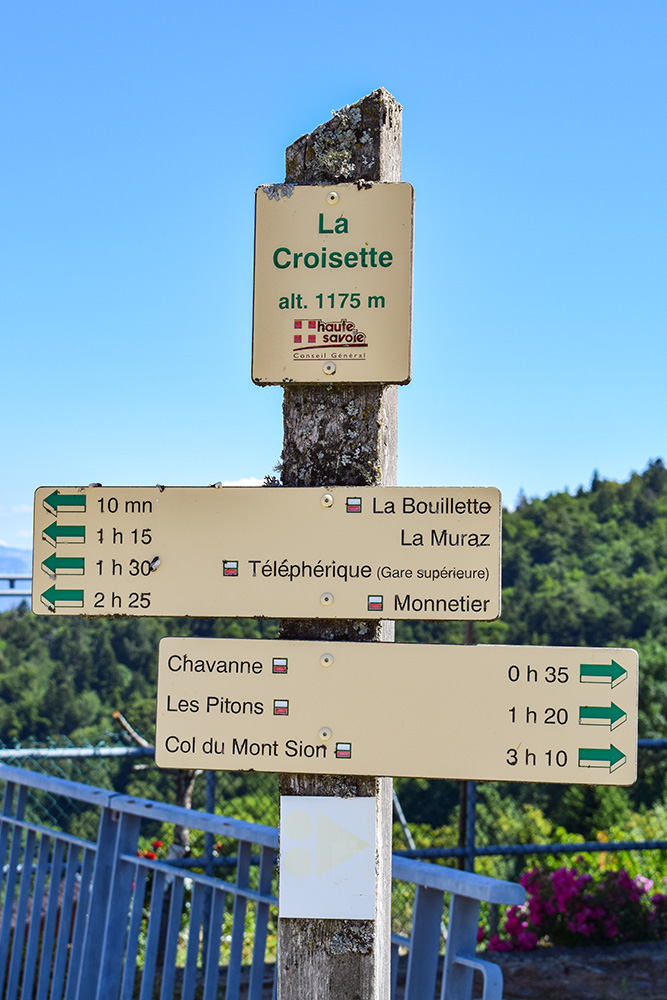
Col de la Croisette © French Moments
There are also a few restaurants at the mountain pass, making it possible to stop for a meal or a drink before continuing your visit. It is worth checking opening times in advance, especially outside the main season or on quieter weekdays.
Cyclists should treat the climb as a serious mountain effort, not just a scenic detour. Walkers and casual visitors should use the col as a starting point rather than a full stop. The best of the Salève is often found by lingering a little longer.
What to See Near the Col de la Croisette
The wider Salève area offers plenty to explore. You can continue towards Mornex and the Geneva-facing side of the mountain, head towards La Muraz, or link the visit with other viewpoints along the Salève.
Cruseilles, the Plateau des Bornes and the countryside between Annecy and Geneva also make natural additions to a day in the area.
Geneva is close enough to feel almost below your feet, yet the atmosphere up here remains unmistakably Haute-Savoie.
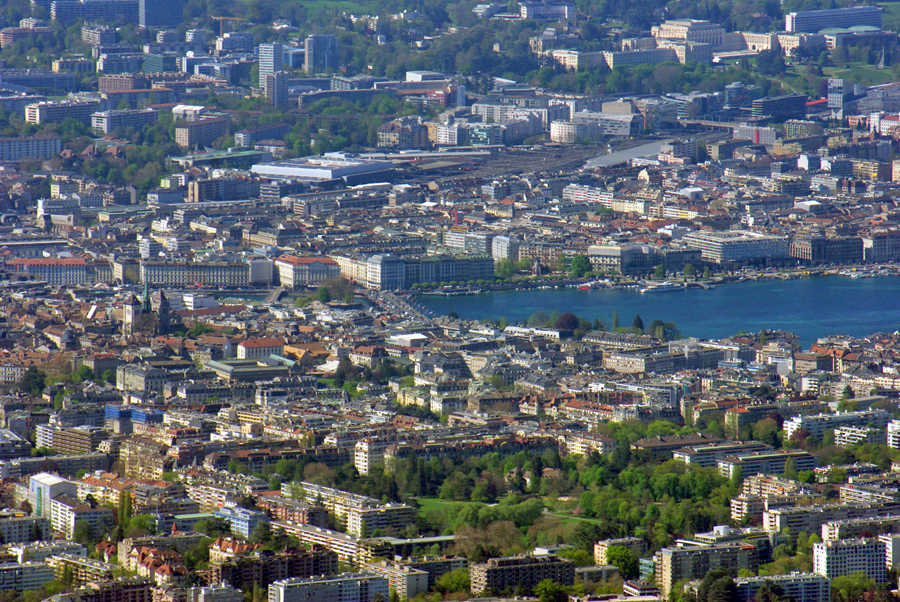
Geneva seen from Salève © French Moments
Is the Col de la Croisette Worth Visiting?
Yes — especially if you want to understand why the Salève is much more than a mountain backdrop to Geneva.
The Col de la Croisette is scenic, local, sporty and wonderfully placed. It has Alpine views without requiring a long expedition, Tour de France drama without losing its everyday character, and enough personality to stand proudly apart from its famous namesake in Cannes.
One Croisette has film stars. This one has steep roads, fresh air and a view worth climbing for.
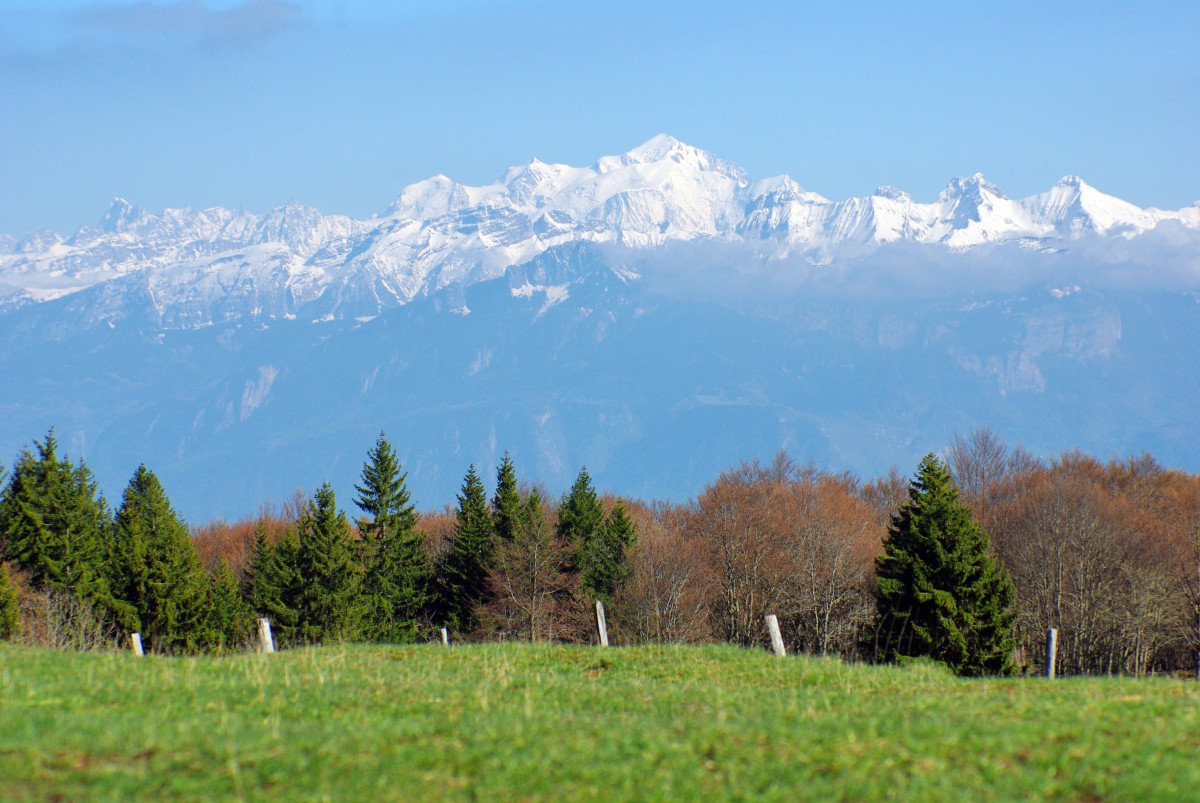
The Mont-Blanc seen from the Salève mountain (near the telecommunications tower) © French Moments
Find Accommodation Near the Salève
There are several places to stay around the Salève if you want to explore the area at a slower pace. The main options include Cruseilles, Beaumont, Archamps, Saint-Julien-en-Genevois and Annemasse, depending on whether you prefer a quieter countryside base or easier access to Geneva and public transport.
For the widest choice of hotels and apartments, Annemasse is often the most practical option. Browse the map below to compare places to stay near the Salève.