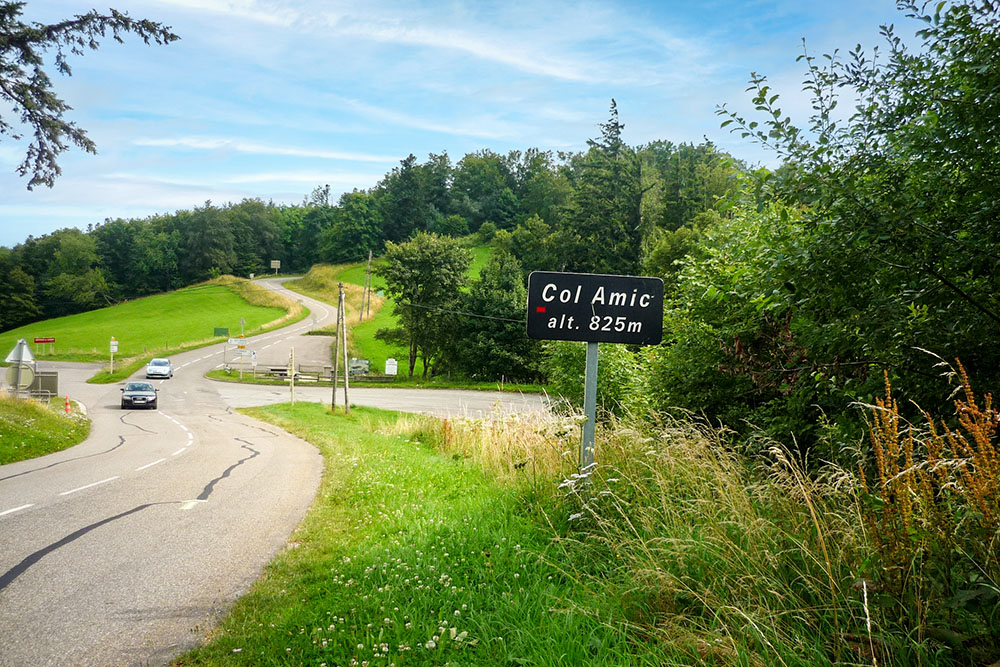


Col Amic is one of those places in the Vosges that many people cross without really stopping.
A road junction, a few picnic tables, forest all around, a road winding towards the Grand Ballon… and before you know it, you are already on your way again.
And yet this small Vosges mountain pass, located at around 828 metres above sea level, has more interest than it may first appear. Especially when the Tour de France decides to send its riders through it.
In 2026, Col Amic appears on the route of the Mulhouse to Le Markstein Fellering stage. For a few minutes, this quiet corner of the Hautes-Vosges will receive its little moment in the spotlight. Not bad for a place that usually keeps a fairly low profile.
Where is Col Amic?
Col Amic is located in the Vosges Mountains, in the Haut-Rhin département of Alsace. It lies between the Hartmannswillerkopf — also known as Vieil-Armand — and the Grand Ballon, the highest summit in the Vosges.
The pass sits on the famous Route des Crêtes, the scenic road that follows the high ridges of the Vosges.
In places, this route offers wonderful views over forests, mountain pastures, rounded summits and, on a clear day, towards the Alsace Plain.
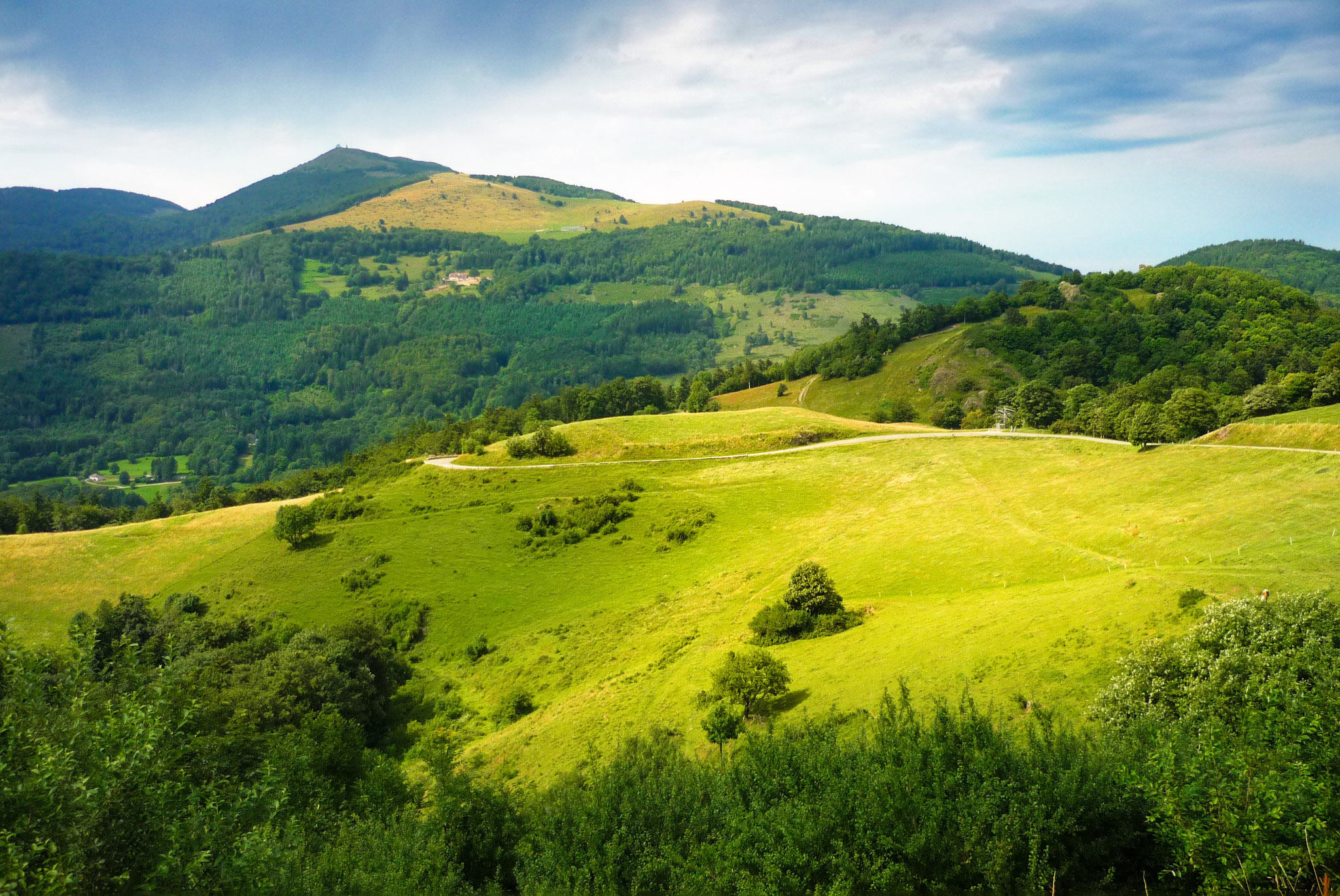
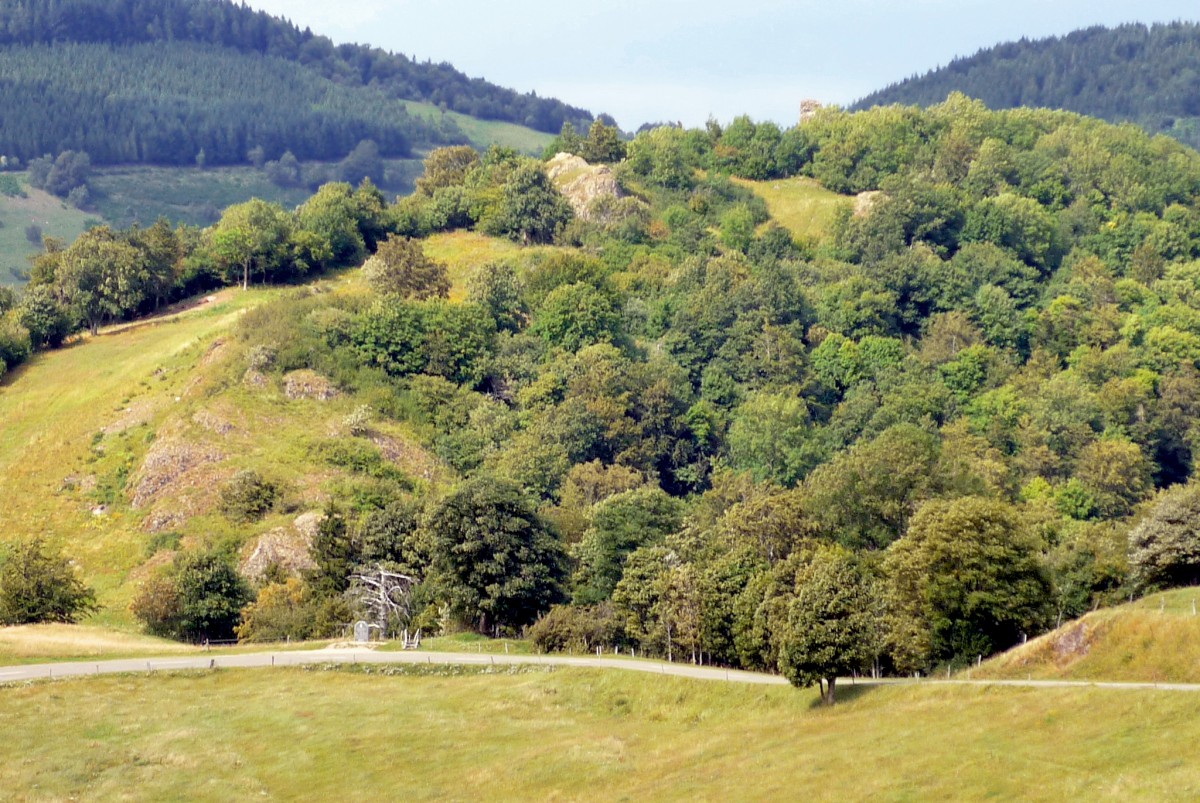
Route des Crêtes near col Amic © French Moments
Col Amic is crossed by the D431G, one of the sections of the Route des Crêtes.
Another road climbs from the Thur Valley, passing near Willer-sur-Thur and Goldbach-Altenbach.
This is also one of the routes used by cyclists who climb towards the pass before often continuing to the Grand Ballon.
To be honest, for many visitors, Col Amic is mainly a place you pass through on the way to somewhere else.
A sort of interval before the main act. But when the interval comes with fresh mountain air, fir trees and proper Vosges bends, there are worse places to pause.
A pass once known as Col du Kohlschlag
Before it became known as Col Amic, the pass was called Col du Kohlschlag.
This name came from the nearby Ferme-Auberge du Kohlschlag, the traditional mountain farm-inn that overlooks the area.
The pass was later renamed in memory of Captain Paul Antoine Émile Amic, a French officer who died in 1915 during the First World War.
He served in the 15th battalion of Chasseurs Alpins and was decorated for his bravery on the battlefield of the Hartmannswillerkopf.
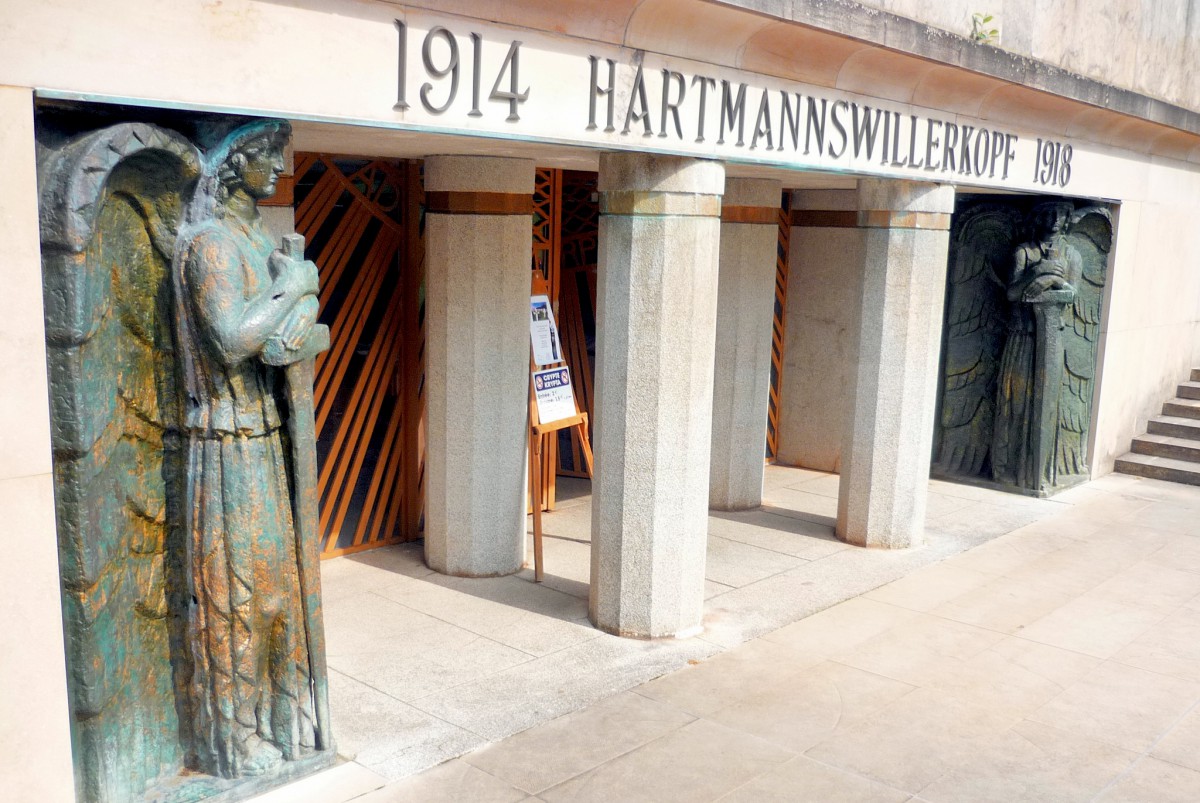
The Hartmannswillerkopf necropolis © French Moments
This gives the pass another dimension. Col Amic is not just a quiet mountain road between forests and pastures.
It also belongs to a landscape deeply marked by the First World War, especially around the Vieil-Armand, one of the most tragic battlefields of the Vosges front.
What to see near Col Amic ?
Col Amic is not a major tourist destination in itself. It does not have the dramatic reputation of the Grand Ballon, nor the lively atmosphere of a famous Alsace wine village.
But there are several interesting places nearby.
Towards the Vieil-Armand, you can find the ruins of Freundstein Castle.
The ruins of the Freundstein Castle © French Moments
Tourist guides often describe it as the highest castle ruin in Alsace.
Set high in the Vosges, it offers that rather atmospheric combination of old stones, forest, silence and mountain mist.
In other words, the sort of place where you feel a medieval legend ought to appear, even if you cannot remember one.
About 1.5 km from Col Amic, you can also reach the Sicurani Chapel on foot.
Also known as Notre-Dame de la Victoire Chapel, it is connected to the memory of the First World War and makes a worthwhile short walk for those who want to explore the area beyond the roadside.
And then, of course, there is the Ferme-Auberge du Kohlschlag. In the Vosges, a ferme-auberge (a farm-inn) is never just a detail.
It is often the moment when a walk suddenly becomes much more motivating.
Col Amic and the Tour de France
In 2026, the Tour de France passes through Col Amic during Stage 14, from Mulhouse to Le Markstein Fellering.
This is not the first time that the Tour has explored this part of the Vosges.
The massif has regularly featured in the race over the decades, with demanding stages using its climbs, ridges and mountain roads: 1969, 1973, 1976, 1992, 1997, 2005, 2014, 2019 and 2026.
On paper, Col Amic is not necessarily the decisive climb of the stage.
The route includes other major Vosges difficulties, including the Grand Ballon, the Ballon d’Alsace and the Col du Haag.
But its position is interesting. It comes early in the stage, after the riders have left Mulhouse and climbed towards the Hartmannswillerkopf area.
On television, Col Amic may appear only briefly: a bend in the forest, a few spectators, a group of riders already trying to shape the day’s breakaway.
And then someone watching from the sofa may ask: “Where exactly is Col Amic?”
Well, here is the answer: it is a small Vosges pass, discreet but well placed, somewhere between mountain scenery, cycling effort and wartime memory.
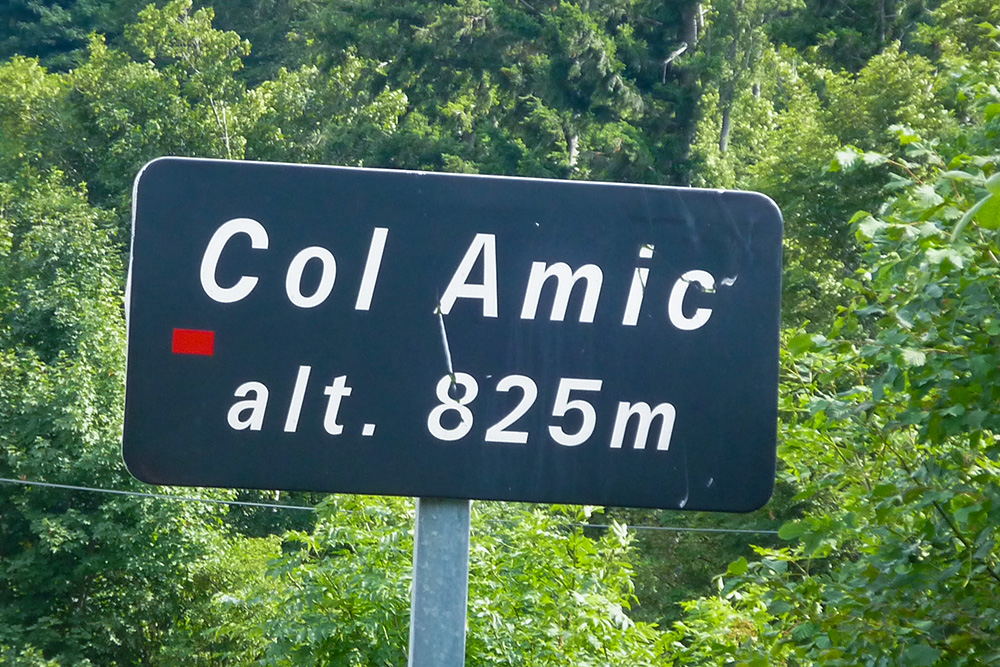
Col Amic © French Moments
Cycling up Col Amic
For cyclists, Col Amic is best known as a route towards the Grand Ballon.
From Soultz-Haut-Rhin, the climb to Col Amic is around 12 km long, with an average gradient of about 4.6%.
From Willer-sur-Thur, the ascent is shorter, at roughly 9.6 km, with an average gradient close to 4.8%.
On paper, that sounds fairly reasonable. But in the Vosges, one should always be suspicious of the word “reasonable”. It often means: yes, it climbs, and yes, you may still be smiling at the start.
Cyclists generally describe the climb as pleasant, shaded and relatively quiet, with a moderate but sometimes uneven gradient.
The road alternates between forest sections and more open areas with mountain pastures and views towards the surrounding heights.
It may not be the most spectacular climb in the Vosges, but it has a real charm, especially for those looking for a quieter approach to the Grand Ballon.
And once you reach Col Amic, the more determined riders can continue upwards. That is when the Grand Ballon starts to make its presence felt.
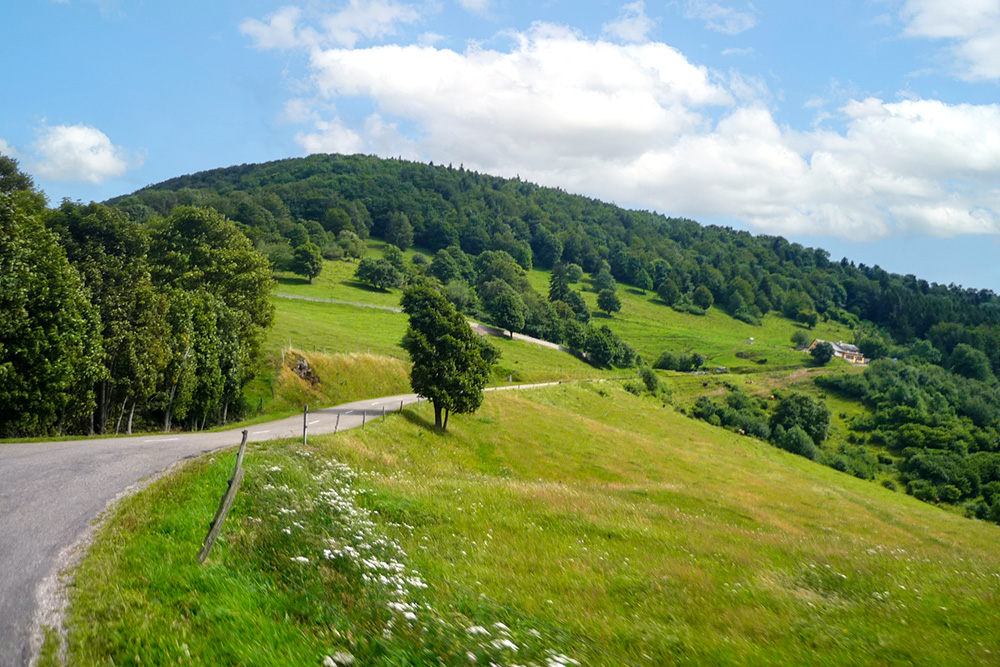
The road that leads to Col Amic © French Moments
My memory of Col Amic
I know Col Amic quite well, even if I never really stopped there for a proper photo session.
For me, it was often part of the route to the Grand Ballon, following the Route des Crêtes across the Vosges.
The landscape is familiar in my memory: winding roads, forested slopes, rounded summits, and that particular Vosges atmosphere which feels gentle at first, but never entirely tame.
Unfortunately, my visits to Col Amic mostly happened before my passion for photography really took off.
The result is that I have plenty of memories, but not many photos to show. Which is slightly annoying when you later become a travel blogger!
But perhaps that is part of the charm of Col Amic. It is not a place that tries too hard to impress.
It is a passage, a landmark, a little piece of the Vosges that you come to appreciate over time.
And in July 2026, when the Tour de France riders pass through, this quiet mountain pass will have its own brief moment of fame.
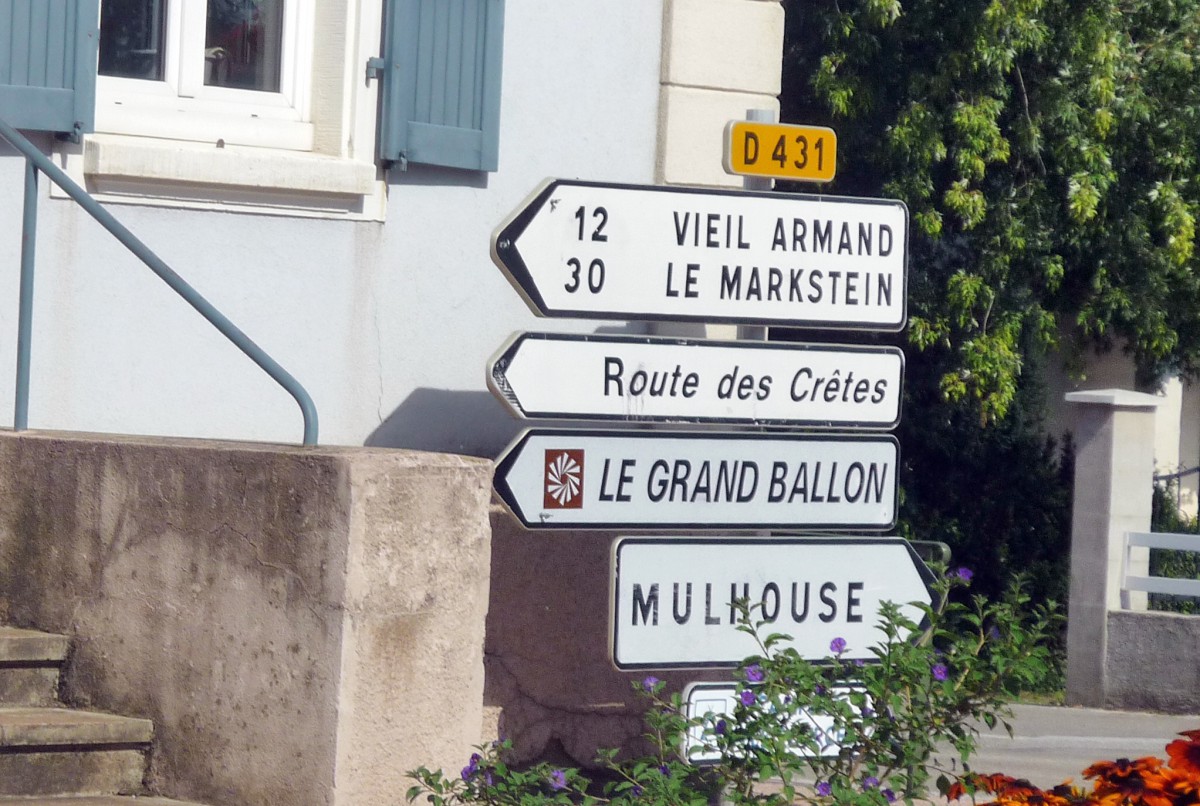
Route des Crêtes © French Moments