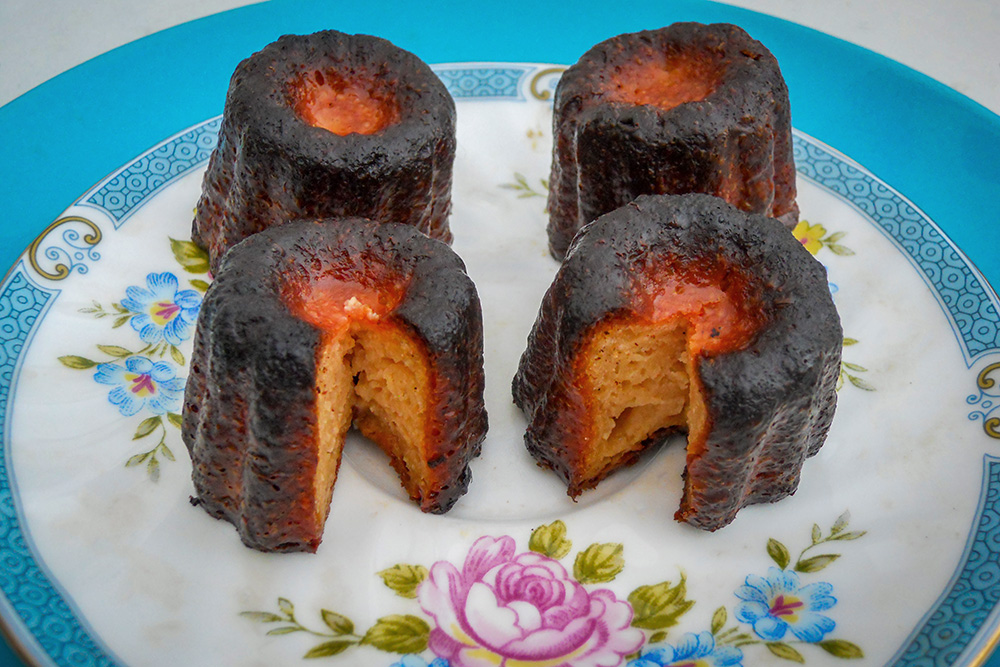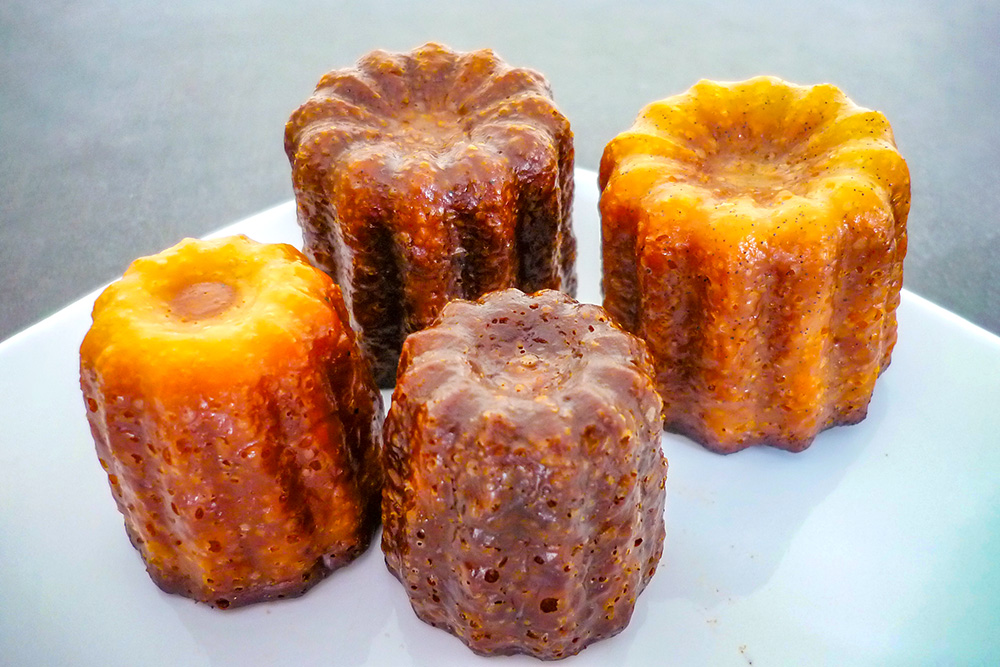


Soft at the centre and deeply caramelised on the outside, the canelés de Bordeaux (or cannelés) are one of the most distinctive pastries of southwestern France and particularly Bordeaux.
These small, fluted cakes—baked in specially designed copper moulds lined with tin—bring together two essential contrasts: a glossy, crisp crust and a tender, moist interior.
Their simplicity is deceptive. Making them well is a genuine challenge, requiring precision, high heat, and the right balance of flavours to achieve the signature texture.
Although they have become an emblem of Bordeaux, the cannelé’s story stretches far beyond its modest size.
Part delicacy, part historical curiosity, and part symbol of the region’s culinary identity, the canelés de Bordeaux have earned their place among France’s most beloved pastries.
What are Canelés?
A canelé is a small cylindrical cake, typically about two inches high, made from a batter of milk, flour, sugar, eggs, vanilla and rum.
When baked at high temperature, the mixture develops a dark, aromatic crust while the interior remains soft and slightly custard-like.
The result is a pastry with remarkable depth: caramel, vanilla, toasted sugar and subtle spices all expressed through a single bite.
Canelés can be enjoyed at virtually any time of day: with morning coffee, as an afternoon treat, paired with a dessert wine, or offered during a wine tasting—where their sweetness and texture beautifully complement several local wines, especially Sauternes.
The Origins of the Canelés
A Pastry Rooted in Bordeaux’s History
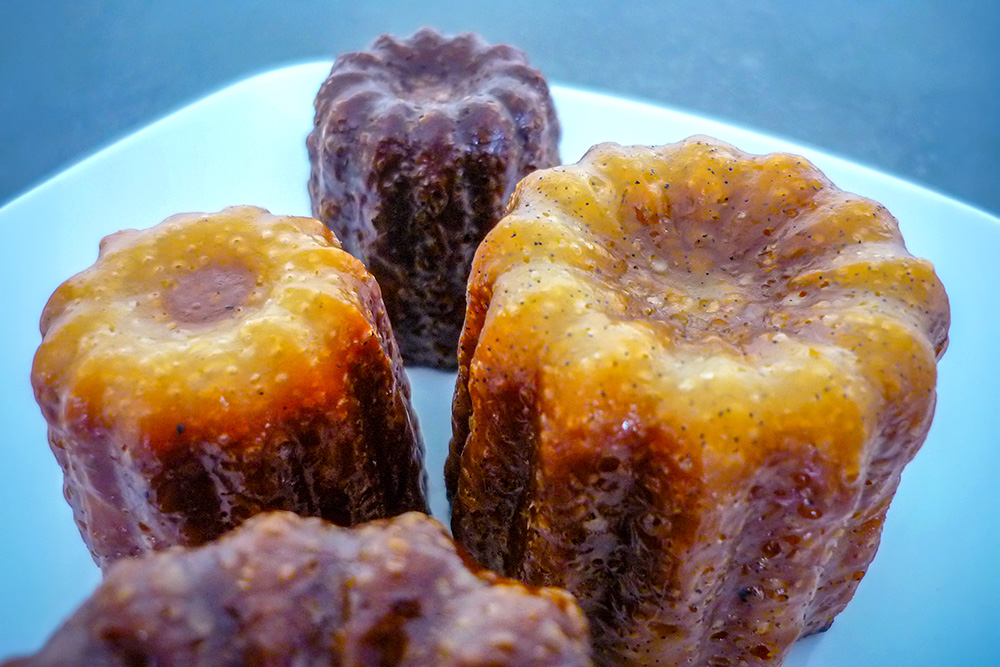
Although the exact origins are debated, most historians agree that the canelés de Bordeaux emerged around the 17th or 18th century, likely linked to the flourishing wine trade of the port city.
One theory suggests that nuns from local convents used leftover egg yolks to make small cakes.
Wine merchants often clarified wine using egg whites, leaving the egg yolks abundant and readily available—an ideal base for baking.
Another tradition links the pastry to the canelettes or cannelons, ancient pastries once made in Bordeaux and mentioned in local archives.
Whatever the precise origin, the cannelé was always a product of modest ingredients but great care.
From Local Secret to Modern Emblem
Despite their long history, the canelés remained relatively unknown outside the region for centuries.
It was only in 1985 that its modern identity took shape.
That year, the Confrérie du Canelé de Bordeaux—the official Brotherhood of the Canelé—registered the name canelé de Bordeaux as a brand, standardising the spelling (previously written cannelé, canelé or canelate) and promoting its tradition.
This move transformed the pastry from a local curiosity into a symbol of Bordeaux, sparking renewed interest among pastry chefs and consumers across France and abroad.
The Craft Behind the Perfect Canelé
The Importance of the Mould
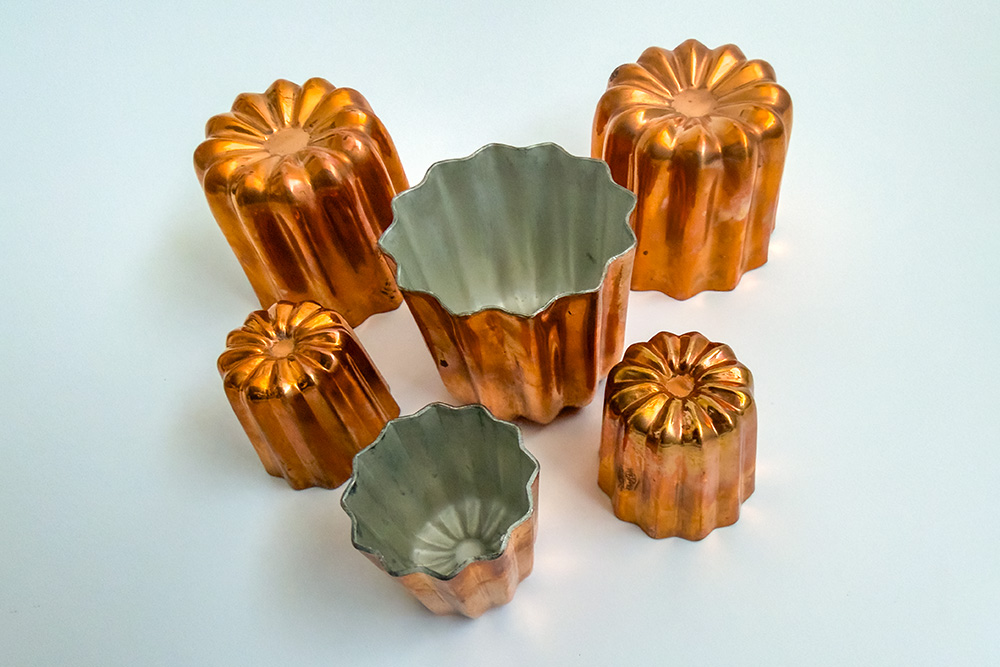
The iconic shape of the canelés de Bordeaux comes from their fluted moulds, traditionally made of copper lined with tin.
These materials ensure excellent heat conduction, vital to creating the signature crust.
Modern bakers sometimes use silicone moulds, but copper remains the benchmark for authentic results.
A Technical Pastry
Producing a good cannelé requires a precise technique:
The batter is typically rested for many hours (sometimes overnight).
The moulds are coated with beeswax or butter to help form the crust.
Baking takes place at very high temperature, then gradually lowered to finish cooking the centre.
The interplay between heat, sugar caramelisation and moisture defines the entire character of the cannelé.
This complexity explains why the pastry, although deceptively small, is notoriously difficult to master.
A Modern Icon of French Pastry
Today, canelés de Bordeaux are among the most consumed pastries in the city.
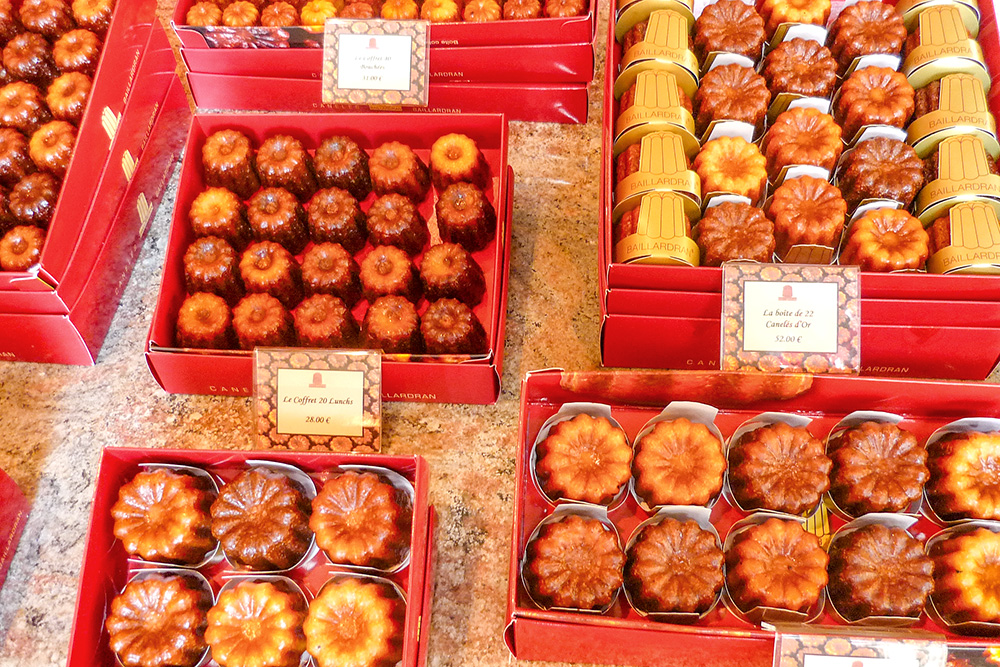
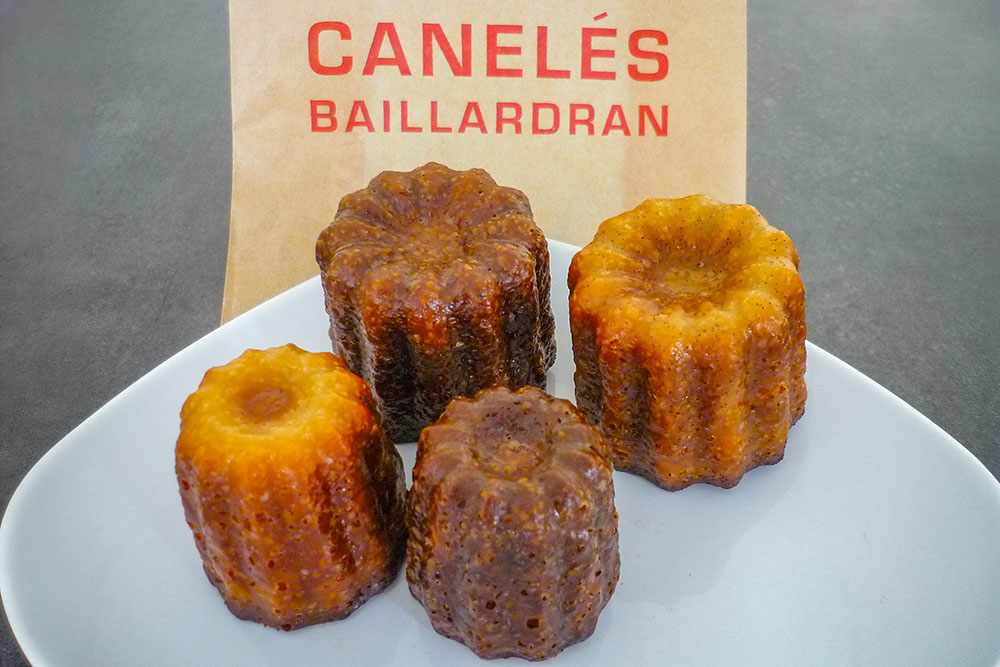
The best-known example is produced by Baillardran, a Bordeaux institution whose boutiques can be spotted by their distinctive red décor.
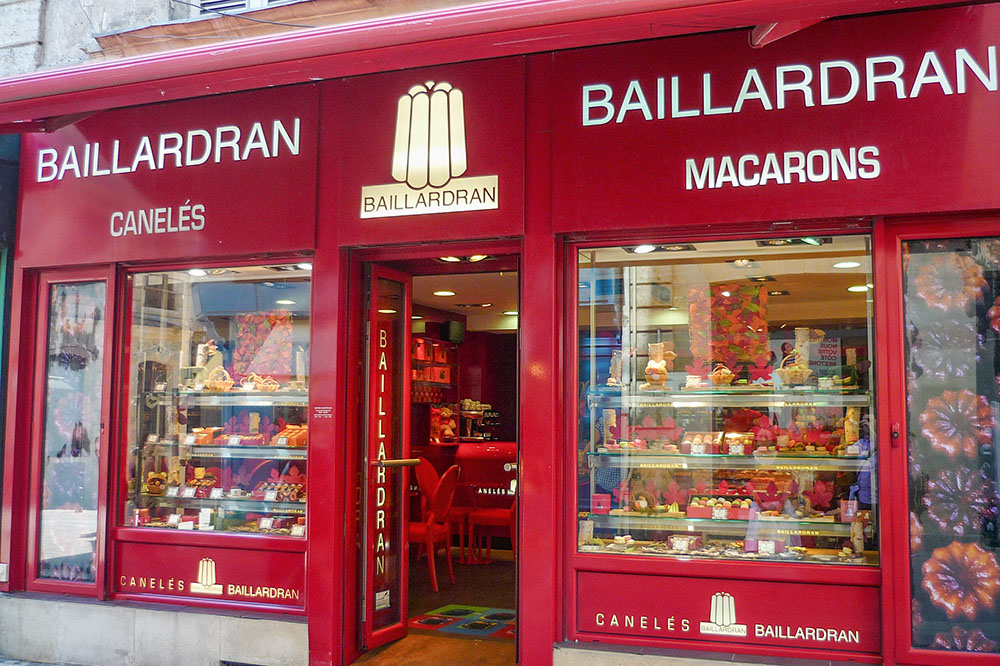
Their version is firm, shiny, and strongly caramelised—a style that has become almost synonymous with the modern canelés.
Over the years, the pastry has also captivated top Parisian houses.
Chefs at Pierre Hermé, Fauchon and Ladurée have all embraced the canelé, each offering refined interpretations that helped spread its reputation across France and beyond.
Whether enjoyed freshly baked in a Bordeaux bakery or discovered in a Parisian patisserie, the canelés remain intimately tied to their city of origin.
Its flavour—at once rustic and elegant—embodies the essence of Bordeaux itself: a region shaped by tradition, ingenuity and an enduring sense of craftsmanship.
Recipe for Making Traditional Canelés
Ingredients (for 12 cannelés)
- 12 copper cannelé moulds (or high-quality silicone moulds)
- 500 ml whole milk
- 2 eggs
- 2 egg yolks
- ½ vanilla pod (or 1 teaspoon vanilla extract)
- 3 to 4 tablespoons dark rum
- 100 g plain flour
- 200 g caster sugar
- 50 g butter (+ extra for greasing the moulds)
Method
STEP 1 – Prepare the infused milk
Heat the milk with the 50 g butter and the halved vanilla pod (seeds scraped into the milk).
Bring just to the boil, then remove from the heat.
Let it infuse for about 10–15 minutes.
This infusion step is essential for developing the cannelé’s deep vanilla flavour.
STEP 2 – Make the batter
In a mixing bowl, combine the flour and sugar.
Add the 2 eggs and 2 egg yolks and whisk until smooth, but without incorporating too much air.
Gradually pour in the warm milk mixture (remove the vanilla pod first), gently whisking to obtain a fluid batter, similar to thin crêpe batter.
STEP 3 – Rest the batter
Let the mixture cool, then add the rum.
Cover the bowl and place it in the refrigerator for at least 24 hours, ideally up to 48 hours.
This long resting time improves the texture, helps the batter settle, and is key to the authentic cannelé structure.
STEP 4 – Preheat the oven
The success of cannelés relies heavily on the initial blast of high heat.
Preheat the oven to 250–260°C (depending on your oven’s power).
Let it heat thoroughly for several minutes.
STEP 5 – Prepare the moulds
Generously butter the copper moulds, then dust them with sugar to promote caramelisation (some bakers use a butter–beeswax mixture, but butter alone works well).
Whisk the batter briefly to recombine the ingredients, then fill each mould to about 5 mm from the top.
STEP 6 – The two-stage baking
Place the moulds in the oven and bake:
5 minutes at 250–260°C
This creates the initial caramelised crust.Lower the temperature to 180–190°C
Continue baking for 40–60 minutes, depending on your oven and the size of your moulds.
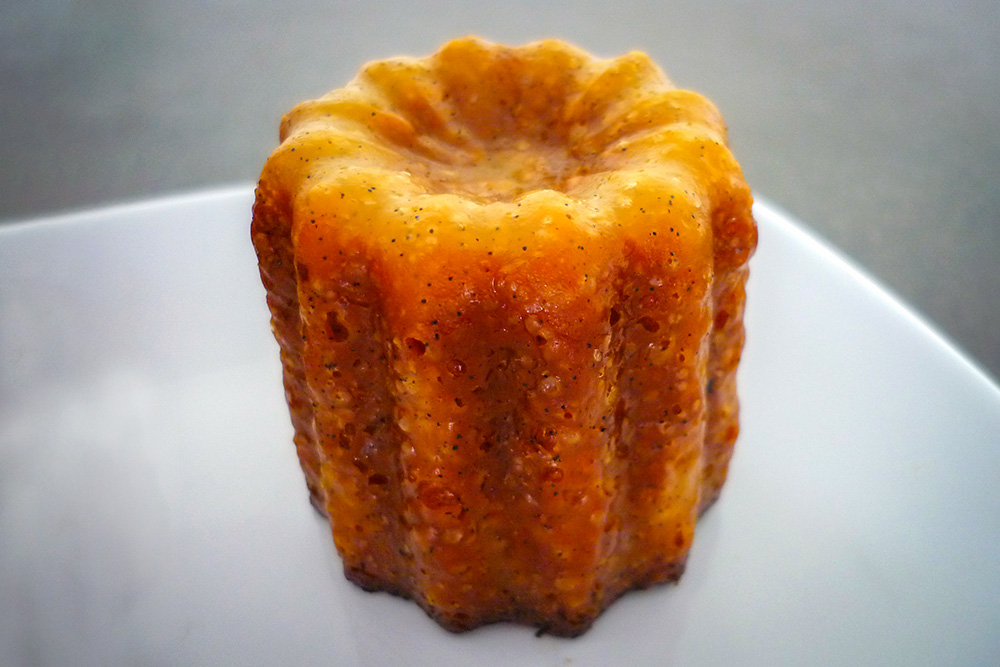
The cannelés are ready when the outside is dark brown and deeply caramelised, yet the inside remains soft, moist and slightly custardy.
Let them cool in the moulds for a few minutes, then unmould carefully and finish cooling on a rack.
Notes and Improvements
Copper moulds give the best result, with optimal caramelisation and crispness.
The batter should remain slightly lumpy and liquid; don’t overmix.
A long rest (24–48h) is crucial.
The colour should be dark, almost mahogany, not light brown—this is characteristic of real cannelés de Bordeaux.
They are best the day they are baked, as the crust softens over time.
Conclusion
The canelés de Bordeaux occupy a curious place in the world of French pastry.
They are beloved in their home city, admired by pastry chefs, and increasingly recognised by food lovers abroad — yet they have not (yet) reached the universal fame of the croissant, the madeleine or the Parisian macaron.
Part of this relative discretion comes from the canelé itself: humble in appearance, difficult to master, and still strongly tied to Bordeaux’s identity.
It has never been mass-produced with the ease of a croissant, nor widely re-interpreted like the macaron.
Its success depends on craftsmanship, technique and the peculiar alchemy of a copper mould and high heat — a combination that resists industrial shortcuts.
And yet, its rise over the past few decades suggests that its moment may come.
As more travellers discover Bordeaux, as more chefs refine the recipe, and as more bakeries adopt the canelé beyond France, the little fluted cake continues to gain ground.
Whether it will ever join the pantheon of globally recognised French pastries remains to be seen.
But one thing is certain: those who taste a true, freshly baked canelé de Bordeaux — caramelised, fragrant, with its soft custard heart — rarely forget it.
And perhaps that is the beginning of every culinary legend.