

My first experience of British Christmas traditions dates back to 2001.
At the time, I was already familiar with Christmas celebrations in France, particularly in Alsace-Lorraine, where I had lived for several years. But spending Christmas with an English family was going to introduce me to a few surprises!
I remember the Christmas crackers on the table, the colourful paper crowns everyone was expected to wear during the meal, and the fact that the main family celebration took place on Christmas Day rather than Christmas Eve.
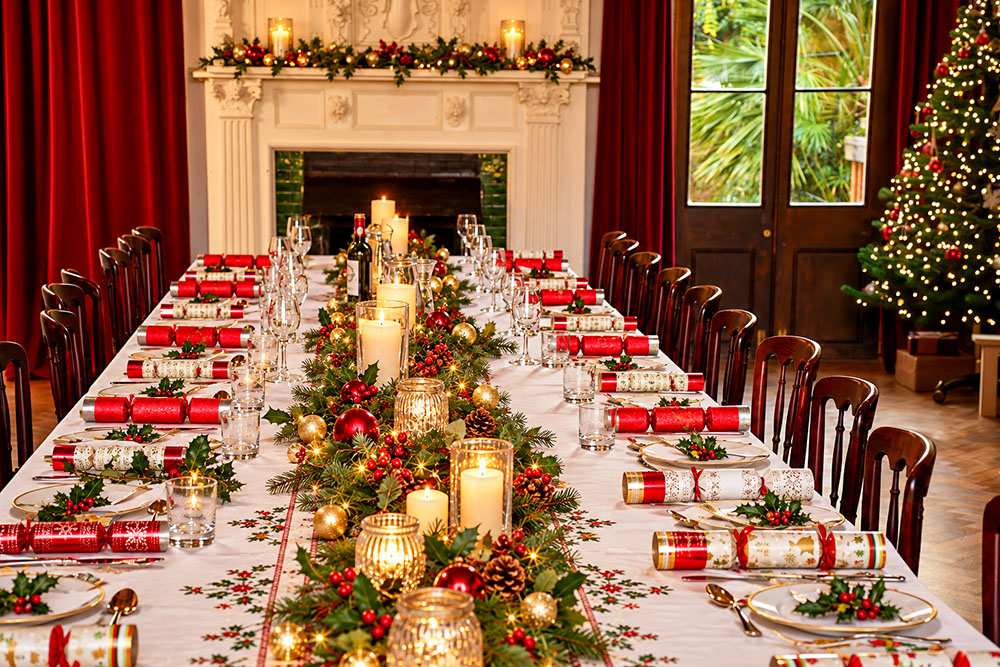
British Christmas Traditions: Festive table set up for the dinner © French Moments
Even the supermarkets looked different. The chocolates, cakes and festive specialities were not quite what I was used to seeing in France.
Since then, I have had plenty of opportunities to discover Christmas customs on this side of the Channel. I now live in England with my Franco-British family, which means we can enjoy traditions from both countries.
Some English Christmas customs have become particular favourites of mine. Others still make me smile, and a few continue to leave me slightly puzzled!
After all, Christmas has become a fairly international celebration. Christmas trees, Father Christmas, presents and festive advertisements can be found almost everywhere.
But look a little closer at how families celebrate, and the differences soon become apparent.
So, what is Christmas really like in England?
Here are 15 British Christmas traditions, seen through the eyes of a Frenchman who has come to know them rather well over the years.
Getting ready for Christmas in England
1. Christmas arrives in the shops as early as September!
Every year, I am surprised by how early Christmas preparations begin in England.
You might think that September would be a little too soon to start thinking about Christmas.
Not according to some British retailers!
It is not unusual to discover the first festive products in supermarkets shortly after the summer holidays.
Boxes of chocolates, biscuits, Christmas cakes and other seasonal goods gradually begin to appear on the shelves.
One of the funniest things is seeing Halloween and Christmas products displayed next to each other.
On one side, pumpkins, witches and skeletons. On the other, reindeer, Christmas trees and Father Christmas.
Quite a combination!
Of course, French supermarkets have also started preparing for Christmas earlier over the years. But I have always felt that British retailers are particularly enthusiastic about getting ahead of the festive season.
Having spent many years in Alsace, I tend to associate the beginning of Christmas celebrations with Advent.
For me, that is when the Christmas atmosphere should really begin.
British supermarkets, however, seem to have other ideas!
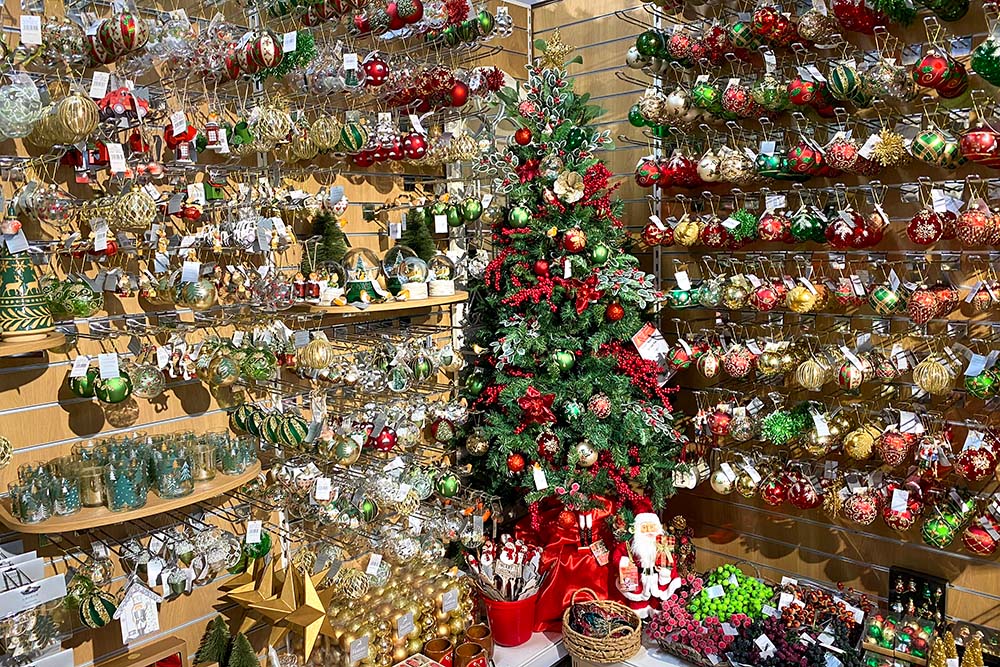
Christmas tree decoration in an English store © French Moments
What about Christmas markets in England?
Having lived in Alsace, I find it difficult to imagine Advent without Christmas markets.
But in England, things are a little different.
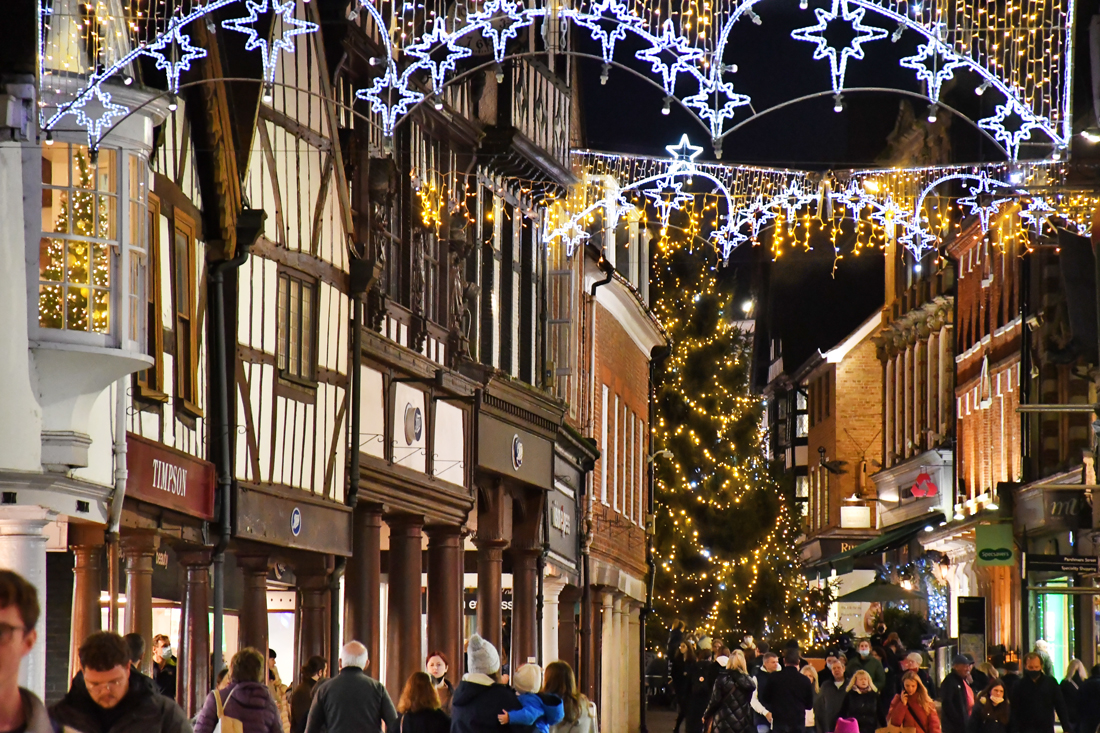
Christmas markets certainly exist, particularly in larger towns and cities. London, Birmingham, Manchester, York and Winchester are among the places where visitors can enjoy festive stalls, decorations and seasonal food.

At the Winchester Christmas Market © French Moments
However, Christmas markets inspired by the German tradition are a relatively recent addition to British festive life.
One of the earliest examples was the Lincoln Christmas Market, which began in 1982.
Since then, Christmas markets have become increasingly popular across the country.
Some even open in mid-November, well before the traditional beginning of Advent.
But visiting a Christmas market is not necessarily an annual family ritual in England, as it often is in Alsace or parts of Germany.
The Christmas market I know best is in Winchester, Hampshire, not far from where we live.

Winchester Christmas Market © French Moments
It takes place in the historic Cathedral Close, with wooden chalets selling Christmas decorations, handicrafts, gifts and festive treats.
I have visited it and was genuinely impressed.
With the medieval cathedral rising behind the stalls, you could almost imagine yourself at a Christmas market in Germany!
Of course, it does not have the centuries-old tradition of the markets in Strasbourg or the small Alsatian villages.
But I think Winchester has done a very good job of recreating that atmosphere.
If you are interested in visiting a Christmas market in Britain, it is worth looking at the larger cities as well as cathedral towns such as Winchester.
2. English houses light up for Christmas — sometimes a little too much!
One thing you will notice in English residential neighbourhoods during December is the enthusiasm for decorating houses.
Some people are not satisfied with a Christmas tree in the living room.
They put fairy lights around their windows, across the roof, along the garden fence and even in the trees.

Christmas lights in a private street near Portsmouth © French Moments
You might also spot illuminated reindeer, inflatable Father Christmas figures and all sorts of flashing decorations.
Sometimes the result is beautiful.
Sometimes, well… it is a little less subtle!
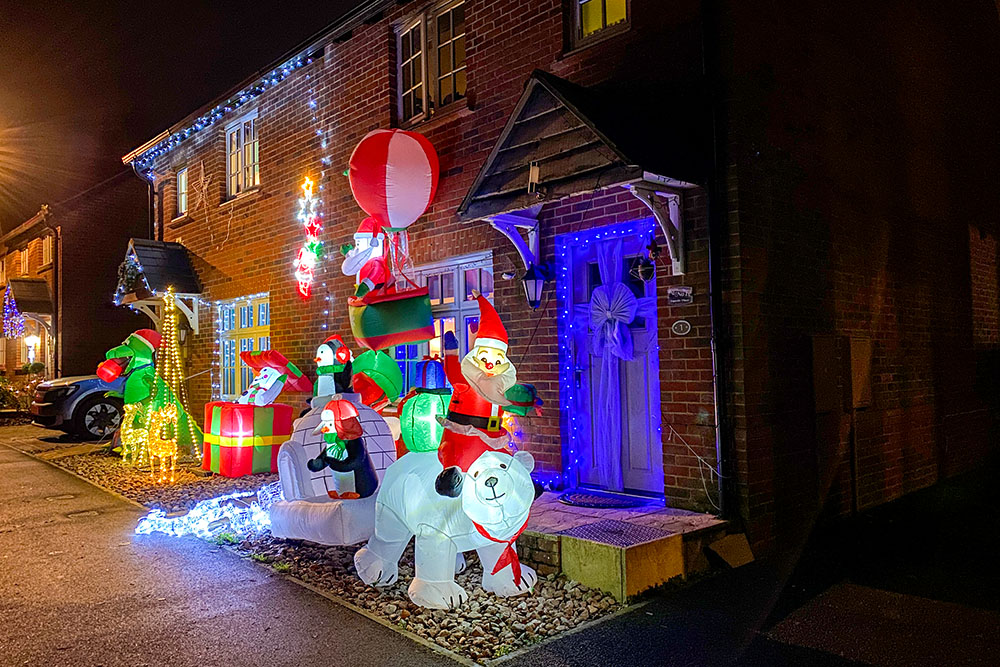
Christmas decorations near Portsmouth © French Moments
I must admit that my years in Alsace have probably influenced my taste in Christmas decorations.
In Alsatian towns and villages, I was used to seeing decorations carefully arranged to complement old houses, half-timbered façades and traditional Christmas trees.
In England, I sometimes get the impression that the main objective is to fit as many lights as possible onto the house!
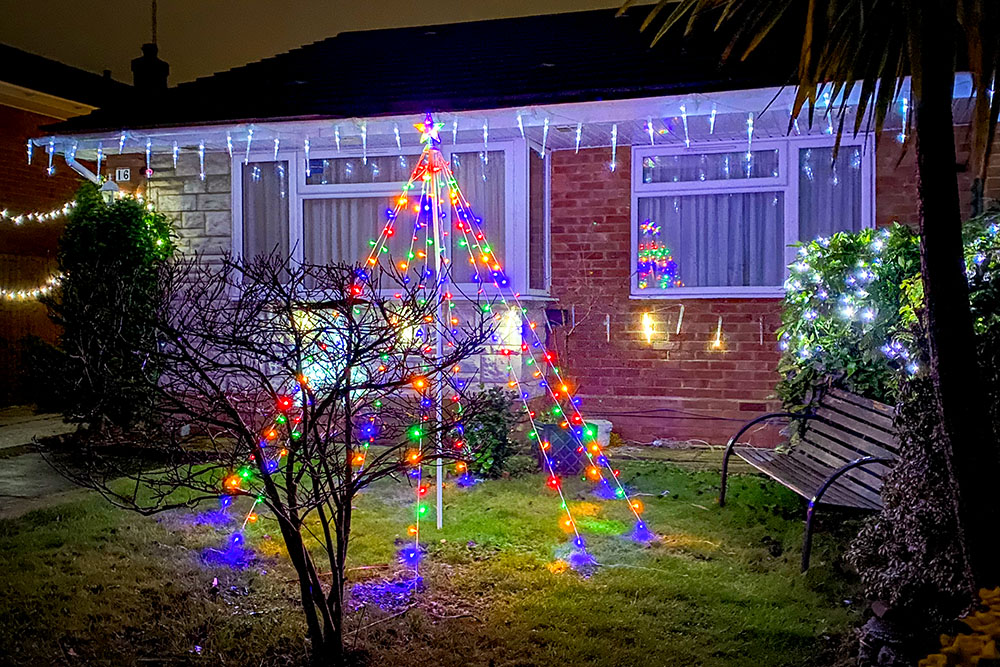
Christmas decorations near Portsmouth © French Moments
That is only my personal opinion, of course. Some English homes are decorated with great taste.
But the enthusiasm for private Christmas illuminations is something I have noticed repeatedly.
There is another difference.
In Alsace-Lorraine, local councils often install extensive Christmas lights in the streets, including in some residential areas.
In the English towns and villages I know, public decorations tend to be concentrated around shopping streets and town centres.
Elsewhere, it is often the residents themselves who provide the festive atmosphere.
And some certainly go to town on it!
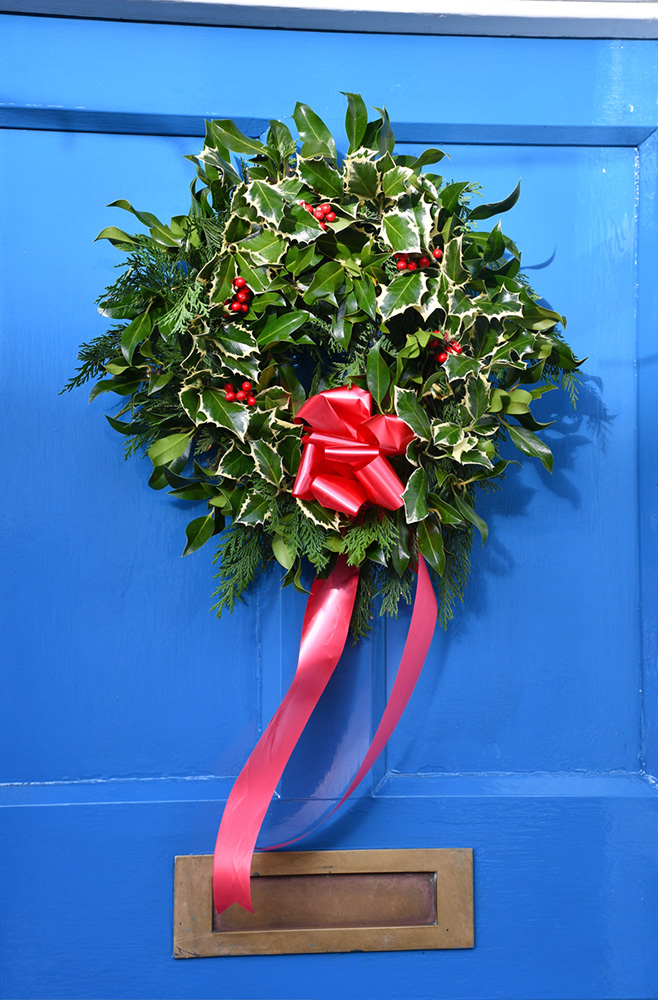
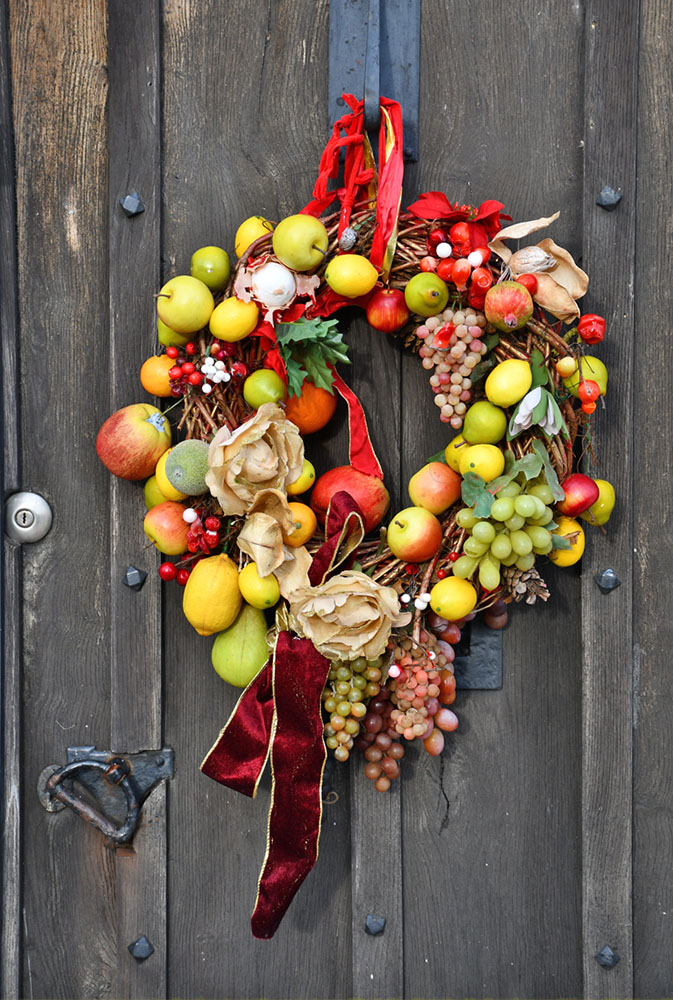
3. Christmas wreaths appear on front doors everywhere
There is one English Christmas decoration I particularly like: the Christmas wreath.
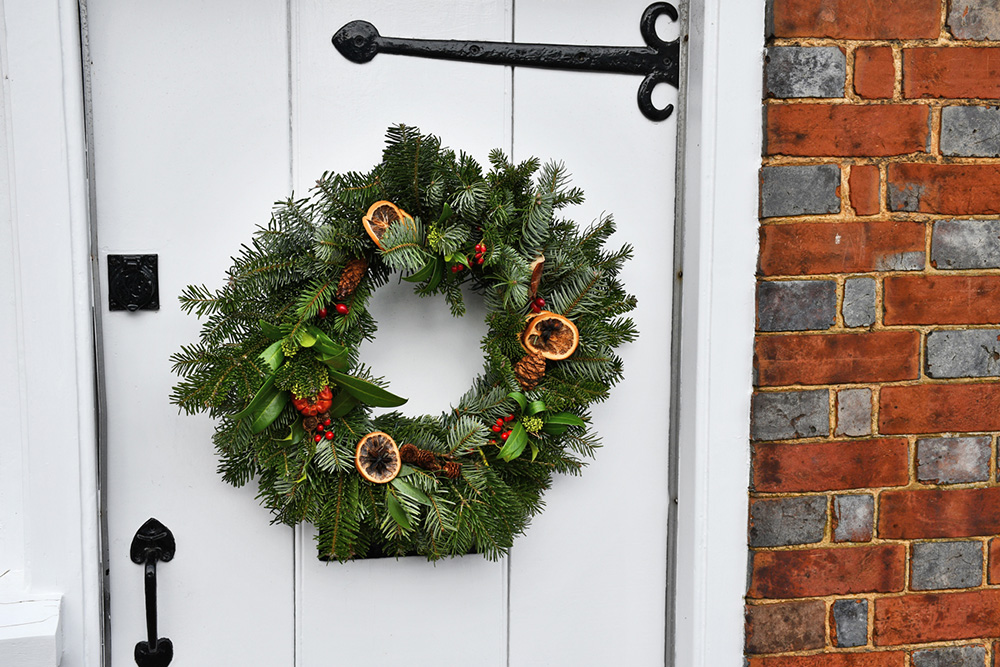
A Christmas wreath on a door in Burwash, East Sussex © French Moments
As December approaches, many front doors are decorated with wreaths made from evergreen branches, holly, pine cones, berries or other festive materials.
Some are traditional, while others feature more modern colours and designs.
I often find them very attractive.
Christmas wreaths are also used in France, of course, but I have noticed that they seem much more common on English front doors.
They make a house look welcoming before you have even stepped inside.
And unlike the multicoloured lights flashing in every direction, a simple, carefully chosen wreath can create a lovely Christmas atmosphere.
So the English can be quite restrained when it comes to decorations after all!
What I particularly appreciate is that this tradition works just as well on a modest cottage as it does on a large country house.
You do not need an elaborate display to make your front door look festive.
4. Sending Christmas cards is still a big tradition
This was another custom that struck me when I first spent Christmas in England.
Christmas cards are everywhere!
People send or give cards to relatives, friends, neighbours, colleagues and sometimes people they see regularly during the year.
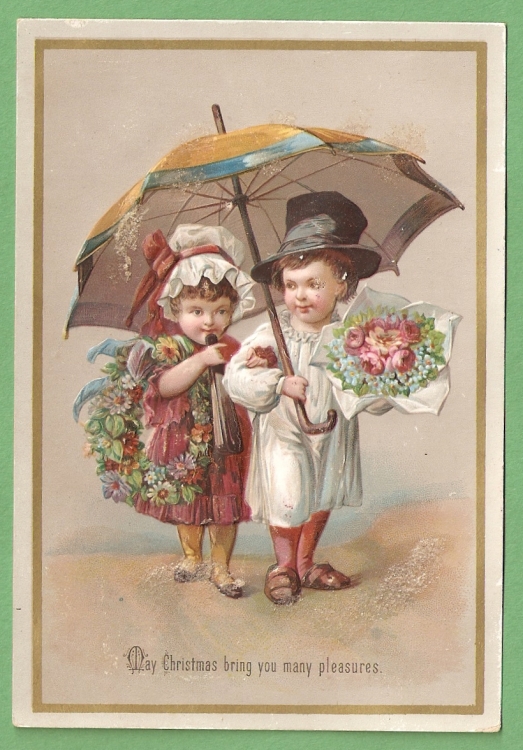
Despite emails, social media and instant messaging, sending Christmas cards remains an important custom for many British families.
Visit a supermarket or card shop in December and you will discover an extraordinary selection.
There are snowy landscapes, religious scenes, animals, humorous illustrations and all kinds of sentimental messages.
But receiving the cards is only part of the tradition.
You are supposed to display them too!
In many English homes, Christmas cards are arranged on mantelpieces, shelves or special strings stretched across a room.
They become part of the decorations.
I find this particularly amusing when I compare it with my memories of Alsace.
In Alsace, we often gave friends and relatives bredeles, the traditional Christmas biscuits.
In England, people exchange Christmas cards!
Naturally, there is nothing to stop anyone from doing both.
But I think these little customs reveal something about the different ways people celebrate Christmas on either side of the Channel.
British Christmas traditions beyond the family home
5. Christmas jumpers: whatever happened to dressing up for Christmas?
Ah, the famous Christmas jumper!
If you have spent December in Britain, you will certainly have come across this custom.
Christmas jumpers can feature reindeer, snowmen, Christmas trees, funny slogans and sometimes even flashing lights.
Schools, workplaces and charities organise special days when everyone is encouraged to wear one.
There is even a Christmas Jumper Day associated with the charity Save the Children.
Now, I have to admit something.
For a long time, I really did not like this tradition.
When I was growing up in France, Christmas was an opportunity to wear your best clothes.
You made an effort for Christmas Eve and the family meal.
The idea of deliberately wearing a brightly coloured jumper with an enormous reindeer on the front seemed to go completely against my childhood memories!
But I have to make one exception.
One year, my wife bought me a Christmas jumper that I actually thought was rather nice.
It was also very warm.
So perhaps there is hope for me yet!
Christmas parties at work and in associations
The Christmas jumper is only one example of how Christmas enters everyday working life in Britain.
Throughout December, many companies organise a Christmas party or Christmas do for their staff.
These events may take the form of a meal in a restaurant, an evening in a pub or a larger celebration with music and dancing.
They give colleagues an opportunity to spend time together outside the usual working environment.
Community groups, associations and voluntary organisations often arrange similar gatherings for their members.
Sometimes there is also a Secret Santa, where everyone draws a name and buys a small present for that person, usually within an agreed budget.
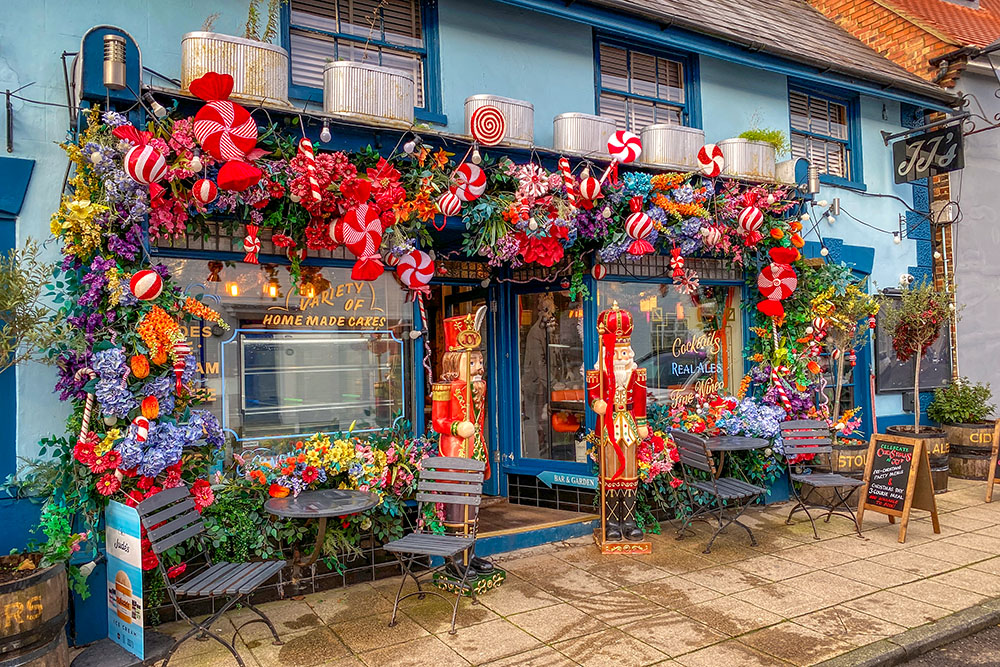
A café decorated for Christmas in Emsworth, Hampshire © French Moments
We also have end-of-year meals and celebrations in France, of course.
But I have the impression that the Christmas party occupies a particularly prominent place in British working and community life.
Christmas is not simply something celebrated at home. During December, it becomes part of the social calendar too.
6. Christmas carols and the Christian meaning of Christmas
Among the British Christmas traditions I appreciate most are the Christmas carols.
Many of these songs are familiar around the English-speaking world, including Hark! The Herald Angels Sing, O Come, All Ye Faithful and Silent Night.
Throughout Advent, churches organise carol services, concerts and celebrations.
You may also hear carols sung in schools, village halls and occasionally in the streets.
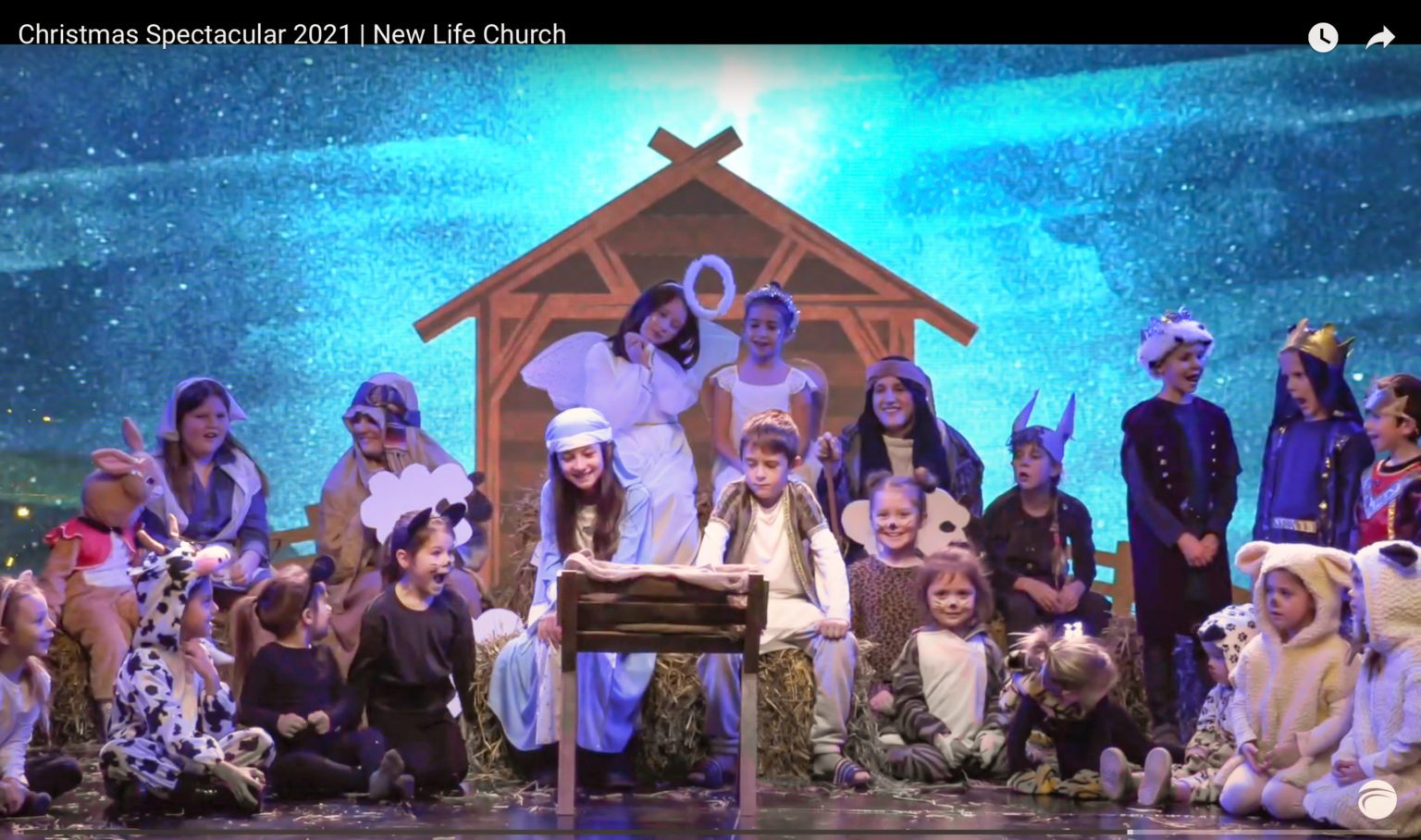
A Nativity Play in a Church
I particularly enjoy this musical and religious dimension of Christmas.
In the English villages where I have lived, I have noticed that Christian Christmas traditions often remain a natural part of local community life.
This is partly connected with the country's religious history and the position of the Church of England, of which the British monarch is Supreme Governor.
Of course, not every English person attends church, and Christmas is celebrated in many different ways.
But Christian traditions continue to play an important role in numerous communities.
One experience particularly stands out in my memory.
One Christmas, I attended a service in the old Anglican parish church at Burwash, a village in Sussex.
That was where I first discovered a tradition I had never heard of before: Christingle.
A Christingle usually consists of an orange wrapped with a red ribbon, decorated with sweets or dried fruit and topped with a candle.
Each element has a Christian meaning.
The orange represents the world, the candle symbolises Jesus as the light of the world, the red ribbon recalls the blood and love of Christ, and the sweets or fruit represent the gifts of creation.
I found the celebration particularly interesting.
It was one of those occasions when living in another country introduces you to a custom you might otherwise never encounter.
I have also attended many Christmas performances and church celebrations over the years, including a live Nativity performance that I described on my French-language blog, Destination Angleterre.
7. Christmas pantomimes: a very British form of entertainment
Among the British Christmas traditions is the pantomime, usually shortened to panto.
Now, if you are unfamiliar with British pantomimes, the name can be rather misleading.
These are certainly not silent performances!
Quite the opposite.
A Christmas pantomime is a family show, often based on a traditional story such as Cinderella, Aladdin or Jack and the Beanstalk.
There are songs, jokes, extravagant costumes and plenty of audience participation.
Children and adults are encouraged to shout familiar phrases or warn the characters when a villain appears.
The humour often includes wordplay, cultural references and jokes aimed at different age groups.
I have a confession to make.
I have never actually attended a Christmas pantomime.
The English side of my family knows this tradition very well, but I have always been reluctant to go.
My concern is that I might spend the entire performance trying to understand the jokes!
Perhaps I should finally give it a try one Christmas.

Jazz music on the Winchester Christmas Market's stage © French Moments
Christmas productions in English schools
There is another tradition associated with Christmas performances that I find particularly enjoyable: school Christmas productions.
In the weeks leading up to the holidays, many English primary schools organise performances for parents, relatives and sometimes friends.
Some present a Nativity play, with Mary, Joseph, shepherds, angels and the Wise Men.
Others prepare musicals, plays or Christmas concerts.
And I must say that some of these productions are surprisingly good!
The children may spend weeks learning songs and rehearsing their lines, while teachers work hard preparing costumes, sets and the performance itself.
The results can be remarkably polished.

School choir on the market's stage © French Moments
For families, attending the Christmas production becomes part of the festive calendar.
School performances also exist in France, naturally.
However, I do not remember Christmas-specific productions having quite the same place in French school life as I have observed in England.
It is another example of Christmas being celebrated by the wider community, rather than only within the family.
8. Christmas television adverts become an event in their own right
If you watch British television or spend time on YouTube during November and December, you may have noticed something unusual.
Every year, several major retailers release special Christmas advertisements.
John Lewis is probably the best-known example, but Waitrose, Sainsbury's, Aldi and other brands also produce festive campaigns.
Some of these adverts resemble short films.
They tell a story, introduce memorable characters, use carefully chosen music and often try to provoke an emotional reaction.
Their release may even become a news story, with people discussing which retailer has produced the best Christmas advert that year.
This was something new to me when I began discovering British Christmas traditions.
Of course, Christmas advertising exists in France too.
But in Britain, certain campaigns have become annual events that people actually look forward to.
Even if you do not watch British television, you can easily find these adverts on YouTube.
I think they reveal something about the commercial importance of Christmas in Britain.
Alongside the religious and family traditions, Christmas has become a major event for retailers.
And they certainly know how to make the most of it!
How do English families celebrate Christmas Eve and Christmas Day?

Christmas enchantment in Winchester © French Moments
9. Christmas Eve is not quite like the French Réveillon
In many French families, Christmas Eve is one of the most important moments of the festive season.
The réveillon usually involves a special meal on the evening of 24 December, sometimes followed by Midnight Mass or the opening of presents.
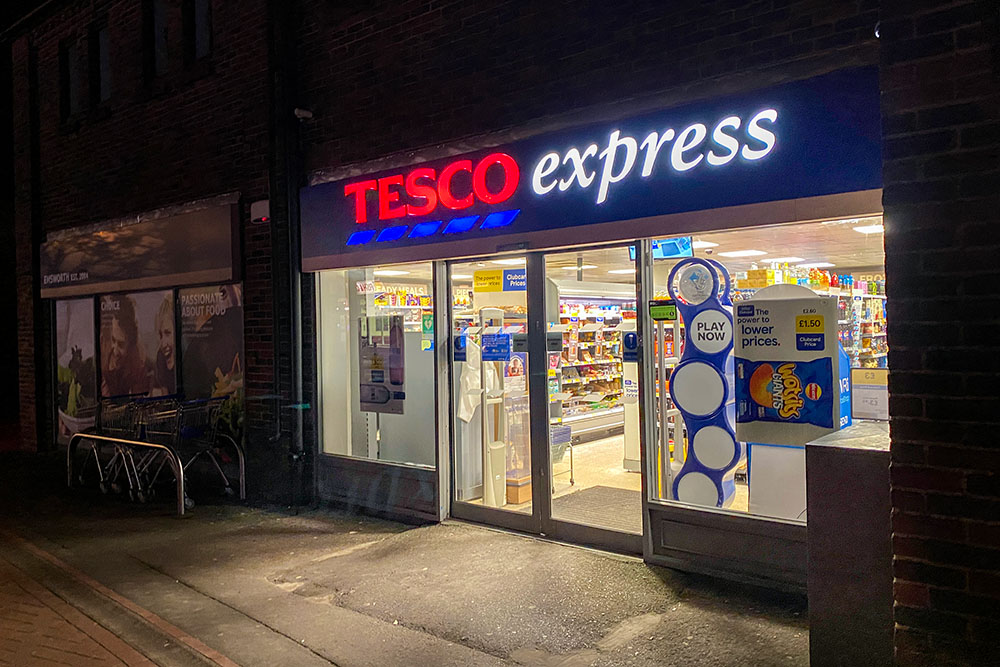
A Tesco Express near Portsmouth open until the evening of the 24th of December © French Moments
In England, Christmas Eve is often rather different.
For many households, it is the final day of preparations before Christmas.
And what a day it can be!
If I can offer one piece of advice, try to avoid large supermarkets and busy shopping centres on 24 December.
People are collecting food orders, buying forgotten ingredients, wrapping last-minute presents and making sure everything is ready for the following day.
It can be a rather hectic atmosphere.
Naturally, some families have a special Christmas Eve meal or attend a church service.
But the traditional main Christmas meal in England usually takes place on 25 December.
That is one of the biggest differences from the Christmas celebrations I knew in France.
In our Franco-British family, we have found our own solution.
We celebrate both days!
We keep some French traditions on Christmas Eve while also enjoying the English celebrations on Christmas Day.
So our family is not necessarily a typical example of English Christmas customs.
It is simply our way of bringing the two cultures together.
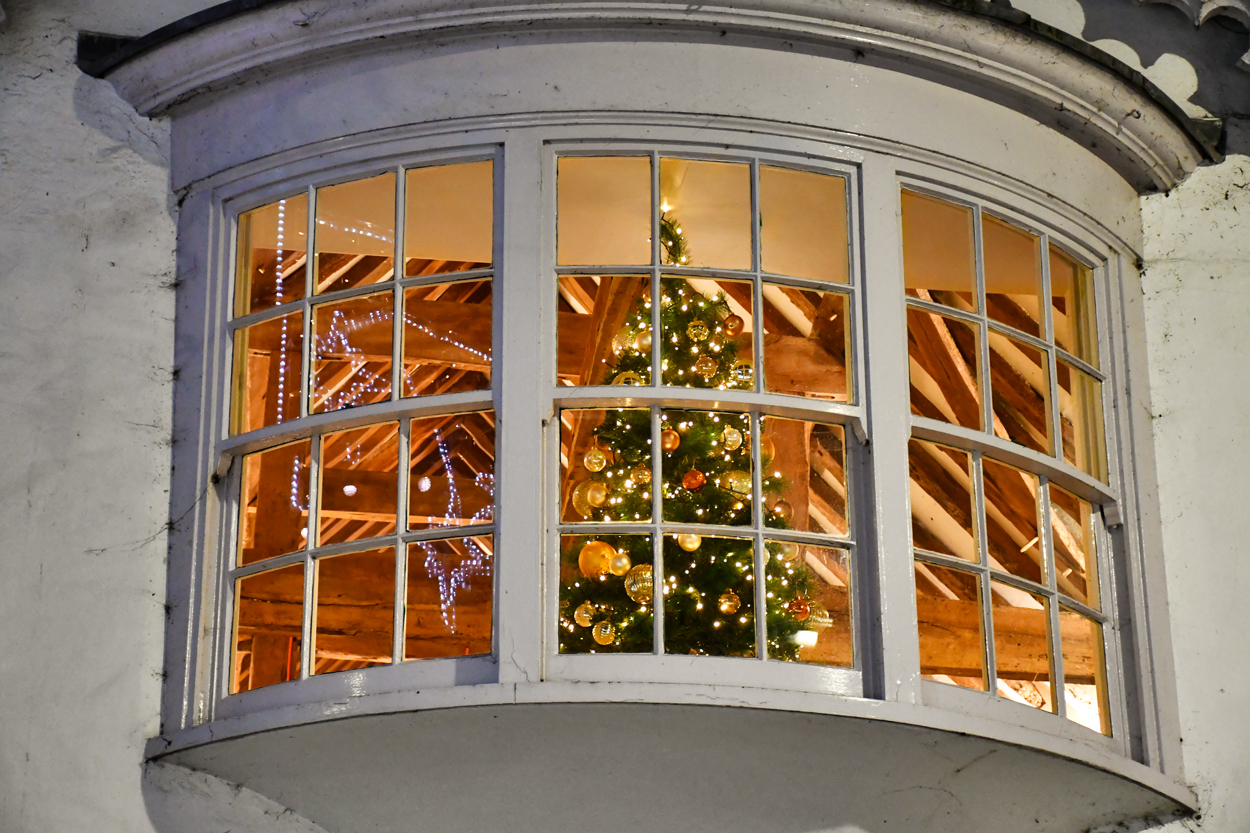
Christmas window in Winchester © French Moments
10. Christmas morning: Father Christmas and opening the presents
In England, children generally open their Christmas presents on the morning of 25 December.
This is a widespread custom, although every family has its own habits.
Presents are usually placed under the Christmas tree.
Children may also receive a Christmas stocking, filled with small presents, sweets and other surprises.
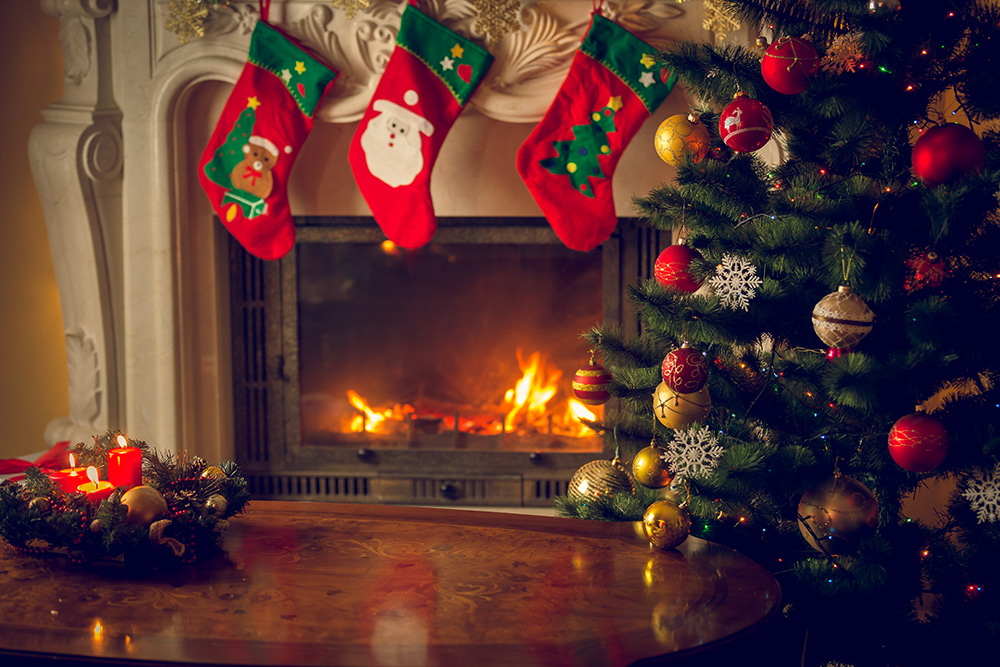
Red Stocking - Photo by kryzhov via Envato Elements
And what about Father Christmas?
In Britain, you will hear both Father Christmas and Santa Claus.
The two names have different historical backgrounds, although the figures they describe have gradually merged in modern Christmas celebrations.
Santa Claus, in his familiar modern form, was particularly influenced by American traditions.
The older English Father Christmas has a fascinating story of his own.
In fact, the history of Christmas gift-bringers would deserve an entire article!
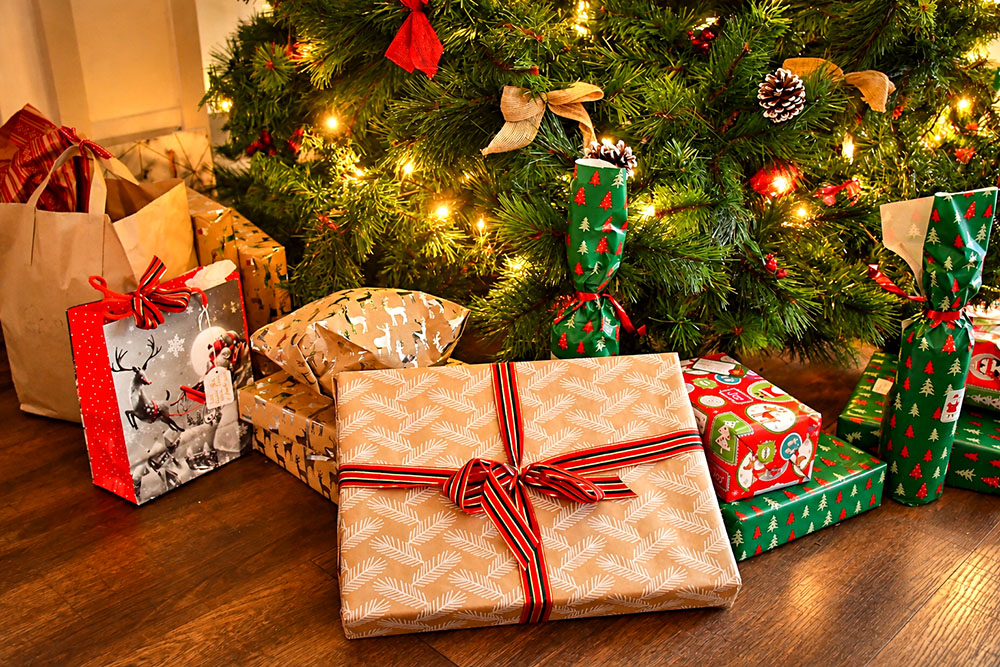
The Christmas presents waiting under the tree © French Moments
In our family, we usually open our presents on Christmas morning, often after breakfast.
I rather like starting Christmas Day this way.
But during my first English Christmas in 2001, we opened the presents much later, towards the evening.
Which goes to show that even within England, there is no single way of celebrating Christmas.
11. British Christmas traditions around the dinner table
We now come to one of the highlights of the British Christmas traditions: Christmas dinner.
Do not let the word dinner mislead you.
The meal may be served in the early afternoon.
In my English in-laws' family, for example, we sometimes sat down to eat at around 2 pm.
The traditional centrepiece is roast turkey, accompanied by a generous selection of vegetables and side dishes.
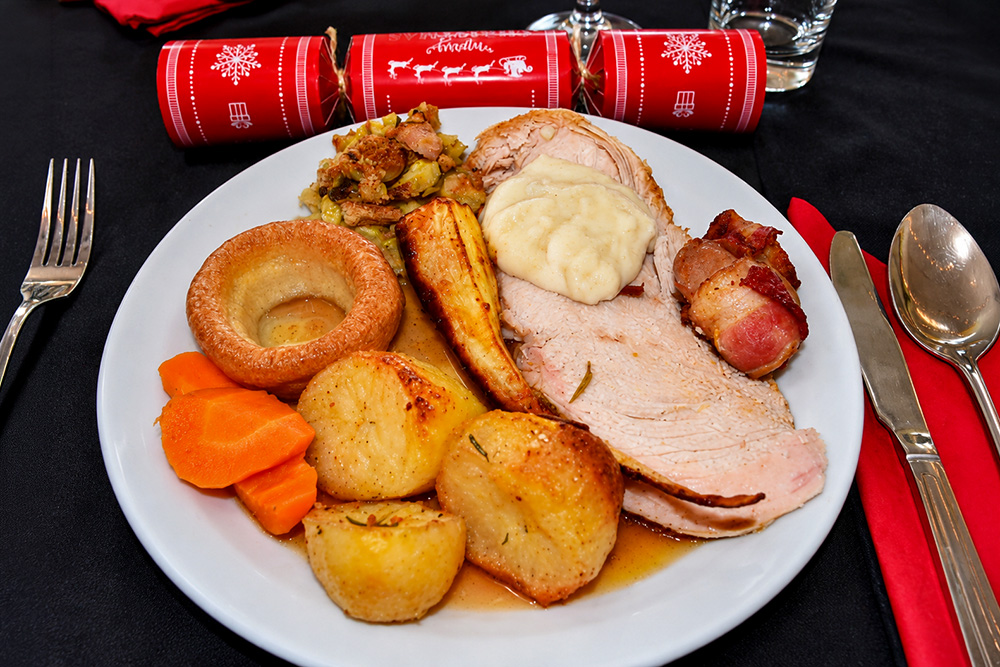
The Christmas dinner is served! © French Moments
You will often find:
- Roast potatoes, usually cooked until beautifully golden and crisp.
- Pigs in blankets, small sausages wrapped in bacon.
- Stuffing, a savoury mixture often prepared with herbs and breadcrumbs.
- Brussels sprouts, a familiar Christmas vegetable.
- Roast parsnips and carrots, sometimes with a little honey.
- Yorkshire puddings, light, puffed batter puddings traditionally associated with roast beef but also enjoyed with Christmas dinner in some families.
- Gravy, a rich savoury sauce served over the meat and vegetables.
Other meats and vegetarian alternatives are also popular, depending on family preferences.
I have enjoyed several traditional English Christmas dinners with my in-laws.
And I must say, I liked them very much!
Roast turkey with all the trimmings makes a generous and comforting family meal.
But when I compare it with Christmas in France, I notice a different approach to festive food.
In France, the Christmas meal often involves several courses and a selection of special ingredients.
Oysters, foie gras, smoked salmon, cheeses and elaborate pastries may all appear on the table.
Families sometimes spend rather more than usual to enjoy the best products they can afford.
The pleasure of eating well is a very important part of French Christmas celebrations.
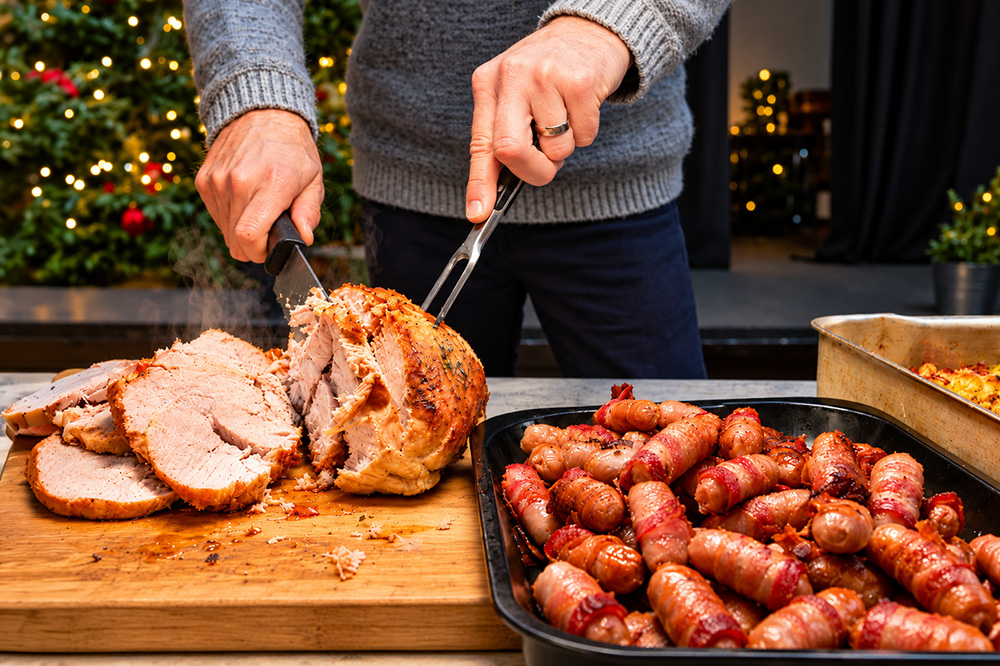
My brother-in-law is cutting the Christmas Turkey © French Moments
In England, the traditional meal seems to me more focused on one large roast and its many accompaniments.
Both approaches have their merits.
But when it comes to variety and the choice of festive delicacies, I must admit that my preference remains French!
12. Christmas crackers: why is everyone wearing a paper crown?
Of all the Christmas customs I discovered in England, this is probably one of the strangest from a French perspective.
On the Christmas dinner table, each guest will often find a Christmas cracker.
It is a cardboard tube wrapped in decorative paper, rather like an enormous sweet.
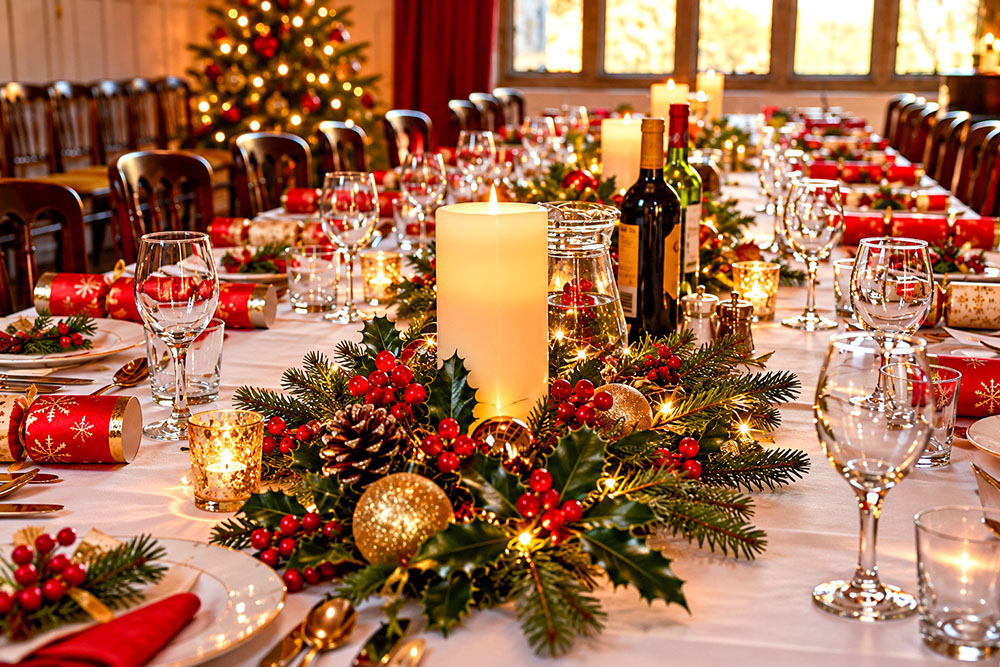
The table is now ready for Christmas, without forgetting the crackers! © French Moments
Two people pull it apart.
There is a little snapping sound, and the cracker opens to reveal a few surprises.
Usually, these include a small novelty gift, a joke printed on a piece of paper and a coloured paper crown.
And everyone is expected to wear the crown during the meal.
Yes, really!
Imagine sitting around a beautifully laid Christmas table, wearing your smart festive clothes, only to put a bright green or red paper crown on your head.
When I first experienced this tradition in 2001, I thought it was rather peculiar.
And I certainly did not want to wear the crown!
But traditions are traditions.
So I joined in.
Nowadays, I am quite familiar with crackers, although I still find the paper crowns amusing.
As for the jokes, they are usually terrible.
In fact, that is part of their charm.
Christmas crackers became popular during the Victorian period, which played an important role in shaping modern British Christmas celebrations.
A great many British Christmas traditions that seem timeless today were either introduced or popularised in Britain during the nineteenth century.
13. Christmas pudding, mince pies and Christmas cake: why so many dried fruits?
Now we come to the desserts.
And this is where my French taste buds begin to protest!
Three traditional specialities are particularly associated with British Christmas: Christmas pudding, mince pies and Christmas cake.
They have one thing in common.
They are all rich in dried fruits, especially raisins, and often contain spices.
Christmas pudding is a dark, dense dessert, sometimes flambéed with brandy and served with brandy butter, custard or cream.
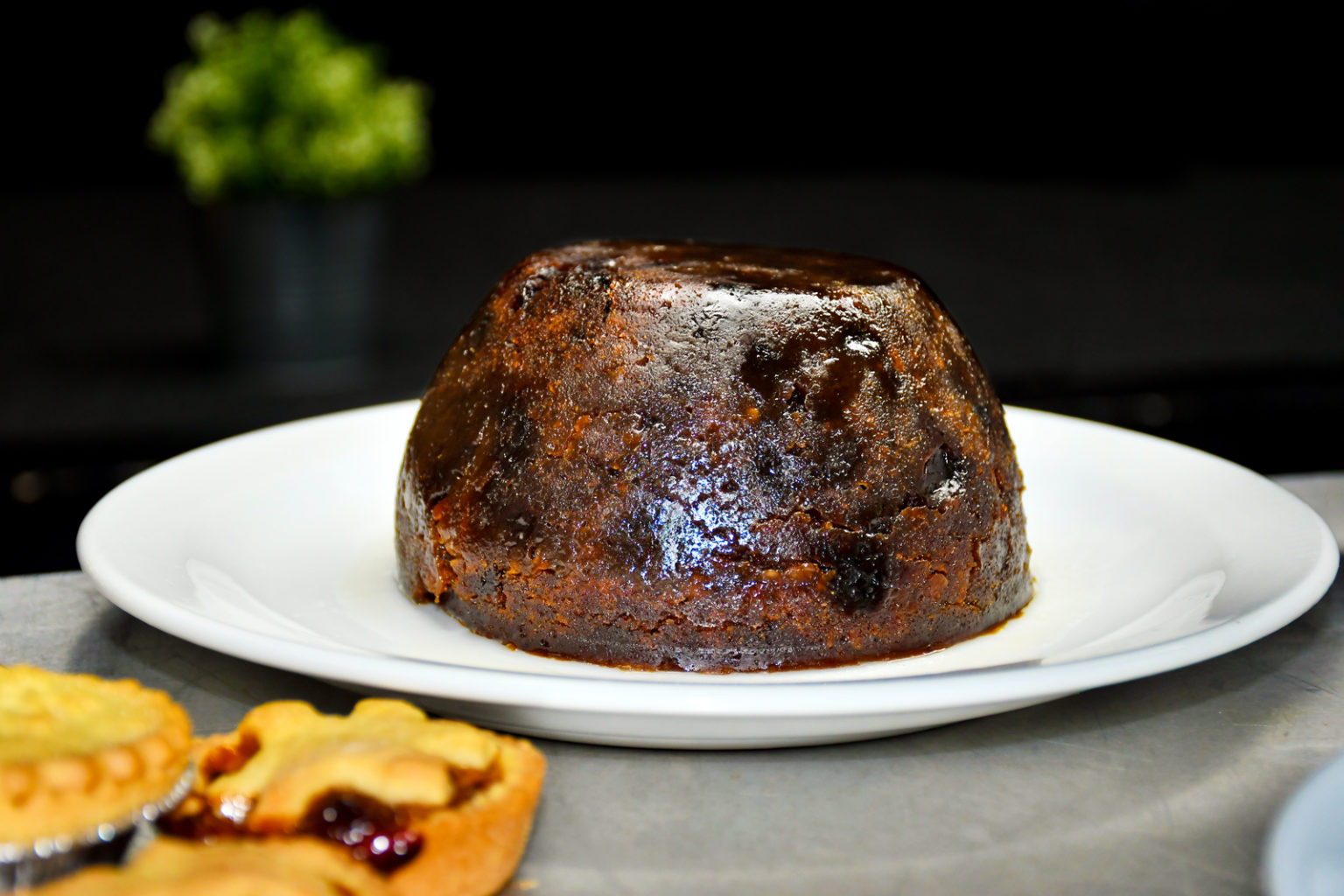
The Christmas pudding © French Moments
Christmas cake is another rich fruit cake, often covered with marzipan and icing.
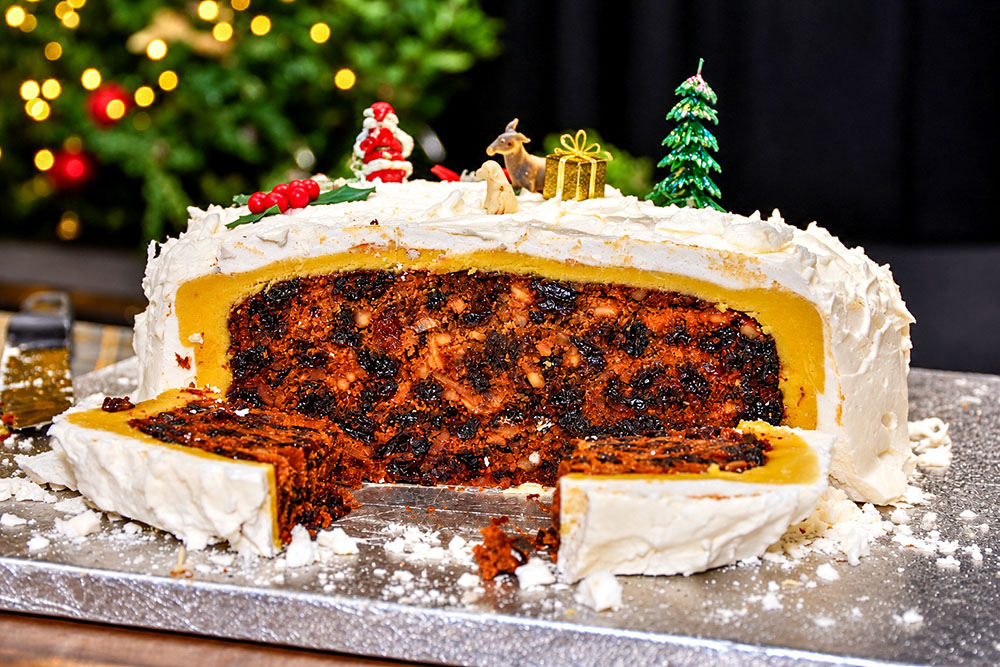
The Christmas cake © French Moments
Mince pies, meanwhile, are small pastries filled with a sweet mixture of dried fruit, apples, spices and other ingredients.
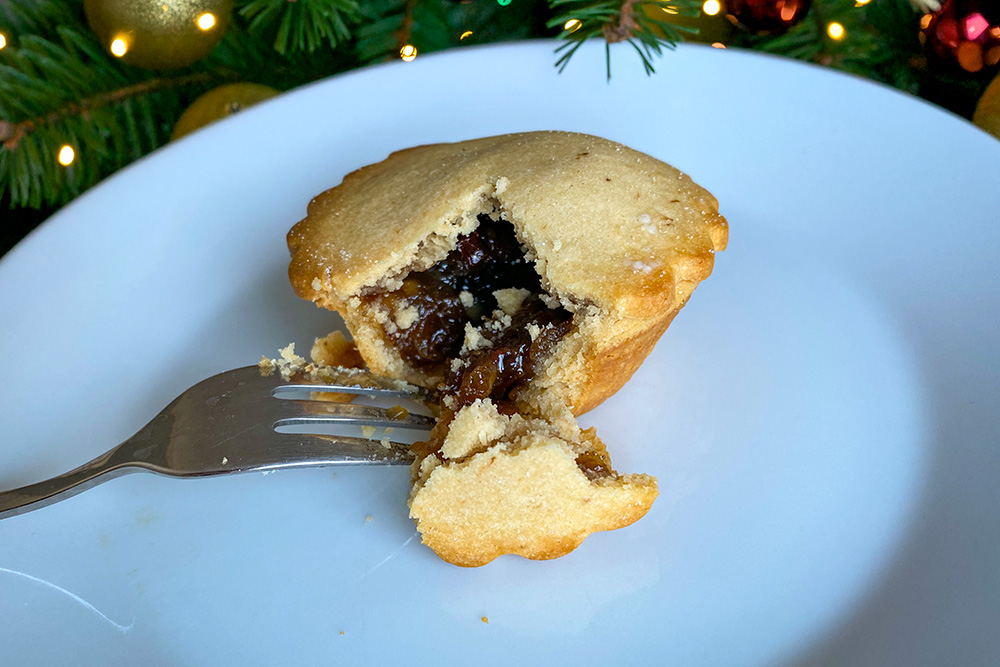
A mince pie © French Moments
The filling has a rather curious name: mincemeat.
That name can be confusing, because modern mince pies generally contain no meat.
Their ancestors, however, did contain meat alongside fruit and spices.
I still remember tasting a mince pie for the first time.
I was not quite prepared for the rich dried-fruit filling, and my first bite left me rather disappointed.
I suspect the expression on my face said everything!
Over the years, I have tried all these traditional British Christmas treats.
But I cannot pretend they have become my favourite desserts.
If you are not particularly fond of raisins or candied fruit, the traditional British Christmas selection can seem a little repetitive.
In France, we have a wider variety of festive pastries, and I would happily choose a beautifully made bûche de Noëlover a portion of Christmas pudding.
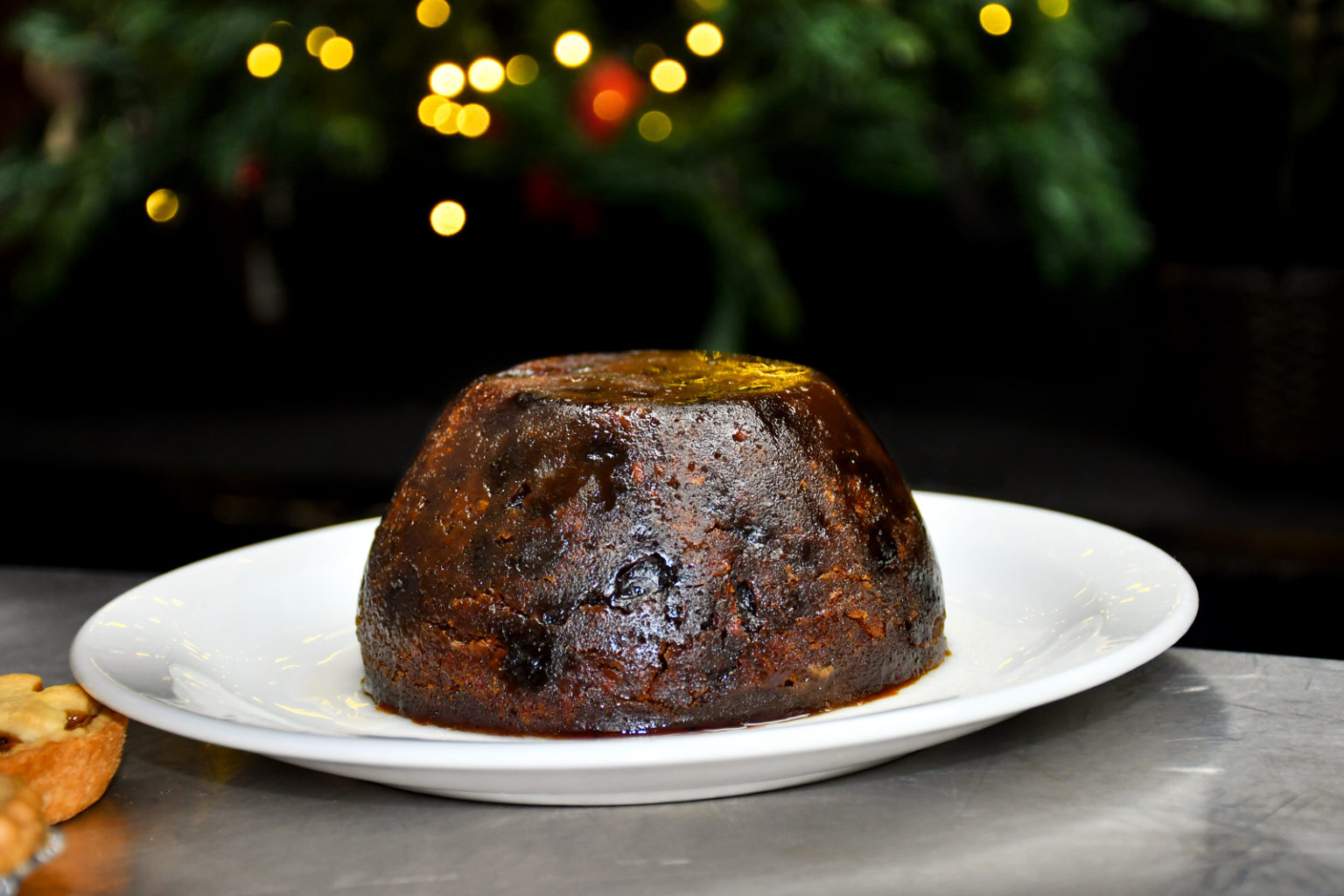
The pudding, one of the most famous British Christmas traditions © French Moments
That said, these British desserts have fascinating histories.
The evolution of mince pies, from medieval meat-and-fruit preparations to the sweet pastries we know today, is particularly interesting.
And even if they are not quite to my taste, I can appreciate the importance they have in the Christmas celebrations of many British families.
14. The King's Christmas Broadcast: a royal appointment at 3 pm
Another well-known British Christmas tradition is the monarch's Christmas Broadcast.
Every year, the King addresses people in the United Kingdom and across the Commonwealth in a special Christmas message.
The broadcast traditionally takes place at 3 pm on Christmas Day.
It is a familiar part of the festive television schedule for many British households.
The monarch generally reflects on events from the previous year, paying attention to themes such as service, community, compassion and hope.
Christian references may also play an important part in the message.
For a French person, this broadcast naturally invites comparison with the French President's New Year's Eve address.
But there is a difference.
In France, the President traditionally speaks to the nation on the evening of 31 December.
In Britain, the royal message is associated with Christmas Day itself.
And of course, the constitutional position of the British monarch is very different from that of the French President.
The tradition began in 1932, when King George V delivered a Christmas message by radio.
Today, the Christmas Broadcast remains one of the familiar features of the British festive season.
Boxing Day: British Christmas traditions continue on 26 December
15. Boxing Day: a walk, football or a little shopping?
In most of France, 26 December is an ordinary working day.
There is an exception in Alsace-Moselle, where St Stephen's Day (la saint-Étienne) is a public holiday.
In England, however, 26 December is Boxing Day.
And despite its name, it has nothing to do with the sport of boxing!
The origins of Boxing Day are associated with several traditions of giving gifts or donations after Christmas, including gifts to servants, tradespeople and people in need.

Boxing day in France. Photo by ShintarTatsiana via Envato Elements
Today, it is a bank holiday associated with a variety of activities.
Some families visit relatives or spend more time together.
Others watch football, go shopping or take advantage of the post-Christmas sales.
But there is another habit that I particularly enjoy.
Going for a walk.
After the Christmas dinner and all those festive treats, many people like to spend some time outdoors on Boxing Day.
It is something I am very happy to do myself.
Living on the south coast of England, we have plenty of opportunities to explore the countryside, walk across the South Downs or enjoy the coastal scenery.
I have even written about a Boxing Day walk on Hayling Island, near Portsmouth.

Spending Boxing Day on Hayling Island © French Moments
For me, these winter outings have become part of the Christmas season in England.
They are a lovely way to enjoy some fresh air after the busy preparations and family celebrations.
And after eating so much on Christmas Day, a good walk is probably not a bad idea!
Christmas Day: the day when England almost stops shopping
There is one final aspect of Christmas in England that I find particularly interesting.
On 25 December, much of the country seems to slow down.
Most supermarkets close, many other businesses shut for the day, and public transport is often very limited or unavailable.
To understand why this strikes me, you need to remember that shops in England are generally open more frequently than in France.
Even on Sundays, going to the supermarket or visiting a shopping centre is quite normal.
Christmas Day therefore creates a noticeable break from the usual commercial activity.
There is also a legal reason behind it.
In England and Wales, large shops with a retail floor area of more than 280 square metres must close on Christmas Day.
Smaller shops may be allowed to open, although many choose not to.
For a French person accustomed to shops closing more often, this might not seem particularly remarkable.
But in England, where Sunday shopping is part of everyday life, I find the contrast striking.
On Christmas Eve, the supermarkets can be packed with shoppers.
The next day, everything seems to have stopped.
I rather like this idea of a commercial truce, even if it lasts for only one day.
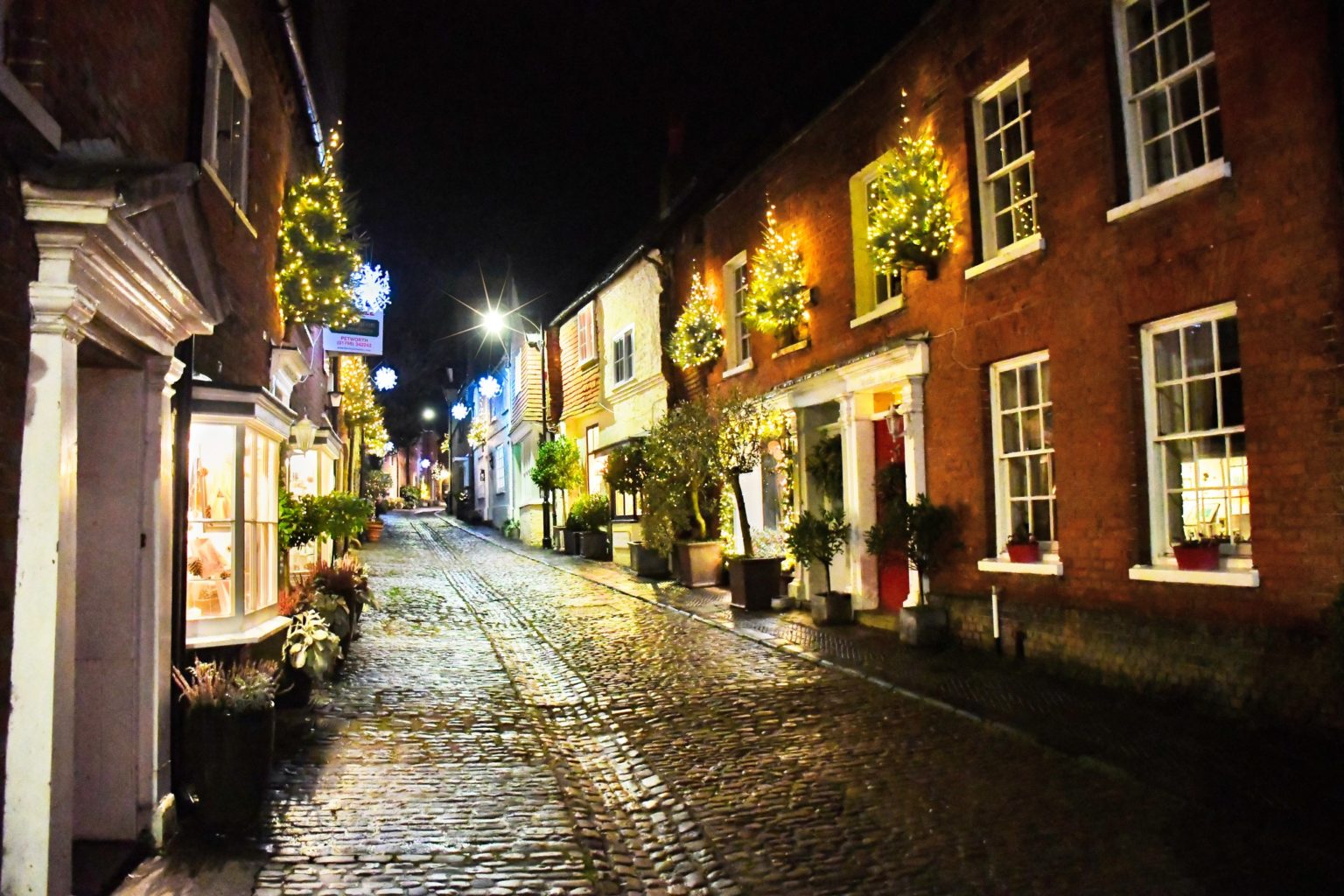
Petworth at Christmas Time © French Moments
French or British Christmas traditions: which do I prefer?
After all these years in England, choosing between French and British Christmas traditions is not particularly easy.
There are English traditions that I genuinely appreciate.
I love seeing Christmas wreaths on front doors and cards displayed in people's homes.
I enjoy Christmas carols, church celebrations and the way Christian traditions remain visible in many communities.
I also like a traditional English Christmas dinner and a Boxing Day walk in the countryside.
But there are French traditions I still miss.
The food, naturally!
I remain attached to the French pleasure of preparing an exceptional meal, choosing good ingredients and spending time enjoying them around the table.
And then there are the Christmas traditions of Alsace-Lorraine.
The carefully decorated houses, the Christmas lights in old towns and villages, the markets and the wonderful bredeles all occupy a special place in my memories.
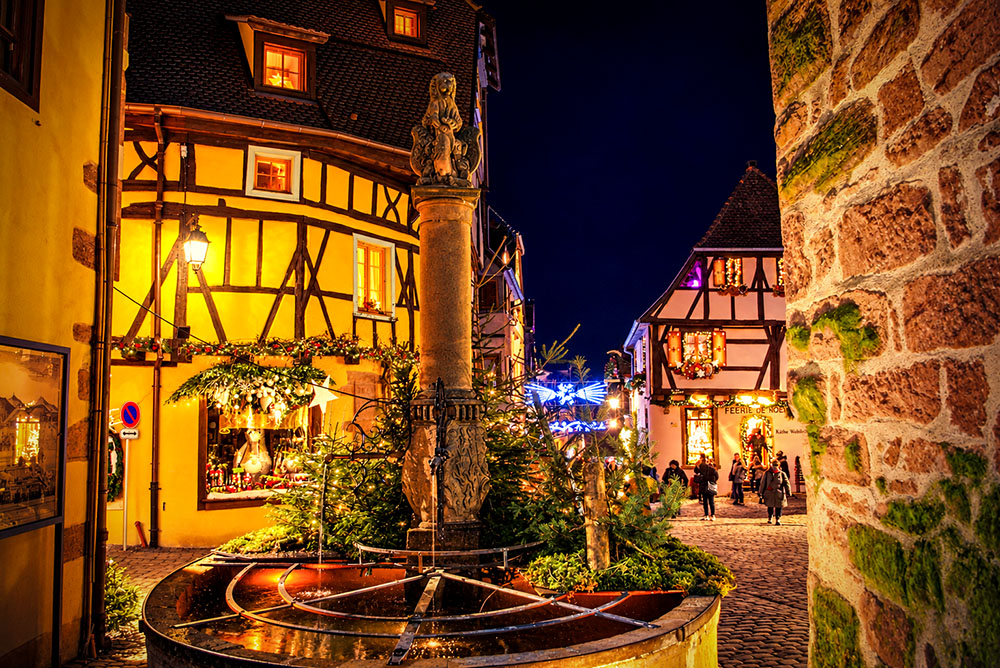
Riquewihr, Alsace at Christmas © French Moments
So, is Christmas really different in England?
My answer would be both yes and no.
No, because Christmas trees, presents, Father Christmas and commercial advertising have become familiar across many countries.
But yes, because Christmas is still very much a celebration experienced within families.
And that is where the cultural differences become most apparent.
When do you open your presents? What do you eat? Do you attend a church service? How do you decorate your home? What do you do on the day after Christmas?
These small habits give each country, and indeed each family, its own way of celebrating Christmas.
In our Franco-British family, we have chosen to keep traditions from both sides of the Channel.
And I think that is a rather nice way to celebrate Christmas!
Have you ever spent Christmas in Britain? And if you are British, which of these traditions would you find most difficult to give up?
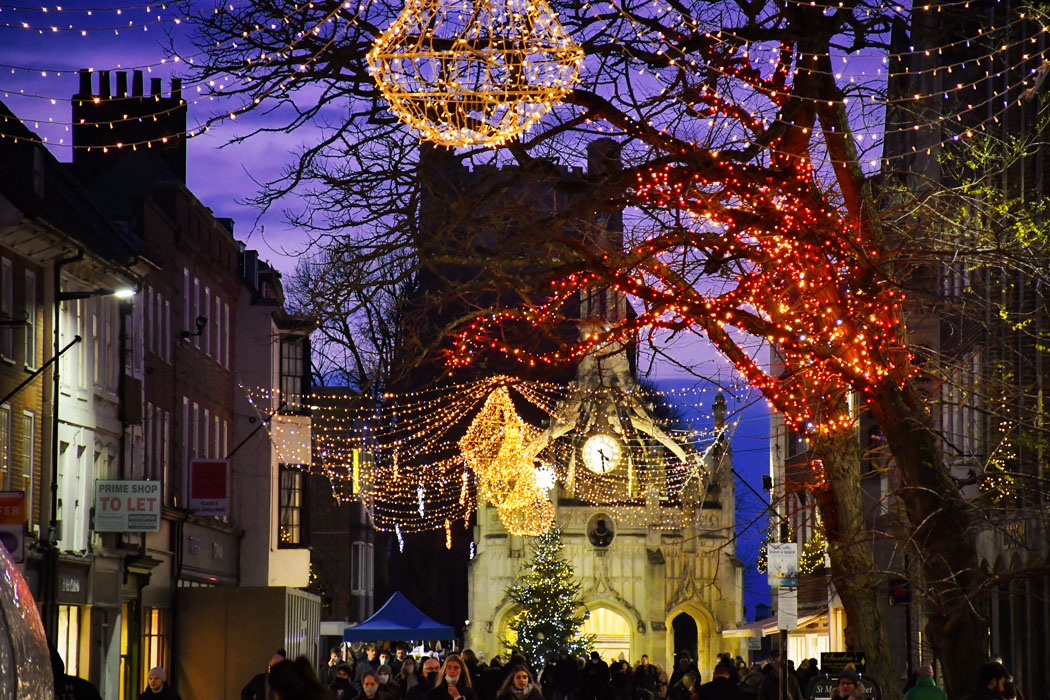
British Christmas traditions: lights in Chichester, West Sussex © French Moments