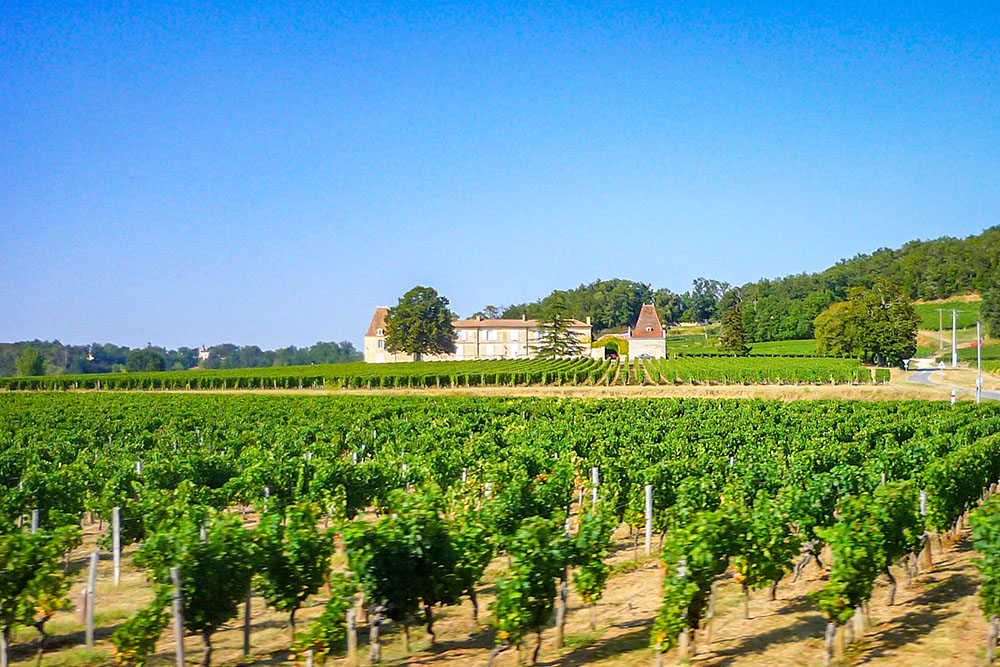


Bordeaux Wines are produced in the vast vineyard region surrounding the city of Bordeaux, a landscape shaped by centuries of cultivation, trade and tradition.
Few wine regions in the world enjoy such a long-standing and prestigious reputation: every year, more than 700 million bottles of Bordeaux wine are sold worldwide, ranging from approachable everyday blends to some of the most celebrated and sought-after wines on the planet.
This immense diversity of terroirs, grape varieties, styles and appellations is what makes Bordeaux Wines so fascinating.
The region’s strategic location, at the meeting point of the Garonne, Dordogne and Gironde rivers, helped transform Bordeaux into a major wine-trading hub as early as the Middle Ages.
Over time, merchants, winemakers, aristocrats and great estates shaped a vinicultural mosaic that continues to evolve today.
Whether enjoyed as a simple table wine or as one of the legendary grand crus—whose bottles can reach astronomical prices—Bordeaux Wines embody a unique blend of history, craftsmanship and natural richness.
To understand Bordeaux is, in many ways, to follow the story written in its vineyards.
Understanding Bordeaux Wines
Bordeaux Wines are predominantly red—about 89% of the region’s production—but the area also produces acclaimed dry white wines, elegant sweet whites, refreshing rosés, and a growing range of sparkling wines.
This diversity reflects a vineyard mosaic shaped by centuries of experimentation and refinement.
More than 8,500 producers—locally referred to as châteaux—craft Bordeaux Wines across 60 appellations, each with its own character, tradition and rules.
To understand the reputation of Bordeaux Wines, it is essential to begin with the geography.
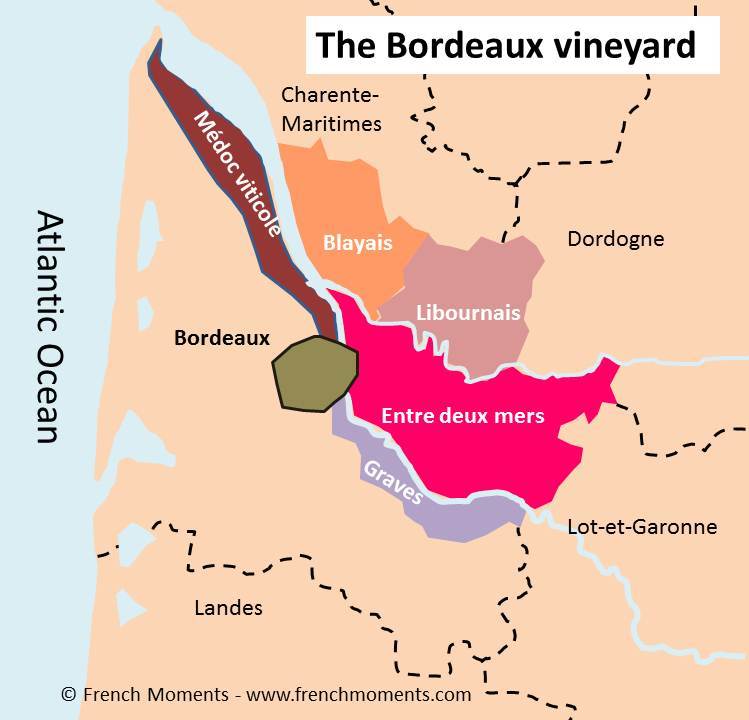
The vineyards are organised around three major waterways: the Garonne, the Dordogne, and the Gironde estuary.
These rivers do more than divide the region into distinctive wine-producing zones; they moderate the climate, reduce frost risk, and create a complex interplay of soils ideal for viticulture.
Much of the Bordeaux vineyard rests on limestone foundations, sometimes covered by gravel, clay or sand.
These variations produce an extraordinary range of terroirs, influencing the personality of the wines as much as the grape varieties themselves.
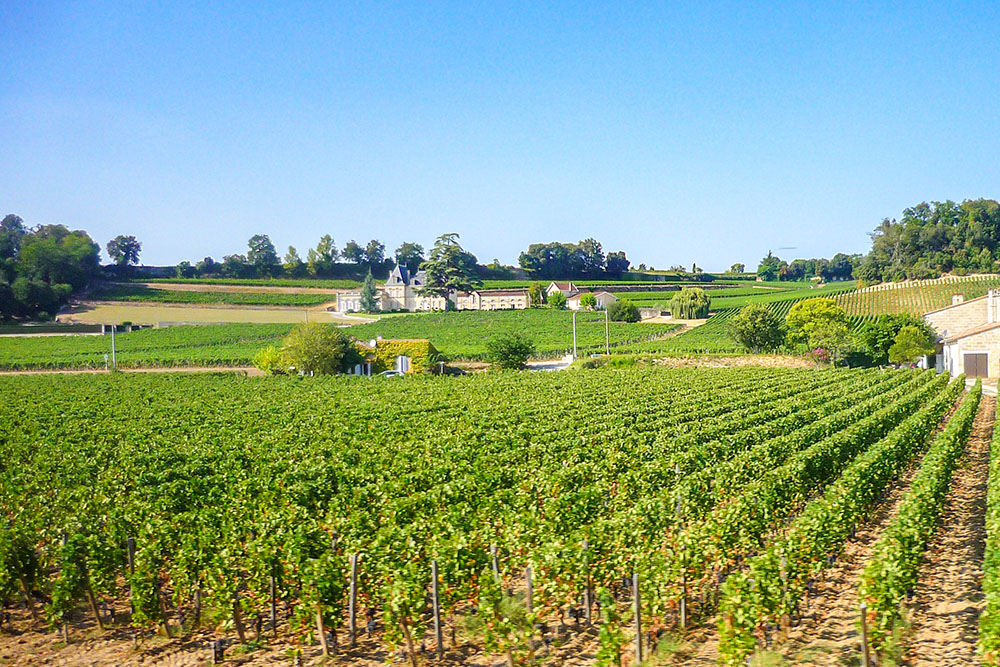
Over the last two centuries, these landscapes have become the setting for some of France’s most remarkable wine estates.
Grand residences, elegant chartreuses and architectural showpieces—many built between the 18th and 19th centuries—stand amid the vines, symbolising the prestige and long commercial success of Bordeaux’s wine trade.
This combination of favourable geography, historic trade routes, varied soils and long-established expertise explains why Bordeaux Wines have become among the most recognised and respected in the world.
Bordeaux Wines: 5 Major Classifications (Classements)
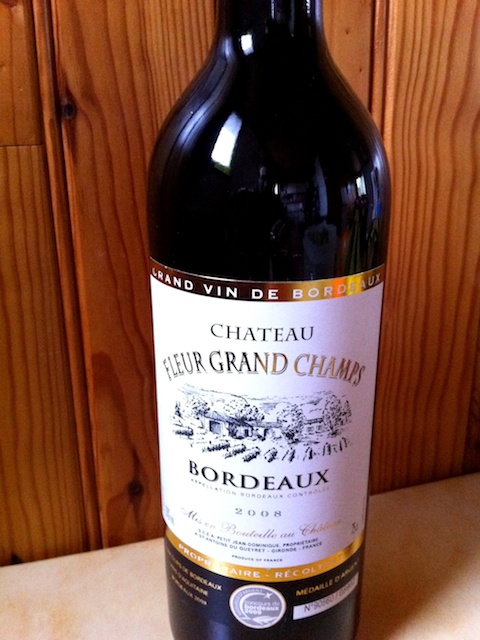
Classement de 1855
This historic classification, created for the Exposition Universelle of Paris in 1855, listed 61 red wines from the Médoc (plus one red from Graves, Château Haut-Brion) and 27 sweet white wines from Sauternes and Barsac.
It reflected the market value and reputation of the wines at the time, essentially ranking them according to their commercial success and the prices they achieved.
Remarkably, the classification has remained almost unchanged since 1855.
The only major revision occurred in 1973, when Château Mouton Rothschild was promoted from Second Growth to Premier Grand Cru Classé after decades of lobbying.
Classement des Graves
Established in 1953 and completed in 1959, this classification covers 16 estates in the Graves region (south of Bordeaux).
Unlike other Bordeaux classifications, it contains no hierarchical ranking: all classified wines are considered on an equal level.
Since the creation of the Pessac-Léognan appellation in 1987, all classified Graves estates belong to this AOC.
The classification was based not only on reputation but also on the historical quality and consistency of the wines.
Classement de Saint-Émilion
Created in 1955, the Saint-Émilion classification is unique in Bordeaux because it is regularly revised, approximately every 10 years, under the authority of the INAO (Institut National de l’Origine et de la Qualité).
Unlike the 1855 ranking, it is not based on price but on blind tastings, terroir analysis, wine quality, estate reputation and production standards.
This dynamic classification aims to offer consumers a reliable reference point and to encourage excellence among Saint-Émilion producers.
Classement des Crus Bourgeois du Médoc
The roots of the Crus Bourgeois trace back to the 12th century, when certain bourgeois families—during the English rule over Bordeaux—gained privileges such as tax exemptions on their wine trade.
Their prosperity grew over the centuries, and their estates became associated with high-quality production.
The modern classification recognises 94 estates, highlighting some of the most important and best-known wines outside the 1855 ranking.
The term “Cru Bourgeois” reflects both this long heritage and the continued commitment to quality.
Classement des Crus Artisans
The Crus Artisans classification honours 44 small family-run properties, particularly in the Médoc, where winemaking and estate management are often carried out by the owners themselves.
Officially recognised since 1989, the label reflects the dedication, craftsmanship and traditional methods preserved by these independent producers.
It is the result of long efforts led by the Syndicat des Crus Artisans du Médoc.
A Noteworthy Exception
One estate appears in more than one classification: Château Haut-Brion, which is simultaneously part of the 1855 Grand Cru Classé ranking and the Graves classification—a rare distinction in the world of Bordeaux Wines.
Bordeaux Wines: 8 Grape Varieties
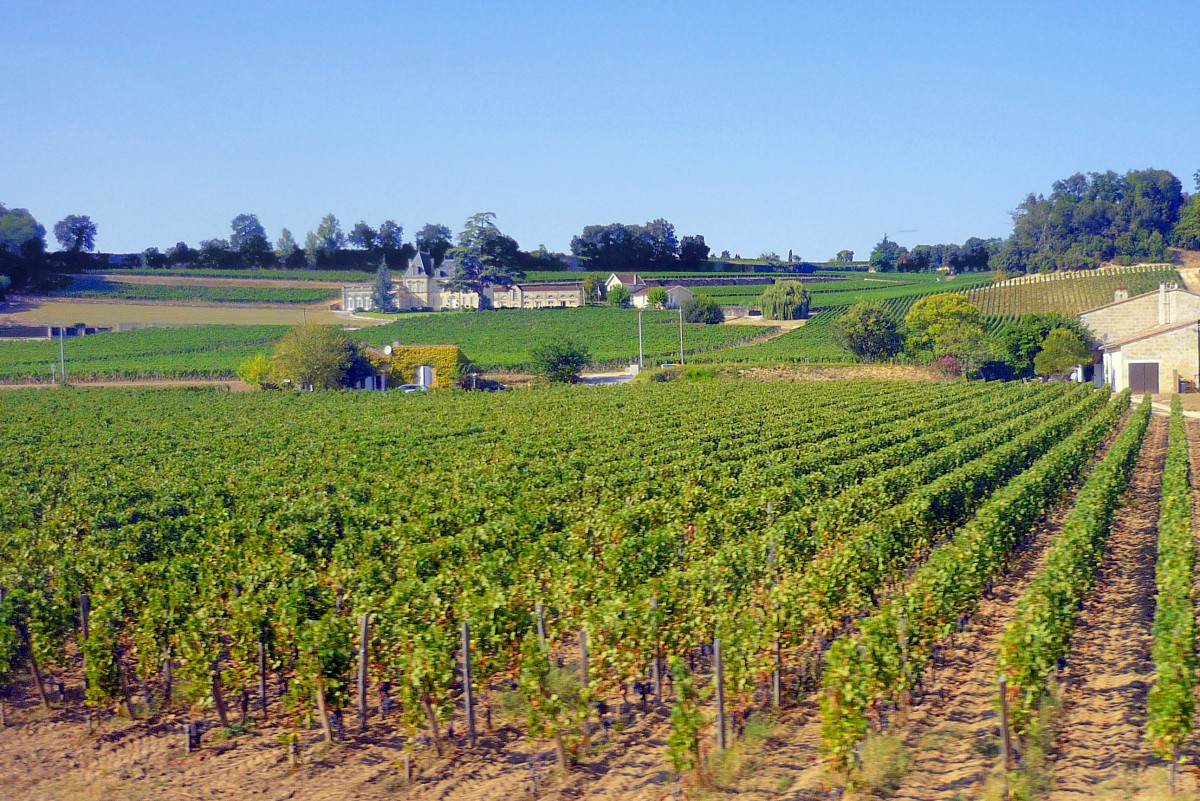
Cabernet Sauvignon
A flagship grape of Bordeaux, Cabernet Sauvignon produces wines of exceptional quality with remarkable ageing potential.
Vinified alone or blended with Merlot, it offers spicy, structured, aromatic wines, often revealing notes of blackcurrant, cedar, graphite, roasted coffee and sometimes tobacco.
Cabernet Sauvignon thrives particularly well in the gravel soils of the Médoc and Graves, where the heat-retaining stones help the late-ripening grape reach full maturity.
Merlot
Arriving in the Bordeaux region in the late 18th century, Merlot has become the global reference for smooth, velvety young red wines.
It is typically fruit-forward, showing flavours of red and black fruits, plum, floral hints and a supple, rounded texture.
Often blended with Cabernet Sauvignon, Merlot is at the heart of many of Bordeaux’s greatest wines—especially in Saint-Émilion and Pomerol, where it excels on clay-limestone soils.
Cabernet Franc
An ancestor of Cabernet Sauvignon, Cabernet Franc is prized for its refined aromatics, freshness and liveliness.
It brings finesse, floral notes, red fruit and elegant structure to blends.
While often used alongside Merlot and Cabernet Sauvignon, it has gained renewed prestige—particularly since outstanding vintages such as 2000 in Saint-Émilion, where it performs exceptionally well. It also handles ageing gracefully.
Petit Verdot
Known for its intense personality—colour, tannins and deep aromatics—Petit Verdot is a late-ripening grape traditionally used in small proportions to enhance the complexity of top Bordeaux blends.
Even a modest percentage can significantly influence the structure and depth of a wine. It is often found in prestigious cuvées from the Médoc and Graves, including estates such as Château Margaux.
Many of the 1855 Grands Crus Classés include a touch of Petit Verdot in their blends.
Malbec
Once widely planted in Bordeaux, Malbec today appears mainly in blends from Saint-Émilion or Haut-Médoc, where it adds colour, richness and a mellow texture.
It offers good ageing potential but is more sensitive to climatic conditions than the dominant Bordeaux varieties.
Although it thrives today in regions such as Cahors or Argentina, about 6,000 hectares remain in France.
Sémillon
A cornerstone of Bordeaux’s white wines, Sémillon is especially important in the Sauternes region.
It produces powerful, textured wines with subtle aromas when young, and it plays a crucial role in sweet wines affected by noble rot (Botrytis cinerea).
In dry whites, Sémillon adds body and roundness.
Its quality depends significantly on warm, stable weather conditions, which allow its full potential to emerge.
Sauvignon
Used predominantly for dry white wines, Sauvignon Blanc is celebrated for its vibrant acidity and aromatic clarity, with flavours of citrus, white flowers and sometimes herbs or exotic fruit.
When blended with Sémillon, it contributes freshness and lift to both dry whites and certain sweet wines from Sauternes, enhancing their aromatic complexity.
Muscadelle
Though difficult to cultivate and sensitive to disease, Muscadelle is valued for its distinctive floral, musky aromas.
It is planted in small quantities and used to enhance the aromatic profile of certain Bordeaux whites, including the traditional family of sweet wines known as Vins Blancs d’Or.
Its presence is subtle but contributes finesse when skilfully blended.
A Note of Interest
One wine appears in two official classifications: Château Haut-Brion, which is part of both the 1855 Grand Cru Classé ranking and the Graves classification—a unique distinction in the Bordeaux region.
Bordeaux Wines: 60 Appellations Divided into 6 Families
Bordeaux et Bordeaux supérieur (blanc, red or rosé)
5 appellations: Bordeaux, Bordeaux Supérieur, Bordeaux Clairet, Bordeaux Rosé, Crémant de Bordeaux.
These wines, fruity and elegant, represent nearly half of all vineyard plantings in Bordeaux.
They are generally intended to be enjoyed young and offer some of the best value for money in the region.
All winemaking districts within the Gironde département may produce these AOC wines.
Their versatility and accessibility explain their continued popularity.
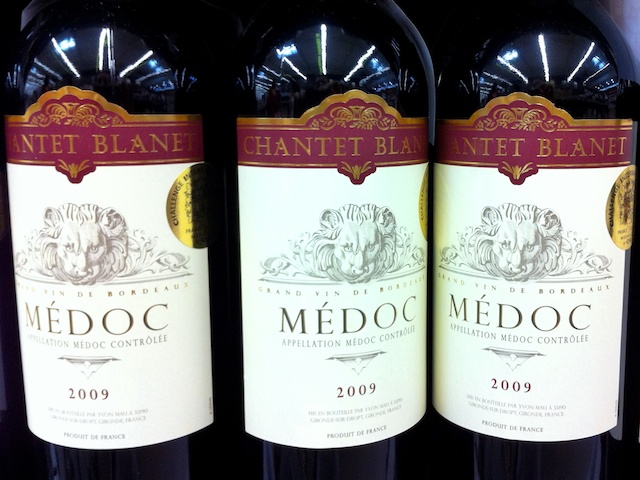
Médoc (red) and Graves (red or white)
10 appellations: Médoc, Haut-Médoc, Listrac-Médoc, Margaux, Moulis, Pauillac, Saint-Estèphe, Saint-Julien, Graves, Pessac-Léognan.
Representing about 15% of Bordeaux wine production, this family groups together most of the great classified wines, including a large number from the 1855 classification, as well as estates recognised in the Crus Bourgeois and Crus Artisans lists.
The red wines are rich, structured, and noted for their excellent ageing potential, often built on Cabernet Sauvignon.
The white wines (especially from Pessac-Léognan and Graves) can be dry or medium sweet and are known for their refinement, aroma and finesse.
Les côtes de Bordeaux (mostly red wines)
8 appellations: Blaye, Blaye Côtes de Bordeaux, Bourg & Côtes de Bourg, Cadillac Côtes de Bordeaux, Castillon Côtes de Bordeaux, Francs Côtes de Bordeaux, Graves de Vayres, Sainte-Foy-Bordeaux.
This family accounts for about 14% of Bordeaux Wines.
These wines tend to be expressive and full of character, often built around Merlot.
Many offer a generous aromatic profile, with some cuvées displaying a round, mellow or even lightly syrupy texture.
Saint-Emilion, Pomerol et Fronsac (red wines only)
10 appellations: Saint-Émilion, Saint-Émilion Grand Cru, Lussac-Saint-Émilion, Montagne-Saint-Émilion, Puisseguin-Saint-Émilion, Saint-Georges-Saint-Émilion, Lalande-de-Pomerol, Pomerol, Fronsac, Canon-Fronsac.
Representing around 10% of Bordeaux Wines, this family includes some of the most renowned and prestigious red wines in the region.
Often dominated by Merlot and Cabernet Franc, they are known for their aromatic depth, elegance, and exceptionally velvety tannins.
These wines can be both seductive when young and remarkably long-lived.
Vins blancs secs de Bordeaux (dry white wines)
12 appellations: Blaye Côtes de Bordeaux, Bordeaux & Bordeaux Sec, Bourg & Côtes de Bourg, Côtes de Blaye, Crémant de Bordeaux, Entre-Deux-Mers, Entre-Deux-Mers Haut-Benauge, Francs Côtes de Bordeaux, Graves, Graves de Vayres, Pessac-Léognan, Sainte-Foy-Bordeaux.
Although they represent only about 8% of Bordeaux Wines, these appellations cover the entire spectrum of Bordeaux Dry Whites.
Mostly made from Sauvignon Blanc and Sémillon, they range from crisp and citrus-driven to rich, complex and ageworthy.
A handful of these wines—particularly from Pessac-Léognan and Graves—are valued for their capacity to age, and several appear in the Graves classification.
Vins blancs d’or (sweet white wines)
14 appellations: Barsac, Bordeaux Haut-Benauge, Bordeaux Supérieur (moelleux), Cadillac, Cérons, Côtes de Bordeaux-Saint-Macaire, Francs Côtes de Bordeaux, Graves de Vayres, Graves Supérieures, Loupiac, Premières Côtes de Bordeaux, Sainte-Croix-du-Mont, Sainte-Foy-Bordeaux, Sauternes.
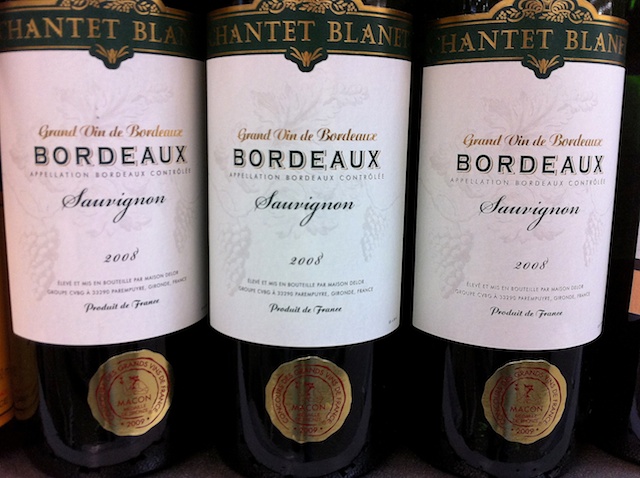
These 14 AOC represent only about 3% of Bordeaux Wines, yet they have played a major role in building Bordeaux’s historical prestige.
Made primarily from Sémillon, with Sauvignon Blanc and sometimes Muscadelle, these wines range from medium-sweet to fully sweet.
They are celebrated for their remarkable balance of richness and freshness, their smooth, honeyed textures, and their aromatic complexity—often developing notes of apricot, citrus, exotic fruit, honey, and spice with age.
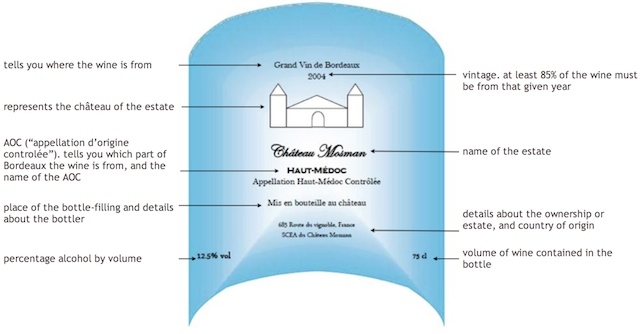
Bordeaux Wines: Understanding Wine Labels
La Cité du Vin: A Modern Gateway to Bordeaux Wines
Inaugurated in 2016 on the banks of the Garonne, the Cité du Vin has become one of the most emblematic cultural institutions dedicated to the world of wine.
Although deeply rooted in the identity of Bordeaux, the Cité du Vin is not a traditional museum.
It is a multisensory cultural centre offering an international perspective on wine history, viticulture and global wine cultures, while giving pride of place to Bordeaux Wines.
An audacious architecture
Its architecture alone marks a departure from the classical lines that define much of Bordeaux’s 18th-century heritage.
Designed by architects Anouk Legendre and Nicolas Desmazières (Agence XTU), the building displays a fluid, curving silhouette inspired by the movement of wine swirling in a glass, the twisting flow of the Garonne River, and the organic shapes of the surrounding landscape.
Its glass and aluminium façade gives the structure a luminous, changing appearance throughout the day, echoing the colours and textures of wine itself.
Inside, visitors discover a vast permanent exhibition structured around 19 themed spaces.
These combine multimedia installations, historical objects, audiovisual displays and immersive environments to explore the global history of wine—from ancient civilisations to modern winemaking techniques.
Interactive features guide visitors through topics such as terroirs, grape varieties, wine trade routes, sensory perception, and the cultural symbolism of wine across centuries.
The Panoramic Belvedere
A highlight of the experience is the panoramic belvedere, a tasting space located at the top of the building.
From here, visitors enjoy sweeping views over the city and the river while tasting a selection of wines from around the world, often including notable examples from the Bordeaux region.
Temporary Exhibitions
The Cité du Vin also hosts temporary exhibitions, lectures, workshops, screenings and cultural events that explore the relationship between wine and art, literature, music and science.
Its facilities include a wine shop, a restaurant, and spaces dedicated to professional meetings and educational programmes.
More than a tourist attraction, the Cité du Vin has become a symbol of contemporary Bordeaux—an innovative city that honours its heritage while embracing the future of winemaking.
For anyone interested in understanding Bordeaux Wines, the Cité du Vin offers a comprehensive and engaging journey through the region’s traditions, diversity and global influence.
Get your entrance ticket here!
Where to stay when you visit Bordeaux?
Choosing the right base can make your trip to Bordeaux Old Town even more enjoyable.
The city is compact and walkable, so staying in or near the historic centre is ideal — especially between the railway station and Place des Quinconces, where you’ll have easy access to restaurants, tram lines, and the main sights.
Below is a curated selection of six hotels, ranging from boutique charm to modern comfort, all perfectly located for exploring the city on foot.
Hôtel Burdigala by Inwood Hotels (★★★★★)
A contemporary five-star stay offering refined comfort, elegant interiors, and a calm atmosphere just a short walk from Mériadeck and the historic centre.
📍 115 rue Georges Bonnac, 33000 Bordeaux
Aparthotel Adagio Bordeaux Centre Gambetta (★★★★)
Modern and practical serviced apartments in a central location, ideal for longer stays or travellers seeking kitchen facilities steps from the city’s main cultural sites.
📍 40 rue Edmond Michelet, 33000 Bordeaux
Radisson Hôtel Bordeaux Saint-Jean (★★★★)
A stylish contemporary hotel near Bordeaux-Saint-Jean station, perfect for visitors arriving by TGV and looking for easy tram access into the historic centre.
📍 13 rue des Gamins, 33800 Bordeaux
Hôtel de Normandie (★★★★)
Classic Bordeaux elegance in a beautifully preserved 18th-century building, ideally located near the Golden Triangle and Place des Quinconces.
📍 7 Cours du 30 Juillet, 33000 Bordeaux
Hôtel Majestic (★★★★)
A refined, traditionally styled hotel in a prime central location, close to Bordeaux’s theatres, upscale shopping streets, and major monuments — ideal for exploring the historic centre on foot.
📍 2 rue de Condé, 33000 Bordeaux
Hôtel Madame (★★★)
A charming boutique hotel set in a quiet street near the cathedral, blending intimate atmosphere, thoughtful design, and excellent access to the historic heart of Bordeaux.
📍 4 rue Bouffard, 33000 Bordeaux
More places in Bordeaux?
Find your preferred accommodation here or by browsing the map below:
What to do in Bordeaux?
Check out the activities and monuments you can visit in Bordeaux Old Town: