

Beuvron-en-Auge was a village we knew by reputation long before we finally visited. On 10 September 2026, during our stay in the Pays d’Auge, Rachel, Aimée and I went to see it for ourselves.
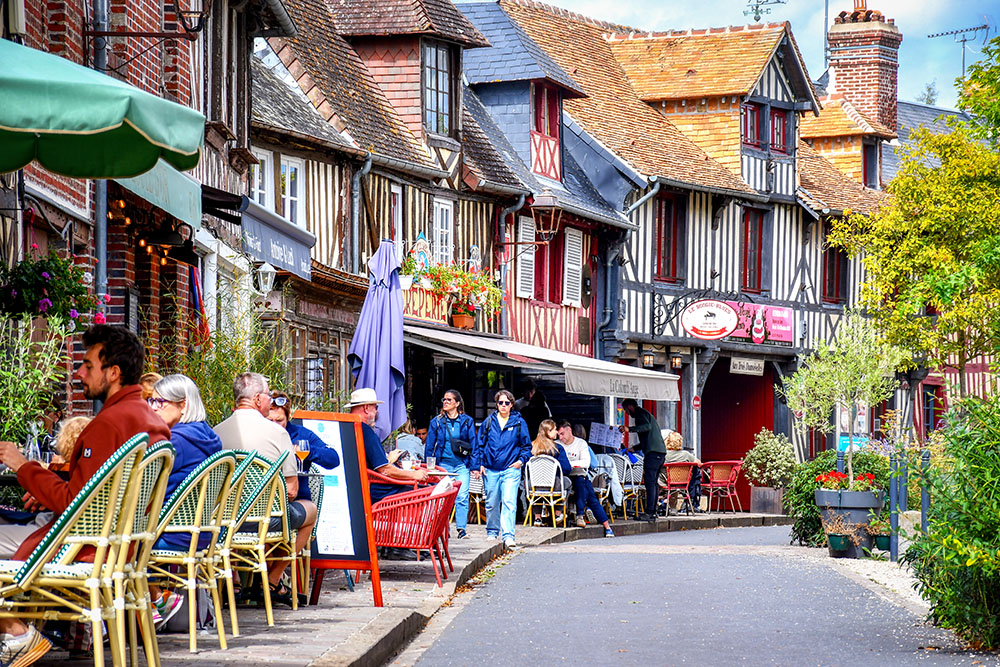
What struck me most was the village square, lined on both sides with half-timbered houses. The café and restaurant terraces still had something of a summer atmosphere about them. September, yes. But nobody seemed in a hurry to take their lunch indoors.
We had sunshine, large clouds in the sky and enough people around to make the village feel lively. We had deliberately chosen a weekday. There were visitors, certainly, but the crowds were manageable.
While Rachel and Aimée explored the shops and artisans’ premises, I took photographs and filmed a guided walk. This article follows that walk, with a few additional observations and practical tips from our visit.
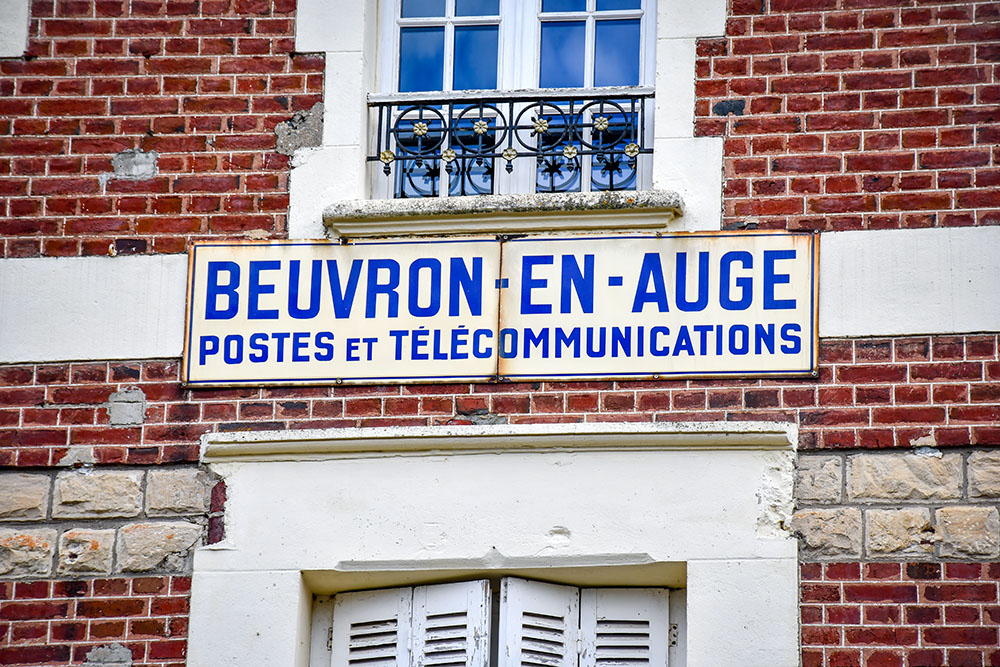
Old sign at the former post office of Beuvron-en-Auge © French Moments
Beuvron-en-Auge at a glance
- Where: the Pays d’Auge, in the Calvados département of Normandy.
- Why visit: half-timbered houses, an old manor and a village centre whose preservation has an interesting history.
- How long: allow two to three hours for a leisurely visit with photographs and stops in the shops. Walking through the centre takes much less time.
- Where we parked: Esplanade Woolsery, 4 avenue de la Gare. Parking was free when we visited in September 2026.
- Our route: Rue des Haras, the main square, Rue Michel d’Ornano to the church, then back towards the centre and the side streets.
Is Beuvron-en-Auge worth visiting?
Yes, I would recommend it, particularly if you are exploring the Pays d’Auge by car. Just bear in mind that Beuvron is small. If you know Riquewihr or Eguisheim in Alsace, you will find a more compact village here, with fewer streets to explore.
That leaves time to look properly. At the carved figures on a façade, for instance, or the way a timber-framed house has been put together. There is more to notice than the familiar view of the square.
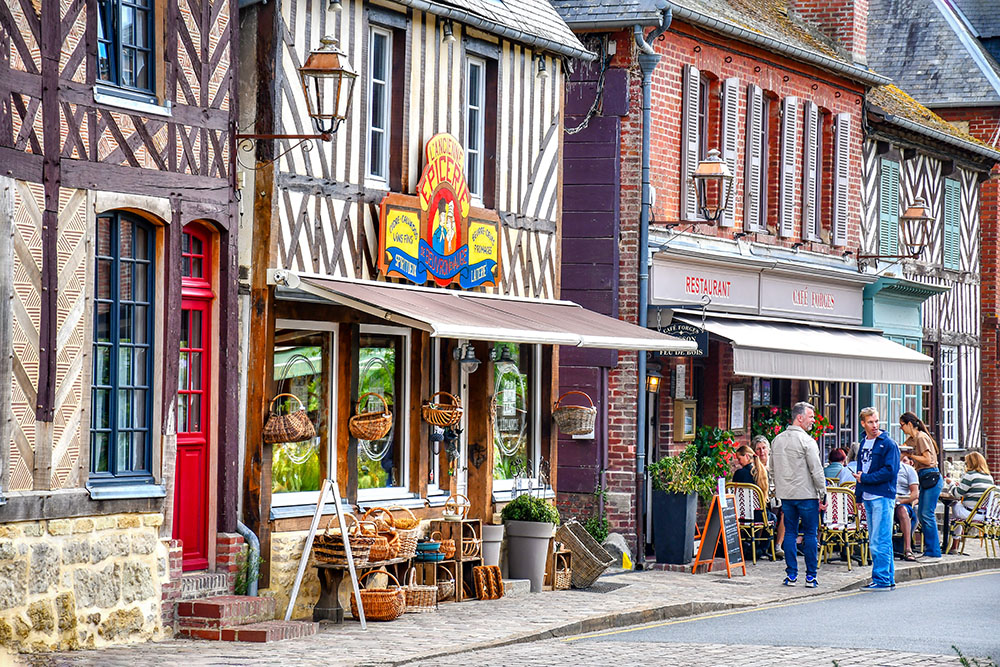
Place Michel Vermughen in Beuvron-en-Auge © French Moments
Beuvron belongs to Les Plus Beaux Villages de France. This is the name of an association and a recognised heritage label, rather than simply an enthusiastic description. At the time of writing, seven villages in Normandy hold the label.
Rachel was pleasantly surprised by the atmosphere. In her first impressions for our video, she said:
“It's actually a nicer atmosphere than I was expecting and the ‘place’ is really pretty.”
She had heard German, American and British accents around the square. No Australians, she noted, although she was keeping an ear out for them!
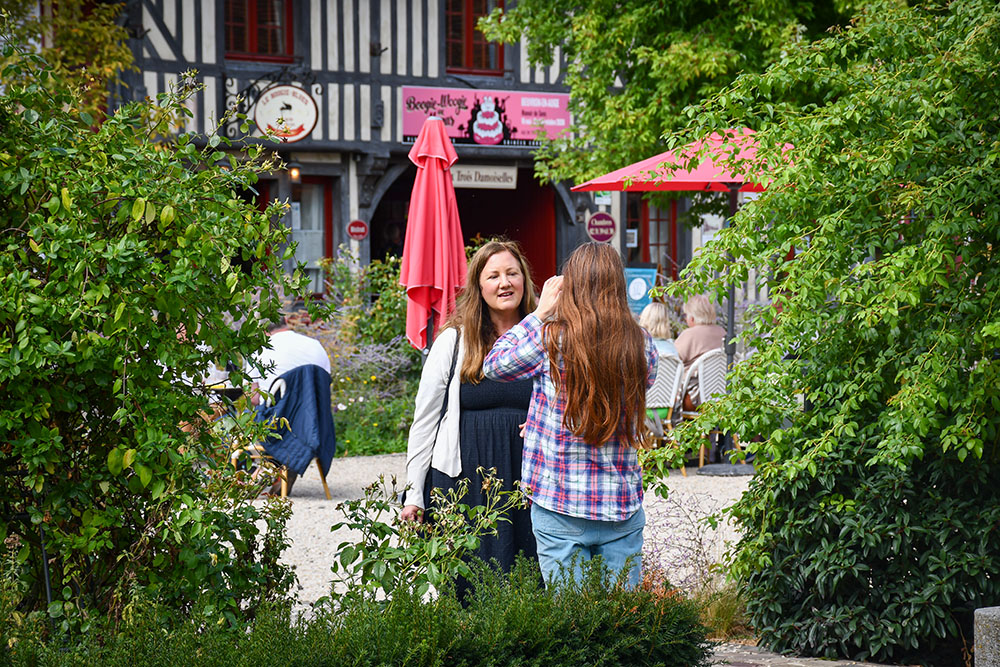
Rachel recording a short video in Beuvron-en-Auge © French Moments
It was clearly a popular place to visit. But on that September weekday, we could enjoy it without feeling overwhelmed by the number of people.
Watch our Beuvron-en-Auge guided walk
You can follow the village walk in my video below, beginning on Rue des Haras and continuing through the square towards Saint-Martin’s Church. Rachel shares her first impressions near the beginning.
Along the way, I stop at several of the details described here, including the timber joint and the house on Rue de la Catouillette. If you are planning a visit, the film will also give you a better idea of the distances involved.
What to see in Beuvron-en-Auge: our walking route
My filmed walk begins on Rue des Haras, at the southern entrance to the village. It crosses the main square along its western side, continues to the church and returns along the same street. This is an out-and-back walk, with short detours near the centre.
The stops below follow that order. I have also included Rue de l’Enfer, which I photographed during our visit.
Starting on Rue des Haras: the old manor
As you approach the square from Rue des Haras, look to the right for the old manor. The municipality dates it to the late fifteenth century.
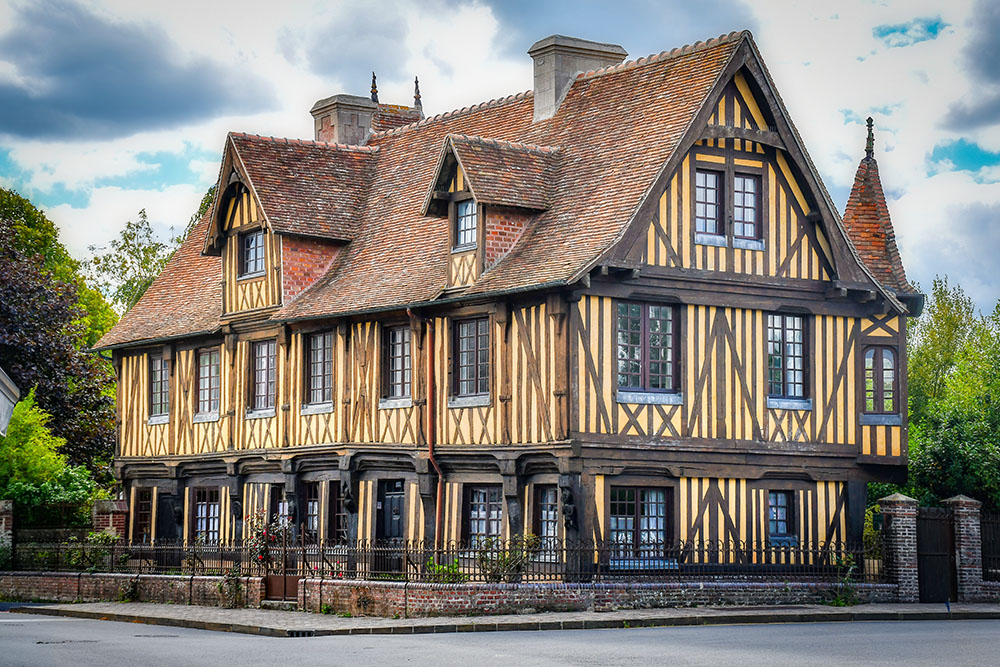
The old manor house of Beuvron-en-Auge © French Moments
Its timberwork deserves a closer look, particularly the carved figures on the façade. These are details that can easily disappear in a photograph of the whole building. Look at the individual pieces as well as the overall shape.
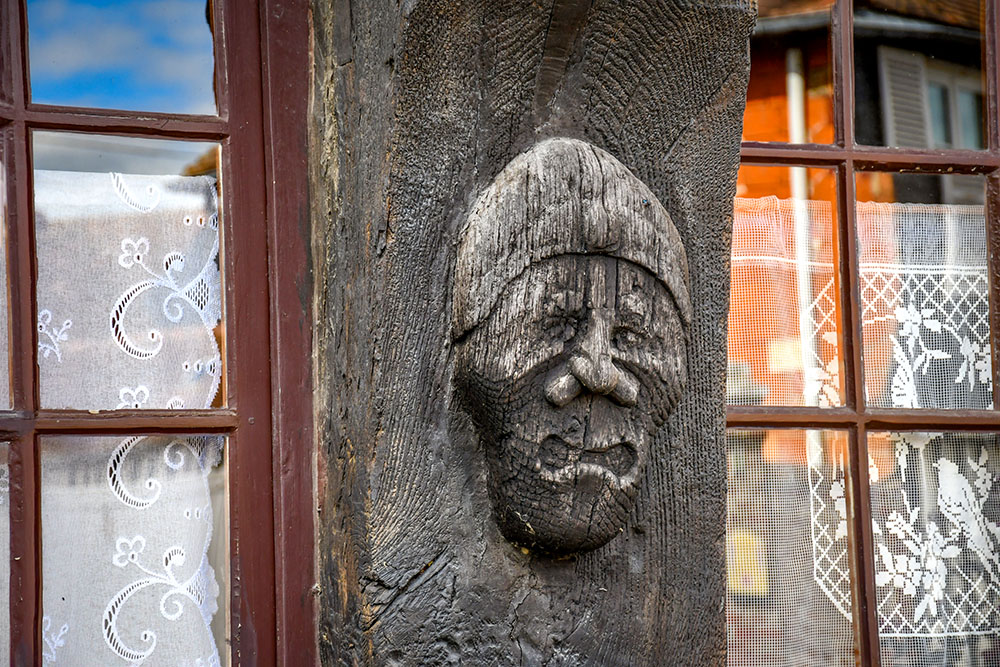
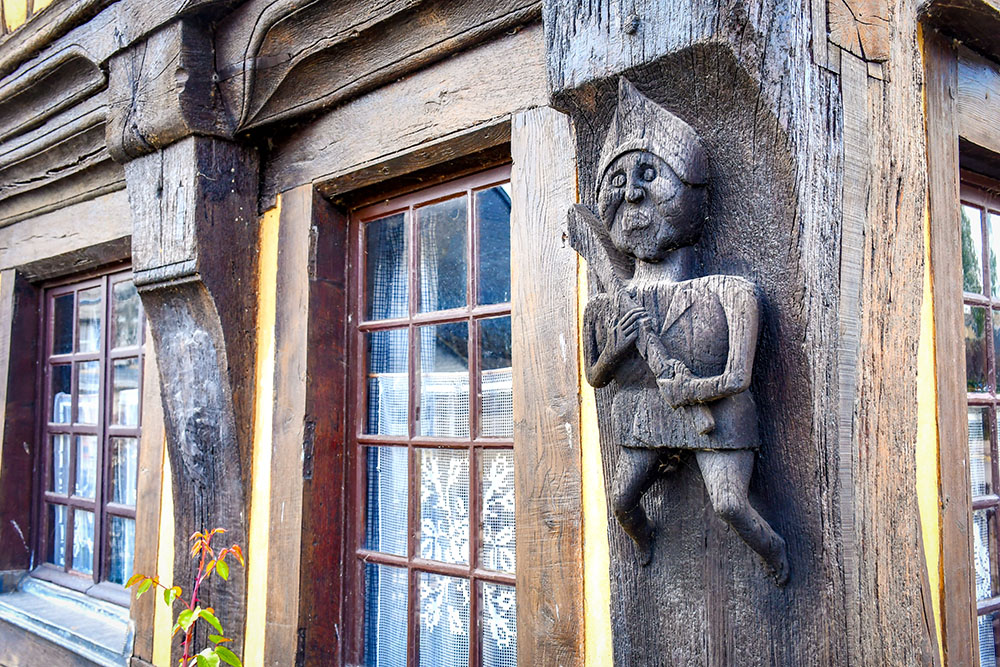
The manor is privately owned, so admire it from the street. It also introduces something worth remembering as you explore: Beuvron’s buildings belong to different periods. The village was not built all at once.
Place Michel Vermughen and its half-timbered houses
Continue along the western side of Place Michel Vermughen, the main square.
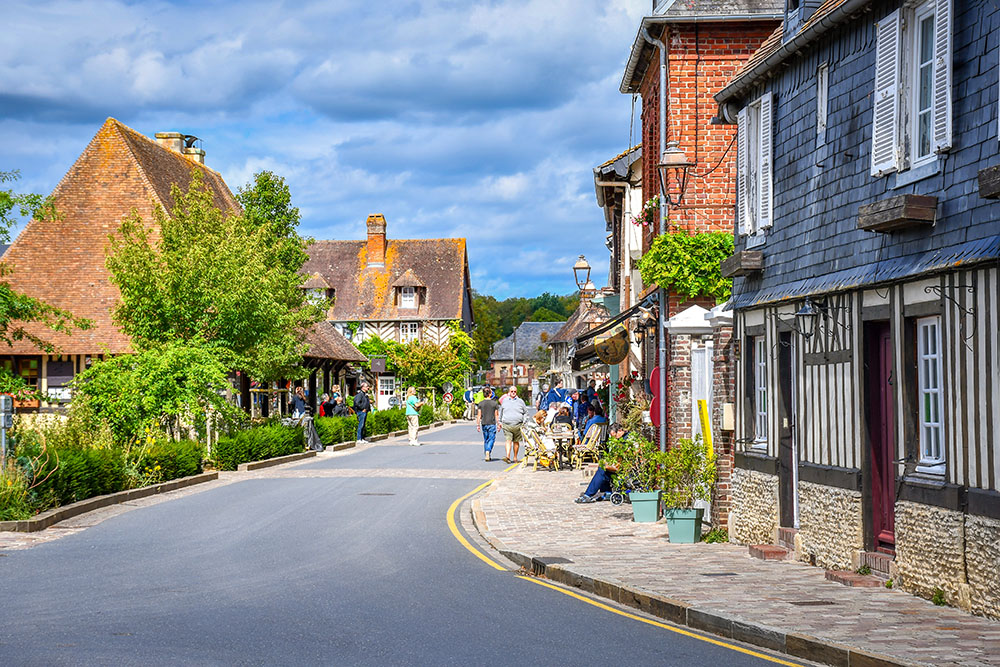
Place Michel Vermughen in Beuvron-en-Auge © French Moments
This was the part of Beuvron that made the strongest impression on me. The houses frame the square, while the terraces give people a reason to sit and enjoy it. During our visit, lunch was very much in progress.
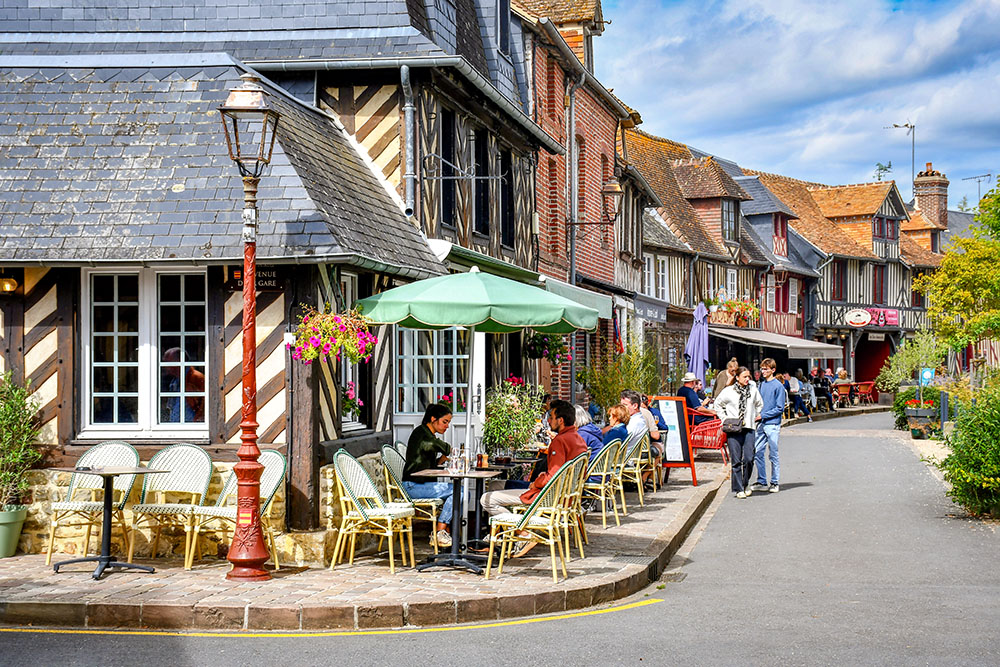
Place Michel Vermughen in Beuvron-en-Auge © French Moments
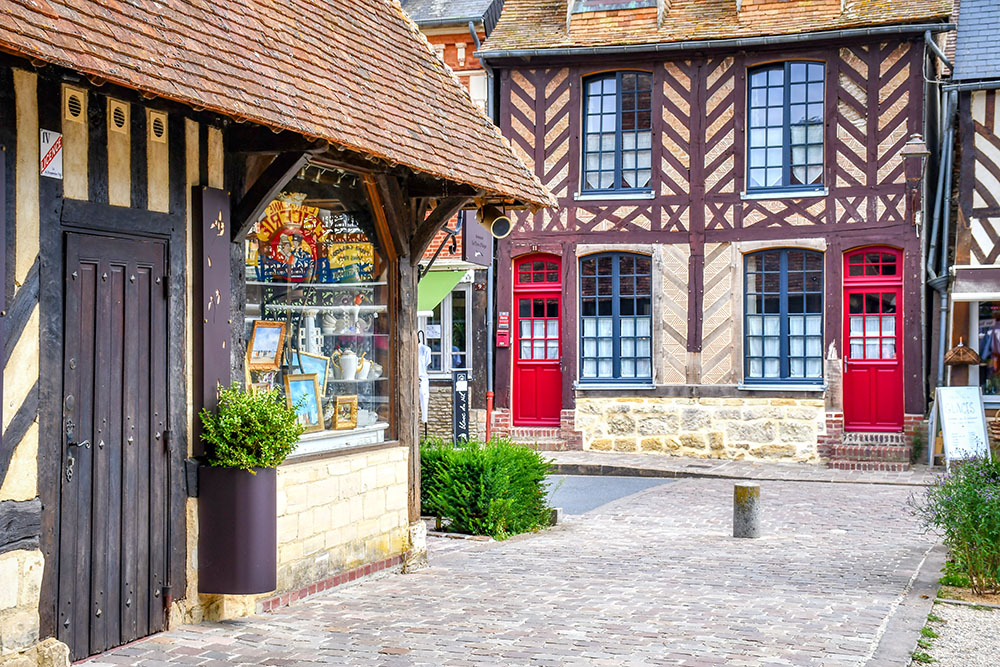
In French, these half-timbered houses are called maisons à colombages, or maisons à pans de bois. The visible timbers form the building’s frame. Traditionally, the spaces between them could be filled with materials such as earth mixed with straw; you will also see brick infill.
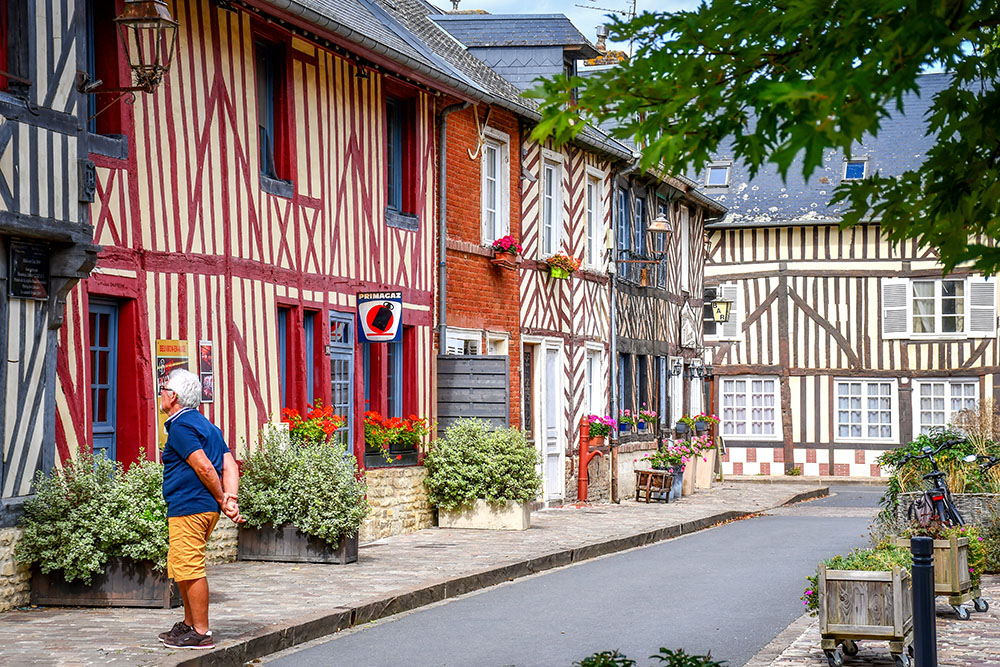
Half-timbered houses in Place Michel Vermughen © French Moments
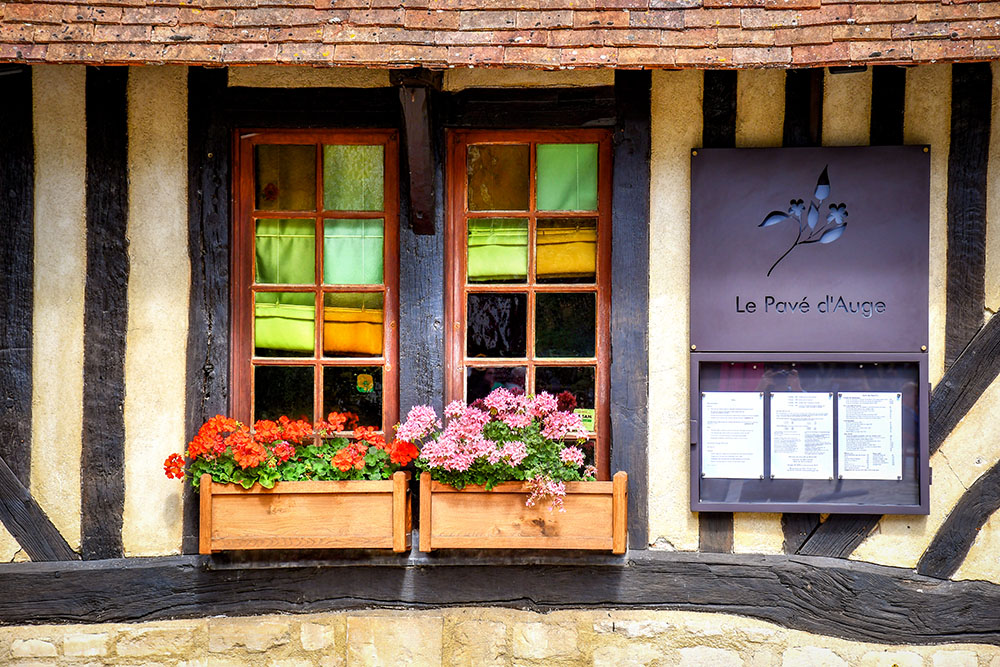
Notice the differences from one house to the next. A roofline changes, the beams form another pattern, or a window sits differently within the frame. The old shopfronts deserve attention too.
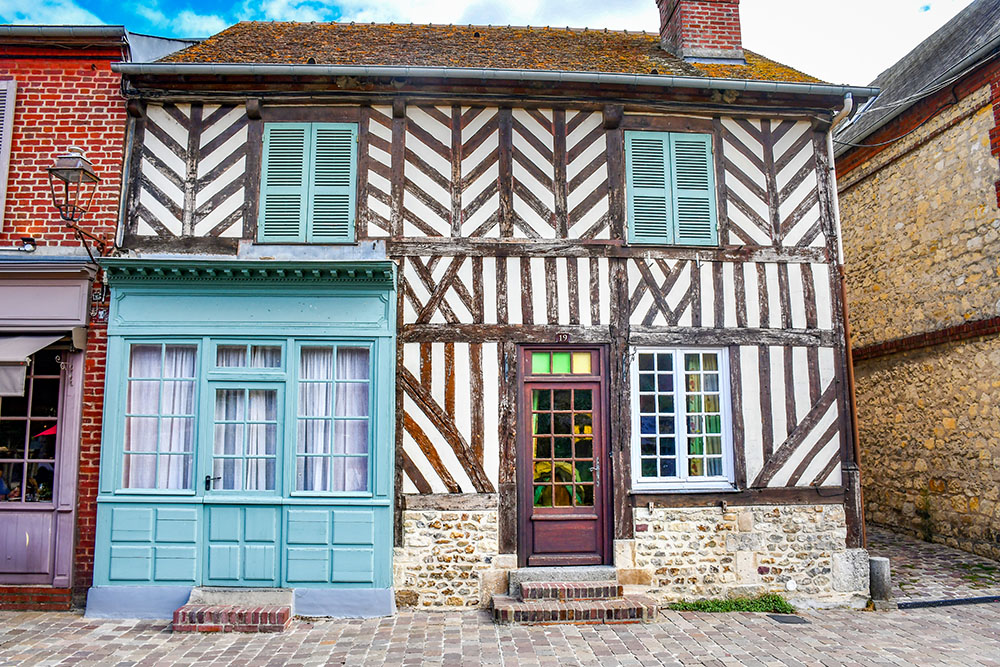
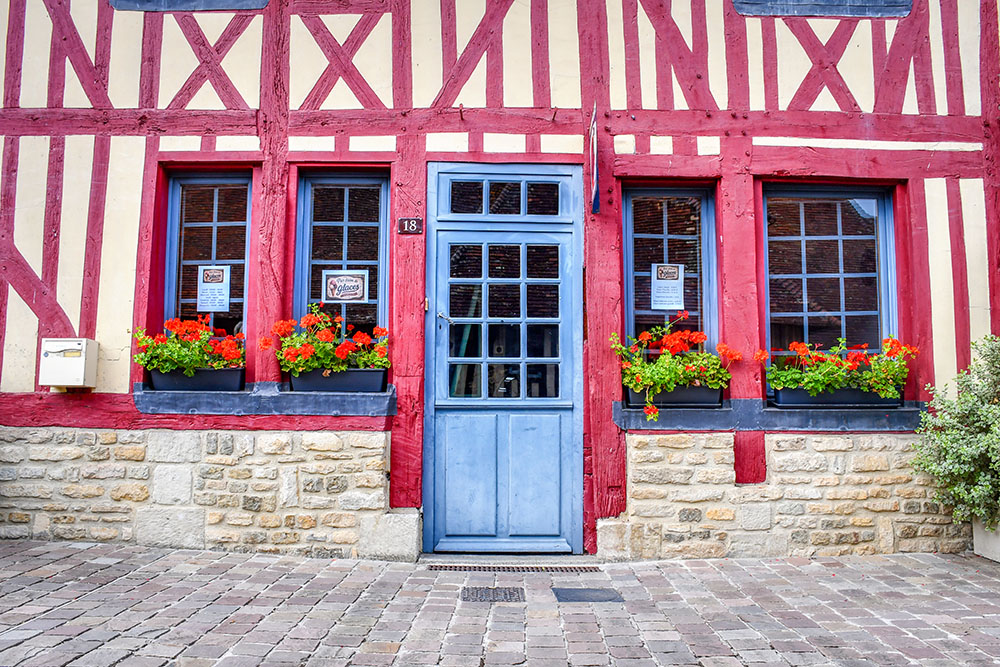
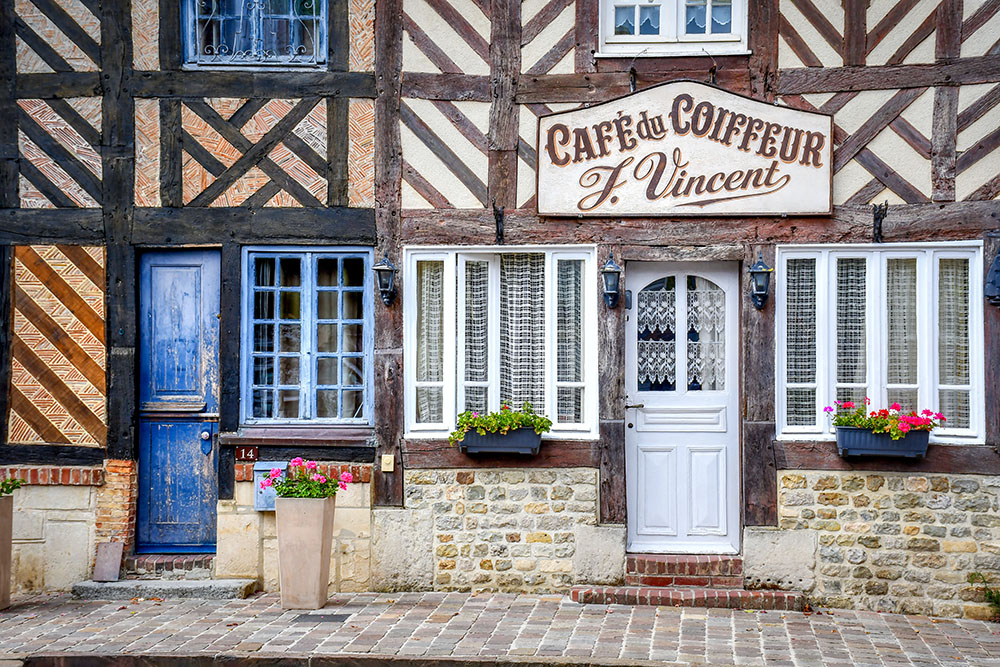
And who was Michel Vermughen? His name brings us to a more recent chapter of the village’s history.
The market hall and the village’s revival
The market hall in the middle of the square looks comfortably at home among the old buildings. Yet the structure you see today was rebuilt in 1975.
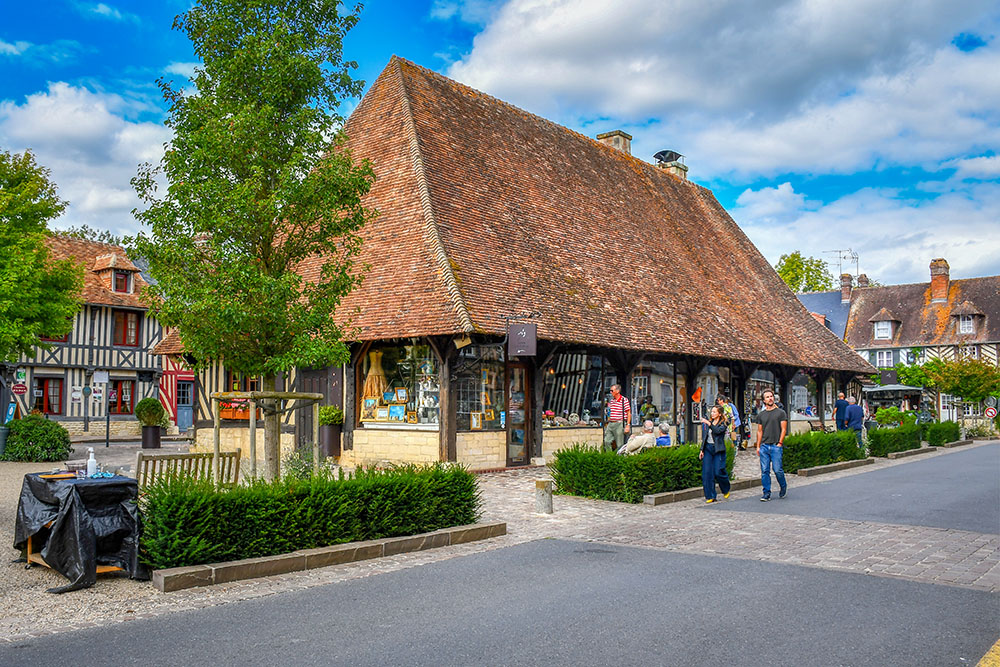
The market hall on Place Michel Vermughen © French Moments
An earlier wooden hall, dating from 1850, had been demolished in 1958. When its replacement was built, old materials were reused, including timbers recovered from buildings threatened by the construction of the Normandy motorway.
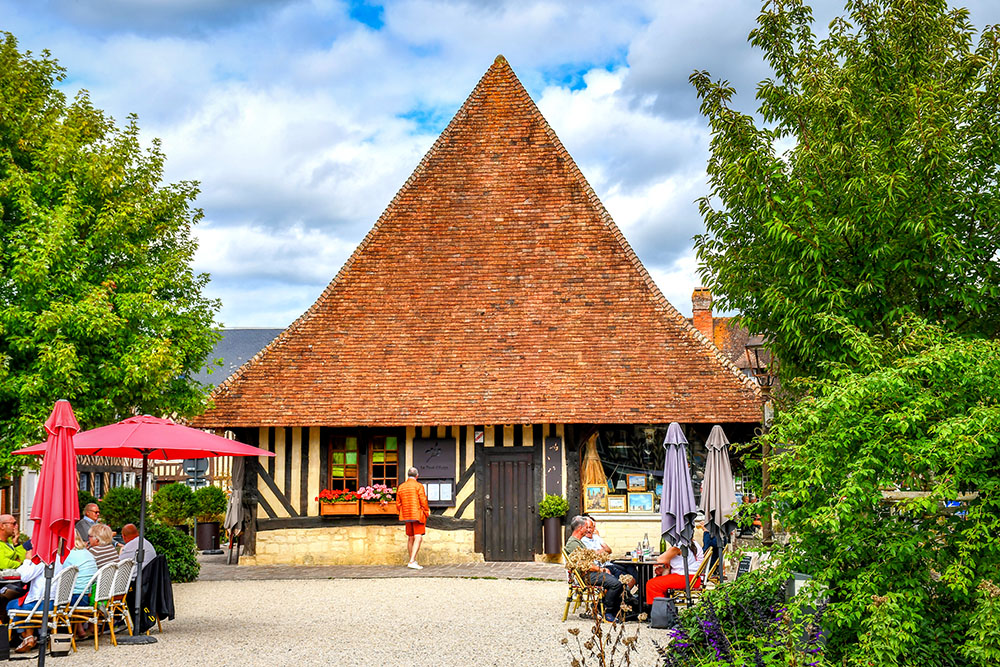
The market hall on Place Michel Vermughen © French Moments
So some of the wood had already had a life elsewhere before it arrived in Beuvron.
The rebuilding formed part of a wider effort to revive the village under Mayor Michel Vermughen. By the 1970s, declining activity and the closure of businesses had left Beuvron facing an uncertain future. Restoring its buildings helped give people a reason to return.
It is easy to admire the square today without thinking about those decisions. But the work undertaken then helps explain what we are able to enjoy now.
Along Rue Michel d’Ornano: the washhouse and brick houses
From the square, follow Rue Michel d’Ornano north towards the church.
Beside the street is a lavoir, or washhouse. Before washing machines, communal washing places were part of everyday life. Washing and rinsing clothes by hand was demanding work, particularly in cold weather, and was commonly undertaken by women.
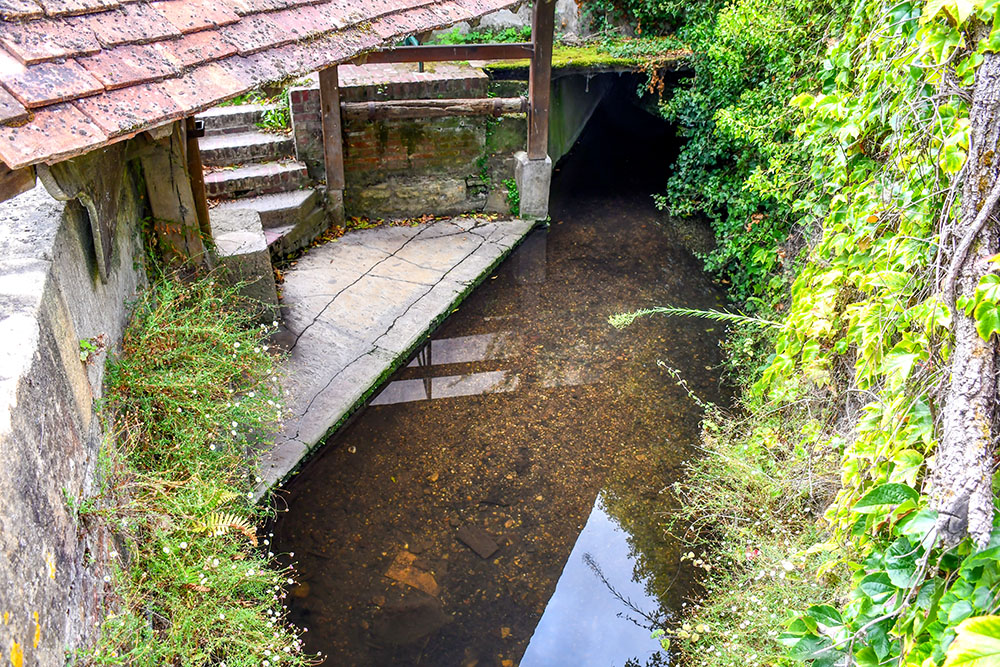
The wash house (lavoir) of Beuvron-en-Auge © French Moments
There is no need for an elaborate monument to tell us something about a village. A washhouse can do that quite well.
Further along, the architecture changes. The closely grouped half-timbered houses give way to larger, detached homes built in red brick. This stretch is worth including in your walk, even if most photographs of Beuvron concentrate on the square.
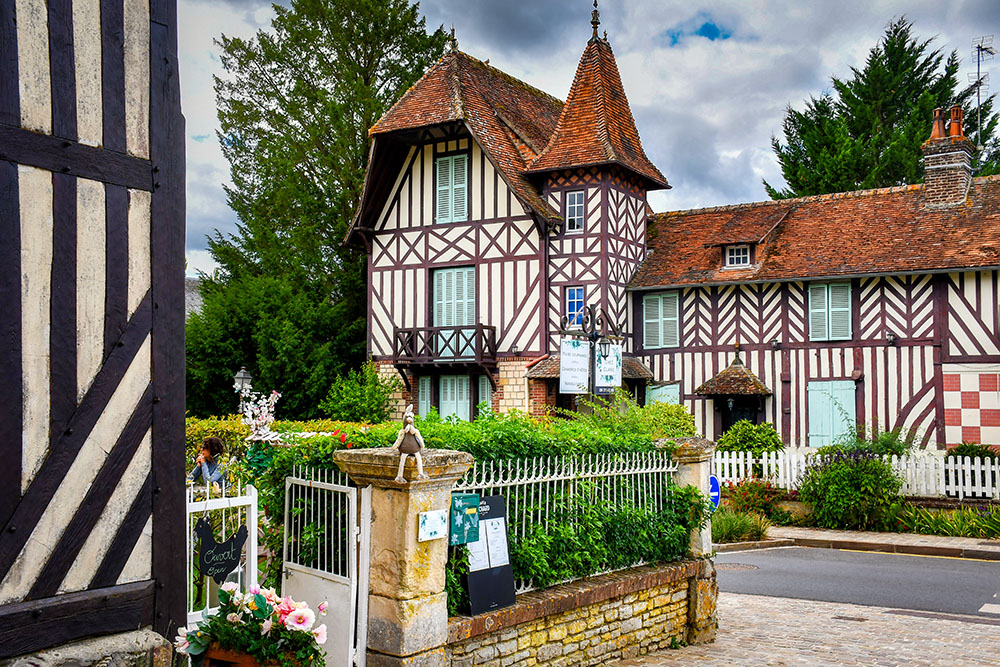
Rue Michel d’Ornano © French Moments
Saint-Martin’s Church
Saint-Martin’s Church stands to the north of the centre. Built between 1640 and 1643, it owes its position to a change in the village’s layout.
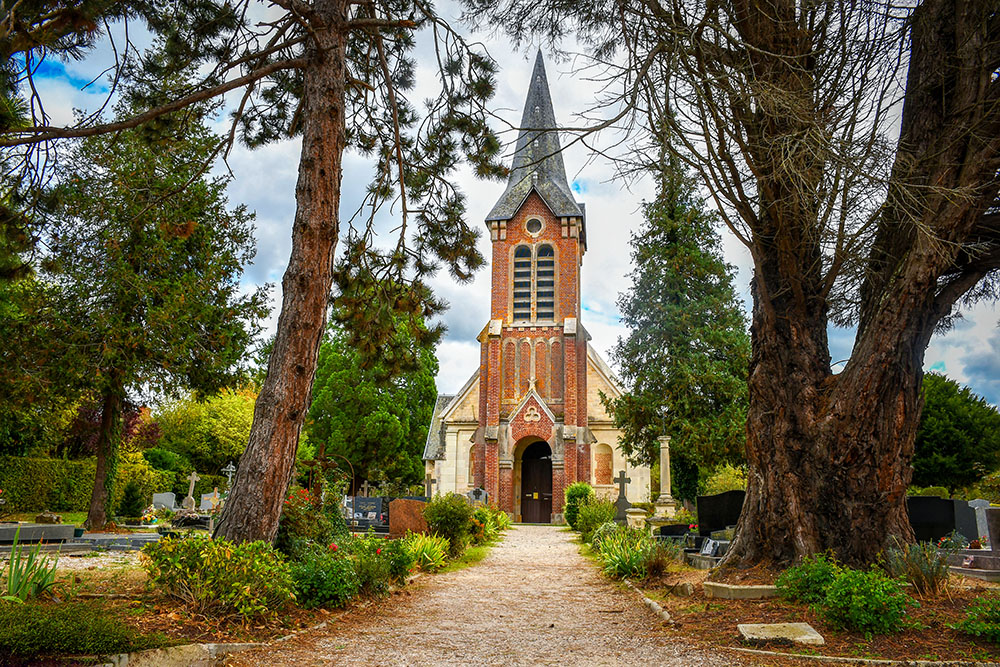
Eglise Saint-Martin © French Moments
The earlier church stood within the grounds of the Harcourt castle. Gilonne de Goyon-Matignon, widow of the Marquis of Beuvron, had a new church built here instead.
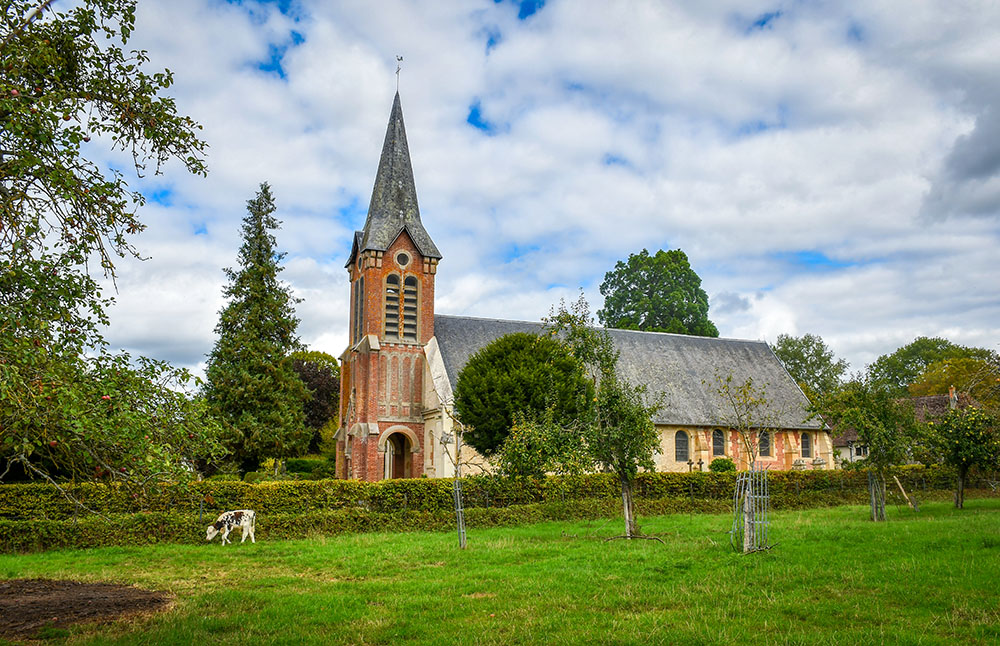
Eglise Saint-Martin © French Moments
The building has been altered and restored over the centuries. Around it, the churchyard and its old yew trees are also worth a look.
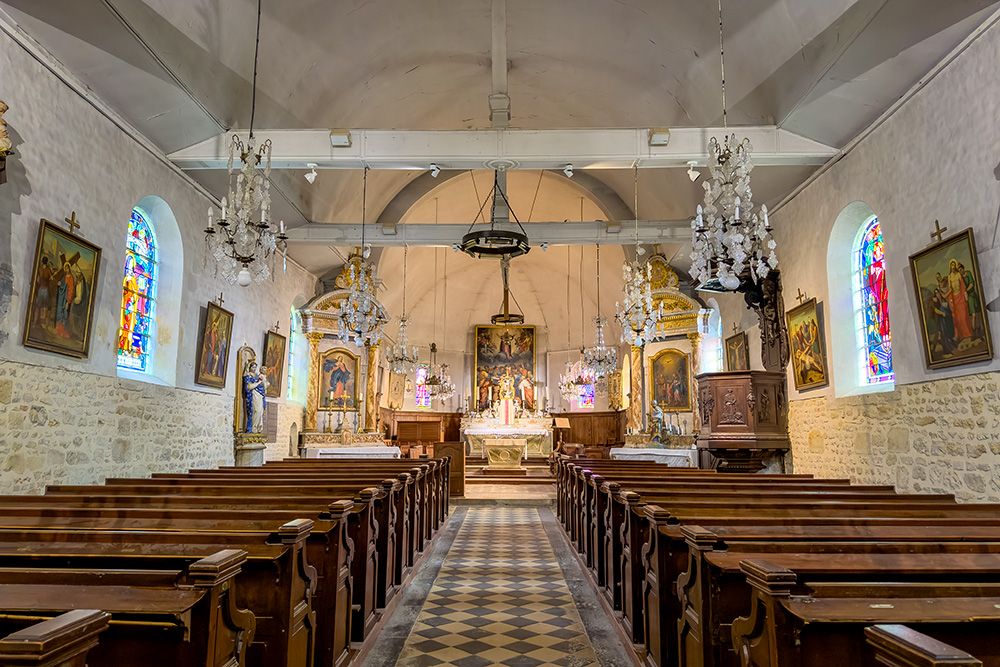
The nave of the Saint-Martin church © French Moments
This is where my route turns back towards the centre, along Rue Michel d’Ornano.
A closer look at the timber framing
On the return walk, I crossed the street to film a small construction detail on a half-timbered house: a piece of wood projecting from the wall, with wooden pegs passing through it.
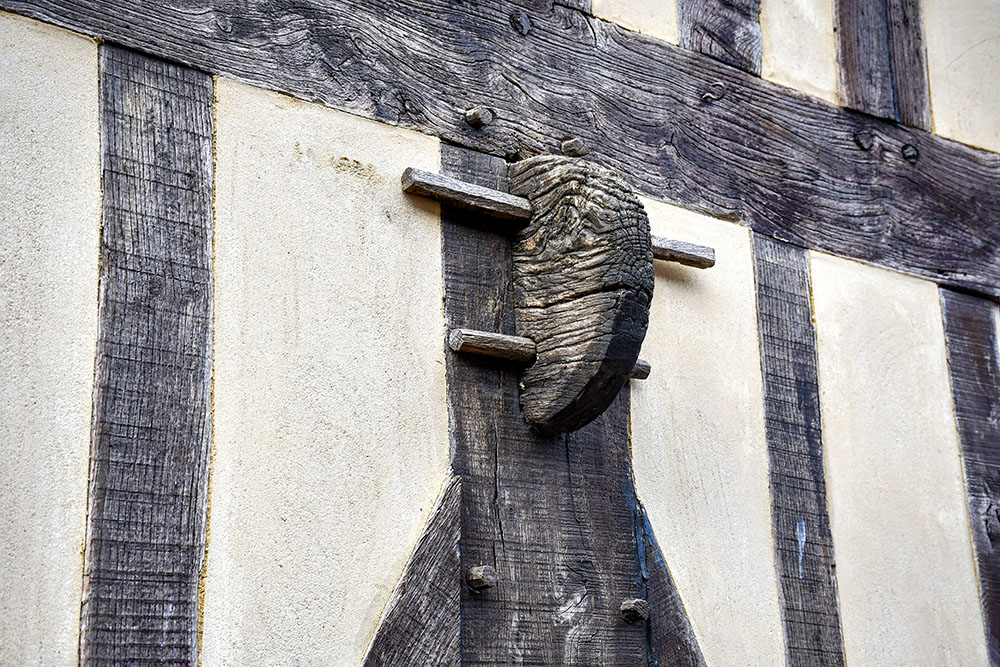
A piece of wood projecting from the wall, with wooden pegs passing through it © French Moments
Why stop for that?
Because it allows us to see something of how the frame fits together. Carpenters shaped the timbers and secured their joints with wooden pegs. Usually, we admire the pattern of the beams from a distance. Here, a closer view reveals part of the construction itself.
It was one of those details I wanted to include in the video. Small, but worth noticing.
A short detour into Rue de la Catouillette
Back near the centre, take a short detour into Rue de la Catouillette.
I came this way to admire a house combining stone and timber framing. Part of it stands on wooden posts, leaving an open space underneath. It makes an interesting subject for a photograph, especially after the more familiar façades around the square.
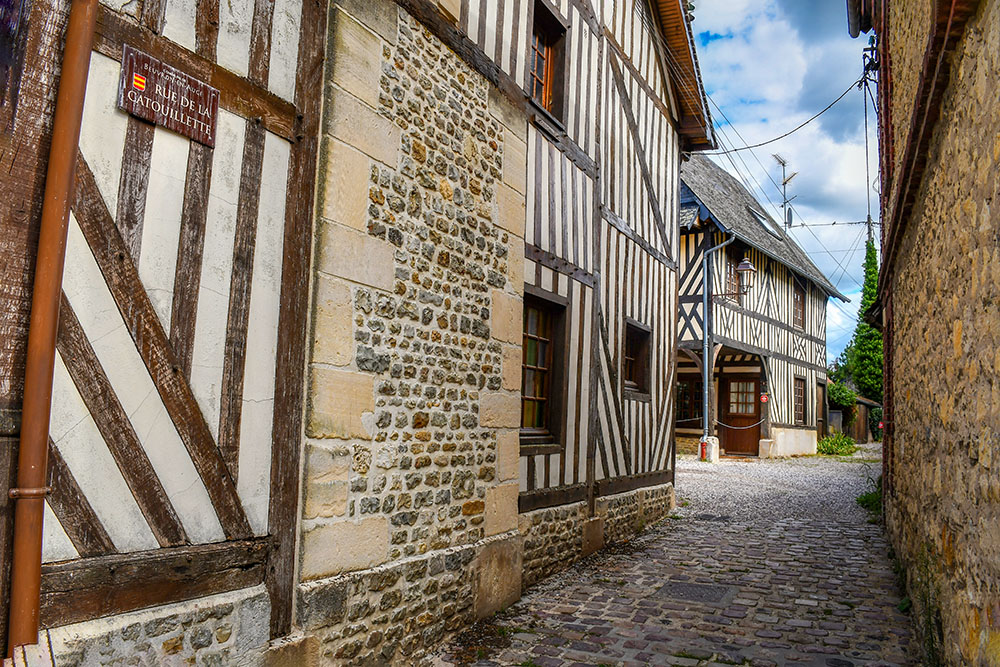
Rue de la Catouillette © French Moments
And the street name? According to an explanation reported in Ouest-France, it comes from a dialect word meaning “to tickle”. The suggestion that someone might have come here to tickle their throat with a little calvados is an amusing thought. An explanation of the street’s history, however, would require rather more evidence!
Rue de l’Enfer: another lane to explore
I also photographed Rue de l’Enfer, another street to include while exploring the centre.
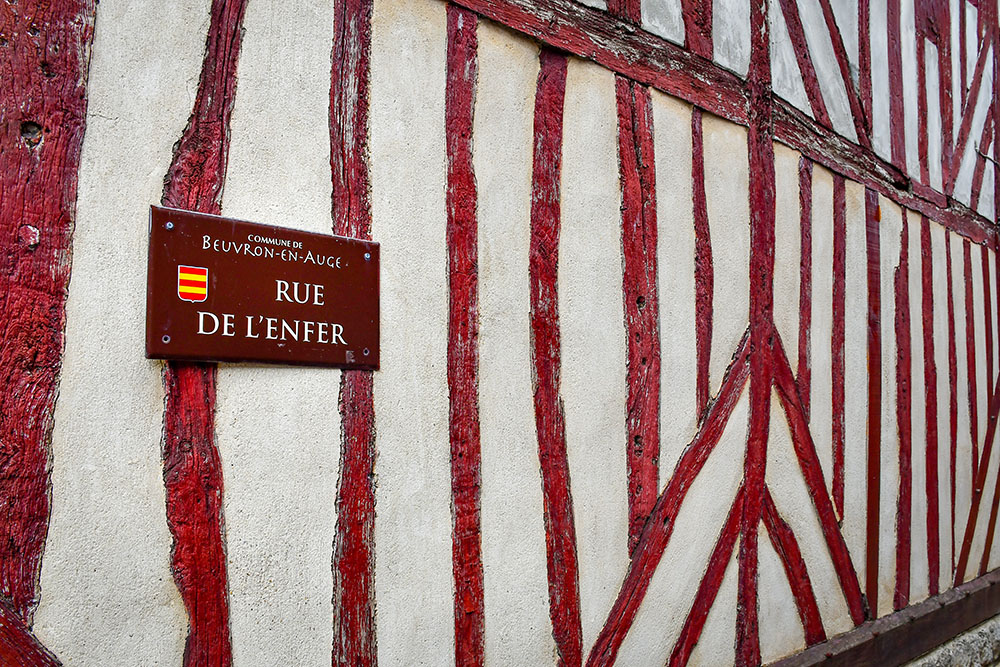
Rue de l'Enfer © French Moments
Its name translates literally as “Hell Street”. Why such a name in Beuvron? I have not found a reliable explanation, so I shall leave that question open.
Be careful not to confuse it with Rue de la Catouillette. They are separate streets; the house partly supported on wooden posts described above is in the latter.
A few stories behind Beuvron-en-Auge
The name Beuvron has a connection with an animal you might not immediately associate with the village: the beaver. Its origins are linked to an old word for beaver through the name of a local watercourse. The second part, en Auge, places it in the surrounding Pays d’Auge.
For centuries, the village was associated with the Harcourt family. Its everyday prosperity, however, also depended on trades such as tanning and weaving, and on commerce with the surrounding farms. In the nineteenth century, livestock trading was particularly important.
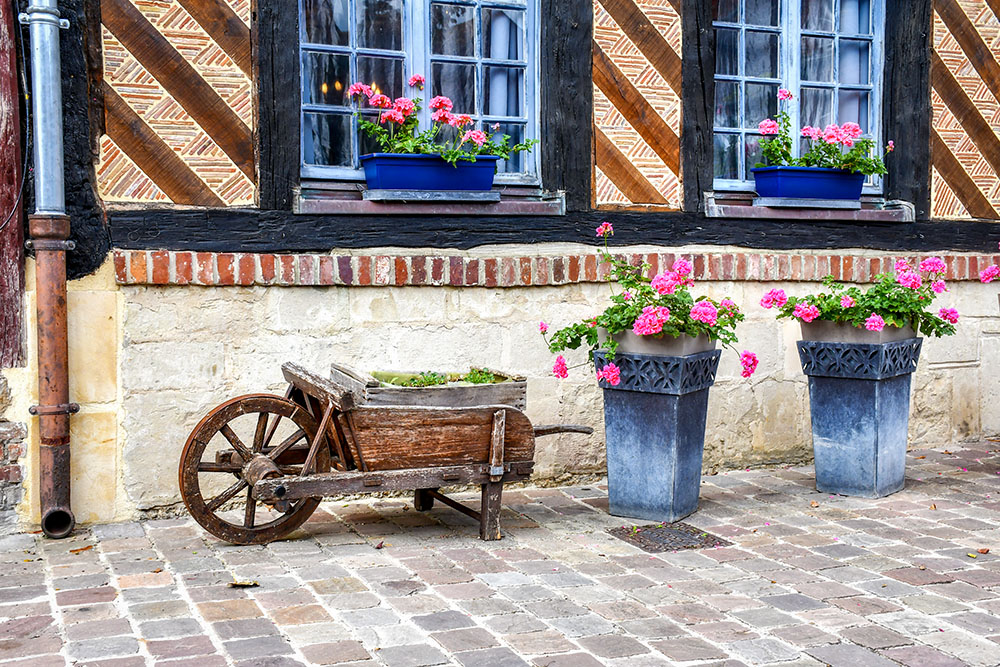
Half-timbered façades on Place Michel Vermughen © French Moments
The population figures give another perspective. Beuvron had 585 inhabitants in 1821, compared with 203 in 2023: a fall of roughly two-thirds over those two centuries. The busy terraces and shops can make it easy to forget how few people live here permanently.
Beuvron in 1944
The municipal newsletter Le Beuvronnet, in its July 2019 issue, preserves local memories of the war, including the evacuation of residents in July 1944. It gives 22 and 23 August 1944 as the dates of Beuvron’s liberation.
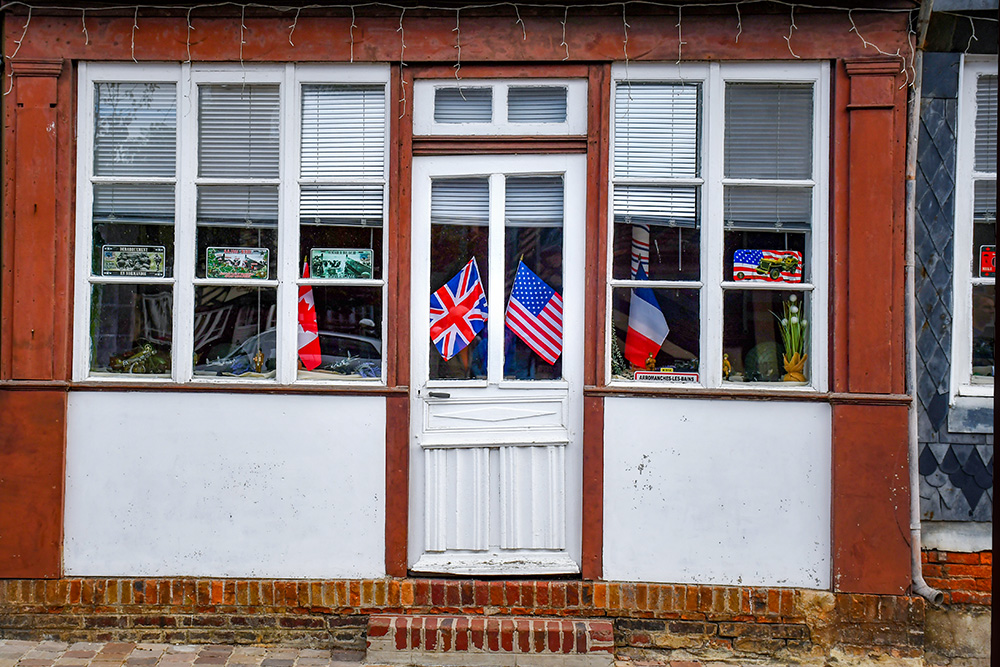
The Allied flags © French Moments
These recollections add a very different chapter to the history of the streets we walk through today.
Planning your visit to Beuvron-en-Auge
Where is Beuvron-en-Auge and how do you get there?
Beuvron-en-Auge lies in Calvados, in the Pays d’Auge, roughly 30 kilometres from both Caen and Lisieux.
We visited by car during a longer stay in the area. Having a car made it straightforward to combine villages and stop elsewhere in the countryside. For more ideas from that trip, see my guide to the Pays d’Auge in Normandy.
Once parked, you can explore the village centre on foot.
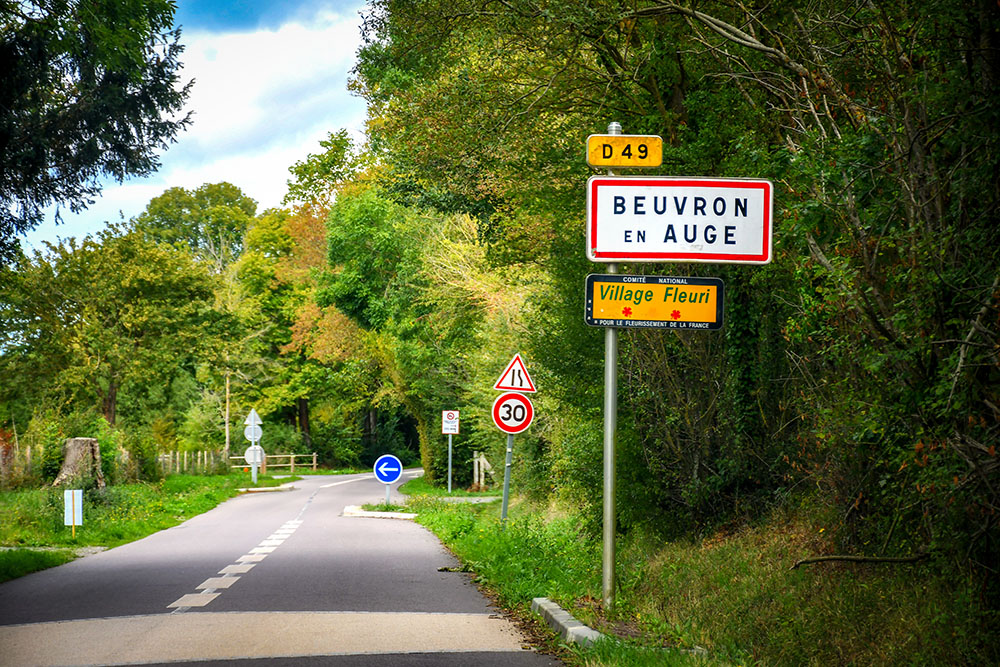
Arriving in Beuvron-en-Auge © French Moments
Where to park in Beuvron-en-Auge
We used the large car park at esplanade Woolsery, 4 avenue de la Gare, close to the village centre. It was free during our visit in September 2026.
We appreciated that. After visits to villages such as Eguisheim and Riquewihr, where parking can add to the cost of a day out, it was a welcome difference.
We also noticed parking spaces along avenue d’Harcourt. Availability will naturally depend on when you arrive; follow the signs and any restrictions displayed on the day.
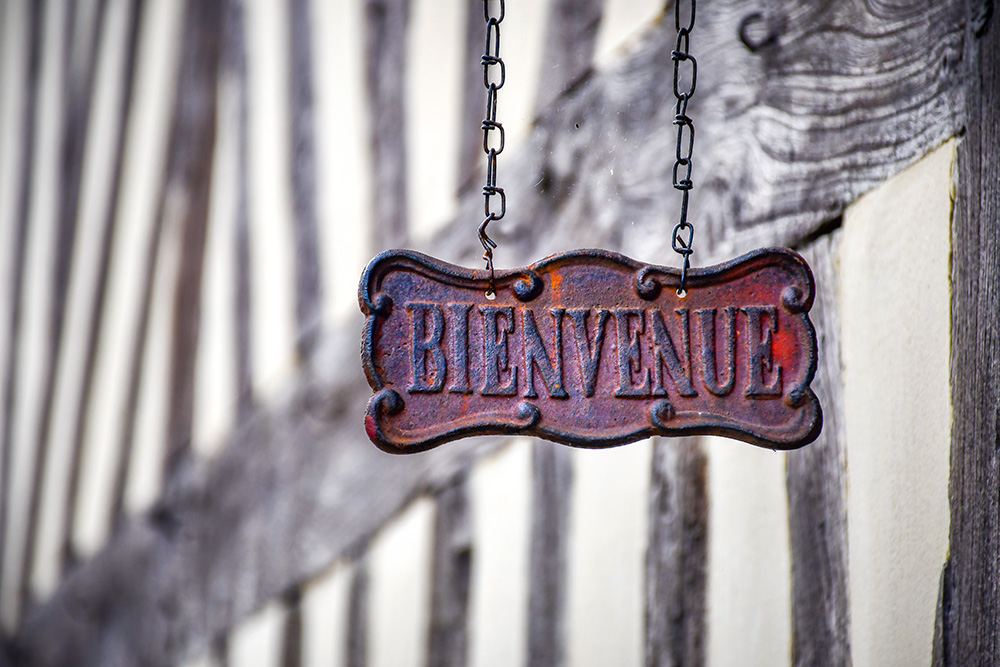
Welcome sign in Beuvron-en-Auge © French Moments
How much time do you need?
We spent no more than three hours in Beuvron. I was taking photographs and filming, while Rachel and Aimée visited shops and artisans’ premises.
For a similar visit, I would allow two to three hours. That gives you time to walk to the church, explore the small streets and stop wherever something interests you.
You do not need that long simply to walk through the centre. Equally, if you sit down for a leisurely meal, allow more time. The village’s size and the length of your visit are two different things.
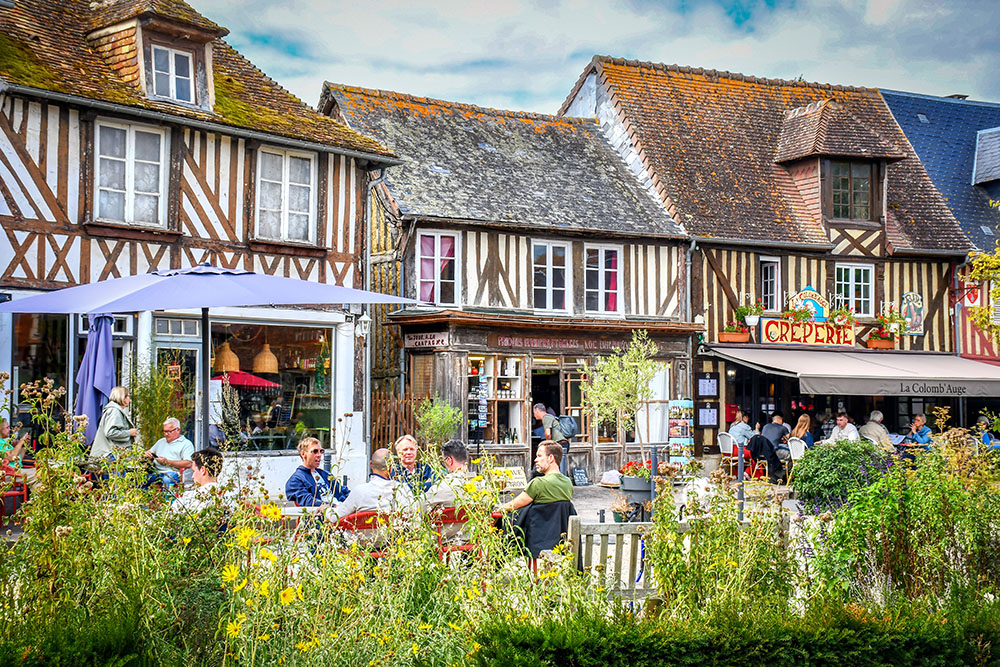
Place Michel Vermughen © French Moments
When is the best time to visit?
Our Thursday visit in September worked well. It was sunny, with large clouds, and the temperature was in the low twenties. People were eating outside and the centre was animated without being uncomfortably busy.
Based on that experience, I would choose a weekday if possible. Personally, I would avoid summer weekends, when a small and well-known village is less likely to offer the same breathing space.
Of course, September does not guarantee sunshine. We were fortunate with our day.
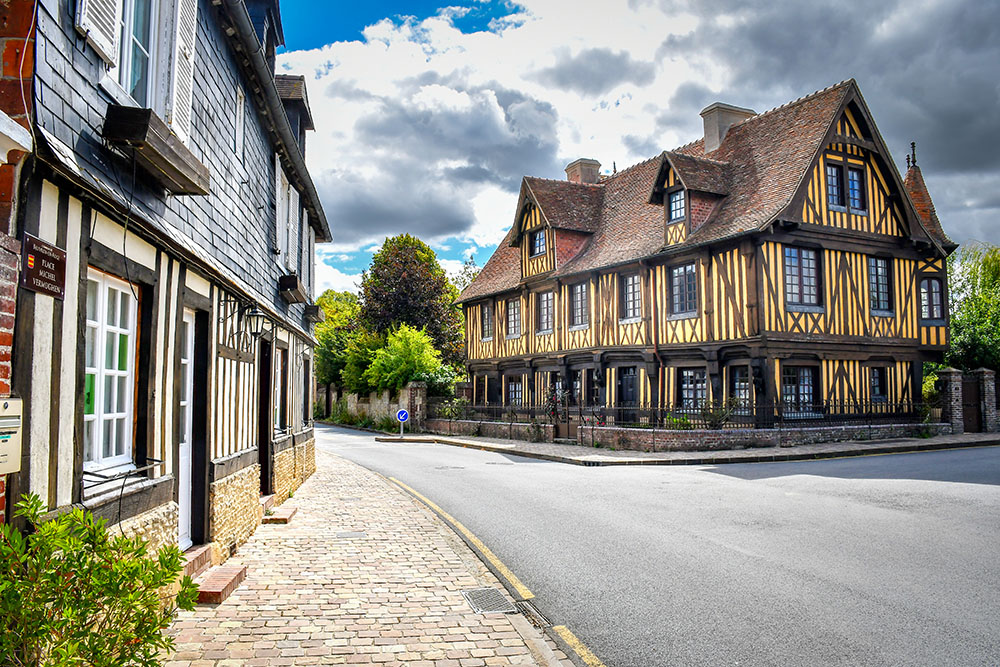
The old manor © French Moments
Shops, local produce and somewhere to eat
Rachel and Aimée explored some of the artists’ and artisans’ premises while I continued filming. I also called at the bakery.
If you enjoy looking at handmade work, leave some time for that side of Beuvron. The village’s Espace des Métiers d’Art occupies the former school, although I cannot identify all the individual premises Rachel and Aimée visited.
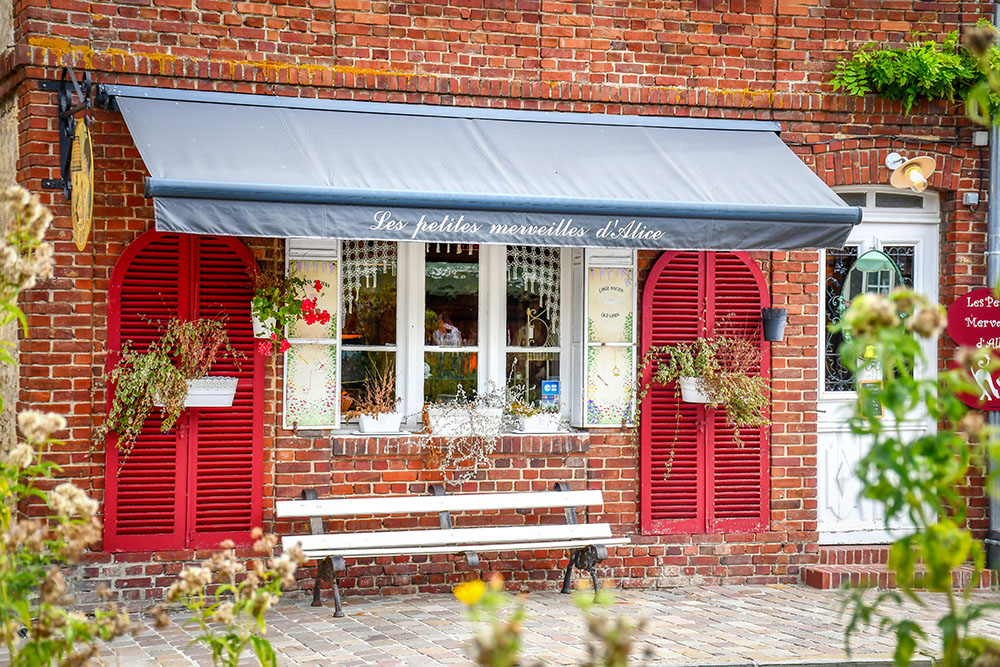
Shops in Beuvron-en-Auge © French Moments
There are cafés and restaurants around the square. Rachel felt the menus looked more appealing than she had expected in such a well-known tourist village, but we did not eat at a restaurant here, so I cannot offer a personal recommendation.
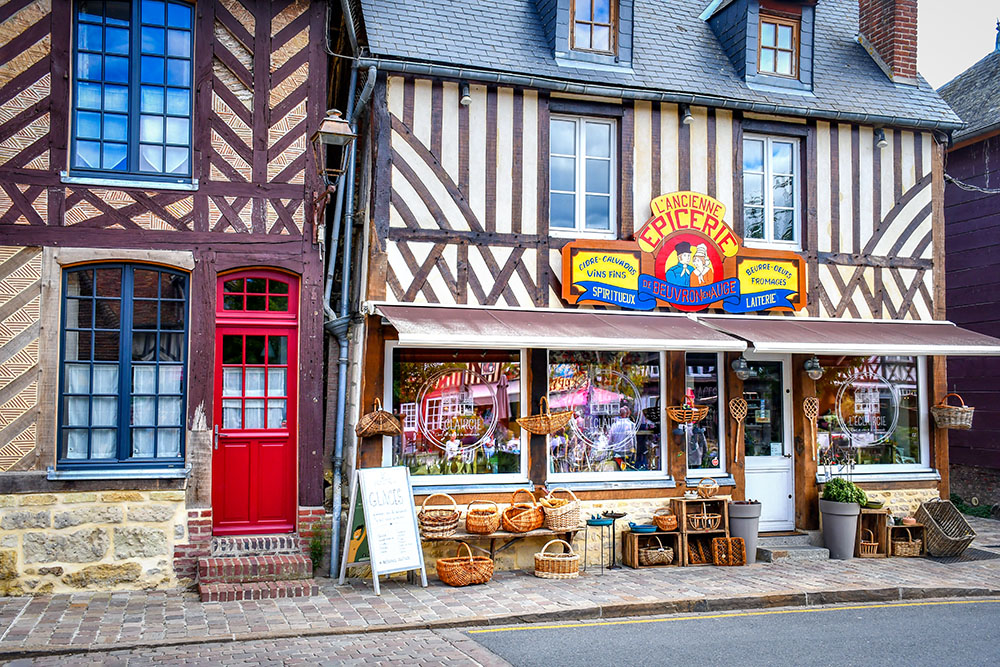
Shops in Beuvron-en-Auge © French Moments
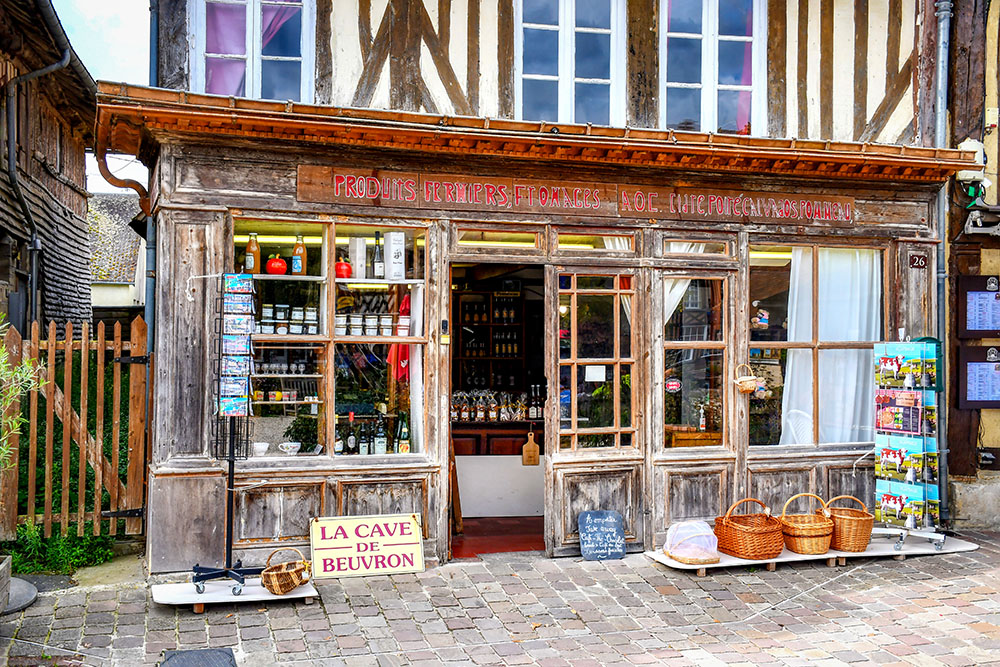
Shops in Beuvron-en-Auge © French Moments
We had brought food with us and planned to find a picnic spot after leaving. With local produce among our purchases, that suited our day very well.
What to visit near Beuvron-en-Auge
Beaumont-en-Auge
We also visited Beaumont-en-Auge that day. If you would like to continue exploring after Beuvron, it is another village I would recommend.
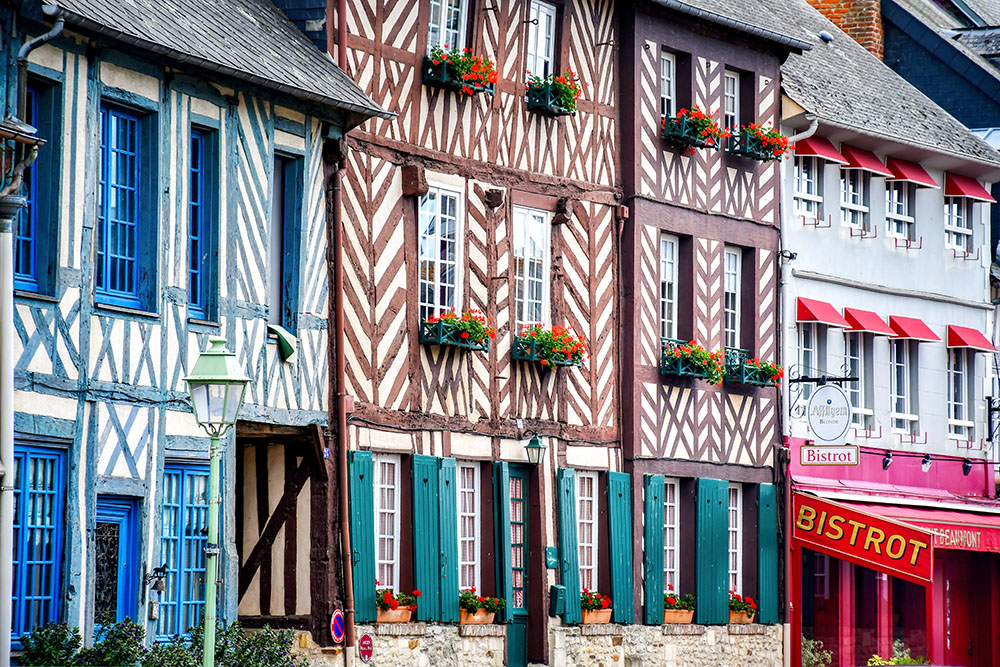
Lovely half-timbered houses in Beaumont-en-Auge © French Moments
Allow yourself time in each rather than treating them as quick photographic stops. For us, combining the two made sense precisely because Beuvron itself is fairly compact.
Cambremer, Grandouet and the Cider Route
Beuvron is a stop on the Route du Cidre, a signposted driving route of around 40 kilometres through the Pays d’Auge.
Apples are an important part of the area’s identity. Cider, calvados and pommeau all belong to this local tradition, alongside apple juice. Beuvron also celebrates cider with an autumn festival.
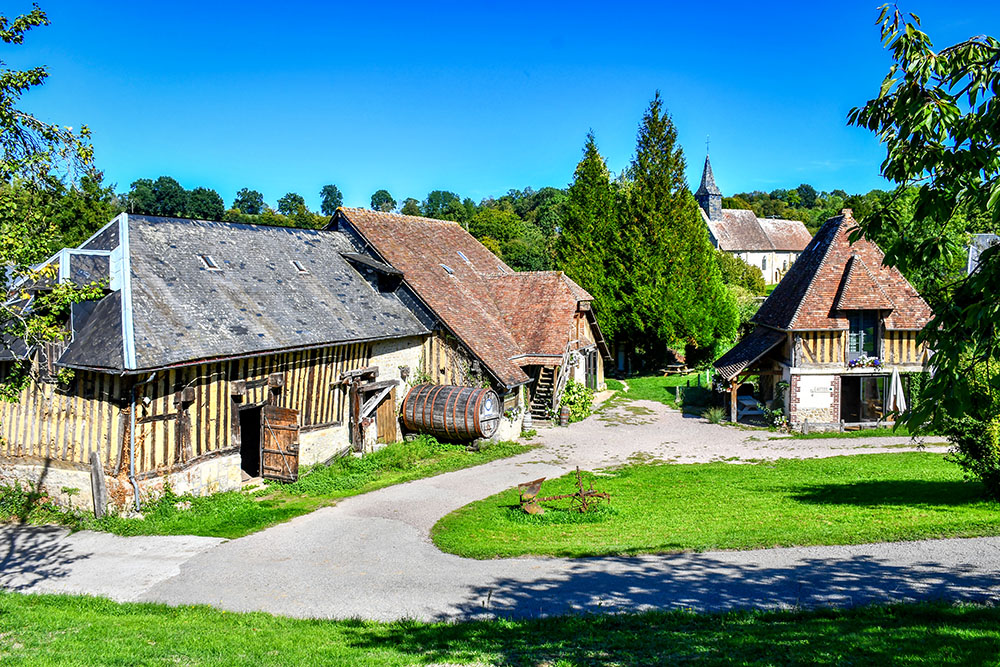
The lovely rural setting of the Manoir de Grandrouet © French Moments
A few days after our village visit, I followed part of the Cider Route around Cambremer and went to Grandouet to buy cider. This would be another way to extend your time in the area, especially if you are interested in the producers behind the bottles. Check individual opening hours before setting out.