

The Ballon d’Alsace is one of those places that carries far more than just a name on a map.
It is a summit, of course. It is also a mountain pass, a small mountain resort, a hiking destination, a historic crossing point in the Tour de France… and, above all, a meeting point between several worlds.
Here, the Vosges do not simply look towards Alsace. They also touch Lorraine and Franche-Comté.
The Ballon d’Alsace symbolises this frontier-meeting point between three provinces, three landscapes and three different atmospheres. And perhaps that is what makes it so endearing.
At 1,247 metres / 4,091 ft above sea level, the Ballon d’Alsace is not the highest summit in the Vosges. The Grand Ballon is considerably higher. But in terms of reputation, history and imagination, it certainly belongs among the greats.
A summit between Alsace, Lorraine and Franche-Comté
The Ballon d’Alsace is located in the Southern Vosges, where the Haut-Rhin, the Vosges département and the Territoire de Belfort meet.
Geographically, it occupies a remarkable position.
To the east, you descend towards the Doller valley and Alsace.
To the north, you reach the upper Moselle valley, on the Lorraine side.
To the south, you drop down towards Giromagny, Belfort and Franche-Comté.
This is what makes the Ballon d’Alsace a true mountain crossroads. You do not climb up here only for the view. You also come to understand, almost physically, how regions meet on the ridges.
For me, this is one of the great charms of the place. The Ballon d’Alsace is not an isolated summit. It is a passage, a hinge, a kind of balcony between several provinces.
Ballon d’Alsace or col du Ballon d’Alsace?
It is important to distinguish between the summit of the Ballon d’Alsace and the Col du Ballon d’Alsace.
The summit reaches 1,247 metres / 4,091 ft. It is discovered on foot, by following the paths that cross the high pastures and rounded slopes.
The pass, meanwhile, lies a little lower, at around 1,173 metres / 3,848 ft above sea level. This is where the roads pass, along with cars, motorbikes, cyclists and, occasionally, the riders of the Tour de France.
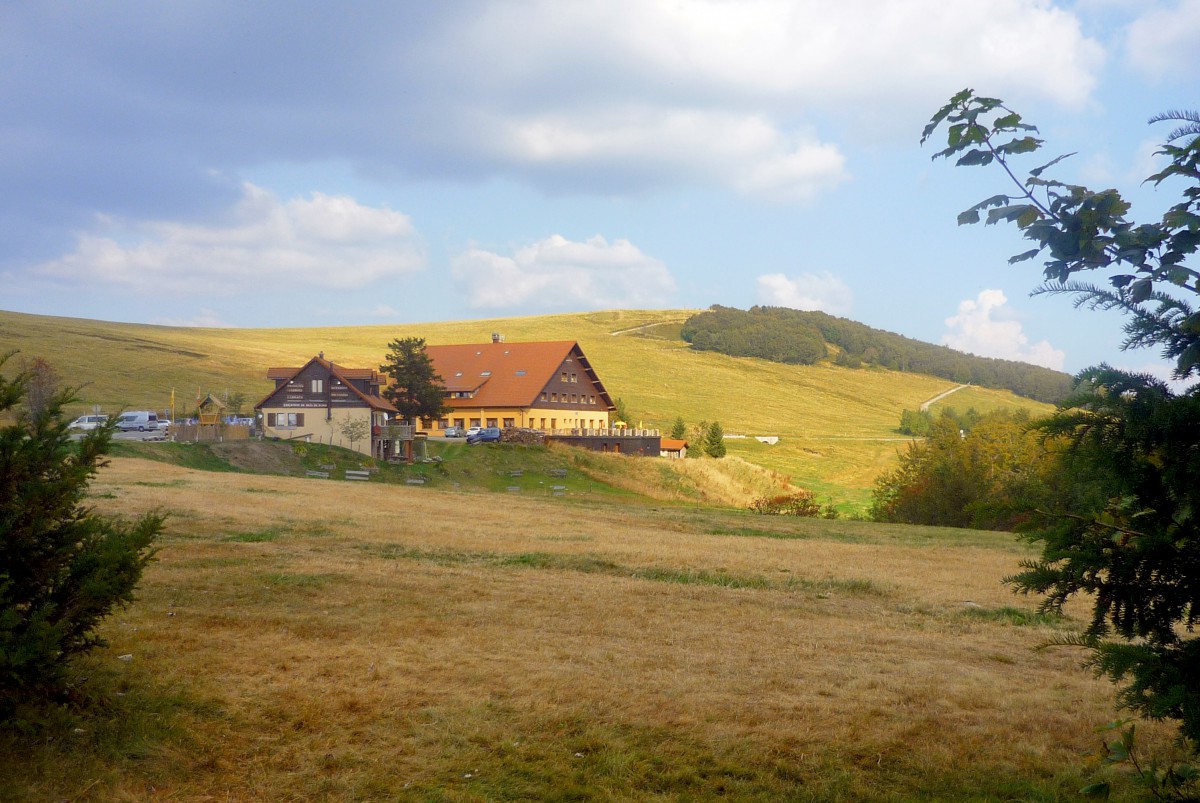
Chalet-restaurant at the col du Ballon d'Alsace © French Moments
In everyday language, people often say “going up to the Ballon d’Alsace” to refer to the whole site. And frankly, nobody is likely to correct you at a bend in the road, except perhaps a particularly motivated geographer.
But to understand the place properly, the distinction is useful: the pass is the road crossing; the summit is the highest point of the site.
A mountain of passage… and history
Long before cars, motorbikes and cyclists, the Ballon d’Alsace was already a strategic place.
For a long time, the massif formed a natural barrier that was difficult to cross between Lorraine, Franche-Comté and Alsace.
To pass from one world to another, people had to deal with slopes, forests, snow, uncertain tracks and, no doubt, a good deal of patience.
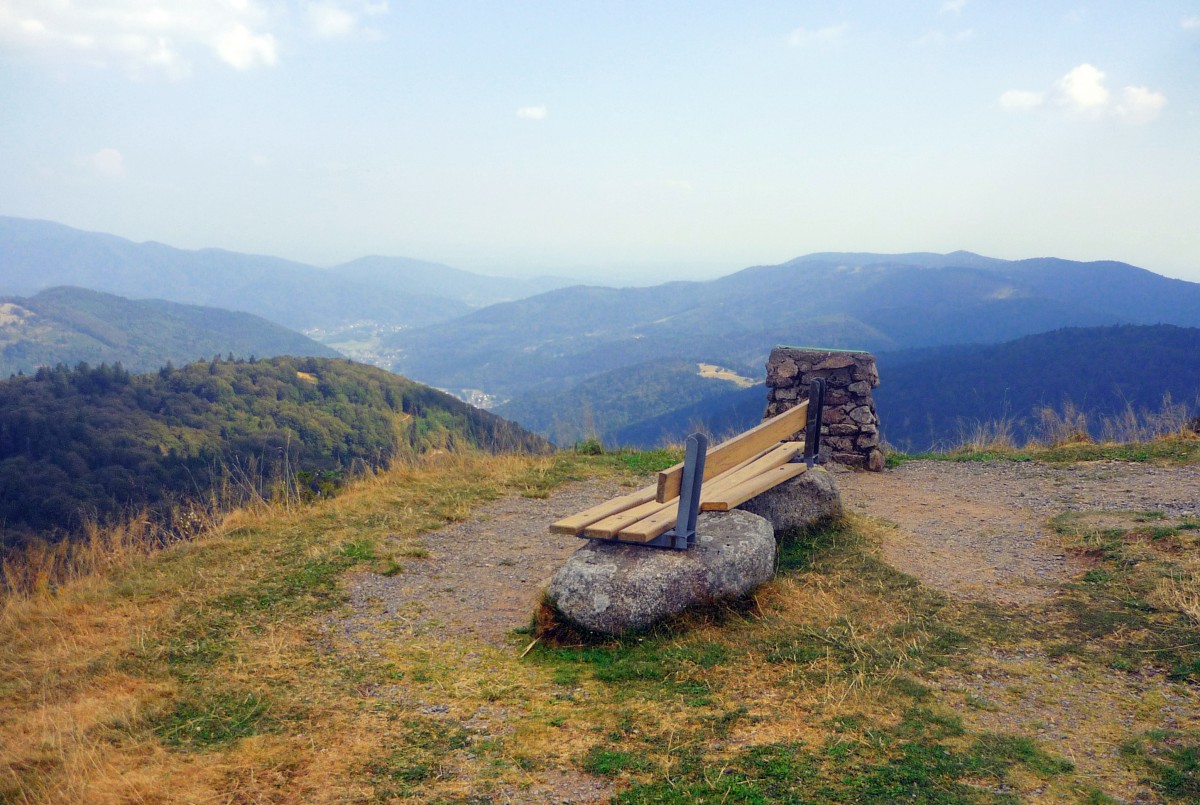
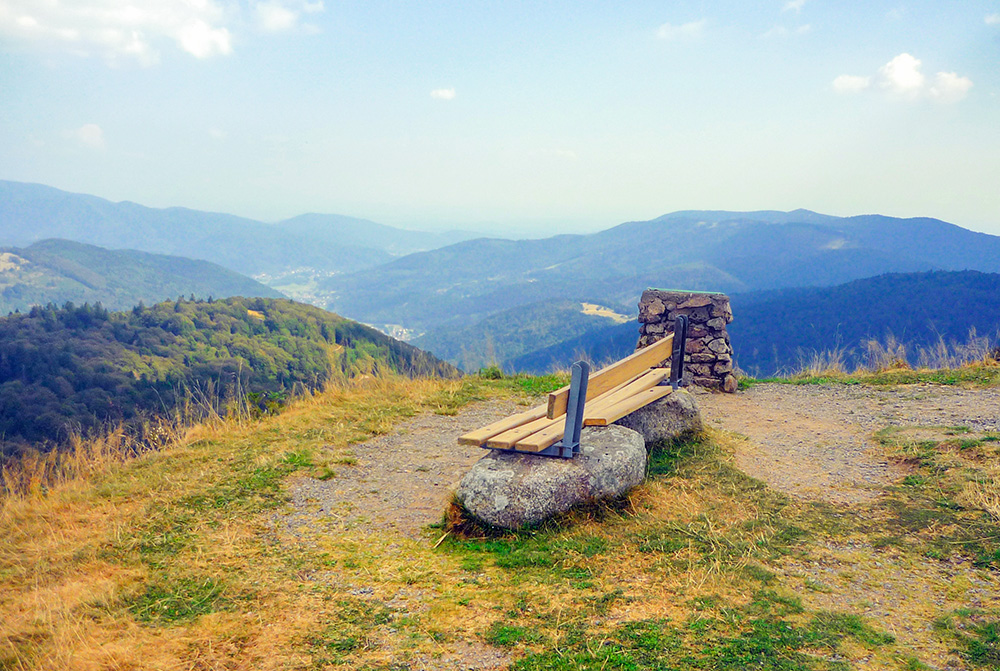
Panoramic view on the Doller Valley from the summit © French Moments
La Jumenterie: the horse of the Duke of Lorraine
In the early 17th century, the site was even home to a rather surprising experiment.
In 1618, Henri II of Lorraine, Duke of Lorraine, established a ducal stud farm on the Ballon d’Alsace to improve the Lorraine horse breed.
The experiment lasted only a few years, but it left a name in the landscape: La Jumenterie.
Even today, this area recalls that curious episode when the Vosges heights were associated with the breeding of horses for the Duchy of Lorraine.
The road of Louis XV: crossing the Vosges barrier
Then, in the 18th century, the Ballon d’Alsace became a matter of communication and transport.
At the time, the massif remained a major obstacle between the Moselle valley, the Savoureuse valley and the Doller valley.
To reach Franche-Comté and Switzerland more directly from Lorraine, the crossings had to be improved.
The old route via the Col de Bussang did exist, of course, but it made journeys considerably longer.
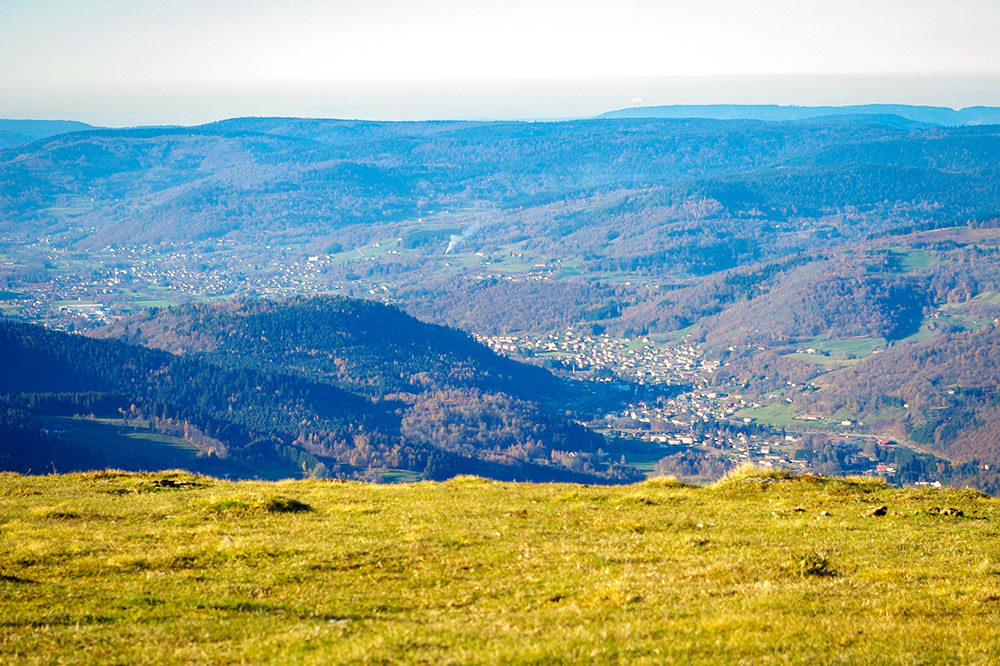
View of the Upper Moselle Valley from the Ballon d'Alsace © French Moments
Under the reign of Louis XV, a road passing over the Ballon d’Alsace was therefore considered. In 1751, the administration sent an engineer from the Ponts et Chaussées to study whether the project was feasible.
The objective was very practical: to facilitate trade, especially in grain and salt from Lorraine towards Switzerland, while also serving the farms and mountain dairies of the massif.
Work began in 1753 and the road was completed a few years later. It would be further improved at the end of the 18th century to correct certain bends and soften the gradients.
Today, when you drive peacefully up to the Ballon d’Alsace, it is easy to forget this history.
And yet the road you take is not just a pretty mountain road. It is the heir to an old project designed to open up the area and connect valleys, provinces and economies.
The Ballon d’Alsace has therefore never been just an isolated summit. It has always been a place of passage. And that is precisely what gives it its richness.
Three roads to the Ballon d’Alsace
One of the distinctive features of the Ballon d’Alsace is that it can be reached by three main road approaches.
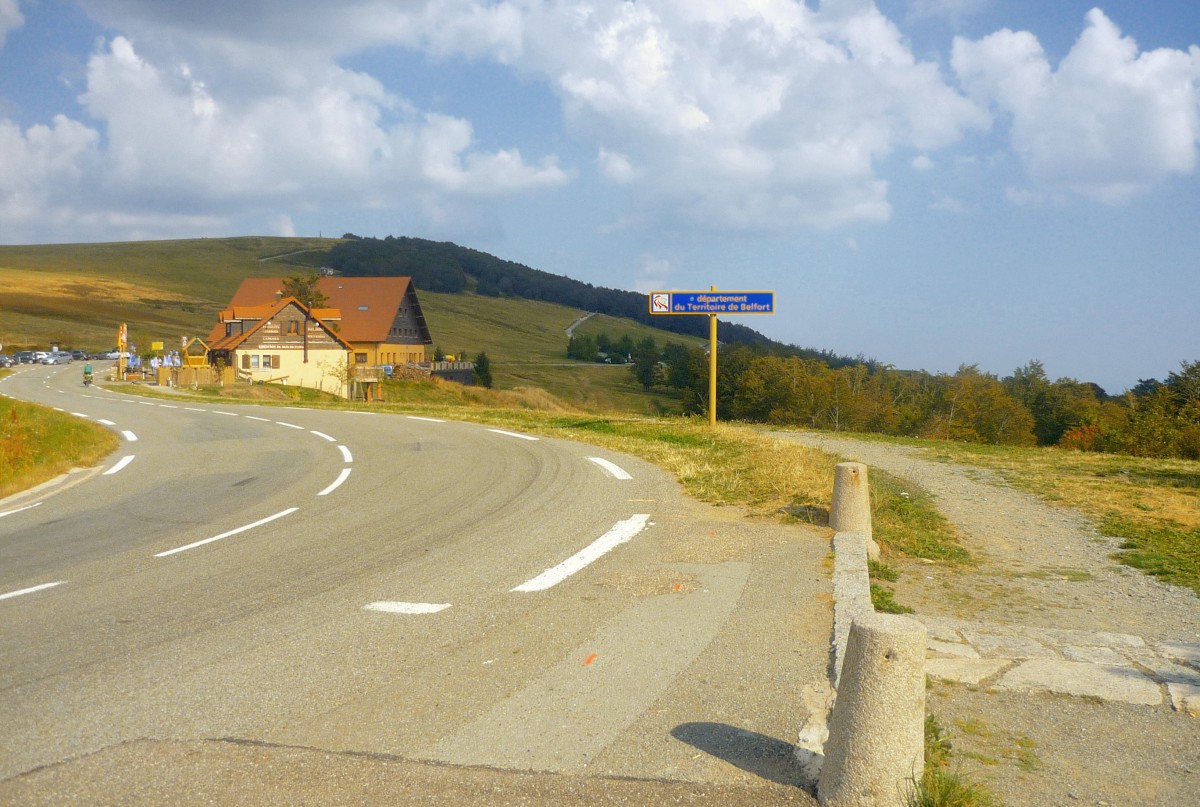
Arriving at the col du Ballon d'Alsace © French Moments
The first road climbs through the Moselle valley from Saint-Maurice-sur-Moselle. This is the Lorraine side, and also one of the routes most closely linked to the history of the Tour de France. The climb is regular and serious, with that very Vosges atmosphere of forest, hairpin bends and well-measured effort.
The second approach comes through the Doller valley, on the Alsace side, from Sewen. This is the access I know best, because it was the most natural route when we lived in southern Alsace. You pass through this deep valley, with Lake Sewen and then the area around Lake Alfeld, before reaching the heights. The scenery is magnificent, wilder in places, and very endearing.
The third road comes from Giromagny, through the Savoureuse valley, on the Territoire de Belfort side. It gives the Ballon d’Alsace its Franche-Comté opening. Here again, the landscape changes: the light feels slightly different, as does the sensation of approaching the mountain.
These three roads tell the story of the Ballon d’Alsace’s identity all by themselves. Each side brings its own colour: Lorraine, Alsace, Franche-Comté.
Three ways up, three ways of discovering the same summit.
What to see at the summit of the Ballon d’Alsace
At the summit, the Ballon d’Alsace first offers a landscape of high pastures, upland meadows and open views.
On a clear day, the eye travels far: towards the Vosges, the Alsace Plain, the Belfort Gap, the Jura, the Black Forest and sometimes the Alps.
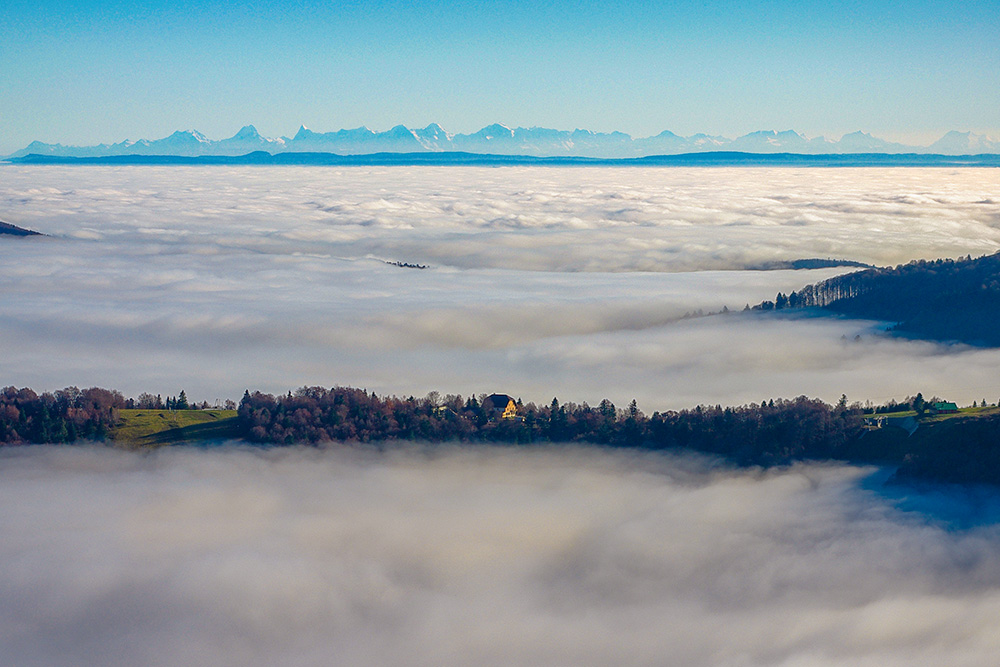
The view to the Alps from the summit © French Moments
As so often in the Vosges, the weather decides the show. One day, you have an immense view; the next, you are in the mist with the impression of walking inside a very determined cloud.
But the Ballon d’Alsace is not only about its panorama. The summit also has several historic and symbolic landmarks.
Statues and monuments at the summit
The summit of the Ballon d’Alsace also has several monuments that recall its historical and symbolic importance.
There is, in particular, a polychrome bronze statue of the Virgin Mary, installed as an ex-voto in 1860.
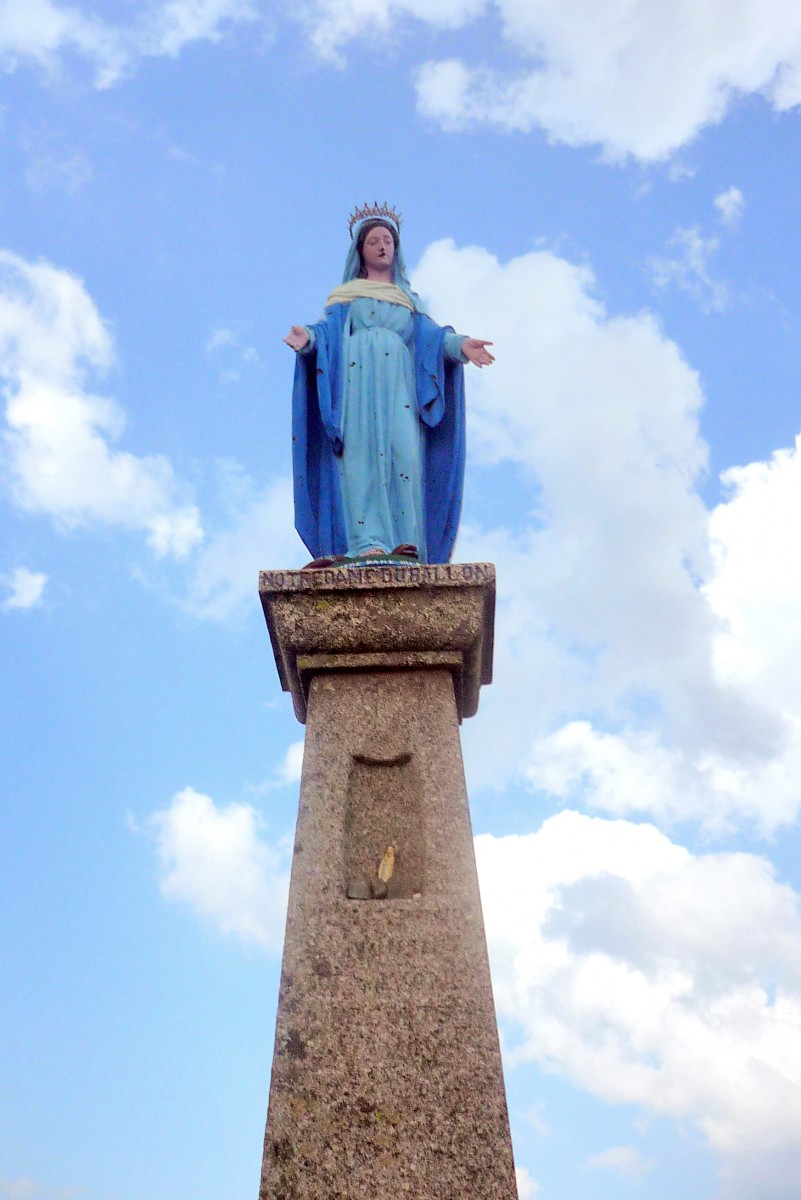
The statue of the Virgin, Ballon d'Alsace © French Moments
This may come as a surprise during a walk, but it reminds us that Vosges summits have often been linked to a form of popular spirituality, somewhere between protection, gratitude and attachment to place.
Another monument is more immediately eye-catching: the statue of Joan of Arc, inaugurated on 19 September 1909.
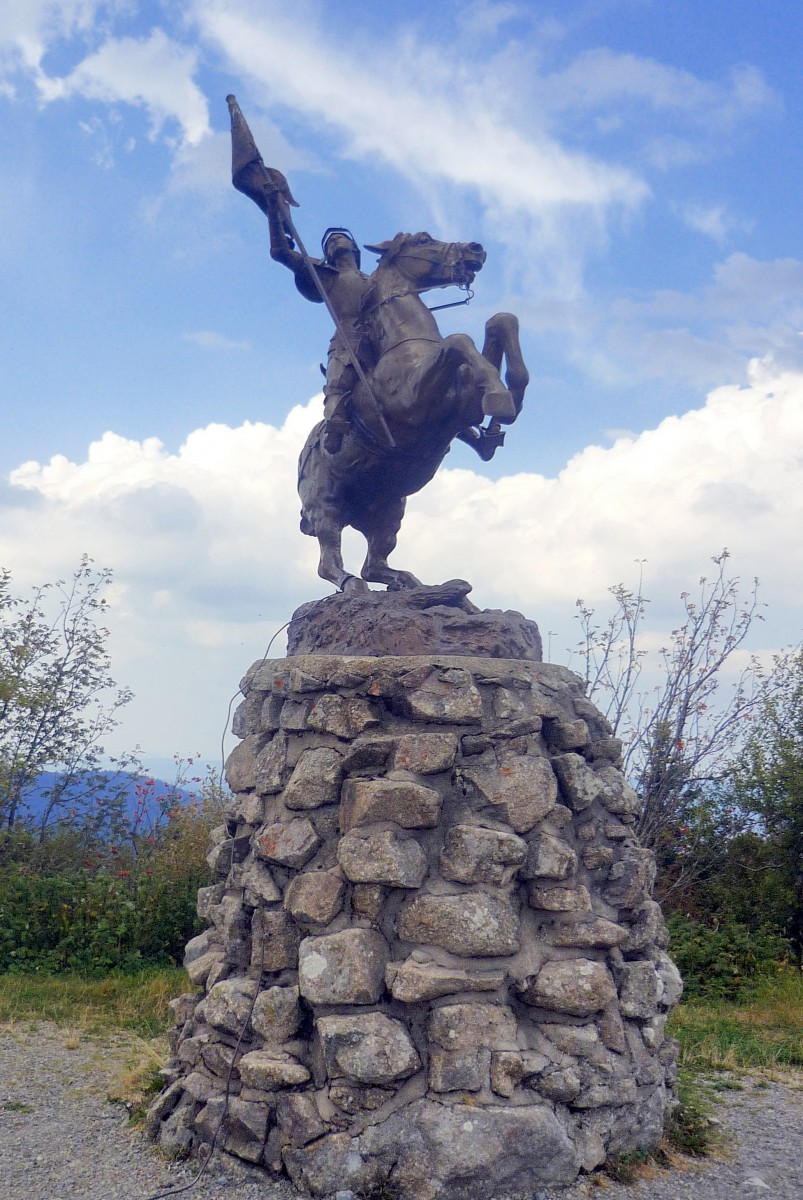
Equestrian statue of Joan of Arc, Ballon d'Alsace © French Moments
Created by Mathurin Moreau and Pierre Le Nordez, it takes on a very particular significance here. At the time, Alsace had been annexed to the German Empire since 1871.
Placing Joan of Arc on the Ballon d’Alsace, so close to the former frontier, was therefore far from insignificant. The statue clearly symbolised France’s attachment to Alsace.
Finally, there is the Monument to the Mine Clearers, erected in 1950 in memory of those who died for France while clearing mines.
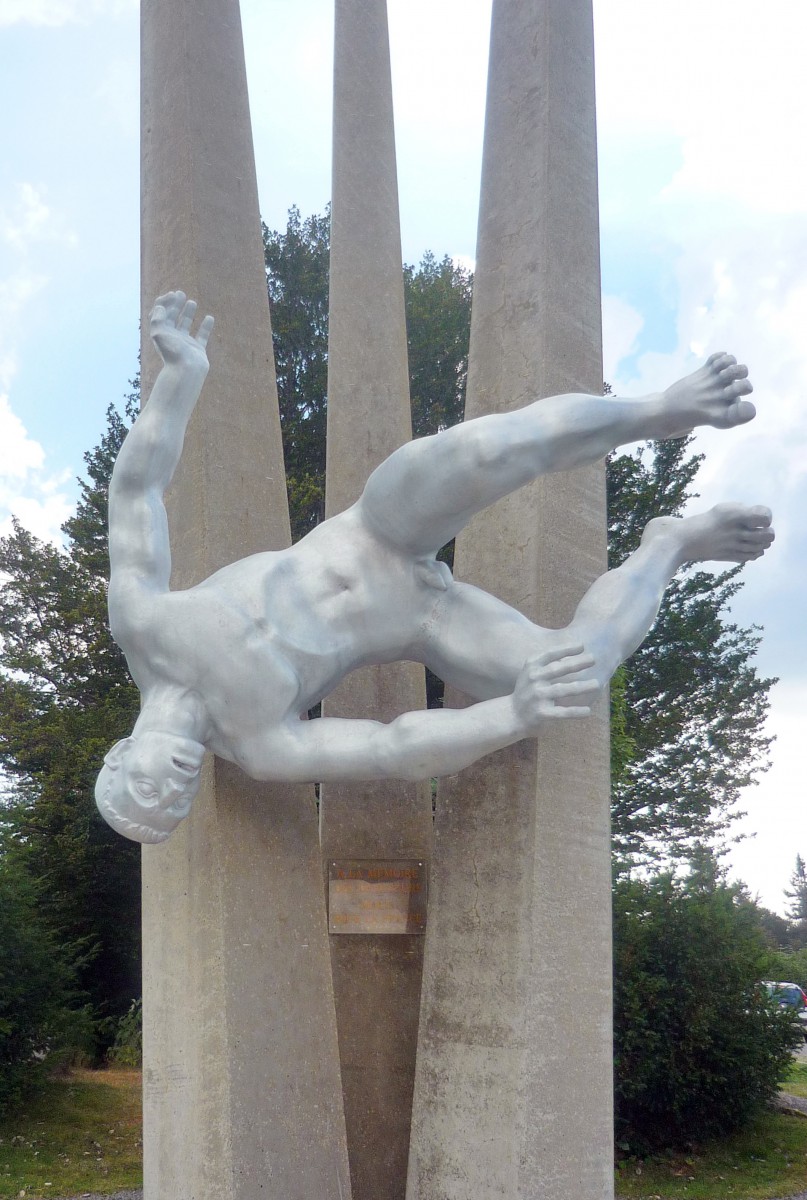
Monument aux démineurs, Ballon d'Alsace © French Moments
Here again, the peaceful summit landscape contrasts with a more solemn memory, linked to the conflicts of the 20th century and the traces they left in border regions.
So, at the Ballon d’Alsace, the monuments are not merely decorative features. Each of them tells, in its own way, part of the history of the massif: popular faith, national attachment, war, reconstruction and remembrance.
Discovering the old boundary stones
This is one of the most interesting aspects of the Ballon d’Alsace.
After the war of 1870 and the Treaty of Frankfurt in 1871, Alsace and part of Lorraine were annexed by the German Empire. The Ballon d’Alsace then found itself right next to the new border between France and Germany.
This frontier left traces in the landscape. Stone boundary markers, still visible today, once marked the separation between the two states.
![Bornes au Ballon d'Alsace © Rémih - licence [CC BY-SA 4.0] from Wikimedia Commons](https://frenchmoments.eu/wp-content/uploads/2026/07/Bornes-au-Ballon-dAlsace-©-Remih-licence-CC-BY-SA-4.0-from-Wikimedia-Commons.jpg "Bornes au Ballon d'Alsace © Rémih - licence [CC BY-SA 4.0] from Wikimedia Commons")
Boundary markers at the summit © Rémih - licence [CC BY-SA 4.0] from Wikimedia Commons
Some bore an “F” on the French side and a “D” on the German side, for Deutschland. In some cases, the German letter was later hammered away or erased after Alsace-Lorraine returned to France.
Today, these stones no longer separate two countries. Instead, they mark departmental boundaries or recall a vanished border. But they give the summit a special depth.
You come to the Ballon d’Alsace to admire the landscape, and you discover that the stones themselves tell the story. That is what I love about this place: geography and memory meet here almost at every step.
Hiking around the Ballon d’Alsace
The Ballon d’Alsace is an excellent starting point for hiking.
You can simply enjoy a walk around the summit, perfect for a family outing or a gentle introduction to the area. The paths allow you to enjoy the high pastures, the views and the different monuments without necessarily setting off on a major expedition.
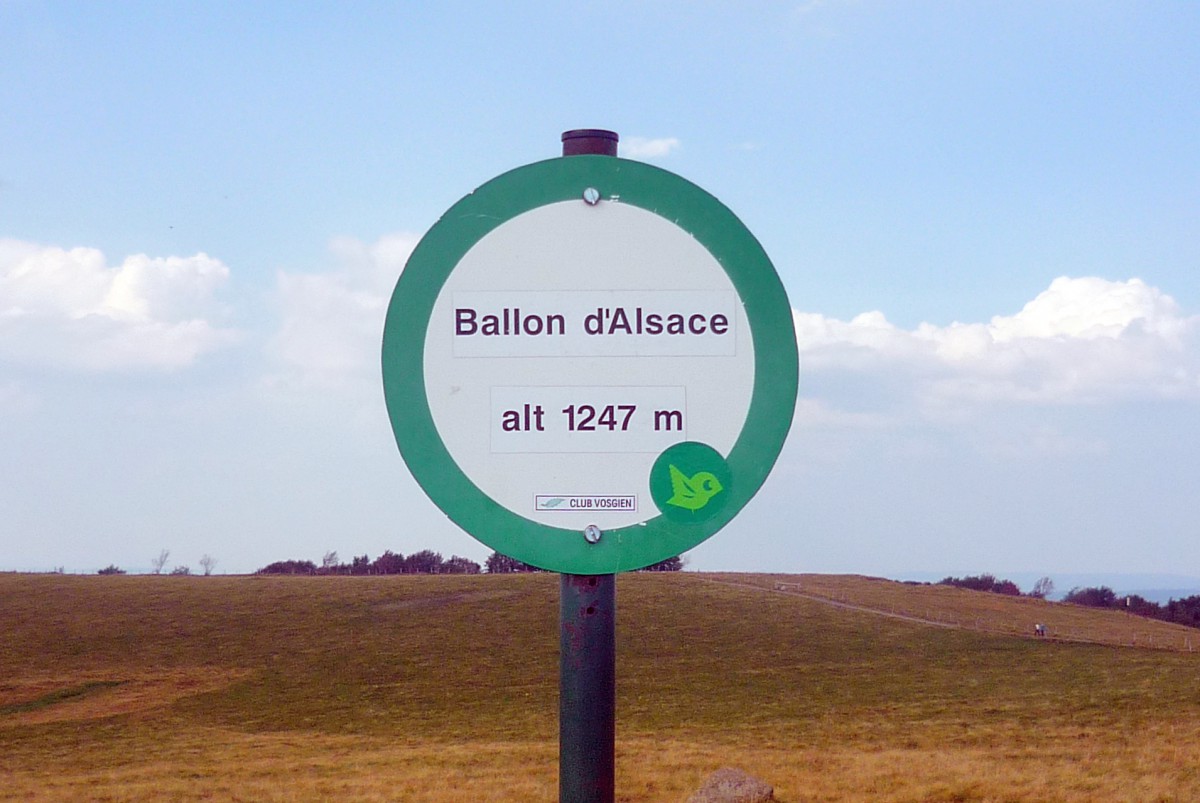
Arrived at the summit! © French Moments
But you can also explore the wider massif. Personally, I know the Ballon d’Alsace well, having hiked both at the summit and around it, especially from Lake Alfeld in the Doller valley.
This area is magnificent. Lake Alfeld, tucked beneath the Vosges slopes, has a more mountainous, more secret atmosphere.
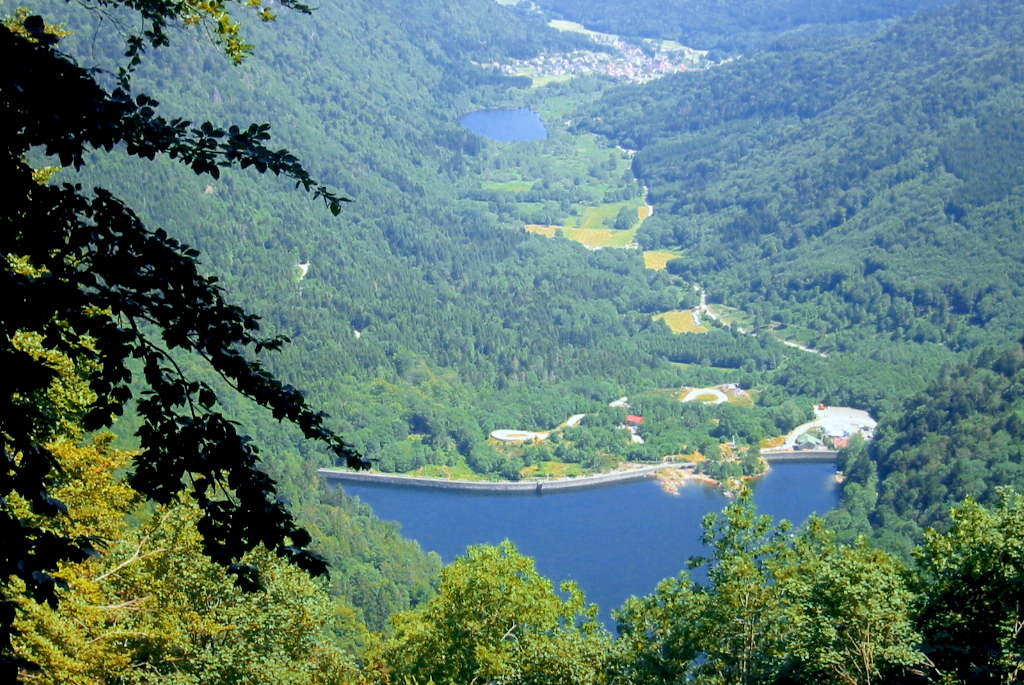
Vallée de la Doller © French Moments
From there, the hikes towards the heights of the Ballon d’Alsace give a real sense of ascent. You leave the valley, cross the forest, and little by little reach the open spaces of the ridges.
That is one of the great pleasures of the Southern Vosges: the distances remain reasonable, but the feeling of being in the mountains is very real.
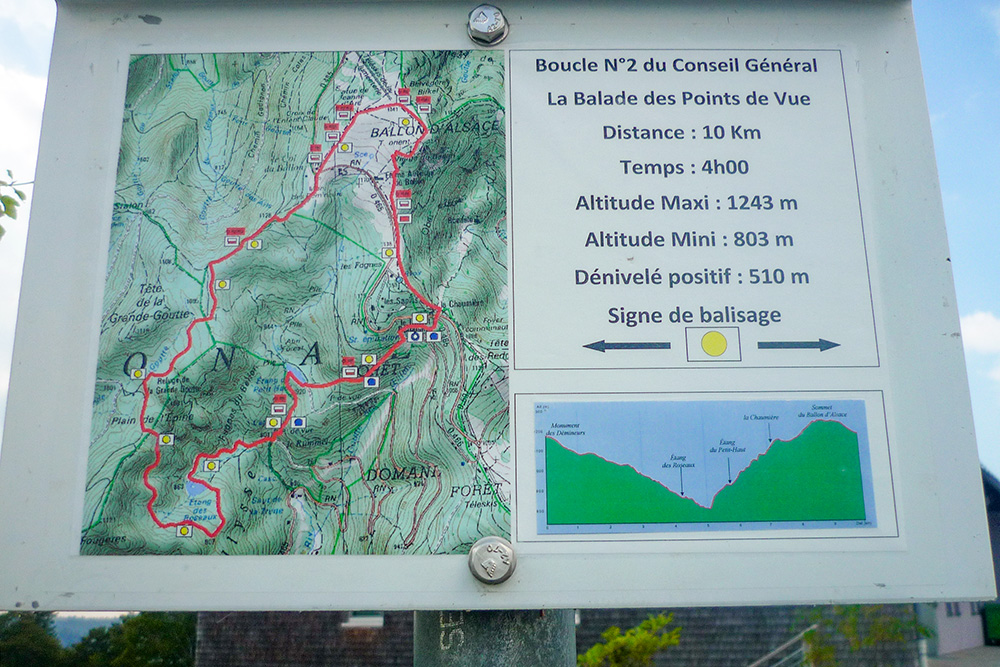
Hiking map © French Moments
The Ballon d’Alsace and the Tour de France
The Ballon d’Alsace holds a special place in the history of the Tour de France.
In 1905, it became the first major mountain pass crossed by the riders of the Grande Boucle. René Pottier was the first to the top, entering the legend of the Tour in the process.
Since then, the Ballon d’Alsace has regularly returned to the route, becoming one of the race’s mythical climbs.
Between 1905 and 2026, the Col du Ballon d’Alsace will have been crossed 28 times by the Tour de France.
That figure says a great deal about the importance of the place in French cycling history. Of course, other Alpine or Pyrenean passes later became more famous, but the Ballon d’Alsace keeps a rare privilege: it opened the great mountain story of the Tour.
In 2026, the Tour de France passes through it again during the stage between Mulhouse and Le Markstein Fellering. On the official profile, the Ballon d’Alsace is classified as a Category 1 climb, with an ascent of 8.9 km at 6.9%.
For television viewers, it may be an opportunity to rediscover a familiar name. For the riders, it will be a serious difficulty in an already demanding Vosges stage.
The Ballon d’Alsace does not have the altitude of the great Alpine passes. But it has history, gradient, forest, bends and that little extra soul that makes places mythical.
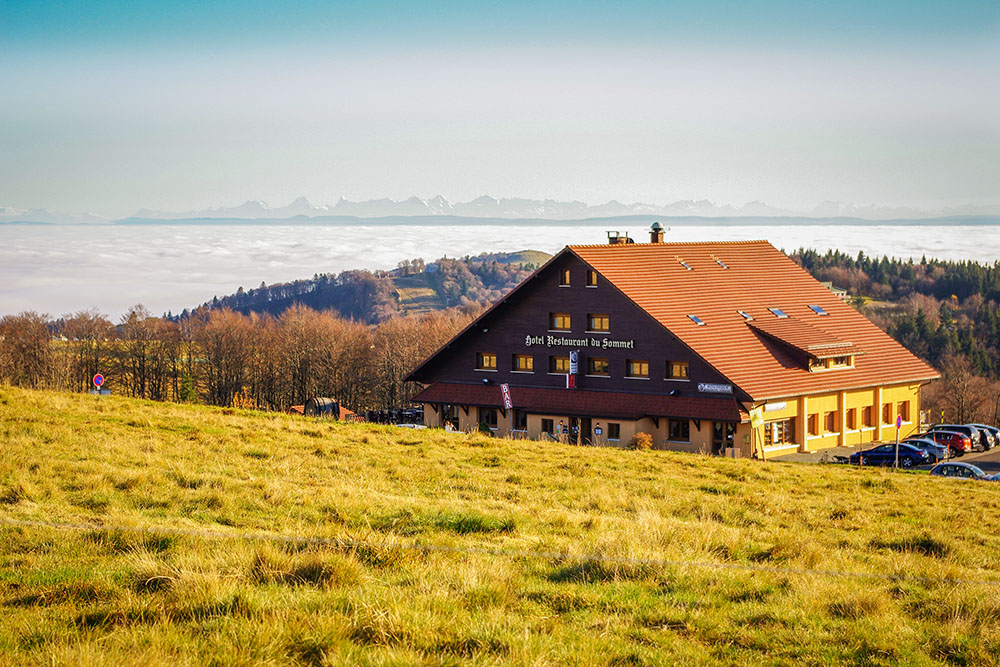
Col du Ballon d'Alsace © French Moments
Cycling up the Ballon d’Alsace
By bike, the Ballon d’Alsace has to be earned.
The three sides offer very different climbs.
From Saint-Maurice-sur-Moselle, you follow the historic, regular and classic ascent.
From Sewen, on the Doller valley side, the climb is longer and more varied, with a very attractive setting around the lakes and the Alsatian mountain landscape.
From Giromagny, you arrive via the Franche-Comté side, with yet another atmosphere.
What makes the Ballon d’Alsace interesting for cyclists is precisely this variety. You can choose your side, compare the gradients, vary the landscapes and, if you are truly motivated, return by another route.
But beware: as so often in the Vosges, the figures do not tell the whole story. An average gradient may seem reasonable on paper, and then suddenly, in a bend, your legs remind you that they did not sign up for a gentle digestive stroll.
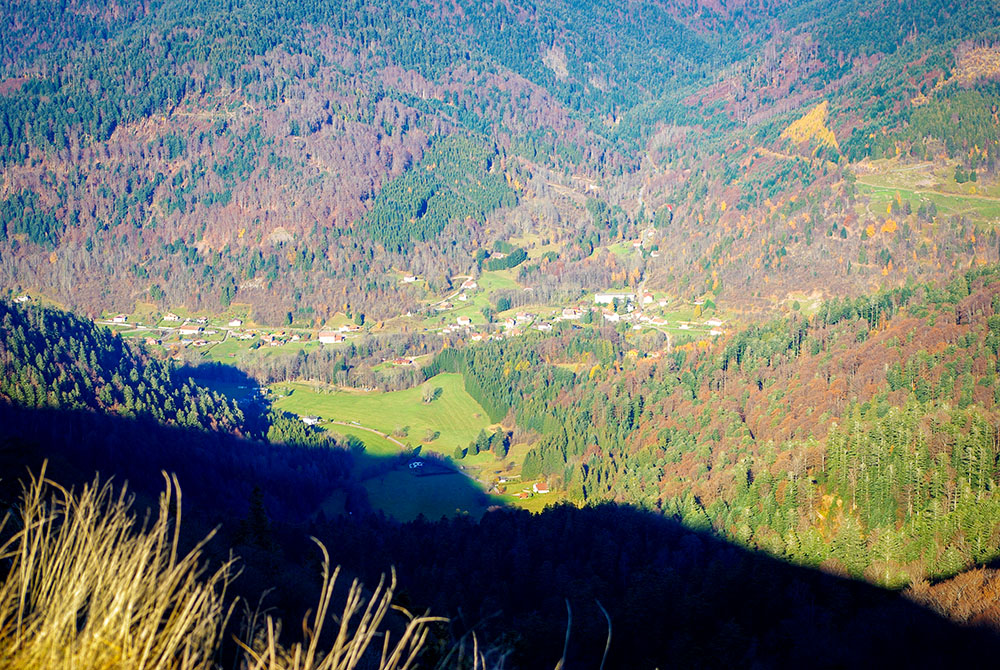
View of Les Charbonniers, Saint-Maurice-sur-Moselle © French Moments
My view of the Ballon d’Alsace
The Ballon d’Alsace is a place I know well.
We used to hike there, either at the summit or in the surrounding massif. The area around Lake Alfeld, in the Doller valley, was one of our most familiar access points, because it was easily reached from southern Alsace.
For me, the Ballon d’Alsace remains deeply linked to this idea of meeting. A meeting between Alsace, Lorraine and Franche-Comté. A meeting between nature and history. A meeting between walkers, hikers, cyclists, families, skiers and simple visitors who have come to take the air.
It is not just a summit you climb in order to tick a box. It is a place you feel. A place where the landscapes seem to tell several stories at once.
And perhaps that is why the Ballon d’Alsace deserves its title as a mythical summit of the Vosges.
It is not the highest. But it has something that many higher summits do not always have: a soul.