All Souls' Day in France takes place every year on 2 November, the day after All Saints' Day, known in French as La Toussaint.
It is a day when the Catholic Church remembers and prays for those who have died. Yet, rather surprisingly, most of the French customs associated with remembering the dead take place the previous day.
Why do French families visit cemeteries and place chrysanthemums on graves on 1 November, rather than on All Souls' Day itself?
The answer has much to do with the French public holiday calendar. But there is also an interesting historical connection with the Abbey of Cluny in Burgundy.
Let's discover what All Souls' Day means in France, where the tradition comes from and how it is observed today.
What Is All Souls' Day in France?
All Souls' Day is officially known in French as la Commémoration de tous les fidèles défunts, or the Commemoration of All the Faithful Departed.
It takes place in the Catholic liturgical calendar on 2 November.
The commemoration is dedicated to prayer for the dead, particularly those whom Catholics believe are undergoing purification before entering heaven.
For practising Catholics, the day has a spiritual significance. Praying for the departed is an expression of faith in God's mercy and the hope of eternal life.
In everyday French, All Souls' Day is sometimes called le Jour des Morts (Day of the Dead) or la Fête des Morts, although these are not its official liturgical names.
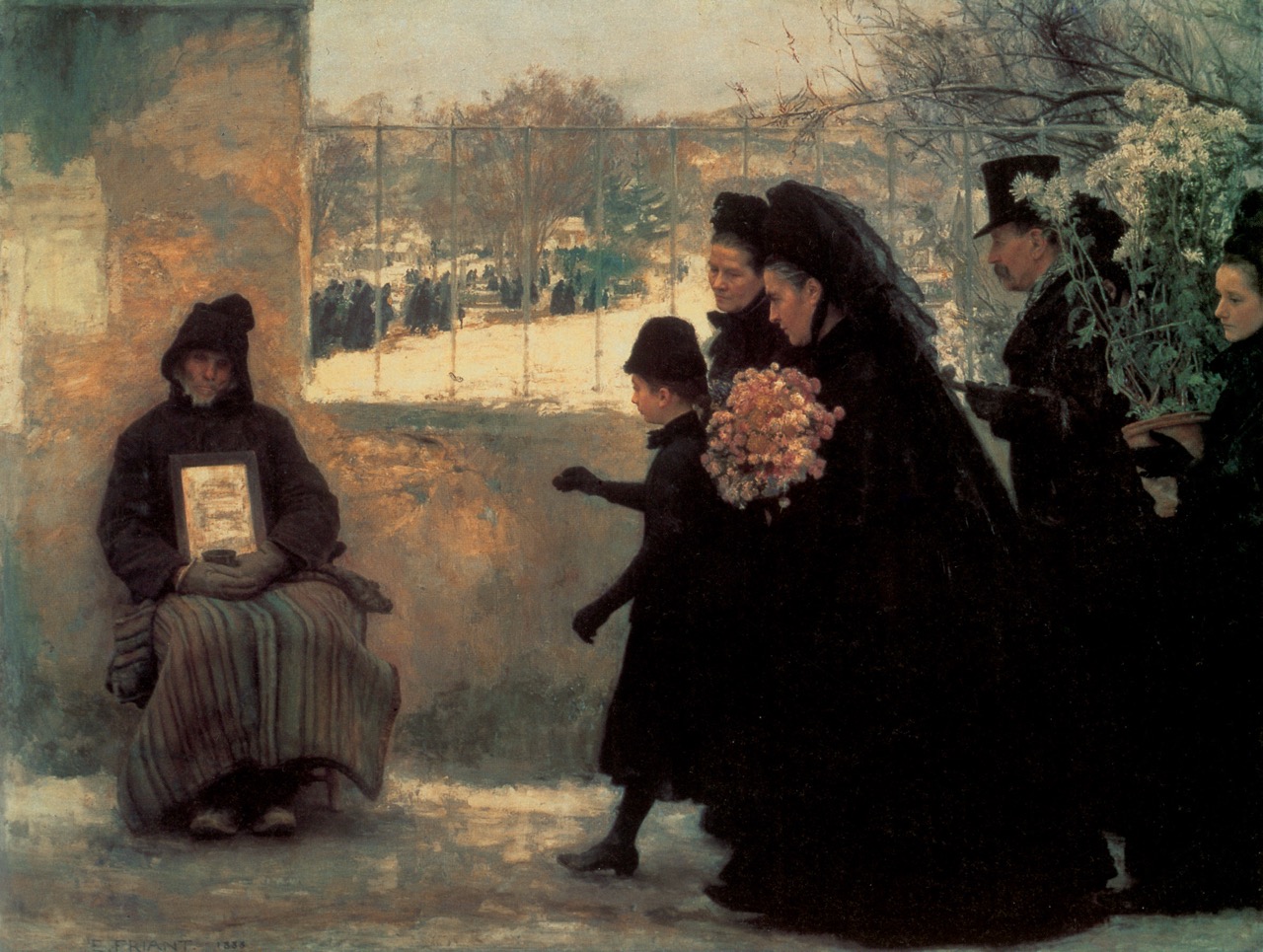
La Toussaint by Emile Friant 1888 - Fine Arts Museum of Nancy
All Souls' Day vs All Saints' Day in France
The difference between the two dates is important, even though they are frequently confused.
All Saints' Day, celebrated on 1 November, honours all the saints, including those who have never been formally canonised.
All Souls' Day, on 2 November, commemorates the faithful departed and is especially associated with prayers for the dead.
| All Saints' Day | All Souls' Day | |
|---|---|---|
| Date | 1 November | 2 November |
| French name | La Toussaint | Commémoration des fidèles défunts |
| Religious meaning | Honouring all the saints | Praying for the faithful departed |
| Public holiday in France | Yes | No |
| Cemetery visits | Very common | Also possible |
In practice, the traditions surrounding these two days have become closely connected.
Many French families visit cemeteries on 1 November to clean family graves, place flowers and remember deceased relatives. The main reason is that All Saints' Day is a public holiday.
This explains why the French custom of remembering the dead is so closely associated with La Toussaint, even though the official Catholic commemoration takes place the following day.
You can find out more about 1 November in my article on All Saints' Day in France.
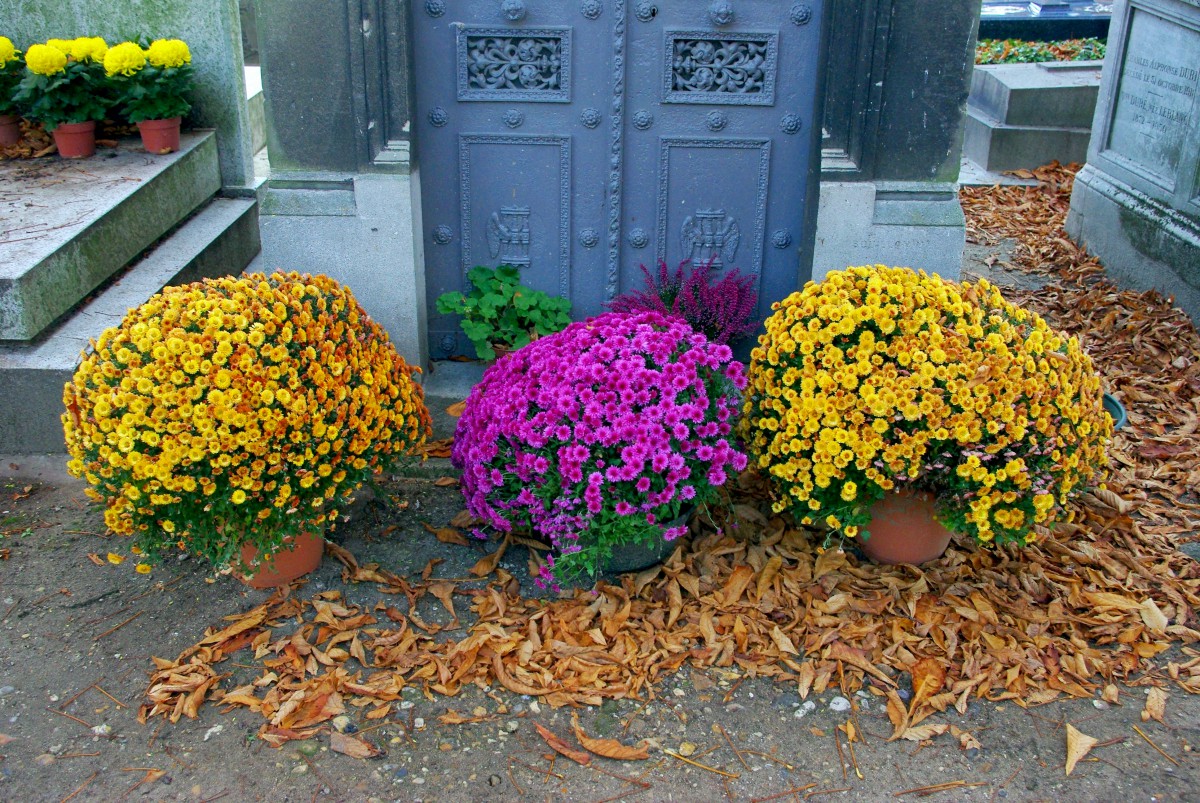
Chrysanthemums for All Souls' Day in France © French Moments
The History of All Souls' Day in France
The New Testament does not explicitly instruct Christians to pray for the dead. However, historical sources show that certain Christian communities developed practices of commemorating and praying for the departed in the centuries following the apostolic period.
These practices gradually became established in parts of Western Christianity. By the ninth century, Amalarius of Metz was already discussing a specific liturgical office for the dead.
Later, towards the end of the Early Middle Ages, the establishment of 2 November as an annual day of commemoration became closely associated with the Abbey of Cluny in Burgundy.
Amalarius of Metz and the Early Office for the Dead
Before the establishment of All Souls' Day on 2 November, Christian liturgical practices commemorating the dead had already developed over several centuries.
An interesting reference comes from Amalarius (Amalaire in French), a ninth-century churchman closely associated with Metz in Lorraine.

Metz by the Moselle River © French Moments
Around 820, in his work De ecclesiasticis officiis, Amalarius discussed a liturgical office for the dead.
This provides evidence that commemorations of the departed were already taking a more formal place in Western Christian worship before the time of Saint Odilo of Cluny.
However, an office for the dead should not be confused with the later annual commemoration specifically observed on 2 November.
That development would become particularly associated with the Abbey of Cluny towards the end of the tenth century.
Saint Odilo of Cluny and the 2 November Tradition
Founded in 910, the Abbey of Cluny became one of the most influential monasteries in medieval Europe.
Its religious influence extended far beyond Burgundy, thanks to a network of monasteries and priories that followed its customs.
One of Cluny's most important abbots was Saint Odilo (saint Odilon in French), who governed the abbey from 994 until 1049.
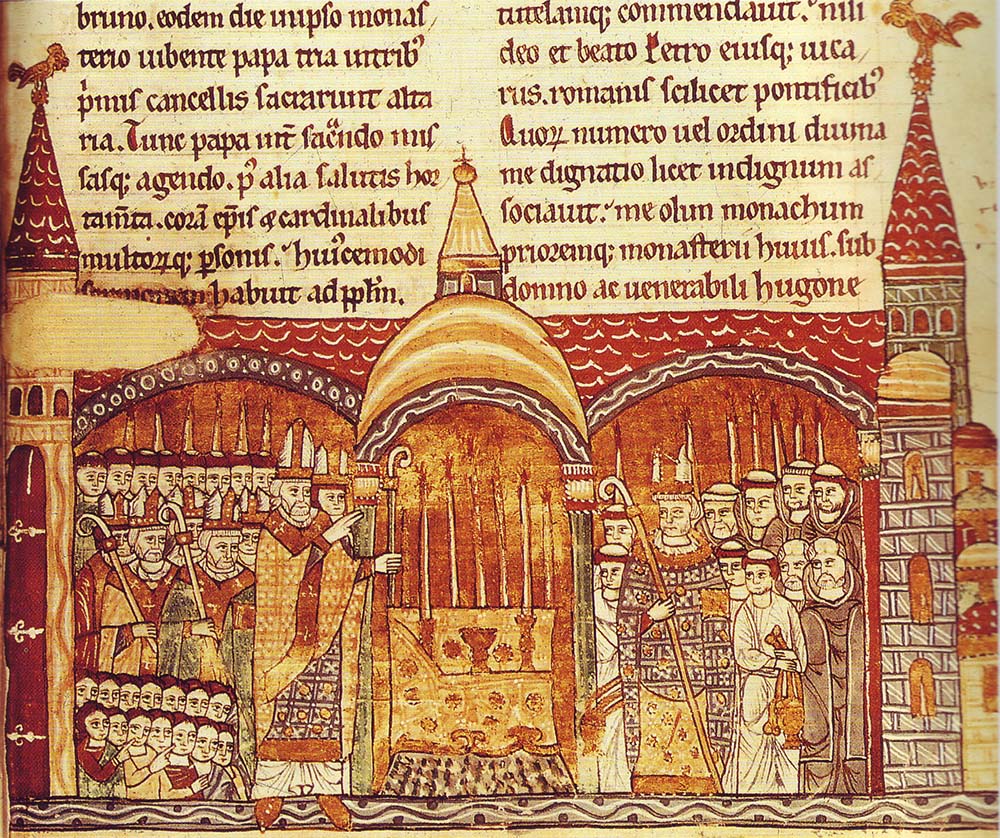
Dedication of Cluny Abbey III by Pope Urban II in 1150
How Saint Odilo Established the 2 November Commemoration
During his abbacy, Odilo introduced a special commemoration of the faithful departed on 2 November in the Cluniac monasteries.
The monks offered prayers and celebrated religious services for those who had died.
The custom gradually spread beyond the Cluniac network and became established more widely in the Western Church.
Odilo did not originate the practice of praying for the dead, which had developed in parts of Christianity centuries earlier. His contribution was to establish a particular annual commemoration within the Cluniac tradition, which subsequently spread more widely in the Western Church.
What I find particularly interesting is that a commemoration still observed by Catholics around the world today owes an important part of its development to a monastery in Burgundy.
Cluny itself is well worth discovering. Although much of the great abbey was dismantled after the French Revolution, its surviving buildings and remains give an idea of the extraordinary importance of this religious centre during the Middle Ages.
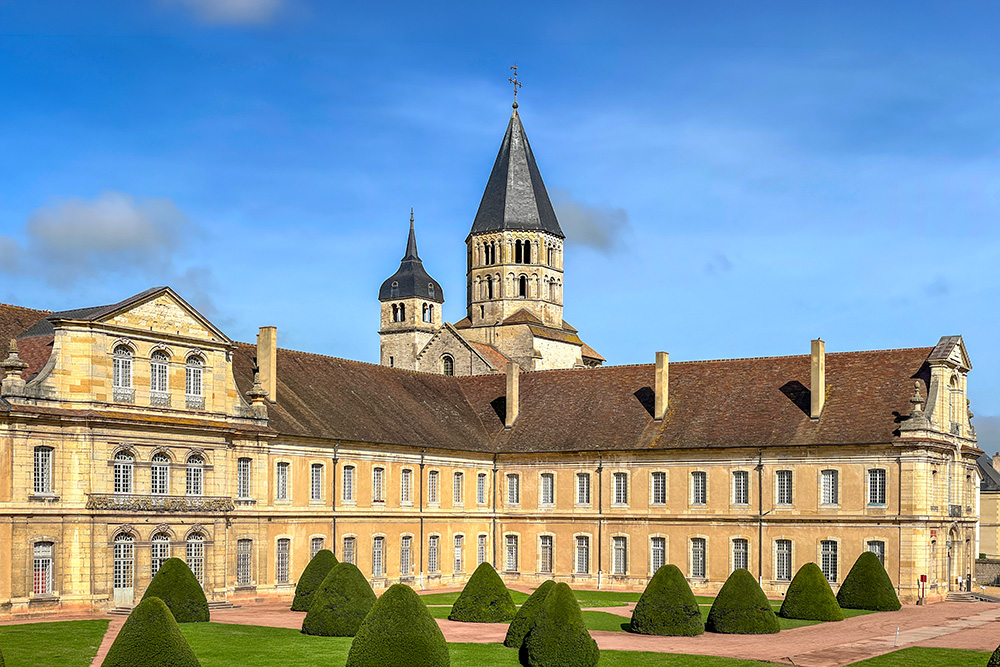
Cluny Abbey © Chabe01 - licence [CC BY-SA 4.0] from Wikimedia Commons
How Is All Souls' Day Observed in France?
Unlike Christmas or Easter, All Souls' Day in France is not associated with large family meals, colourful decorations or public festivities.
It is primarily a religious commemoration, observed through prayers, church services and the remembrance of deceased relatives.
However, not everyone observes 2 November in the same way. For practising Catholics, the day has a particular spiritual significance. For other families, the traditions of remembrance are more closely associated with 1 November.
Prayers and Masses for the Departed
On 2 November, Catholic churches in France celebrate Masses in memory of the faithful departed.
These services include prayers for those who have died, together with readings expressing Christian hope in the resurrection and eternal life.
According to Catholic teaching, the living can pray for the souls of the departed, particularly those undergoing purification before entering heaven.
Some parishes organise special services of remembrance, during which the names of people who have died over the previous year may be mentioned.
The arrangements vary from one parish to another. If you wish to attend a service, it is worth checking the local church's programme.
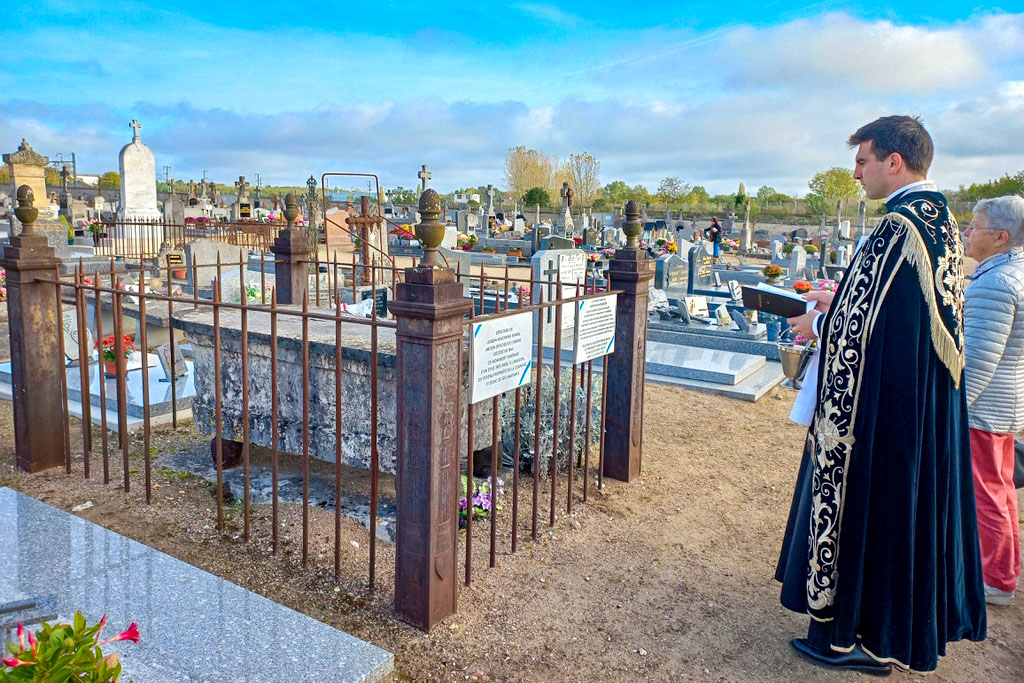
Blessing of the graves at Mortagne-au-Perche on All Souls' Day © Feldbrahi - licence [CC0] from Wikimedia Commons
Cemetery Visits and Family Remembrance
Although All Souls' Day falls on 2 November, many French families visit cemeteries the previous day.
This gives them an opportunity to visit the graves of relatives, clean headstones and place flowers, particularly chrysanthemums.
Some people also visit cemeteries on 2 November, but there is no general obligation to do so.
For many French families, remembering deceased relatives is a custom that continues regardless of religious practice.
Consequently, the traditions associated with All Souls' Day have become closely intertwined with those of La Toussaint.
If you would like to discover more about the appearance, history and organisation of burial grounds in France, see my guide to French cemeteries.

The cemetery of Bonnieux in Provence © French Moments
Is All Souls' Day a Public Holiday in France?
No. All Souls' Day on 2 November is not a national public holiday in France.
It is All Saints' Day, celebrated on 1 November, that is officially recognised as a public holiday.
On 2 November, shops, businesses, offices and public services generally follow their usual opening hours, although these depend on the day of the week and local circumstances.
There is, however, an interesting detail concerning French schools.
The autumn school holidays are known as les vacances de la Toussaint. They usually include both 1 and 2 November, which means that many children are still on holiday when All Souls' Day takes place.
This can sometimes give visitors the impression that the two dates are equally important in the French public holiday calendar.
In reality, only 1 November is a national public holiday.
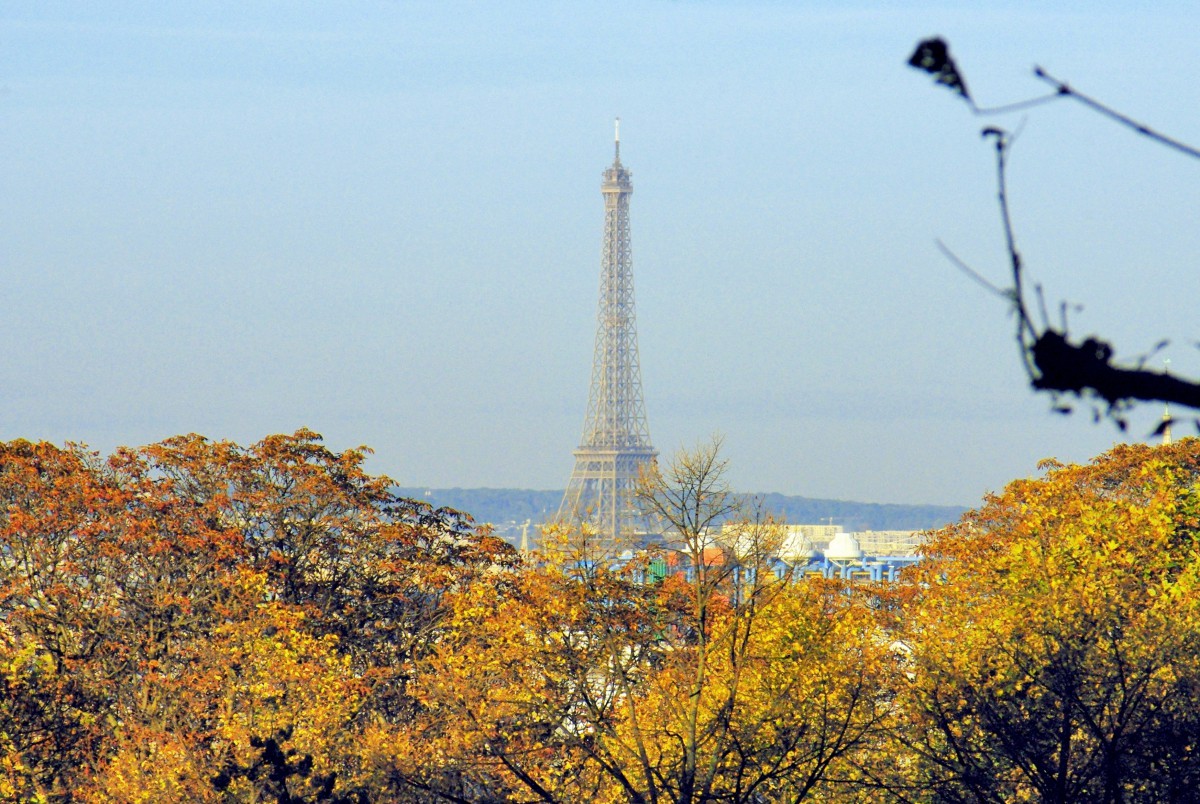
View of the Eiffel Tower from the Père Lachaise cemetery © French Moments
All Souls' Day in France Today
France has changed considerably since the Middle Ages, when the monks of Cluny helped establish the commemoration of the faithful departed on 2 November.
Today, religious observance varies widely across the country, and many French people have little connection with the Catholic Church.
Nevertheless, the beginning of November remains an important time for remembering deceased relatives.
Visit a French cemetery during this period and you will often find graves decorated with fresh chrysanthemums and other flowers.
Some families continue the tradition because of their religious beliefs. Others do so because their parents or grandparents followed the same custom.
The distinction between All Saints' Day and All Souls' Day is not always clearly understood, even in France.
Yet the two dates have different meanings.
On 1 November, the Catholic Church celebrates all the saints. On 2 November, it remembers and prays for the faithful departed.
Together, these observances help explain why the beginning of November remains so closely associated with family remembrance in France.
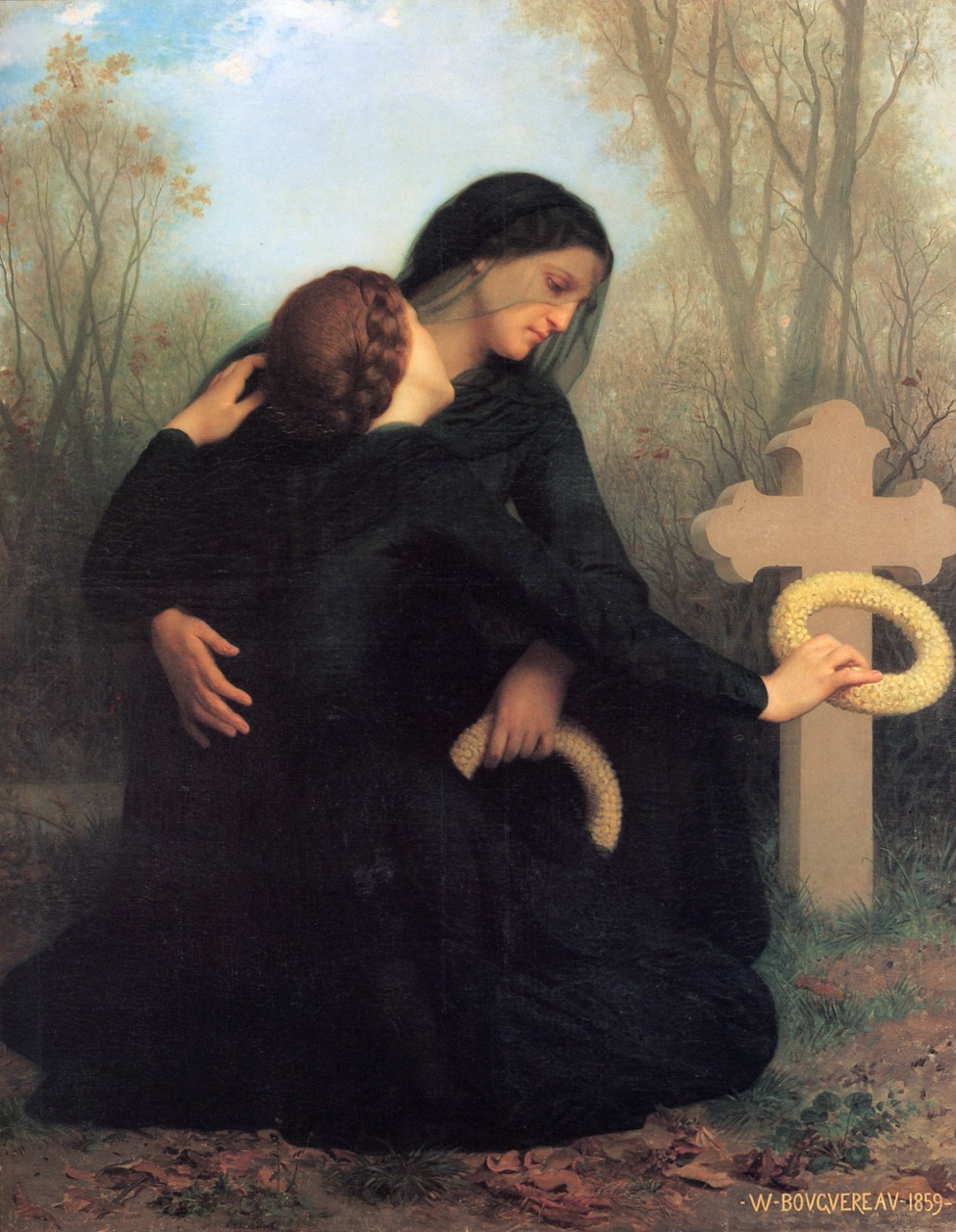
The Day of the Dead, painting by William Adolphe Bouguereau (1859)
Frequently Asked Questions About All Souls' Day in France
When is All Souls' Day in France?
All Souls' Day is observed every year on 2 November, immediately after All Saints' Day on 1 November.
What is All Souls' Day called in French?
The official Catholic name is la Commémoration de tous les fidèles défunts. It is also sometimes called le Jour des Morts or la Fête des Morts in everyday French.
Is All Souls' Day a holiday in France?
No. All Souls' Day is not a national public holiday in France. All Saints' Day, celebrated the previous day on 1 November, is a public holiday.
Why do French people visit cemeteries on 1 November instead of 2 November?
Many French families visit cemeteries on 1 November because it is a public holiday. Over time, the traditions of remembering the dead and decorating graves have become closely associated with La Toussaint, although the Catholic commemoration of the faithful departed officially takes place on 2 November.