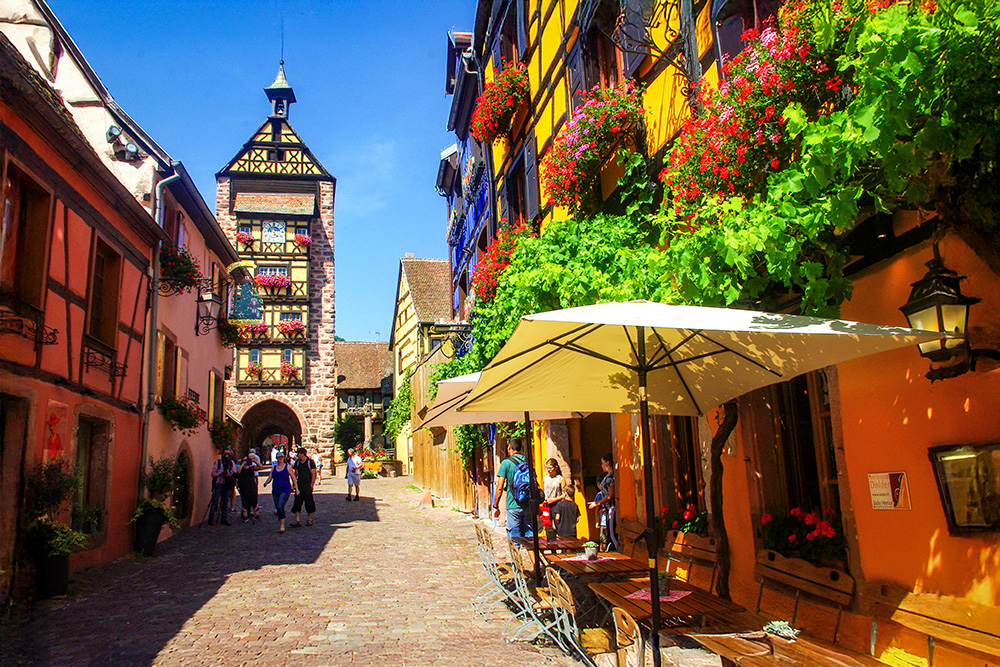


If there's one village that deserves a place on your itinerary when visiting Alsace, it's Riquewihr!
Situated along the famous Alsace Wine Route, just north of Colmar, Riquewihr is one of those places I never tire of exploring.
Its colourful half-timbered houses, narrow cobbled streets, Renaissance façades and medieval fortifications make it one of the most picturesque villages in eastern France.
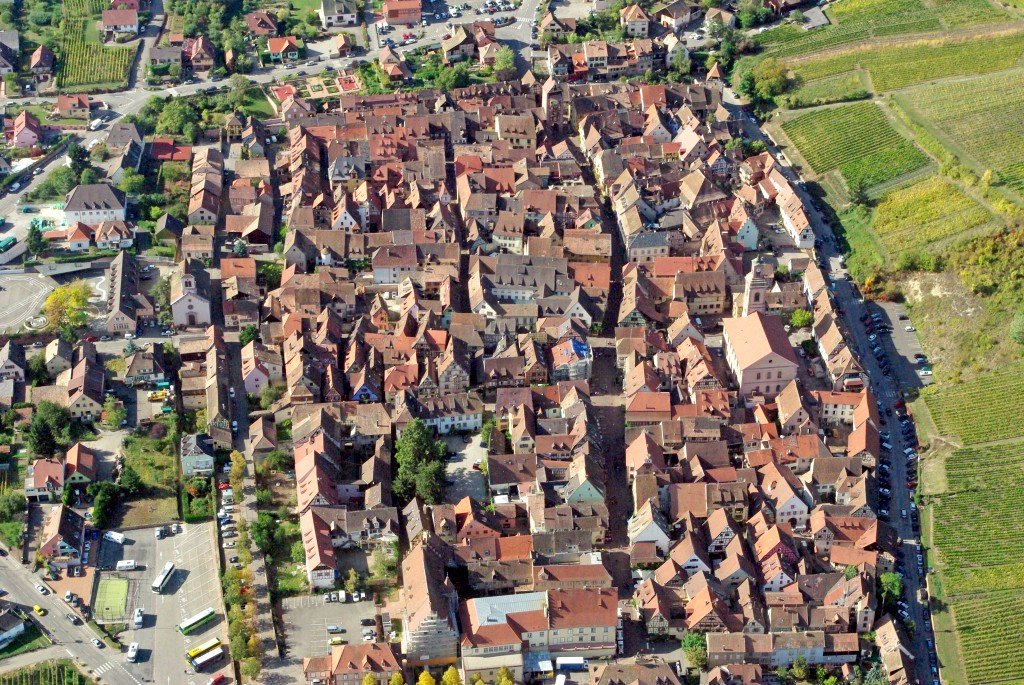
Riquewihr from above © French Moments
Riquewihr is officially recognised as one of Les Plus Beaux Villages de France. Only six Alsatian villages currently hold this distinction: Riquewihr, Eguisheim, Hunawihr, Bergheim, Mittelbergheim and Hunspach.
But there is much more to the village than its pretty houses.
Behind the colourful façades lies a fascinating history, closely connected with the wine trade, the Dukes of Württemberg and the changing fortunes of Alsace.
During my latest visit in May 2026, I filmed a 4K walking tour through the historic centre, including several quiet streets that many visitors overlook.
In this guide, I'll introduce you to the main sights of Riquewihr, share some interesting historical anecdotes and give you practical tips to make the most of your visit.
Where is Riquewihr?
Riquewihr is situated in the Haut-Rhin département of Alsace, in north-eastern France, approximately 15 kilometres north of Colmar.
The village lies at the foot of the Vosges Mountains, in a small valley opening towards the Alsace Plain.
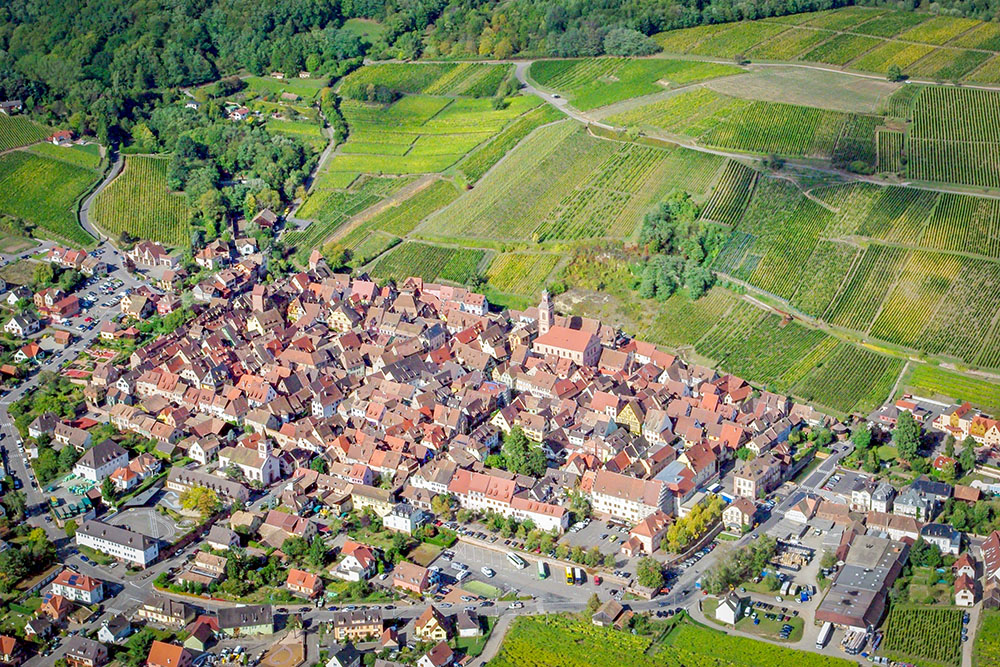
Riquewihr from above © French Moments
It's a particularly attractive setting.
Vineyards cover the surrounding hillsides, while the rooftops of the old town are clustered within the remains of its medieval fortifications.
The main street, known as the Grand'Rue, climbs gently from the Town Hall at the eastern entrance towards the Dolder tower at the western end.
Riquewihr belongs to the Pays de Ribeauvillé-Riquewihr, a wine-growing area that includes several historic villages.
You can discover more of this beautiful corner of Alsace in my guide to the Ribeauvillé–Riquewihr region.
Why Visit Riquewihr?
The first reason is its remarkable architectural heritage.
Riquewihr has retained much of its old street layout, defensive walls and Renaissance buildings. Walking through the centre, you'll find houses dating back several centuries, some with beautifully carved wooden beams, projecting windows and decorated doorways.
The village is also famous for the Dolder, its imposing medieval tower, and the vineyards that surround the old town.

Riquewihr © French Moments
Of course, Riquewihr attracts plenty of visitors, especially in summer and during Advent.
The Grand'Rue can become rather busy!
But take a few steps into the smaller lanes, and you'll discover a quieter side of the village.
That's something I particularly enjoy about Riquewihr. There always seems to be another interesting doorway, courtyard or architectural detail waiting to be discovered.
A Brief History of Riquewihr
The origins of Riquewihr go back to the early Middle Ages.
According to local tradition, a Frankish landowner named Richo established an estate here. His name was associated with Richovilla, which gradually evolved into Riquewihr.
By the twelfth century, the settlement belonged to the Counts of Horbourg.
As the vineyards developed and the town became more prosperous, its rulers decided to strengthen its defences.
In 1291, Riquewihr was surrounded by walls and ditches. Several monuments from this period have survived, including the Dolder and the Thieves' Tower.
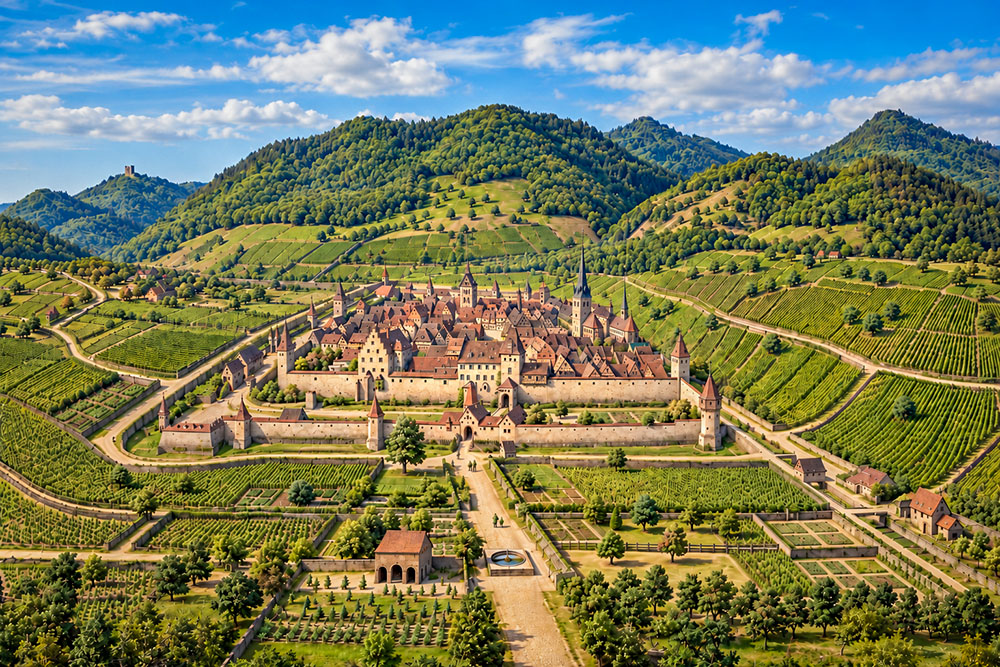
Riquewihr in the 17th century
Riquewihr and the Dukes of Württemberg
In 1324, the Counts of Horbourg sold Riquewihr to the Counts of Württemberg.
For several centuries, the town remained closely connected with the German-speaking world.
Under the Württemberg-Montbéliard dynasty, Riquewihr became an administrative and judicial centre for the family's possessions west of the Rhine.
The Protestant Reformation was introduced in 1534, bringing important changes to religious life.
Riquewihr © French Moments
The Golden Age of Wine
The sixteenth century was one of the most prosperous periods in Riquewihr's history.
Its wines were traded across the Holy Roman Empire and beyond.
Wealthy winegrowers, merchants and local officials built impressive houses, often decorated with Renaissance features that can still be admired today.
This prosperity also explains why such a small town contains so many remarkable buildings.
However, difficult times followed.
During the Thirty Years' War, Riquewihr suffered attacks, pillaging, famine and epidemics. The town was particularly affected in 1635 and again in 1652.
In 1680, Riquewihr came under French royal authority, although its political and legal links with the Württemberg family continued.
It was finally attached to France in 1796, following the French Revolution.
Despite subsequent conflicts and political changes in Alsace, much of the historic centre survived.
And that brings us to the Riquewihr we can explore today.
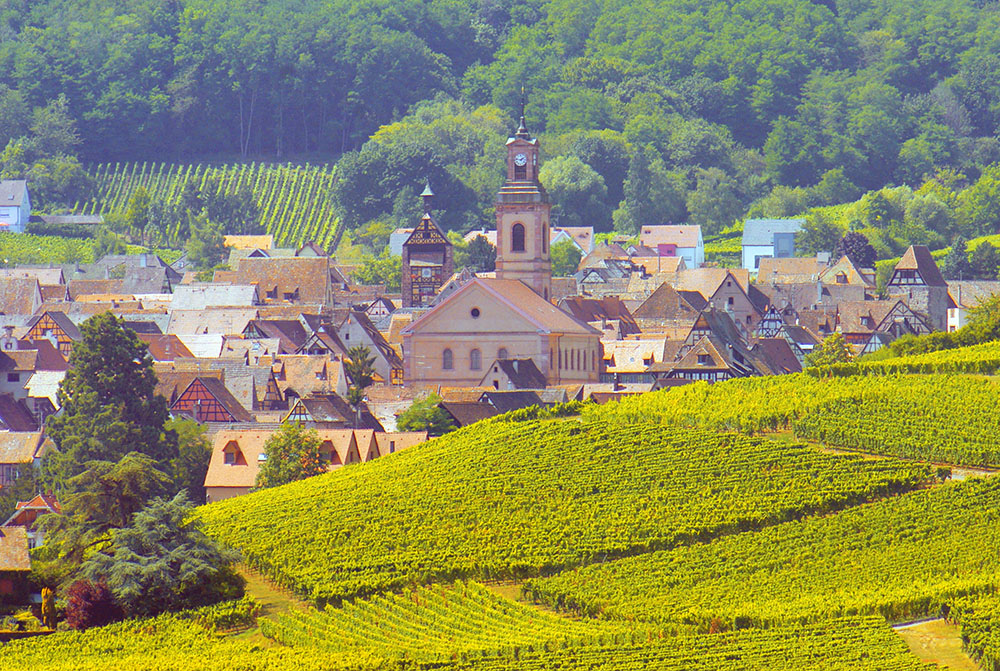
Riquewihr © French Moments
Things to See in Riquewihr
The main sights of Riquewihr are all within a relatively small area.
You can easily walk from one end of the historic centre to the other, but I recommend taking your time.
There are plenty of details worth stopping for.
The Town Hall and Place Voltaire
Most visitors enter the old town through the Town Hall, or Hôtel de Ville, at the eastern end of the Grand'Rue.
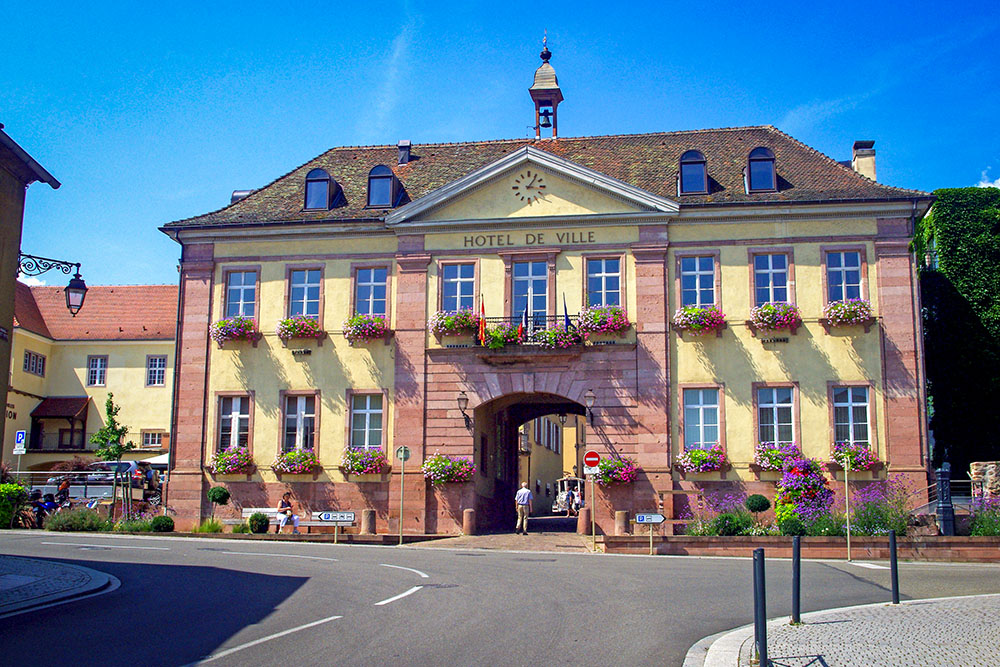
The town-hall of Riquewihr at the entrance to the village © French Moments
Built in 1809, the building has a Neoclassical appearance that contrasts with the traditional houses nearby.
It stands close to the site of the former Lower Gate, demolished in 1808.
Walk through the passage beneath the Town Hall, and you'll reach Place Voltaire, where the main street begins.
This is an excellent starting point for exploring Riquewihr.
Grand'Rue and its Half-Timbered Houses
The Grand'Rue, officially called Rue du Général de Gaulle, is the main street of Riquewihr.
It is lined with colourful half-timbered houses, many dating from the sixteenth and seventeenth centuries.
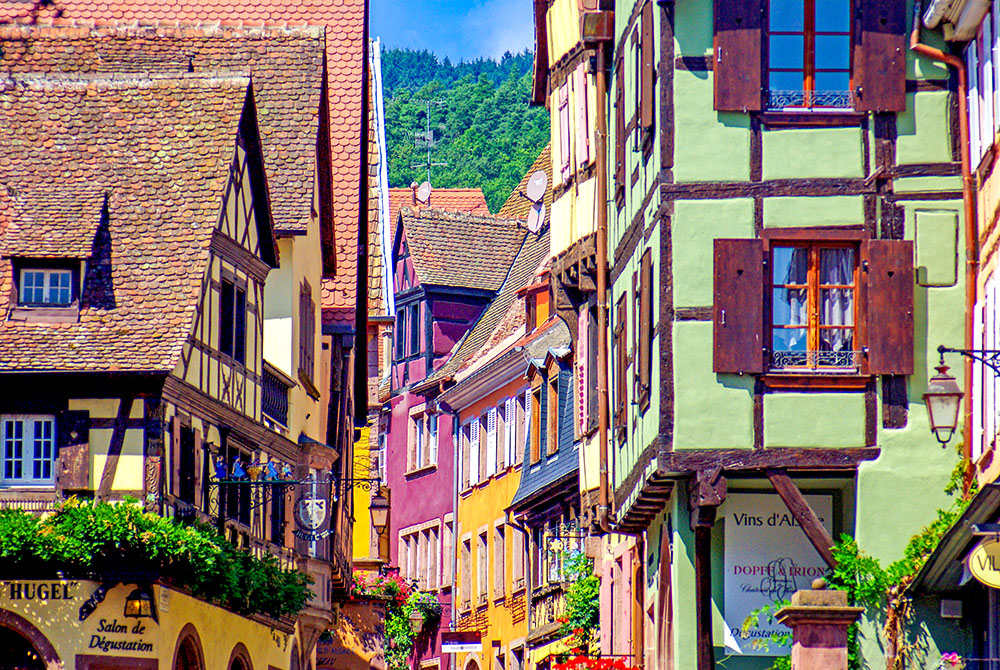
Grand-Rue © French Moments
Look up at the wooden carvings, the projecting upper floors and the beautifully decorated windows.
One of the most remarkable buildings stands at number 14.
Known as the Gratte-Ciel, or Skyscraper, this extraordinary house dates from 1561.
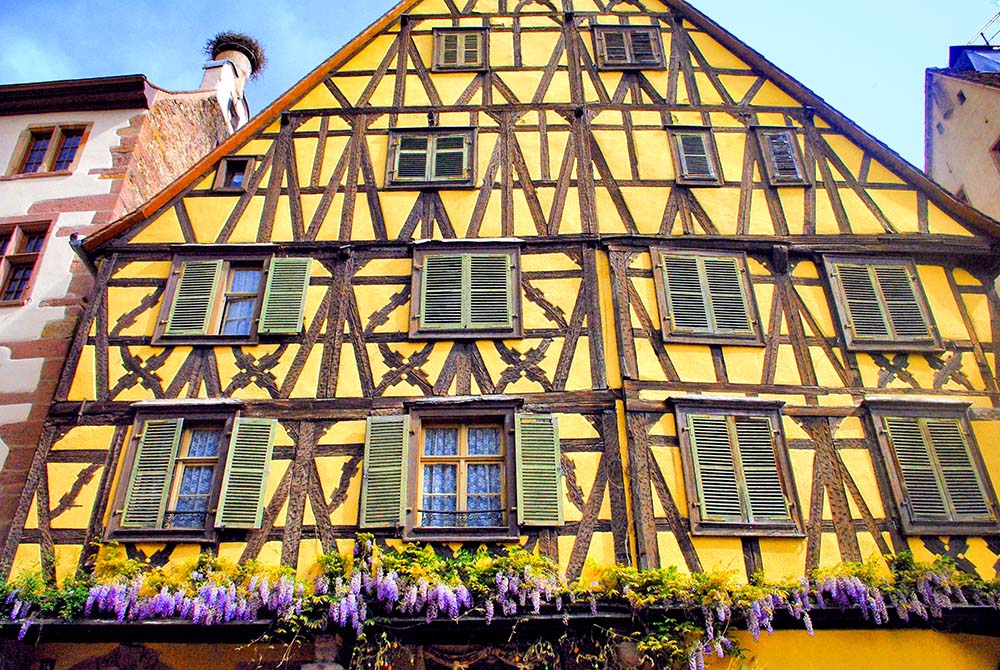
The skyscraper of Riquewihr © French Moments
With five storeys and a height of approximately 25 metres, it is one of the tallest traditional half-timbered houses in Alsace.
Not quite a New York skyscraper, but an impressive achievement for the sixteenth century!
Another interesting building is the Schickhardt House, at number 12, constructed in 1606 by Heinrich Schickhardt, an architect who worked for the Dukes of Württemberg.
The Dolder
At the upper end of the Grand'Rue stands the most famous monument in Riquewihr.
The Dolder was built in 1291 as part of the town's first defensive walls.


Standing 25 metres high, it served as a gateway, watchtower and belfry.
What makes it particularly unusual is the contrast between its two façades.
From inside the town, the tower has an attractive half-timbered appearance.
But walk through the gateway and turn around.
The exterior is much more austere, with massive stone walls designed to discourage potential attackers.
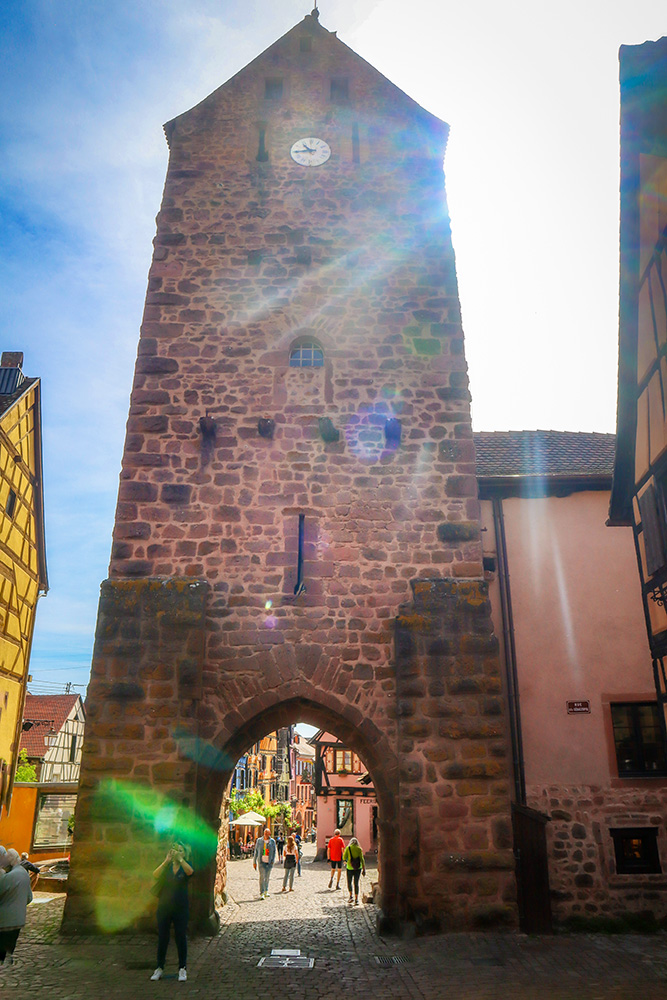
The countryside face of the Dolder © French Moments
This contrast was deliberate.
A watchman once lived in the tower with his family. His duties included keeping watch, closing the gate at night and sounding the alarm in case of danger.
Today, the Dolder houses a museum dedicated to the history of the fortified town, with views over the rooftops from the upper levels.
For further information, visit the official Riquewihr history and architecture page.
The Porte Haute and the Medieval Ramparts
Beyond the Dolder stands the Porte Haute, or Upper Gate.
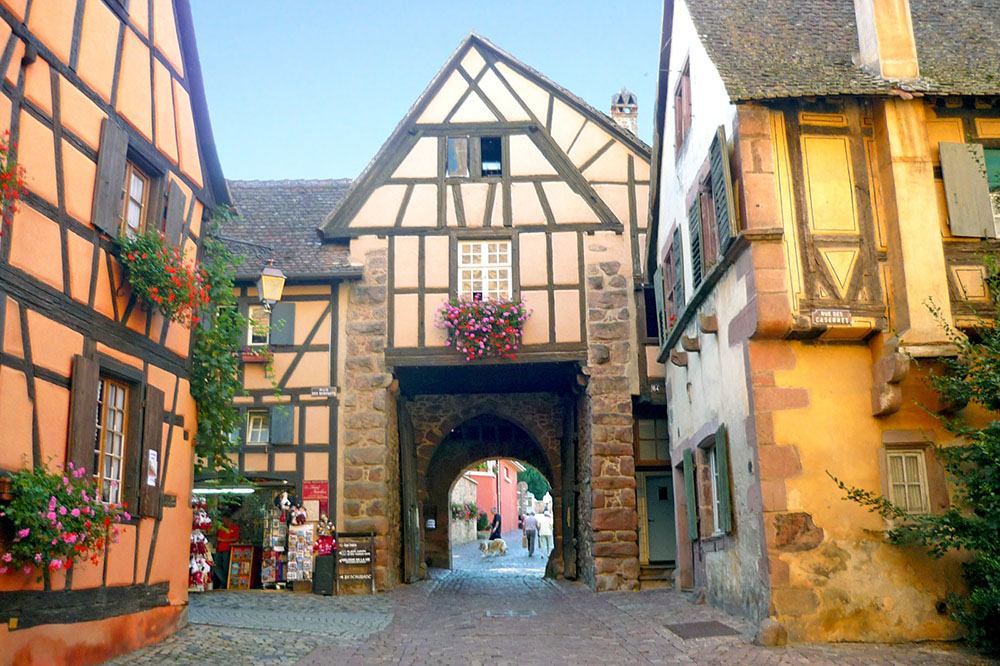
Obertor, Riquewihr © French Moments
The original gateway dates from the late thirteenth century and was strengthened around 1500 when Riquewihr's defences were enlarged.
One of its most remarkable features is a wooden portcullis dating from 1536.
A portcullis was a heavy barrier that could be lowered to block the entrance in case of attack.
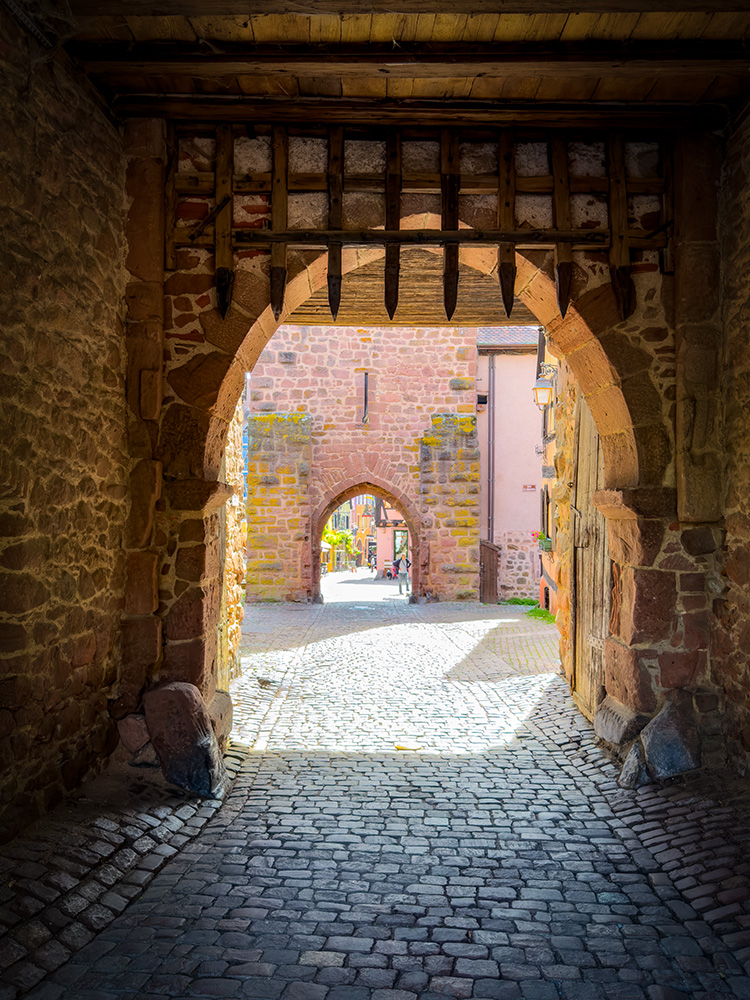
Through the Obertor and the Dolder © French Moments
The defensive walls were essential during the Middle Ages, when prosperous towns were vulnerable to raids and military campaigns.
You can still see sections of the fortifications near the Dolder and along Rue des Remparts.
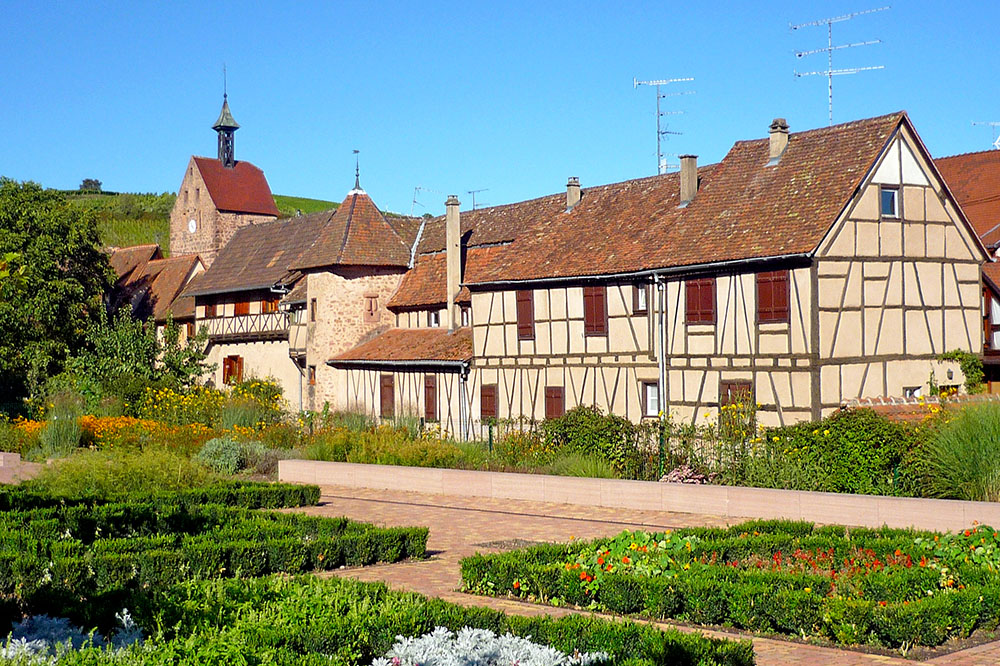
The fortifications of Riquewihr © French Moments
The Thieves' Tower
A short walk from the Dolder, at the end of Rue des Juifs, stands the Tour des Voleurs, or Thieves' Tower.
Built in 1291 and modified during the fifteenth century, it is approximately 18 metres high.
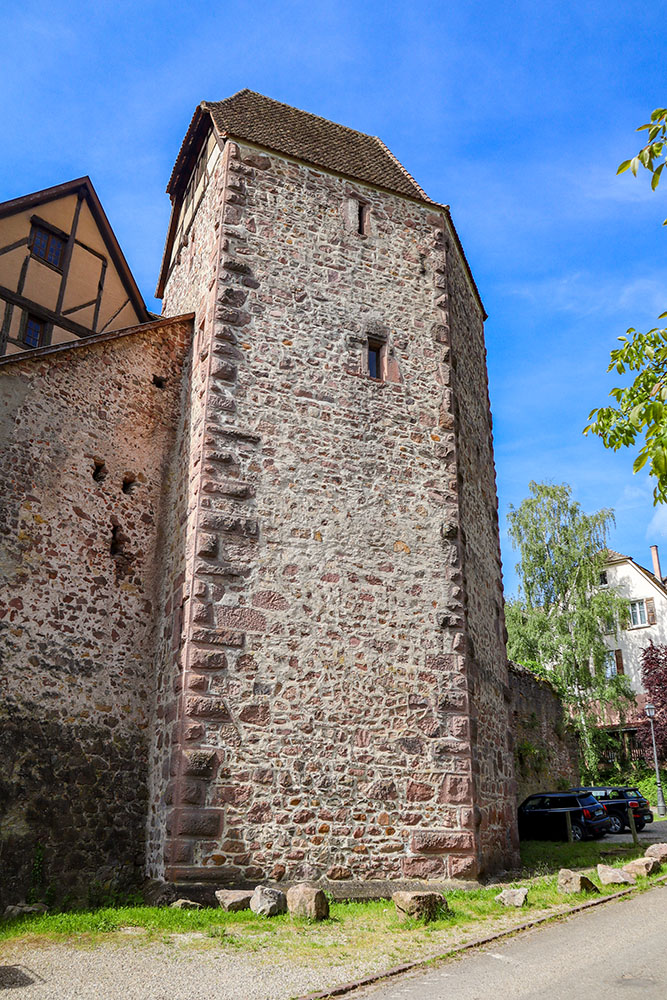
La Porte des Voleurs © French Moments
Its shape is rather unusual: pentagonal on the outside and square on the inside.
Originally part of the defensive system, the tower later served as a prison.
Riquewihr was an important centre of local justice, and prisoners could be detained and interrogated here.
The tower contained a torture chamber, which visitors can discover as part of the museum.
The visit also includes a traditional winegrower's house, offering an insight into everyday life several centuries ago.
It is a reminder that life in a medieval town was not always as peaceful as the pretty streets might suggest!
The Fontaine de la Sinne
At the foot of the Dolder stands the Fontaine de la Sinne, built in 1560.
At first sight, it looks like a typical Renaissance fountain.
But it had a very practical purpose.
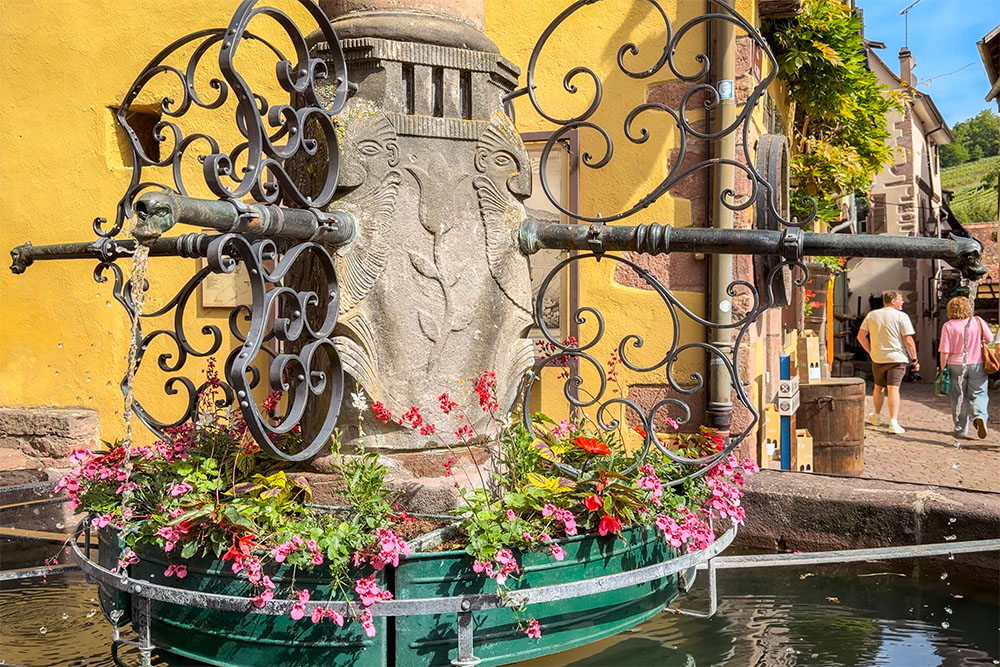
Fontaine de la Sinne © French Moments
Winegrowers used it when checking the capacity of their barrels and other containers.
This was particularly important in a town where the wine trade played such a major economic role.
The heraldic lion above the fountain carries the coats of arms associated with the Lords of Horbourg and Riquewihr.
Look closely, and you'll notice the star and stag antlers among the symbols.
The Château of the Dukes of Württemberg
Not far from the eastern end of the Grand'Rue stands the former château of the Dukes of Württemberg.
Chateau of the counts of Württemberg © French Moments
The present building was constructed around 1540, replacing an earlier residence.
Its distinctive gable is typical of Renaissance architecture in the Rhine region.
The château once played an important administrative role in the town.
After losing its function as a princely residence, it was purchased by Riquewihr in 1861 and subsequently used for other purposes, including education.
The Churches of Riquewihr
Riquewihr's religious history reflects the influence of the Protestant Reformation in Alsace.
The old parish church of Sainte-Marguerite became Protestant in the sixteenth century.
Later, Catholic worship was reintroduced, and the two communities shared the same building under an arrangement known as the simultaneum.
In the nineteenth century, the old church was demolished and replaced by two separate places of worship.
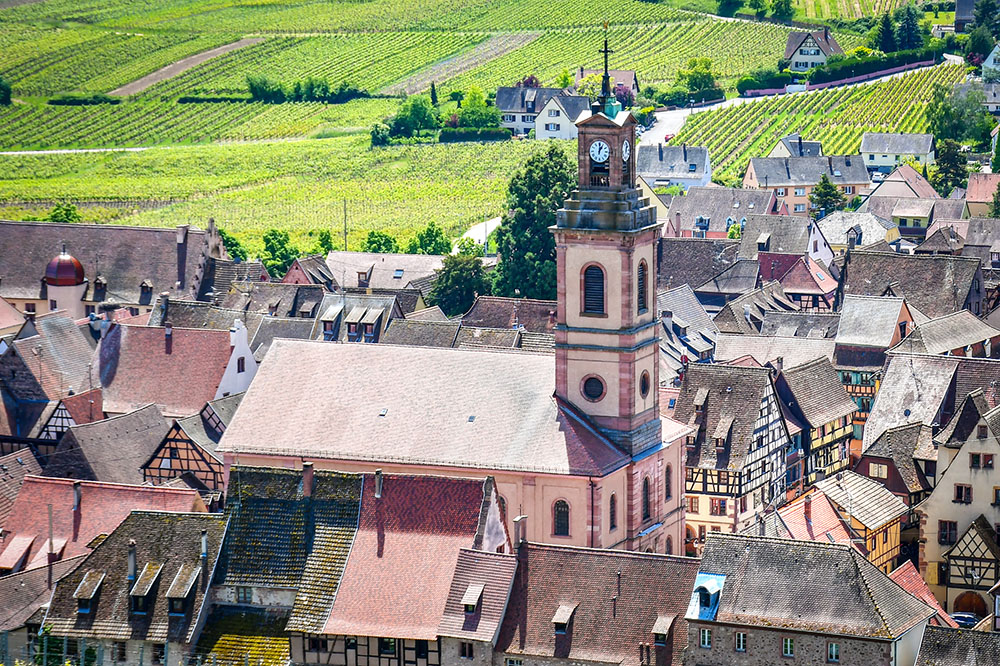
The Protestant Church © French Moments
The Catholic church of Sainte-Marguerite was built between 1846 and 1849, while the Protestant church was constructed over a longer period, from 1846 to 1859.
Another interesting place is the Place des Trois Églises, whose name recalls three religious buildings that once stood in this part of Riquewihr.
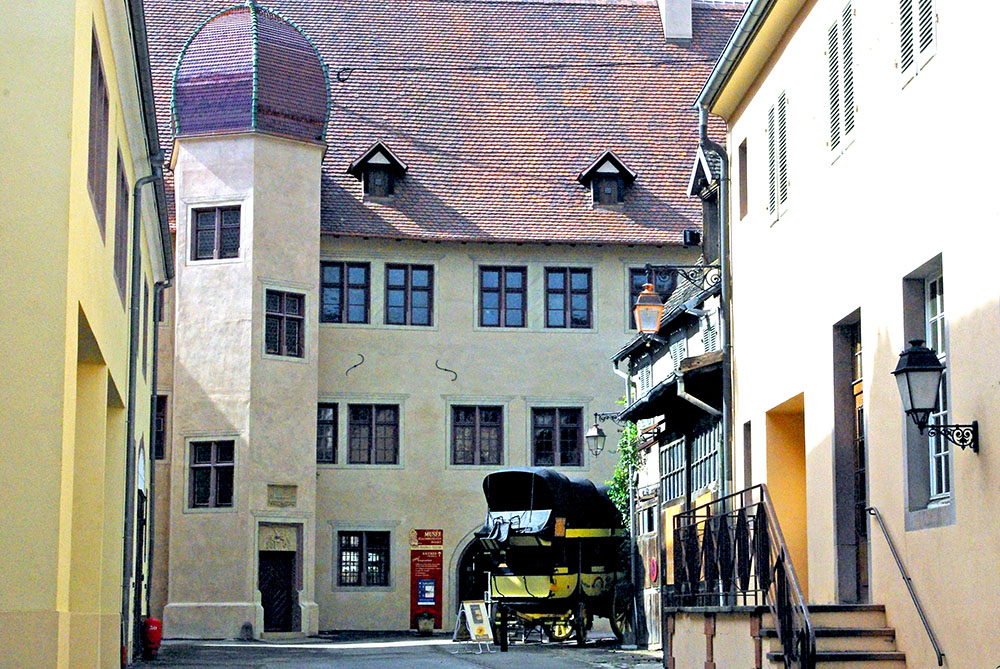
The Cour de Strasbourg
At numbers 11–13, Rue de la Première Armée, you'll find the Cour de Strasbourg, also called the Strassburgerhof.
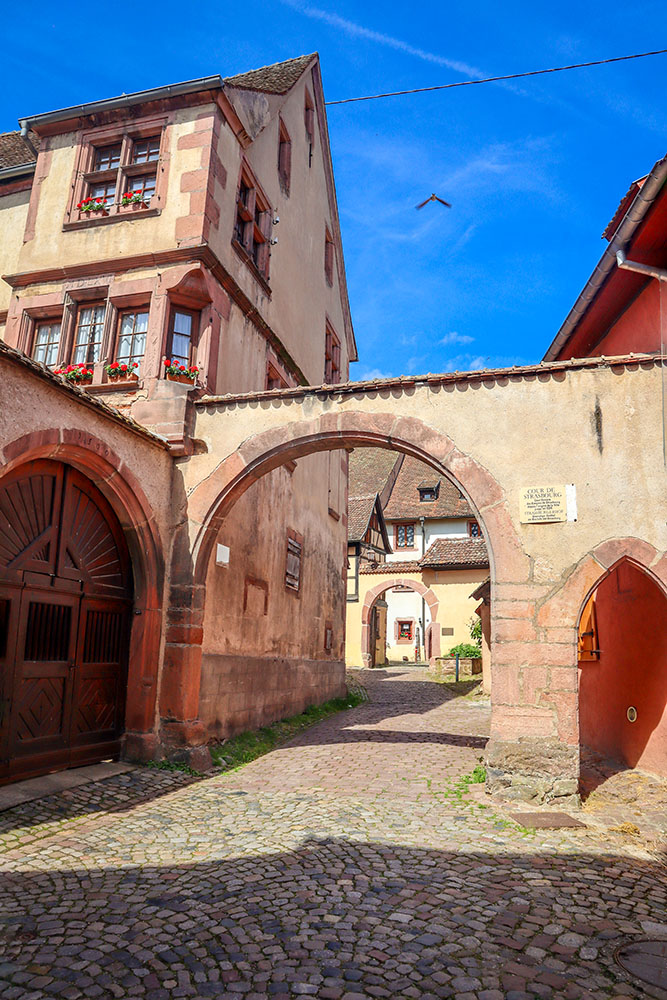
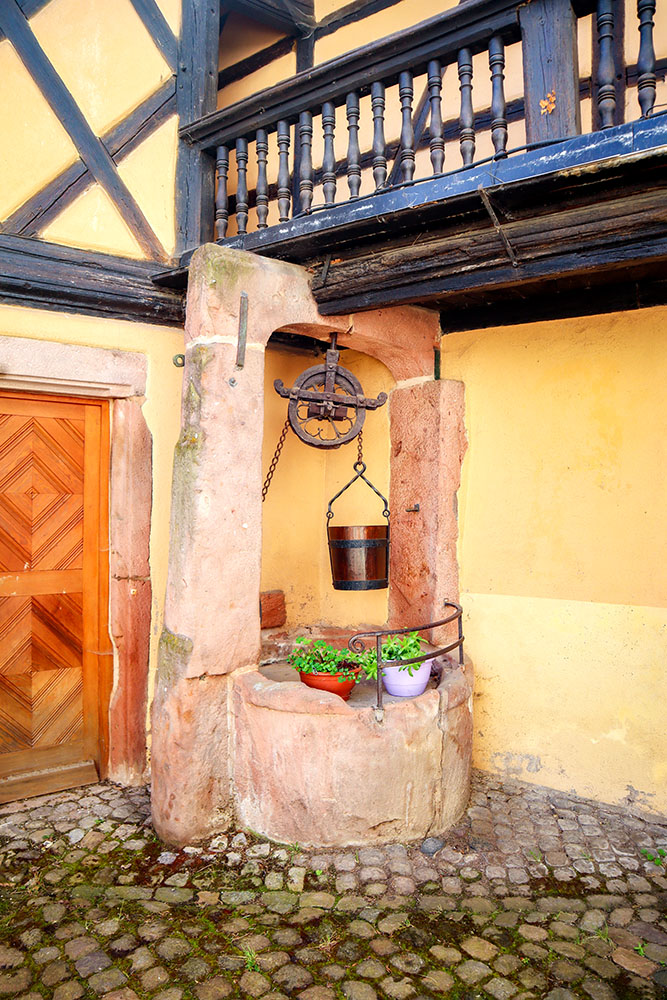
The property was once associated with the bishops of Strasbourg and the collection of agricultural produce from their estates.
The buildings visible today mainly reflect the Renaissance period.
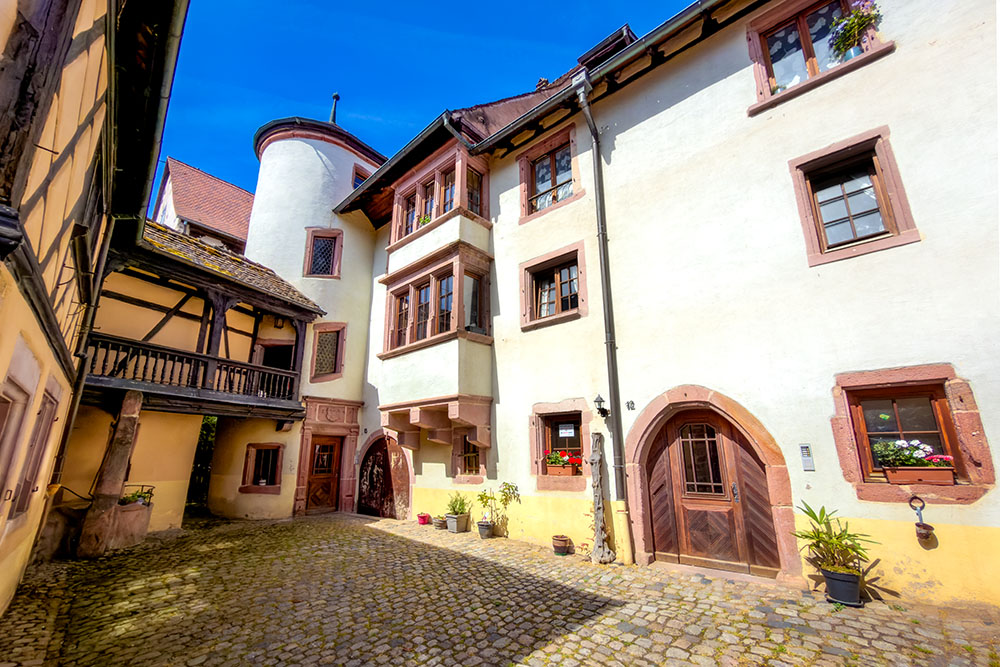
The Cour de Strasbourg © French Moments
Look for the staircase tower and other architectural details around the courtyard.
It's one of those places that remind us why it's worth looking beyond the Grand'Rue.
The Former Courtyard of Autrey Abbey
Another historic property stands at number 5, Rue du Cheval.
Known as the Adrihof, it once belonged to Autrey Abbey, a religious establishment in the Vosges.
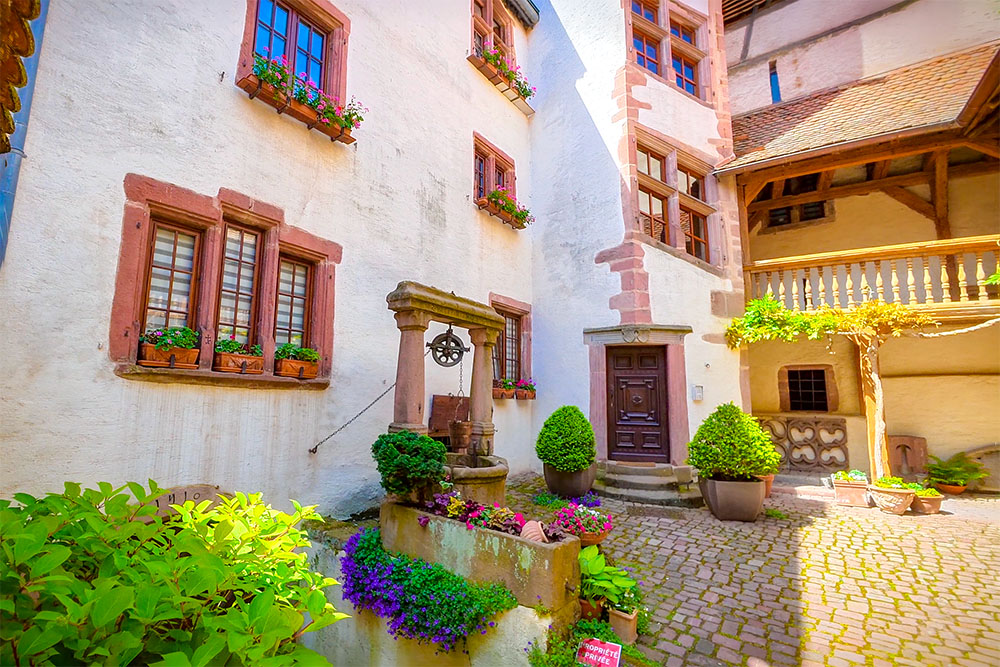
Cour d'Autrey © French Moments
In 1579, the property was purchased by a local winegrower, Melchior Strauss.
He employed a master builder from Milan, Anthoni Mutzat, to remodel the house.
The building includes a projecting oriel window, a staircase tower and an old entrance to the cellar.
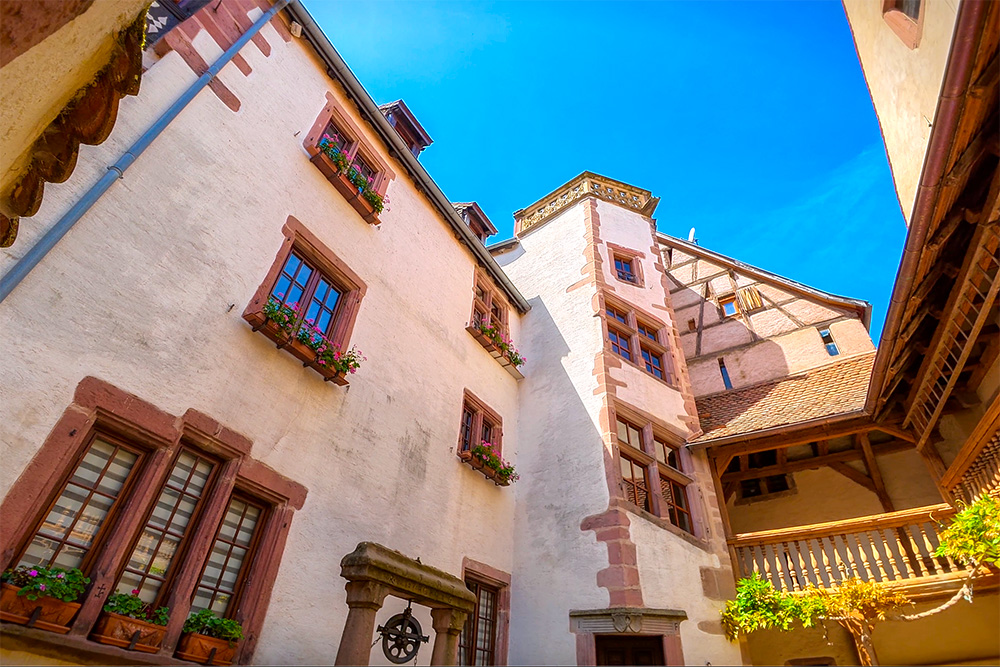
Cour d'Autrey © French Moments
These features illustrate the architectural influences that travelled across Europe during the Renaissance.
Remarkable Renaissance Houses
Riquewihr contains many houses that deserve a closer look.
One of the finest is the Maison Dissler, at number 6, Rue de la Couronne.
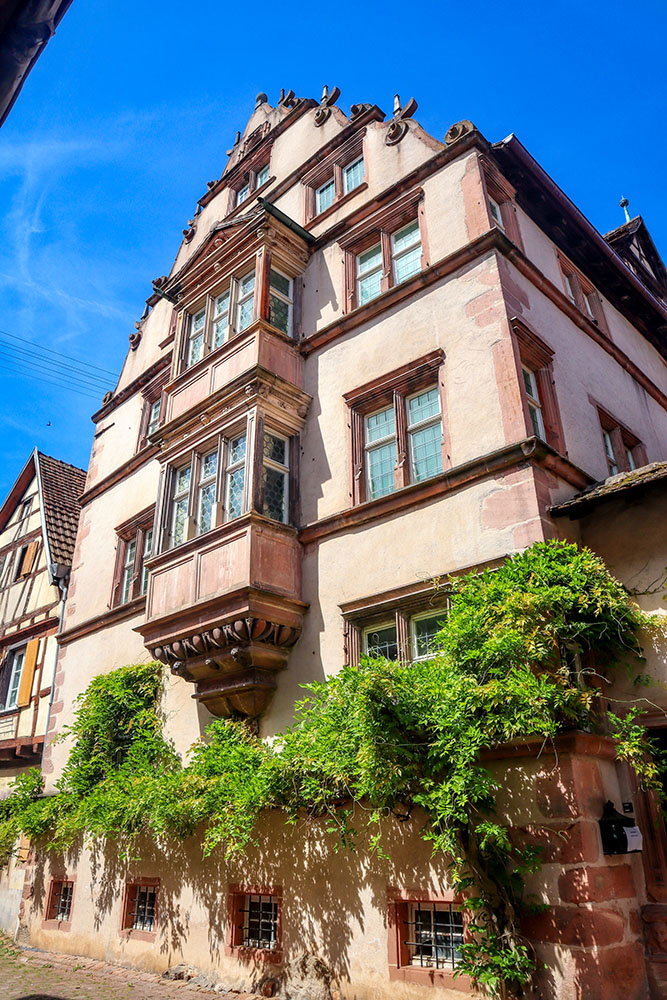
Maison Dissler © French Moments
Rebuilt in 1609–1610, it belonged to Peter Muller, a prosperous winegrower, innkeeper and wine expert who became mayor of Riquewihr in 1619.
Its Renaissance façade, richly decorated oriel window and distinctive gable reflect the wealth of its owner.
Another interesting residence is the Maison Conrad Ortlieb, at number 2, Rue du Cerf.
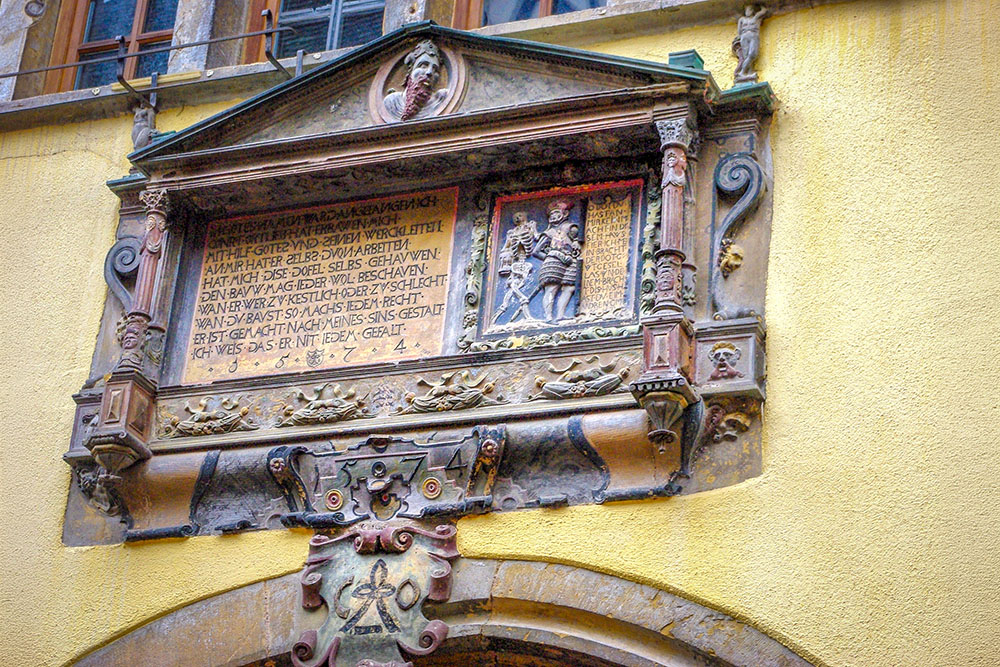
Maison Ortlieb © French Moments
Built in 1574, it belonged to a man who worked as a gourmet.
In old Alsace, this term did not have quite the same meaning as in modern English.
A gourmet was a recognised wine expert who acted as an intermediary between producers and buyers.
Given the importance of the wine trade, it was a respected profession.
The Quiet Backstreets
Don't limit yourself to the main tourist route.
Streets such as Rue Hederich, Rue Latérale, Rue Saint-Nicolas and Rue des Écuries Seigneuriales reveal another side of Riquewihr.
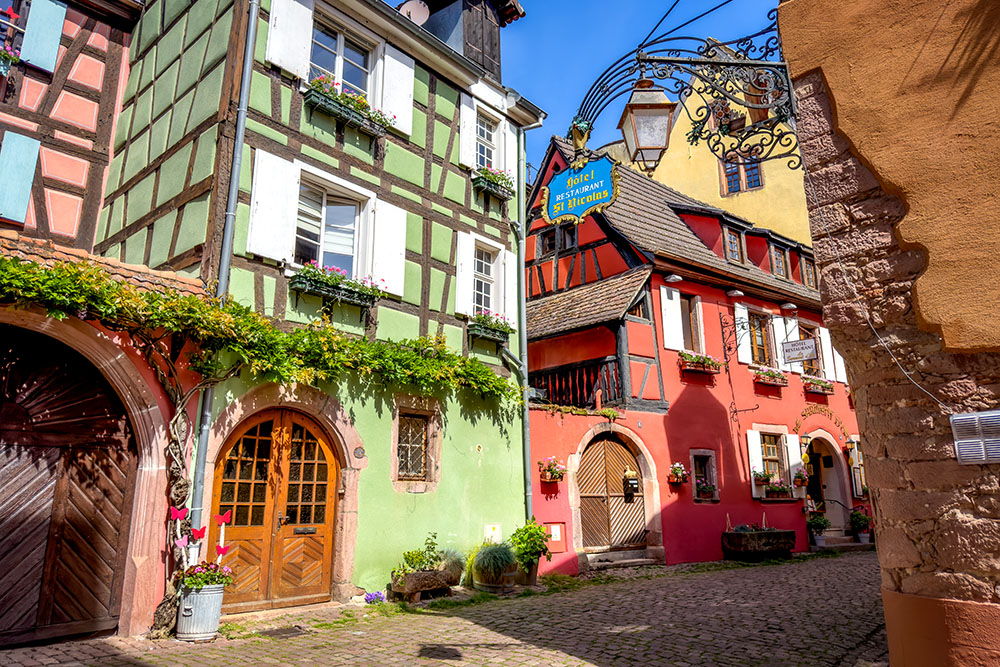
Rue du Cerf © French Moments
Here, you'll find old wells, wooden galleries, decorated doorways and beautiful groups of half-timbered houses.
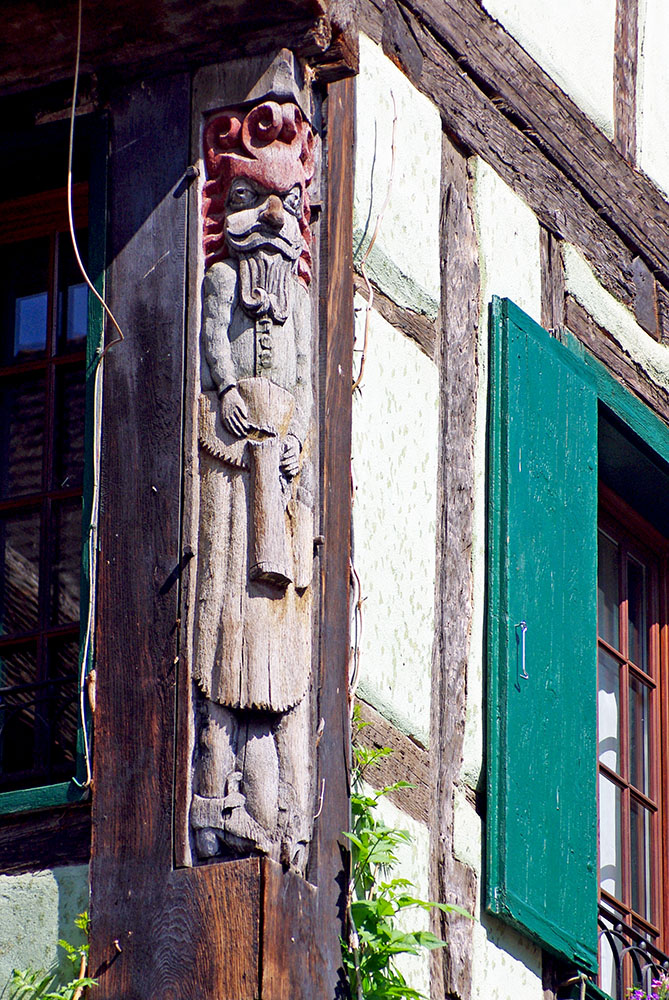
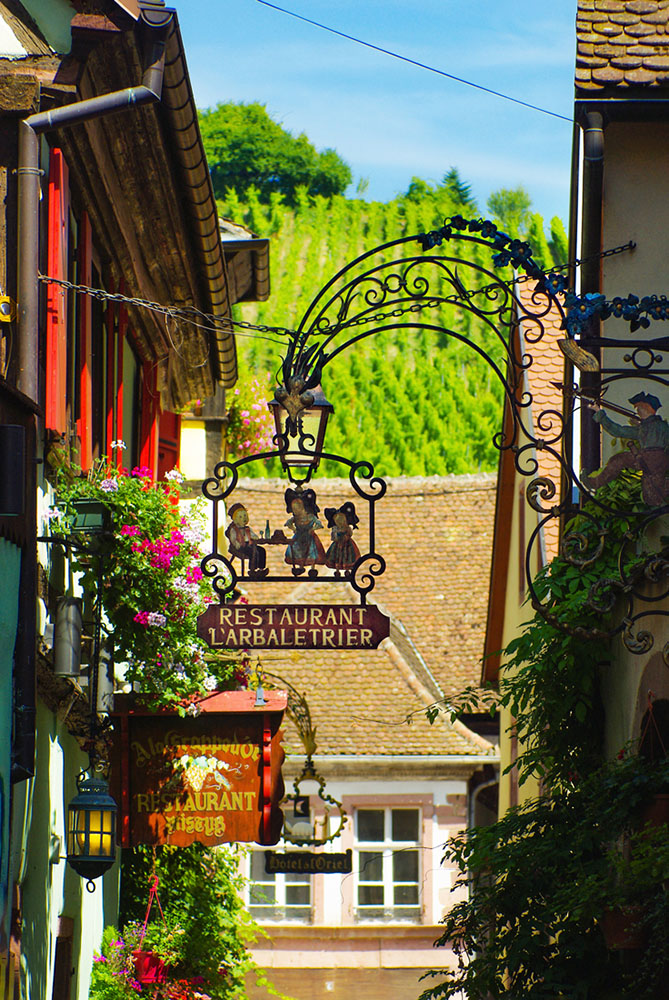

Some of the properties are officially protected as historic monuments.
I particularly enjoy these quieter streets, where you can appreciate the architecture without having to compete with the crowds along the Grand'Rue.
And don't forget to look up!
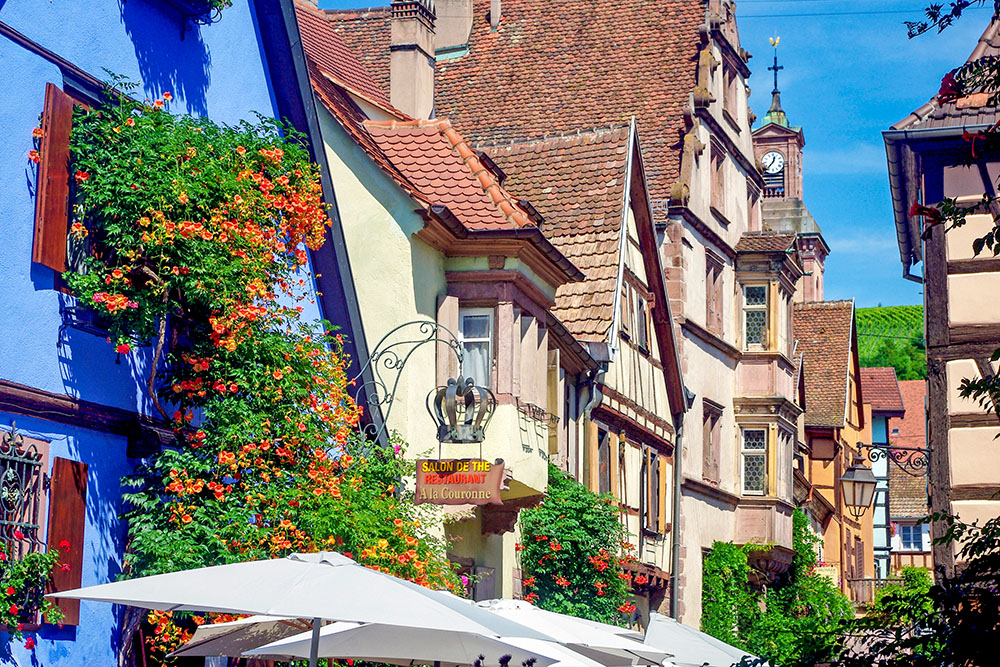
Rue de la Couronne © French Moments
The Site of the 2014 Fire
Near the Dolder, at the corner of the Grand'Rue and Rue des Juifs, you may notice a gap in the historic streetscape.
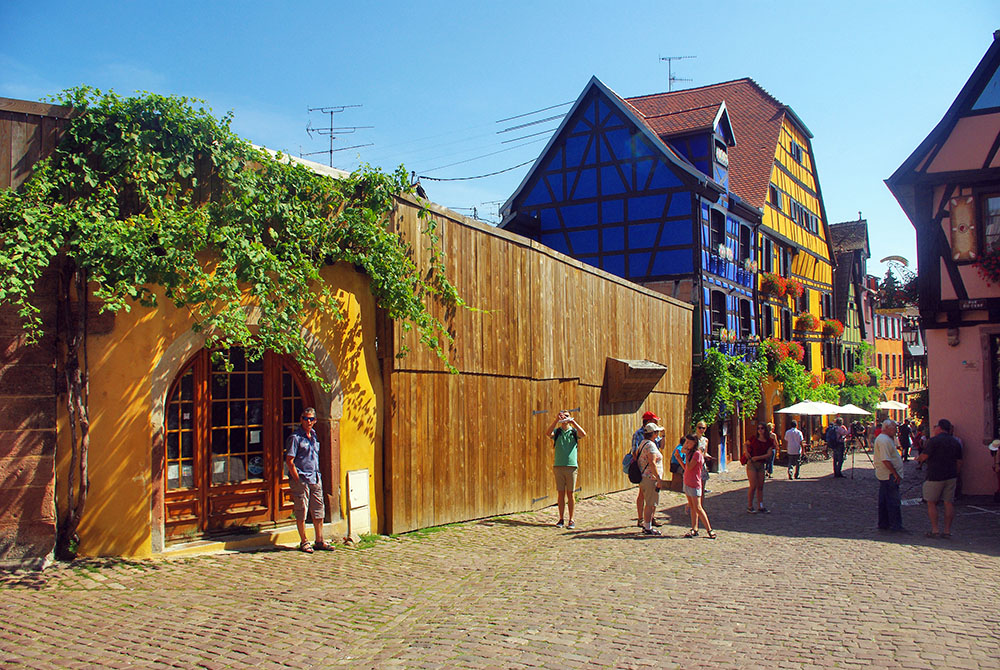
The site of the fire © French Moments
Until 2014, several old half-timbered houses stood here.
On New Year's Day 2014, a devastating fire destroyed part of this historic neighbourhood and claimed the life of an elderly resident.
When I visited Riquewihr in May 2026, the site was still empty and surrounded by wooden fencing.
I contacted Riquewihr Town Hall in October 2026 to enquire about the future of the site.
The council confirmed that no reconstruction work had begun and that no building project was currently scheduled.
Any future development will have to respect strict planning regulations to protect the historic character of the old town.
Hopefully, one day, the gap will be filled by buildings that respect Riquewihr's architectural heritage.
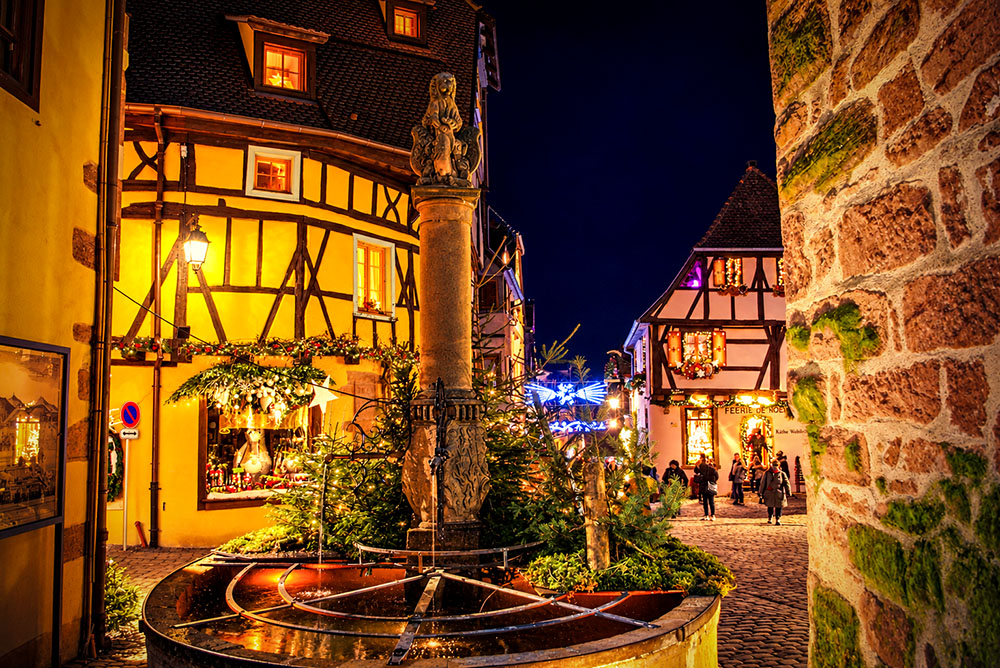
A view of Riquewihr taken a few days prior to the fire which destroyed the yellow house on the left © French Moments
Riquewihr Guided Walking Tour in 4K
Would you like to explore Riquewihr with me?
During my visit in May 2026, I filmed a guided walking tour through the historic centre.
The route covers approximately 2.5 kilometres and takes us along the Grand'Rue, past the Dolder and through several quieter streets.
We discover medieval fortifications, fountains, Renaissance courtyards and traditional houses.
Throughout the walk, I share historical anecdotes and point out details that are easy to miss.
The video is filmed in 4K, with English commentary.
Whether you're planning a visit or simply discovering Alsace from home, I hope you'll enjoy this leisurely walk.
Watch my guided walking tour of Riquewihr below.
Riquewihr and the Alsace Wine Route
You cannot really talk about Riquewihr without mentioning wine!
The village stands along the Alsace Wine Route, which runs for more than 170 kilometres through the vineyards at the foot of the Vosges.
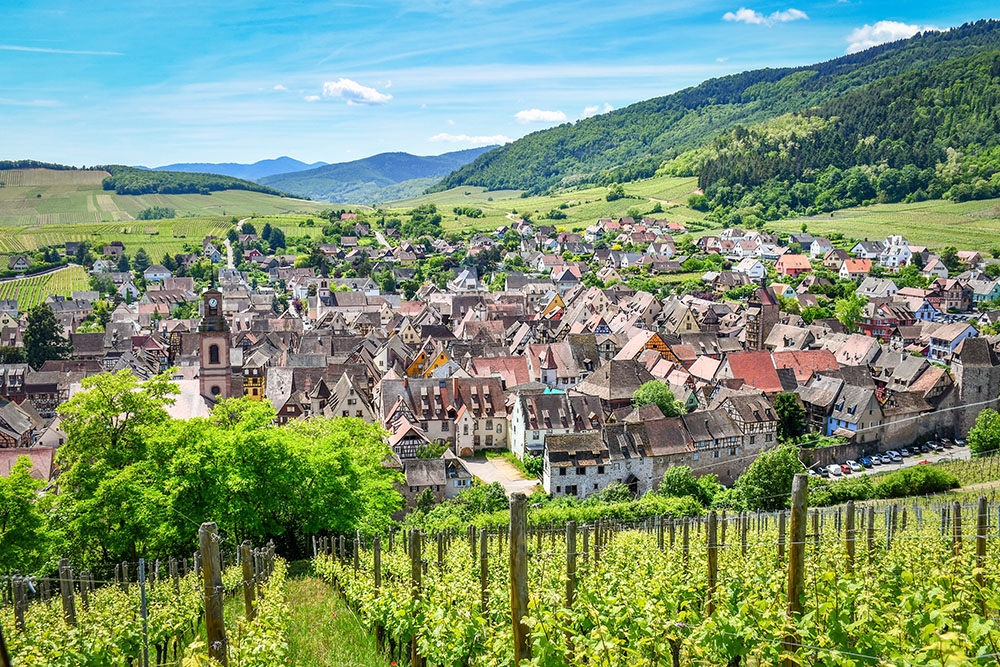
The vineyards of Riquewihr © French Moments
Two particularly famous vineyards surround Riquewihr: Schoenenbourg and Sporen.
Both benefit from the prestigious Alsace Grand Cru designation.
Schoenenbourg, above the village, is especially associated with Riesling, while Sporen is well known for Gewurztraminer.
The vineyards are attractive throughout the growing season, but I particularly enjoy seeing them in autumn, when the leaves turn golden yellow and orange.
Even if you're not interested in wine tasting, a walk among the vines is worth considering.
For more information about grape varieties and local traditions, read my guide to Alsace wines.
Riquewihr at Christmas
If you think Riquewihr is beautiful in spring or summer, you should see it at Christmas!
During Advent, the half-timbered houses are decorated with fir branches, lights and traditional ornaments.

Riquewihr Christmas Market © French Moments
The historic centre hosts a Christmas market where visitors can browse stalls selling decorations, gifts and regional specialities.
Near the Dolder, you'll also find La Féérie de Noël, a shop devoted to Christmas decorations throughout the year.
Riquewihr becomes particularly busy during Advent, especially at weekends.
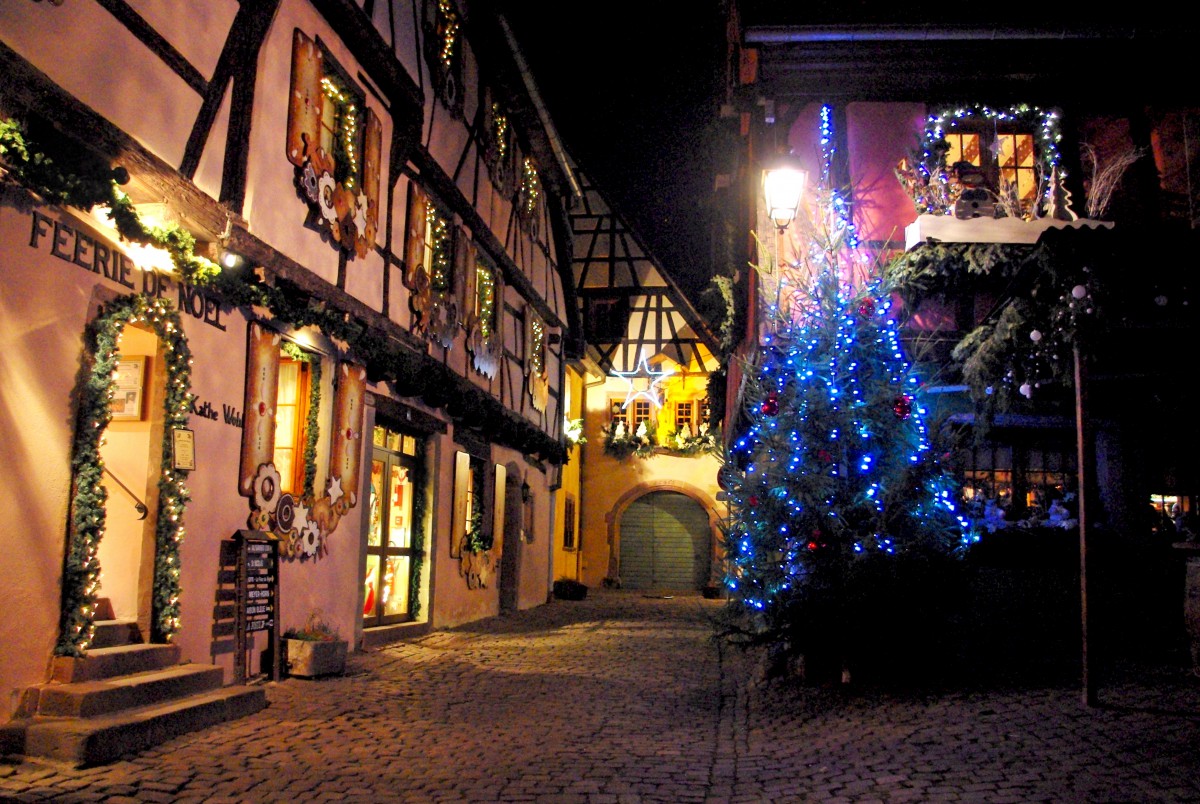
Riquewihr Christmas Market © French Moments
For 2026, the Christmas market is scheduled from 27 November to 20 December.
For opening times, photographs and visitor information, read my guide to the Riquewihr Christmas Market.
Practical Tips for Visiting Riquewihr
How to Get to Riquewihr
By car: Riquewihr is approximately 15 kilometres north of Colmar, generally around 20–25 minutes' drive.
A car is particularly convenient if you intend to explore several villages along the Alsace Wine Route.
By public transport: Riquewihr does not have a railway station.
You can travel by train to Colmar and continue by regional bus.
Fluo Grand Est line 816 connects Colmar, Riquewihr and Ribeauvillé.
Check the latest timetable on the official Fluo Grand Est website, especially at weekends and on public holidays.
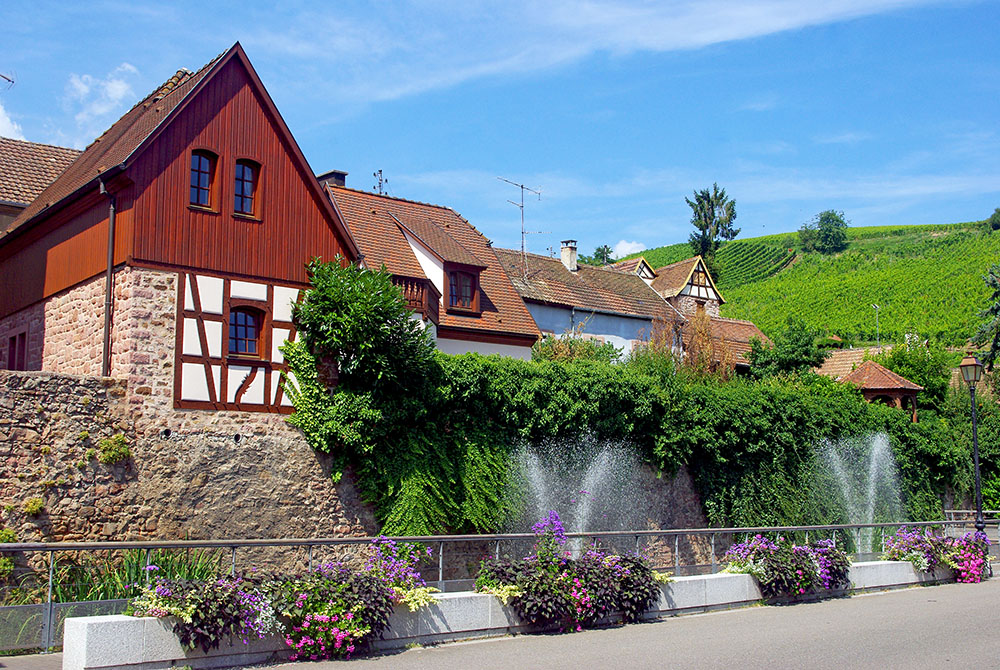
At the entrance to the village © French Moments
Where to Park in Riquewihr
Visitors should generally park outside the historic centre.
The old streets are narrow, and vehicle access is restricted.
The Parking du Vignoble is one option near the eastern entrance, with other parking areas around the outside of the old town.
Visitor parking is generally paid.
For the current tariffs and arrangements, consult the Riquewihr municipal parking information.
My advice is to arrive early during busy weekends and the Christmas market season.
How Long Do You Need to Visit Riquewihr?
If you're short of time, you can see the main sights along the Grand'Rue in about an hour.
However, I recommend allowing two to three hours to explore the historic centre properly.
Half a day is even better if you'd like to visit a museum, enjoy a meal or take photographs without rushing.
And if you want to combine Riquewihr with a walk through the vineyards, you could easily spend a full day in the area.
When Is the Best Time to Visit Riquewihr?
Spring: The flowers appear, the vineyards turn green and the temperatures are generally pleasant for walking.
Summer: The village is full of colour, although this is also one of the busiest times of year.
Autumn: The vineyards turn golden, creating beautiful scenery around the historic town.
Winter: Outside Advent, the streets are often quieter, although some businesses and attractions may have reduced opening hours.
Personally, I particularly enjoy visiting in late spring and autumn.

Riquewihr Christmas Market © French Moments
Where to Stay in Riquewihr
Why not spend a night in Riquewihr?
Once the busiest part of the day is over, the village often becomes quieter, making it a lovely place for an evening stroll.
Riquewihr also provides a convenient base for discovering the neighbouring villages and vineyards.
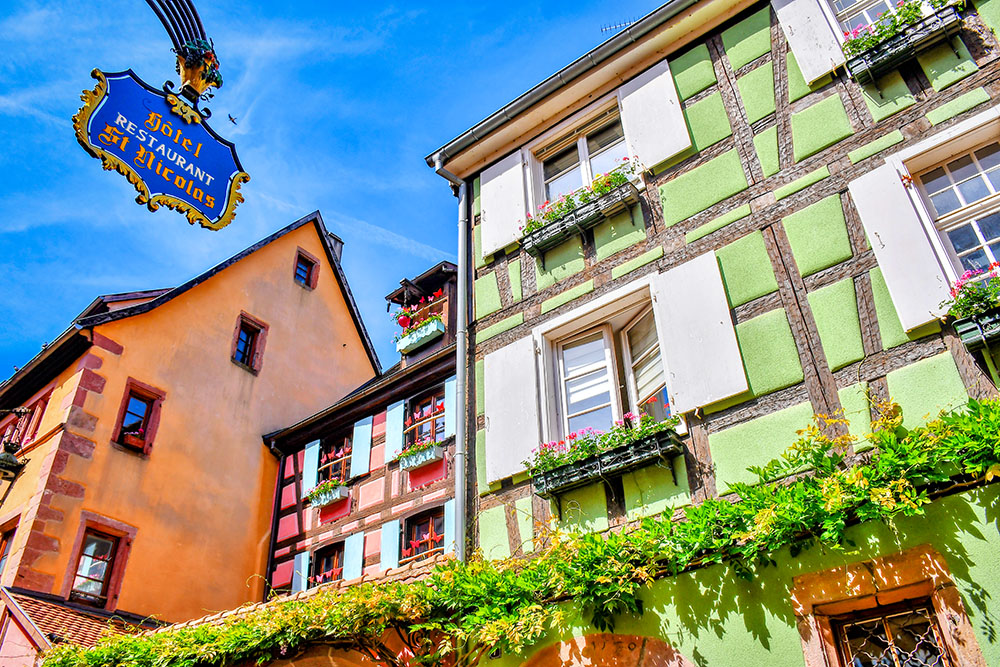
Hotel in Riquewihr © French Moments
Accommodation ranges from traditional hotels to guesthouses and self-catering apartments.
Options to consider include:
- Best Western Hotel Le Schœnenbourg
- Hôtel de La Couronne
- Hôtel Saint-Nicolas
- Hôtel L’Oriel
- L’Adrihof guesthouse
- Gîtes Les Remparts de Riquewihr
If you're visiting during Advent, I recommend booking well in advance.
What to See Near Riquewihr
There are several lovely places to discover within a short distance of Riquewihr.
Hunawihr is a small wine-growing village famous for its fortified church, surrounded by vineyards. It is also one of the Most Beautiful Villages of France.

Hunawihr © French Moments
Ribeauvillé has a charming historic centre and three ruined castles overlooking the town. Its annual Minstrels' Festival is another fascinating local tradition.
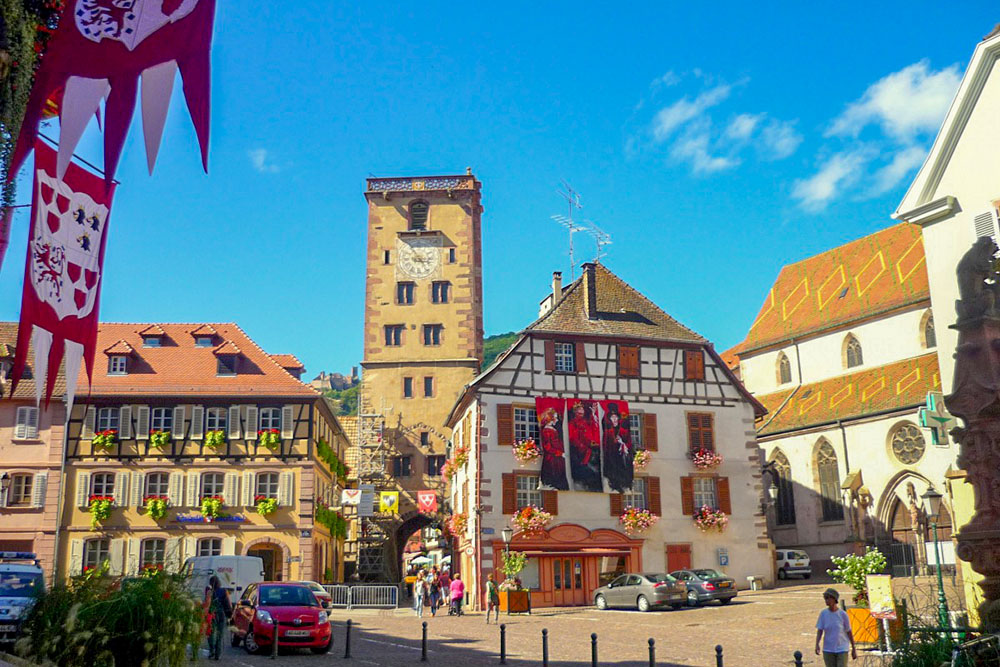
Ribeauvillé © French Moments
Bergheim is known for its well-preserved medieval walls, Renaissance houses and quieter atmosphere.

Bergheim © French Moments
Kaysersberg is another favourite of mine, with its beautiful half-timbered houses, fortified bridge and ruined castle above the River Weiss.

View of Kaysersberg in Alsace © French Moments
Colmar, approximately 15 kilometres south of Riquewihr, offers a larger historic centre, museums and the picturesque district of Little Venice.
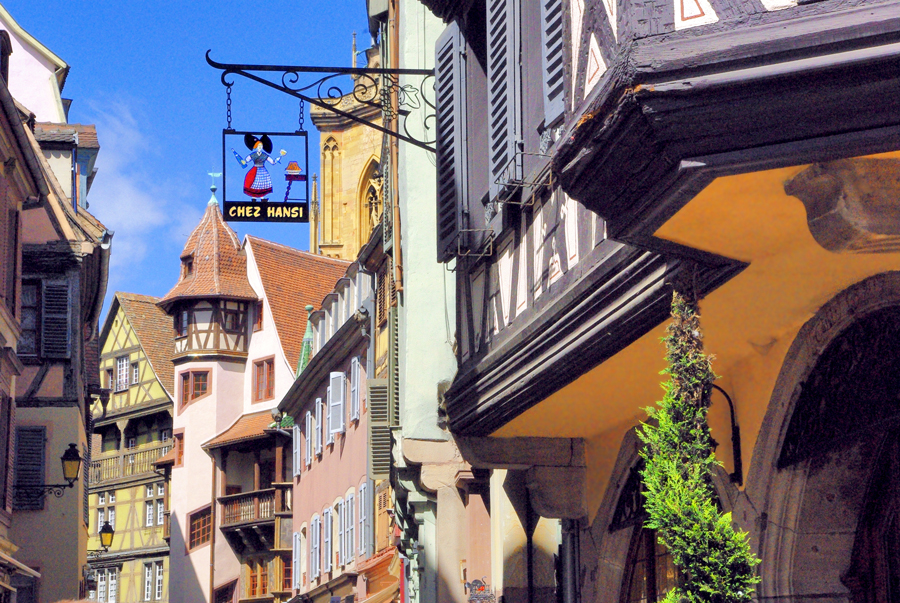
Rue des Marchands © French Moments
For further ideas, take a look at my guide to places to visit around Colmar.
You may also enjoy my articles about the Tour of Alsace and the Wonders of Alsace.
Frequently Asked Questions About Riquewihr
Is Riquewihr worth visiting?
Yes! Riquewihr is one of Alsace's most attractive historic villages, with beautiful half-timbered houses, medieval fortifications and a setting among vineyards.
Is Riquewihr in France or Germany?
Riquewihr is in France, near Colmar. However, its history is closely connected to the German-speaking world, particularly through its former rulers, the Counts and Dukes of Württemberg.
Can you visit Riquewihr without a car?
Yes. Regional buses connect Riquewihr with Colmar, although services are less frequent than in larger towns. Check the timetable before travelling.
How long does it take to explore Riquewihr?
Allow around two to three hours for a leisurely visit to the historic centre. Half a day is preferable if you wish to visit a museum or enjoy a meal.
Is Riquewihr better than Eguisheim?
Both villages are well worth visiting. Riquewihr is known for the Dolder and its Grand'Rue, while Eguisheim has an unusual circular street layout. If you have time, I recommend discovering both.
A Few Final Words About Riquewihr
I've visited Riquewihr many times, and I always enjoy returning.
Of course, the famous Grand'Rue and the Dolder are enough to attract visitors from far and wide.
But what I particularly appreciate is the wealth of details hidden in the smaller streets.
An old doorway, a Renaissance window, a quiet courtyard or a fountain with an interesting story… there's always something to discover.
So, if you're planning a visit, take your time.
Don't just walk up the Grand'Rue, photograph the Dolder and leave!
Explore the side streets, admire the façades and imagine what life must have been like here several centuries ago.
And if you've already visited Riquewihr, I'd love to hear about your experience.
Happy travels in Alsace!