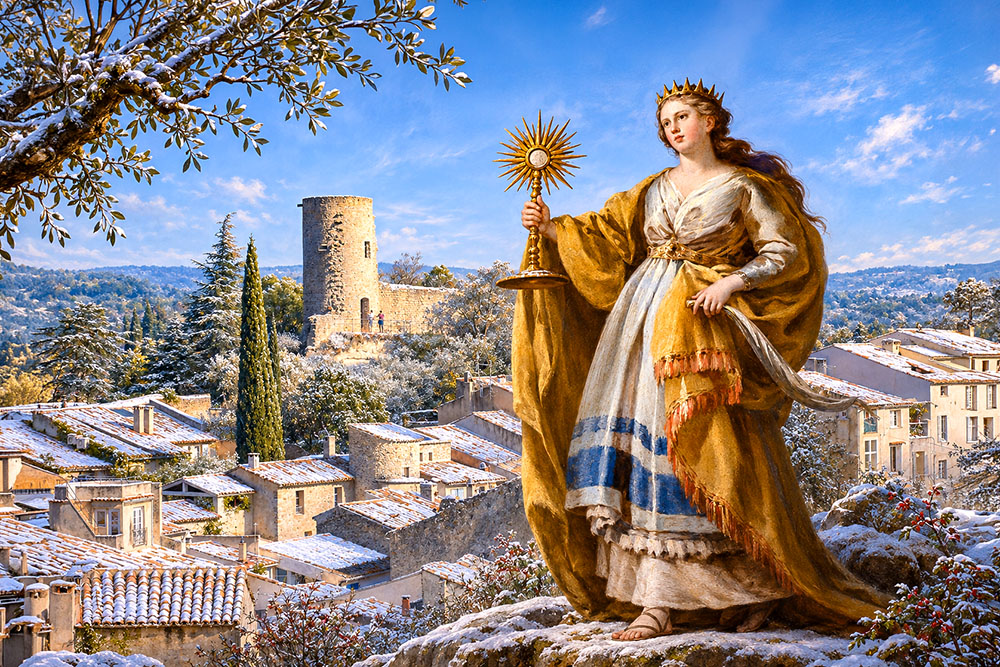

Saint Barbara's Day in France, celebrated on 4 December, always brings back fond memories of my childhood in Germany during the 1980s.
At the time, my family lived in Speyer, a historic town on the Rhine, where my father served in a French Army engineering regiment (Régiment du Génie).

Me in Speyer, Germany
December was a particularly exciting month for us.
There was Advent, of course, beginning on the fourth Sunday before Christmas. In Germany, this was a much-loved family tradition, with Advent wreaths, candles and preparations that seemed to give the entire month a special atmosphere.
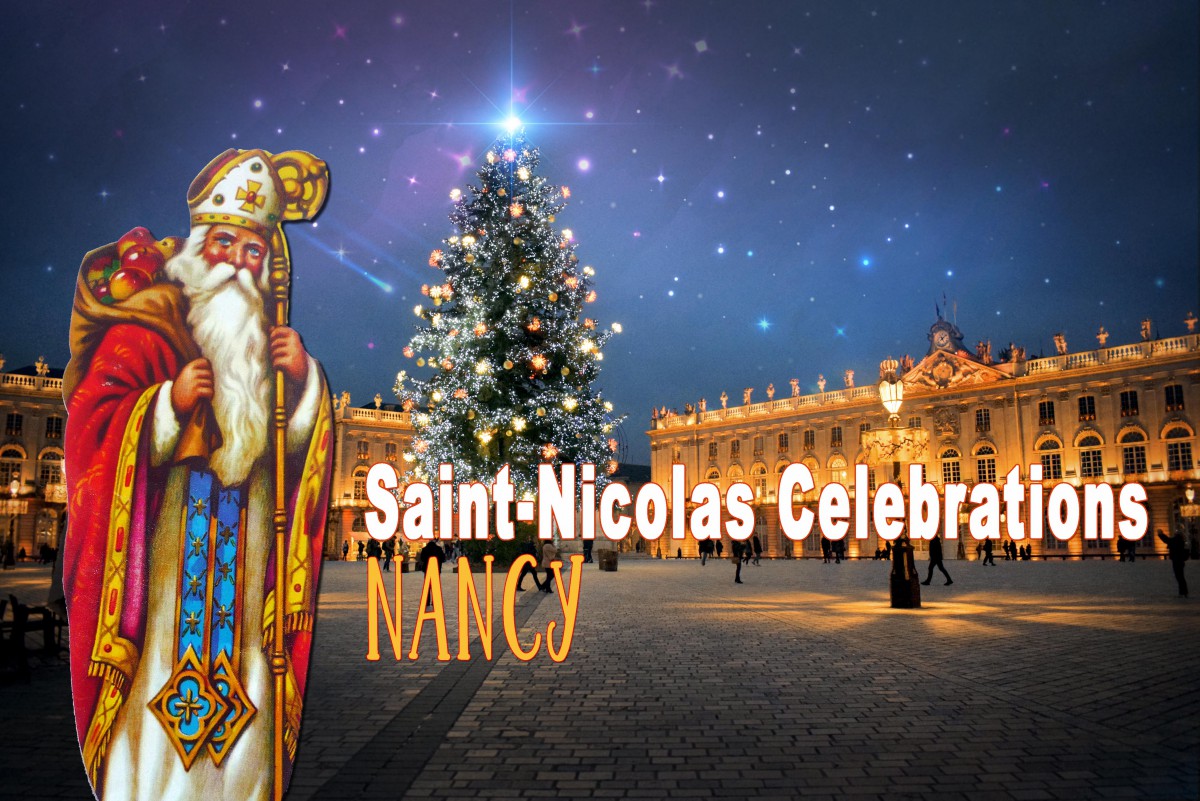
Then came Saint Nicholas Day on 6 December, when Saint Nicholas himself would visit, bringing mandarins and sweets for the children.
But there was another celebration, one that was particularly important in the French military community where we lived.
La Sainte-Barbe.
Every 4 December, the French Army barracks at Quartier Normand in Speyer became the setting for one of the most important celebrations of the year for the regiment's engineers, known as sapeurs.
The day began with an official military parade on the barracks' parade ground.
The regimental colours, bearing the battle honours Lorraine 1914, Bois-le-Prêtre 1915, Artois 1915 and Verdun 1916, were presented during the ceremony, which was followed by a Mass at the garrison.
But Sainte-Barbe was not just about military formality.
There were sporting competitions between the different companies, festive meals in the mess halls and an evening gala bringing together officers, non-commissioned officers, conscripts, their families and German partners from the town of Speyer.
For the soldiers, it was a celebration of their regiment's traditions and shared identity.
For the families, it was another highlight of an already festive December.
And for a child like me, it was simply part of the wonderful excitement that surrounded the approach of Christmas.
Only much later did I come to appreciate the fascinating story behind Sainte-Barbe and discover how widely her feast day was celebrated across France.
Because Saint Barbara was not only the patron saint of military engineers and artillerymen.
She was also honoured by miners and firefighters, whose professions exposed them to the dangers of fire, explosions and sudden accidents.
And hundreds of miles away, in Provence, her feast day marked the beginning of the traditional Christmas season, with a charming custom involving wheat seeds and three little dishes.
So who was Saint Barbara? Why did she become the patron saint of such dangerous professions? And what does she have to do with Christmas in Provence?
Let's discover the story behind this little-known French December tradition.
What Is Saint Barbara's Day in France?
Saint Barbara's Day in France is celebrated every year on 4 December.
Known in French as la Sainte-Barbe or la fête de la Sainte-Barbe, it honours Saint Barbara, a Christian martyr traditionally believed to have lived during the third or fourth century.
Over time, she became associated with protection against lightning, fire, explosions and sudden death.
This explains why several professions adopted her as their patron saint.
Among them are miners, firefighters, artillerymen and military engineers.
In certain parts of France, Saint Barbara's Day became one of the most important celebrations of the year.
But there is something rather unusual about this feast.
In the former mining districts of northern and eastern France, Sainte-Barbe is closely associated with industrial heritage and the memory of those who worked underground.
In the French Army, it remains a celebration of military traditions and comradeship.
Meanwhile, in Provence, families plant wheat seeds to mark the beginning of the traditional Christmas season.
Three very different customs.
And yet, they all share the same origin.
To understand why, we need to travel back many centuries.
Who Was Saint Barbara?
The story of Saint Barbara takes us to the early centuries of Christianity, when followers of the new faith sometimes faced persecution under the Roman Empire.
According to Christian tradition, Barbara was born into a wealthy pagan family.
Her father, usually named Dioscorus, was determined to control her life and protect her from the outside world.
The story is commonly associated with Heliopolis, although different versions of the legend place the events in different locations.
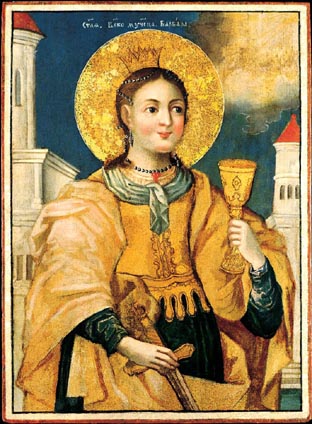
It is important to remember that Saint Barbara's existence has never been historically established with certainty.
Her story comes from Christian hagiographical traditions recorded long after the period in which she was supposed to have lived.
Nevertheless, the legend became enormously popular during the Middle Ages.
And it contains several remarkable episodes.
The Tower with Three Windows
According to the best-known version of the legend, Barbara's father kept her confined in a tower.
He wanted to protect her from unwanted attention and prevent her from making decisions independently.
But despite her isolation, Barbara discovered Christianity and embraced the new faith.
One day, while her father was away, she ordered a third window to be added to the tower.
Why three windows?
Because, according to the legend, they represented the Holy Trinity: the Father, the Son and the Holy Spirit.
When Dioscorus returned, he was furious.
He discovered that his daughter had become a Christian and demanded that she abandon her beliefs.
Barbara refused.
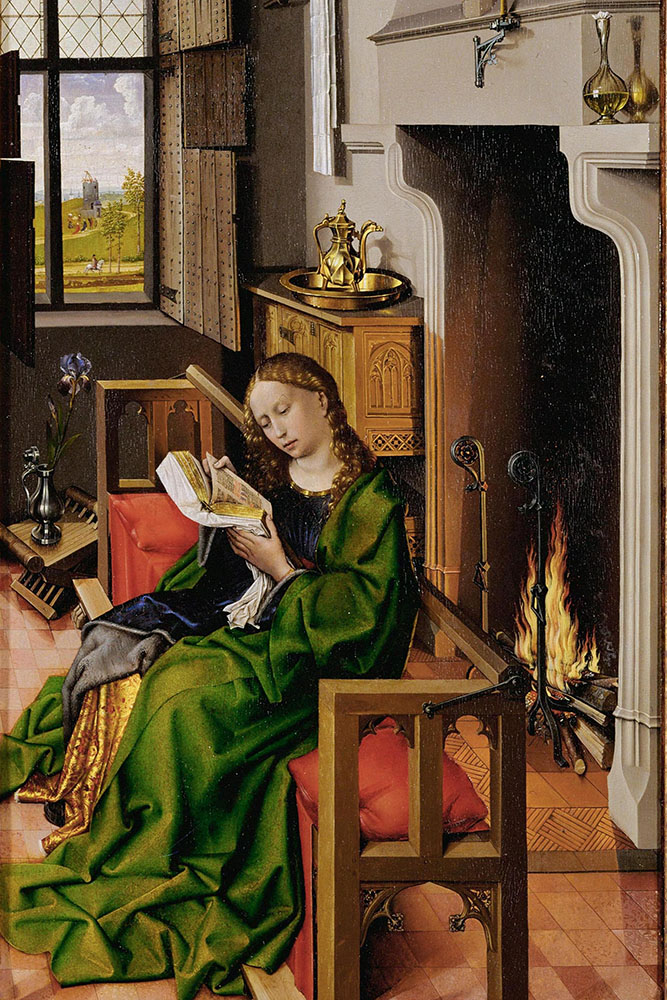
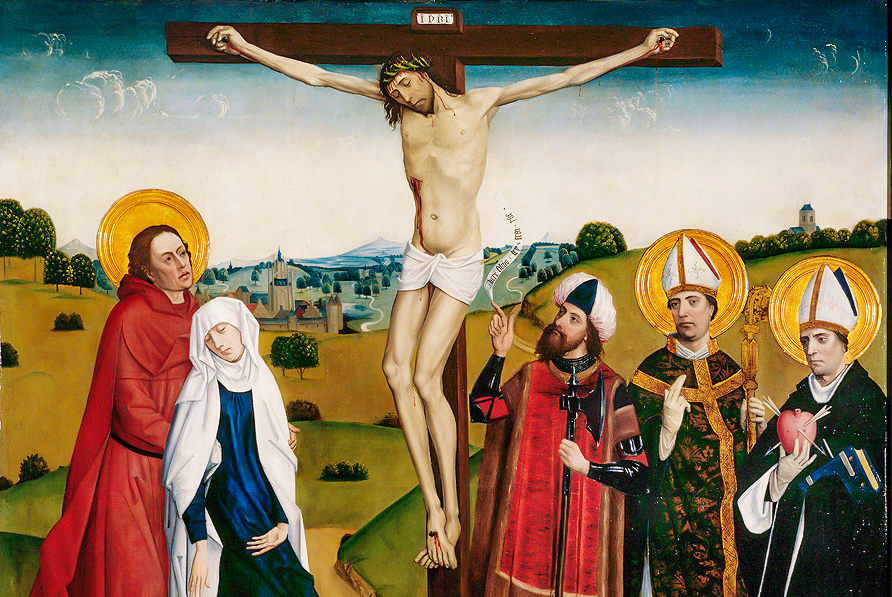
Santa Barbara depicted in a painting by Robert Campin (1438)
The Martyrdom of Saint Barbara
The legend continues with Barbara attempting to escape her father's anger.
In some versions, a rock miraculously opens to conceal her.
Eventually, however, she is discovered, arrested and brought before the authorities.
Despite being subjected to terrible punishments, she refuses to renounce her Christian faith.
The story ends tragically.
Barbara is sentenced to death, and her own father carries out the execution.
But as Dioscorus leaves the scene, lightning strikes him and kills him.
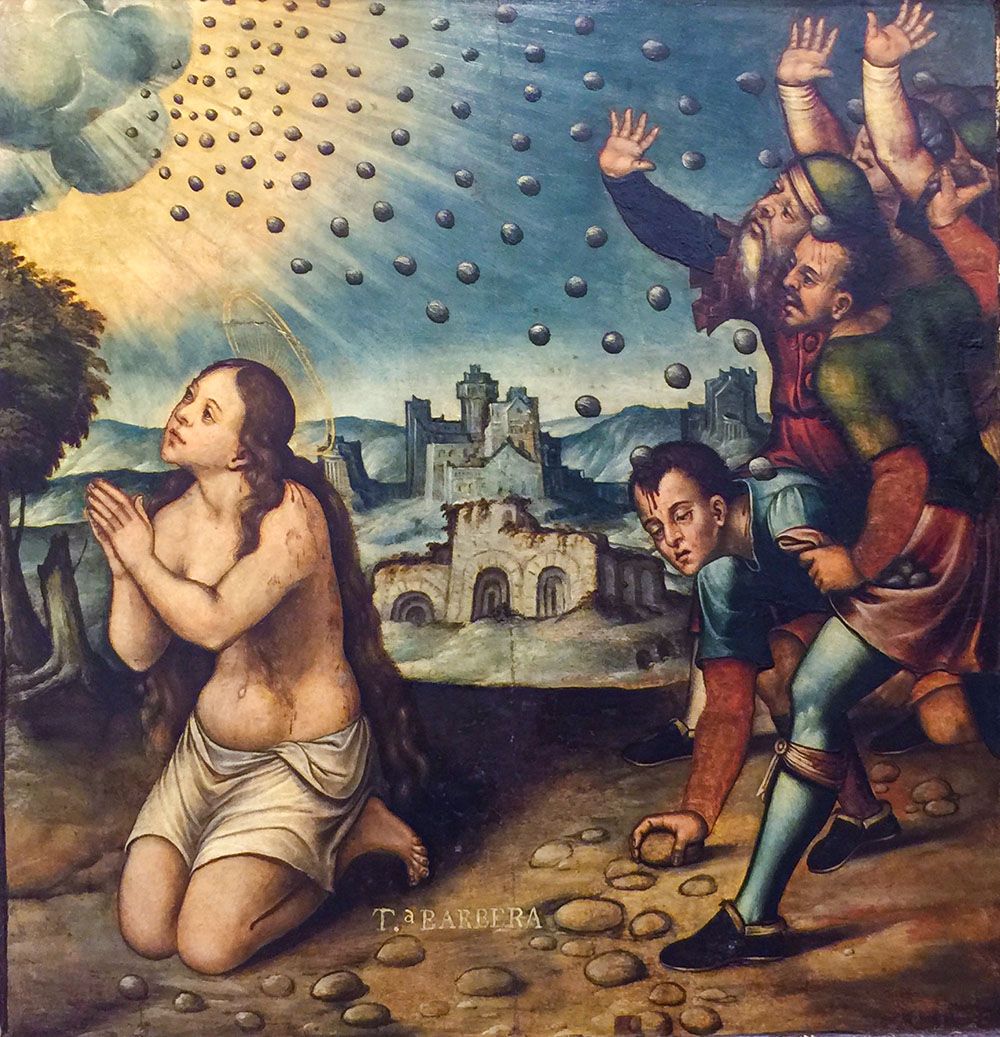
The Martyrdom of Santa Barbara by Gaspar Requena 16th C
It is a dramatic ending.
And, as we shall see, this episode explains much of the symbolism associated with Saint Barbara.
For centuries, Christians invoked her protection against lightning, fire, explosions and unexpected death.
That connection would eventually make her one of the most important patron saints of dangerous professions.
Why Is Saint Barbara the Patron Saint of Miners and Firefighters?
At first, the connection between a young Christian martyr and professions such as mining, firefighting or artillery might seem rather strange.
But the answer lies largely in the lightning strike at the end of her legend.
Because Barbara's father was said to have been killed by a sudden bolt of lightning, she became associated with protection against violent and unexpected dangers.
Over time, several professions placed themselves under her patronage.
These included:
- Miners, who faced the dangers of underground collapses, gas explosions and other accidents.
- Firefighters, whose work involved flames and unpredictable hazards.
- Artillerymen, who handled gunpowder, cannons and explosive weapons.
- Military engineers, particularly those involved in mining, demolitions and explosives.
- Quarry workers and explosives specialists, whose activities carried similar risks.
In earlier centuries, when dangerous working conditions were an unavoidable part of many occupations, the protection of a patron saint held particular significance.
For miners especially, Saint Barbara became much more than a religious figure.
She became part of their everyday working lives and collective identity.
Saint Barbara's Day in the Mining Regions of France
To appreciate the importance of Sainte-Barbe, we need to travel to the former industrial landscapes of northern and eastern France.
Think of the coalfields of Nord-Pas-de-Calais, the mining districts around Saint-Étienne or the former mining communities of Lorraine.
These were regions where mining shaped not only the economy but also the identity of entire towns and villages.
Generations of families depended on the mines.
The work was physically demanding; the conditions could be harsh, and accidents were an ever-present danger.
It is hardly surprising that Saint Barbara came to occupy such a special place in these communities.

Summer in France: the countryside of Lorraine © French Moments
A Major Day of Celebration for Miners
Traditionally, 4 December was one of the most important dates in the miners' calendar.
In certain mining districts, it was a day off work.
Religious services were organised in honour of Saint Barbara, followed by communal meals, parades and celebrations.
The festivities brought together miners, their families and the wider community.
In some mines, statues of Saint Barbara were displayed as symbols of protection.
Workers might pass her image before descending underground.
For men whose daily work involved considerable risks, her presence was a familiar and reassuring sight.
But Sainte-Barbe was also a celebration of solidarity.
It recognised the shared experiences of miners who worked together, often in difficult and dangerous conditions.
Saint Barbara's Day in Lorraine
Lorraine has a long industrial history, particularly in its coal and iron-mining districts.
For generations, mining communities developed their own customs, celebrations and strong sense of belonging.
Saint Barbara naturally became part of this heritage.
In the former coalfields of Moselle, the feast day was traditionally associated with miners and their families.
Even after the closure of the mines, the memory of Sainte-Barbe survived.
Today, commemorations help preserve the history of these communities and pay tribute to those who spent their working lives underground.
It is a reminder that traditions can continue long after the industries that gave rise to them have disappeared.

The 'Cités' of Messein in Neuves-Maisons © French Moments
Sainte-Barbe in Northern France
The tradition is equally important in the former coalfields of northern France.
Around Lens, Liévin and other mining towns, Sainte-Barbe has become an opportunity to celebrate industrial heritage through cultural events.
One particularly interesting example is the Festival de la Sainte-Barbe in the Lens-Liévin area.
Here, the memory of the mining industry is celebrated through artistic performances, installations and events, often using fire and light as central themes.
It is an imaginative way of transforming the dangers once associated with mining into a celebration of local history.
The religious origins of Sainte-Barbe have not disappeared entirely.
However, the day has also acquired a broader cultural meaning.
It is now an occasion to remember the miners, celebrate their communities and keep an important chapter of French history alive.
If you are interested in this heritage, the French National Agency for Miners' Rights (ANGDM) explains how Sainte-Barbe continues to bring former mining communities together.
Saint Barbara's Day and French Firefighters
Mining communities are not the only ones to celebrate Sainte-Barbe.
For French firefighters, known as sapeurs-pompiers, the feast day has a particularly strong significance.
Every year, fire brigades across France organise ceremonies in honour of their patron saint.
These celebrations are often held around 4 December, rather than necessarily on the exact date.

Firemen from the early 1900s at Ecomusée d'Alsace © French Moments
A Tradition of Recognition and Remembrance
A typical Sainte-Barbe ceremony may bring together firefighters, local elected representatives, families and members of the public.
Depending on the brigade, the occasion can include speeches, the presentation of medals, promotions and tributes to firefighters who have died in service.
It is a moment to recognise courage, commitment and service to the community.
But there is usually a more convivial side too!
The official ceremony may be followed by a shared meal or another gathering.
In many towns and villages, Sainte-Barbe is one of the most important social occasions in the local fire brigade's calendar.
And although the tradition has religious origins, its modern significance extends well beyond religion.
It is above all an opportunity to honour those who serve and strengthen the bonds between colleagues and their communities.
Saint Barbara and the French Artillery and Engineers
This is the part of Sainte-Barbe that brings me back to my childhood in Speyer.
Saint Barbara is the patron saint of two important branches of the French Army: the Artillery (Artillerie) and the Engineers (Génie).
Both have long been associated with dangerous activities involving explosives, gunpowder and demolition work.
For the artillery, the connection is relatively easy to understand.
For centuries, artillerymen handled cannons and explosive weapons, exposing themselves to the risk of accidental detonations.
The Génie had its own dangerous responsibilities.
Military engineers were involved in digging mines, preparing defensive positions, demolishing obstacles and handling explosives.
The legend of Saint Barbara, with its dramatic lightning strike, made her a fitting protector for both branches.
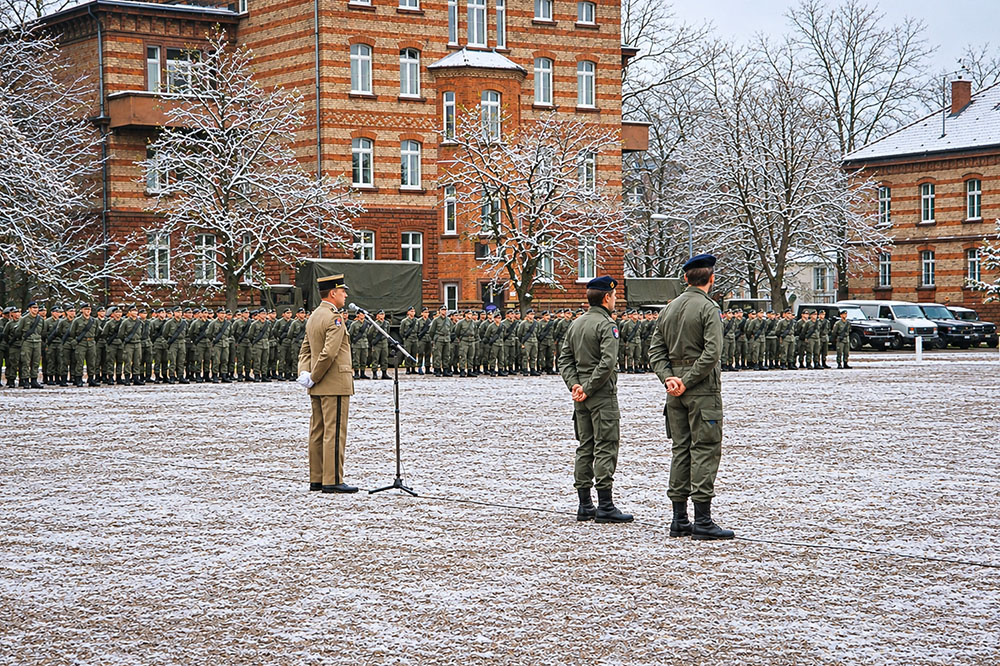
Winter Military Ceremony inside the French army's barracks, Speyer, back in the 1980s
How French Military Engineers Celebrate Sainte-Barbe
In French engineering regiments, Sainte-Barbe remains an important annual tradition.
Celebrations may include a military parade, the raising of the colours, speeches, sporting competitions and communal meals.
There can also be more informal activities, reflecting the traditions and humour of military life.
These customs are intended to strengthen comradeship and preserve the history of the regiment.
The French Ministry of the Armed Forces confirms that both artillery units and the engineers celebrate Saint Barbara on 4 December.
For me, this explains why Sainte-Barbe occupied such an important place in the calendar of the French military community in Germany.
The ceremonies at Quartier Normand were not simply a local celebration.
They belonged to a much older military tradition shared by engineering and artillery regiments throughout France.
What About the French Cavalry?
Interestingly, not every branch of the French Army celebrates the same patron saint.
The cavalry, which includes the Spahis, traditionally honours Saint George on 23 April.
So while military engineers and artillerymen celebrate Sainte-Barbe in December, cavalry regiments follow a different tradition in spring.
It is one of the many fascinating customs that give the French Army its distinctive heritage.
The Christmas Tradition of Saint Barbara in Provence
Now, let's leave the barracks and former mining districts behind and head south.
Because in Provence, Saint Barbara's Day takes on a completely different character.
Here, 4 December is associated with one of the region's most charming Christmas traditions.
And it involves something wonderfully simple.
A little wheat, some cotton wool, three shallow dishes and a splash of water.
That's all you need!
Planting the Wheat of Saint Barbara
In Provence, families traditionally sow wheat seeds on 4 December.
This custom is known as le blé de la Sainte-Barbe.
The seeds are usually placed in three small dishes or saucers lined with damp cotton wool.
Over the following days, they begin to germinate.
By Christmas, the young shoots should have grown into little patches of bright green wheat.
The three dishes are traditionally associated with the Holy Trinity.
But the custom also reflects older agricultural ideas of fertility, renewal and the hope of prosperity.
According to a popular Provençal saying:
Quand lou blad vèn bèn, tout vèn bèn.
In English, this means something like:
When the wheat grows well, everything goes well.
In other words, healthy wheat is traditionally regarded as a favourable sign for the coming year.
Of course, it is a popular belief rather than a way of predicting the future.
But there is something rather appealing about the symbolism.
In the middle of winter, fresh green shoots bring a welcome reminder of life and renewal.
The tradition is still promoted by tourist offices and local communities throughout Provence.
For example, Provence-Camargue Tourism explains how families continue to plant wheat or lentils in three little dishes on Saint Barbara's Day.
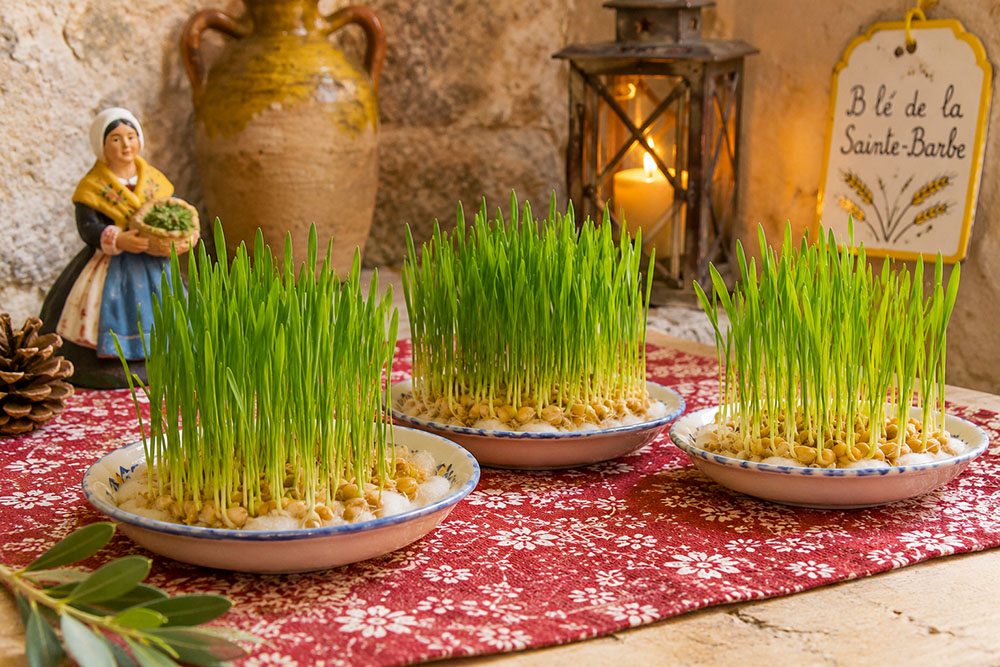
Rustic Saint Barbara Wheat Display
How to Grow Saint Barbara's Wheat at Home
Would you like to try the tradition yourself?
It is remarkably easy, and it can make a lovely seasonal activity for children.
You will need:
- Three small saucers or shallow dishes.
- Some cotton wool.
- Wheat grains suitable for germination.
- A little water.
Here's what to do:
- On 4 December, place a thin layer of cotton wool in each dish.
- Moisten the cotton wool without flooding it.
- Spread the wheat grains across the surface.
- Place the dishes somewhere bright, away from excessive heat.
- Keep the cotton wool moist as the seeds begin to germinate.
- Watch the green shoots develop during the days leading up to Christmas.
If everything goes well, you should have three little dishes of green wheat ready for your Christmas decorations.
And there is something rather satisfying about watching them grow day after day.
What Happens to the Wheat at Christmas?
Traditionally, the green wheat is used to decorate the Provençal Christmas table.
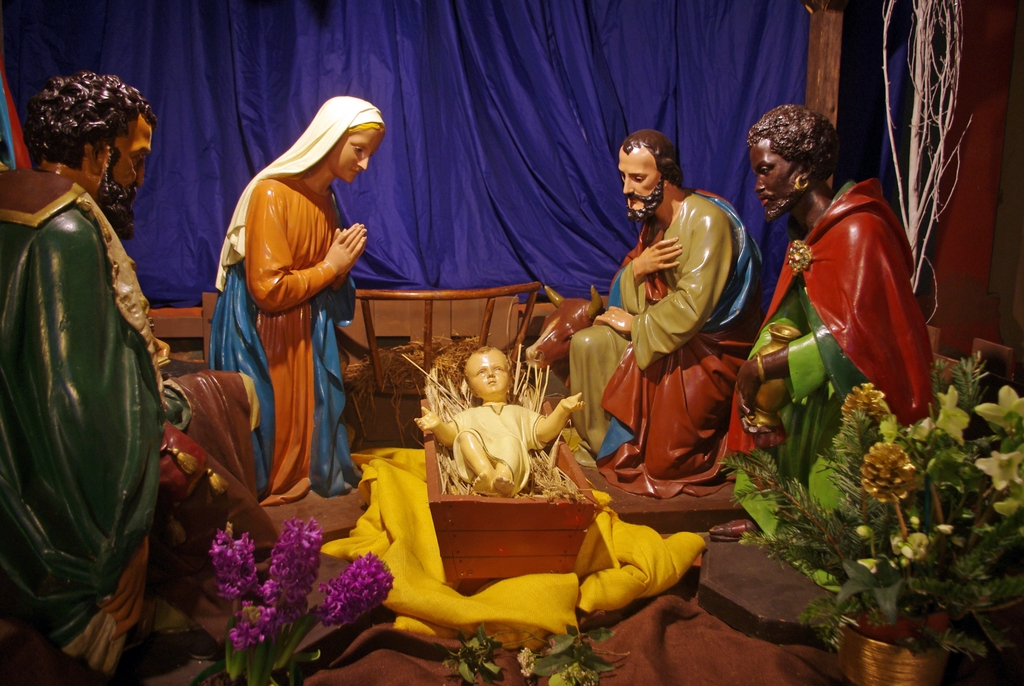
The three dishes may be placed among the festive decorations or incorporated into the display surrounding the Nativity scene.
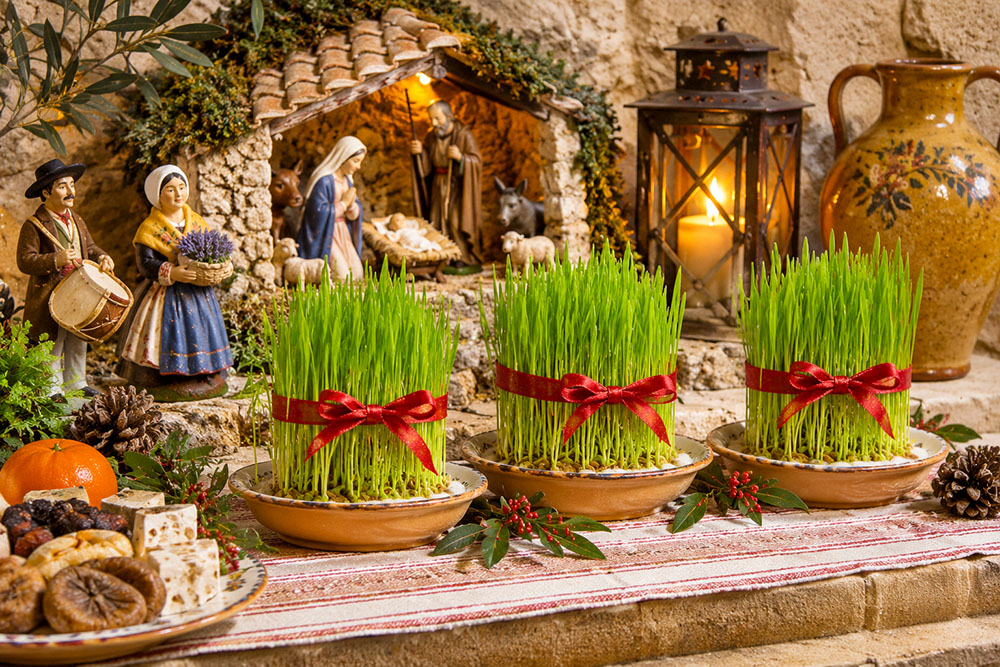
Rustic Provençal Christmas Crèche Display
In some households, ribbons are tied around the growing shoots to keep them upright.
The wheat forms part of a much wider collection of Provençal Christmas customs.
These include the santons, the traditional Christmas Eve meal and the famous thirteen desserts.
The Marseille Tourist Office describes the three dishes of germinated wheat as an important part of the Christmas table.
It is a lovely example of how a simple tradition can bring together religious symbolism, agricultural heritage and family celebrations.
Saint Barbara's Day: The Beginning of Christmas in Provence
One of the most interesting things about the Provençal celebration is its place in the regional Christmas calendar.
In much of France, the festive season is associated with Advent, Christmas markets and the feast of Saint Nicholas.
But in Provence, the traditional Christmas cycle is often considered to begin on 4 December, with Sainte-Barbe.
This period is known as the période calendale.
It continues until Candlemas on 2 February.

A Nativity Scene from Provence! © French Moments
During these weeks, Provençal families may observe a series of customs rooted in Christian tradition and regional folklore.
The planting of Saint Barbara's wheat is one of the first.
It is followed by preparations for Christmas, the setting up of Nativity scenes, Christmas Eve celebrations and the festivities surrounding Epiphany.
Finally, Candlemas marks the traditional end of the season.
Santons, Nativity Scenes and the Thirteen Desserts
If you have ever visited Provence in December, you may have encountered the region's famous santons.

Nativity Scene of Notre-Dame de Paris in December 2016 © French Moments
These little terracotta figures are used to create elaborate Nativity scenes featuring not only the Holy Family but also traditional Provençal villagers and tradespeople.
There might be a shepherd, a baker, a fisherman or a woman carrying vegetables.
Each figure contributes to a miniature representation of village life in Provence.
Then there is the Christmas Eve meal, traditionally associated with the gros souper and the thirteen desserts.
These desserts symbolically represent Christ and his twelve apostles.
The dishes of Saint Barbara's wheat form part of this festive setting.
You can discover more about these customs in my article on Christmas in Provence.
What I find particularly interesting is the contrast with the Christmas traditions I remember from Germany and eastern France.
In Lorraine and Alsace, Saint Nicholas plays a major role in the early December celebrations.
In Provence, meanwhile, the planting of wheat on Sainte-Barbe provides another way of welcoming the season.
Different customs, different regional identities.
And yet, they all contribute to the extraordinary richness of Christmas traditions in France.
How to Recognise Saint Barbara in Churches and Works of Art
If you enjoy exploring old churches during your travels in France, you may already have encountered Saint Barbara without realising it.
She appears in numerous sculptures, stained-glass windows and religious paintings.
But how can you recognise her?
The most distinctive clue is a tower with three windows.
This refers to the tower in which she was supposedly imprisoned and the three windows associated with the Holy Trinity.
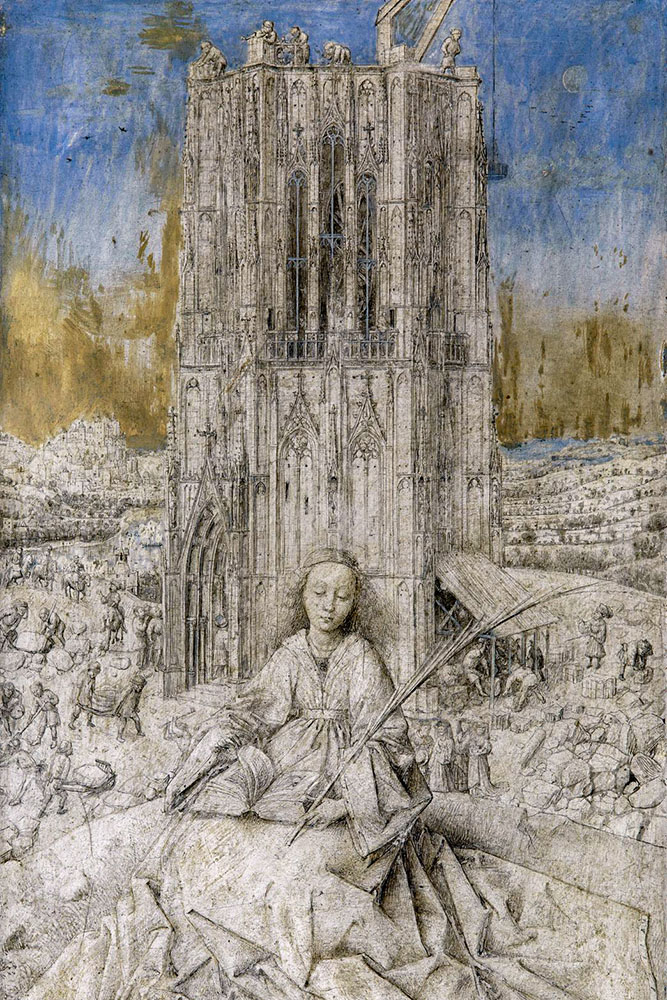
Saint Barbara and the tower, as depicted in a sketch by Jan van Eyck (1437)
She may also be depicted carrying a palm branch, a traditional symbol of martyrdom.
Other representations include a chalice, a crown or objects connected with her legend.
Sometimes, she appears beside a cannon or another symbol linked to her patronage.
The National Gallery in London provides an interesting explanation of Saint Barbara's traditional attributes in Western art.
Once you know what to look for, identifying her becomes much easier.
And this is one of the pleasures of visiting historic churches in France.
A statue that might initially seem unremarkable can suddenly reveal a story stretching back many centuries.
Is Saint Barbara's Day Still Celebrated in France Today?
Yes, although its importance varies considerably from one region to another.
Saint Barbara's Day is not a national public holiday in France.
For most people, 4 December is an ordinary working day.
However, the celebration remains meaningful in several communities.
In former mining districts, commemorations and cultural events help preserve industrial memories.
Among firefighters, military engineers and artillerymen, the feast continues as an important professional tradition.
And in Provence, the custom of planting wheat keeps Sainte-Barbe closely connected with Christmas preparations.
Interestingly, the same date can therefore have very different meanings depending on where you are in France.
For some, it is a day of remembrance.
For others, a celebration of community and service.
And for many Provençal families, it is simply the day when the Christmas wheat is planted.
Saint Barbara's Day in Other Countries
Although Sainte-Barbe has a particularly interesting place in French regional culture, the tradition is not confined to France.
Saint Barbara is honoured in several European countries, often under different names.
Saint Barbara in Germany
In German-speaking regions, she is known as Sankt Barbara.
One traditional custom involves cutting branches from fruit trees on 4 December.
These branches, known as Barbarazweige, are placed indoors in water in the hope that they will blossom around Christmas.
It is another charming tradition associated with the arrival of winter and the promise of renewal.
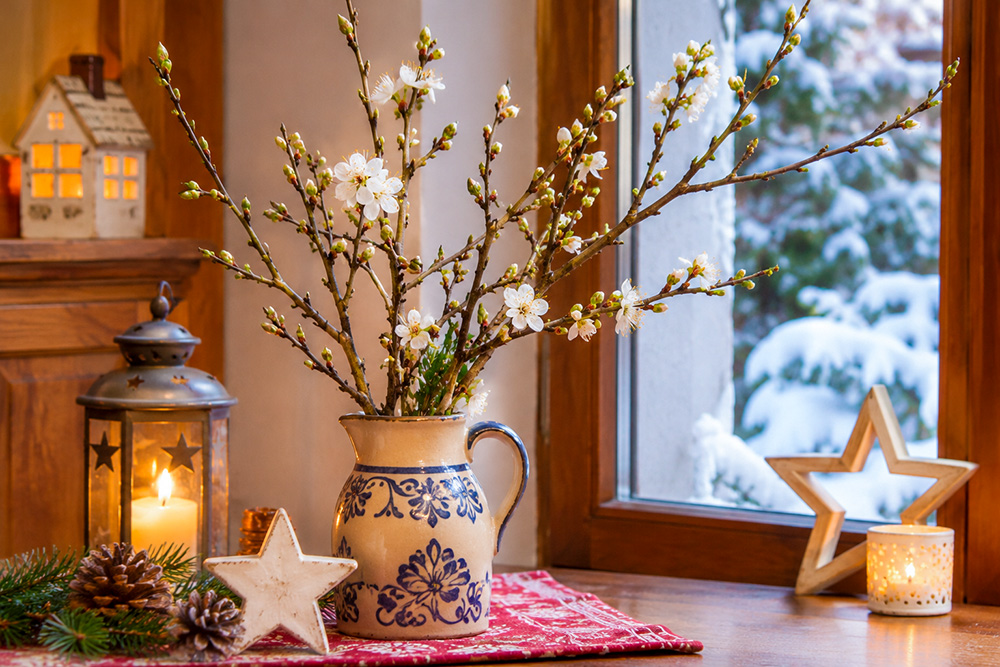
Winter Window Blossom Still Life
Saint Barbara in Poland
In Poland, Barbórka is an important traditional celebration associated with miners.
Like their French counterparts, Polish mining communities have long honoured Saint Barbara as their patron saint.
Celebrations can include ceremonies, parades and festive gatherings.
Saint Barbara Beyond Europe
Saint Barbara is also honoured in parts of the Mediterranean, the Middle East and elsewhere in the world.
Different communities have developed their own customs around her feast day.
These traditions show how a single religious figure can become part of the cultural identity of communities separated by considerable distances.
A December Tradition Worth Remembering
There is something quite remarkable about Saint Barbara's Day.
On the surface, the traditions associated with 4 December seem to have very little in common.
What connects a firefighter's ceremony in Lorraine with a dish of germinating wheat on a kitchen table in Provence?
Or an old mining celebration in northern France with a medieval statue of a young woman holding a tower?
The answer lies in centuries of history, faith and popular tradition.
Saint Barbara's story may belong largely to the world of Christian legend, but the customs that developed around her are very real.
They tell us about the fears and hopes of earlier generations.
The miners who sought protection before descending underground.
The firefighters who continue to honour their colleagues.
The military engineers who gather each December to celebrate their traditions.
And the Provençal families who welcome the Christmas season by watching fresh green shoots emerge in the middle of winter.
For me, the date will always have another meaning.
It brings back memories of December in Speyer, when the celebrations of Advent, Saint Nicholas and Sainte-Barbe made the weeks before Christmas such a memorable time.
I did not know much about the history of Saint Barbara back then.
But I remember the importance of the occasion in the life of the French military community.
And perhaps that is what makes traditions like Sainte-Barbe so special.
They connect the past with the present, and personal memories with a much wider cultural heritage.
So, when 4 December comes around this year, spare a thought for Saint Barbara.
And if you have a few wheat grains at home, why not try a little Provençal tradition of your own?
You might discover a delightful new way to begin the Christmas season in France.
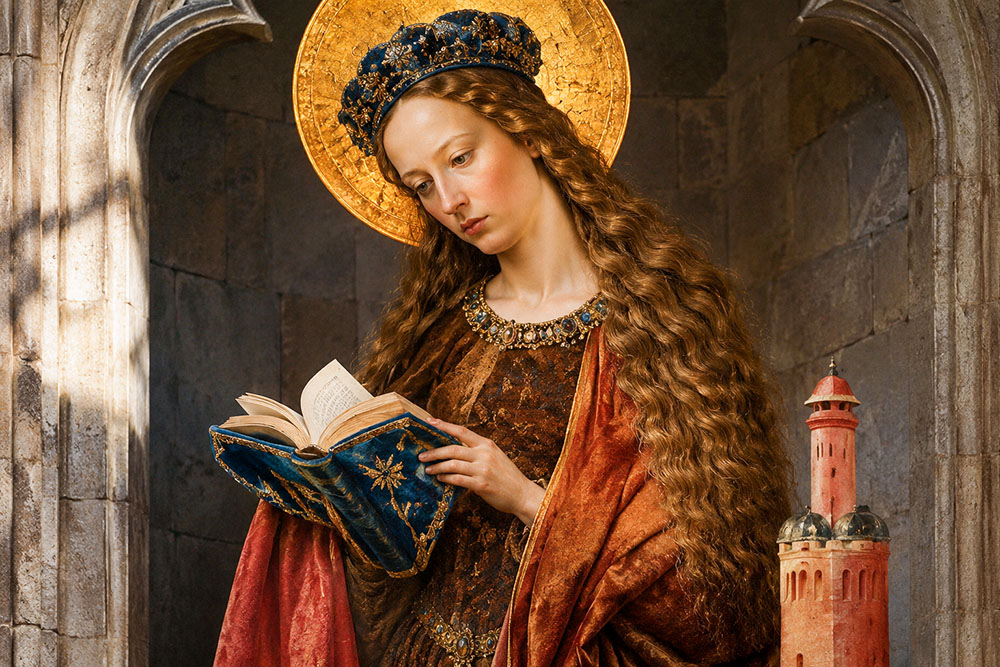
Santa Barbara inspired by a painting from Jos Amman von Ravensburg