Every Christmas, children across Britain eagerly await a visit from Father Christmas.
They hang up their stockings, leave a mince pie and perhaps a glass of sherry for their mysterious visitor, and make sure there is a carrot for the reindeer.
Then, sometime during the night of 24 December, Father Christmas is supposed to arrive with his sack of presents.
He comes down the chimney, delivers the gifts and disappears before anyone wakes up.
Well, that's the theory. I'm sure many parents would appreciate a little help with the Christmas shopping!
But have you ever wondered where Father Christmas actually comes from?
The history of Father Christmas is much more surprising than you might imagine.
For centuries, he had nothing to do with bringing presents to children.
He did not travel in a flying sleigh; he had no reindeer, and he certainly did not run a toy factory at the North Pole.
Instead, Father Christmas was an English character associated with feasting, drinking, merriment and the celebration of Christmas itself.
And Santa Claus?
He followed a different path, with roots in the European traditions surrounding St Nicholas.
The two characters only gradually became one during the nineteenth century.
As a Frenchman living in England, I find this story particularly interesting because St Nicholas is still celebrated in parts of France, especially in Lorraine, where I grew up, and neighbouring Alsace.
Yet St Nicholas was once an important figure in medieval England too.
So how did England move from St Nicholas to Father Christmas, and eventually to the Santa Claus we recognise today?
To understand this, we need to travel back several centuries.
And our journey begins long before the Victorians, Coca-Cola and Christmas shopping!

The formidable story of Father Christmas and Santa Claus © French Moments
Before Father Christmas: St Nicholas in Medieval England
Who was St Nicholas?
Long before Father Christmas became a familiar figure in British homes, St Nicholas was one of the best-known saints in medieval Europe.
Traditionally identified as a fourth-century bishop of Myra, a city in what is now southern Turkey, Nicholas became associated with generosity, charity and the protection of children.

Nicholas of Myra © French Moments
His reputation rested partly on stories describing miraculous interventions and secret acts of kindness.
One particularly famous legend tells of a poor man who had three daughters but could not afford their dowries.
According to the story, Nicholas secretly provided gold to help the young women and their family.
Over the centuries, the details of the tale changed.
In some versions, the gold was delivered through a window. In others, it came down the chimney and landed in stockings left to dry by the fire.
Does that sound familiar?
We can already recognise some of the elements that would later appear in the story of Santa Claus: a mysterious benefactor, unexpected gifts and a nocturnal delivery.

St. Nicholas, basilica of Saint-Nicolas-de-Port © French Moments
But we must remember that these are religious legends, not events whose details can be established with historical certainty.
St Nicholas nevertheless became a very popular saint.
Churches were dedicated to him throughout medieval England, and his feast day was celebrated on 6 December.
This is where our story becomes particularly interesting.
Did English children once receive presents on 6 December?
Today, most British children expect their Christmas presents on 25 December.
But this was not always the case.
During the Middle Ages, gift-giving in England was particularly associated with two dates: St Nicholas's Day on 6 December and New Year's Day.
St Nicholas was the patron saint of children, making his feast day a natural occasion for gifts and charitable activities.

Saint Nicolas in Nancy © French Moments
However, we should be careful not to imagine that every medieval English child followed precisely the same tradition.
We do not have evidence that children throughout England routinely put their shoes beside the fireplace on 5 December and found them full of presents the following morning.
Customs varied considerably between places and social groups.
The University of Liverpool's history of Christmas traditions explains that gifts were mainly exchanged on St Nicholas's Day or at New Year rather than Christmas Day.
New Year's gifts were often exchanged between adults, particularly among wealthier families.
Presents might include money, clothing, food or other useful objects.
They could also serve a social purpose, helping to maintain relationships between patrons, servants and acquaintances.
Not exactly the latest toys that children might request today!
What matters is that the association between St Nicholas and gift-giving existed in England long before the arrival of the modern Santa Claus.
And for readers familiar with eastern France, there is a lovely historical connection here.
From medieval England to St Nicholas in Lorraine
I grew up in Lorraine, in northeastern France, where St Nicholas has a special place in local culture.
His feast day, 6 December, remains an important occasion in many Lorraine towns and villages.
In Nancy, for example, the celebrations of St Nicholas form part of the city's identity.

The market of Saint Nicolas in Nancy © French Moments
Children associate him with sweets, small presents and festivities.
St Nicholas is also well known in Alsace, Germany, Belgium, the Netherlands and several Central European countries.
What I find fascinating is that a saint who remains so closely connected with the traditions of my native region was once celebrated in medieval England too.
The customs have not developed in exactly the same way, of course.
But their shared origins remind us how closely connected European cultures were long before our modern national Christmas traditions took shape.
The Boy Bishop: when a child became a bishop
There was another remarkable tradition connected with St Nicholas in medieval England.
It was known as the Boy Bishop.
Around the feast of St Nicholas, or sometimes the feast of the Holy Innocents later in December, a young choirboy was chosen to take on the symbolic role of a bishop.
He could wear episcopal robes, carry a staff and take part in processions and certain religious ceremonies.
Imagine a choirboy temporarily occupying the bishop's place in a great English cathedral!
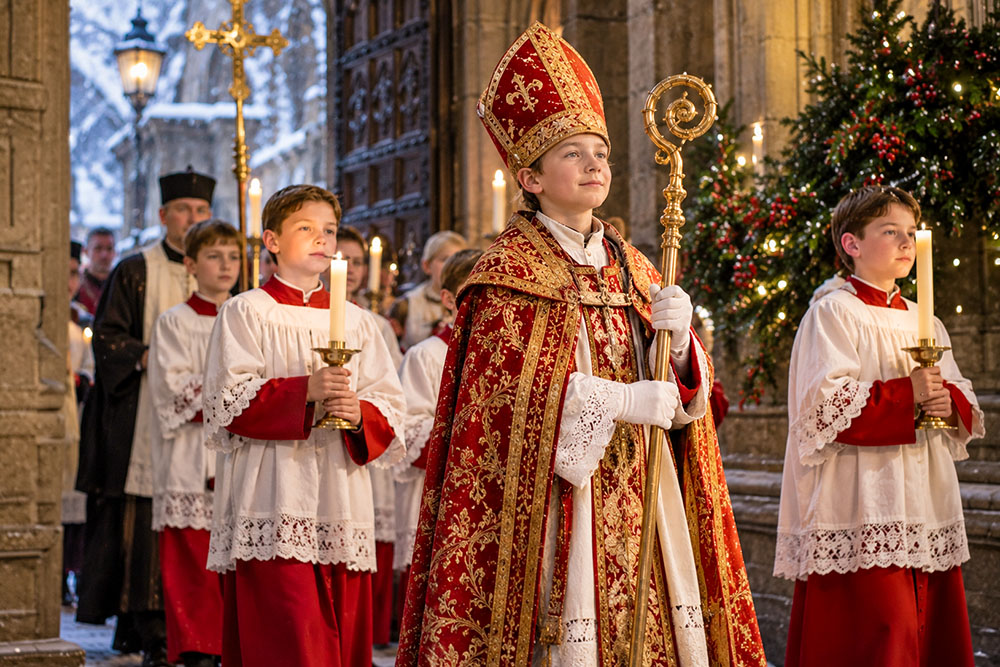
The Boy Bishop - An imagined historical scene, created for illustrative purposes
The custom was practised in a number of English religious institutions, including cathedral communities.
It formed part of a wider medieval tradition of temporarily reversing the normal social order during festive occasions.
The young bishop could lead processions and participate in the distribution of alms.
But he was not a medieval Father Christmas travelling from house to house with children's toys.
The tradition belonged to a different religious and cultural world.
The historian Sarah Peverley discusses the Boy Bishop in the University of Liverpool's account of medieval Christmas customs.
So, at this point in our story, England already has St Nicholas, gift-giving traditions and celebrations involving children.
But Father Christmas himself has not yet arrived.
For that, we must turn to another tradition altogether.

Winchester cathedral at Christmas © French Moments
The English Reformation: What Happened to St Nicholas?
A religious upheaval
During the sixteenth century, England underwent enormous religious changes.
The break with Rome under Henry VIII in the 1530s marked the beginning of a long and complicated transformation.
The English Reformation developed over several reigns, with changing religious policies under Henry VIII, Edward VI, Mary I and Elizabeth I.

Winchester cathedral © French Moments
Among the practices increasingly questioned were those associated with the veneration of saints.
St Nicholas was one of the figures affected by these changes.
Celebrations devoted to him declined in importance in Protestant England.
The Boy Bishop tradition was also disrupted, although its history involved periods of suppression and temporary revival.
But religious changes did not mean that people suddenly stopped giving presents.
Family customs rarely disappear overnight.
Instead, the dates and meanings of gift-giving continued to evolve.
From St Nicholas to New Year and Christmas
In post-Reformation England, New Year's gifts remained significant, particularly among adults.
Gift-giving also became increasingly associated with Christmas Day, although this development was gradual.
It would be misleading to imagine a single moment when everyone in England abandoned St Nicholas on 6 December and began opening presents on 25 December instead.

Christmas presents © French Moments
Different practices coexisted.
The transition took place over a long period, influenced by religious changes, social customs and, eventually, the growth of Christmas as a family celebration.
The Victoria and Albert Museum explains how the Victorians helped shift gift-giving from New Year towards Christmas.
But before we reach the nineteenth century, another character enters our story.
He is English, rather old-fashioned and rather fond of a good celebration.
His name is Father Christmas.
How Did Father Christmas First Appear?
Sir Christmas: an early ancestor
The origins of Father Christmas lie in an English tradition of personifying the Christmas season.
In other words, Christmas itself was imagined as a character.
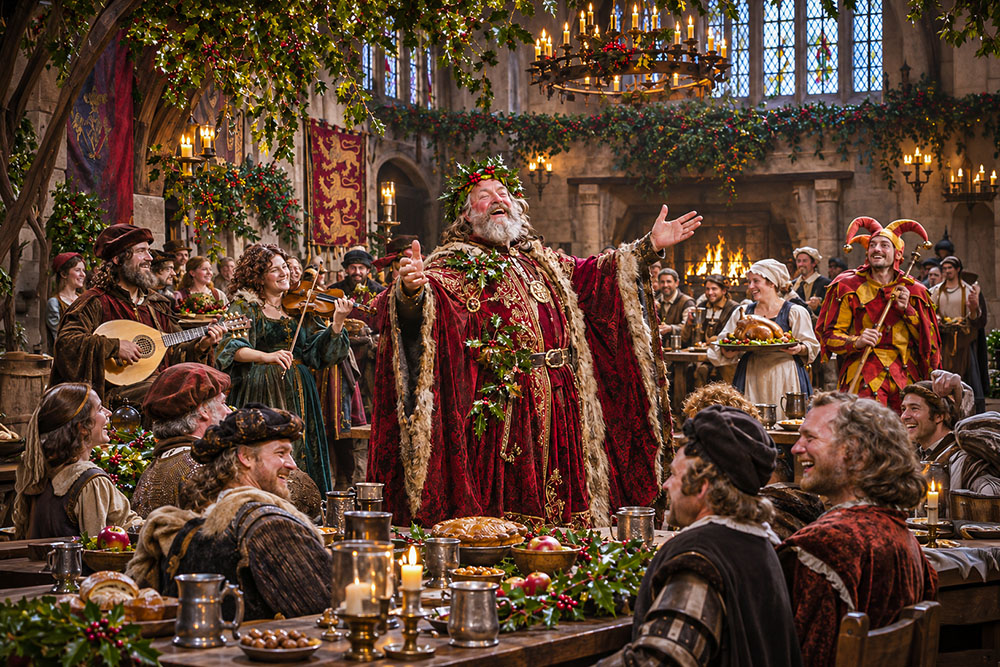
Sir Christmas - An imagined historical scene, created for illustrative purposes
This may seem slightly strange today, but medieval literature frequently represented seasons, virtues, vices and festivals as human figures.
One of the earliest known examples appears in a fifteenth-century English carol featuring a character called Sir Christmas.
He announces the birth of Christ and encourages people to celebrate.
We are already entering the world of music, merriment and communal festivities.
However, this Sir Christmas was not a mysterious visitor who distributed presents to children.
He represented the festive season.
The Library of Congress traces these early personifications of Christmas and explains how they eventually developed into Father Christmas.
Other traditions also contributed to the character.
In Tudor and Stuart England, wealthy households sometimes appointed a Lord of Misrule to oversee seasonal entertainment.
These figures could be known by names such as Captain Christmas or the Christmas Lord.
Their task was to organise amusements and preside over the festivities.
And as you might expect, their responsibilities had very little to do with quietly delivering wrapped presents.
Ben Jonson's Old Christmas
An important development occurred in 1616.
That year, the playwright Ben Jonson presented a court entertainment called Christmas, His Masque.
In it, Christmas appears as an elderly character wearing old-fashioned clothes and accompanied by a rather unusual family.
His children personify various Christmas customs and entertainments.
Among them are characters associated with carols, mince pies, mumming and wassailing.
One of them is even called New Year's Gift.
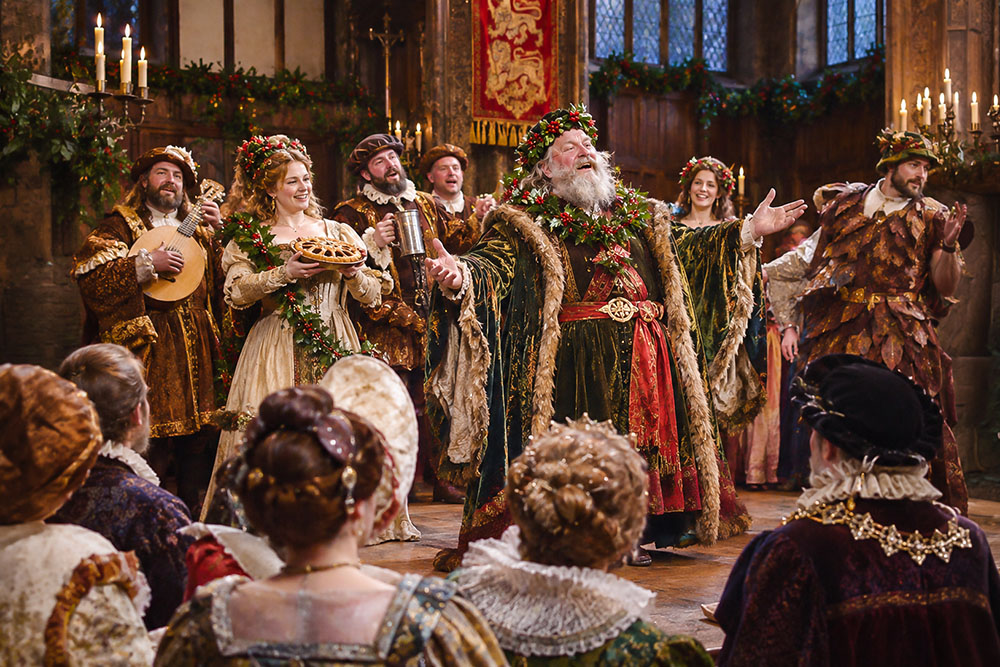
Father Christmas - An imagined historical scene, created for illustrative purposes
I rather like the idea of Mince Pie appearing as a character in a royal performance.
It gives a new meaning to the expression Christmas entertainment!
The character of Christmas complains that he is not being properly welcomed.
This is significant because festive customs were already being criticised by religious reformers.
Christmas was becoming a controversial subject.
Jonson's old character represented established customs that some people feared were disappearing.
But he still was not a present-bringer in the modern sense.
His role was to defend and embody the celebrations of Christmas.
English Heritage's detailed history of Father Christmas examines Jonson's character and its importance in the development of the English tradition.
When did the name Father Christmas appear?
The name Father Christmas became particularly visible during the religious and political conflicts of the seventeenth century.
One important early reference appears in the pamphlet The Arraignment, Conviction, and Imprisoning, of Christmas, published in the mid-1640s.
The pamphlet imagines Christmas as an old character who has disappeared or been imprisoned.
It reflects contemporary arguments about the future of traditional celebrations.
Another remarkable publication followed in 1658.
Its title was The Examination and Tryall of Old Father Christmas.
Written by Josiah King, it imagined Father Christmas being brought before a court.
He faced accusations associated with the excesses of festive celebrations, including drinking and disorderly behaviour.
Poor Father Christmas!
Instead of being welcomed with mince pies and sherry, he found himself answering charges in court.
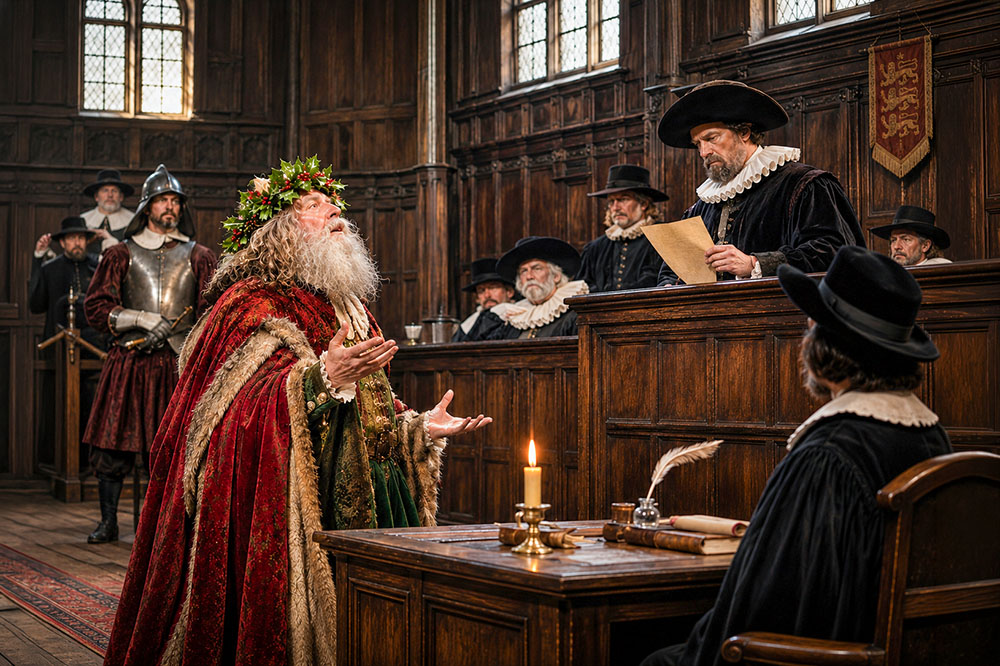
Father Christmas answering charges in court - An imagined historical scene, created for illustrative purposes
Yet these pamphlets tell us something important.
By the middle of the seventeenth century, Father Christmas had become a recognisable symbol of the traditional English festive season.
And the reason for his sudden prominence was connected with one of the most turbulent periods in English history.
Father Christmas and the Puritan Attack on Christmas
Why did the Puritans object to Christmas?
During the English Civil Wars of the 1640s, political and religious tensions divided the country.
Among those supporting a more thorough reform of religious life were the Puritans.
Many Puritans opposed the traditional celebration of Christmas.
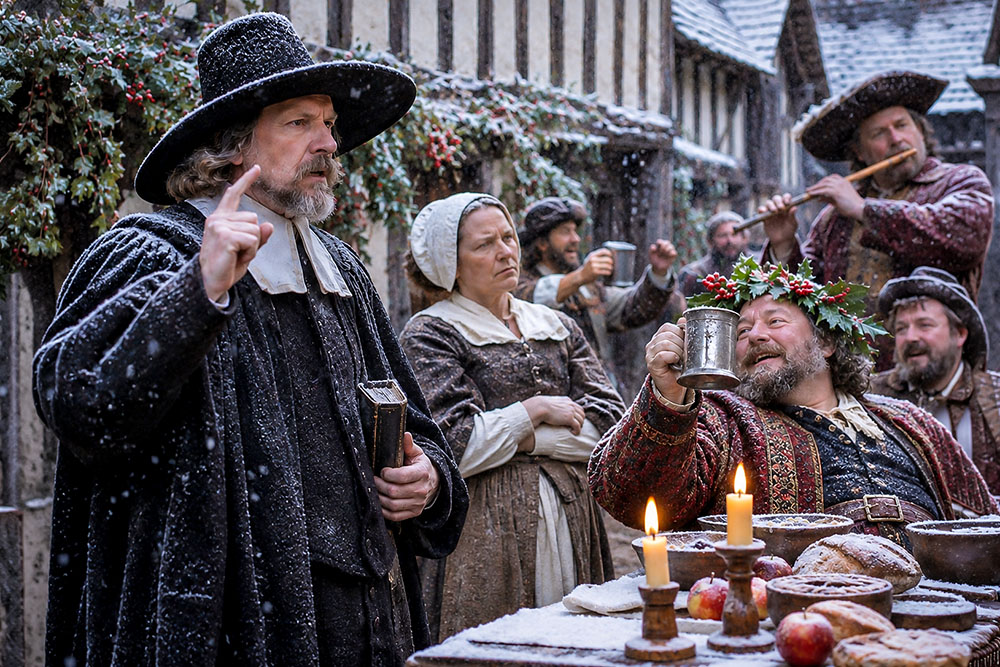
The Puritans opposing Christmas in England - An imagined historical scene, created for illustrative purposes
One reason was theological.
They argued that Scripture did not command Christians to celebrate Christ's birth on 25 December.
Others objected to the drinking, gambling and unruly behaviour that sometimes accompanied the festivities.
We should remember that Christmas in early modern England was not necessarily the quiet family occasion we know today.
Celebrations could include substantial feasts, public entertainments, games and heavy drinking.
In some places, the festivities were noisy enough to attract criticism from religious leaders and local authorities.
The Puritans regarded many of these practices as inappropriate.
They wanted religious life to follow what they considered a more strictly biblical pattern.
Was Christmas really banned in England?
Yes.
In 1647, Parliament passed an ordinance abolishing the official observance of Christmas and several other traditional religious festivals.
Christmas Day was no longer supposed to be treated as a special holiday.
Shops were expected to remain open, and churches were not supposed to hold their customary Christmas services.
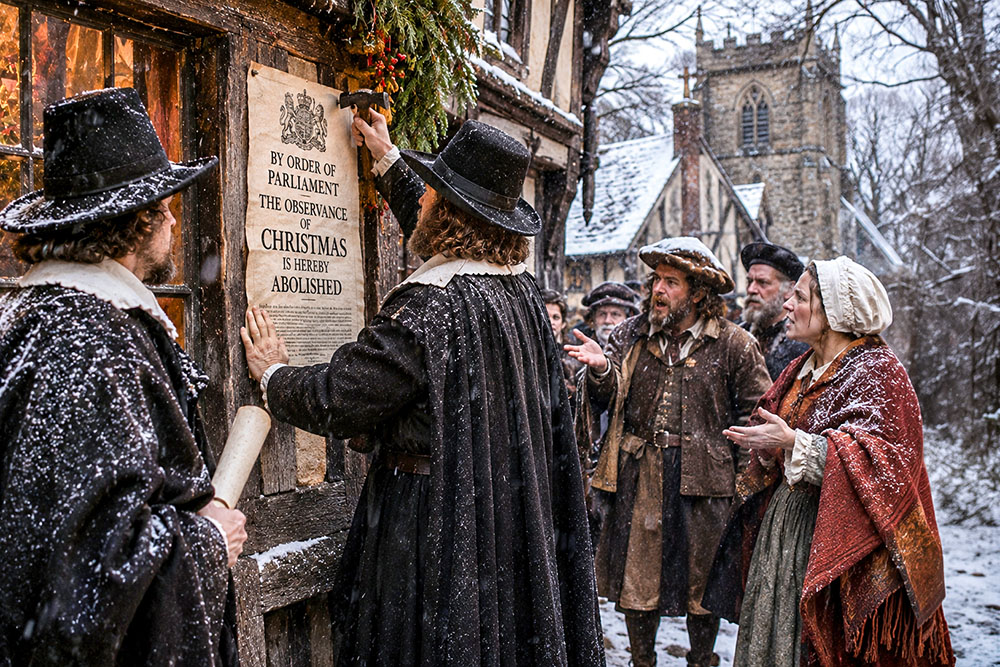
Christmas made illegal in England - An imagined historical scene, created for illustrative purposes
But implementing these measures was another matter.
Not everyone agreed with Parliament.
Some people continued to observe Christmas, and opposition sometimes led to disturbances.
In certain places, attempts to keep shops open on Christmas Day met resistance.
The historian Fiona McCall, from the University of Portsmouth, has studied these conflicts using contemporary records.
Her article, Christmas under the Puritans, demonstrates that official restrictions did not prevent many English communities from continuing their traditional celebrations.
There is also a popular misconception worth correcting.
You may have heard that Oliver Cromwell personally banned Christmas.
The truth is more complicated.
The main parliamentary ordinance abolishing Christmas observances was passed in 1647, before Cromwell became Lord Protector in 1653.
Cromwell belonged to the political and religious world that supported stricter observance, but the prohibition cannot be attributed to a single individual.
Historic England provides a useful explanation of this distinction.
Father Christmas becomes a defender of tradition
It was during these conflicts that Father Christmas acquired an almost political role.
In pamphlets and satirical publications, he represented the old customs threatened by religious reformers.
He stood for hospitality, feasting, music and the pleasures of celebrating together.
In a sense, Father Christmas became a defender of the traditional English Christmas.
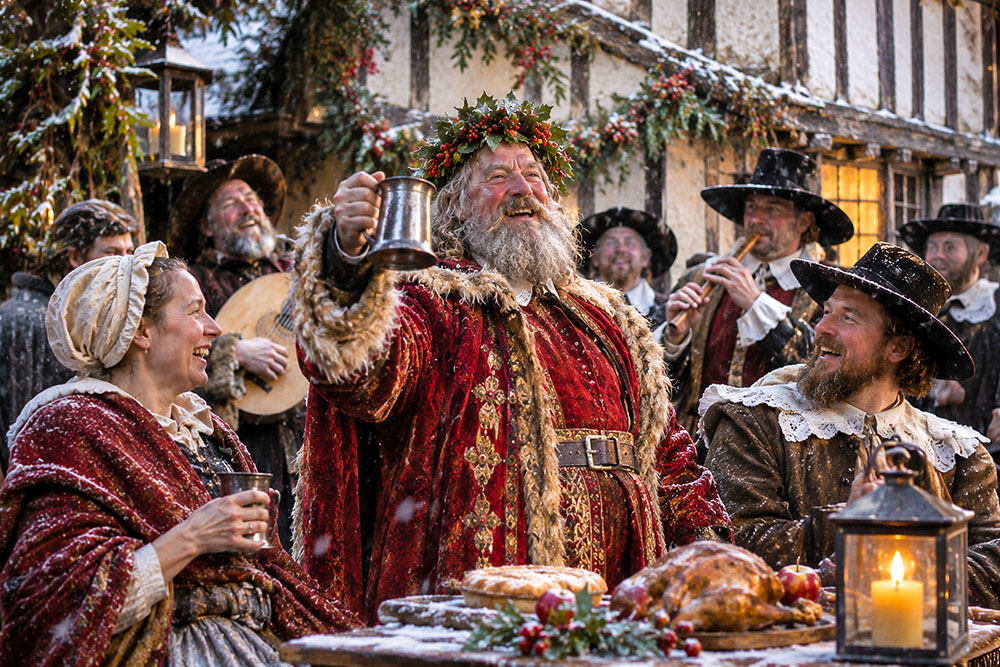
Father Christmas defending the traditions in England - An imagined historical scene, created for illustrative purposes
This is a remarkable contrast with his modern image.
Today, we picture him delivering toys and listening to children's Christmas wishes.
In the seventeenth century, he was more likely to appear in arguments about religion, politics and whether people should be allowed to celebrate Christmas at all.
The monarchy was restored in 1660, and Christmas celebrations returned to official favour.
Father Christmas survived.
But his appearance and purpose were still a long way from what we know today.
What Did Old Father Christmas Look Like?
Was Father Christmas originally dressed in green?
When people discuss the history of Father Christmas, a familiar claim often appears.
Apparently, the original English Father Christmas always wore green, until the Americans changed his clothes to red.
It is a charming story.
Unfortunately, it is too simple.
Historical illustrations show Father Christmas wearing a variety of clothes and colours.
Sometimes he appears in green.
In other representations, he wears long robes, fur-trimmed coats or garments decorated with holly.
His costume varied according to the period and the artist.
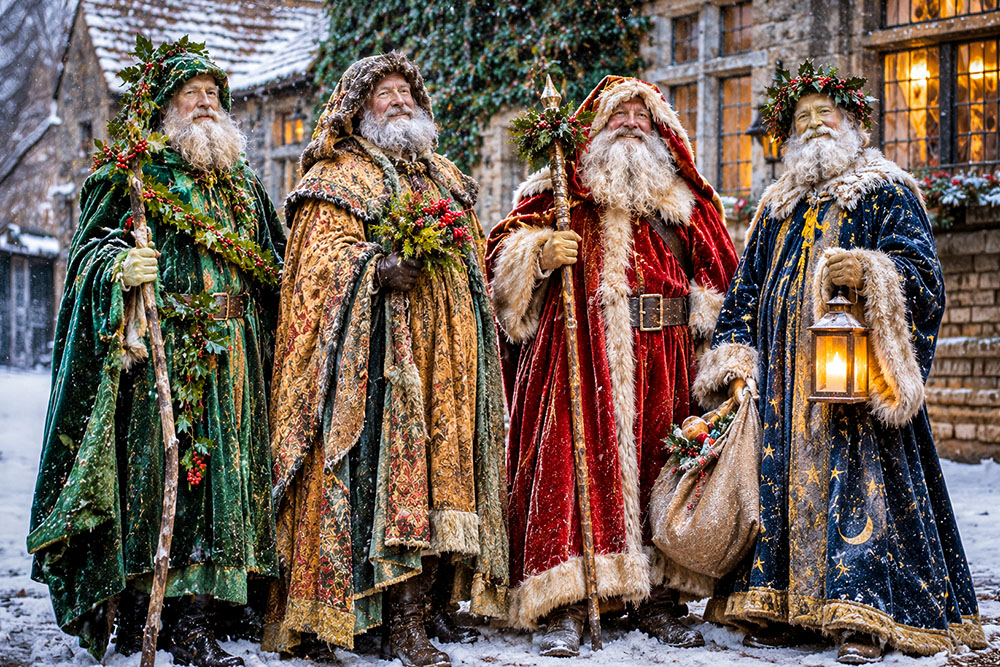
The different appearances of Father Christmas - An imagined historical scene, created for illustrative purposes
He was often shown as an elderly, bearded man associated with winter and festive abundance.
But there was no universally recognised outfit that everyone followed.
Father Christmas did not have a dress code approved by some seventeenth-century Christmas committee!
The illustrations reproduced by the Library of Congress show just how varied his appearance could be.
Father Christmas in traditional folk plays
The old character also survived through popular entertainment.
In some English communities, Father Christmas appeared in mummers' plays.
These traditional folk performances were often staged during the Christmas season.
They could include comic speeches, mock battles, characters who died and returned to life, and various forms of festive entertainment.
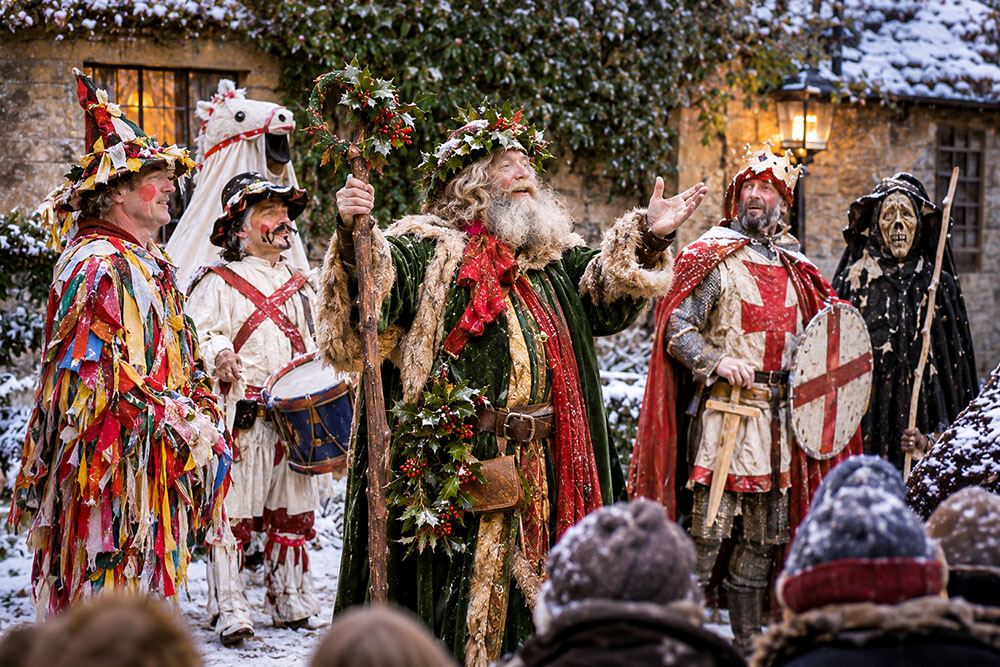
Father Christmas in a role play - An imagined historical scene, created for illustrative purposes
Father Christmas sometimes introduced the performance or welcomed the audience.
He remained a figure of celebration.
His role was not yet to arrive silently during the night and leave gifts for sleeping children.
The Library of Congress has studied his appearance in surviving mummers' play traditions.
By the early nineteenth century, England therefore possessed a well-established figure called Father Christmas.
But he still belonged largely to the world of adult festivities.
Meanwhile, across the Atlantic, another Christmas character was becoming increasingly popular.
And this newcomer was far more interested in delivering presents.
How Santa Claus Developed in America
From St Nicholas to Sinterklaas
To understand Santa Claus, we need to return to the European traditions of St Nicholas.
In the Netherlands, the saint was known as Sinterklaas.
His feast day remained strongly associated with children and gifts.

St Nicholas in Nancy © French Moments
Dutch customs surrounding St Nicholas contributed to the eventual development of Santa Claus in North America.
The name itself derives from the Dutch Sinterklaas.
But it would be misleading to suggest that the modern American Santa was simply an unchanged Dutch tradition transported to New York.
The story is more complicated.
European folklore, New York's Dutch heritage, American literature and nineteenth-century popular culture all played a part.
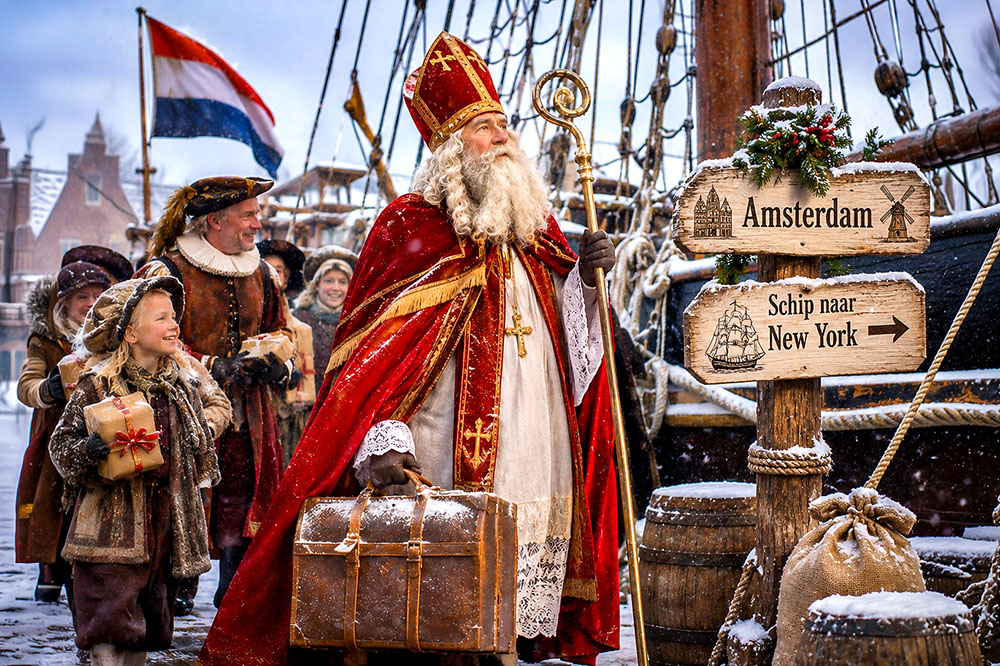
Sinterklaas on his way to America - An imagined historical scene, created for illustrative purposes
Some of the stories about St Nicholas were preserved, while others were reshaped.
New details appeared.
Over time, the saintly bishop became a cheerful, mysterious visitor associated with Christmas Eve.
When did Santa Claus acquire his sleigh and reindeer?
The early nineteenth century was particularly important.
In 1809, the American writer Washington Irving referred to St Nicholas in his satirical history of New York.
Other writers continued to develop the character.
In 1821, an illustrated American poem called Old Santeclaus with Much Delight featured a gift-bringer travelling by sleigh and reindeer.
This was already close to the figure we recognise today.
Then, in 1823, a poem entitled A Visit from St. Nicholas was published anonymously in the United States.
It later became famous under the title The Night Before Christmas.
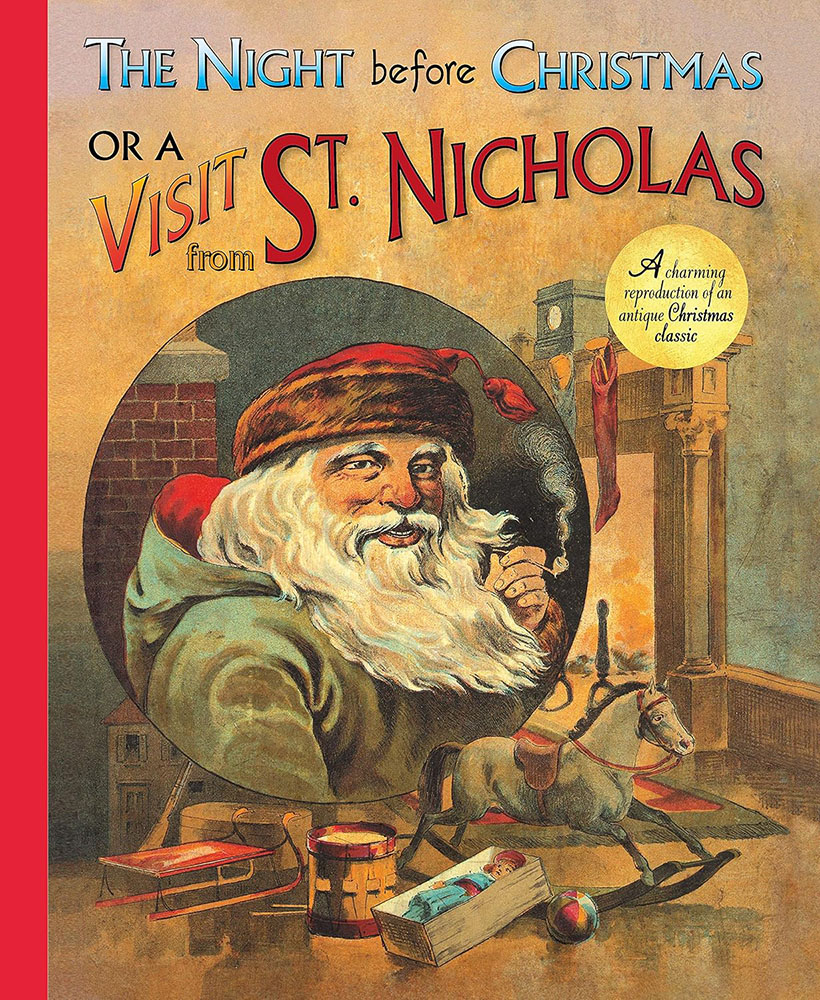
The poem is traditionally attributed to Clement Clarke Moore, although its authorship has been debated.
It describes a cheerful St Nicholas who arrives on Christmas Eve in a sleigh drawn by eight tiny reindeer.
He enters the house through the chimney and delivers presents.
The poem helped popularise many of the characteristics that became associated with Santa Claus.
But it did not invent the entire tradition in one stroke.
The character had already been developing in American publications.
Still, the poem gave him a memorable form and helped establish the Christmas Eve visit in the popular imagination.
By now, Santa Claus possessed quite an impressive means of transport.
Eight flying reindeer, a sleigh and the ability to pass through chimneys.
I suspect the average Victorian delivery company would have found that rather difficult to compete with!
English Heritage traces this American development and its subsequent arrival in Britain.
Thomas Nast gives Santa Claus a recognisable appearance
Another important figure was Thomas Nast.
Born in Landau in der Pfalz, Germany in 1840, Nast moved to the United States as a child and became one of the country's best-known political cartoonists.
From the 1860s onwards, he produced illustrations of Santa Claus for Harper's Weekly.
His drawings helped shape the image of a cheerful, bearded character associated with presents and Christmas festivities.
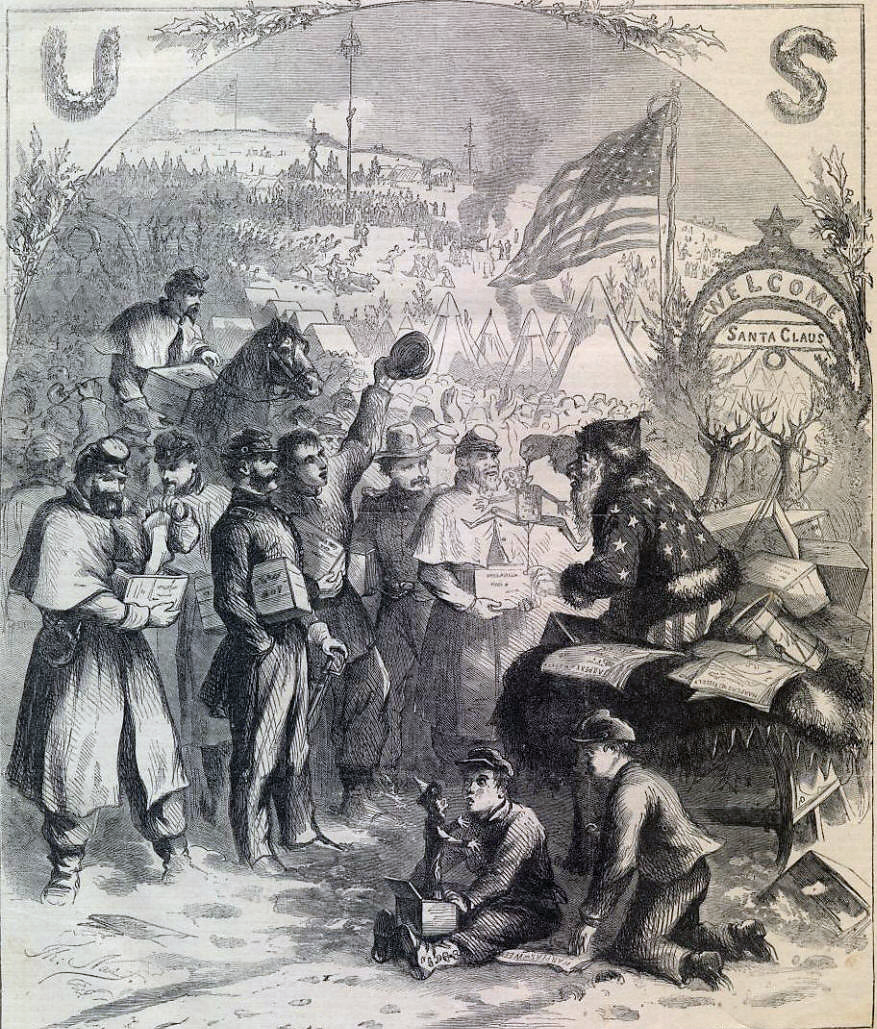
Santa Claus by Thomas Nast in Harpers 1863
Over time, other elements became associated with Santa Claus, including the North Pole and the idea of a workshop producing toys.
However, Nast did not invent the modern Santa Claus entirely by himself.
Nor did he establish one definitive costume that everyone immediately adopted.
Illustrators continued to portray the character in different forms.

Portrait of Santa by Thomas Nast, published in Harper's Weekly, 1881
The important point is that, during the nineteenth century, the American Santa Claus was becoming a much more clearly defined children's gift-bringer.
And eventually, he crossed the Atlantic.
Father Christmas Meets Santa Claus in Victorian England
How Victorian Christmas traditions changed family life
The nineteenth century brought enormous changes to British Christmas celebrations.
During Queen Victoria's reign, from 1837 to 1901, Christmas became increasingly associated with family life, children, charitable giving and domestic celebrations.
Industrialisation created new opportunities for manufacturing and selling toys, decorations and other festive goods.
Improvements in printing made illustrated books and Christmas cards more widely available.
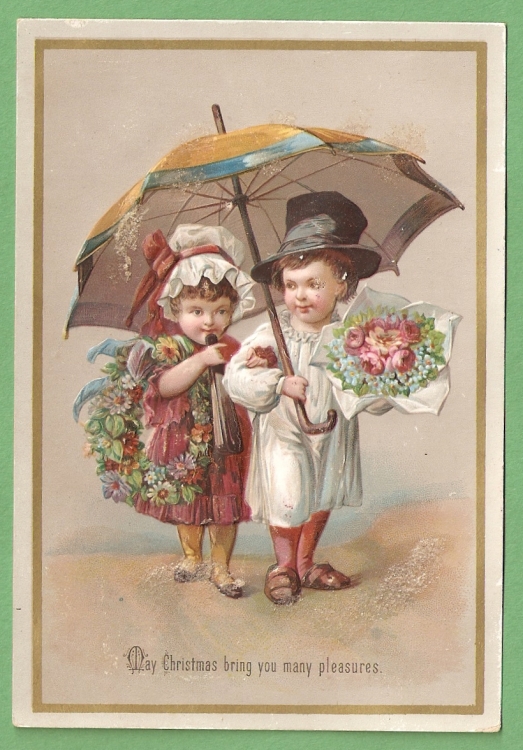
Railways allowed more families to travel during the festive season.
And the growing middle class had greater opportunities to purchase gifts.
Of course, these changes were not experienced equally.
Many poorer families could not afford the elaborate celebrations enjoyed by wealthier Victorians.
Nevertheless, Christmas was changing.
The period also saw the growing popularity of decorated Christmas trees.
Queen Victoria and Prince Albert are closely associated with this tradition, especially following the publication of an illustration of the royal family gathered around a tree in 1848.
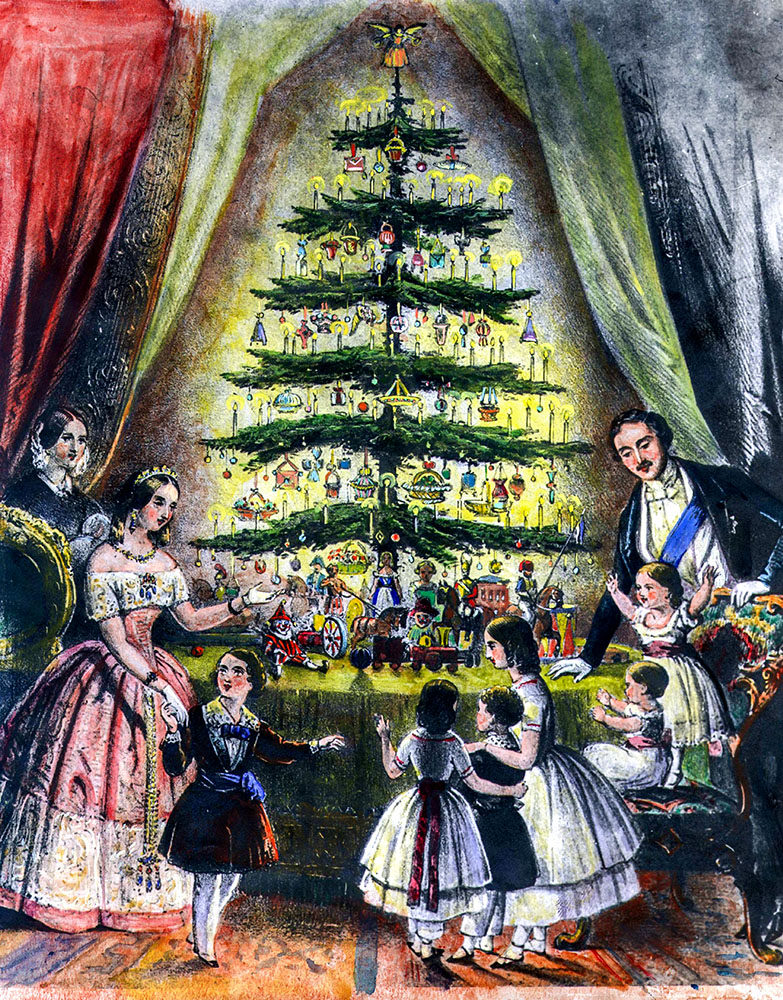
An engraving published in the 1840s of Queen Victoria and Prince Albert created a craze for Christmas trees
But Albert did not introduce Britain's first Christmas tree.
Queen Charlotte, the German-born wife of George III, had already brought the custom into royal circles decades earlier.
The Victoria and Albert Museum provides an excellent overview of these developments.
For a wider look at the period, you can also read my article on Victorian Christmas traditions.

Winchester's Christmas tree on the High Street © French Moments
Victorian presents were not always opened on Christmas morning
Today, in many British families, children open their presents on the morning of 25 December.
That is the custom we follow in our Franco-British household.
But the Victorians did not all do things this way.
Queen Victoria and Prince Albert, for example, exchanged Christmas gifts on the evening of 24 December, following a German tradition.
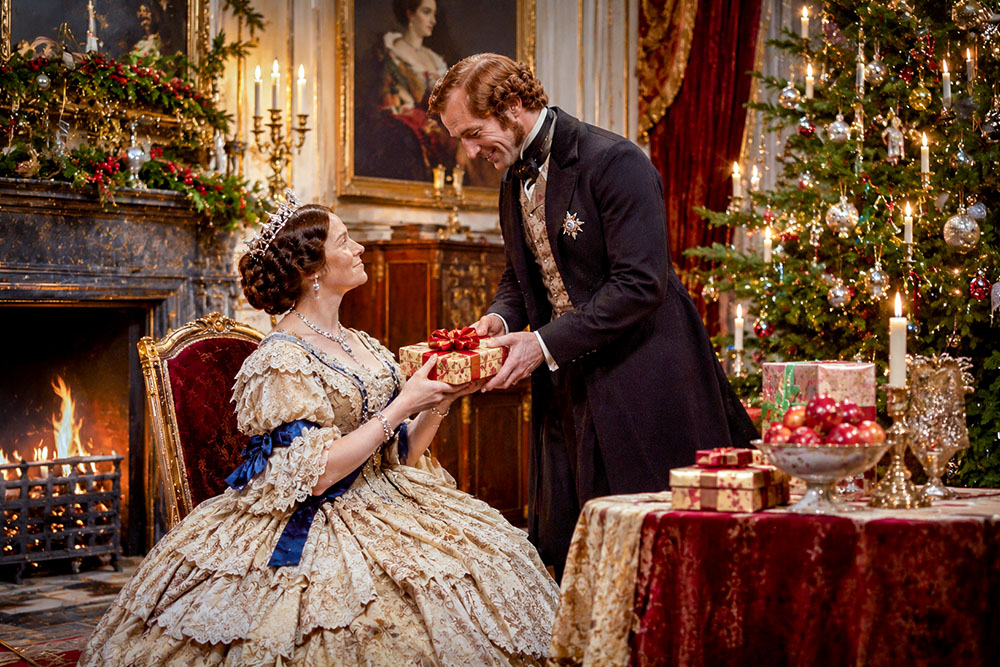
Exchanging gifts on a Victorian Christmas - An imagined historical scene, created for illustrative purposes
Presents were arranged on tables, often near the decorated Christmas trees.
I find this detail rather interesting because it resembles customs still found in France and other parts of continental Europe.
Growing up in France, I was familiar with Christmas Eve playing a much more important part in family celebrations than it generally does in Britain today.
Living in England has made me appreciate how these traditions differ, even between neighbouring countries.
English Heritage describes the royal family's Christmas Eve gift-giving customs.
But why did the Victorians begin to associate presents with Father Christmas?
That is where the American influence enters the story.
When Father Christmas and Santa Claus became one
From the middle of the nineteenth century, American images and stories about Santa Claus began circulating in Britain.
Books, newspapers, illustrated magazines and Christmas cards introduced British readers to the mysterious gift-bringer who travelled at night and filled children's stockings.
But the British already knew Father Christmas.
He had been part of their culture for centuries.
At first, the two characters could still be distinguished.
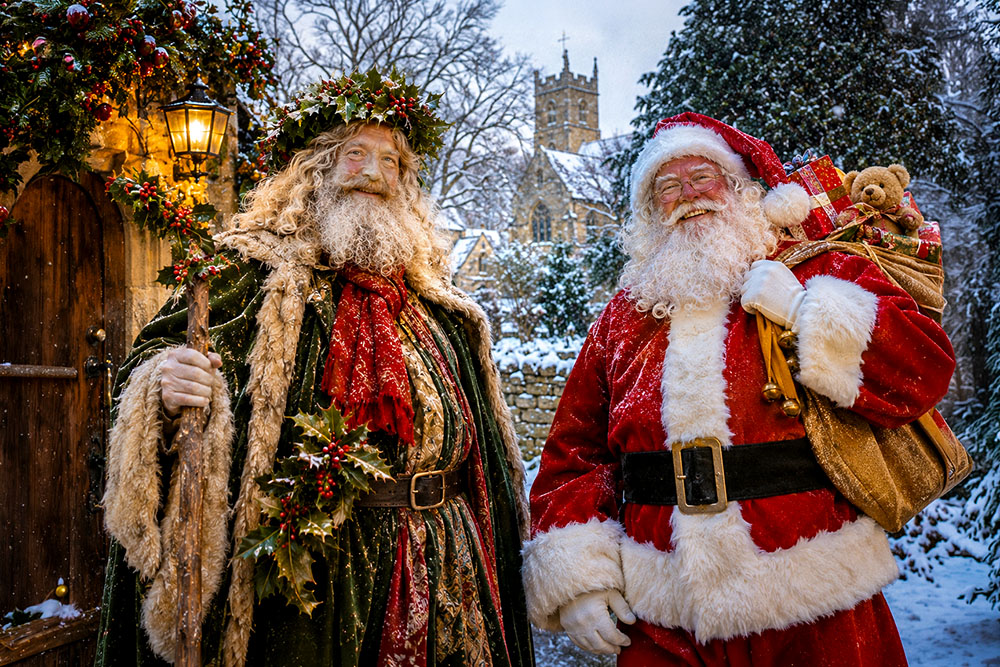
Father Christmas and Santa Claus - An imagined historical scene, created for illustrative purposes
Father Christmas represented the festive season, merriment and hospitality.
Santa Claus was associated more directly with children's gifts.
Yet their characteristics gradually began to overlap.
Father Christmas increasingly appeared with toys and presents.
Santa Claus acquired visual characteristics familiar from the older English figure.

Santa comes down by the fireplace
This merging of traditions became particularly noticeable during the second half of the nineteenth century.
According to English Heritage, Santa Claus was appearing in English publications alongside Father Christmas by the 1860s.
In 1879, a correspondent to Notes and Queries described a custom in which people left stockings outside their bedroom doors on Christmas Eve, expecting a mysterious visitor called Santiclaus to fill them.
The writer was evidently unsure where this new character had come from.
I rather like that detail.
It reminds us that traditions which seem perfectly familiar to us today were once new enough to leave people scratching their heads!
By the 1880s, the two figures had largely merged in popular imagination.
A French visitor to England in 1883 even described Father Christmas coming down chimneys to leave sweets and toys in children's stockings.
By the beginning of the twentieth century, Father Christmas and Santa Claus had effectively become two names for the same character.
The Library of Congress examines this transformation in Christmas Cousins: Father Christmas and Santa Claus.
And that is the great turning point of our story.
The English figure of festive abundance had become the magical giver of Christmas presents.
Did Coca-Cola Invent Father Christmas in Red?
There is another popular story that deserves a closer look.
According to a claim often repeated at Christmas, Coca-Cola invented the modern Father Christmas and dressed him in red to match its branding.

Santa by Coca-Cola
It is an entertaining explanation.
But it is not historically correct.
Both Father Christmas and Santa Claus were portrayed in red clothing before Coca-Cola launched its famous advertising campaigns.
The nineteenth-century illustrations of Santa Claus show a range of colours, including red.
Thomas Nast and other artists had already contributed to the appearance of the familiar bearded figure.
What Coca-Cola did was help popularise one particularly recognisable version of him.
In 1931, the company commissioned the American illustrator Haddon Sundblom to create advertising images featuring Santa Claus.
His paintings showed a jovial, white-bearded man in a red suit trimmed with white fur.
The campaigns were extremely successful and contributed to making this depiction familiar around the world.

Santa's workshop in Obernai, Alsace © French Moments
But Coca-Cola did not invent the red costume.
Nor did it invent Santa Claus.
It helped reinforce an image that had already developed over many decades.
So the next time someone tells you that Father Christmas is simply a creation of Coca-Cola, you can gently explain that his story began several centuries before anyone thought of selling a bottle of fizzy drink!
For the earlier history, see the Library of Congress's study of Father Christmas and Santa Claus.
Father Christmas and Santa Claus Today
Why do the British use two different names?
Today, the names Father Christmas and Santa Claus are generally interchangeable in Britain.
Children might say they are waiting for Father Christmas.
They might equally call him Santa.
Both names refer to the familiar character who visits during the night of Christmas Eve and brings presents.
Father Christmas retains a particularly British flavour.
Santa Claus sounds more American, although it is also widely used in Britain.
But in everyday life, the distinction rarely matters.
The two historical figures have become one.
It is rather extraordinary when you think about it.
One character began as an English personification of Christmas, associated with adult entertainment and feasting.
The other developed from European St Nicholas traditions and became a magical children's gift-bringer in America.
And now, most people would struggle to separate them.

Santa's welcoming the visitors inside a Christmas pyramid © French Moments
What about Father Christmas in France?
France has its own modern gift-bringer: le Père Noël.
The name literally means Father Christmas.
Yet the history of the French figure is not simply identical to that of the English one.
Different regional traditions influenced the development of Christmas customs in France.
St Nicholas remained particularly important in Lorraine and Alsace, as well as in neighbouring parts of Europe.
In Alsace, the Christkindel is another traditional figure associated with Christmas gifts.
These customs developed alongside the increasingly widespread figure of Père Noël.
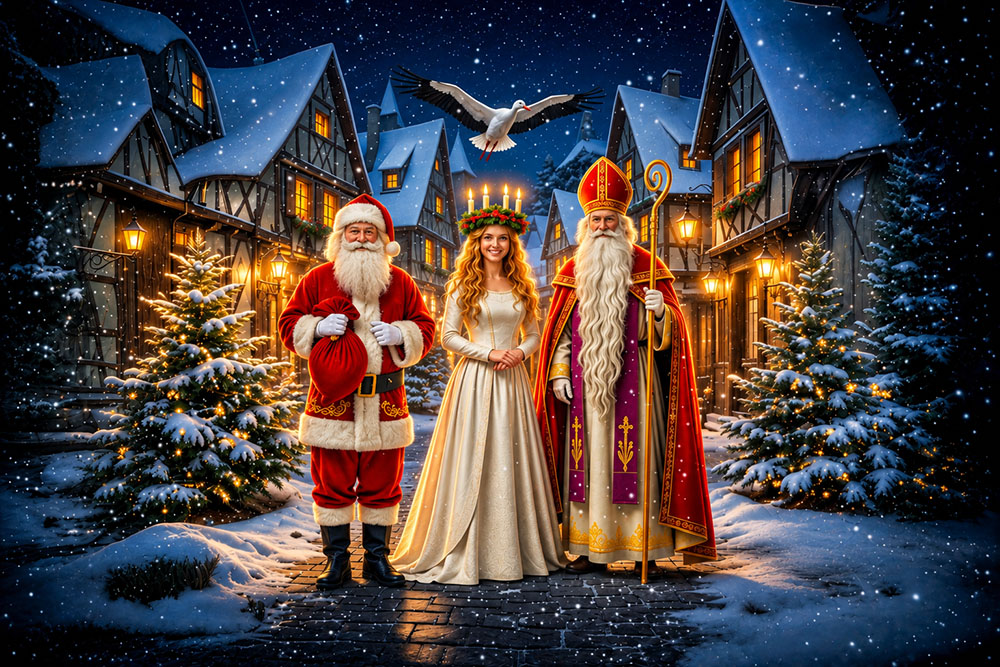
The Alsatian Christmas heroes - An imagined historical scene, created for illustrative purposes
Today, the familiar red-coated Père Noël is known throughout France.
But regional traditions have not disappeared.
In Lorraine, St Nicholas continues to occupy a special place in December celebrations.
This is something I find particularly meaningful.
Having grown up in northeastern France and later settled in England, I have come to know Christmas through two sets of traditions.
Some are remarkably similar.
Others are surprisingly different.
The opening of presents, the food served at Christmas dinner and even the date of the main family celebration can vary.
I have written more about these differences in my article on British Christmas traditions through French eyes.
But discovering the history of Father Christmas has given me another reason to look at these familiar customs with curiosity.
Our Christmas traditions are not isolated national inventions.
They are the product of centuries of religious, cultural and social exchanges.
And sometimes, their history has taken rather unexpected turns!
A Brief Timeline of Father Christmas and Santa Claus
| Period | What happened? |
|---|---|
| Middle Ages | St Nicholas is widely celebrated in Europe, including England. Gifts are associated with 6 December and New Year. |
| Fifteenth century | A personification of Christmas called Sir Christmas appears in English carols. |
| Sixteenth century | The English Reformation changes the place of saints and religious customs. |
| 1616 | Ben Jonson presents Christmas, His Masque, featuring Old Christmas. |
| Mid-1640s | Father Christmas appears in pamphlets defending traditional celebrations. |
| 1647 | Parliament abolishes the official observance of Christmas and other religious festivals. |
| 1658 | Josiah King's The Examination and Tryall of Old Father Christmas is published. |
| 1823 | A Visit from St. Nicholas helps popularise the American gift-bringer and his reindeer. |
| From the 1860s | American Santa Claus traditions become increasingly familiar in Britain. |
| Late nineteenth century | Father Christmas and Santa Claus gradually merge into one character. |
| 1931 | Coca-Cola's Sundblom advertisements reinforce a familiar image of Santa Claus. |
Conclusion: Two Christmas Stories That Became One
We have reached the end of our journey through the history of Father Christmas.
And what a journey it has been!
We began in medieval England, where St Nicholas was associated with children and gifts.
We then encountered an English personification of Christmas who preferred feasting and merriment to delivering presents.
During the seventeenth century, Father Christmas became a symbol of traditional celebrations at a time when the Puritans were trying to suppress them.
Meanwhile, across the Atlantic, European St Nicholas traditions were developing into the American Santa Claus.
During the Victorian period, these two stories gradually came together.
The old English Father Christmas adopted the magical gift-giving role of Santa Claus.
And Santa Claus became so familiar in Britain that the two names eventually referred to the same character.
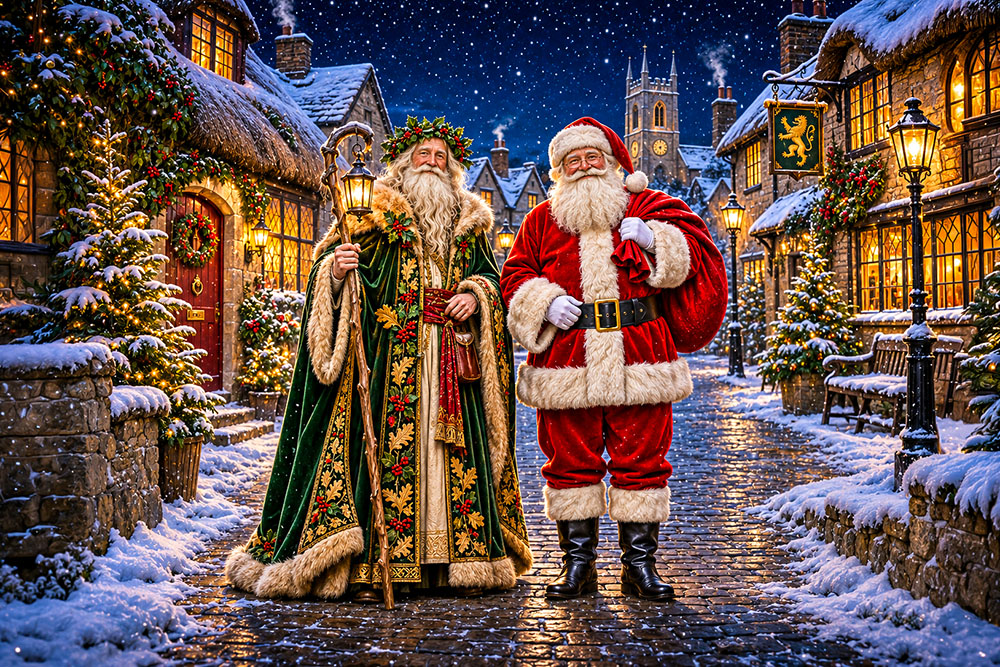
The English Christmas heroes - An imagined historical scene, created for illustrative purposes
What interests me most is not simply how the modern Father Christmas acquired his red coat, his sleigh or his reindeer.
It is the way traditions travel between countries and change over time.
An English symbol of festive merriment, a saint once celebrated throughout medieval Europe, and an American gift-bringer all contributed to the character we recognise today.
And there is one final thought I rather like.
If you had invited Father Christmas to your home in the seventeenth century, he might well have enjoyed your Christmas dinner and a generous glass of wine.
But I would not have counted on him bringing the presents!

Santa's toys, Trail of Lanterns in Metz © French Moments
Did you know that Father Christmas and Santa Claus originally came from different traditions? And are there any St Nicholas customs still celebrated where you live?
I'd love to hear about them.
Sources and Further Reading
This article draws on historical research, early printed texts and publications by heritage organisations, museums and universities.
- English Heritage — The History of Father Christmas, by Tom Moriarty. An overview of the English origins of Father Christmas, the development of Santa Claus and their eventual merger.
- Library of Congress — “In Comes I, Old Father Christmas”: Surprising History of a Christmas Icon, by Stephen Winick, 2018. A study of early English sources and Father Christmas's role in traditional folk plays.
- Library of Congress — Christmas Cousins: Father Christmas and Santa Claus, by Stephen Winick, 2018. A detailed explanation of the merging of the English and American Christmas figures.
- University of Liverpool — The History of Christmas Traditions, featuring research by Professor Sarah Peverley, 2023. Particularly useful for medieval celebrations, St Nicholas and early gift-giving customs.
- University of Portsmouth — Christmas under the Puritans, by Dr Fiona McCall, 2023. Historical research into the suppression of Christmas festivities and popular resistance in seventeenth-century England.
- Historic England — Did Oliver Cromwell Really Ban Christmas?. An explanation of the religious and political circumstances surrounding the restrictions on Christmas celebrations.
- Victoria and Albert Museum — Victorian Christmas Traditions. An account of nineteenth-century Christmas cards, presents, decorated trees and the development of family celebrations.
- English Heritage — Victorian Christmas Traditions. Further details about Queen Victoria, Prince Albert and the changing place of Christmas gifts in Victorian households.