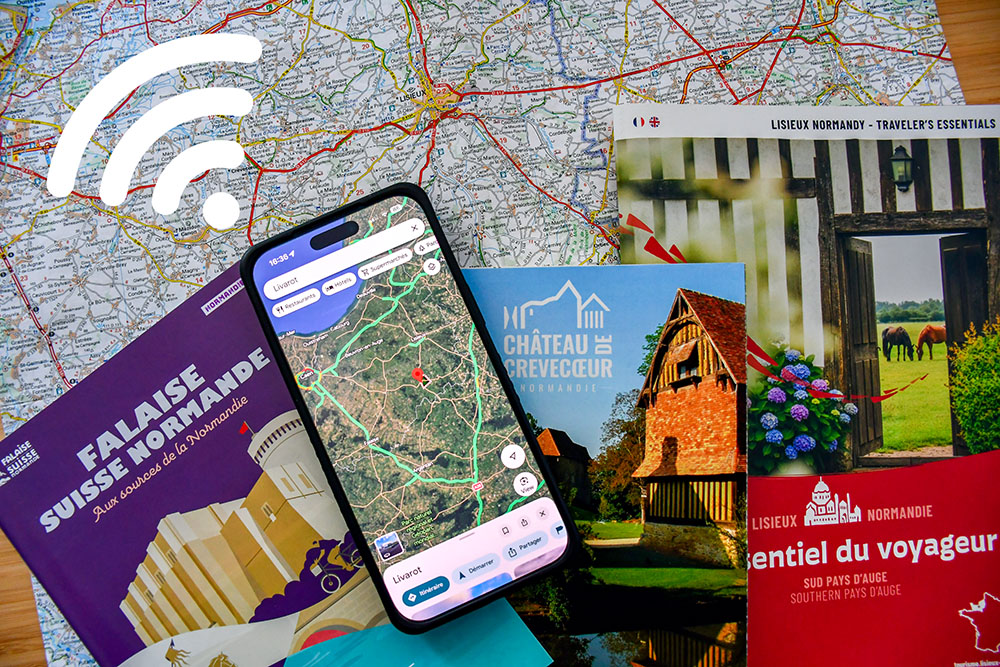


This France eSIM review is based on a 17-day road trip through Normandy, where I used mobile data almost every day for GPS navigation, local searches and staying connected while travelling.
At the end of August, we packed the car, drove down to Portsmouth Harbour and boarded the ferry to Normandy.
Compared with my previous trip to France, this journey was going to be much simpler.
No airport. No trains. No complicated sequence of connections.
Just the ferry to Caen, our car, and sixteen nights in the Normandy countryside.
Simple enough.
Except that during those two weeks, we ended up driving around 1,000 kilometres across Normandy, not even counting the journeys between the ferry terminal at Ouistreham and our accommodation near Livarot.
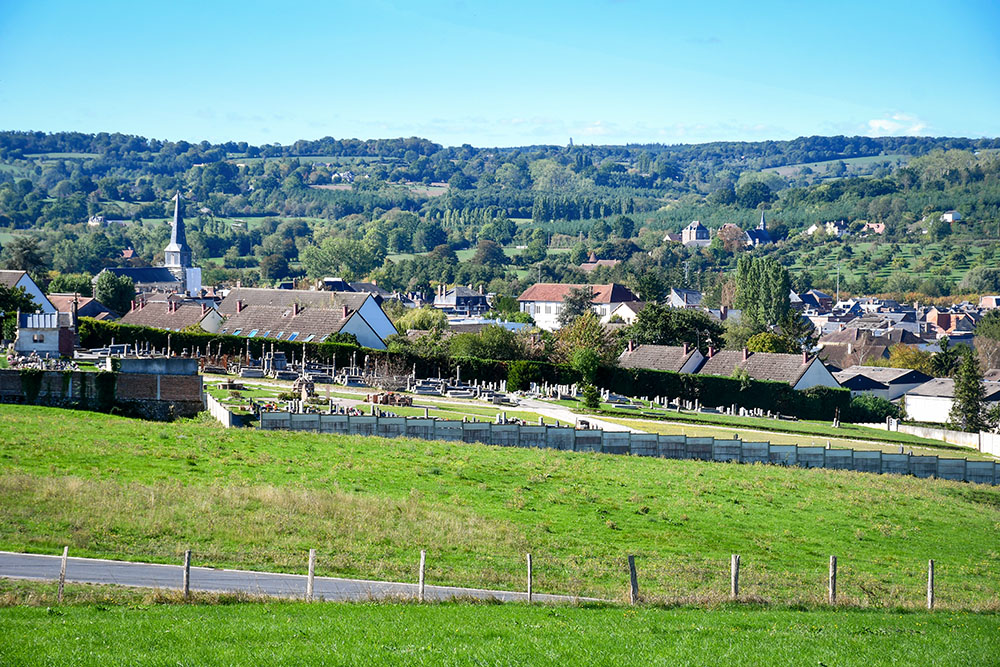
A general view of Livarot © French Moments
That meant plenty of small roads, unfamiliar villages, last-minute changes of plan and a considerable amount of GPS navigation.
For this trip, I had been invited to test an eSIM provided by Sim Local.
So this France eSIM review is not based on a few hours spent in Paris or a weekend connected mainly to hotel Wi-Fi.
I used the eSIM during a proper road trip, travelling through towns, villages, countryside and coastal areas across Normandy between 31 August and 16 September.
And in the end, one particular use proved more important than anything else:
finding our way.
Transparency note: Sim Local provided me with an eSIM for this trip. This article reflects my own experience and opinions. It also contains an affiliate link, which means I may receive a commission if you purchase through it, at no extra cost to you. Sim Local has also provided French Moments readers with the discount code FRENCHMOMENTS, which gives you 5% off.
Why I Needed an eSIM for My Normandy Road Trip
Earlier in the year, I travelled on a very different journey across France.
That trip lasted 18 days and involved planes, trains, cars and ferries. I travelled through Haute-Savoie, Switzerland, Alsace, Lorraine, Champagne, Paris and Normandy before returning to England.
This time, the journey was much more straightforward.
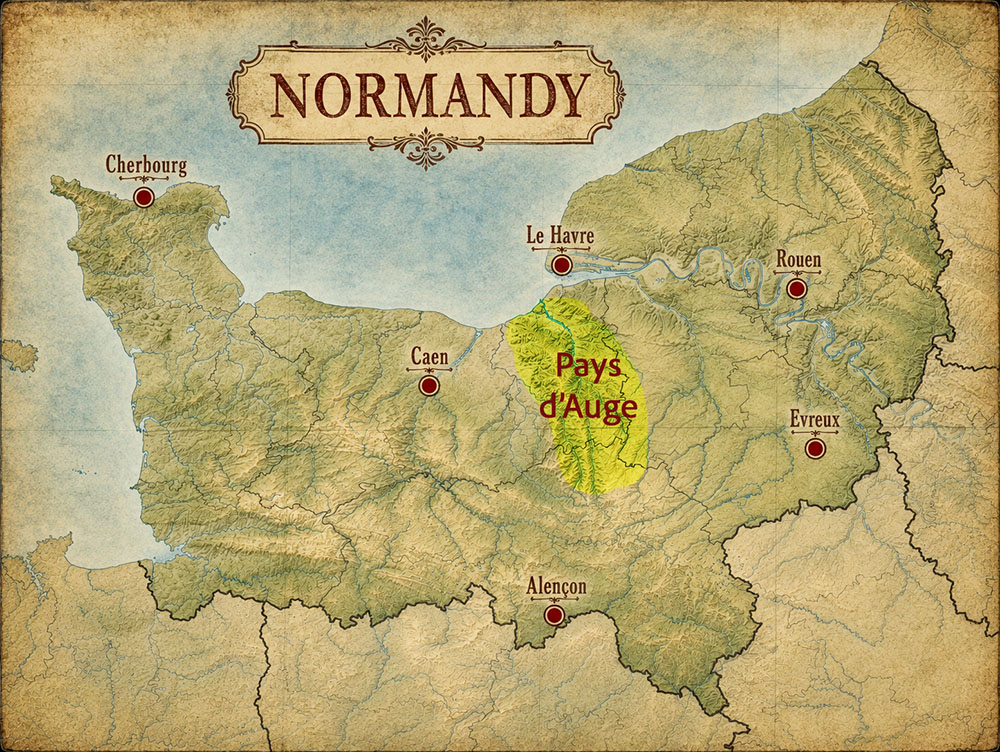
We crossed the Channel from Portsmouth to Ouistreham by ferry on 31 August, then drove inland to our base near Livarot, in the heart of the Pays d’Auge.
We stayed there for sixteen nights.
But while our accommodation did not change, our location certainly did.
Almost every day, we got into the car and explored somewhere different.
And this is where having mobile data became genuinely useful.
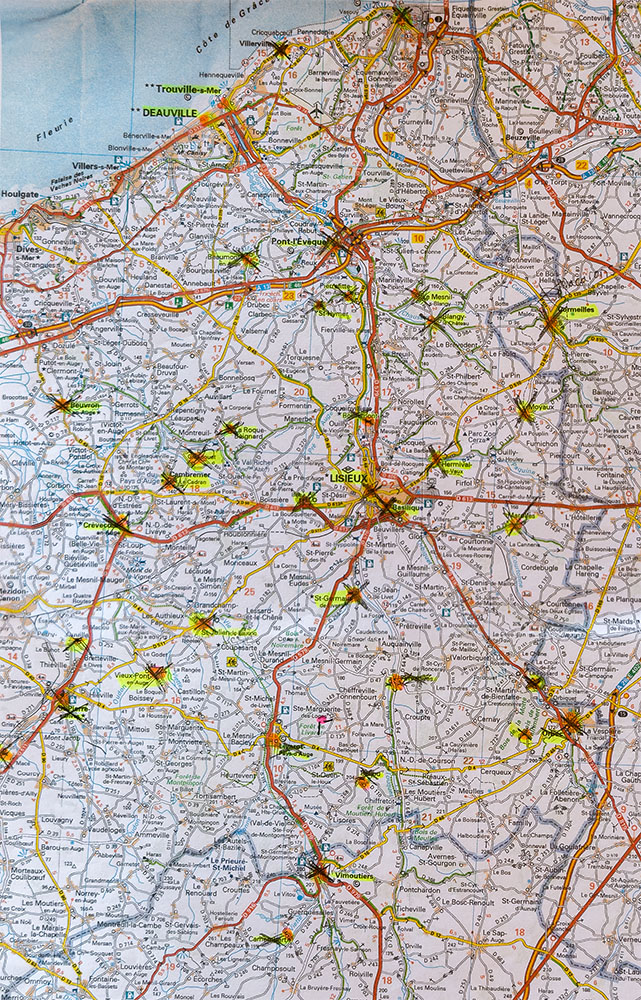
All the places we visited in the Pays d'Auge, Normandy
My phone became our satnav
There was a time when a road trip in France meant keeping a large Michelin map somewhere in the car.
I still like proper maps. I really do!
They are much better for understanding where places are in relation to one another, and there is something satisfying about spreading one out across a table before a day of exploring.
They are slightly less convenient when you are approaching a junction and need to know whether to turn left in 50 metres.
For this trip, I relied heavily on Google Maps and Apple Maps.
My phone effectively became our satnav.
It guided us along main roads, through towns and down some wonderfully rural lanes in the Pays d’Auge.
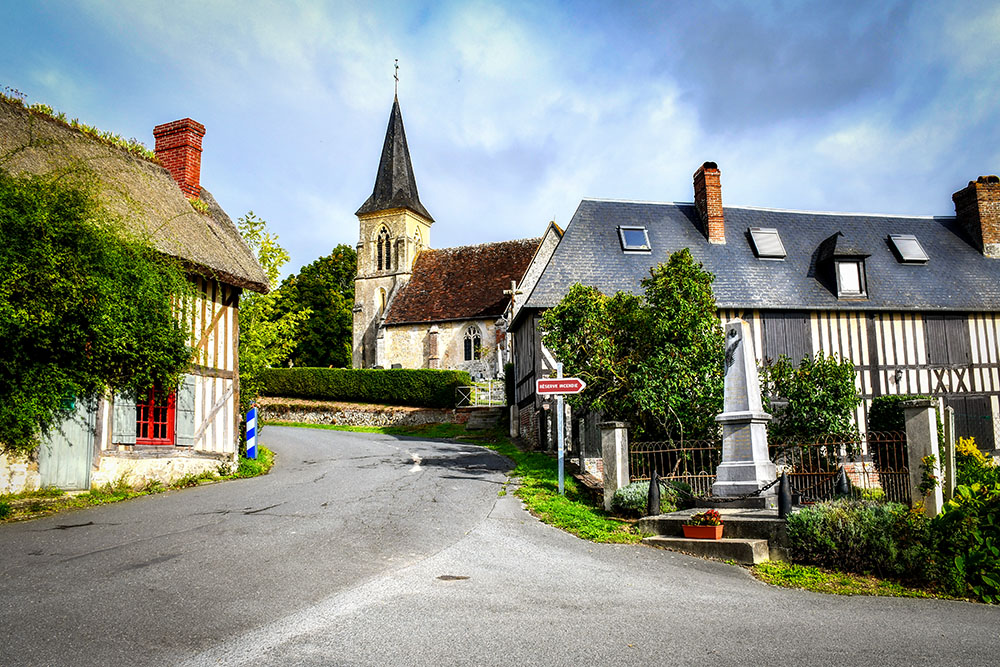
Pierrefitte-en-Auge © French Moments
And because I had mobile data, I could also change our plans while we were travelling.
I could search for a car park before reaching a town.
I could look up the exact location of a church or museum.
I could check whether a shop was still open.
I could search for a bakery or supermarket nearby.
And if we suddenly decided to add another village to the itinerary, I could simply enter it into the map and carry on.
For an independent road trip, that freedom is incredibly useful.
Our 17-Day Normandy Road Trip
Our journey began on 31 August, when we took the ferry from Portsmouth to Ouistreham, the port serving Caen.
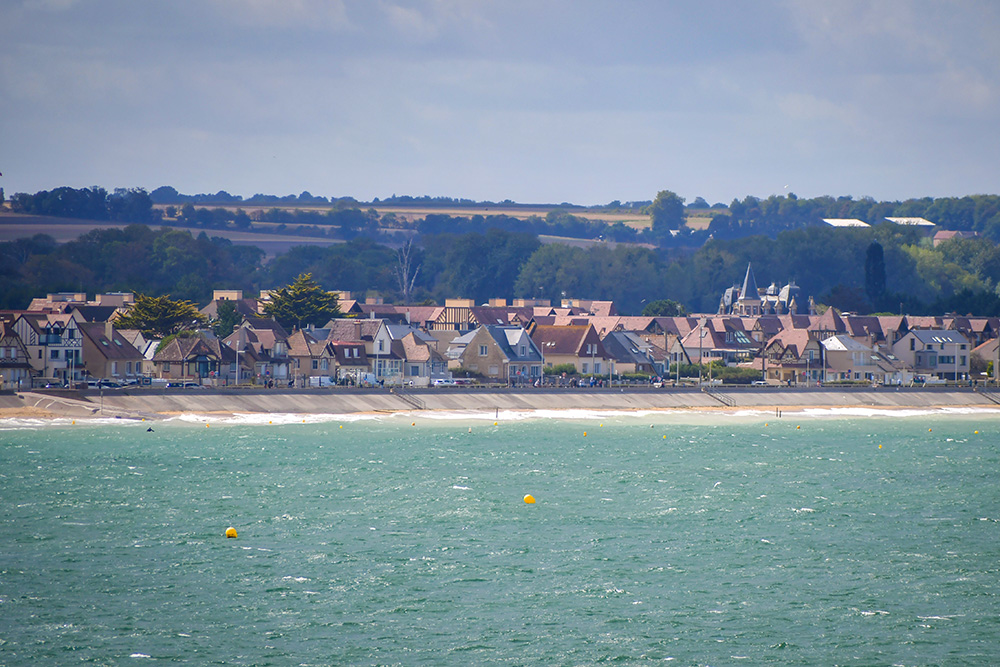
Normandy is in sight!
Once we arrived in France, we didn't have to navigate an airport transfer or railway station.
We simply disembarked and headed towards Livarot.
Our accommodation was in the countryside nearby, giving us an ideal base for exploring the Pays d’Auge.
This part of Normandy had been on my list for a long time.
It is a wonderfully green region of apple orchards, grazing cattle, manor houses, churches, half-timbered farms and historic villages.
During our stay, we visited:
- Lisieux
- Livarot
- Vimoutiers
- Camembert
- Orbec
- Cormeilles
- Pont-l’Évêque
- Honfleur
- Villerville
- Beuvron-en-Auge
- Beaumont-en-Auge
- Cambremer
- Saint-Pierre-sur-Dives
...along with several smaller places and plenty of countryside in between.
We also left the Pays d’Auge for one day to visit Falaise and its impressive castle, closely associated with William the Conqueror.
By the end of the trip, we had driven around 1,000 kilometres in Normandy, excluding the journeys between Ouistreham and Livarot at the beginning and end of the stay.
That turned out to be a very good test of mobile connectivity.
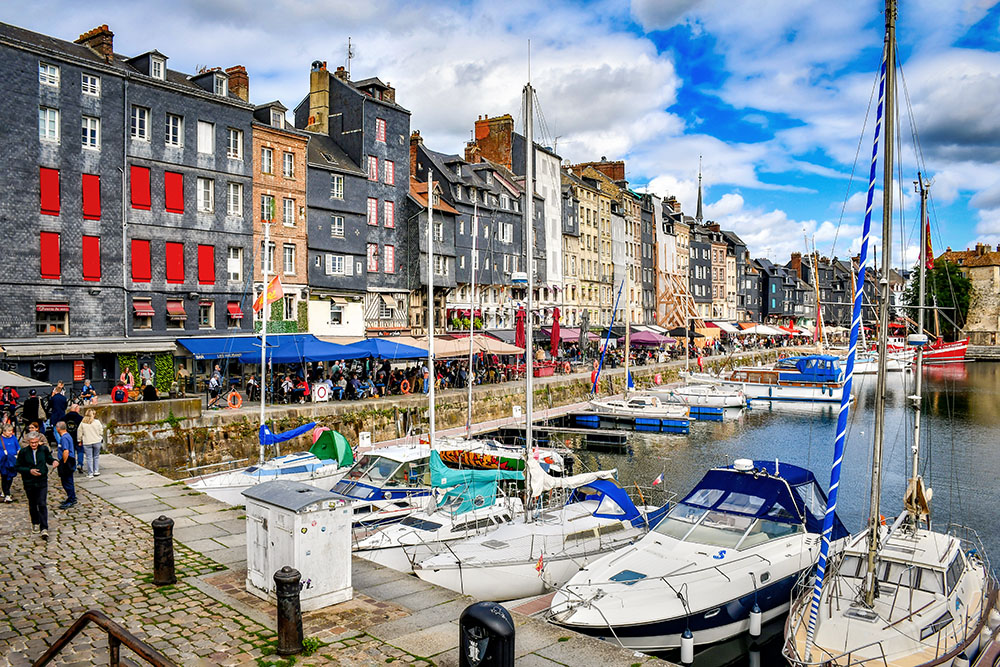
Honfleur © French Moments
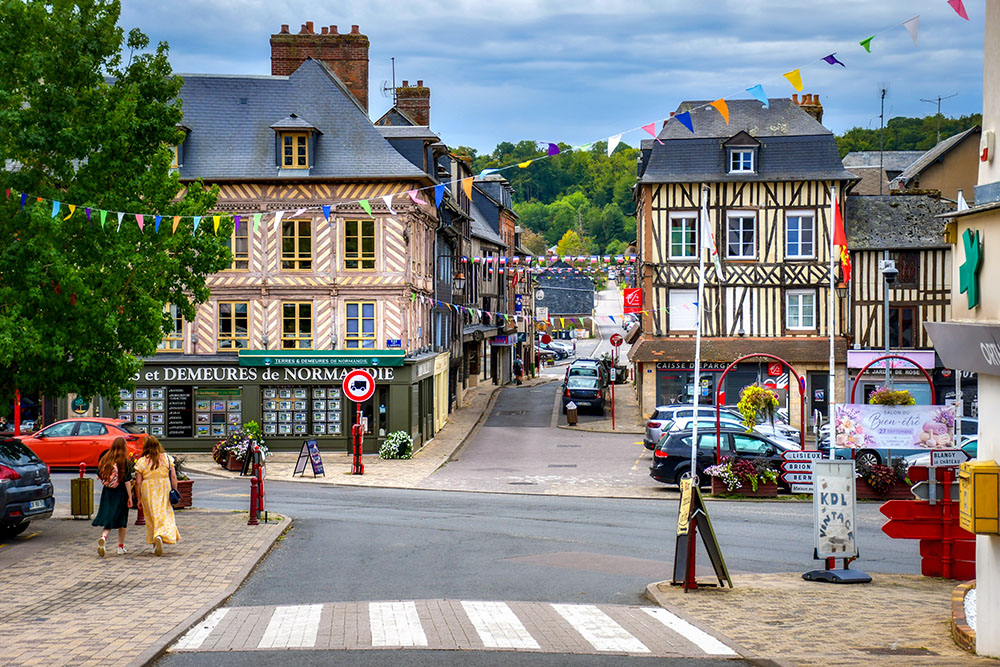
The centre of Cormeilles © French Moments

Castle of Falaise © French Moments
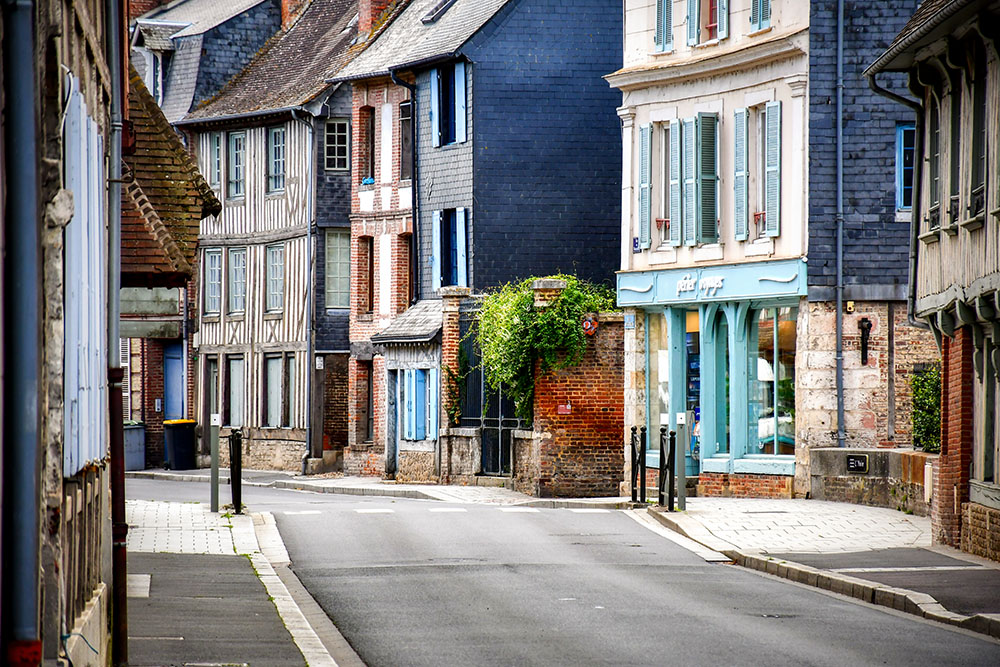
The market town of Pont-l'Évêque © French Moments
Exploring the Pays d’Auge with Mobile Data
One of the things I enjoyed most about the Pays d’Auge was that travelling between places was often just as enjoyable as reaching them.
The countryside is full of narrow lanes bordered by hedges, green valleys, old farms and timber-framed houses.
Sometimes we would pass an especially beautiful manor house or church and I would make a mental note to investigate it later.
Sometimes that investigation happened about thirty seconds later.
“Hang on. What was that place?”
Out came the phone.
A quick search.
Perhaps a U-turn.
And another unexpected stop was added to the day.
This is one of the advantages of travelling with mobile data.
You are not limited to the itinerary you planned the evening before.
You can adapt.
During our stay, the eSIM was useful for far more than simply following a blue line on a map.
I used it to check opening hours, find addresses, look for parking, read about places we had just discovered and organise the next part of our day.
I have written much more about what we discovered in my separate guide to the region:
France eSIM Review: Why GPS Navigation Mattered So Much
If I had to choose the single most important reason for having an eSIM on this trip, it would be GPS navigation.
On some days, our itinerary was carefully planned.
On others, it became rather more flexible.
A village might take longer than expected.
The weather might change.
We might discover somewhere interesting along the way.
Or we might simply decide that we had enough time to add one more stop.
With mobile data, changing plans was easy.
Google Maps or Apple Maps could find a new destination, calculate a route and guide us there.
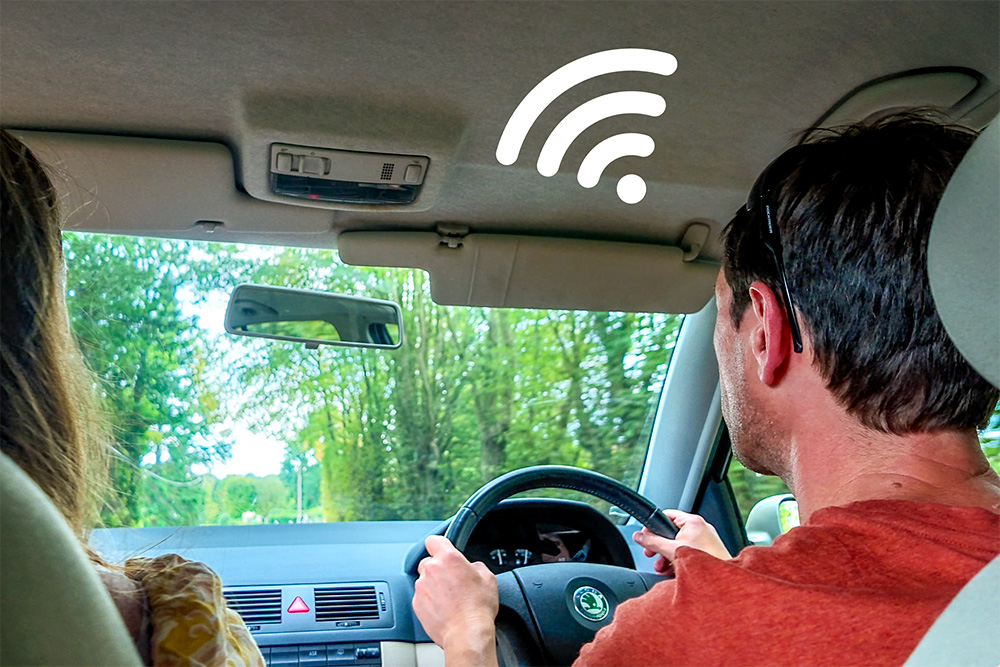
Driving in Normandy © French Moments
That may not sound particularly exciting.
But when you are travelling independently through a rural region for more than two weeks, it makes a real difference.
There is also the question of parking.
Historic French towns are not always designed with modern cars in mind.
Before arriving somewhere such as Honfleur or Lisieux, I could check where the car parks were and navigate directly to them.
That saved time and, occasionally, a certain amount of marital discussion about which direction we should have taken.
Another advantage of live navigation is that it can react when something changes.
Miss a junction?
The route recalculates.
Decide to stop somewhere else?
Enter the new destination.
Need a supermarket before going back to the house?
Search nearby.
Once you get used to travelling this way, it becomes difficult to imagine going back to navigating every journey with printed directions.
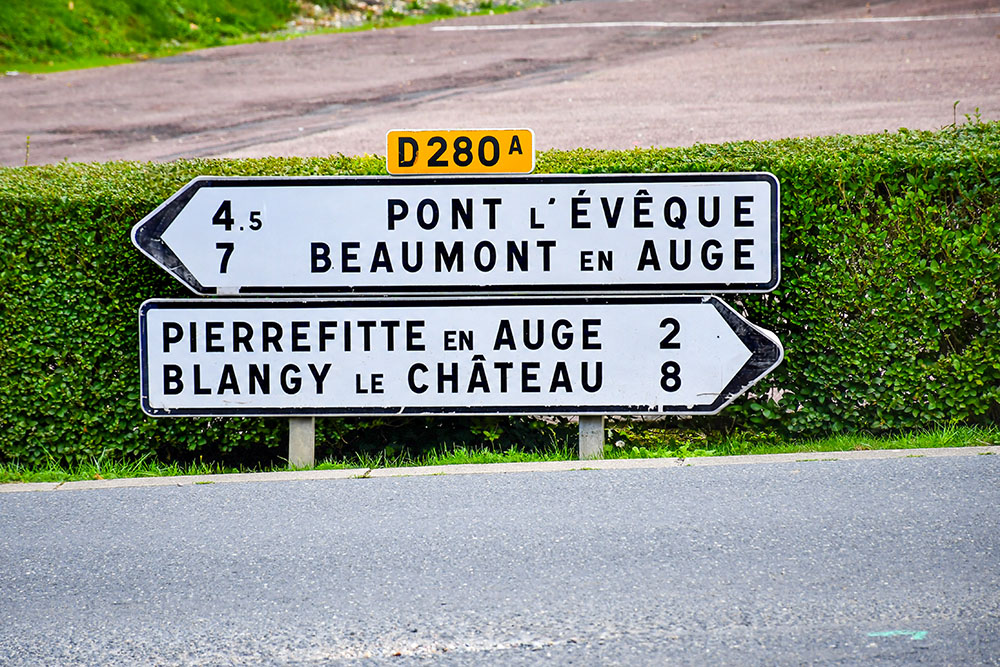
Road signs in the Pays d'Auge © French Moments
Using an eSIM Alongside My UK SIM
One thing I particularly like about using an eSIM abroad is that it does not require me to remove my normal SIM.
I kept my usual UK SIM active during the trip.
That meant I retained my regular phone number for calls, text messages and anything else linked to it.
The travel eSIM, meanwhile, could be used for mobile data in France.
For me, this is one of the most practical aspects of using an eSIM.
There is no tiny plastic SIM card to remove and potentially lose.
There is no need to give people a temporary new phone number.
My normal UK line remained on the phone while the eSIM handled my travel data.
Of course, whether this is useful for you will depend on your existing mobile contract.
Some UK networks still include generous roaming in France.
Others charge for European roaming or impose limits.
So before buying any travel eSIM, I would always recommend checking what your existing provider already gives you.
There is little point in paying for something you already have.
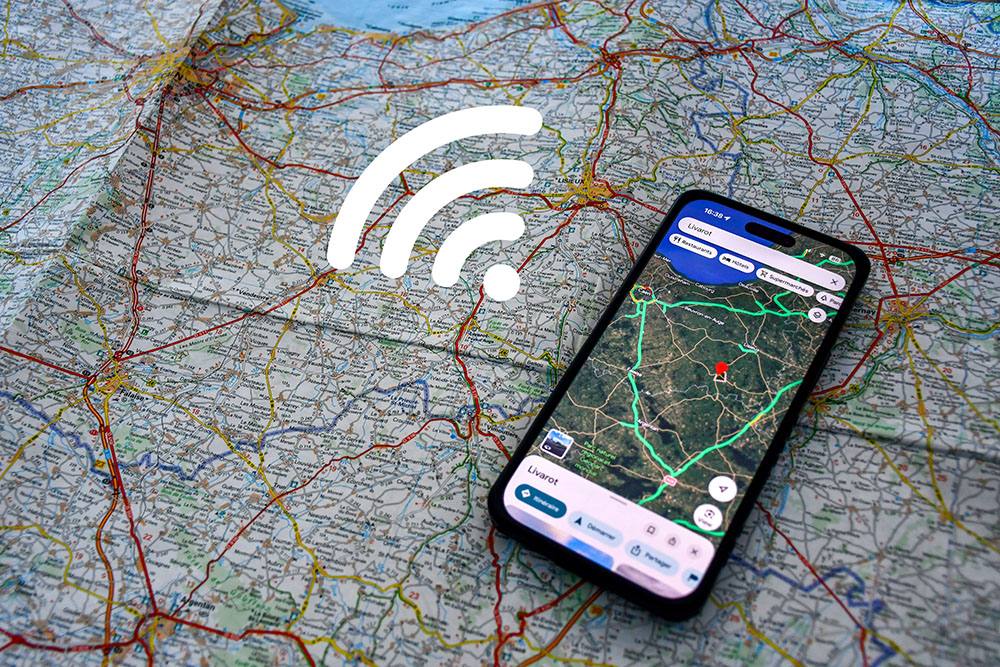
France eSIM Review © French Moments
Setting Up the eSIM
If you have never used one before, the word eSIM can make the whole process sound more technical than it really is.
An eSIM is simply a digital version of the physical SIM card you already have in your phone.
On a compatible device, you can install another mobile plan without inserting a second physical card.
Your phone then allows you to choose which line you want to use for calls and which one you want to use for mobile data.
In my case, the important thing was that the travel eSIM was selected for data while I was in France, while my regular UK line remained available on the phone.
Once everything was set up correctly, I did not have to keep changing settings.
And that is really how I want travel technology to work.
Set it up.
Check that it works.
Then forget about it and enjoy the journey.
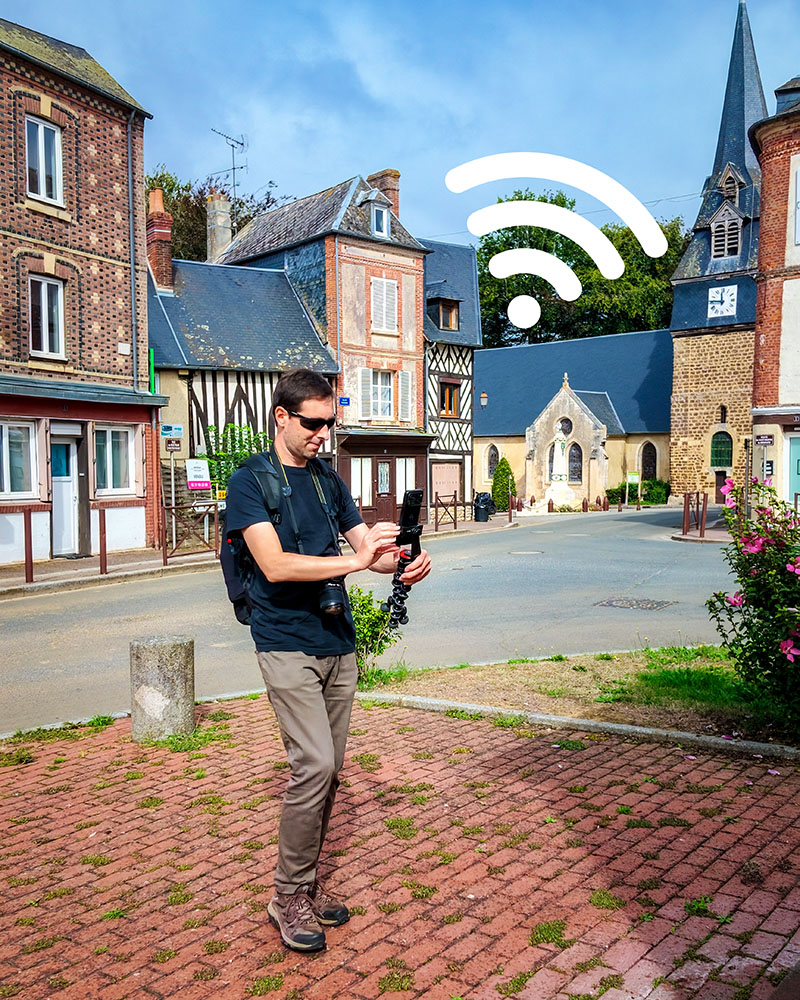
Pierre working in Fervaques © French Moments
How Did the eSIM Perform in Normandy?
The important test for me was not whether I could get a signal while sitting in our accommodation.
Most of the time, we had Wi-Fi there anyway.
What mattered was what happened once we left the house.
Much of our stay was spent travelling through rural areas.
The Pays d’Auge is not a densely urbanised region.
Many of our journeys took us through small villages, farmland and country lanes before eventually reaching larger towns such as Lisieux or coastal destinations such as Honfleur.
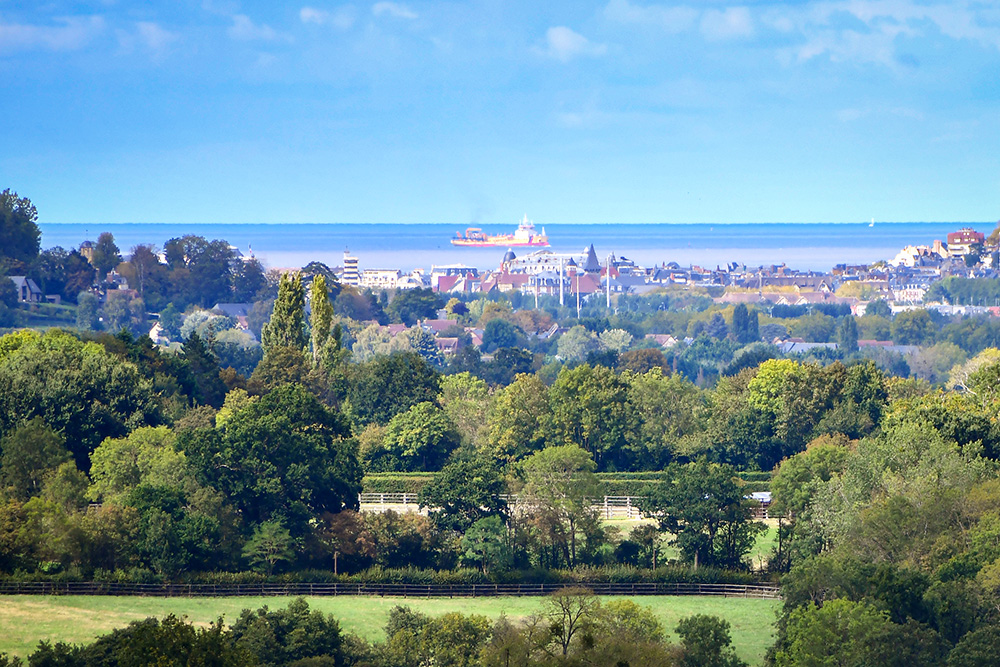
The viewpoint of Beaumont-en-Auge overlooking the Touques Valley, Deauville, Trouville and the English Channel © French Moments
Throughout the trip, I was able to use my phone for the things that mattered most to me.
Most importantly, I could use navigation while travelling.
I could search for destinations.
I could check practical information.
I could change our plans.
I could stay connected.
No mobile service can guarantee perfect reception in every corner of rural France, of course.
Coverage can vary depending on the network, terrain and location.
But during this trip, connectivity never became a recurring issue that affected the way we travelled.
And I think that is an important point.
A good travel eSIM should not become one of the main stories of your holiday.
Ideally, you should barely think about it.
That was largely my experience in Normandy.
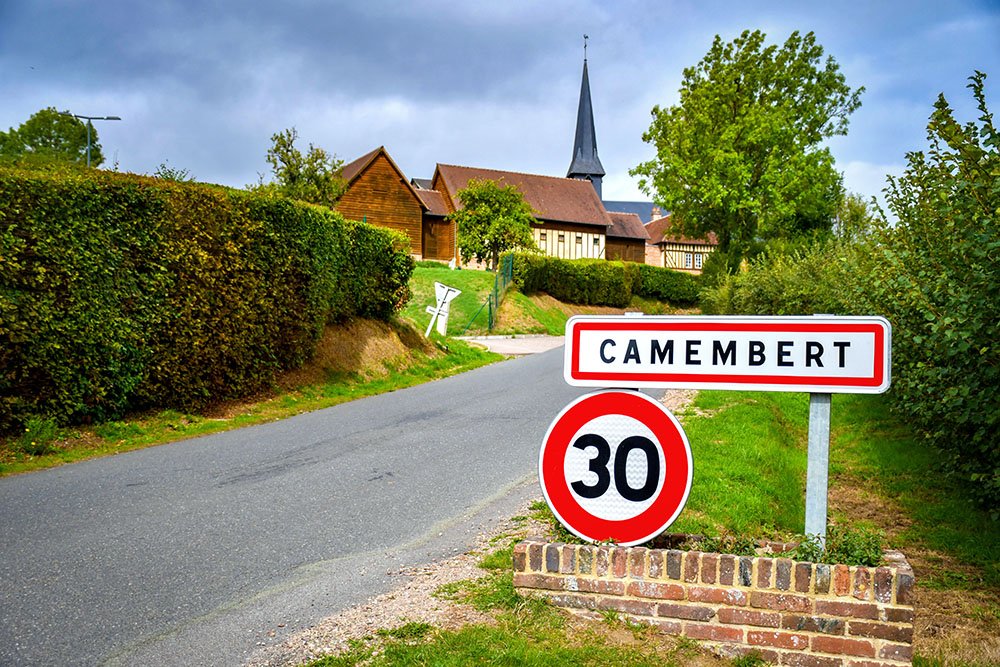
Arriving in the village of Camembert by car © French Moments
What I Used Mobile Data For
Navigation was the biggest reason I valued having mobile data on this trip, but it was far from the only one.
I also used it for everyday travel tasks such as:
- checking opening hours
- searching for car parks
- finding shops and supermarkets
- looking up restaurants and bakeries
- checking the weather (even if the forecast was sometimes deceiving!
 )
) - reading information about places we were visiting
- using email and WhatsApp
- keeping up with work while travelling
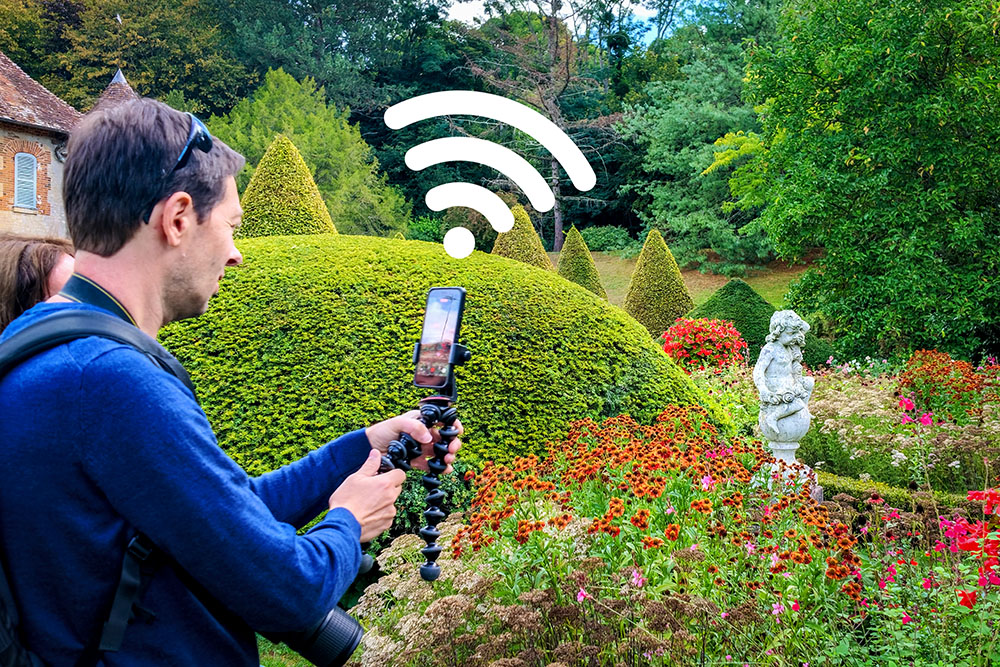
Pierre at work in the Pays d'Auge © French Moments
This was not a holiday.
As usual, I was also researching, photographing and creating content for French Moments.
That meant checking information, responding to messages and occasionally dealing with work while sitting in the car or stopping somewhere during the day.
That part rarely appears in the photographs.
Half-timbered villages are much more attractive than unanswered emails.
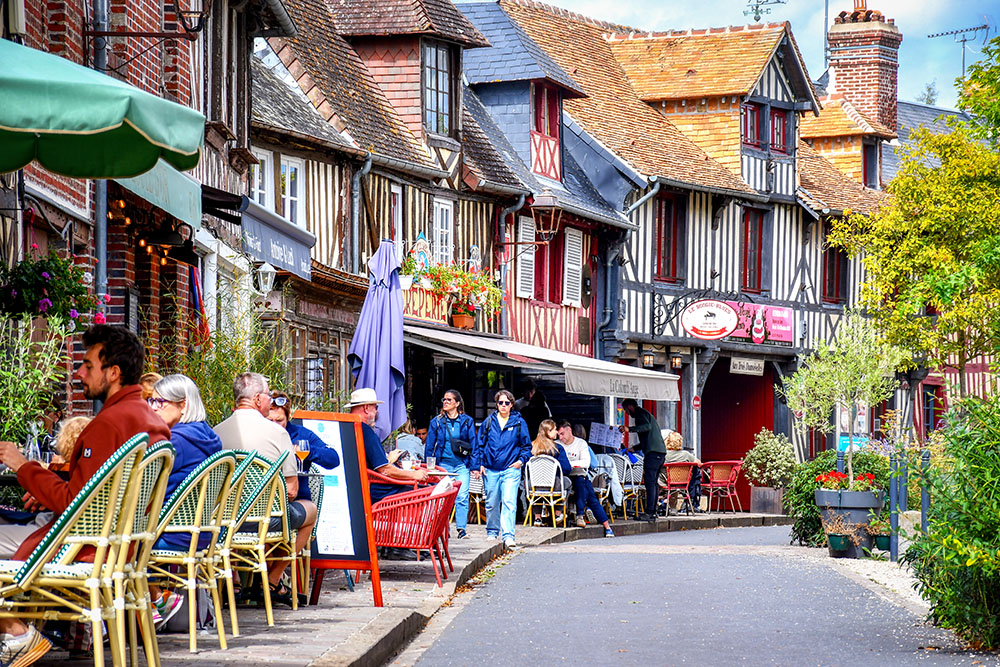
Beuvron-en-Auge, one of France's most beautiful villages © French Moments
Who Might Find a France eSIM Useful?
I do not think every visitor to France automatically needs an eSIM.
It depends entirely on the way you travel and what your normal mobile provider offers.
But I think an eSIM can be particularly useful if you are:
- taking a road trip around France
- relying heavily on Google Maps or Apple Maps
- travelling between several towns or regions
- changing plans while you travel
- using your phone frequently for practical searches
- wanting to keep your usual phone number active
- working or creating content during your trip
- trying to avoid expensive roaming charges from your usual provider
If you are spending a week in one hotel, using Wi-Fi most of the time and already have EU roaming included in your normal mobile plan, you may not need one at all.
That is why I would never describe an eSIM as essential for every traveller.
For the way I travelled around Normandy, however, it was genuinely useful.
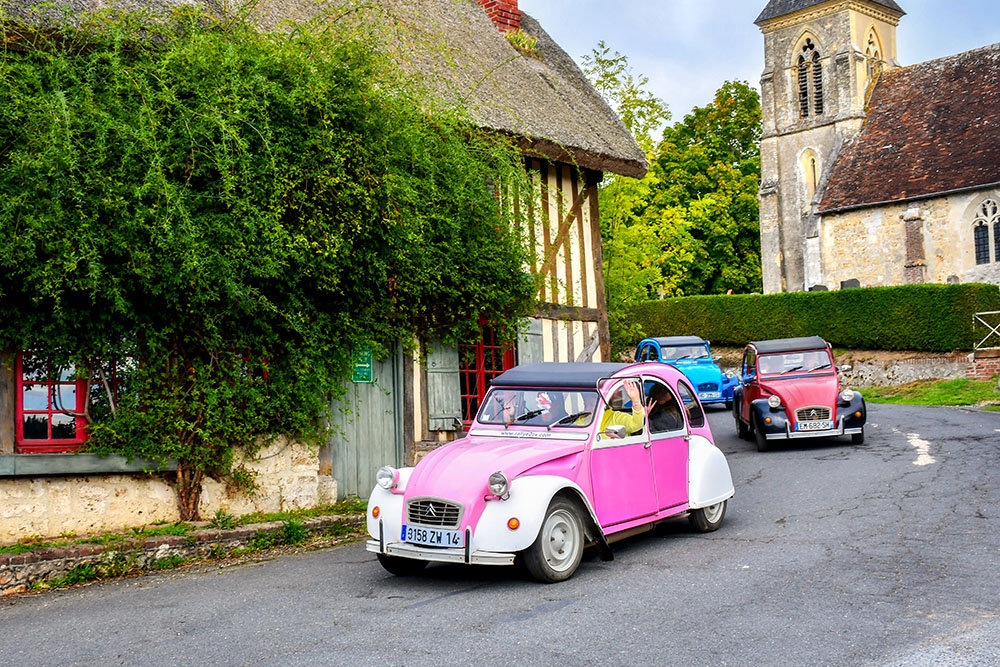
A rally of Citroen 2CV in the Pays d'Auge © French Moments
5% Off for French Moments Readers
For this trip, I used an eSIM supplied by Sim Local.
If you decide that an eSIM would be useful for your own trip to France, Sim Local has provided French Moments readers with a 5% discount.
Use the code:
FRENCHMOMENTS
to receive 5% off your purchase.
(*this is an affiliate link)
As eSIM plans, prices and data allowances can change, I recommend checking the latest options directly before buying rather than relying on figures quoted in an article that may later become outdated.
Final Thoughts on My France eSIM Review
Our Normandy road trip came to an end on 16 September.
After sixteen nights near Livarot, we packed the car and drove back towards Ouistreham.
One last journey through Normandy.
One last route on the phone.
Then we drove onto the ferry and headed back across the Channel to Portsmouth.
During those two weeks, we had travelled around 1,000 kilometres across Normandy.
We had explored historic towns and tiny villages.
We had followed narrow country lanes through the Pays d’Auge.
We had visited castles, churches, markets and seaside towns.
We had eaten cheese.
Quite a lot of cheese, actually.

Camembert cheese © French Moments
And throughout the journey, my phone had quietly helped us get from one place to the next.
That is ultimately the conclusion of this France eSIM review.
The eSIM was not one of the exciting parts of the trip.
Nor should it have been.
It was simply a practical tool that gave me access to mobile data when I needed it.
For me, its greatest value during this particular trip was GPS navigation.
I could find places, change plans and explore Normandy without constantly worrying about whether I would have access to mobile data.
And when travel technology works quietly in the background and lets you concentrate on the places you have actually come to see, that is exactly what I want from it.
French Moments readers can use the code FRENCHMOMENTS to receive 5% off a Sim Local eSIM.

Cows grazing in an apple orchard near Camembert © French Moments