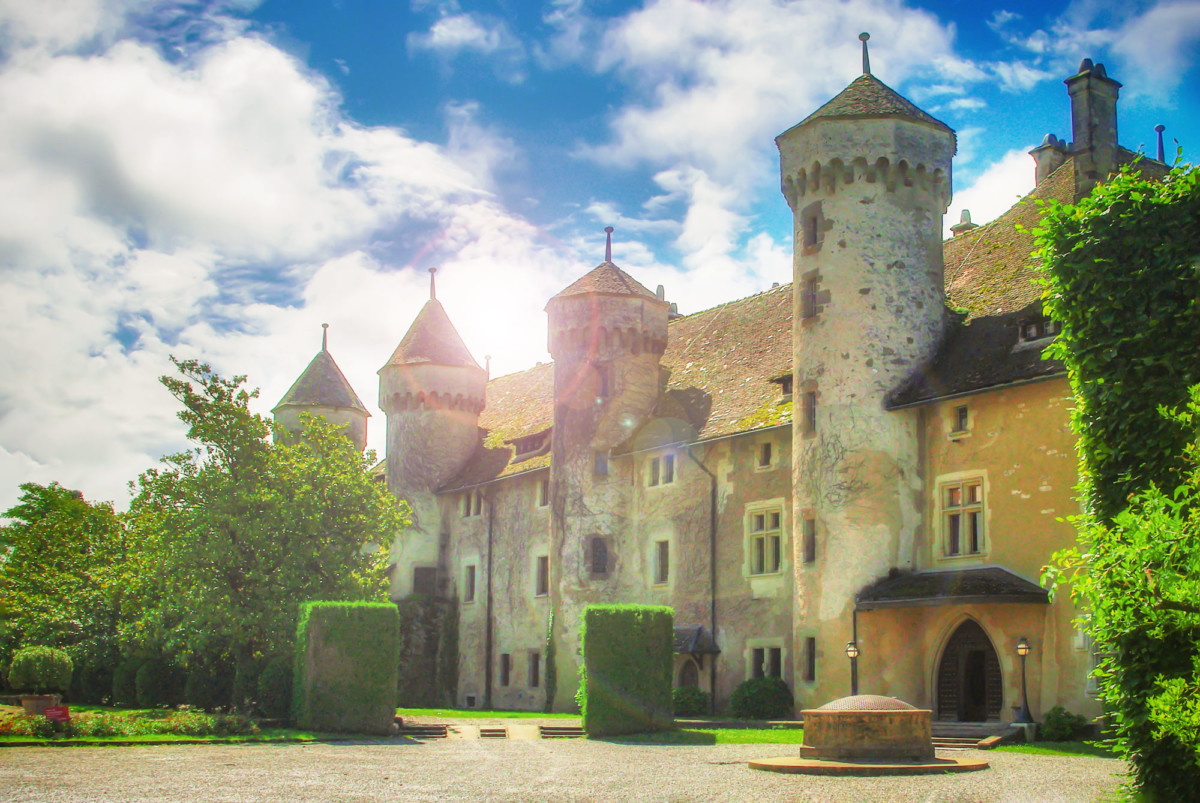


Château de Ripaille is one of the great heritage sites of Thonon-les-Bains, but it does not quite fit the classic image of a castle perched dramatically on a hill.
Here, there is no towering keep dominating a valley. The estate stands by Lake Geneva, in a much more peaceful setting of vineyards, woodland, gardens and lake views. And that is precisely what gives Ripaille its charm: it is at once a castle, a wine estate, a place of Savoyard history and a natural setting.
I visited Ripaille during a trip to Thonon-les-Bains, although I did not tour the interior of the château. Even from the outside, however, the place is intriguing.
You quickly sense that this is not merely a pretty lakeside backdrop. Ripaille has depth, layers of history, a few delicious anecdotes — and even a French expression attached to its name.
Where Is the Château de Ripaille?
The Château de Ripaille is located in Thonon-les-Bains, in Haute-Savoie, on the French shore of Lake Geneva.
It lies to the north of the town, in a large estate bordering the lake, not far from Port-Ripaille.
The estate is often presented as one of the great residences of the French Lake Geneva shore, but also as a place where history, nature and wine come together. Ripaille stretches across a remarkable lakeside setting, with wooded areas, vineyards and views between the Dent d’Oche and Lake Geneva.
It is an interesting place to include in a visit to Thonon-les-Bains. After discovering the upper town, the port of Rives or the funicular, Ripaille offers a change of atmosphere. You leave the urban centre behind and enter a quieter, more aristocratic world, almost withdrawn from the town around it.
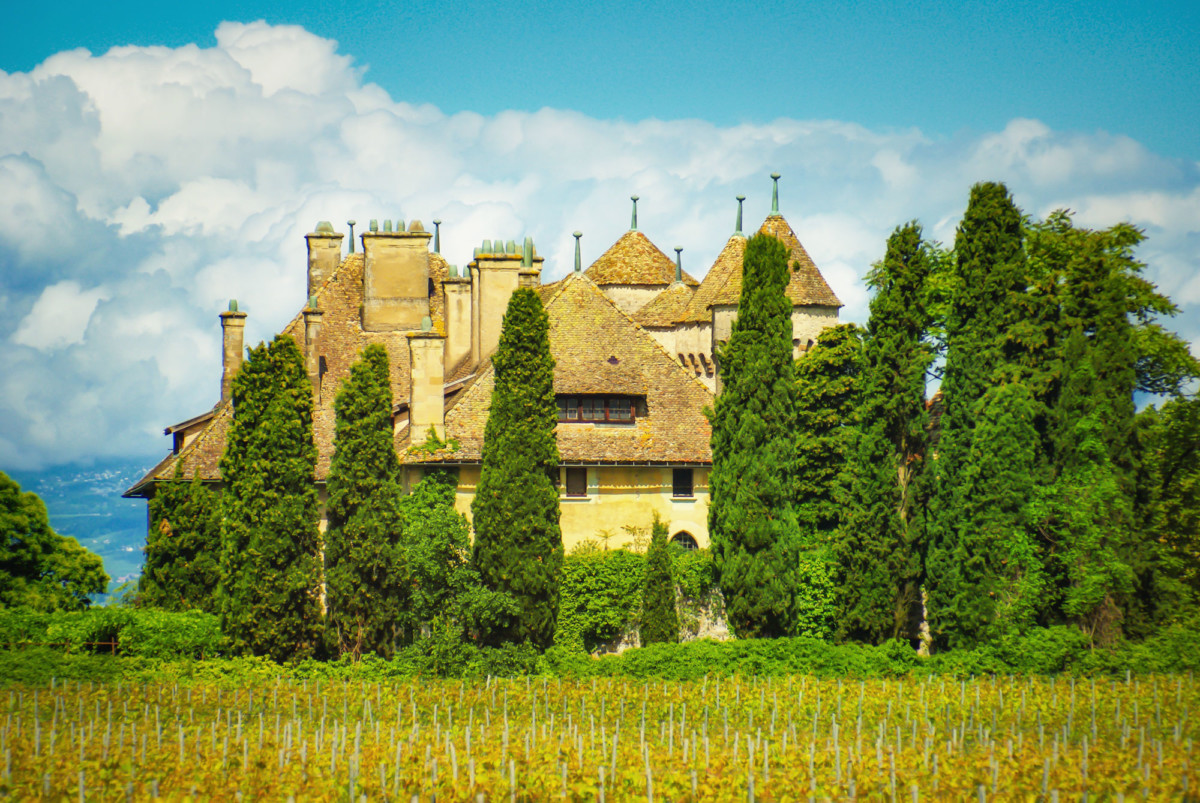
Château de Ripaille © French Moments
A Domain Marked by the Dukes of Savoy
The history of Ripaille is ancient. The site was already occupied in the Bronze Age and later became a prosperous villa in the Gallo-Roman period, as remains found on the estate suggest.
In the Middle Ages, Ripaille became one of the important residences of the Counts and Dukes of Savoy.
The central figure in the story of Ripaille is Amadeus VIII of Savoy. In 1434, he withdrew to Ripaille with several companions in a kind of semi-religious retreat. It was not exactly a hut in the woods, of course. A Duke of Savoy, even in retirement, still had a certain idea of comfort.
The estate then lived through several different chapters. In the 17th and 18th centuries, Ripaille became a Carthusian monastery, protected from the outside world by the high wall that still surrounds the domain. During the French Revolution, the Carthusians had to leave, and the buildings were sold as national property.
At the end of the 19th century, Ripaille entered a new era with Frédéric Engel-Gros, an Alsatian industrialist connected with the DMC textile company in Mulhouse. He bought the estate when it was in poor condition and transformed it in the spirit of the early 1900s, giving the site an almost artistic dimension.
That is what makes Ripaille so distinctive. It is not simply a medieval château. It combines Savoyard memory, monastic life, Belle Époque restoration and the story of a major industrial family.
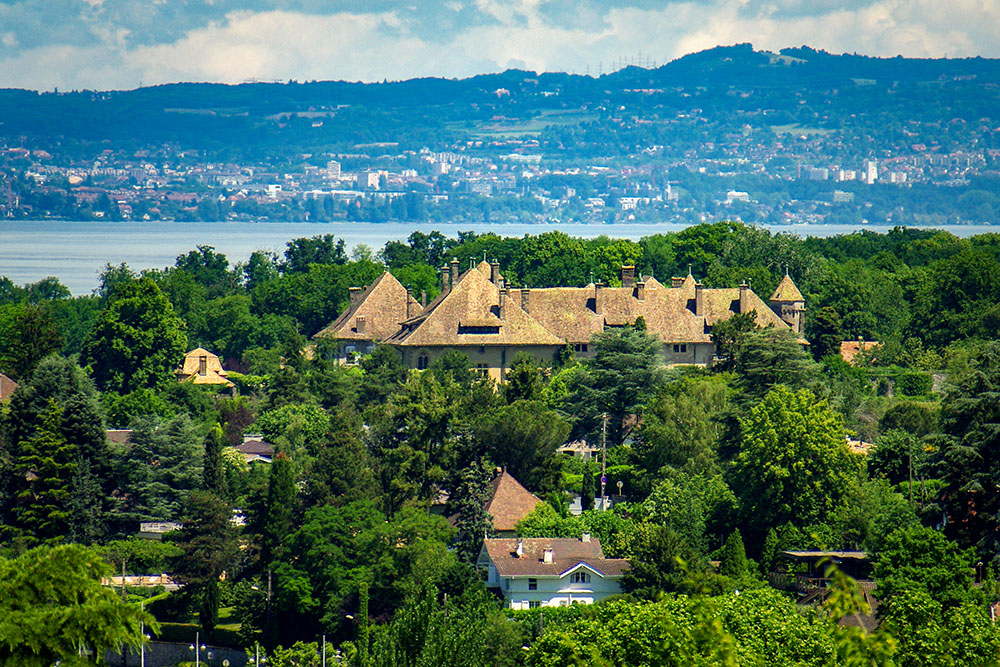
The castle seen from Thonon © French Moments
“Faire Ripaille”: The Anecdote Everyone in France Expects
It is impossible to talk about the Château de Ripaille without mentioning the French expression “faire ripaille”.
Today, faire ripaille means to feast, to eat well and abundantly, often with the idea of a joyful, generous, perhaps slightly excessive meal. The connection with the castle is, of course, tempting: a ducal estate, wine, fine dining, feasts… everything seems ready-made for a delicious origin story.
The reality is a little more nuanced. The expression already existed in French before the site of Ripaille became associated with it in this way. But since Voltaire, Ripaille has been linked to the idea of good living, especially through the image of Amadeus VIII enjoying a life of pleasure on his estate rather than pursuing the sternest spiritual ambitions.
In other words, Ripaille may not have invented the expression, but the castle has embodied it beautifully. And frankly, with a name like that, it would have been a shame not to make the most of it.
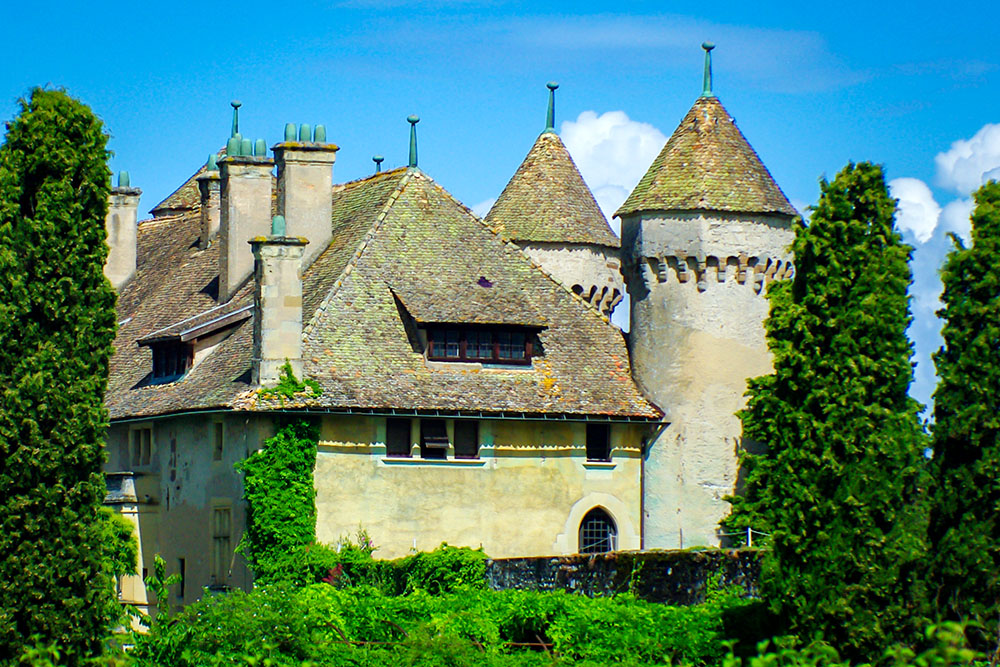
Château de Ripaille © French Moments
The Wine of Ripaille
Ripaille is not only a castle. It is also a wine estate.
The château is surrounded by vineyards, and wine has long been part of the identity of the site. The terroir, shaped by glacial formations, gives the soil a gravelly and permeable character, while the immediate proximity of Lake Geneva softens the extremes of the climate.
The cultivation of vines here is very old, probably going back to the Gallo-Roman period. In the Middle Ages, although the estate belonged to the House of Savoy, the vineyard and wine production were largely connected with religious communities: first the Canons of Saint Augustine, then the Carthusians.
The wine of Ripaille is a white wine made from the Chasselas grape variety. It is generally presented as fresh and fruity, with notes that may evoke toasted almonds and citrus fruit. It pairs well with fish, seafood, cheese or an aperitif.
Once again, the place tells the story of the Chablais rather well: one foot in Savoyard history, another in Lake Geneva culture, and a glass of white wine never too far away.
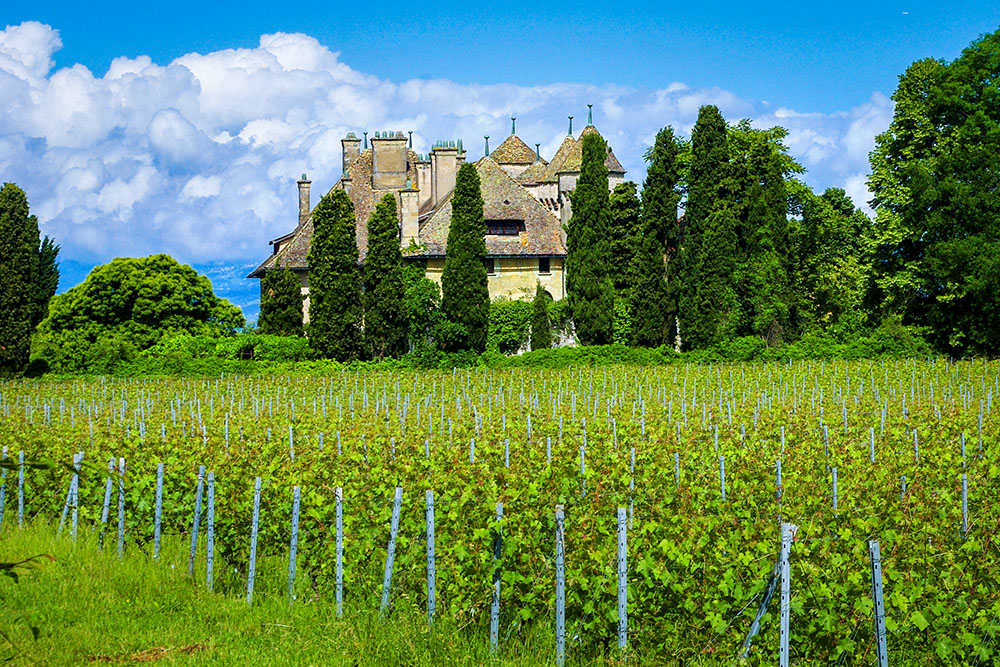
The vineyard of Ripaille © French Moments
Visiting Château de Ripaille
I did not visit the interior of the castle during my time there, but the estate is already worth stopping for because of its setting, atmosphere and history.
A visit inside allows you to go further, with spaces devoted to the medieval Savoyard world, the reconstructed old kitchen of the château, the Belle Époque dining room and a film presenting the history of Ripaille.
Today, the castle is also home to the Fondation Ripaille, created to preserve and promote the historical, artistic and natural heritage of the site. Environmental preservation is one of the foundation’s important concerns.
The estate also includes woodland and an arboretum, as well as the Clairière des Justes, a national memorial dedicated to the French Righteous Among the Nations.
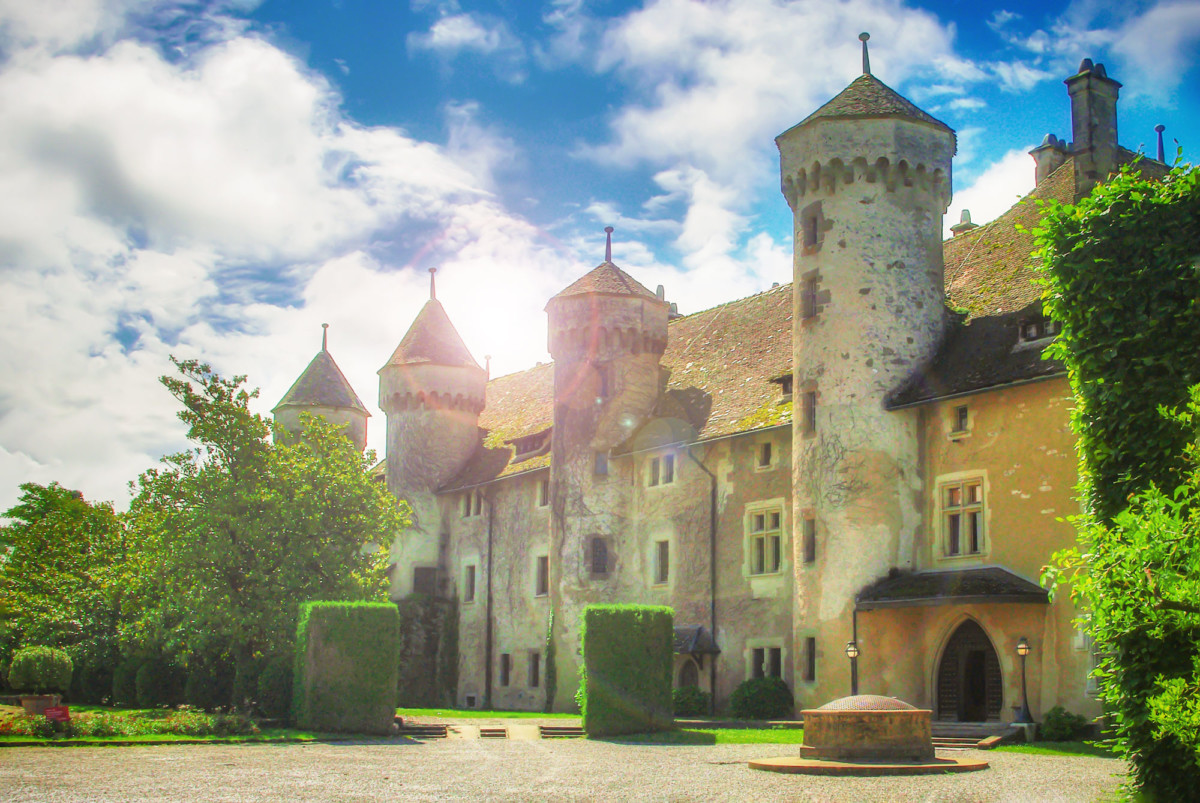
The castle of Ripaille © French Moments
Is the Château de Ripaille Worth Visiting?
Yes, especially if you are visiting Thonon-les-Bains and enjoy places that cannot be reduced to a single period of history.
The Château de Ripaille is not merely a monument. It is an estate that tells several stories at once: the story of the Dukes of Savoy, the story of religious communities, the story of wine, the story of the Belle Époque, the story of memory and the story of the Lake Geneva landscape.
Even without going inside the castle, you quickly understand that Ripaille occupies a special place on the French shore of Lake Geneva. It is a place of retreat, prestige, nature — and, of course, wine.
And if the name makes you want to faire ripaille after your visit, let us simply say that local history would probably not object.