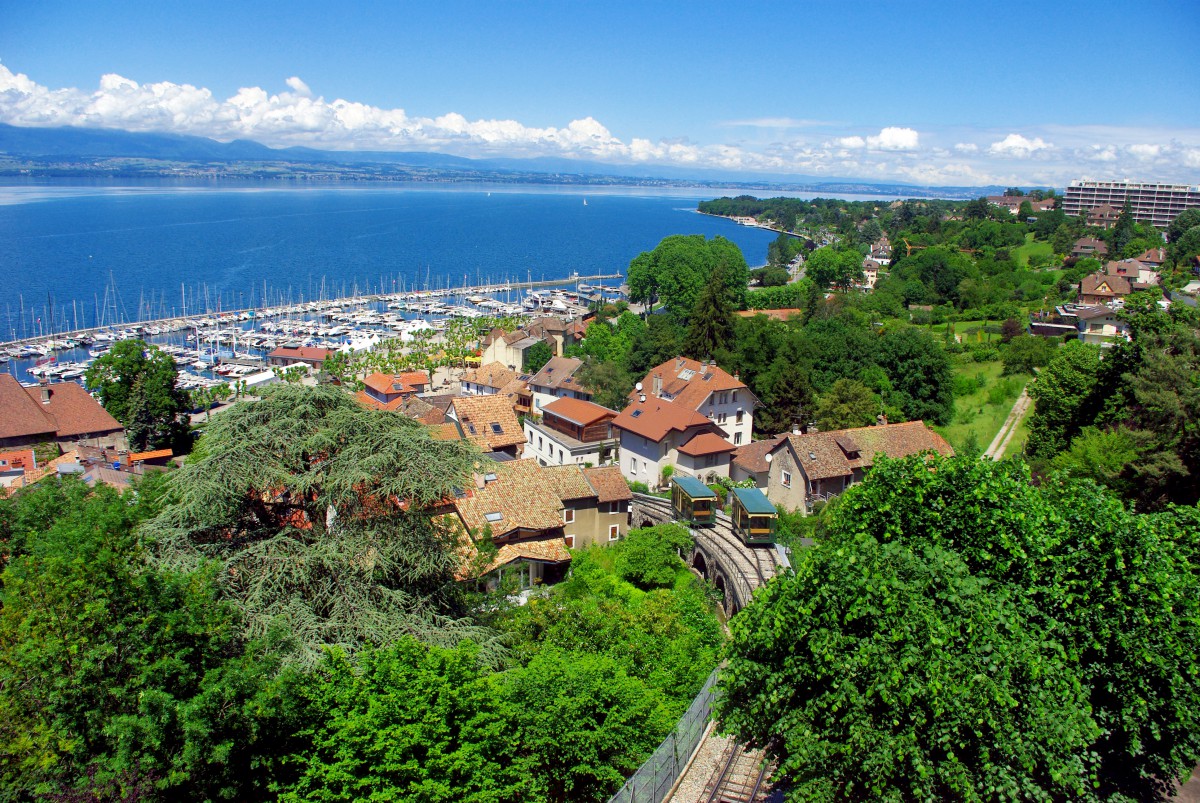


Thonon-les-Bains is one of those towns on Lake Geneva that deserves far more than a quick stop between Geneva, Évian-les-Bains and the mountains of the Chablais.
You may know its name because it evokes thermal waters, lakeside views or the starting point of the Route des Grandes Alpes.
But Thonon is more than a spa town on the shores of Lake Geneva. It is a former capital of the Chablais, a town of belvederes, narrow streets, fortified manors, churches, ports, gardens and contrasts.
I particularly like this dual character: the upper town, with its views over Lake Geneva and its historic heritage, and the lower town of Rives, more lakeside in feel, almost maritime in atmosphere.
In Thonon-les-Bains, you can pass in just a few minutes from a town-centre square to a fishing harbour, from a château to a funicular, from a basilica to a thermal park.
In this article, I invite you to discover 7 must-see sites in Thonon-les-Bains. Ripaille Castle deserves a discovery of its own, so I have devoted a separate article to it.
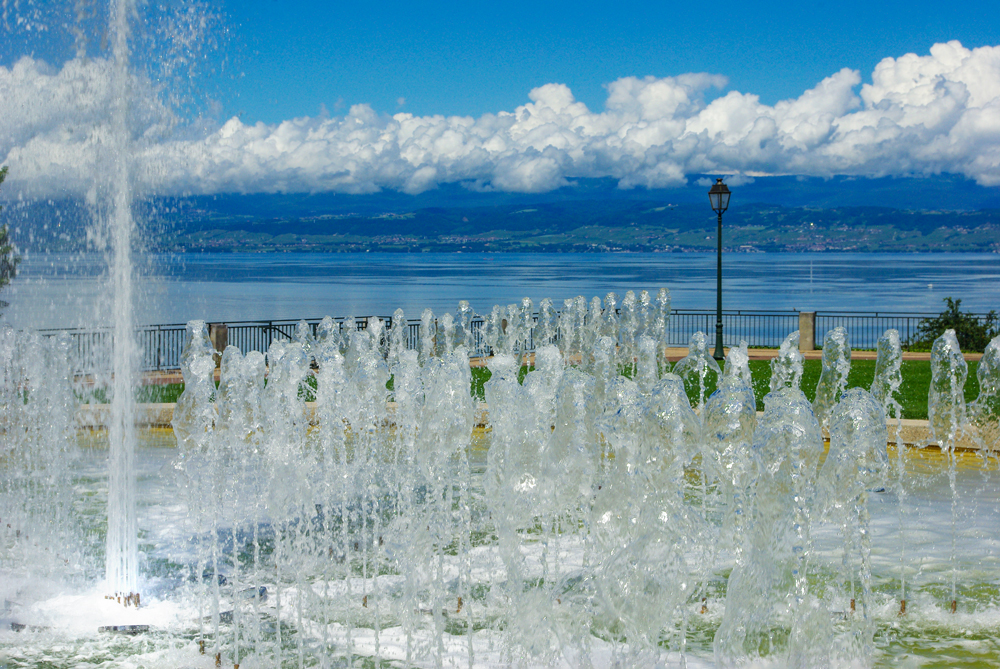
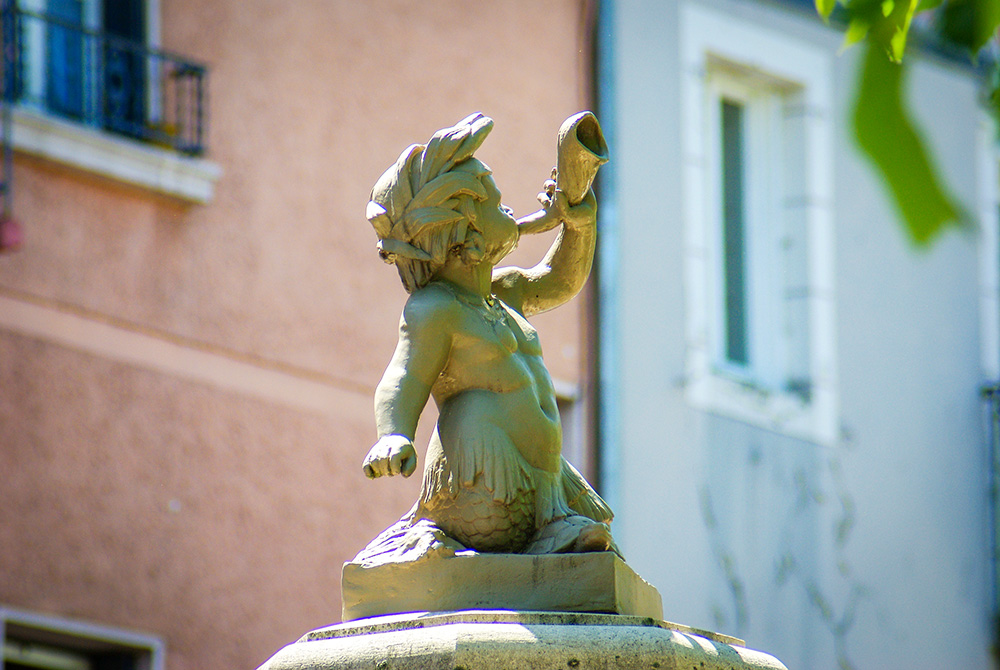
Fountain in Thonon-les-Bains © French Moments
Where Is Thonon-les-Bains?
Thonon-les-Bains is located in Haute-Savoie, on the southern shore of Lake Geneva. The town stands at around 431 metres above sea level, at the northern edge of the Chablais massif and in the north-western part of the Alps.
Its territory borders the lake for around 6.5 kilometres, which explains the strong relationship between the town and Lake Geneva.
This geographical position is essential to understanding Thonon. On one side, the lake opens the town towards Switzerland, Lausanne, the ports of Lake Geneva and the Jura horizons. On the other, the Chablais announces the Pre-Alps, valleys, mountain passes and villages.
Thonon-les-Bains is also traditionally considered the historic capital of the Savoyard Chablais. The town is divided into two very distinct areas: the upper town, with its old streets, belvederes and historic buildings, and the lower town of Rives, organised around the harbour and the former fishermen’s village.
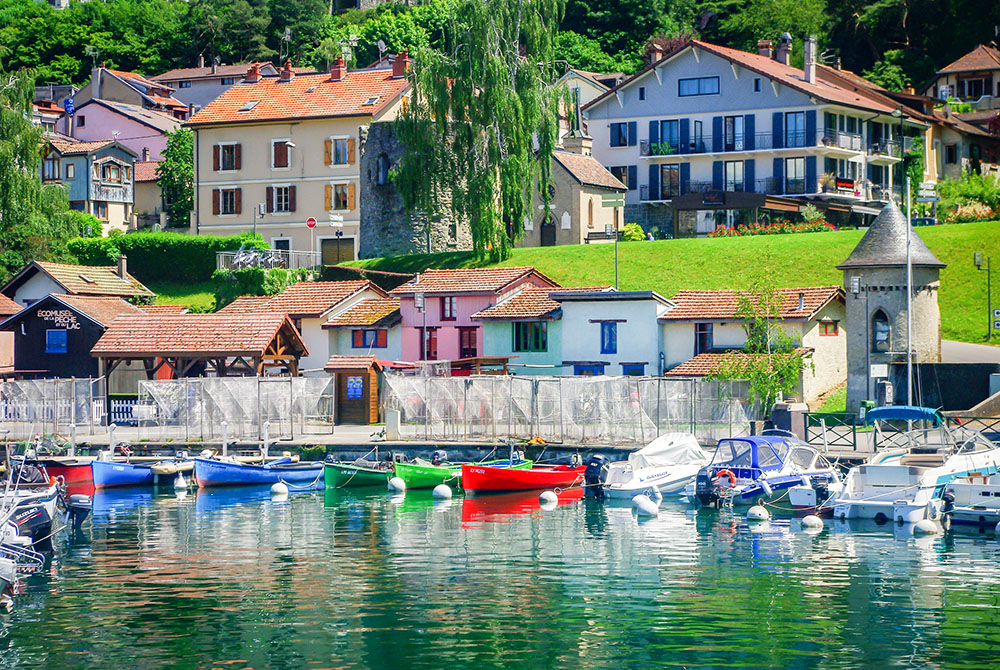
The fishermen’s village of Thonon © French Moments
The Kilometre Zero of the Route des Grandes Alpes
The geography of Thonon-les-Bains is not limited to Lake Geneva. The town is also the symbolic starting point of the Route des Grandes Alpes, one of France’s great tourist routes.
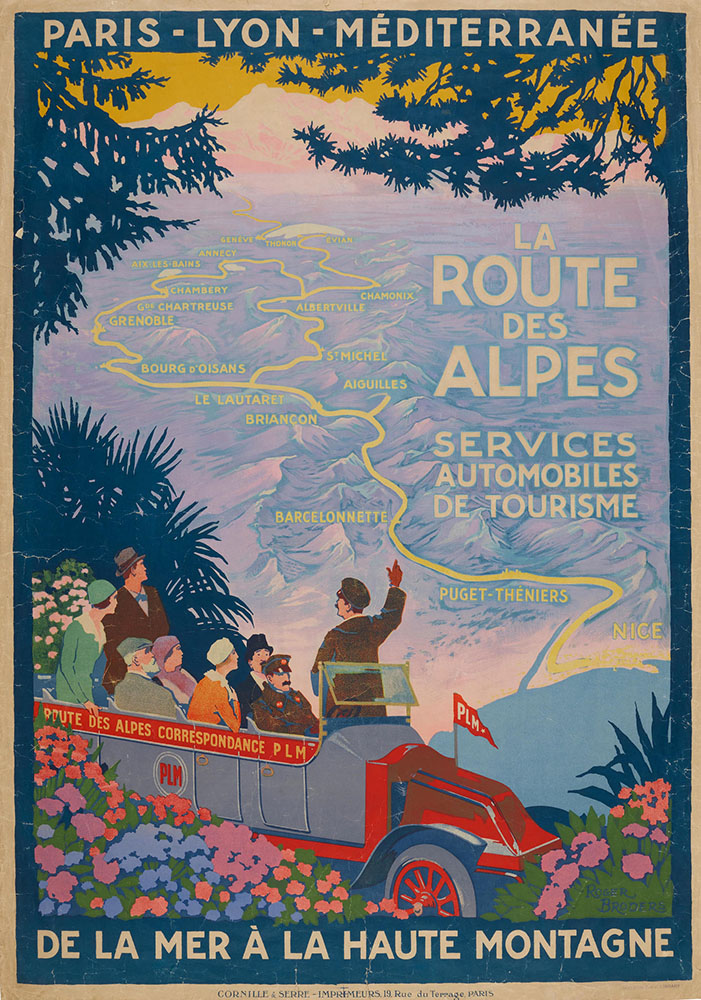
From Thonon-les-Bains, the route leads to Menton, crossing hundreds of kilometres of Alpine landscapes and several major passes in the French Alps. The tourist website mentions a route of 684 kilometres, punctuated by 16 mountain passes.
In other words, Thonon is both a lake town and a gateway to the mountains. That is not so common. Some towns hesitate between two identities. Thonon seems to have decided to keep both — and frankly, one can understand why.
A Brief History of Thonon-les-Bains
The history of Thonon-les-Bains is closely linked to that of Savoy, the Chablais and Lake Geneva. The town has long occupied a strategic position on the southern shore of the lake, where the Savoyard, Swiss and Alpine worlds meet.
In the Middle Ages, Thonon grew in importance within the orbit of the House of Savoy.
In the 14th and 15th centuries, it was connected to ducal power and to the political organisation of the Chablais. Several major figures of Savoy are associated with the region, including Amadeus VIII, Mary of Burgundy and Anne of Lusignan.
Old town of Thonon-les-Bains © French Moments
The town also experienced the upheavals of religious and political history. From 1536 to 1567, it came under Bernese administration before returning to the Savoyard fold. This borderland history partly explains the cultural depth of Thonon: Savoyard, lakeside, Swiss and Alpine influences have long crossed paths here.
The annexation of Savoy to France in 1860 was, of course, another major turning point. Over time, Thonon also developed its identity as a spa town, eventually adding “les-Bains” officially to its name.
Today, it remains a town with several faces: historic, lakeside, thermal, residential and tourist-oriented.
Thonon-les-Bains © French Moments
7 Must-See Sites to Discover in Thonon-les-Bains
Here are 7 sites I visited during my most recent trip to Thonon.
1. The Fishermen’s Village of Rives
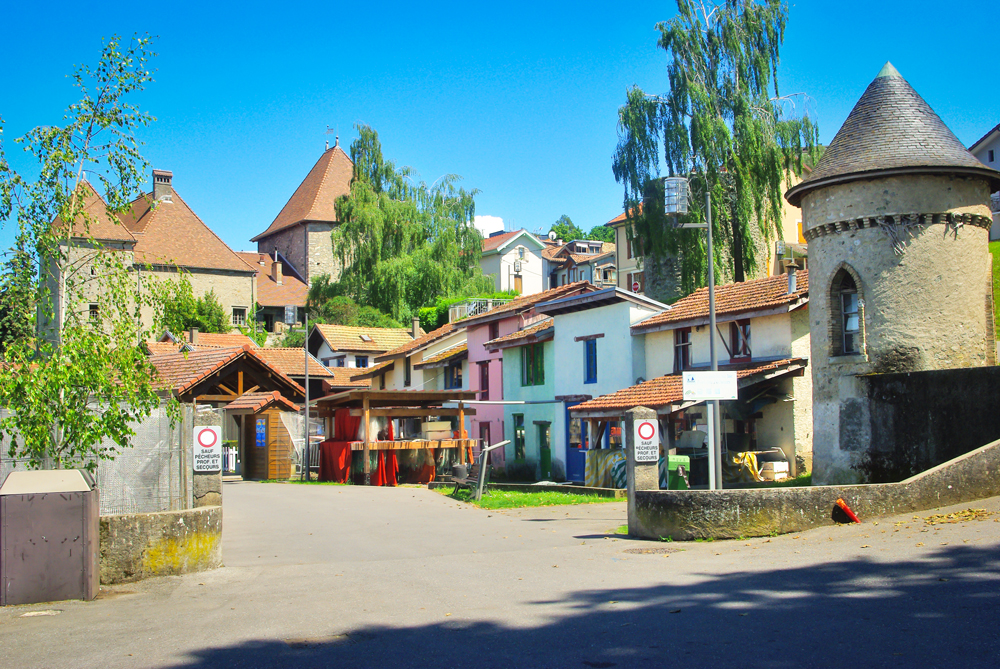
The fishermen’s village of Thonon-les-Bains © French Moments
To understand Thonon-les-Bains, you have to go down to Rives. Here, on the shores of Lake Geneva, the town takes on an almost maritime atmosphere.
The fishermen’s village of Rives is one of the most endearing places in Thonon.
Here you find the harbour, the fishing huts, the quays and that lakeside atmosphere which can make you feel surprisingly far from the upper town. The tourist office presents Rives as an unusual district with a “seaside” feel on the shores of Lake Geneva.
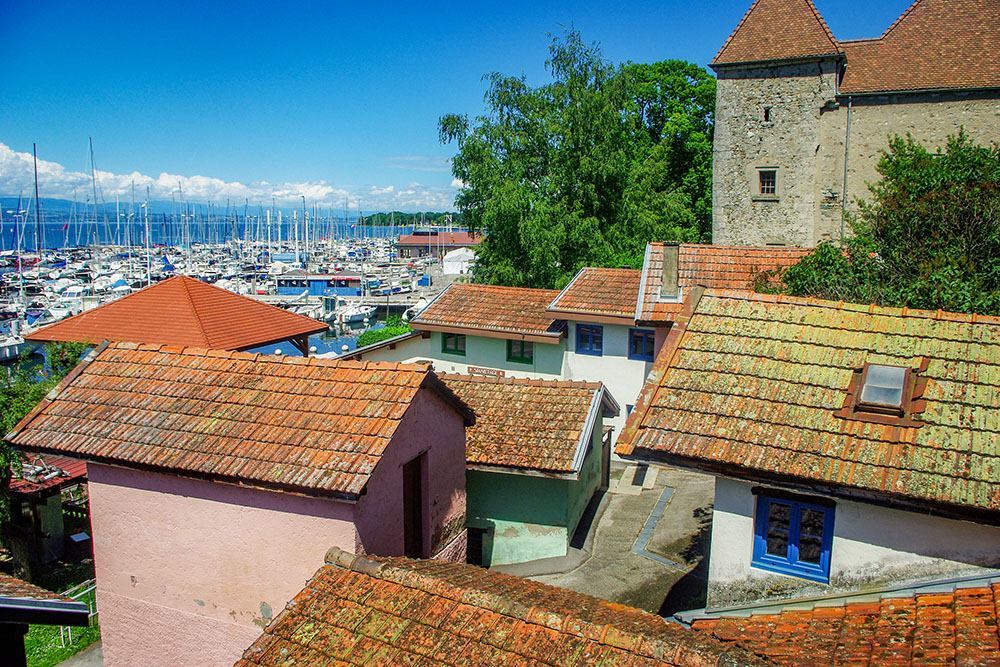
The fishermen’s village of Thonon © French Moments
Until the mid-19th century, professional fishermen lived on the “Grand Champ” side before settling along the old walls of the Château de Rives.
The huts, built of wood and leaning against the wall, were used in the fishermen’s daily work. Today, they have become one of the most recognisable features of the district.
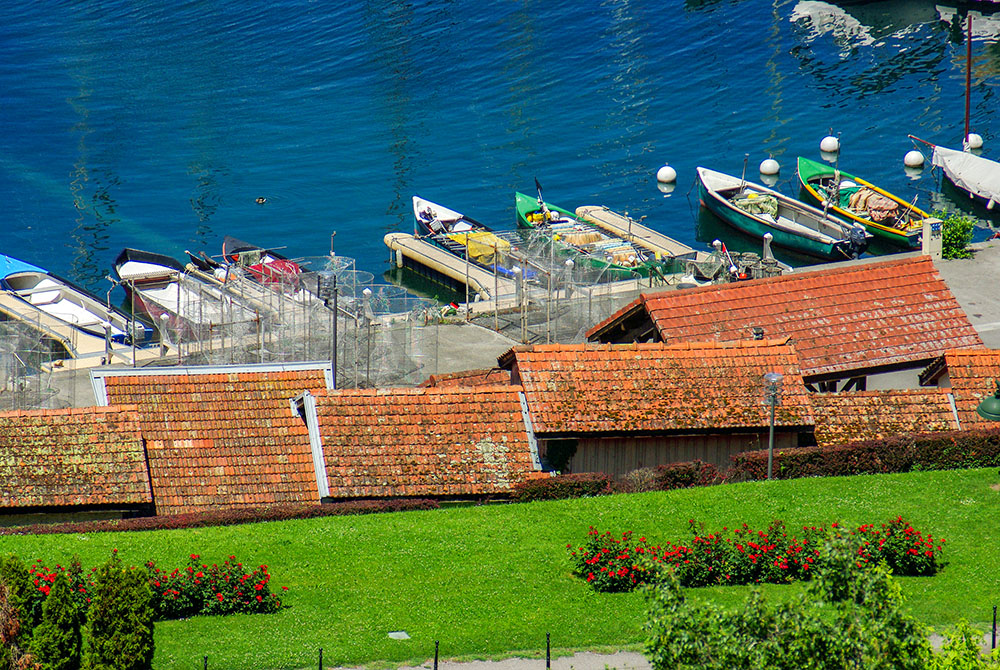
The fishermen’s village of Thonon © French Moments
This fishermen’s village remains a unique entity on the French shores of Lake Geneva. The Fishing and Lake Ecomuseum helps visitors better understand the world of fishermen past and present, as well as the ecosystem of Lake Geneva.
It is a perfect place to begin or end a visit to Thonon. Here you find the lake, the boats, the nets, the huts and that simplicity which feels very welcome after grand façades and grand histories.
2. The Château de Rives
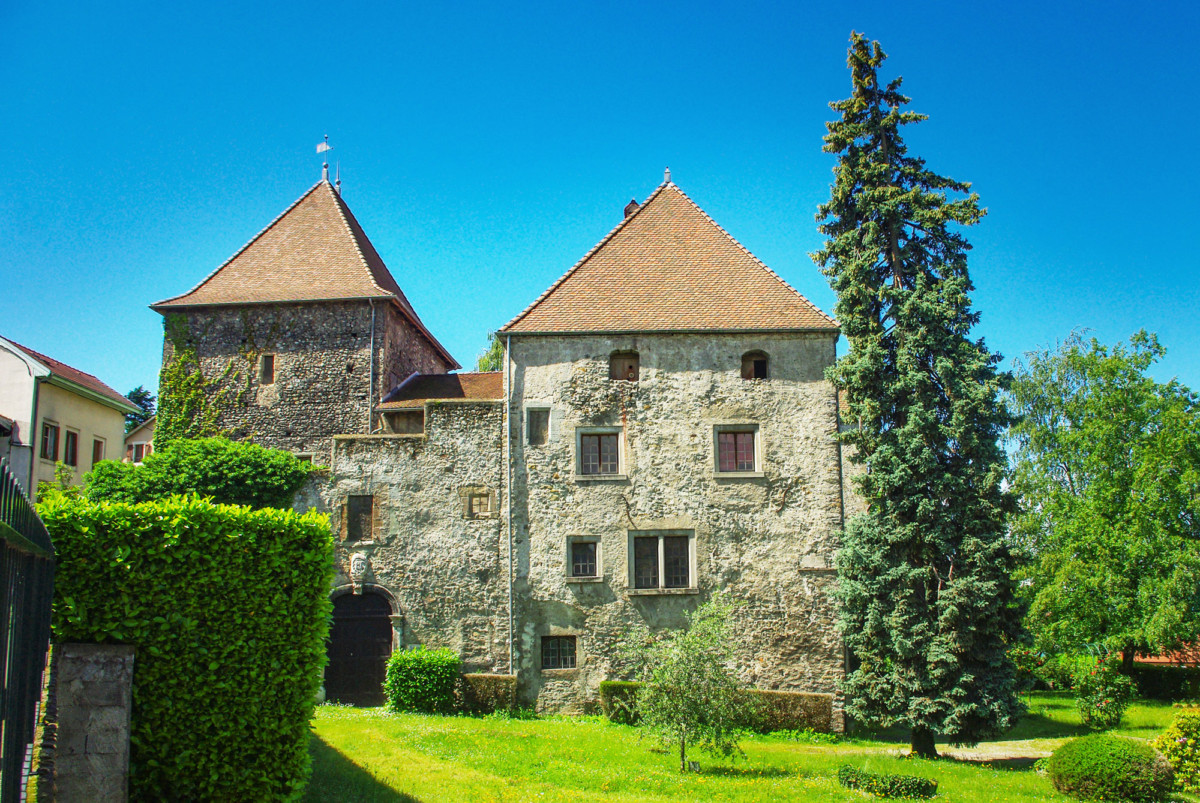
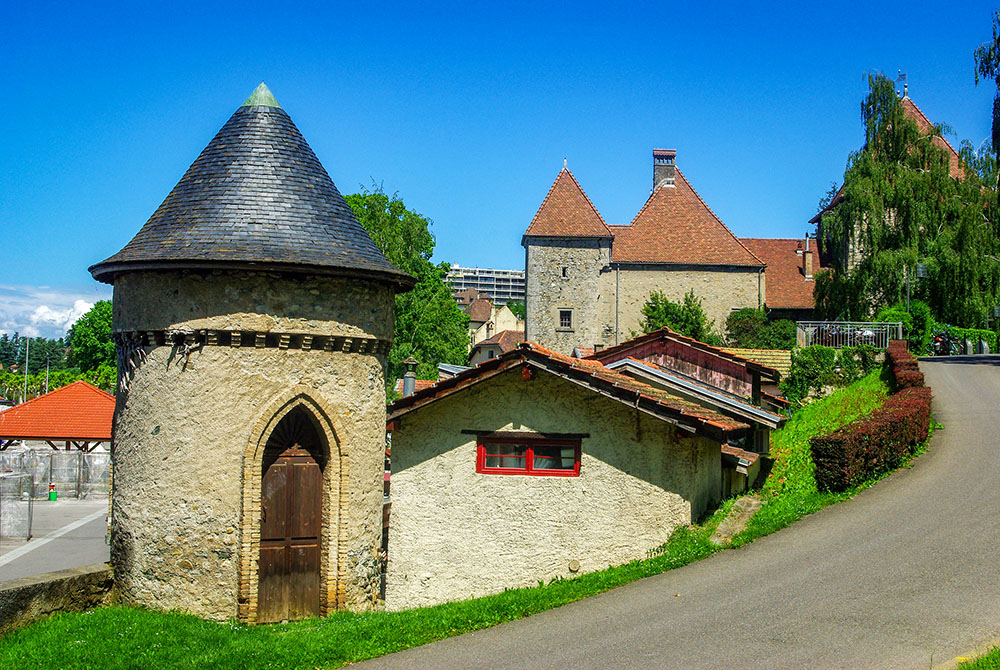
A fortified house in Thonon-les-Bains: the Château de Rives © French Moments
Just above this district stands the Château de Rives, also known as the Château de Montjoux. Visible from several of the town’s esplanades, it is one of the few medieval buildings preserved in the Chablais.
The château was built to strengthen the western corner of Thonon’s fortifications. Over the centuries, it has had an eventful history: ownership by prominent families, links with the monastery of the Grand-Saint-Bernard, a fire in 1557, alterations, industrial use during the Revolution, use as a warehouse in the 19th century, private residence, and then requisition during the Second World War.
In other words, it has lived several lives. Some buildings change function once or twice. The Château de Rives seems to have ticked almost every possible box: defence, residence, religion, industry, storage, military occupation… Perhaps all it lacks is a brief career as a tearoom — and even then, I have not checked.
Today, the château mainly recalls the medieval and fortified dimension of Thonon. It connects the harbour, the old walls, the fishermen’s village and the upper town. Even if you only see it from the outside, it helps you understand the town’s historical verticality.
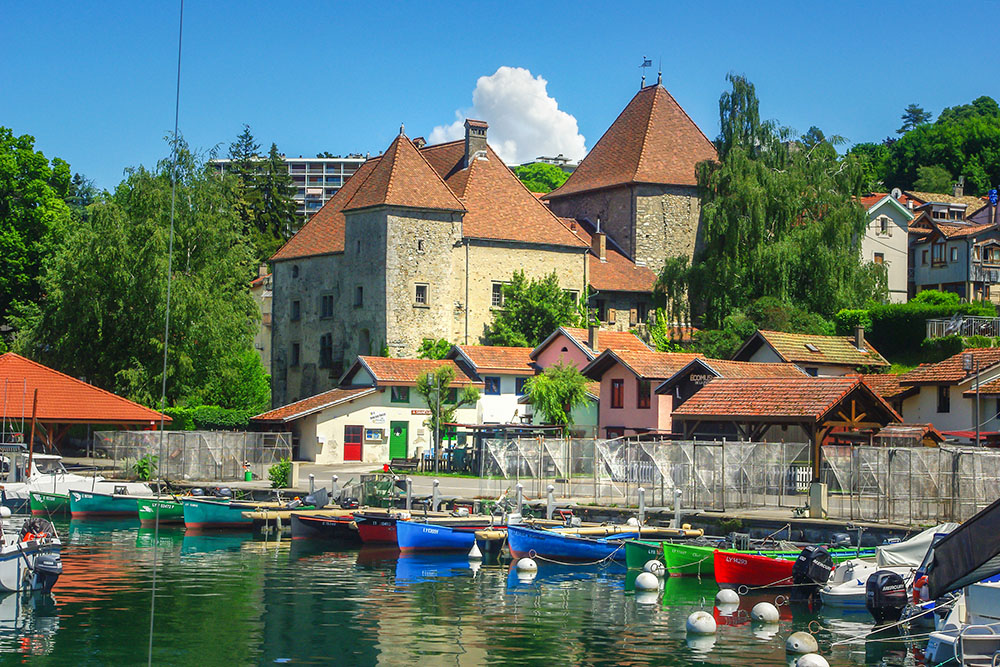
Château de Rives © French Moments
The Tour des Langues
Very close to the Château de Rives, the Tour des Langues (the Tongues' Tower) still dominates the fishermen’s village.
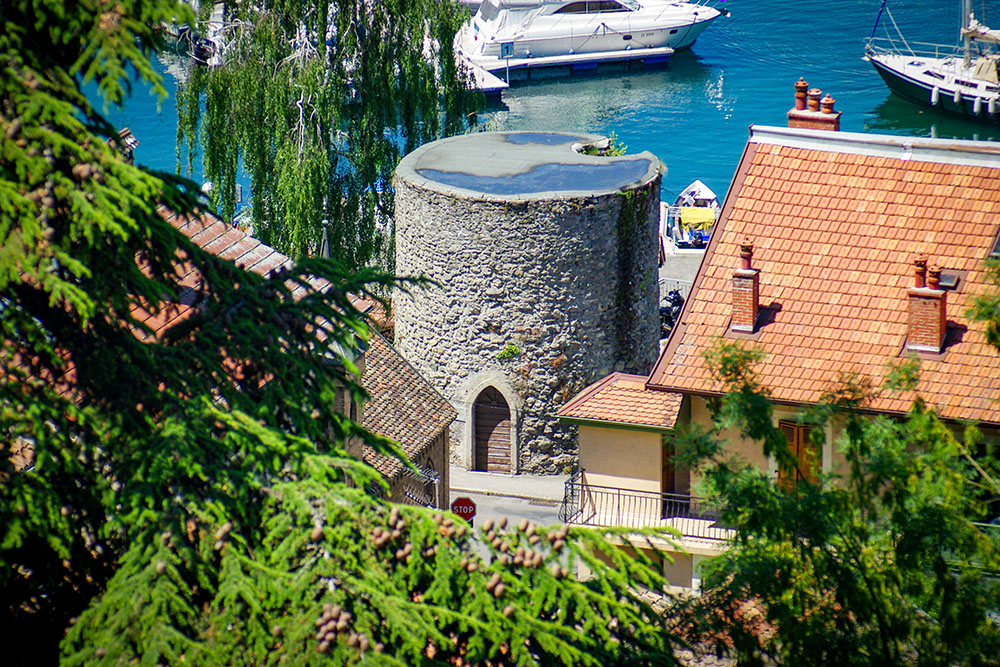
Tour des Langues, Thonon © French Moments
Its name is intriguing, and for once it is not a poetic metaphor. This was where butchers once came to pay a feudal tax to the lord, depositing the tongues of the oxen or cows they had slaughtered.
The detail may come as a surprise, but it is a very concrete reminder that the Rives district was not merely a pretty lakeside setting. It was also a place of power, taxation, trades and everyday life.
3. The Funicular of Thonon-les-Bains
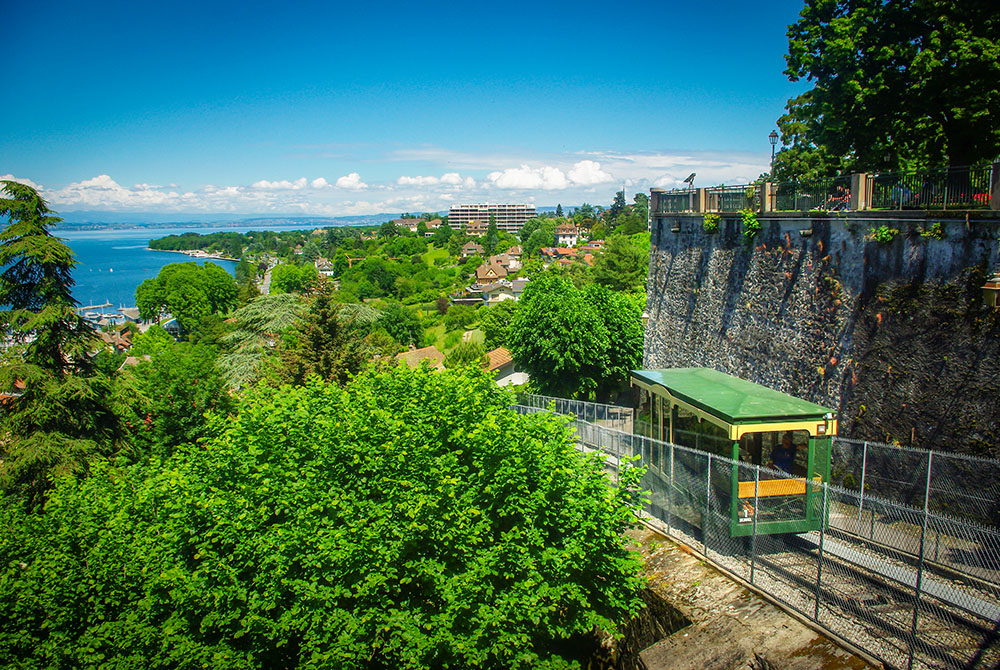
Funicular of Thonon © French Moments
The funicular of Thonon-les-Bains is one of the most pleasant ways to travel from the upper town to the port of Rives. It is not merely practical: it is part of the town’s identity.
Inaugurated on 2 April 1888, it was originally created to carry materials transported by the boats of Meillerie up to the town. At the beginning, its wooden cabins included first- and second-class compartments, as well as space reserved for luggage and goods.
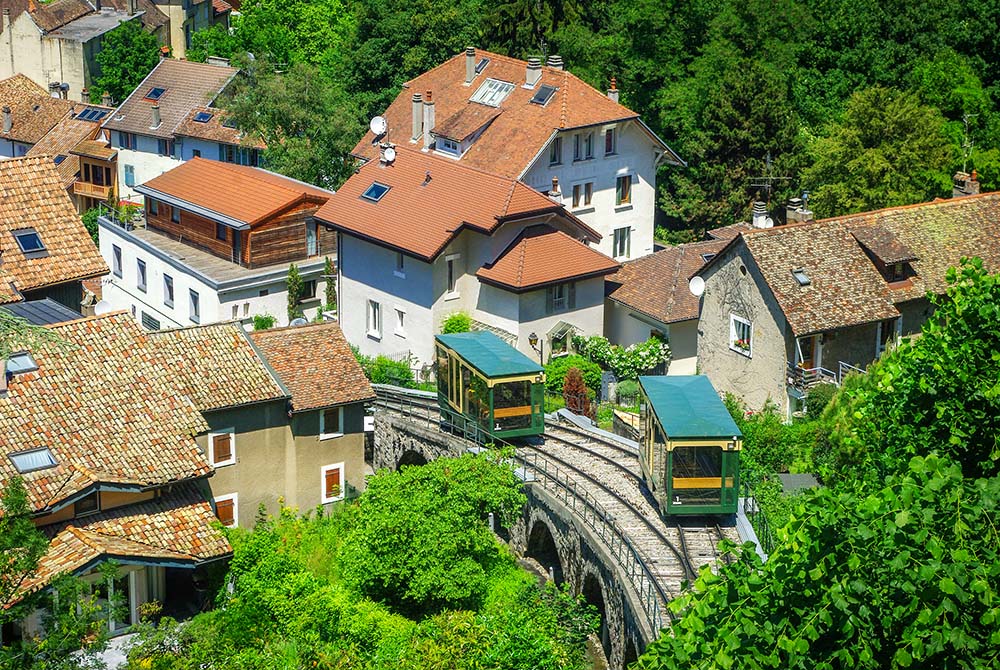
Thonon Funicular © French Moments
Designed by the engineer Auguste Alesmonières, the funicular has a remarkable feature: it is described as the only funicular in Europe where the cabins cross each other on a curve. Its line measures 230 metres, including 86.8 metres on a curve, with a height difference of 40 metres and an average gradient of 22%.
For visitors, above all, it is a charming little experience. You leave the town centre, descend towards the lake, and physically understand the relationship between upper Thonon and lower Thonon. And let us be honest: as soon as a town has a funicular, it automatically gains a few points of character.
4. The Belvédère Park and the Château de Sonnaz
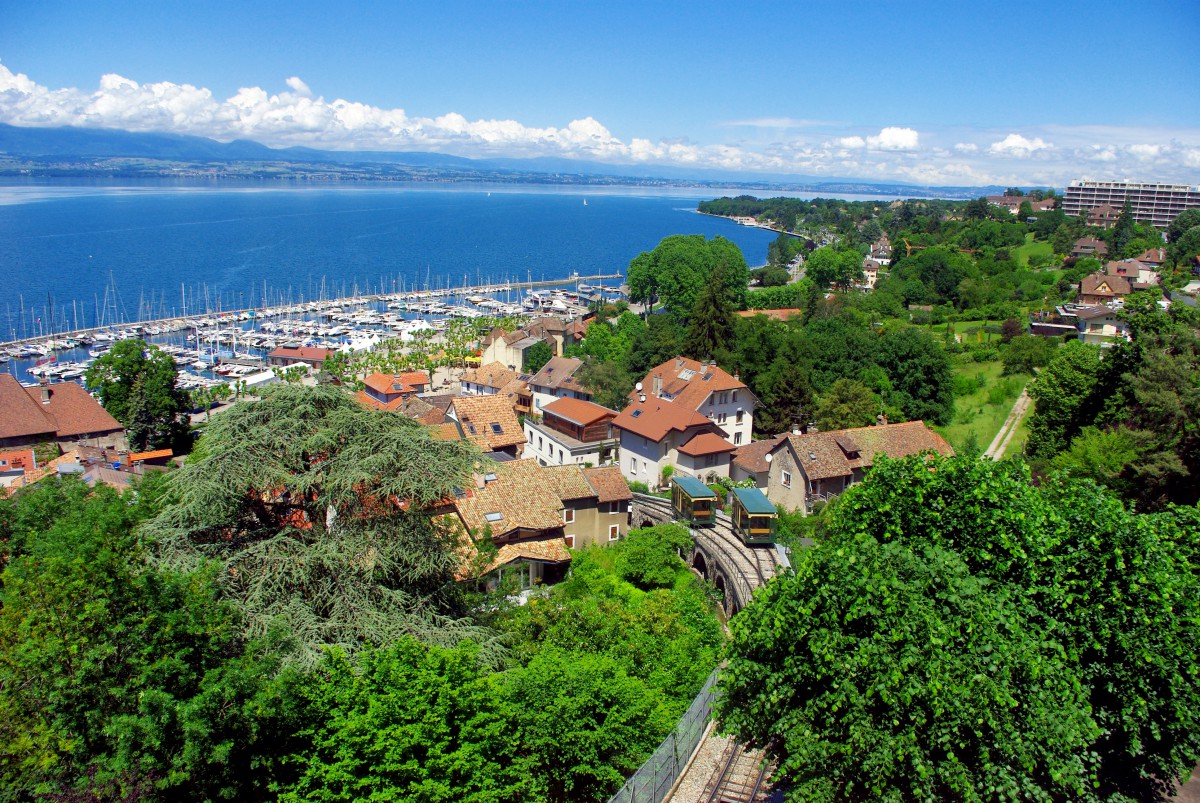
The view from the Belvédère Park © French Moments
The Belvédère Park is one of the best places to grasp the geography of Thonon-les-Bains at a single glance. From the heights, the view opens over Lake Geneva, Switzerland and the Jura range. This is where you understand why Thonon is a balcony town as much as a lake town.
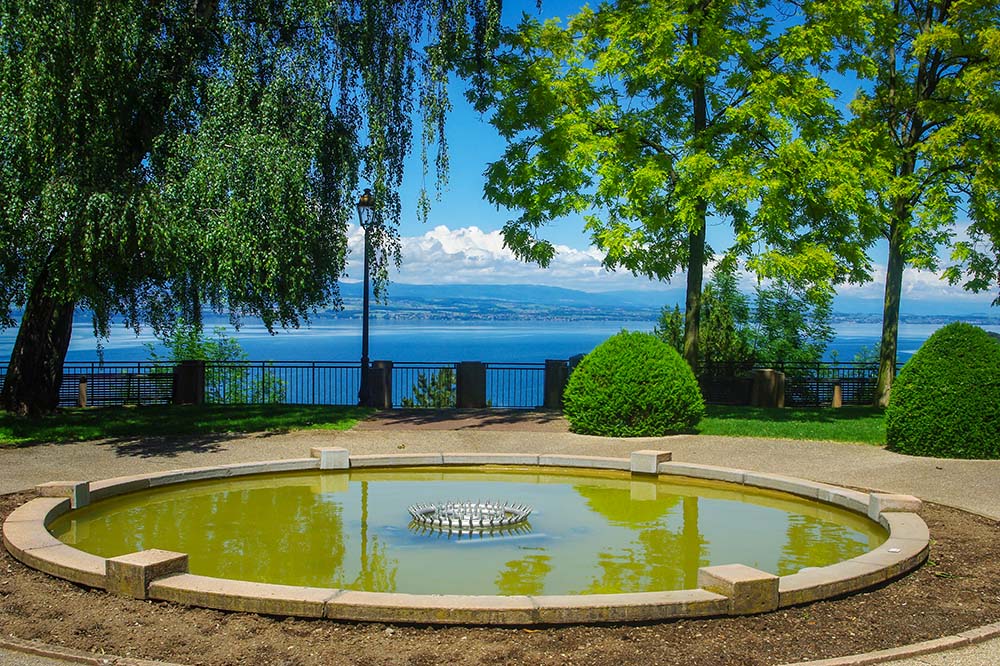
Parc du Belvédère © French Moments
Nearby stands the Château de Sonnaz, in the town centre, close to the Town Hall. Built in 1666 on the ruins of the medieval castle of Thonon, it belonged to the Gerbaix de Sonnaz family, one of the oldest families in Savoy. Today, it houses the Musée du Chablais and the Thonon-les-Bains tourist office.
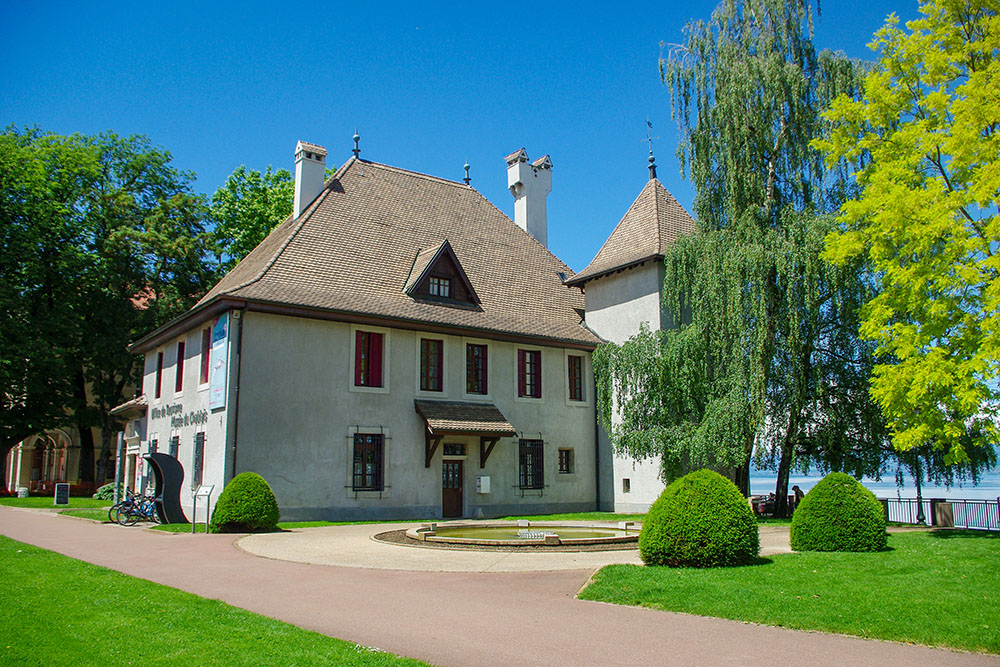
Château de Sonnaz © French Moments
The place is interesting for two reasons. First, it offers a remarkable viewpoint over Lake Geneva. Secondly, it brings together several dimensions of Thonon’s history: the vanished medieval castle, the presence of Savoyard families, the former political importance of the Chablais, and its contemporary conversion into a cultural and tourist space.
The Chablais Museum, installed in the vaulted cellars of the Château de Sonnaz, extends this discovery in a very natural way.
5. The Château de Bellegarde and Its Friezes
The Château de Bellegarde is one of those sites you could easily miss, even though it says a great deal about the former fortified town.
With its square tower, it is one of the last remains of Thonon-les-Bains’ medieval fortifications. It once guarded the Porte des Lombards and defended the north-western flank of the town.
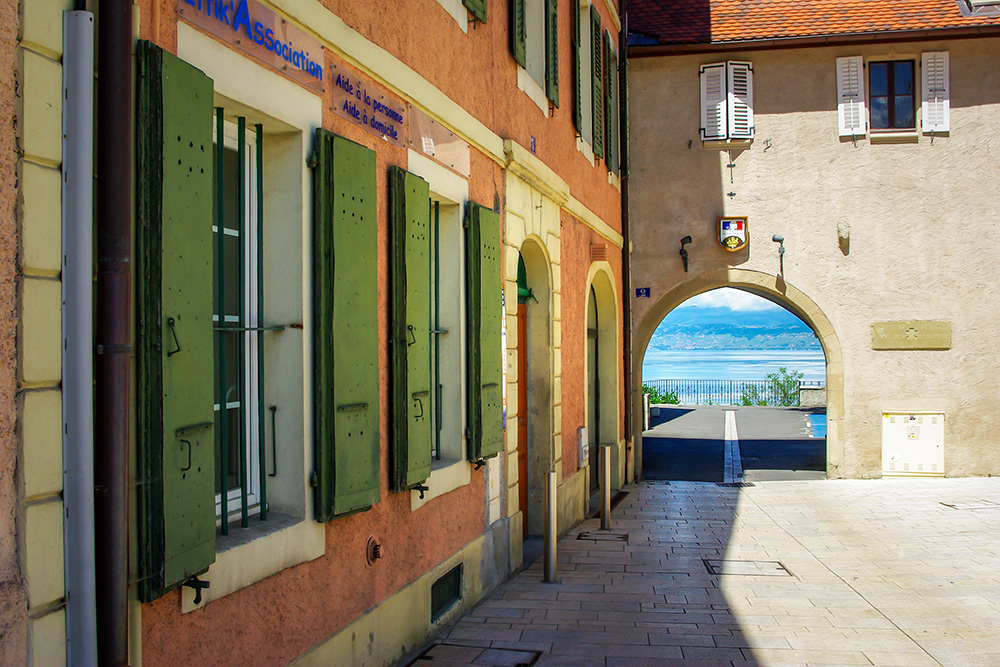
Porte des Lombards © French Moments
It is reached from Place de l’Hôtel de Ville through the gate known as the Porte des Lombards, so named because, in the 14th century, a bank run by a Lombard stood there.
What makes the Château de Bellegarde particularly delightful, however, are the carved wooden friezes on the outside façade — on the left after passing through the Porte des Lombards, on the half-timbered building.
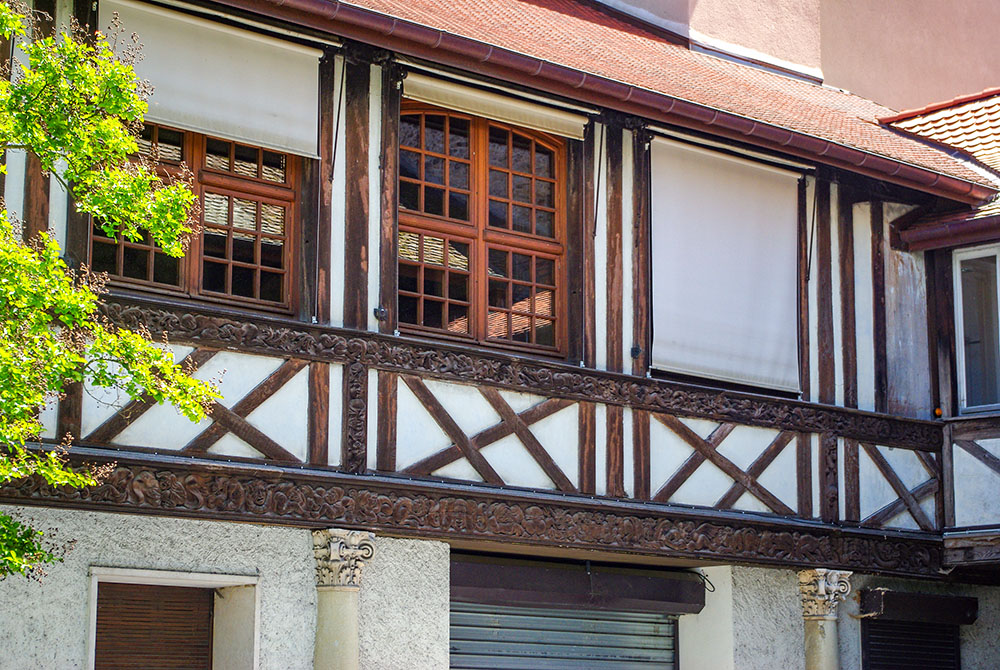
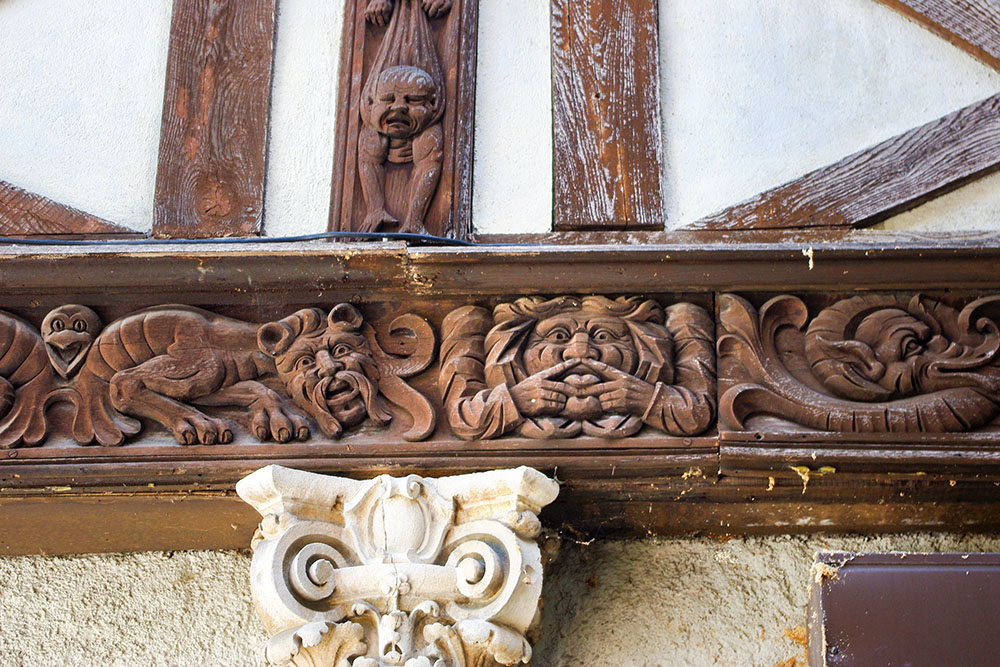
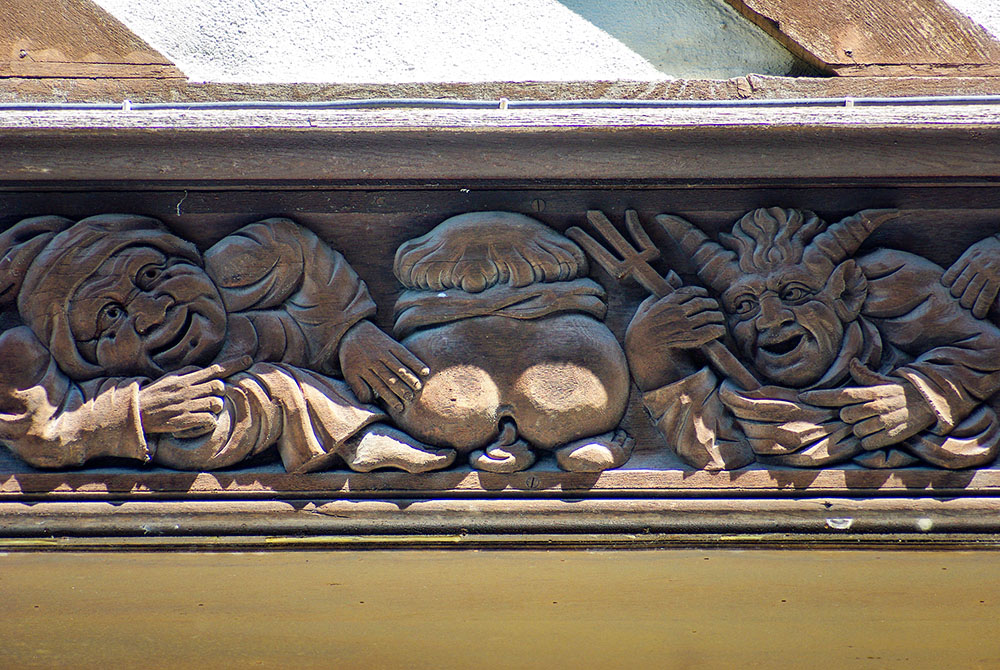
I like this sort of detail. It reminds us that historic towns are not made only of major dates, serious dukes and respectable monuments. They also have their oddities, their winks and their surprises.
6. Saint-Hippolyte Church and the Basilica of Saint Francis de Sales
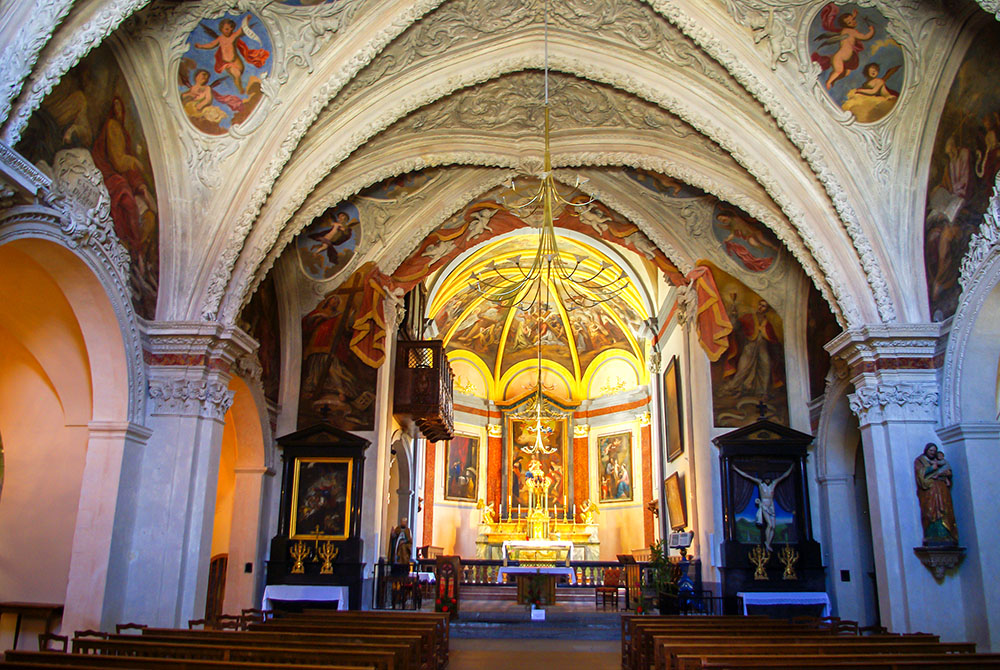
Eglise Saint-Hippolyte © French Moments
In Thonon-les-Bains, one of the most interesting religious ensembles lies in the juxtaposition of two buildings: Saint-Hippolyte Church and the Basilica of Saint Francis de Sales.
Saint-Hippolyte Church is the oldest church in Thonon. Its origins go back to the 12th century, although only the crypt remains from the original building. The present church was built in the 14th century on the site of a Romanesque church, then altered and restored several times. Today, it is considered one of the fine examples of Baroque style in Haute-Savoie.
Its history also reflects the religious tensions of the Chablais. During the Bernese invasion of 1536, it was used as a Protestant temple. Then, in 1594, Francis de Sales brought the Chablais back to the Catholic faith, and notably celebrated Christmas Mass here in 1598.
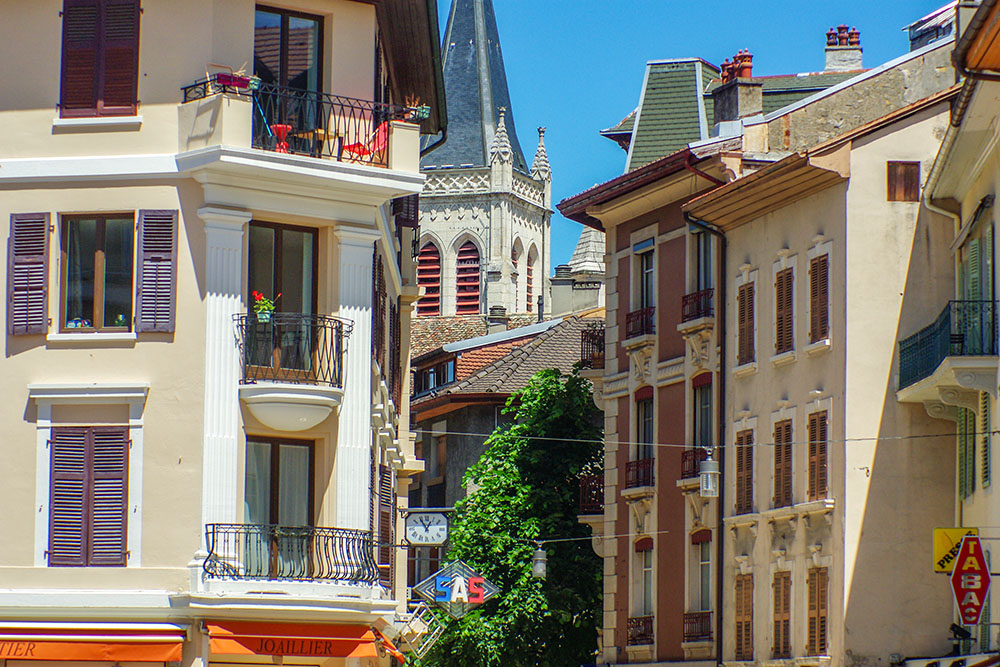
Bell tower of the Church of Saint Francis de Sales © French Moments
The Basilica of Saint Francis de Sales, adjoining the Baroque church, belongs to another period. Completed in the early 20th century, it contains murals by Maurice Denis, among his final works. Its history was marked by a much more ambitious initial project: an imposing neo-Gothic cathedral with two bell towers had been planned at the end of the 19th century, but financial difficulties brought the project to an end.
The result is fascinating: two adjoining churches, two atmospheres, two periods, two ways of telling the story of Christianity in the Chablais. It is exactly the kind of place where you need to take your time, if only to move from one space to the other and feel the change in tone.
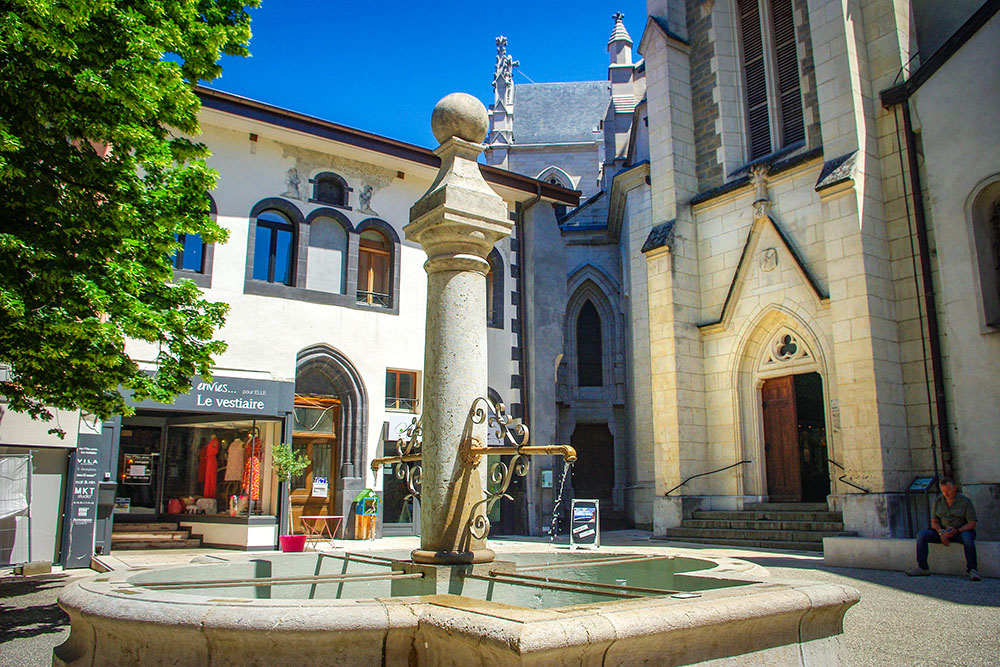
Fountain on Church Square © French Moments
7. The Park of the Thonon Thermal Centre
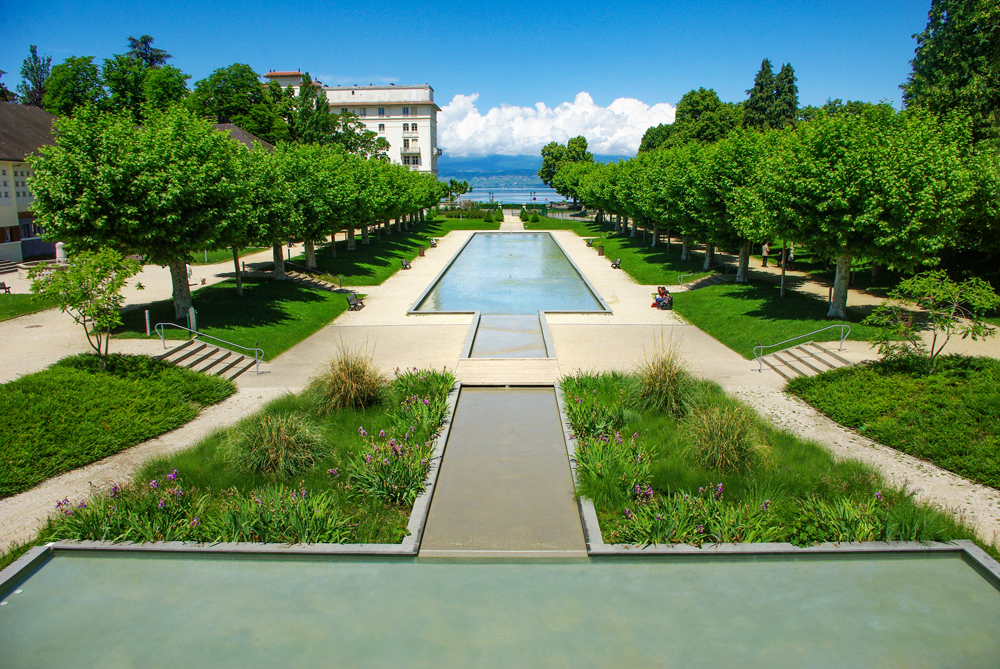
The spa town of Thonon-les-Bains © French Moments
It is impossible to talk about Thonon-les-Bains without mentioning its thermal identity. The park of the Thermal Centre is precisely the place to approach this side of the town in a peaceful and pleasant way.
Located just a short walk from the town centre, the thermal park is a flower-filled and tree-lined space with a plunging view over Lake Geneva. Its pathways and ornamental pond give it a romantic charm, quite different from the atmosphere of the harbour or the historic centre.
The park covers around 2.5 hectares and includes sequoias, larches and maples. It also has a children’s play area, making it both a place for relaxation and a space linked to the town’s thermal history.
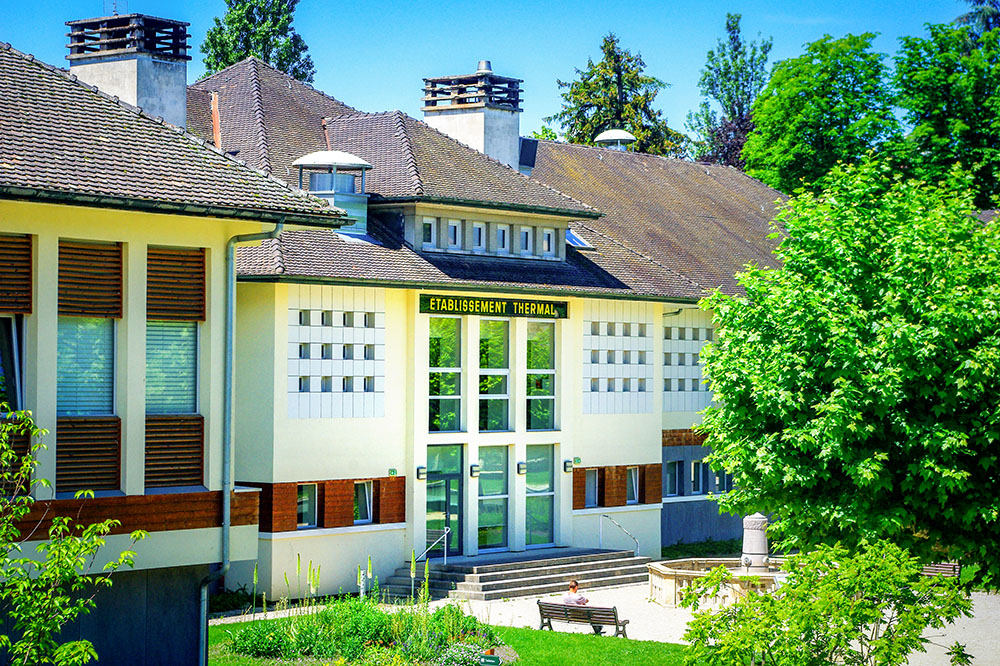
Thermal Centre of Thonon-les-Bains © French Moments
It is a good place to slow down. After the narrow streets, châteaux, churches and descents towards the lake, the thermal park offers a gentler pause. Here, Thonon reveals another of its faces: that of a spa town, turned towards wellbeing, strolling and the contemplation of Lake Geneva.
What About Ripaille Castle?
The Château de Ripaille is, of course, one of the major sites of Thonon-les-Bains. It would be almost impossible to talk about the town without mentioning it.
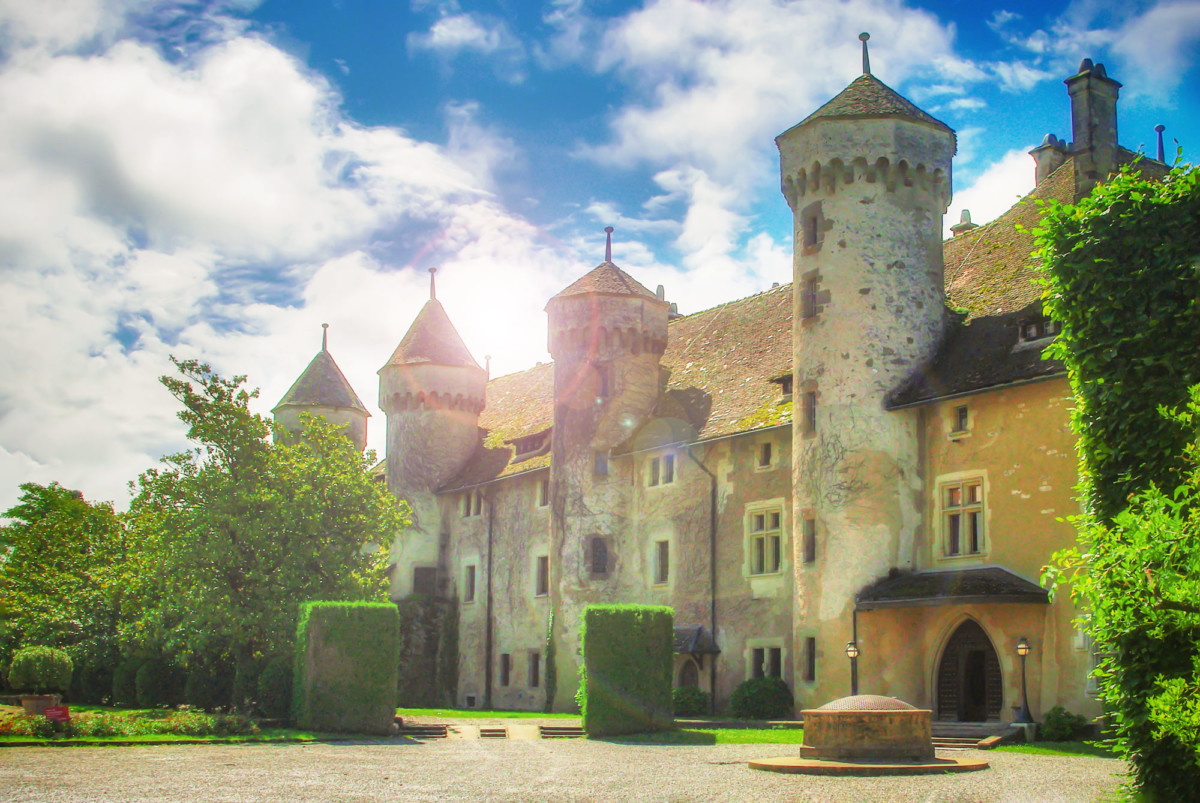
Ripaille Castle © French Moments
But that is precisely the point: Ripaille deserves better than a quick paragraph slipped between two monuments. Its history, setting, links with the House of Savoy, vineyards and location beside Lake Geneva make it a site in its own right.
I have therefore not included it in this selection of seven must-see sites, so that I can devote a full article to it.
Practical Tips for Visiting Thonon-les-Bains
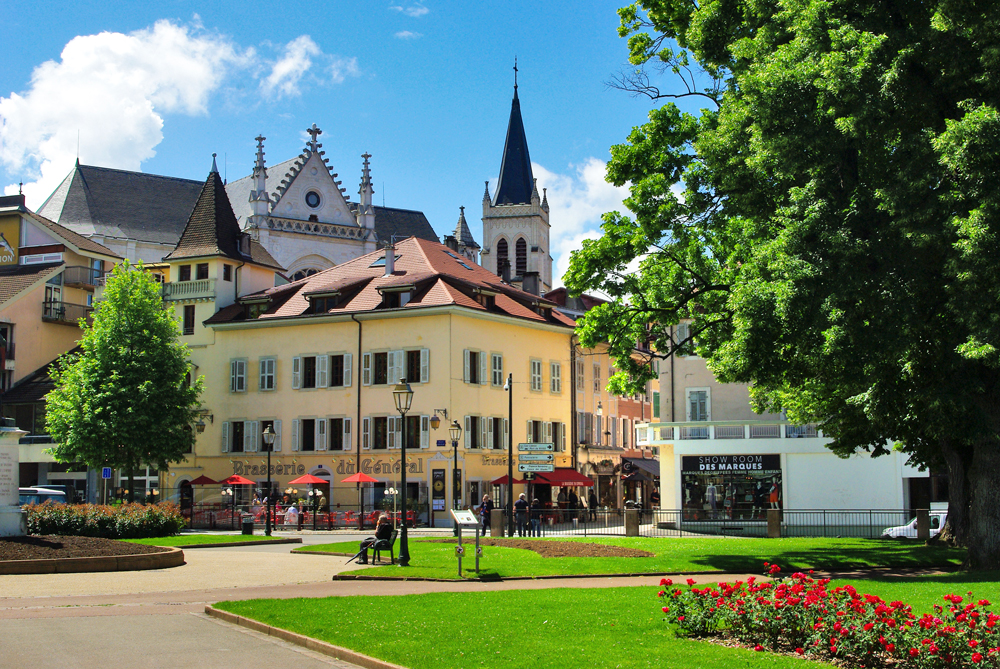
Thonon's City Centre © French Moments
Thonon-les-Bains is very easy to explore on foot, but you do need to keep in mind the difference between the upper town and the lower town. The funicular makes it much easier to travel between the town centre and the port of Rives, especially if you would rather avoid a slightly energetic climb after a walk by the lake.
For a first visit, I recommend allowing at least half a day. This gives you time to discover the historic centre, the belvedere, Saint-Hippolyte Church, the Basilica of Saint Francis de Sales, the funicular and the fishermen’s village of Rives without rushing.
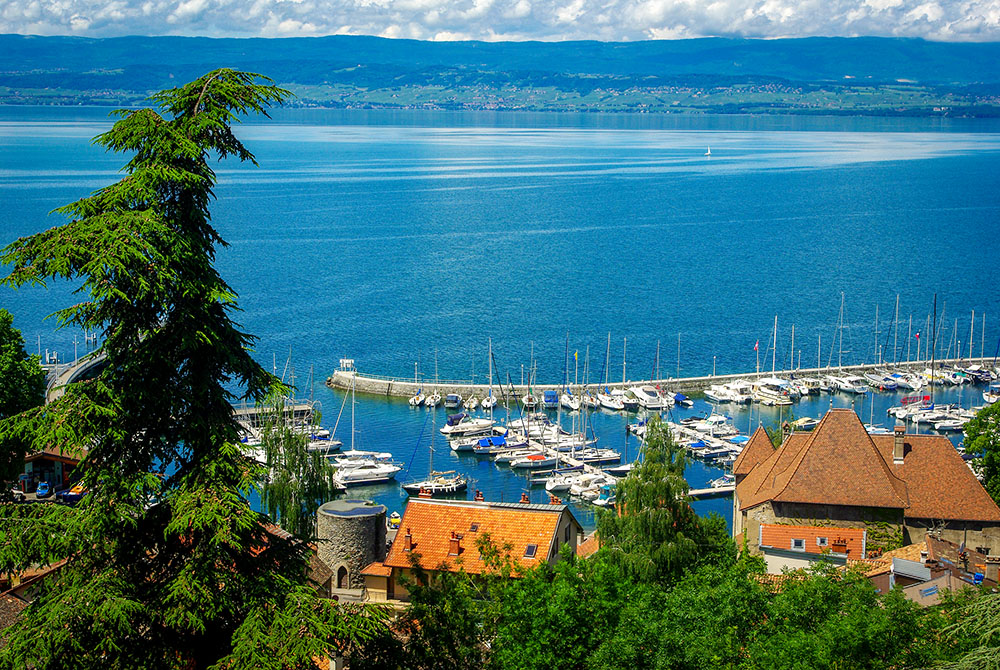
View over Lake Geneva © French Moments
A full day allows you to add the thermal park, the Musée du Chablais, a longer walk along Lake Geneva, or even a detour to Ripaille.
Thonon also fits easily into a wider stay around the French side of Lake Geneva, with Évian-les-Bains, Yvoire, Ripaille Castle, the Dranse Delta Nature Reserve or the first roads of the Chablais.
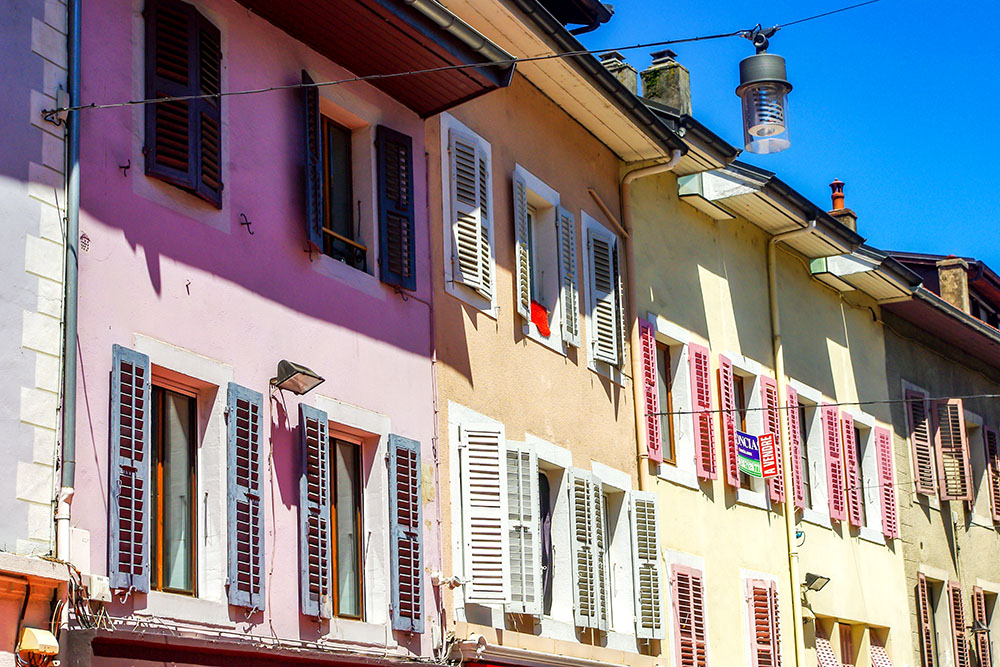
In the streets of the old town of Thonon-les-Bains © French Moments
Where to Stay in Thonon-les-Bains
Thonon-les-Bains offers several accommodation options, including town-centre hotels, places close to the lake, apartments and accommodation in the surrounding area.
The town can make a good base for discovering the Chablais, the French shore of Lake Geneva, Évian-les-Bains, Yvoire, the Château de Ripaille and the starting point of the Route des Grandes Alpes.
Browse the map below to compare available accommodation in and around Thonon-les-Bains.
Is Thonon-les-Bains Worth Visiting?
Yes, especially if you enjoy Lake Geneva towns that do not reveal themselves completely at first glance.
Thonon-les-Bains is less immediately theatrical than Yvoire, less worldly than Évian, less spectacular than Chamonix.
But it has real depth: a fishing harbour, a funicular, châteaux, adjoining churches, belvederes, thermal baths, Savoyard history and a constant relationship with Lake Geneva.
It is a town of passages, levels and viewpoints. You go down towards the lake, climb back up to the upper town, look across to Switzerland, then turn back towards the Alps.
Thonon-les-Bains does not always try to seduce immediately. But between the port of Rives, the fortified manors, the funicular, the churches, the thermal park and the panoramas over Lake Geneva, it gradually reveals a town far richer than a simple name on the southern shore of the lake.
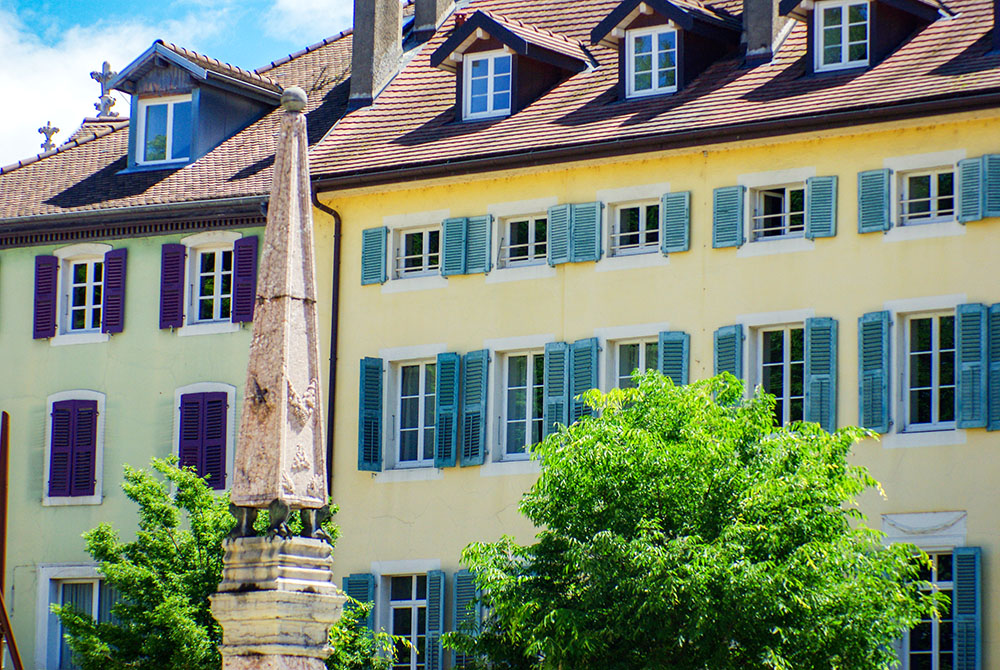
Thonon-les-Bains © French Moments
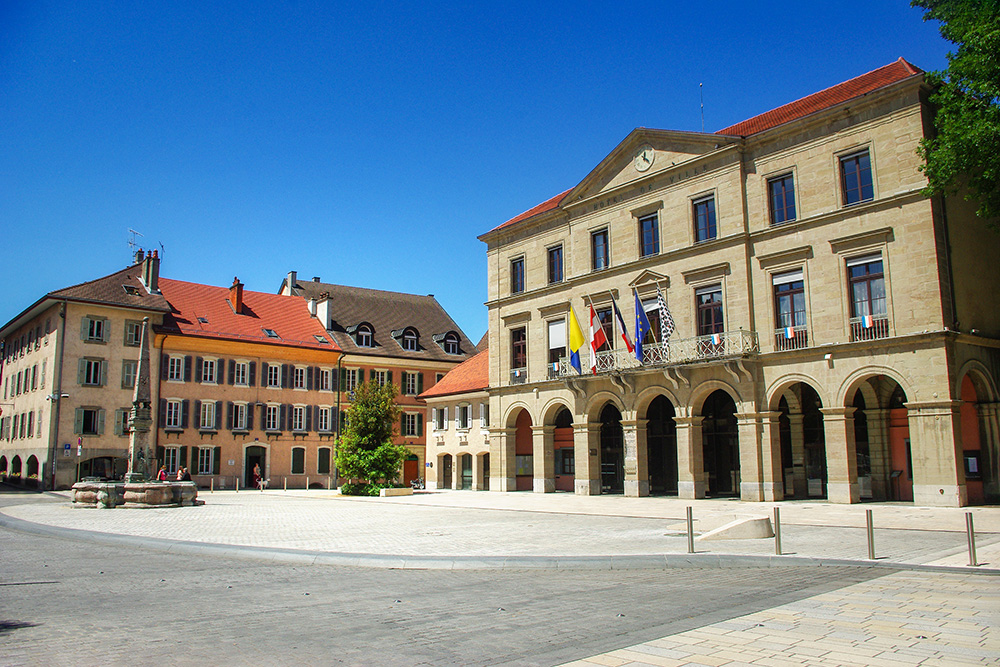
La place de l'hôtel de ville de Thonon-les-Bains © French Moments