The Hartmannswillerkopf, also known as Vieil Armand, is one of those places in Alsace that you can see from the plain without always realising what it represents.
You see a mountain, a great cross, a road climbing towards the ridges.
You vaguely know that the site is linked to the First World War.
Then, one day, you take the time to stop there. And you realise that Vieil Armand is not just a Vosges summit: it is a place of remembrance, reflection, Franco-German history and landscape.
When I lived in Alsace as a teenager, we used to pass the National Monument of Vieil Armand on some of our family outings towards the Grand Ballon.
At the time, I mostly saw it as an impressive site beside the Route des Crêtes. Over the years, I have come to understand the depth of this place much better.
Here, then, are ten things to know about the Hartmannswillerkopf – Vieil Armand, one of the most poignant sites in the Alsatian Vosges.
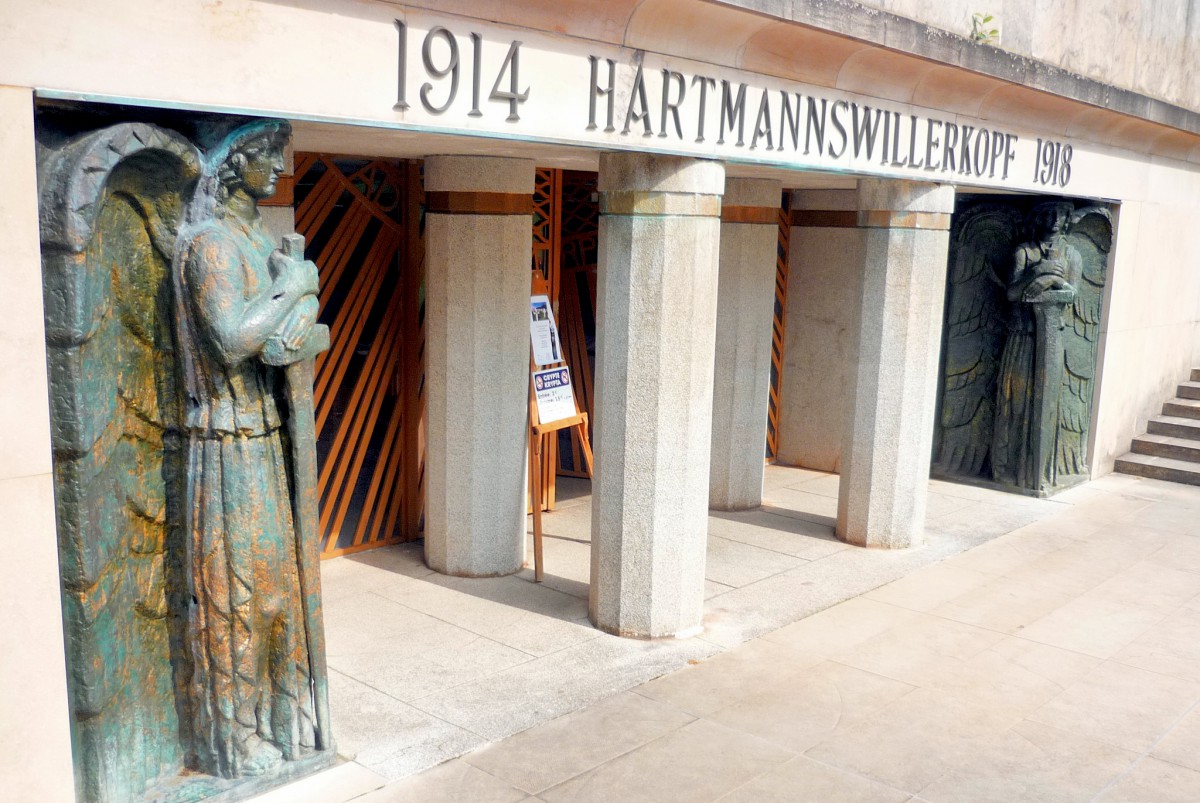
Bourdelle’s two archangels guarding the entrance to the crypt of Vieil Armand © French Moments
10 Things to Know About the Hartmannswillerkopf – Vieil Armand
The Hartmannswillerkopf cannot be reduced to a summit, a monument or a battlefield. To better understand this major site in the Alsatian Vosges, here are ten essential points that reveal its geography, history, memory and landscape power.
1. The Hartmannswillerkopf is a strategic summit in the Vosges
The Hartmannswillerkopf is a rocky spur in the Vosges massif, overlooking the Alsace Plain at an altitude of around 956 metres.
Its position largely explains its importance. From these heights, the view stretches far across the Vosges foothills, the Alsace Plain and, on a clear day, towards the Black Forest, the Jura and even the Alps.
![Hartmannswillerkopf Cemetery. Photo by Evadb [Public Domain via Wikimedia Commons]](https://frenchmoments.eu/wp-content/uploads/2026/07/Hartmannswillerkopf-Cemetery.-Photo-by-Evadb-Public-Domain-via-Wikimedia-Commons.jpg "Hartmannswillerkopf Cemetery. Photo by Evadb [Public Domain via Wikimedia Commons]")
Hartmannswillerkopf Cemetery. Photo by Evadb [Public Domain via Wikimedia Commons]
But this dominant position also made the summit a military objective. During the First World War, controlling the Hartmannswillerkopf meant watching over the plain, the roads, troop movements and enemy lines.
The site is therefore both a geographical summit and a strategic one. In the Vosges, the landscapes are beautiful, but they often carry far more than simple panoramas.
2. The Hartmannswillerkopf is a major stop on the Route des Crêtes
The Hartmannswillerkopf is one of the major stops on the Route des Crêtes, one of the great panoramic routes of the Vosges.
From the plain, you can reach it via Cernay, Uffholtz or Wattwiller. From the heights, you approach it rather from the Grand Ballon, the Col Amic or Le Markstein.
In every case, the Col du Silberloch plays an essential role: it is the gateway to the memorial site, the national monument, the cemetery and the historial.
This location makes the site very accessible, but it can also mislead visitors in a hurry. One might think it is simply a stop on the road to the Grand Ballon. That would be a pity.
Vieil Armand deserves more than a quick pause between two bends. It asks for time, silence and a little attention.
3. Hartmannswillerkopf and Vieil Armand: two names for one summit
The name Hartmannswillerkopf often impresses non-German-speaking visitors. It is long, sonorous, and has that slight “Alsatian password” effect which can discourage pronunciation at the first attempt.
It comes from German: Kopf means “head” or “summit”, while Hartmannswiller refers to the village at the foot of the massif. The name can therefore be understood as “the summit of Hartmannswiller”.
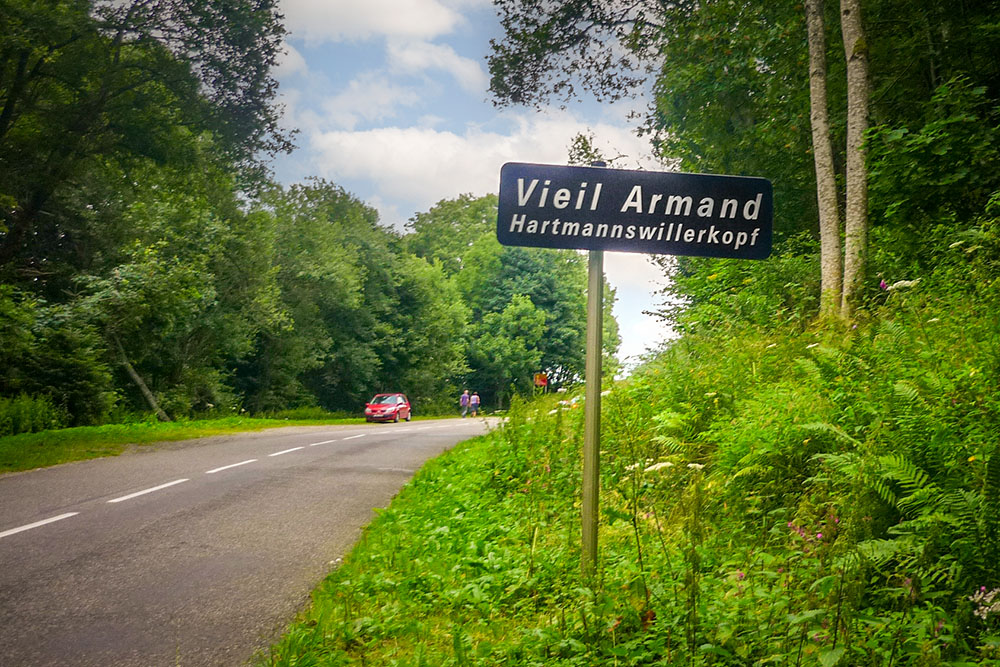
Arriving at Hartmannswillerkopf - Vieil Armand © French Moments
The French name, Vieil Armand, appeared during the First World War.
It is not a translation of the German name, but rather a phonetic distortion, a kind of linguistic corruption of Hartmannswillerkopf, gradually simplified and popularised by French soldiers and then by the press.
4. The Hartmannswillerkopf was one of the most terrible battlefields in the Vosges
The Hartmannswillerkopf is best known for the fighting of the First World War, especially in 1915.
The summit was fiercely contested by the French and German armies. Attacks, counter-attacks, bombardments and close combat turned the mountain into a battlefield of extreme violence.
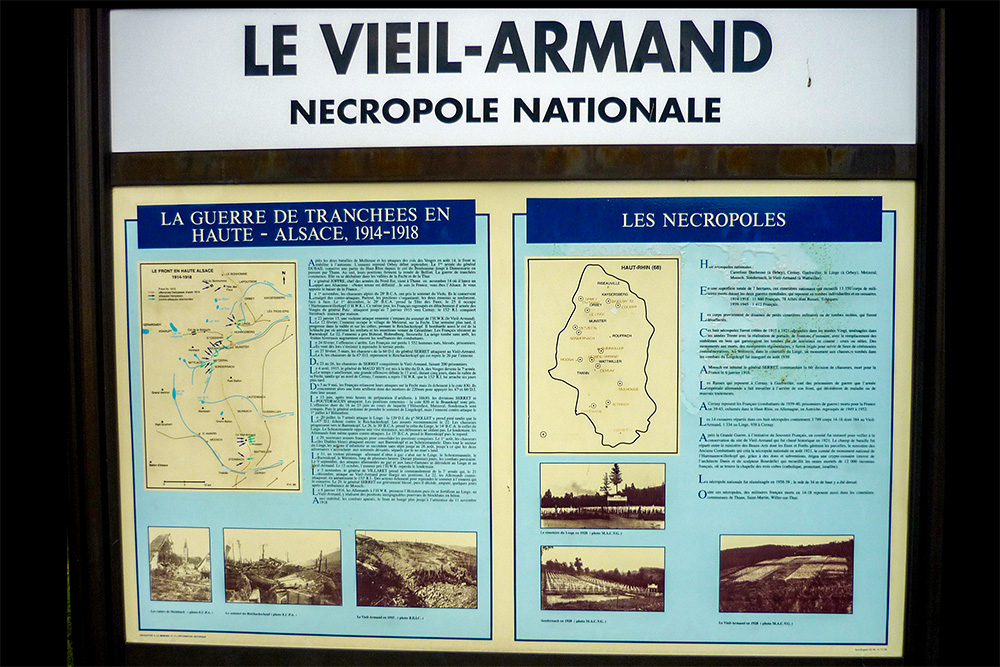
Information panel at Vieil Armand Hartmannswillerkopf
Vieil Armand received tragic nicknames, such as “the man-eater”, so heavy were the losses and so exhausting the fighting. Such a phrase may sound terrible, but it conveys the horror of the place better than long explanations.
What strikes you at the Hartmannswillerkopf is the contrast between the beauty of the site and the harshness of its history. The forest, slopes, rocks and magnificent views do not erase anything. On the contrary, they make the memory even more powerful.
5. The battlefield of the Hartmannswillerkopf can still be visited today
The Hartmannswillerkopf is not only a place of remembrance to be viewed from a distance. It is also a former battlefield that can be explored on foot.
Paths allow visitors to discover trenches, shelters, communication trenches, fortified works and remains of mountain warfare. The site functions almost like an open-air museum.
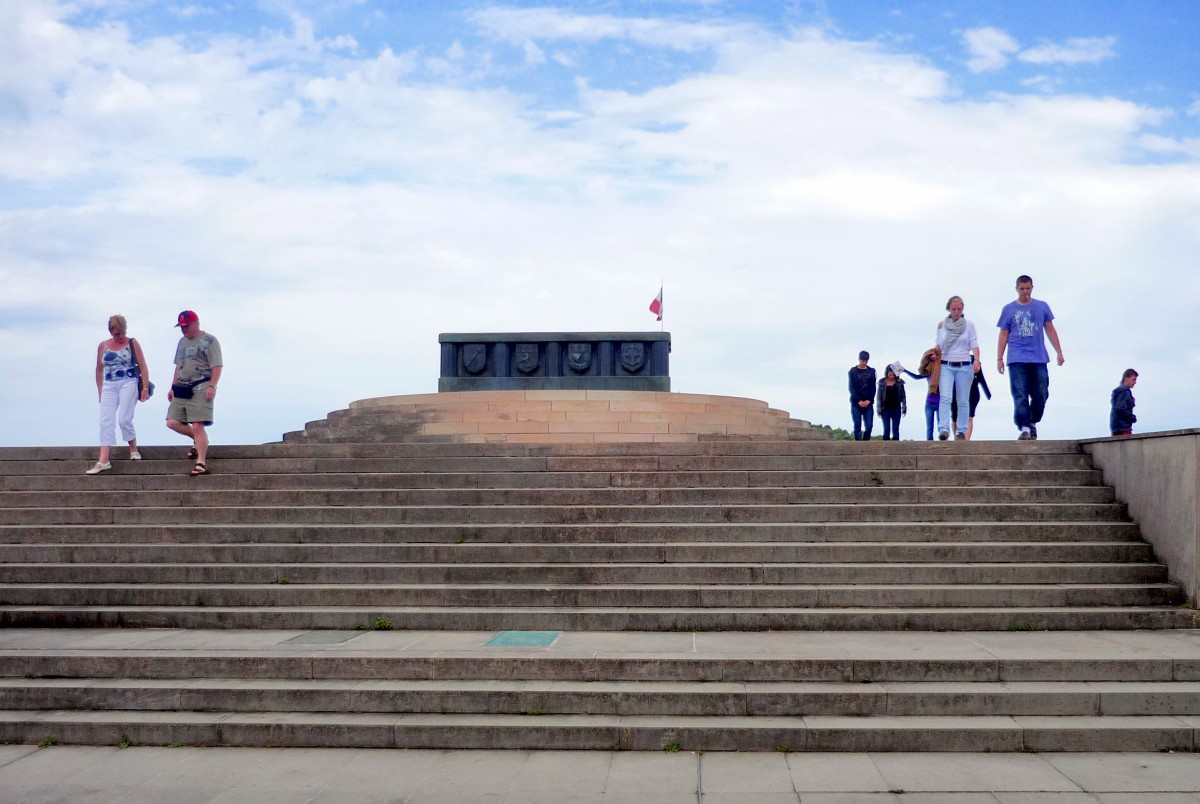
The Altar of the Fatherland at Vieil Armand © French Moments
It is important to remember, however, that you are not walking through a stage set. You are crossing a place where men lived, fought, suffered and died.
That is what makes the visit so particular. The landscape is beautiful, sometimes even peaceful, but every stone seems to remind you that this tranquillity came after much noise, fear and destruction.
At Vieil Armand, hiking and remembrance meet constantly.
6. The National Monument of the Hartmannswillerkopf is one of France’s great First World War memorials
The National Monument of the Hartmannswillerkopf is one of the major French places of remembrance of the First World War.
It includes a crypt, a national cemetery and a memorial complex designed to honour the soldiers who fell on this Vosges front.
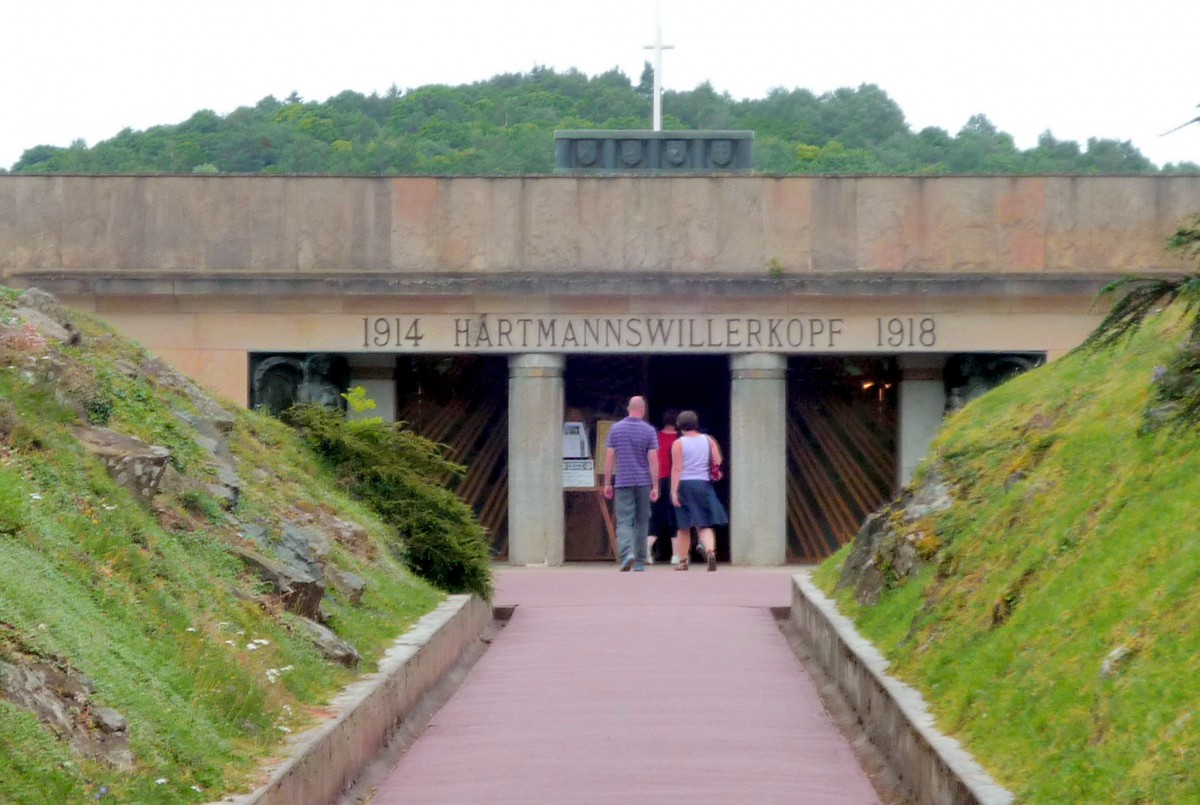
The entrance to the crypt of Vieil Armand © French Moments
The crypt gives the site a particularly solemn dimension. The Silberloch national cemetery, with its rows of graves, recalls the human cost of the fighting. Here, history is not abstract. It has names, dates, bodies and silences.
The national monument is one of the four French national monuments of the Great War, alongside Douaumont, Dormans and Notre-Dame-de-Lorette.
This shows the importance of the Hartmannswillerkopf in national memory. It is not only an Alsatian site. It is a major place in French and European history.
7. The Franco-German Historial gives another dimension to the Hartmannswillerkopf
The Franco-German Historial of the Hartmannswillerkopf completes the visit to the site.
Where the monument invites reflection, the historial helps visitors understand. It places the fighting in context, explains mountain warfare, evokes the soldiers of both sides and gives visitors the keys needed to read the landscape.
Its Franco-German character is essential. On a site where the two armies fought with such ferocity, the choice of a shared place of explanation carries particular strength.
Vieil Armand is therefore not only a war site. It has also become a place of transmission, education and reconciliation.
This is one of the most moving aspects of the place: what was once a mountain of confrontation is now a space of shared memory.
8. The cross of Vieil Armand is a landmark visible from the Alsace Plain
The great cross of Vieil Armand is one of the most visible landmarks on the Vosges foothills.
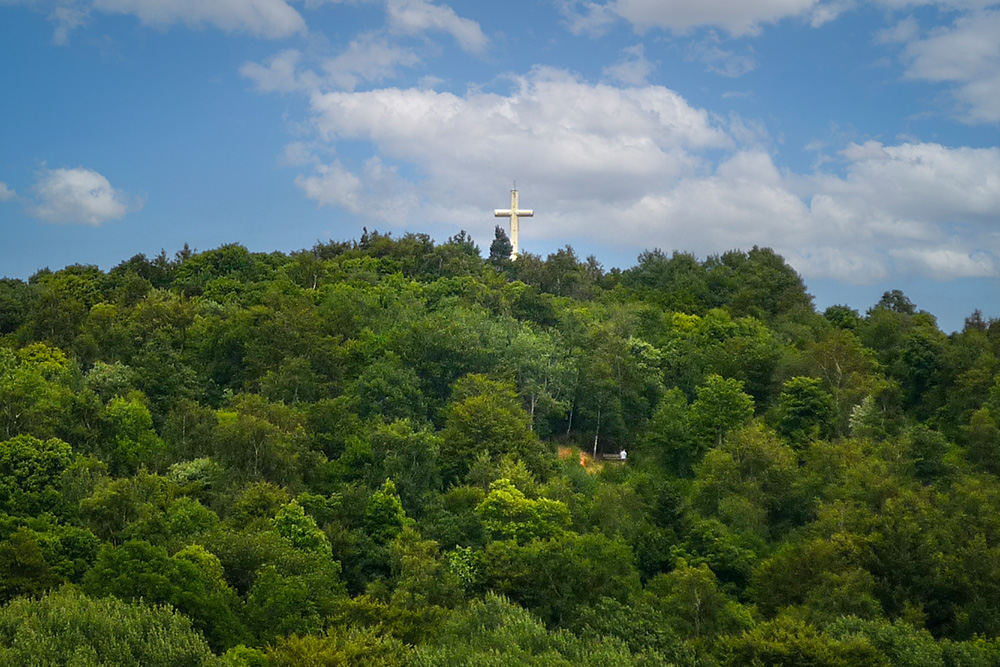
The cross of the Hartmannswillerkopf - Vieil Armand © French Moments
From the Alsace Plain, you can distinguish the rise of the Hartmannswillerkopf and, depending on the conditions, the cross that marks the site. Lit up at night, it becomes a point of light on the dark line of the Vosges.
It belongs to those great Alsatian landmarks that punctuate the edge of the massif, rather like Haut-Kœnigsbourg Castle or Mont Sainte-Odile further north. These places are not only tourist destinations. They shape the mental landscape of Alsace.
You see them from afar. You know they are there. And even when you do not visit them, they contribute to the identity of the region.
9. The Hartmannswillerkopf is also a great Alsatian viewpoint
The Hartmannswillerkopf is first and foremost a place of remembrance, but its role as a viewpoint should not be forgotten.
From the Vieil Armand area, the view can be exceptional. It opens onto the Alsace Plain, the Black Forest, the foothills of the Jura and, on a very clear day, the Alps.
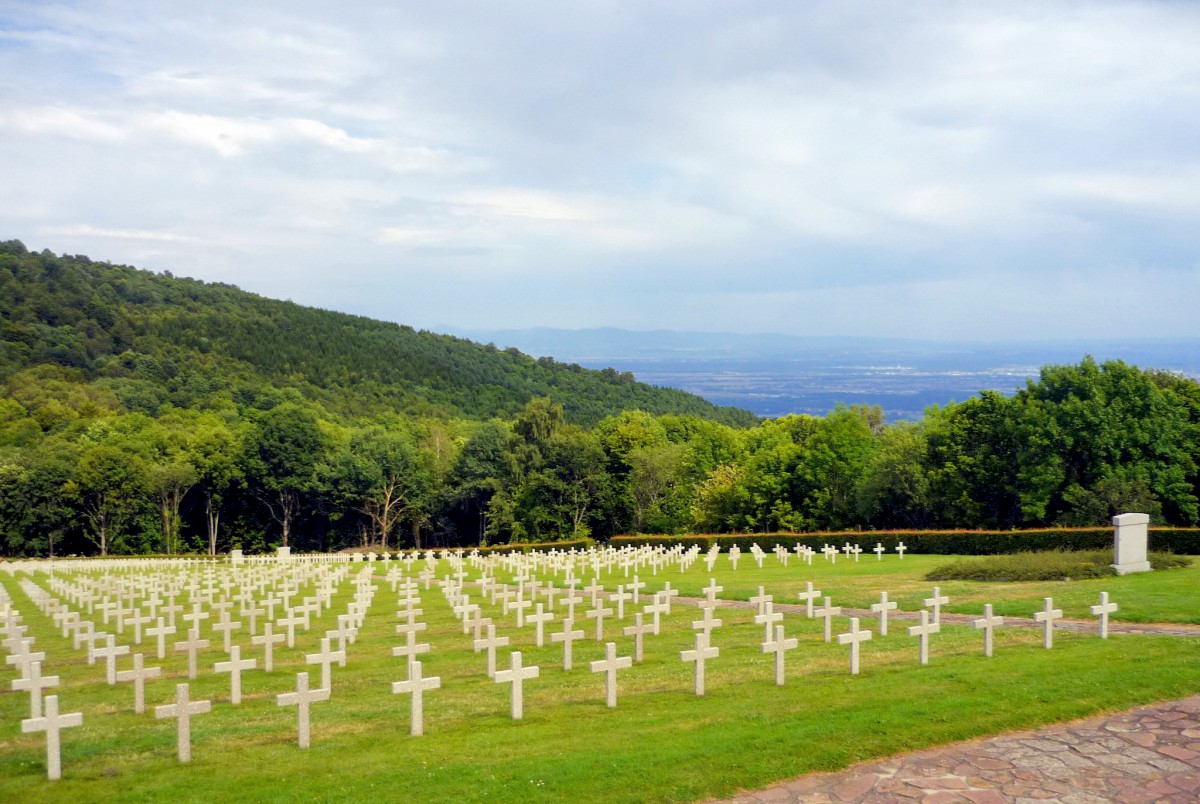
The national cemetery of Vieil Armand and the view over the Alsace Plain © French Moments
This landscape dimension matters. It helps explain why the summit had strategic value, but also why it marks visitors so deeply today.
The eye descends towards villages, vineyards, roads and the plain. Then it rises again towards more distant horizons. In a few seconds, you understand the position of the site within the whole geography of southern Alsace.
The panorama does not erase history. It gives it a setting.
10. The Hartmannswillerkopf by bike and on the Tour de France
The Hartmannswillerkopf is also of interest to cyclists.
The climb to the Col du Silberloch from the plain is a serious Vosges ascent. It may not have the fame of the Grand Ballon, but it offers a fine effort, a forest road and a unique historical setting.
The area has also been used by the Tour de France several times. Cycling sources mention passages via the Col du Silberloch or the Vieil Armand sector in 1952, 1969, 1970, 1973, 1976 and 2014, depending on the routes and classifications used.
In 2026, the Tour de France passes once again through the Hartmannswillerkopf – Vieil Armand area during the Mulhouse – Le Markstein Fellering stage. The site then appears as a major passage before the Col Amic, the Grand Ballon and the Vosges difficulties of the stage.
Clearly, even by bike, Vieil Armand is not crossed without leaving a trace.
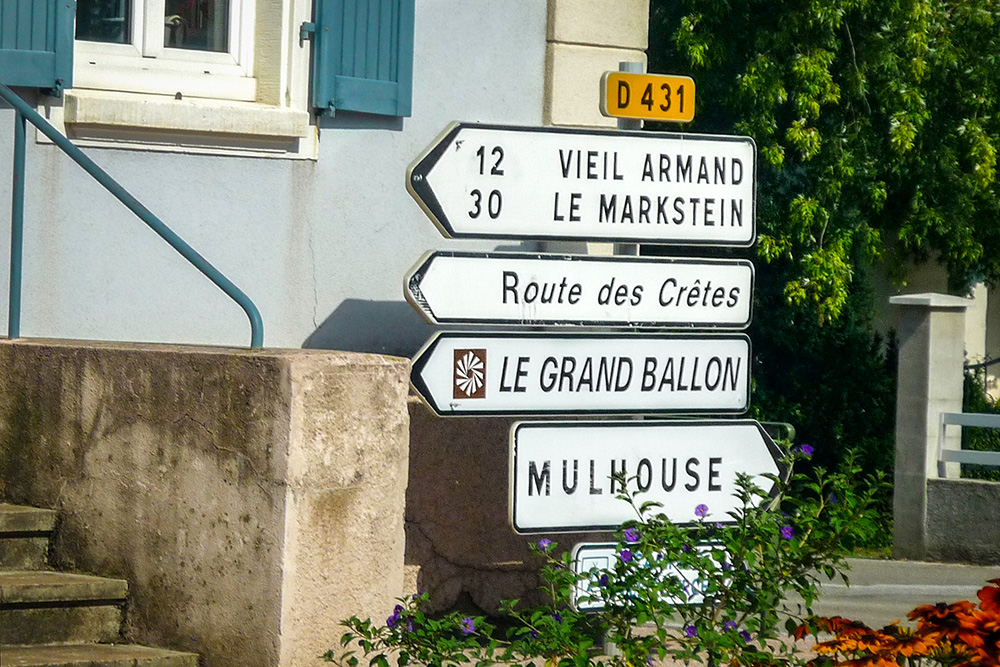
Directions for the Route des Crêtes des Vosges at Uffholtz © French Moments
My View of the Hartmannswillerkopf – Vieil Armand
For me, the Hartmannswillerkopf is not a site I discovered in a guidebook. It is a place I long saw as a familiar landmark on the road to family outings towards the Grand Ballon.
When we passed the national monument, I was not yet fully aware of what Vieil Armand represented. I saw a great place of remembrance, a cross, a road, forests and an impressive landscape.
Over time, the place has taken on another depth.
You understand that this summit is not only beautiful or spectacular. It is charged. Charged with history, pain and memory, but also with reconciliation and transmission.
That is what makes the Hartmannswillerkopf so important. It brings together, in a single place, the geography of the Vosges, the history of Alsace, the memory of the First World War, Franco-German dialogue and the beauty of great panoramas.
You can come here for the history. You can come here for the view. You can come by car, on foot or by bike.
But you rarely leave indifferent.