

The Doller Valley is not the kind of valley you simply pass through. It belongs to those places that leave a lasting mark on the memory.
Together with its neighbour, the Thur Valley, it was, for me, the quintessential Vosges valley during our family outings when I lived in southern Alsace as a teenager.
Almost every week, we would head up into the heights. One day towards the Thanner Hubel, the Rossberg or the Lac des Perches. Another towards the Sudel, the Baerenkopf or the quieter ridges of the massif.
At the time, I did not yet have a camera. A serious strategic mistake. The landscapes were certainly there. But most of the images remained in my memory.
The Doller Valley is all of this at once: a river, villages, mountain lakes, hiking trails, an old railway valley, a cycling area and a gateway to the High Vosges of Alsace.
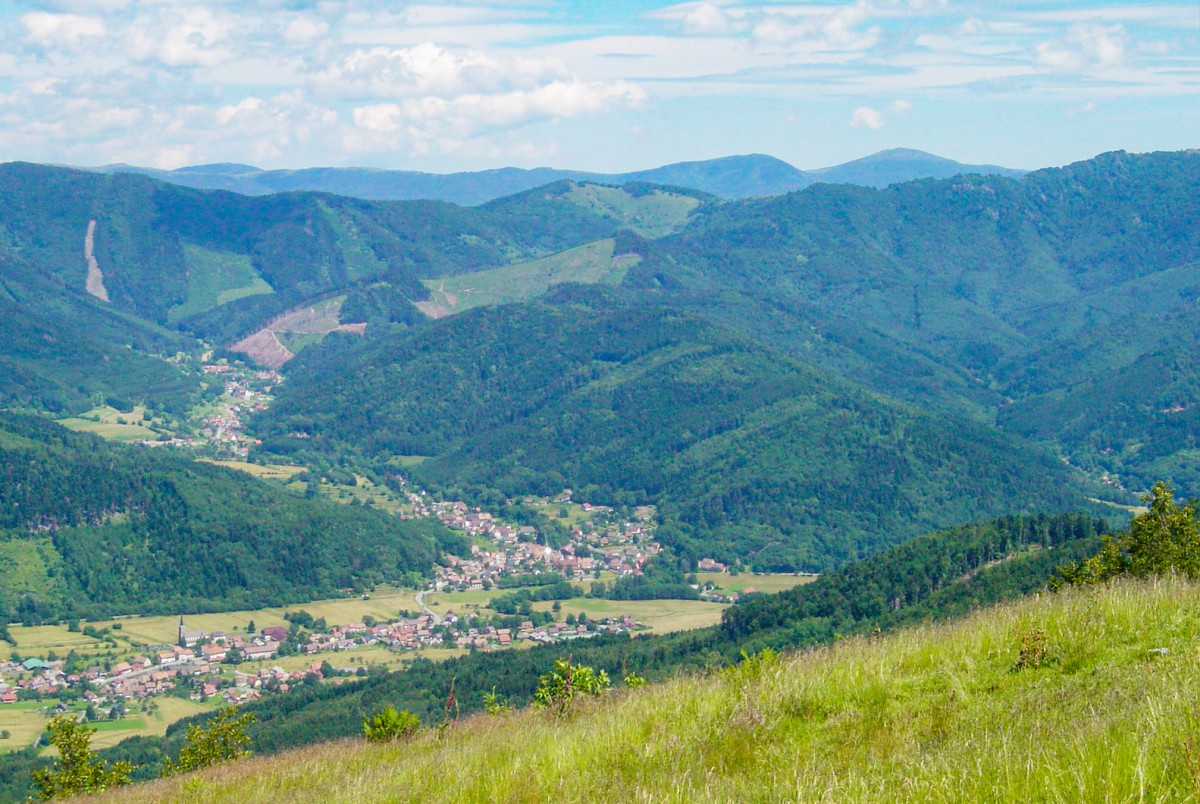
The Doller Valley © French Moments
A valley shaped by the Doller
The Doller rises in the Ballon d’Alsace massif, at a place called Fennematt, above Dolleren.
![Source Doller © Espirat - licence [CC BY-SA 4.0] from Wikimedia Commons](https://frenchmoments.eu/wp-content/uploads/2026/07/Source-Doller-©-Espirat-licence-CC-BY-SA-4.0-from-Wikimedia-Commons.jpg "Source Doller © Espirat - licence [CC BY-SA 4.0] from Wikimedia Commons")
The source of the Doller © Espirat - licence [CC BY-SA 4.0] from Wikimedia Commons
From there, it flows eastwards through the valley before joining the Ill in the Mulhouse urban area.
It is the river that gives the valley its name and its unity. Without it, the villages would simply be lined up between plain and mountain. With it, they form a coherent landscape, almost a story unfolding along the water.
The river crosses or runs alongside some of the valley’s best-known places: Sewen, Dolleren, Oberbruck, Wegscheid, Kirchberg, Masevaux-Niederbruck, Sickert, Lauw, Sentheim, Guewenheim, and then the more open areas towards Burnhaupt and the plain.
In the upper part, the valley is narrow, wooded and mountainous. Lower down, it gradually opens out towards the Sundgau and the Mulhouse region. This transition is part of its charm: you move from Vosges slopes to lowland landscapes without ever really leaving Alsace.
Masevaux, the little capital of the valley
At the heart of the valley lies Masevaux, now Masevaux-Niederbruck, which can be seen as the little capital of the Doller Valley.
![Masevaux Place des Alliés © Rauenstein - licence [CC BY-SA 3.0] from Wikimedia Commons](https://frenchmoments.eu/wp-content/uploads/2026/07/Masevaux-Place-des-Allies-©-Rauenstein-licence-CC-BY-SA-3.0-from-Wikimedia-Commons.jpg "Masevaux Place des Alliés © Rauenstein - licence [CC BY-SA 3.0] from Wikimedia Commons")
Place des Alliés, Masevaux © Rauenstein - licence [CC BY-SA 3.0] from Wikimedia Commons
The town has real character. It is not large, but it brings together history, shops, services, events and that atmosphere of an Alsatian Vosges market town that is rarely found elsewhere with quite such balance.
Masevaux is linked to the history of its abbey, traditionally said to have been founded in the early Middle Ages. This religious origin long marked the town, before craft, textile and industrial activity shaped another part of its identity.
Today, Masevaux is above all an excellent starting point for discovering the valley. You can stroll around, stop before a hike, find tourist information, or simply feel the soul of a valley that is neither entirely rural nor entirely mountainous, but a little of both.
And that is exactly what makes it so endearing.
Villages between plain and mountain
The Doller Valley is not only about Masevaux.
Each village brings its own nuance. Sewen already evokes the Ballon d’Alsace, the lakes and the slopes rising towards the ridges.
Dolleren and Oberbruck breathe the atmosphere of the upper valley. Wegscheid and Kirchberg recall a more discreet Alsace, tucked between meadows, forests and relief.
![Le village de Dolleren, traversé par une des plus belles pistes cyclables d'Alsace © Espirat - licence [CC BY-SA 4.0] from Wikimedia Commons](https://frenchmoments.eu/wp-content/uploads/2026/07/Dolleren-©-Espirat-licence-CC-BY-SA-4.0-from-Wikimedia-Commons.jpg "Dolleren © Espirat - licence [CC BY-SA 4.0] from Wikimedia Commons")
The village of Dolleren © Espirat - licence [CC BY-SA 4.0] from Wikimedia Commons
Lauw, Sentheim and Guewenheim announce a more open, gentler valley, turned towards the plain.
These are not always spectacular villages in the tourist sense. They do not necessarily have the “wow” effect of a village on the Alsace Wine Route, with half-timbered houses, geraniums and visitors armed with cameras as if setting off on safari.
But they have something else: the authenticity of a valley. You feel local life there, attachment to the land, and the closeness of forest and mountain.
![Lauw. Photo by Félix Potuit [Public Domain via Wikimedia Commons]](https://frenchmoments.eu/wp-content/uploads/2026/07/Lauw.-Photo-by-Felix-Potuit-Public-Domain-via-Wikimedia-Commons.jpg "Lauw. Photo by Félix Potuit [Public Domain via Wikimedia Commons]")
The Doller in Lauw. Photo by Félix Potuit [Public Domain via Wikimedia Commons]
The Doller Valley: the valley of lakes
The Doller Valley is also nicknamed the valley of lakes, and for good reason.
Lakes occupy an essential place here, both in the landscape and in the imagination of walkers. Some are easy to reach; others have to be earned.
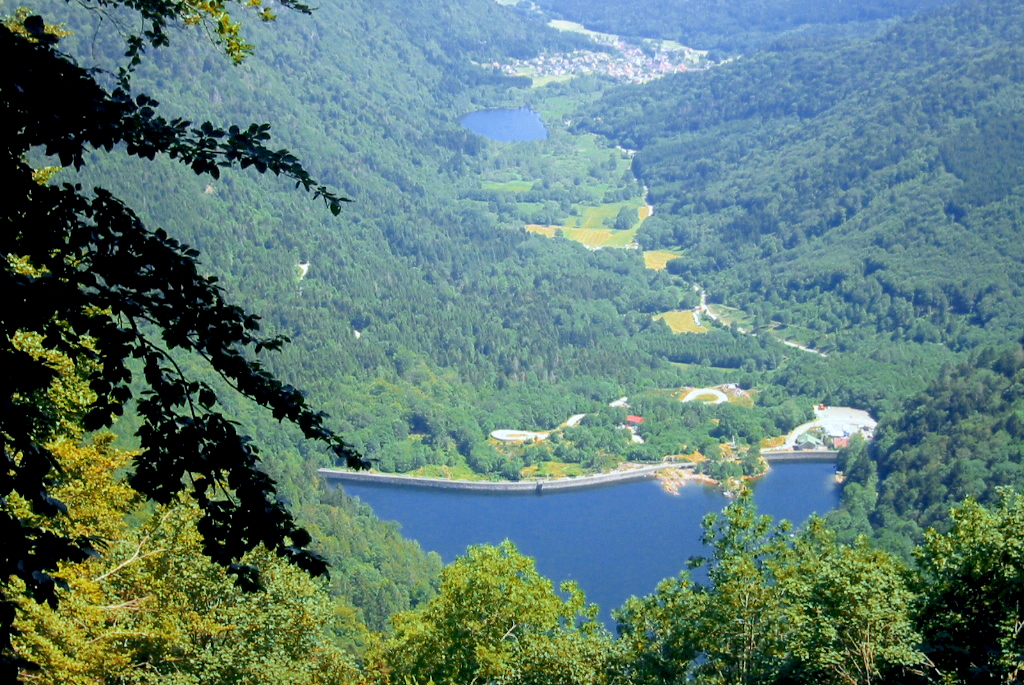
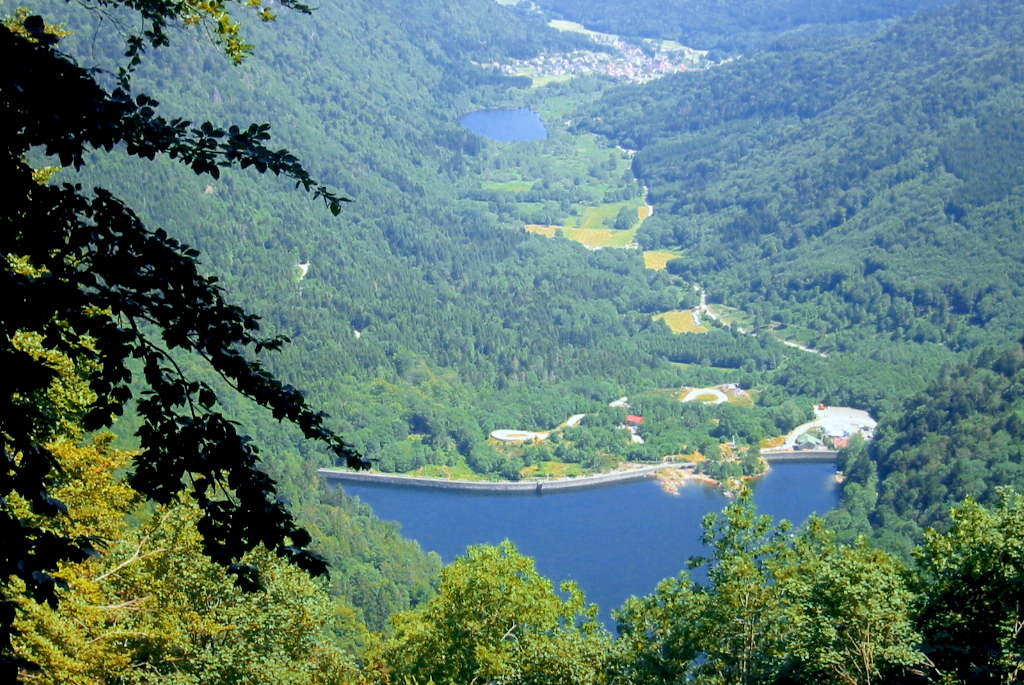
Lake Alfeld and Lake Sewen © French Moments
The Lac de Sewen is one of the best known. Located at the bottom of the valley, it offers a peaceful atmosphere, with the slopes of the Ballon d’Alsace in the background.
A little higher up, the Lac d’Alfeld impresses with its more mountainous setting. Set beneath wooded slopes and dominated by a dam, it already gives the impression of entering a harsher, higher and more unmistakably Vosges world.
The Lac des Perches belongs to another category altogether.
![Lac des Perches © Rémih - licence [CC BY-SA 4.0] from Wikimedia Commons](https://frenchmoments.eu/wp-content/uploads/2026/07/Lac-des-Perches-©-Remih-licence-CC-BY-SA-4.0-from-Wikimedia-Commons.jpg "Lac des Perches © Rémih - licence [CC BY-SA 4.0] from Wikimedia Commons")
Lac des Perches © Rémih - licence [CC BY-SA 4.0] from Wikimedia Commons
It can only be reached on foot, and that is a large part of its charm. Suspended in a glacial cirque, it has that secret quality possessed by certain mountain lakes. You have to walk to approach it. The landscape does not give itself away to the first passer-by. It checks first whether you have brought proper shoes.
The Grand and Petit Neuweiher lakes also offer a beautiful mountain atmosphere, with much-loved hiking routes.
![Lacs des Grand et Petit Neuweiher © Jean-François Azens- licence [CC BY-SA 3.0] from Wikimedia Commons](https://frenchmoments.eu/wp-content/uploads/2026/07/Lacs-des-Grand-et-Petit-Neuweiher-©-Jean-Francois-Azens-licence-CC-BY-SA-3.0-from-Wikimedia-Commons.jpg "Lacs des Grand et Petit Neuweiher © Jean-François Azens- licence [CC BY-SA 3.0] from Wikimedia Commons")
Lacs des Grand et Petit Neuweiher © Jean-François Azens - licence [CC BY-SA 3.0] from Wikimedia Commons
As for the Lachtelweiher, more discreet, it completes this collection of stretches of water that make the valley an ideal territory for nature lovers.
![Lachtelweiher. Photo by Félix Potuit [Public Domain via Wikimedia Commons]](https://frenchmoments.eu/wp-content/uploads/2026/07/Lachtelweiher.-Photo-by-Felix-Potuit-Public-Domain-via-Wikimedia-Commons.jpg "Lachtelweiher. Photo by Félix Potuit [Public Domain via Wikimedia Commons]")
Lachtelweiher. Photo by Félix Potuit [Public Domain via Wikimedia Commons]
In the Doller Valley, the lakes are not just blue dots on a map. They are walking destinations, hiking rewards, and sometimes memories of picnics, fishing trips or slightly tired returns to the car.
Hiking in the Doller Valley
Hiking is one of the great treasures of the Doller Valley.
There is a wide variety of routes here, from family walks to more demanding outings towards the ridges. The network of marked footpaths makes it possible to reach the lakes, the high pastures, the summits and the mountain shelters.
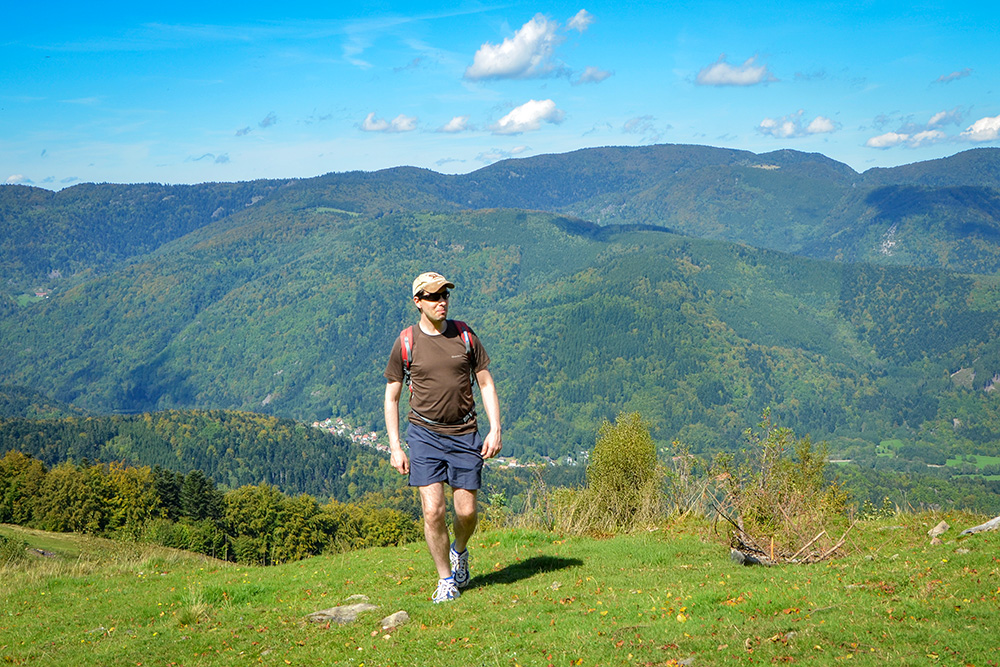
Me hiking in the Doller Valley © French Moments
This is the diversity I knew as a teenager.
We would often head up into the heights. Sometimes on one side of the valley, towards the Thanner Hubel, the Rossberg or the Lac des Perches. Sometimes on the other, towards the Sudel or the Baerenkopf.
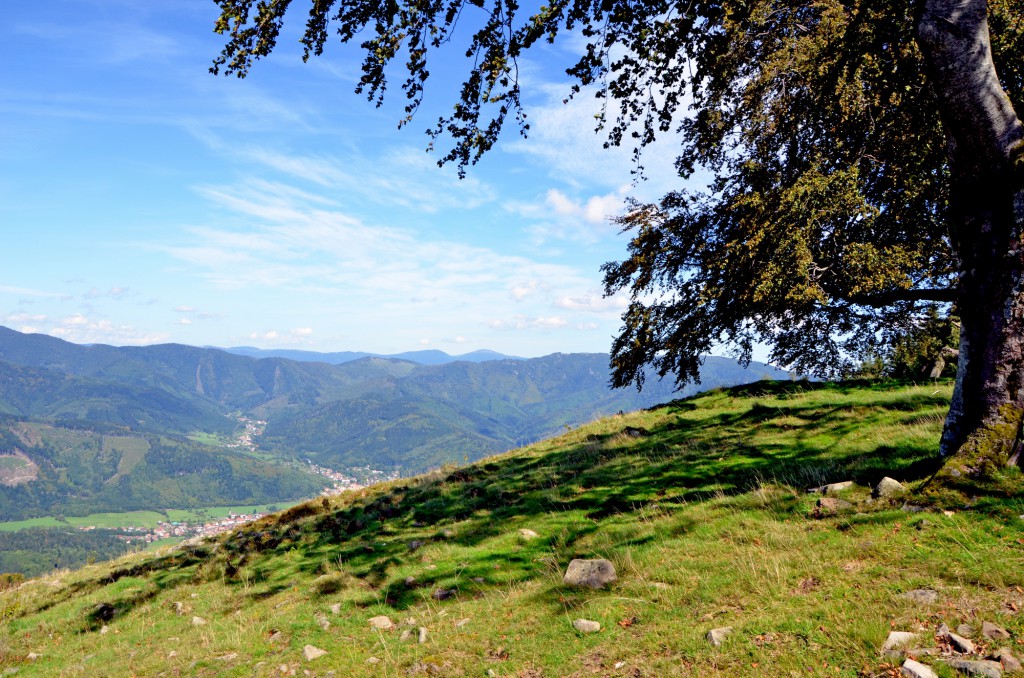
Not far from the Barenkopf © French Moments
These names form part of my own intimate geography. They are not merely places on a map. They evoke Sundays, forest paths, picnic stops, sudden views over the Vosges and, sometimes, that happy tiredness that only good trails can give.
The valley is also known for the Chalets de la Doller, shelters built for hikers, accessible on foot, which add a welcoming and convivial dimension to the area.
Here, hiking is not simply a leisure activity added to the landscape. It is part of the valley’s identity.
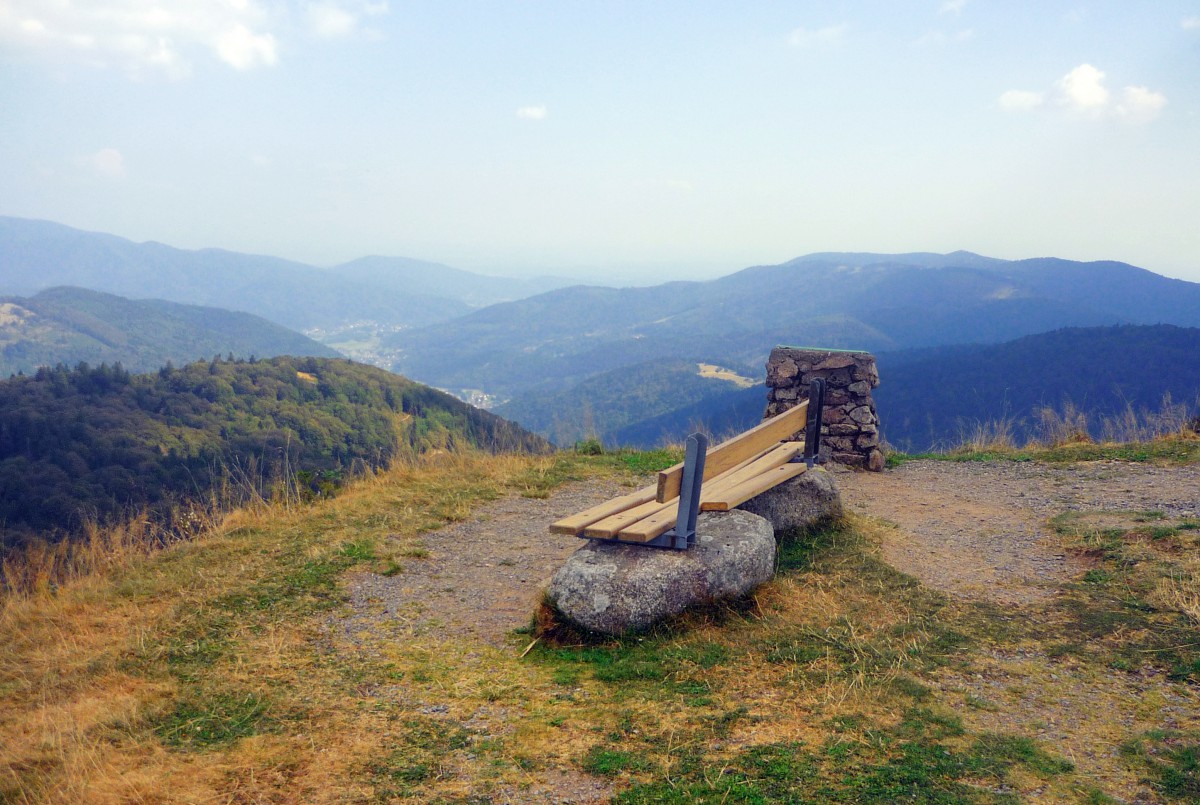
The view from the Ballon d'Alsace © French Moments
Cycling in the Doller Valley
The Doller Valley is also a fine area for cycling.
The cycle path, laid out largely on the former railway line, allows you to explore the valley more gently.
It links lowland and mountain landscapes, crosses the villages, and offers a lovely way to discover the Doller without immediately taking on the serious gradients.
It is ideal for families or for anyone wanting to taste the atmosphere of the valley without turning the outing into a stage of the Tour de France. Which, let us be honest, can be rather restful.
But the valley also has a real connection with sporting cycling. It opens towards the Ballon d’Alsace, one of the legendary climbs in the history of the Tour.
In 2026, the Grande Boucle will once again cross this sector during the stage from Mulhouse to Le Markstein Fellering. After the Ballon d’Alsace, the riders will descend towards the Lac d’Alfeld, the Lac de Sewen, Sewen, Dolleren, Oberbruck, Wegscheid, Kirchberg and Masevaux, before continuing towards the Col du Schirm and the Hundsruck.
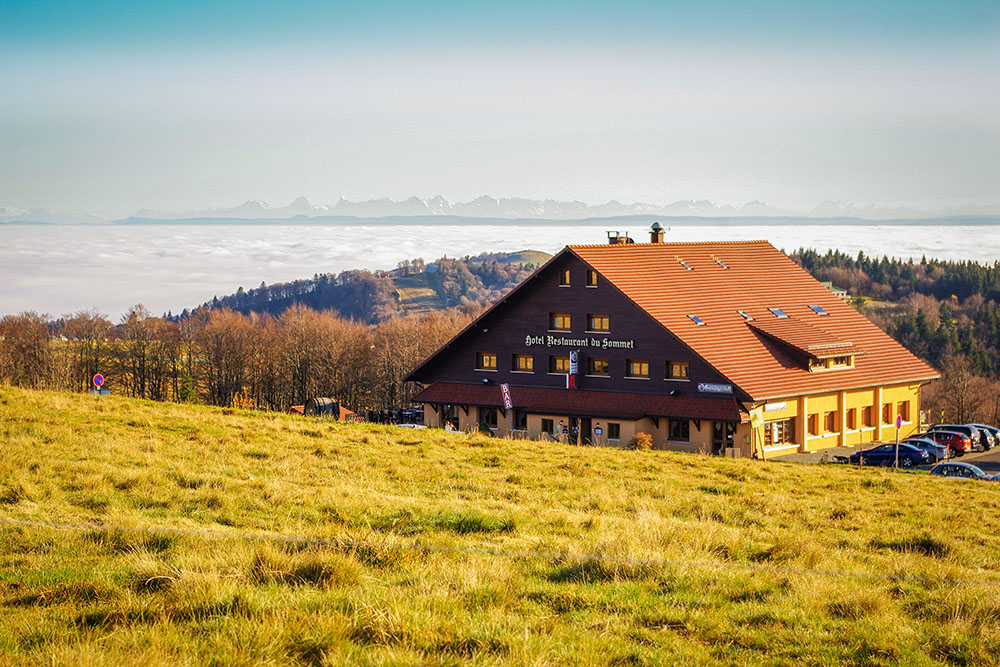
Col du Ballon d'Alsace © French Moments
For cycling enthusiasts, the valley therefore has two faces: the gentle ride along the cycle path and the great history of the Vosges mountain passes.
Both deserve respect. But your calves will know the difference.
The Train Thur Doller Alsace
It is impossible to talk about the valley without mentioning the Train Thur Doller Alsace.
This tourist railway runs between Cernay Saint-André and Sentheim, on a preserved section of the former railway line. Steam trains, railcars, passionate volunteers: everything is there to bring back to life a time when the valley was discovered at the rhythm of the rails.
![Train Thur Doller © Fabrice.BAREUX - licence [CC BY-SA 3.0] from Wikimedia Commons](https://mon-grand-est.fr/wp-content/uploads/2024/03/Train-Thur-Doller-©-Fabrice.BAREUX-licence-CC-BY-SA-3.0-from-Wikimedia-Commons.jpg "Train Thur Doller © Fabrice.BAREUX - licence [CC BY-SA 3.0] from Wikimedia Commons")
Train Thur Doller © Fabrice.BAREUX - licence [CC BY-SA 3.0] from Wikimedia Commons
It is a lovely family activity, but also a genuine piece of heritage. You do not board an old train simply because it looks charming. You rediscover part of the industrial, tourist and human history of the valley.
And let’s be honest: a steam train ride through the Alsatian countryside always has a little magic about it. Even adults who claim to be “sensible” end up smiling when the locomotive whistles.
Farm inns, local produce and living landscapes
The Doller Valley is also a valley of local produce.
Farm inns, local products, markets and Alsatian specialities remind us that the Vosges mountains are not just a backdrop. They are inhabited, worked and cared-for landscapes.
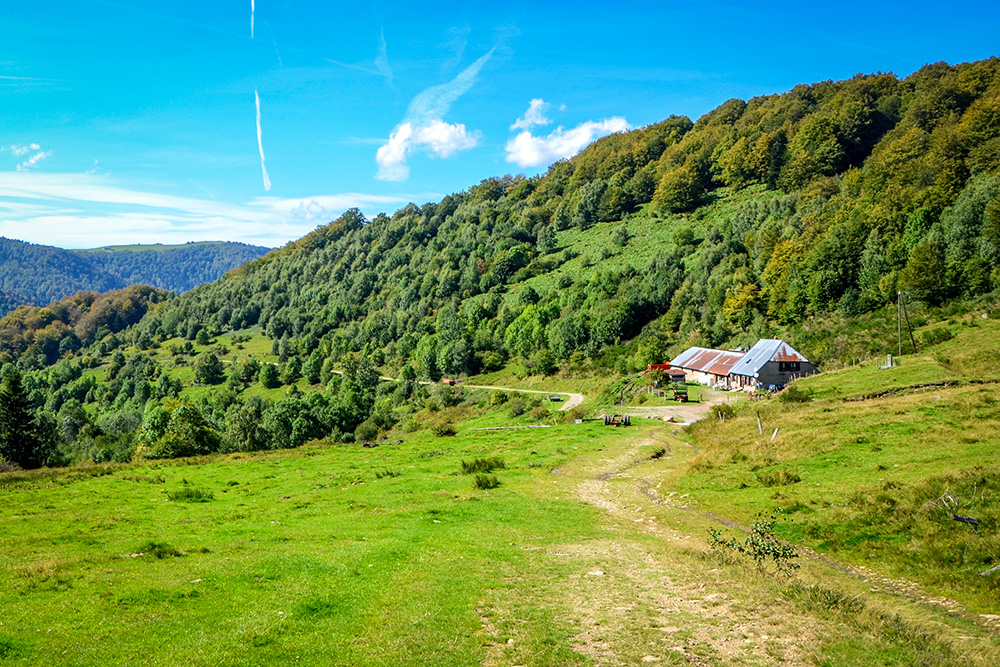
Farm inn in the Doller Valley © French Moments
On the heights, the farm inns often offer that typically Vosges combination: a view, a generous dish, cooler air, and the impression that the secret purpose of the hike may have been to arrive at the table.
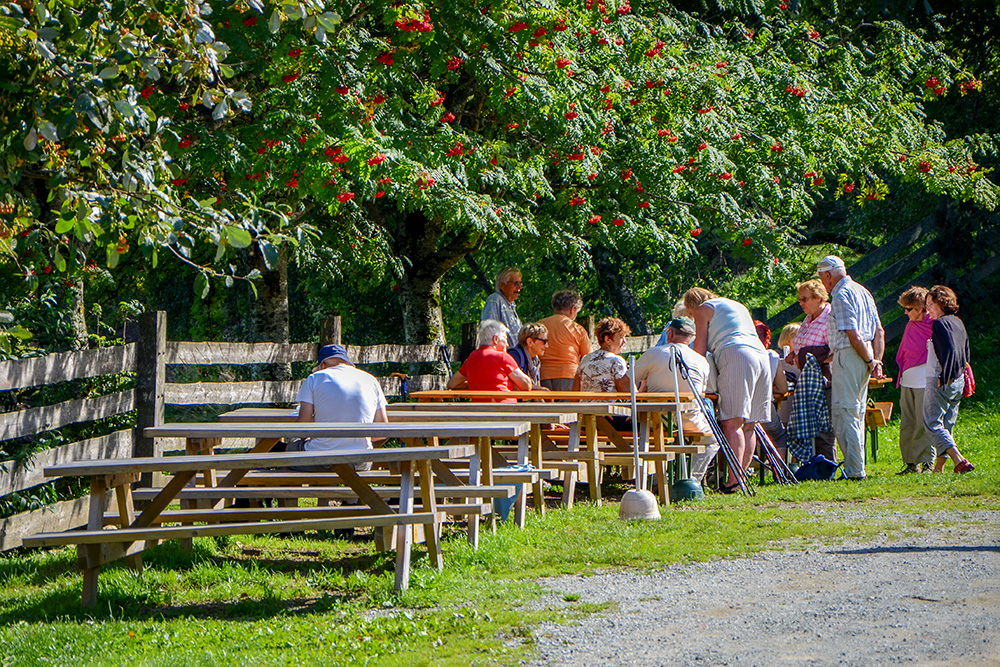
Farm inn in the Doller Valley © French Moments
Cheeses, charcuterie, marcaire meals, pies, potatoes, Munster: the gastronomy here is not always light, but it certainly knows how to comfort. And after a few hours of walking across the high pastures, nobody is likely to ask for a sad and lonely lettuce leaf.
My view of the Doller Valley
The Doller Valley holds a special place for me.
It belongs to those familiar landscapes you think you will know for ever, until one day you realise that you do not actually have enough images of them. When I hiked there as a teenager, I did not think about documenting those outings. I simply lived them.
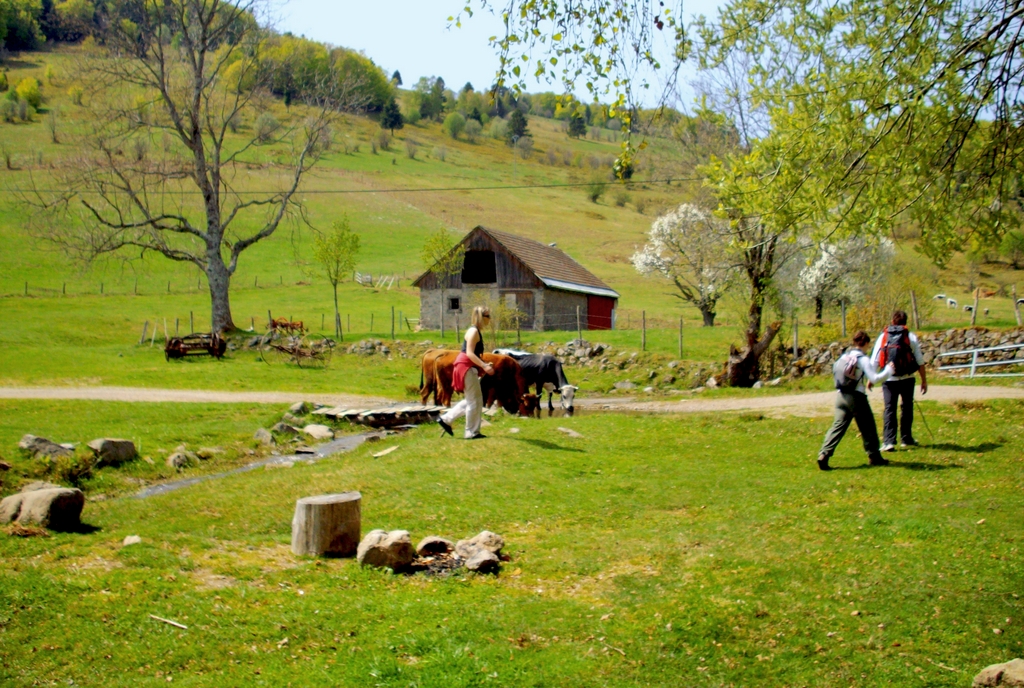
On the heights of Rimbach-près-Masevaux © French Moments
Today, I slightly regret not having more photos of these places: the Lac des Perches, the slopes of the Baerenkopf, the high pastures, the forests, the paths above Masevaux or Sewen. Fortunately, a few royalty-free images help illustrate this article. But it is not quite the same.
During my most recent stay in Alsace, based in Turckheim, I would have loved to return to the Doller Valley. But time ran out. It is always the same: you think you have several days ahead of you, and then the diary shrinks like a peau de chagrin.
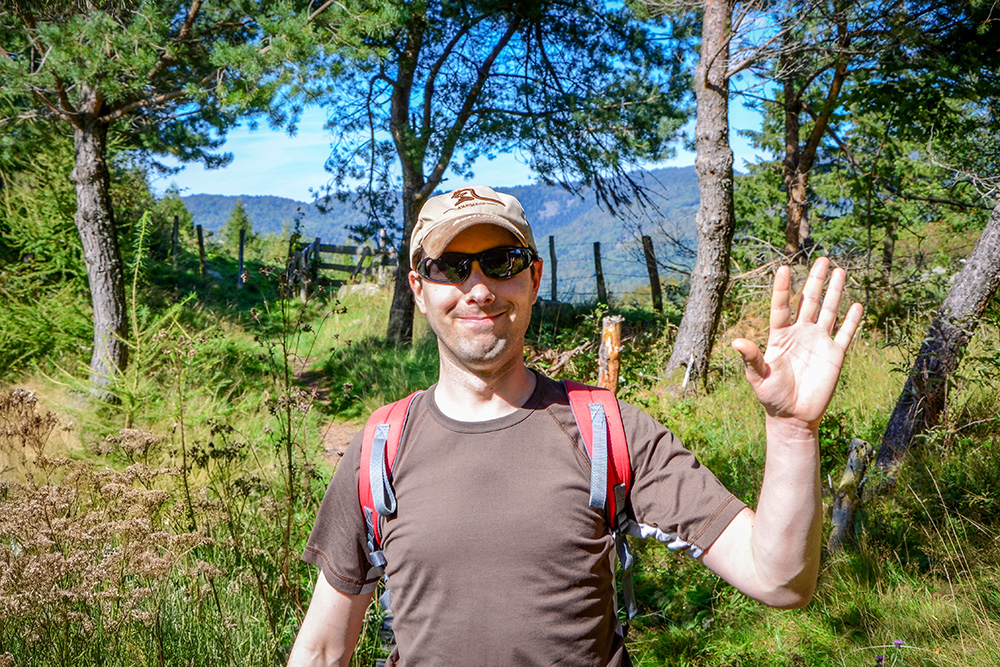
Me hiking in the Doller Valley © French Moments
So I shall have to go back. This time, with my camera.
Because the Doller Valley deserves more than a simple memory. It deserves to be explored again, looked at closely, photographed and told.
It is a valley of river and lakes, villages and ridges, old trains and cycle paths, hikes and farm-inn meals.
A Vosges valley, deeply Alsatian, that does not try to make a noise.
It prefers to let the water, forests, paths and mountains speak for themselves.