

Visit Belfort and you quickly realise that this is not just another small French town somewhere between better-known destinations.
For me, Belfort has never been a vague name on a map. For several years, I lived only about 30 kilometres away, in southern Alsace. I had many friends there, and I used to go to the city twice a week. Sometimes it was for a meal, sometimes for a meeting, sometimes simply because Belfort was part of my familiar landscape.
It was close enough to feel ordinary.
And yet, when I look back, I realise how unusual it really is.
Belfort stands at a fascinating crossroads: between Alsace and Franche-Comté, between the Vosges and the Jura, between the Rhine and Rhône worlds, between France and the Germanic lands beyond.
Discover the Territoire de Belfort © French Moments
It is not as famous as Strasbourg, Colmar or Dijon. It does not try to overwhelm visitors with grandeur. It is more discreet than that.
But discreet does not mean dull.
Quite the opposite.
This is a town with a lion beneath a fortress, a complicated identity, a remarkable military story, a lively cultural scene, and countryside that begins almost at its gates.
So, what makes Belfort such an interesting town in France?
Here are ten reasons why this City of the Lion deserves your attention.
1. Visit Belfort for Its Strategic Position Between Worlds
Some towns are interesting because of what they contain.
Belfort is interesting because of where it stands.
The city occupies the famous Belfort Gap, a natural corridor between the Vosges Mountains to the north and the Jura to the south.
This passage has long connected Alsace, Burgundy and Franche-Comté, while also linking the wider Rhine and Rhône basins.
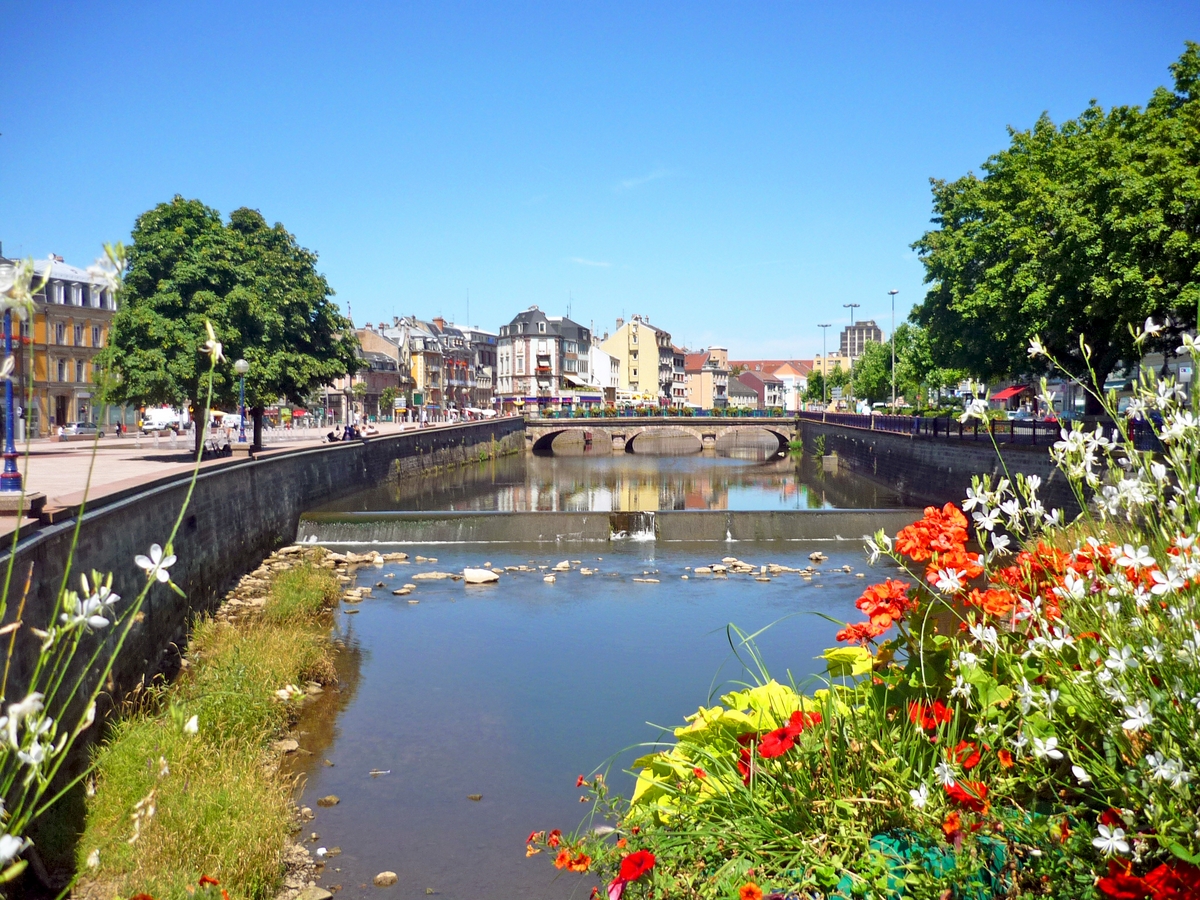
The Savoureuse river © French Moments
That may sound rather geographical — and therefore potentially dangerous if you are still recovering from school atlas trauma — but it explains almost everything.
Belfort was never just a quiet place sitting politely in the landscape. It controlled a route. It guarded a passage. It stood where armies, traders, cultures and borders moved.
That position brought opportunities.
It also brought trouble.
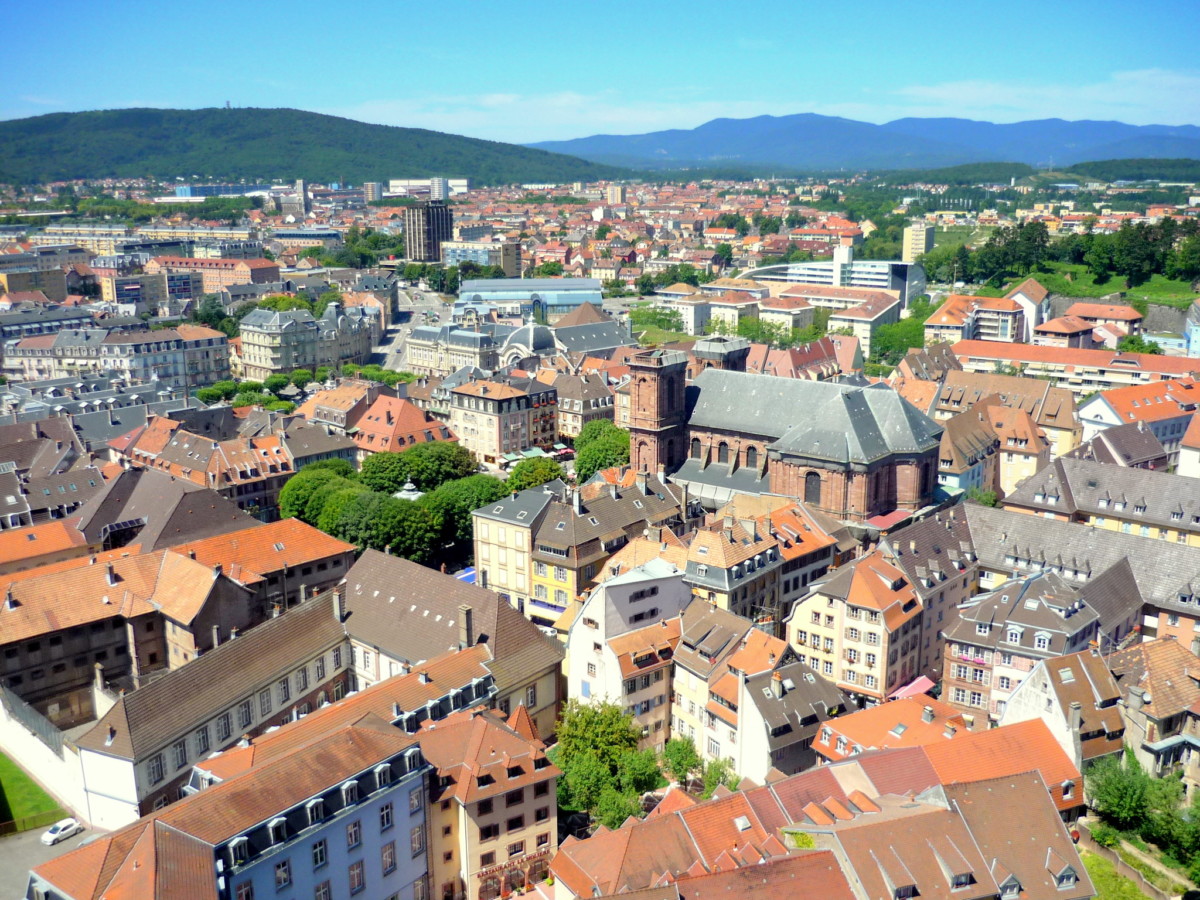
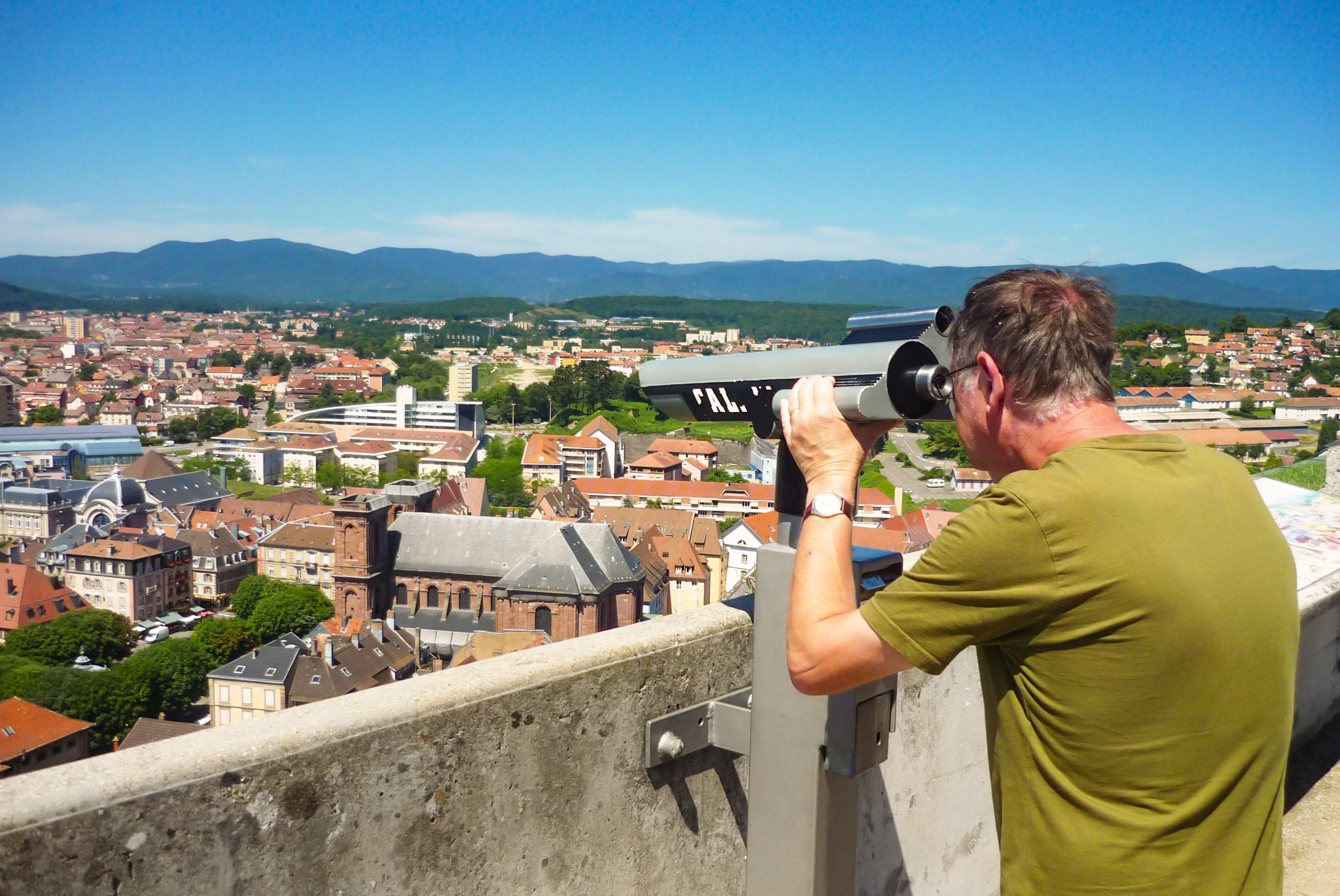
When you visit the city today, especially from the heights of the citadel, you can still understand this strategic role. The landscape opens before you, and suddenly Belfort makes sense. It is not an accidental town. It is a town placed by geography at one of eastern France’s most important thresholds.
And once geography has given a town that kind of position, history usually follows.
Sometimes with a marching band.
Sometimes with cannon fire.
2. Belfort Belongs to a Region with a Complicated Identity
One of the things that makes Belfort so intriguing is that it does not fit neatly into one simple regional box.
Historically, the city belonged to Alsace and formed part of the Haut-Rhin département.
After the Franco-Prussian War, most of Alsace was annexed by the German Empire, but Belfort and 105 surrounding communes remained French after the Treaty of Frankfurt. The Territoire de Belfort later gained full departmental status in 1922.
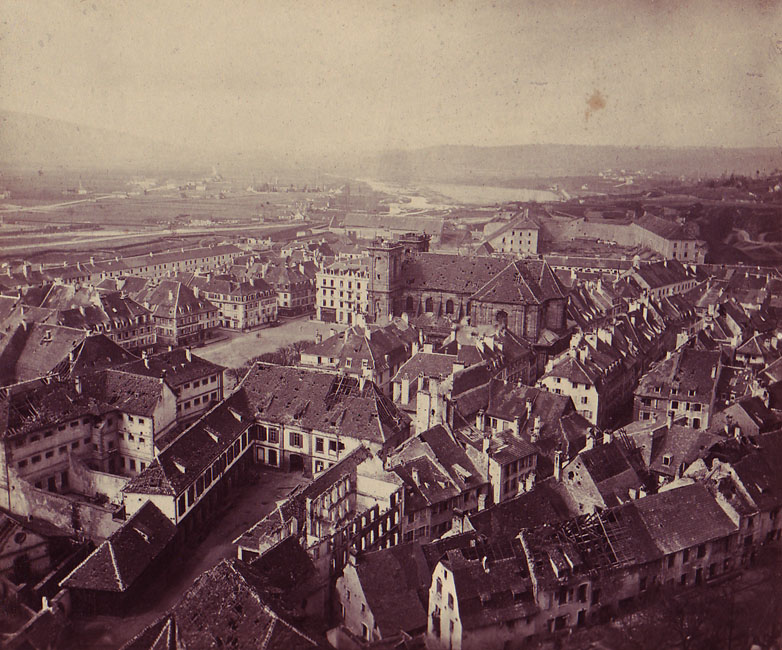
Belfort in 1871
This gives the town a unique identity.
It is in today’s Bourgogne-Franche-Comté region, but it still carries echoes of Alsace. You can feel this in the architecture, in the history, in the way the town sits close to the Sundgau and southern Alsace.
For someone like me, who lived nearby in Alsace, Belfort always felt both familiar and slightly different.
Not quite Alsace.
Not quite Franche-Comté in the usual sense.
Not simply a frontier town either.
It is one of those places shaped by history’s awkward decisions — and awkward decisions often make the most interesting stories.
The town’s identity was not drawn with a ruler.
It was shaped by war, negotiation, memory and geography.
That makes it far more interesting than a place that can be explained in one sentence.
3. Visit Belfort, the Town Turned Resistance into a Civic Identity
Belfort is closely associated with resistance.
Not in a vague, decorative way, but as a central part of its identity.
During the Franco-Prussian War of 1870–71, the city endured a long siege under the command of Colonel Denfert-Rochereau.
While much of Alsace was lost to the new German Empire, Belfort’s resistance helped secure its place on the French side of the new border. The city’s heroic defence is still remembered today, particularly through the Lion and the citadel.

Statue "Quand Même" © French Moments
This history gives Belfort a particular atmosphere.
It is not a town that merely happens to have old stones and a few plaques on walls. Its monuments speak to one another.
The citadel, the Lion, the commemorative statues and the military landscape all tell the same wider story.
A story of pressure.
A story of endurance.
A story of a town that refused to disappear into defeat.
French flag flying in Belfort © French Moments
For visitors, this makes Belfort more than a pleasant stopover. It gives the town depth. You do not have to be an expert in 19th-century French history to feel that something important happened here.
The city wears its memory with pride.
Not loudly.
But firmly.
Very much like the Lion itself.
4. The Lion Gives Belfort Its Powerful Symbol
Of course, we must talk about the Lion.
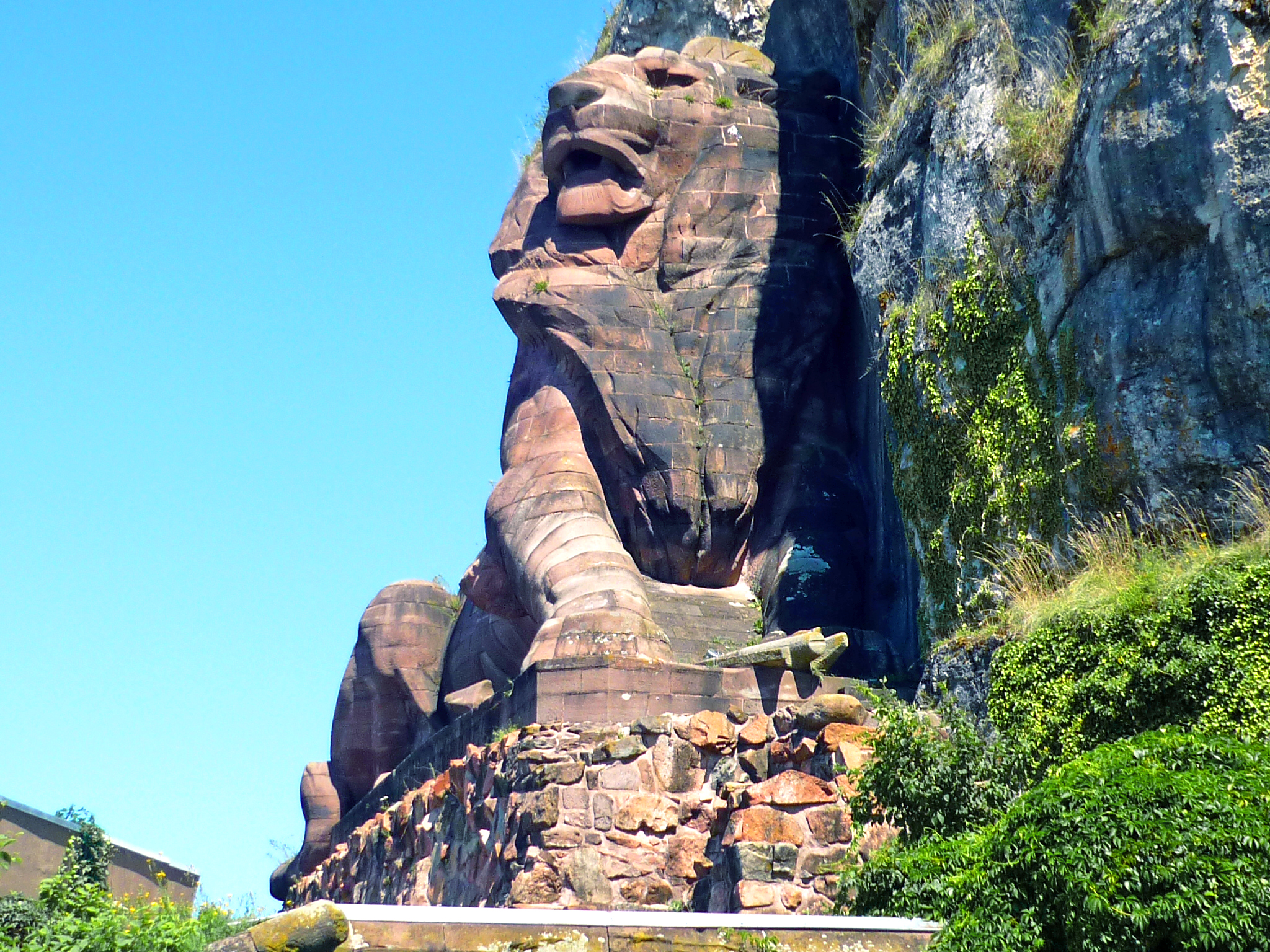
Lion of Belfort © French Moments
How could we not?
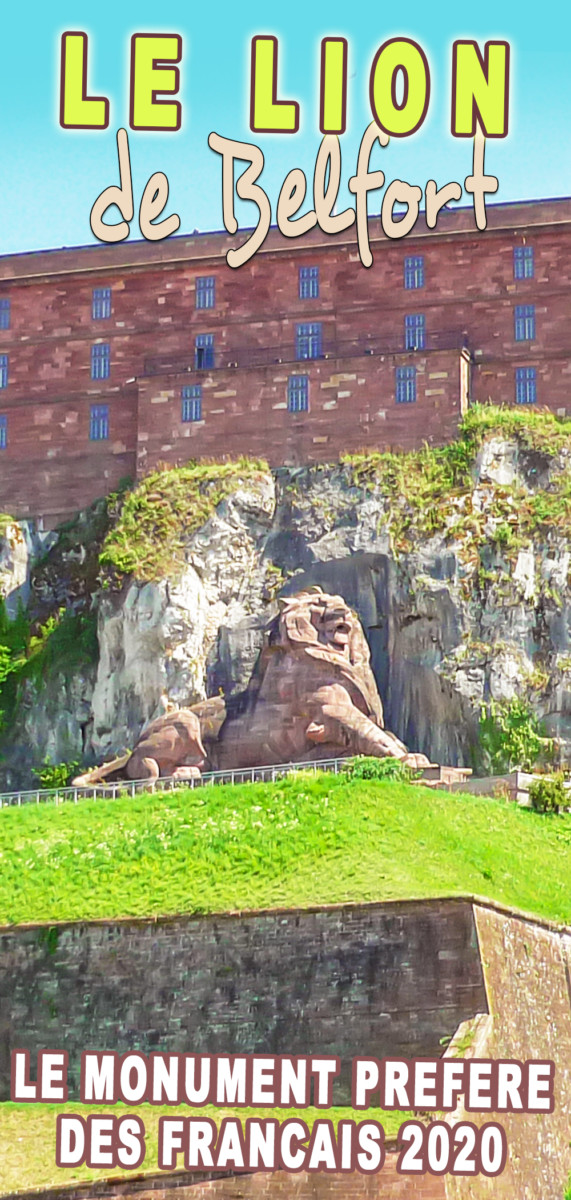
The Lion of Belfort is the town’s great emblem and one of the most striking monuments in eastern France.
Created by the Alsatian sculptor Frédéric-Auguste Bartholdi between 1875 and 1880, it commemorates the city’s resistance during the siege of 1870–71.
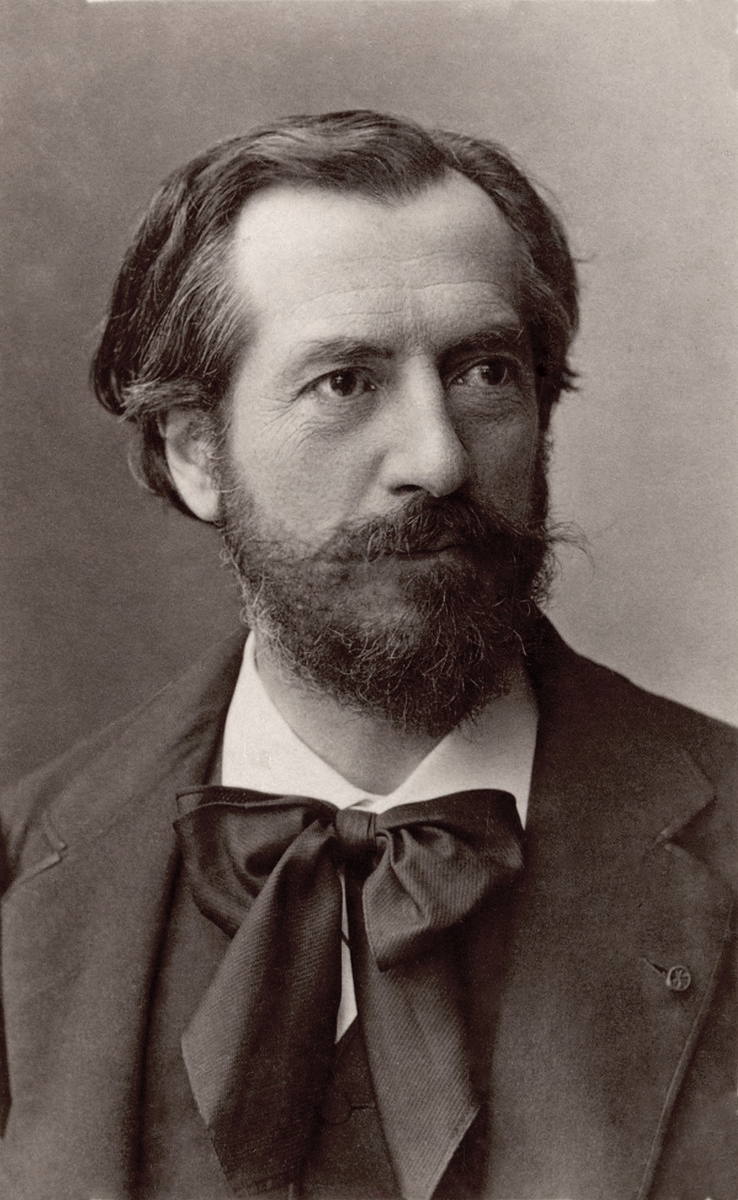
Auguste Bartholdi
Bartholdi is better known around the world for the Statue of Liberty, but in Belfort, his lion feels just as powerful in its own way.
It does not stand in triumph.
It crouches beneath the citadel.
It looks wounded, watchful, and ready.
That is what makes it so expressive. It is not a symbol of easy victory. It is a symbol of resistance under pressure. The animal seems to have absorbed the spirit of the town: proud, slightly stern, and not particularly interested in being intimidated.
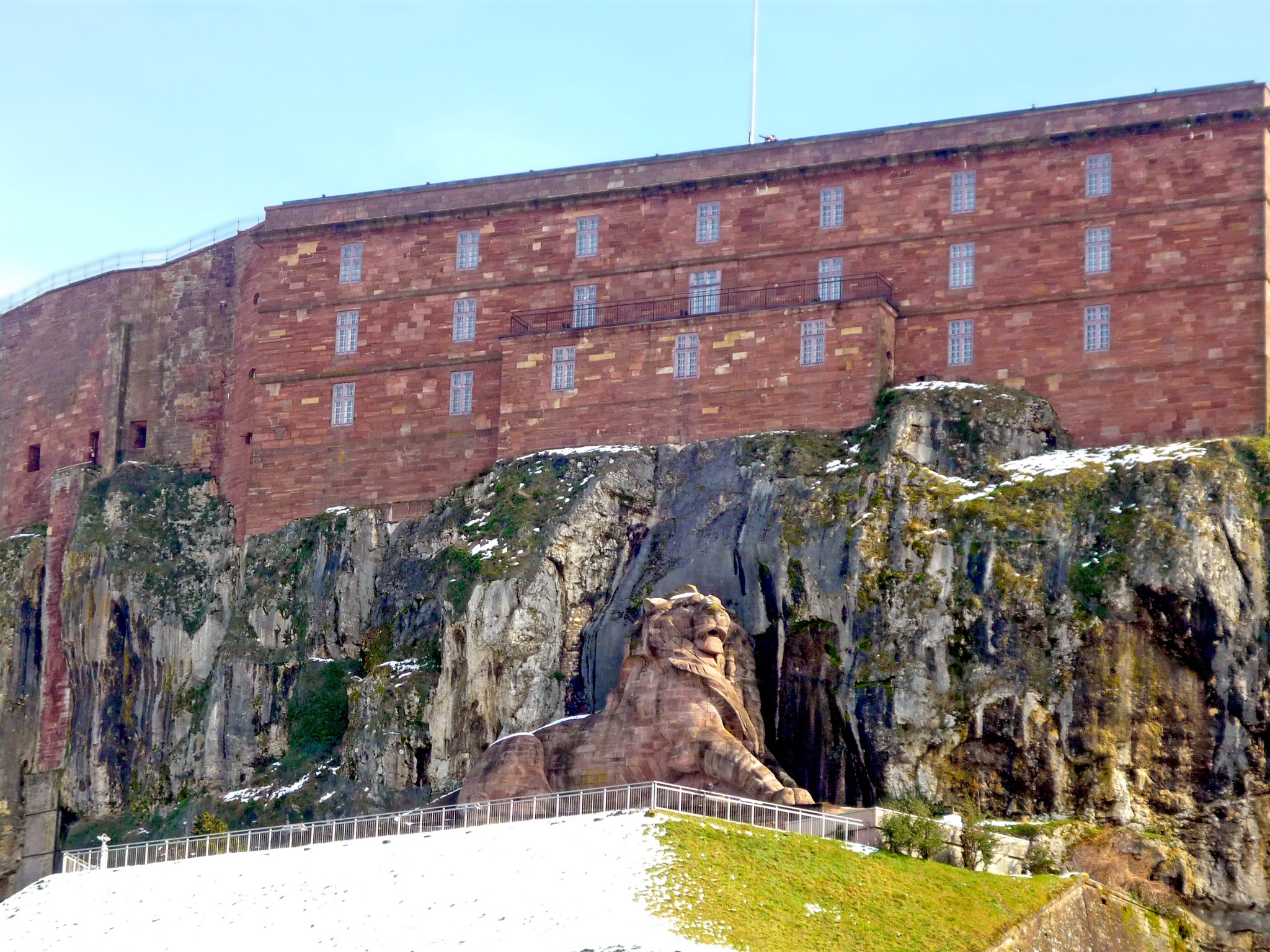
Lion of Belfort under the citadel © French Moments
The Lion is made of pink sandstone and measures about 22 metres long and 11 metres high, which means that standing near it is not quite like admiring a garden statue.
And somehow, it belongs perfectly to its setting.
Beneath the fortress.
Against the rock.
Above the town.
It is difficult to imagine Belfort without it.
5. Visit Belfort for a Fortress Town You Can Understand on Foot
Belfort is a wonderful place to explore on foot because its geography is easy to read.
Start in the old town.
Look up.
There is the citadel.
Walk towards it.
Climb a little.
There is the Lion.
Continue further.
There are the ramparts, viewpoints and the wider landscape.
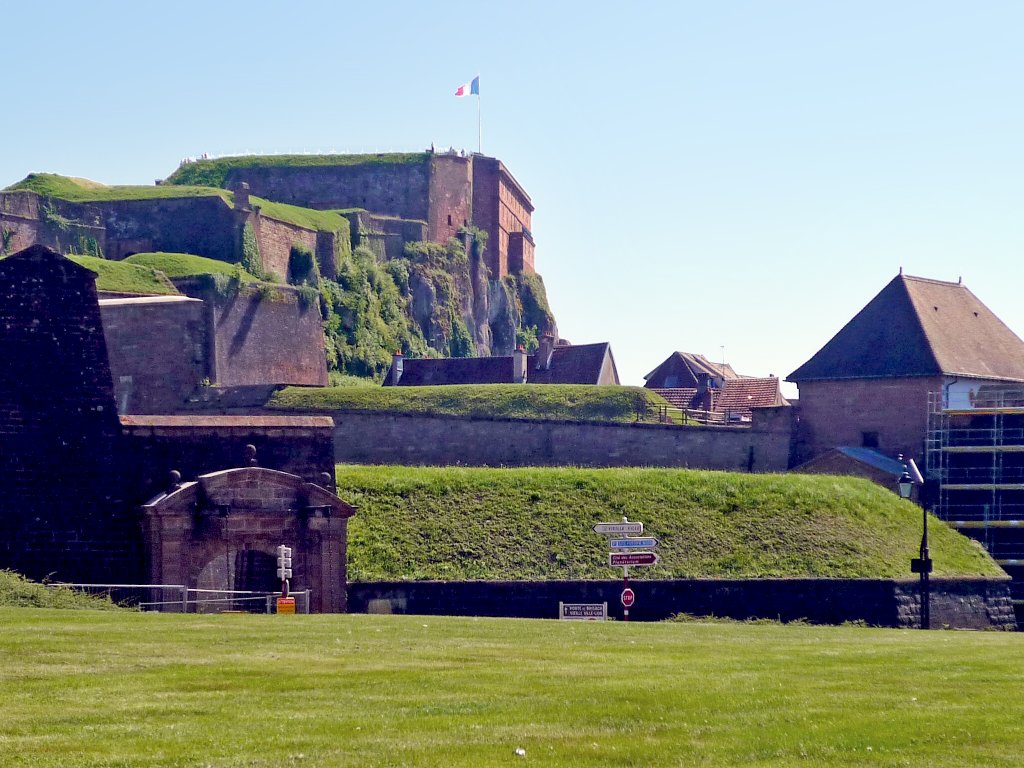
The fortifications of Belfort © French Moments
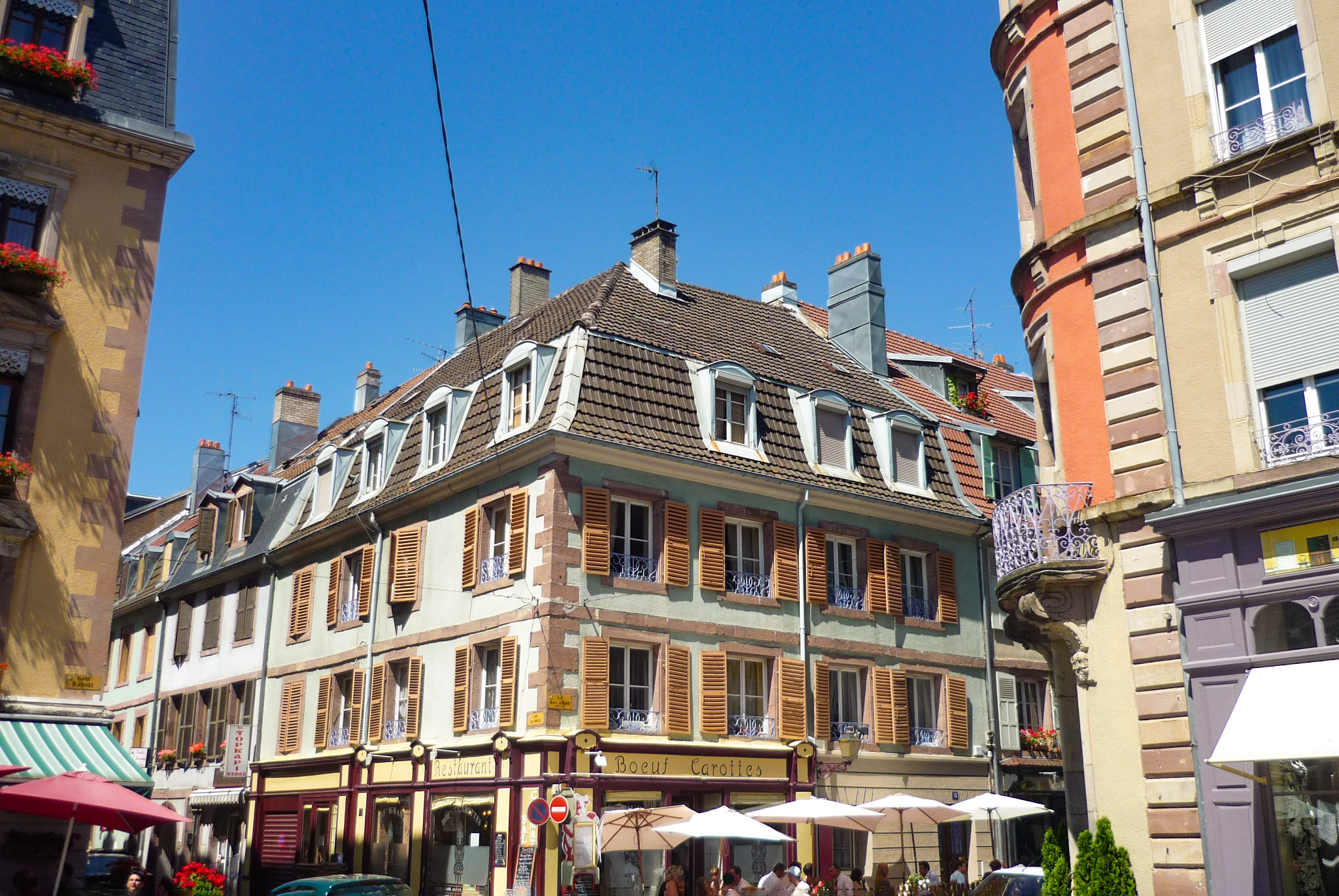
In the old town of Belfort © French Moments
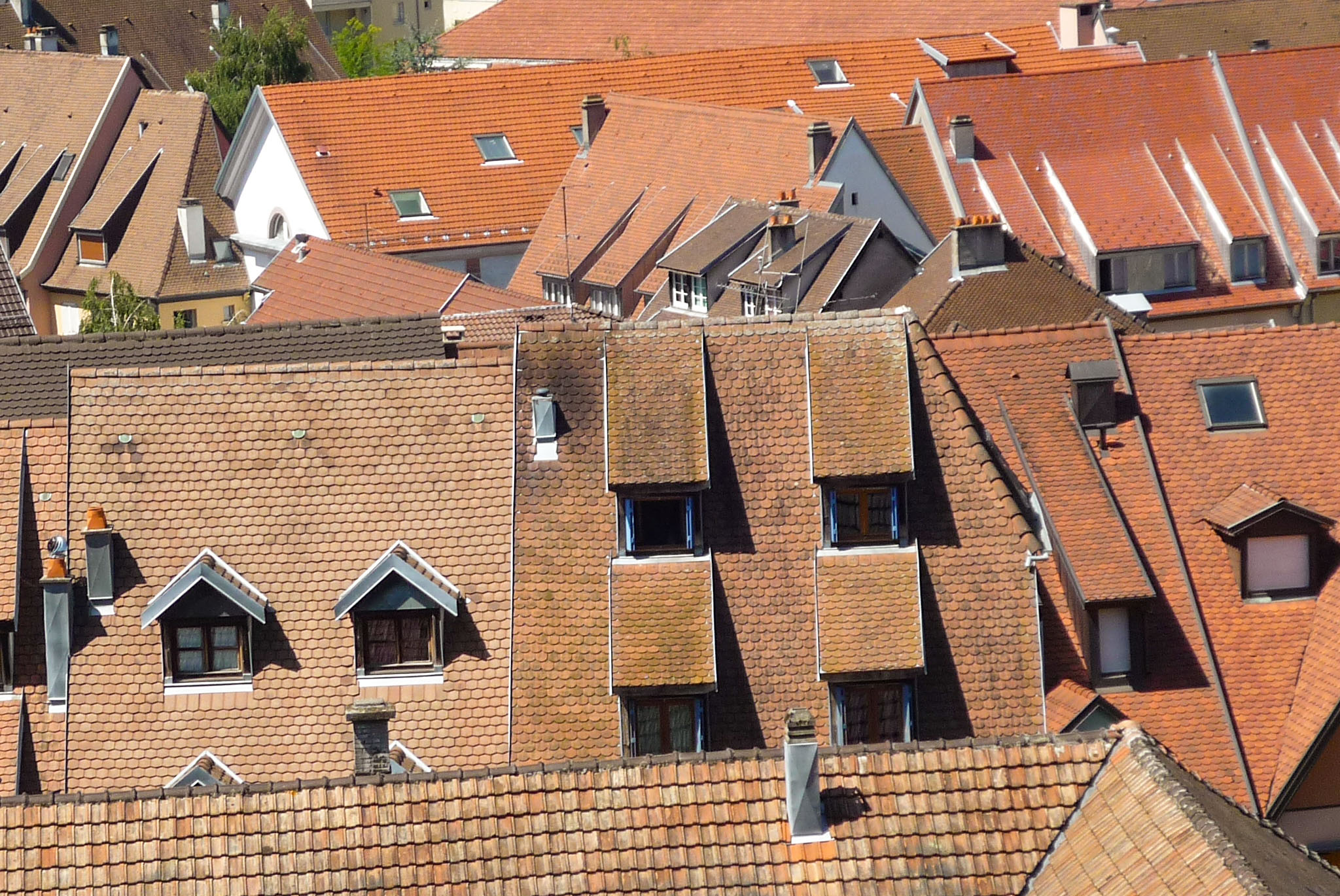
The roofs of Belfort © French Moments
The town unfolds vertically as well as horizontally, which makes the visit especially satisfying. You do not need to spend days decoding the place. Belfort explains itself as you move.
The citadel is central to that experience. Built and adapted over the centuries, then strengthened under Vauban and later military engineers, it dominates the town from its rocky platform.
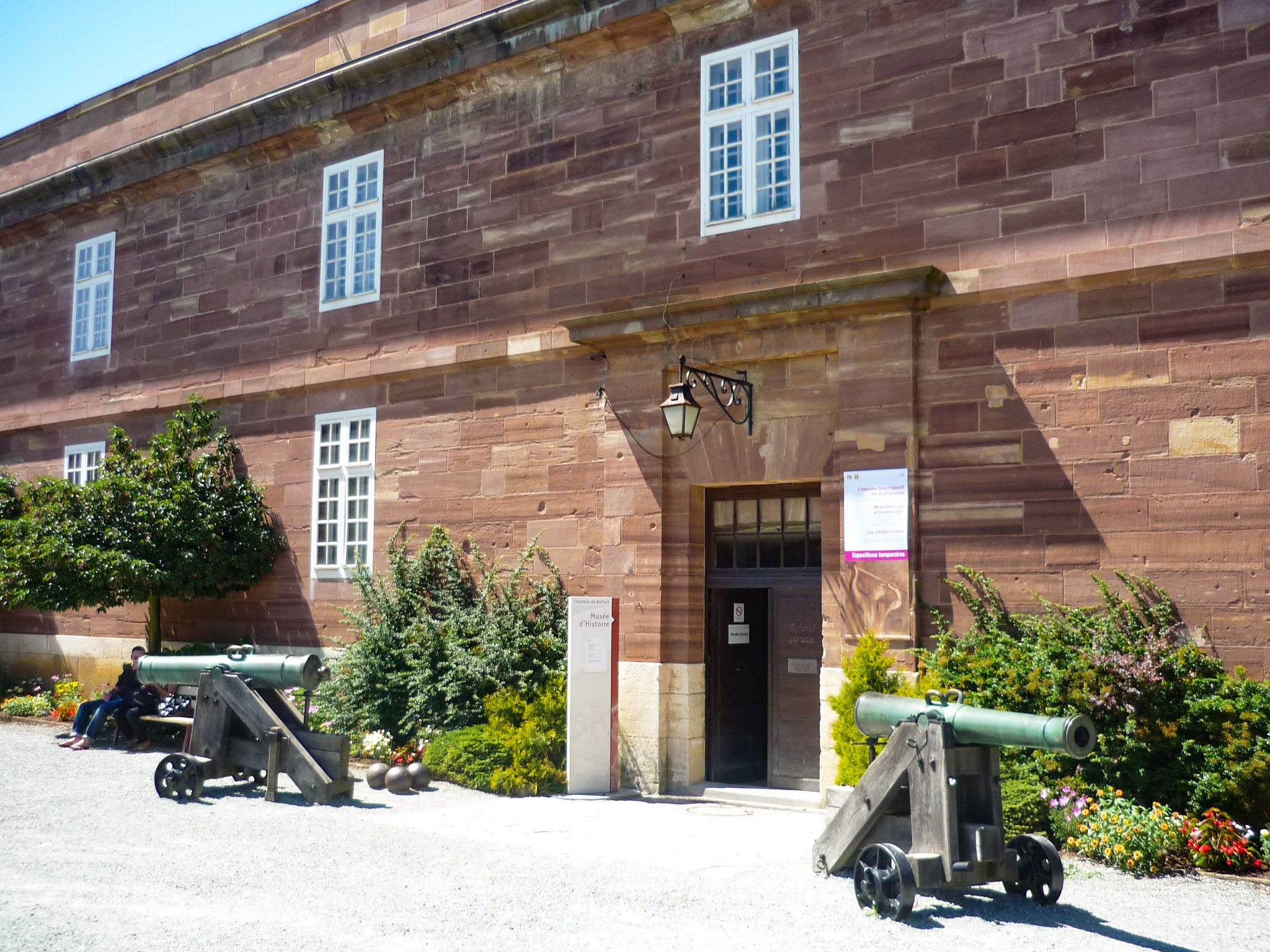
The entrance to the citadel © French Moments
Today, it offers a powerful combination of history, architecture and panoramic views.
From the top, you understand why the site mattered.
You can see the town below, the surrounding countryside, and the famous passage between mountains. Suddenly the Lion, the military history, the old gates and the town’s strategic role all come together.
That is the pleasure of Belfort.
It is not just a town where you look at things.
It is a town where the landscape helps you understand them.
6. Visit Belfort, the Old Town with a Quiet Alsatian Charm
Belfort’s old town is not as famous as the postcard villages of the Alsace Wine Route.
And that may be one of its advantages.
It does not feel like a stage set. It is not trying to compete with Riquewihr, Kaysersberg or Colmar. It has its own rhythm: quieter, more lived-in, more practical, but still full of charm.
The historic centre has streets, squares and façades that reflect the town’s Alsatian connections. You notice it in the colours, in the roofs, in the atmosphere of the old centre. There is something familiar here if you know southern Alsace, but also something more robust, more frontier-like.
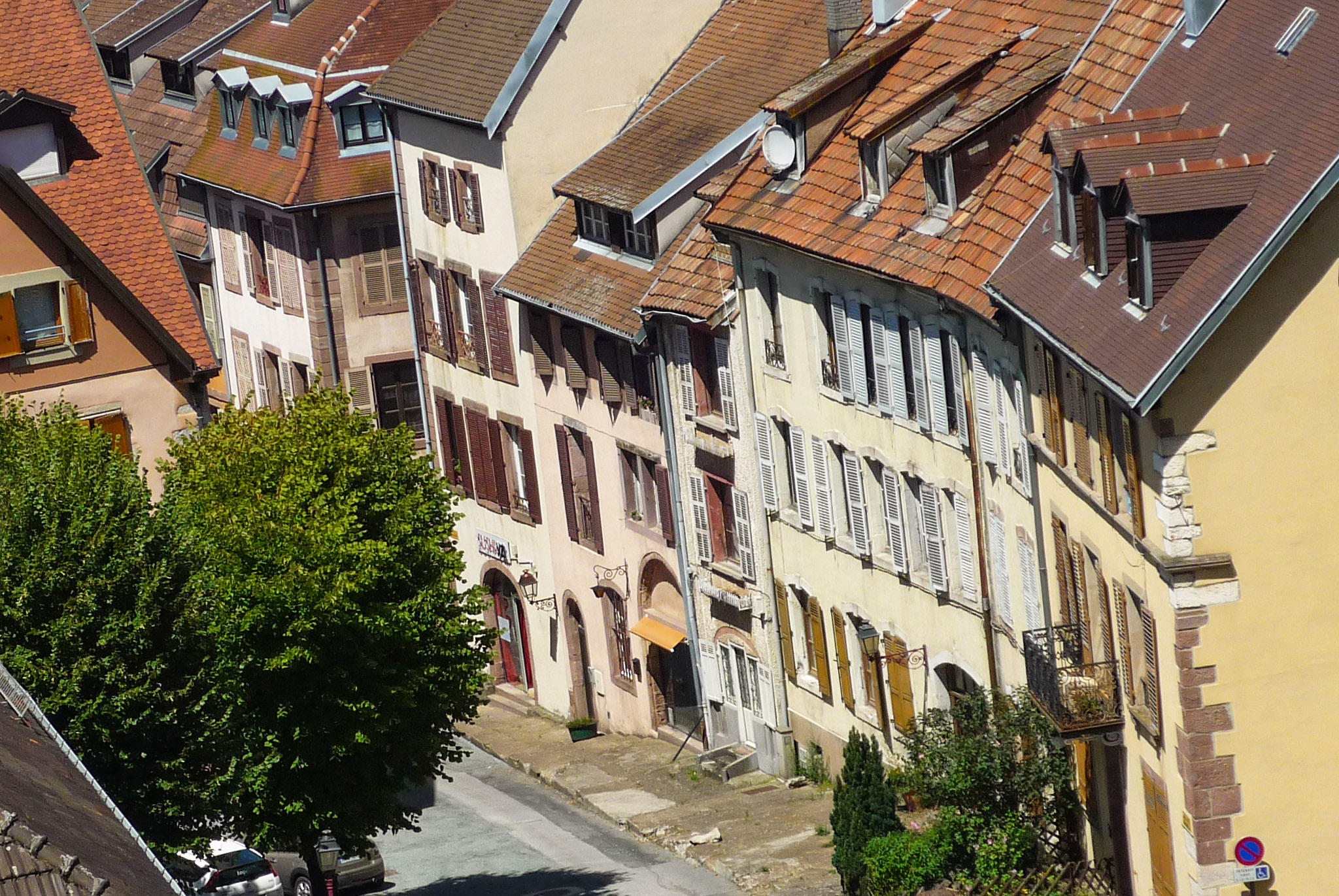
The old streets of Belfort © French Moments
This is not a town wrapped in ribbons for tourists.
It is a real place.
And I mean that as a compliment.
Walk around Place d’Armes, visit Saint-Christophe Cathedral, look at the town hall, follow the streets towards the old fortifications and the Porte de Brisach.

Belfort Cathedral © French Moments
The charm is not always theatrical. Sometimes it is simply in the coherence of the streets, the dignity of the squares, and the way the citadel always seems to be watching from above.
Belfort does not shout for attention.
It rewards attention.
That is different.
And, in many ways, better.
7. Belfort Tells a Bigger French Story
One reason to visit Belfort is that it helps you understand a chapter of French history that many international visitors know far less well than the First or Second World Wars.
The Franco-Prussian War of 1870–71 changed France profoundly.
It led to the loss of Alsace and part of Lorraine, the fall of the Second Empire, and the rise of a new German Empire. In that wider story, Belfort occupies a special place because it remained French while much of the surrounding Alsatian territory was annexed.
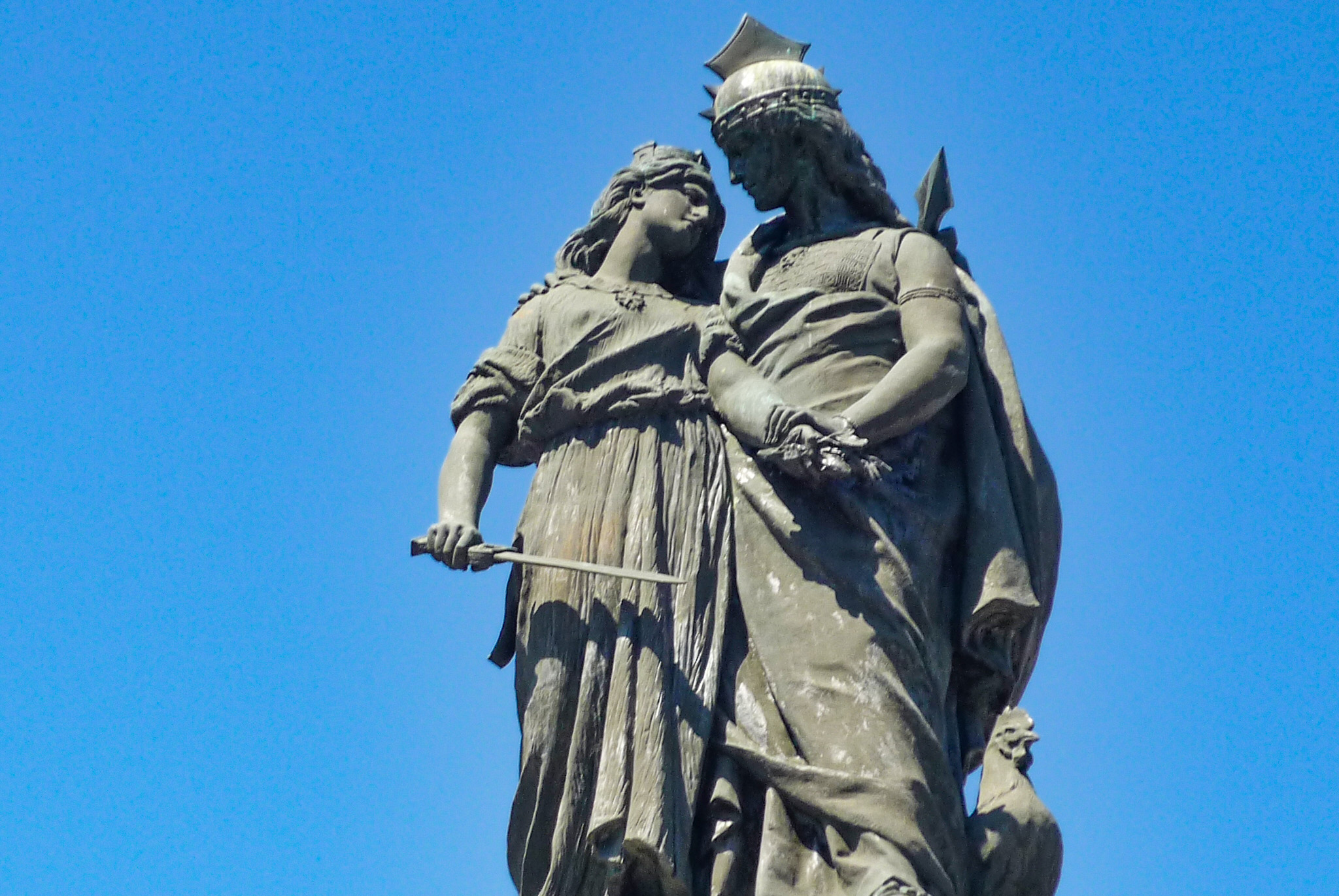
Monument des Trois Sièges © French Moments
That gives the town a symbolic role.
It represents a border that moved — but not quite all the way.
It represents loss — but also resistance.
It represents memory — but not nostalgia alone.
For visitors interested in French history, Belfort is therefore a rewarding place. It gives a local, walkable, visible form to events that can otherwise seem abstract.
You can read about treaties and wars in a book.
But in Belfort, you can stand beneath the Lion, walk through the citadel, and see how national history became local identity.
That is when history becomes more than dates.
It becomes place.
8. Visit Belfort for Its Industrial and Alsatian Legacy
Belfort is not only a military town.
It also has an important industrial story.
After 1871, the town changed rapidly. Because Belfort remained French while much of Alsace was annexed, people and businesses from Alsace moved there.
This contributed to a major increase in population and helped shape its industrial development. Belfort Tourism notes that the town’s population tripled in less than 20 years during this period.
This matters because it adds another layer to the town.
Belfort is not simply old walls, heroic memory and a large stone lion. It is also a place transformed by modern industry, migration and the consequences of a redrawn border.
That industrial heritage is part of the town’s personality.
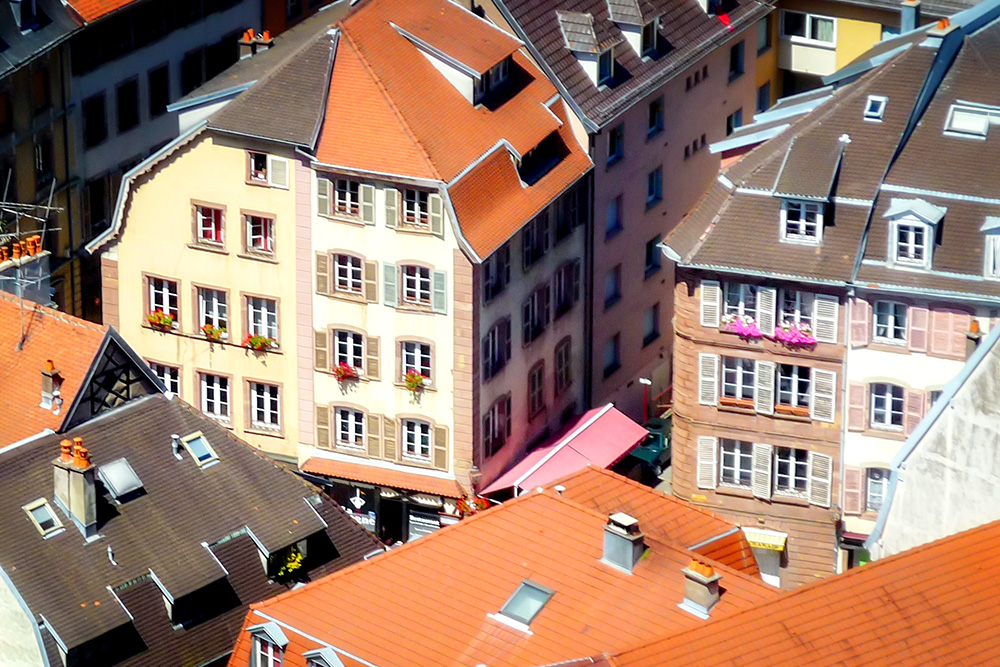
Visit Belfort, France © French Moments
It gives Belfort a more grounded feel than some purely picturesque destinations. There is history here, certainly. But there is also work, movement, factories, railway connections, expansion and modern urban life.
In other words, Belfort is not frozen in the 19th century.
The Lion may look back to 1870–71, but the town around it moved forward.
That tension between memory and modernity is one of the reasons I find it so interesting.
9. Visit Belfort for its Lively Cultural Side
For a town so closely associated with sieges, fortifications and a very serious stone lion, Belfort also knows how to make noise.
Preferably musical noise.
The city and its surroundings host major cultural events, including Les Eurockéennes de Belfort, one of France’s best-known music festivals, held on the Malsaucy peninsula near the city. The festival continues to be a major summer event in the Territoire de Belfort.

The Eurockéennes of Belfort (Public Domain via Wikimedia Commons)
There is also the FIMU, the Festival International de Musique Universitaire, a free music festival held in Belfort during the Pentecost weekend.
This cultural energy is important because it changes the way you see the town.
Belfort is not merely a place of remembrance.
It is alive.
It has students, concerts, festivals, cafés, markets and events. It can be solemn beneath the citadel in the morning and lively in the streets later in the day.
That contrast is appealing.
A town needs memory, yes.
But it also needs music.
Otherwise even the Lion might start to look a little bored.
10. Nature Begins Almost at the City Gates
Another reason to visit Belfort is the landscape around it.
The town is close to the southern Vosges, the Ballon d’Alsace, the Malsaucy lakes, the Étang des Forges and the rural landscapes of the Sundgau. You can move very quickly from town streets to water, hills, forests and mountain air.
The Ballon d’Alsace, located in the Ballons des Vosges Regional Natural Park, is one of the great natural landmarks near Belfort and reaches 1,247 metres. In winter, it is a family-friendly ski area with downhill slopes, cross-country trails, toboggan runs and snowshoe routes.
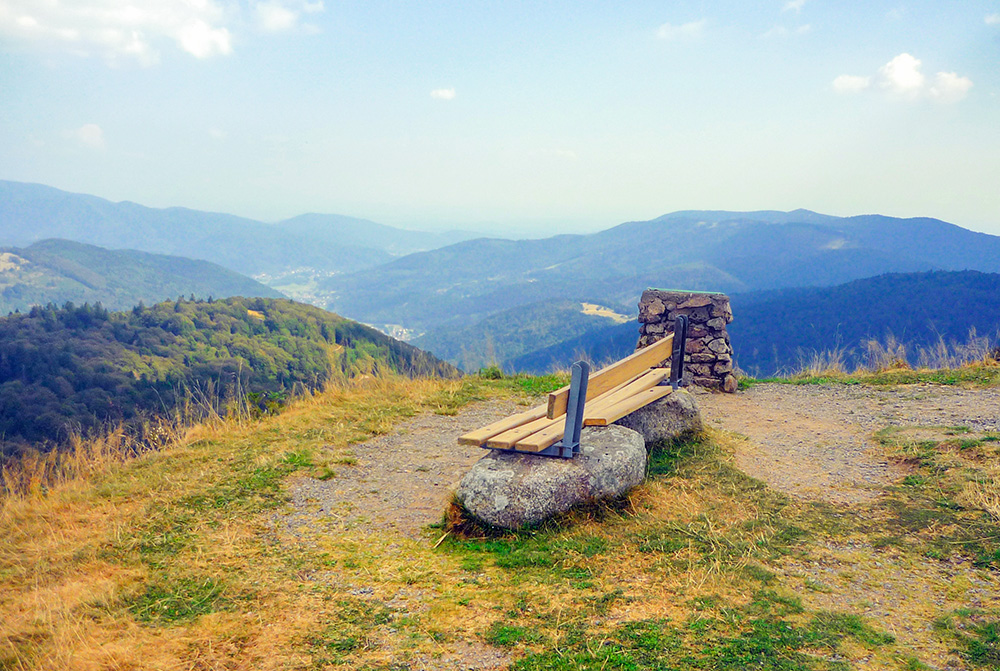
The Ballon d'Alsace (1247 m) © French Moments
Malsaucy, meanwhile, offers a completely different atmosphere: water, leisure, walking, birdlife and, during festival season, music.
This proximity to nature is one of Belfort’s great strengths.
It gives the town breathing space.
You can spend the morning exploring the citadel and old streets, then head towards the lakes or the mountains in the afternoon. Few places of this size offer such an easy combination of urban history and outdoor escape.
And if, like me, you have a weakness for places where hills appear on the horizon, Belfort has one more argument in its favour.
It knows how to keep the mountains nearby.
Conclusion: Why Visit Belfort?
So, why visit Belfort?
Because it is small enough to explore easily, but rich enough to deserve attention.
Because it has one of the most memorable monuments in eastern France.
Because its citadel explains the landscape.
Because its old town still carries echoes of Alsace.
Because its history opens a window onto one of the most important and often overlooked chapters of modern France.
Because it is both a frontier town and a cultural town.
Because nature begins close by.
And because, quite simply, it has character.
Belfort is not Paris.
It is not Strasbourg.
It is not Colmar.
And it does not need to be.
It is the City of the Lion: proud, compact, historic, slightly unexpected, and far more interesting than many travellers realise.
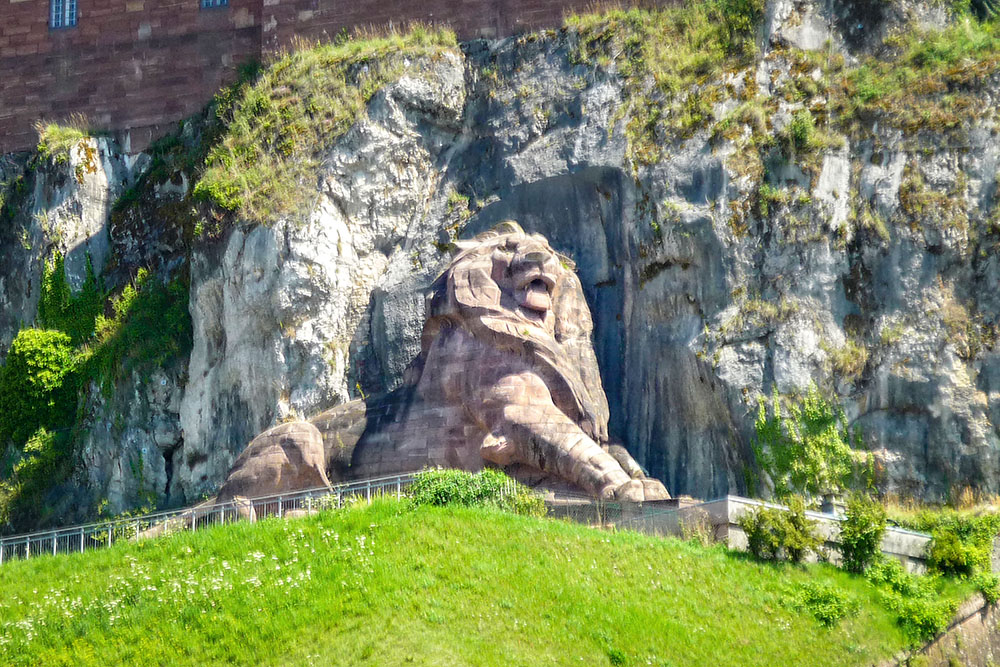
Lion of Belfort, France © French Moments
For me, it will always be connected with personal memories — friends, familiar journeys from southern Alsace, and those regular visits that made the town part of my everyday life.
But even without that personal connection, I would still say this:
Belfort deserves to be seen.
Not rushed through.
Not dismissed as a name on a road sign.
Seen properly.
With time for the Lion, the citadel, the old town, the view from above, and perhaps a little music or mountain air afterwards.
Learn more about Belfort
If you would like to explore the city in greater depth, I have written several other articles that focus on different aspects of Belfort and its fascinating story.
You can begin with my article on the History of Belfort, which explains how this strategic city developed over the centuries and why it became such an important frontier stronghold in eastern France.
My latest blog post about Belfort gives you 10 Must-See Sights in the City of the Lion.
For a closer look at the city’s most famous landmark, read my dedicated article on the Lion of Belfort, the monumental sculpture by Auguste Bartholdi that has become the proud symbol of the city.
And to understand the wider region, don’t miss my article on the Territoire de Belfort, one of France’s smallest départements, with a unique history shaped by Alsace, Franche-Comté and the dramatic events of 1870–71.
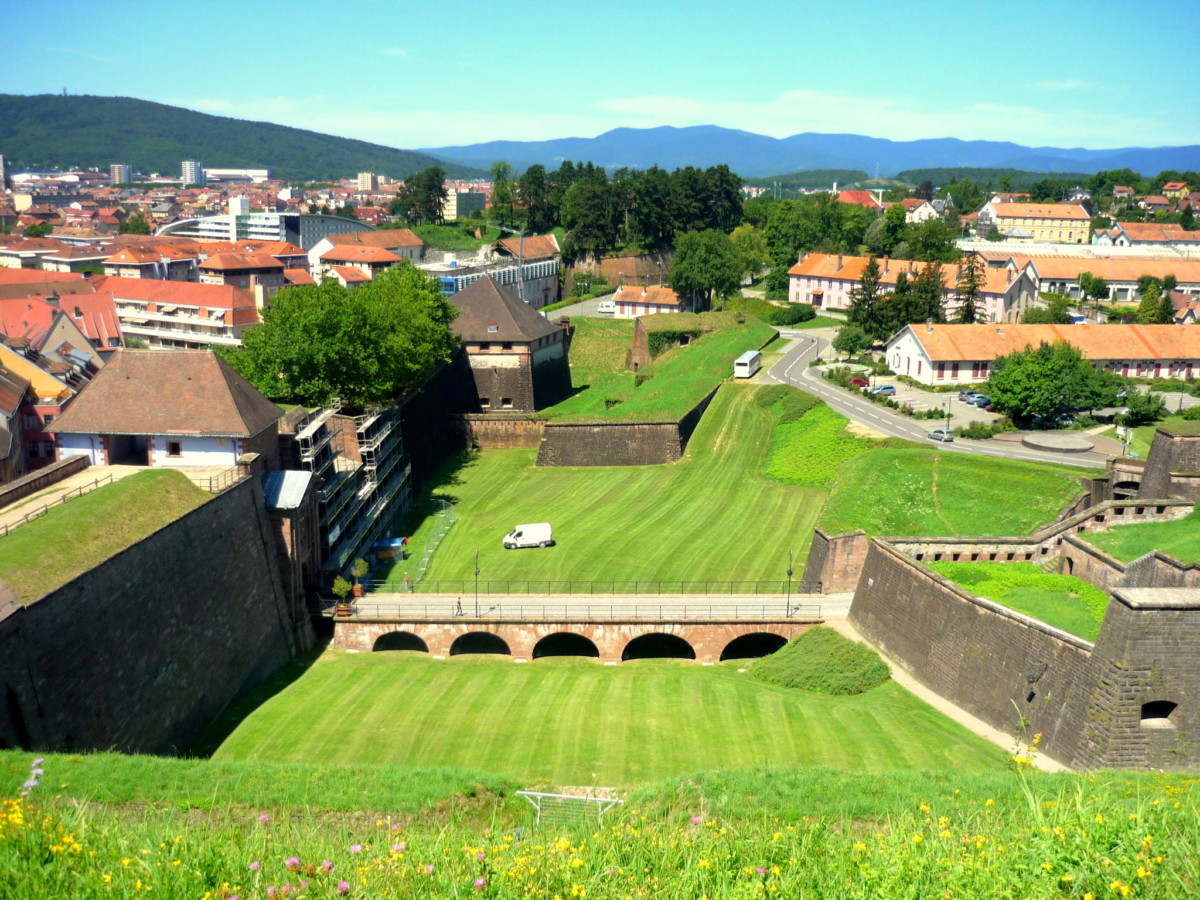
The fortifications of Vauban in Belfort © French Moments
Explore Comfortable Accommodations in Belfort
Planning a visit to Belfort? You’ll find a range of comfortable and charming accommodations to suit your needs.
From cosy boutique hotels to modern apartments, there's something for everyone.
Whether you want to stay in the heart of the city or prefer a quiet retreat, Belfort has it all.
Ready to book your stay? Check out the best option available HERE and find the perfect place to rest after exploring this historic city. Browse the map below:
How to get there
- Belfort is easily accessible by car from Alsace’s main cities, Strasbourg, Colmar, and Mulhouse, as well as from Montbéliard and Besançon in Franche-Comté.
- If you travel from Australia, New Zealand, or America, you could fly to Paris Charles de Gaulle, Zurich, or Frankfurt Airports and rent a car there. The nearest airport is the Euroairport near Basel.
- The TGV Rhin-Rhône from Paris-Gare de Lyon takes 2.15 hours to the new Belfort-Montbéliard-TGV railway station.