

The French Alps Experience begins long before your boots touch a mountain trail.
It starts with light — the pale gold glow on the summit of Mont Blanc at dawn, or the cool blue shadow stretching across a high valley in Chamonix.
It begins with silence, broken only by the distant ringing of cowbells in an alpine meadow.
For many travellers, the French Alps are synonymous with dramatic scenery.
Yet the true French Alps Experience is not just about breathtaking views.
It is about heritage, craftsmanship and a centuries-old relationship between people and mountains.
To hike here is to walk through history — sometimes quite literally.
Understanding the French Alps means understanding both the land and the culture that grew from it.
French Alps Experience: The Birthplace of Modern Mountaineering
Chamonix and the Age of Exploration
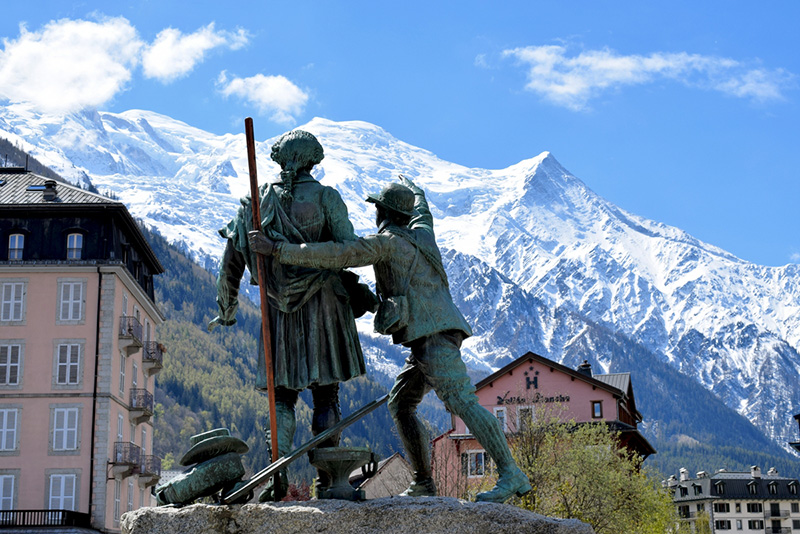
In 1786, Jacques Balmat and Michel-Gabriel Paccard reached the summit of Mont Blanc for the first time.
Their ascent did more than conquer a peak; it changed the way Europe viewed mountains.
Chamonix soon became the epicentre of a new fascination with altitude.
Scientists, aristocrats and early adventurers travelled here, drawn by glaciers and granite spires that had once been feared.
By the nineteenth century, the Golden Age of Alpinism was underway, and French guides were establishing an international reputation for precision, discipline and quiet courage.
This spirit still shapes the French Alps Experience today. The mountains are not playgrounds. They are places of respect.
The Culture of the Mountain Guide
Mountain guiding evolved into a profession rooted in transmission.
Knowledge passed from one generation to the next: how to read the snowpack, how to interpret shifting weather, how to cross a glacier safely.
In the French Alps, skill has always gone hand in hand with humility.
The mountain sets the terms; the climber adapts.
That philosophy continues to influence hiking culture across the region.
French Alps Experience: Diverse Landscapes Beyond Mont Blanc
The Alps are not one landscape but many. Each massif carries its own rhythm and identity.
The Mont Blanc Massif: High Alpine Drama
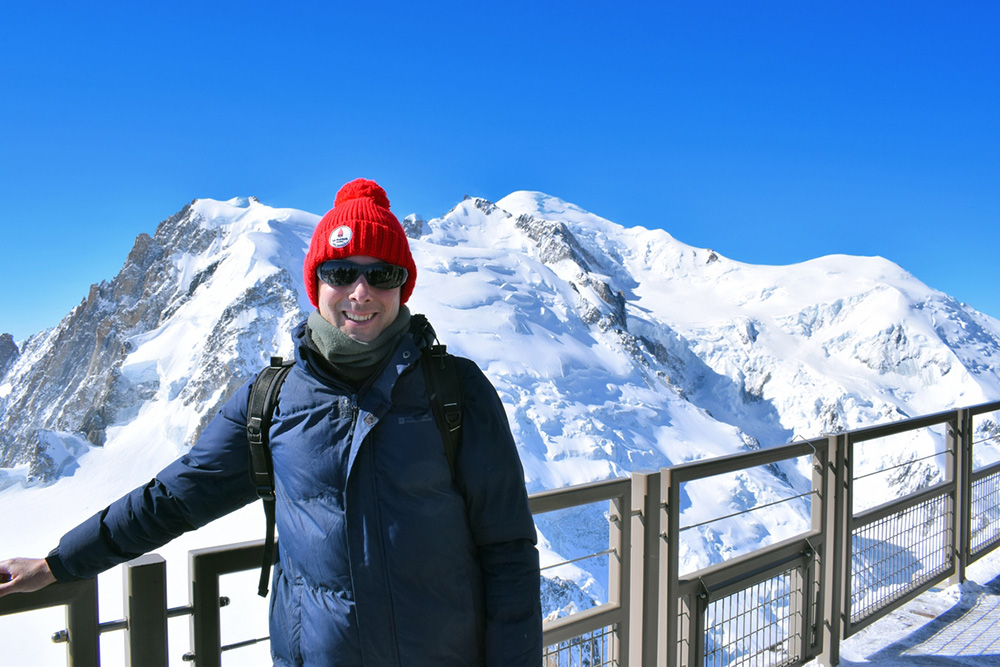
The Mont Blanc massif offers the iconic Alpine image: glaciers spilling into valleys, narrow ridges etched against the sky, and routes that link France to Switzerland and Italy.
For experienced trekkers, the Tour du Mont Blanc is one of Europe’s classic long-distance circuits.
Yet even a gentle valley walk reveals the scale of the landscape.
Weather can shift within hours, reminding visitors that preparation is part of the French Alps Experience.
The Vercors: Wild Limestone and Living History
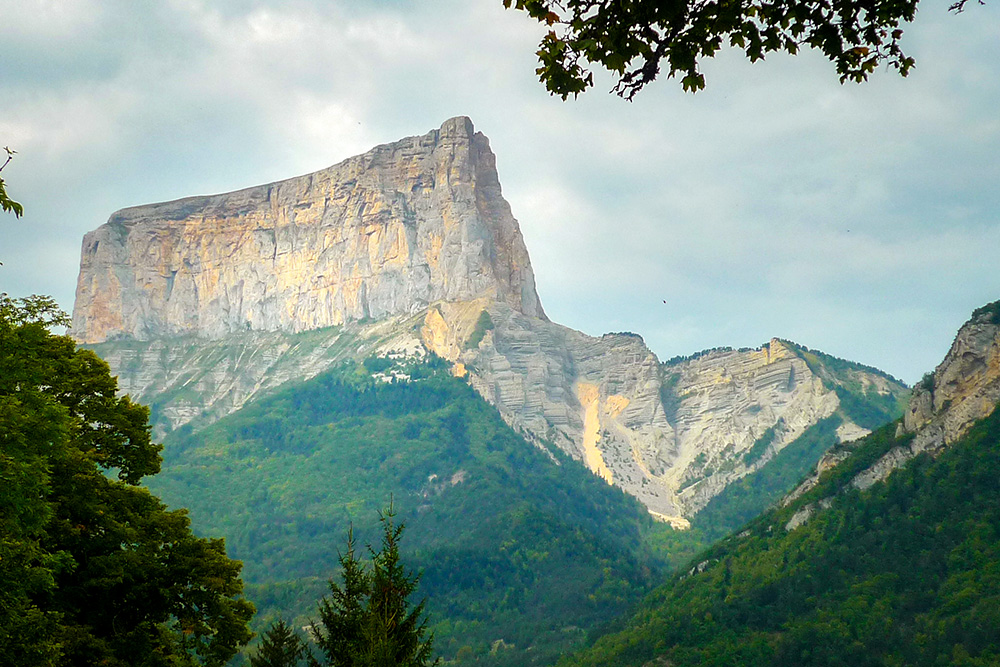
Further south lies the Vercors Massif, where limestone cliffs rise above forested plateaux.
The terrain feels different here — expansive, windswept and deeply atmospheric.
The Vercors also carries historical weight. During the Second World War, it became a stronghold of the French Resistance.
Today, hikers cross ridges that once witnessed extraordinary acts of bravery.
Technically, many trails are accessible, yet the environment remains demanding.
Sudden storms and exposed sections require awareness — and suitable equipment.
The Vanoise: A Protected Alpine Legacy
In 1963, France created Vanoise National Park, its first national park.
The decision marked a turning point in environmental awareness and became a defining element of the modern French Alps Experience.
Linked with Italy’s Gran Paradiso National Park, the Vanoise protects ibex, chamois and fragile alpine ecosystems.
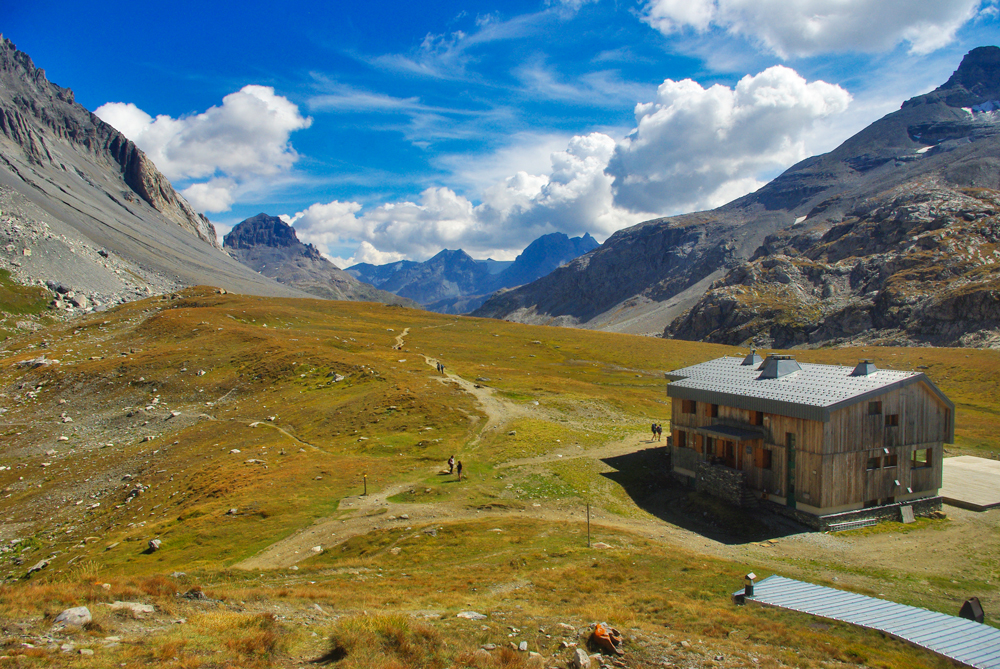
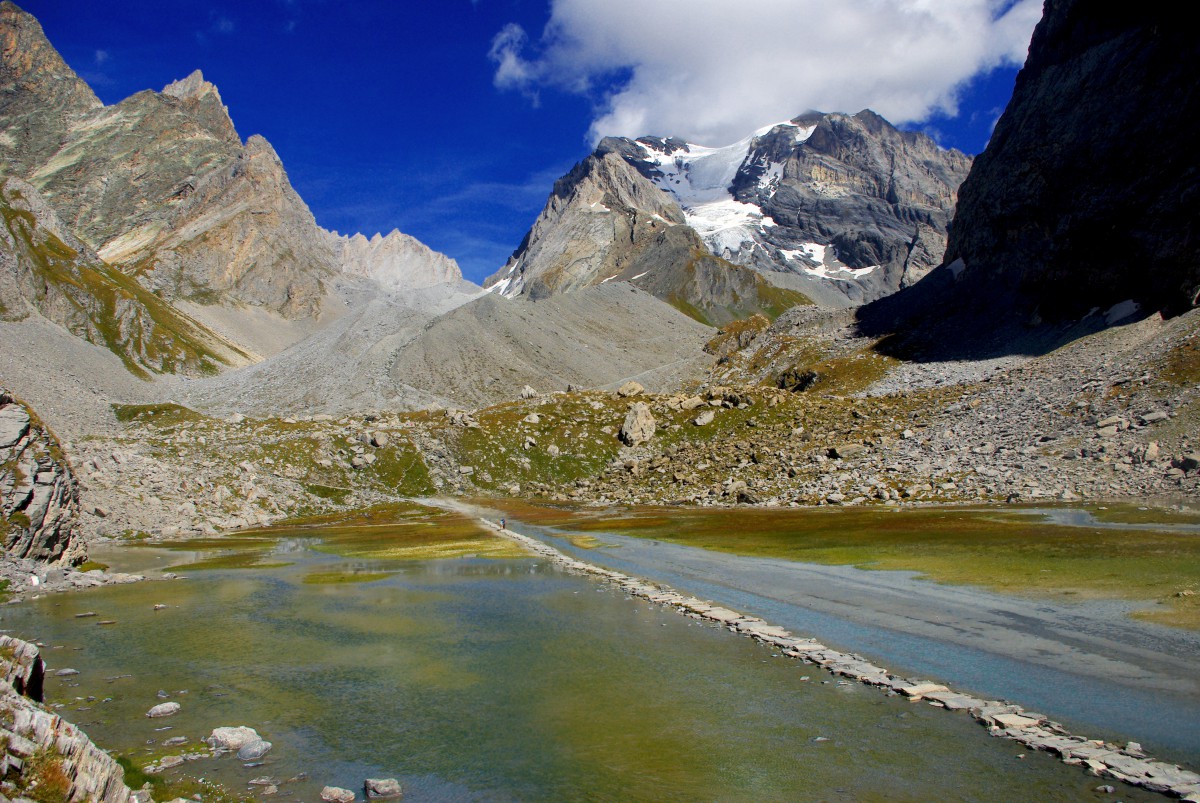
High-altitude lakes shimmer beneath glaciated peaks, and remote refuges provide shelter for trekkers following routes such as the GR5.
Here, heritage is not only historical — it is ecological. The mountains are preserved as much as they are explored.
French Alps Experience: Alpine Craftsmanship and Innovation
Harsh landscapes demand practical solutions.
Long before technical fabrics existed, Alpine communities relied on wool, leather and layered garments to withstand shifting conditions.
Over time, the need for lighter and more durable clothing encouraged regional expertise in textile innovation.
France developed a strong tradition of outdoor craftsmanship closely linked to mountain life.
One example is Cimalp, founded over sixty years ago in the Drôme region.
Emerging from a landscape shaped by the Vercors and the southern Alps, the brand reflects a broader heritage of designing equipment tested in real mountain environments.
Within the French Alps Experience, craftsmanship is never abstract.
It evolves from altitude, wind, cold and sun — from lived experience rather than theory.
French Alps Experience: What to Pack for the Mountains
Even in summer, Alpine conditions can change quickly.
A clear morning may give way to afternoon storms, and temperatures vary dramatically between the valley floor and the summit.
Preparation is integral to the French Alps Experience.
Layering for Changing Conditions
Layering remains the cornerstone of mountain dressing:
A breathable base layer to manage moisture.
An insulating layer for warmth.
A windproof and waterproof outer shell.
This system allows hikers to adapt as weather shifts — something that happens frequently in the Alps.
Footwear and Stability
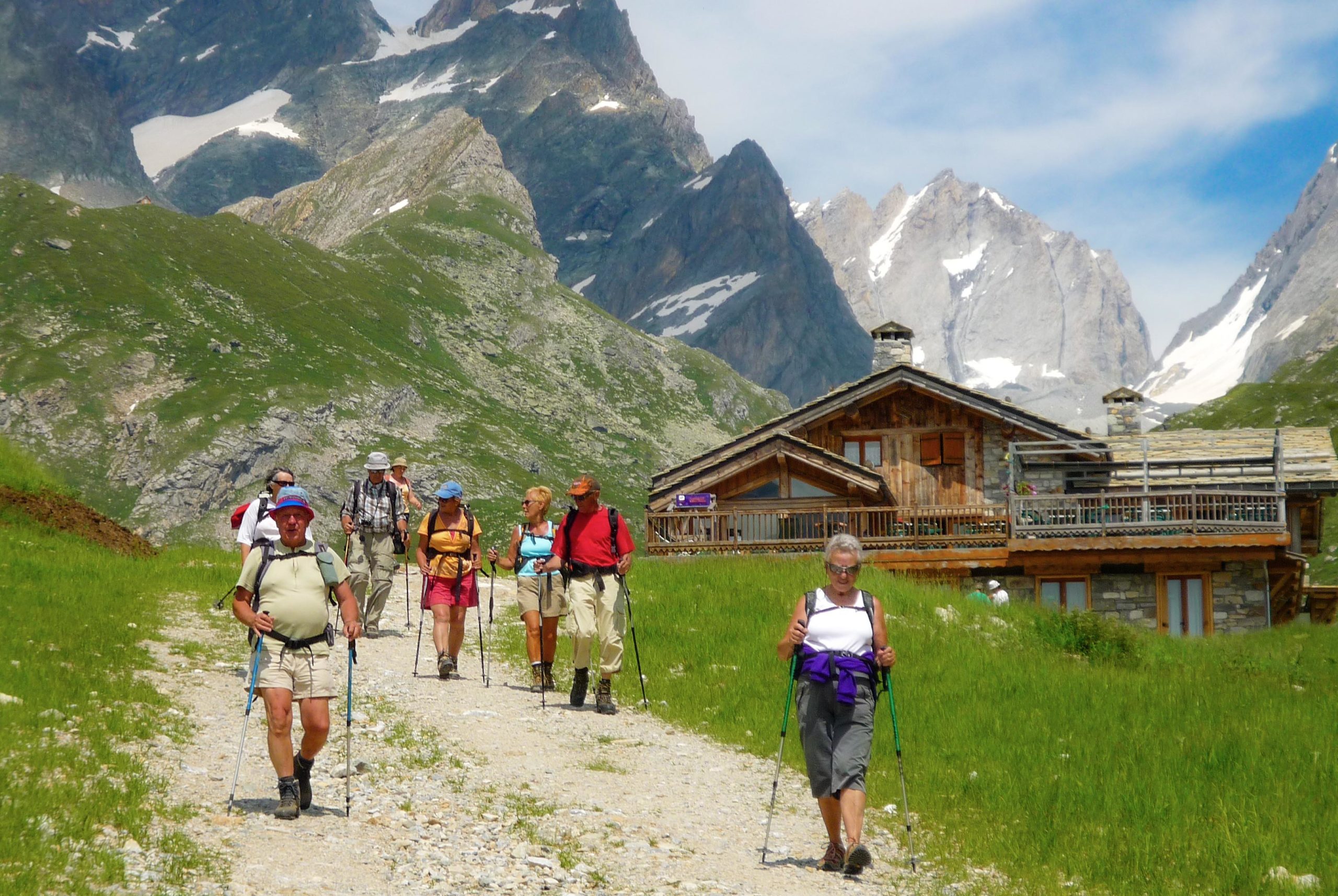
Terrain varies considerably. Rocky high-altitude paths near Mont Blanc differ from the plateau trails of the Vercors or the long circuits of the Vanoise.
Supportive hiking boots with a reliable grip are advisable for uneven terrain, while lighter footwear may suit well-maintained routes.
Stability and comfort over distance are key.
Essential Extras
A few additional items should not be overlooked:
Sun protection, as UV exposure increases with altitude.
Adequate hydration.
Navigation tools, even on marked trails.
A lightweight emergency layer.
Self-reliance remains part of Alpine culture. Mountain refuges offer welcome rest, but responsibility rests with the walker.
French Alps Experience: Hiking as Cultural Immersion
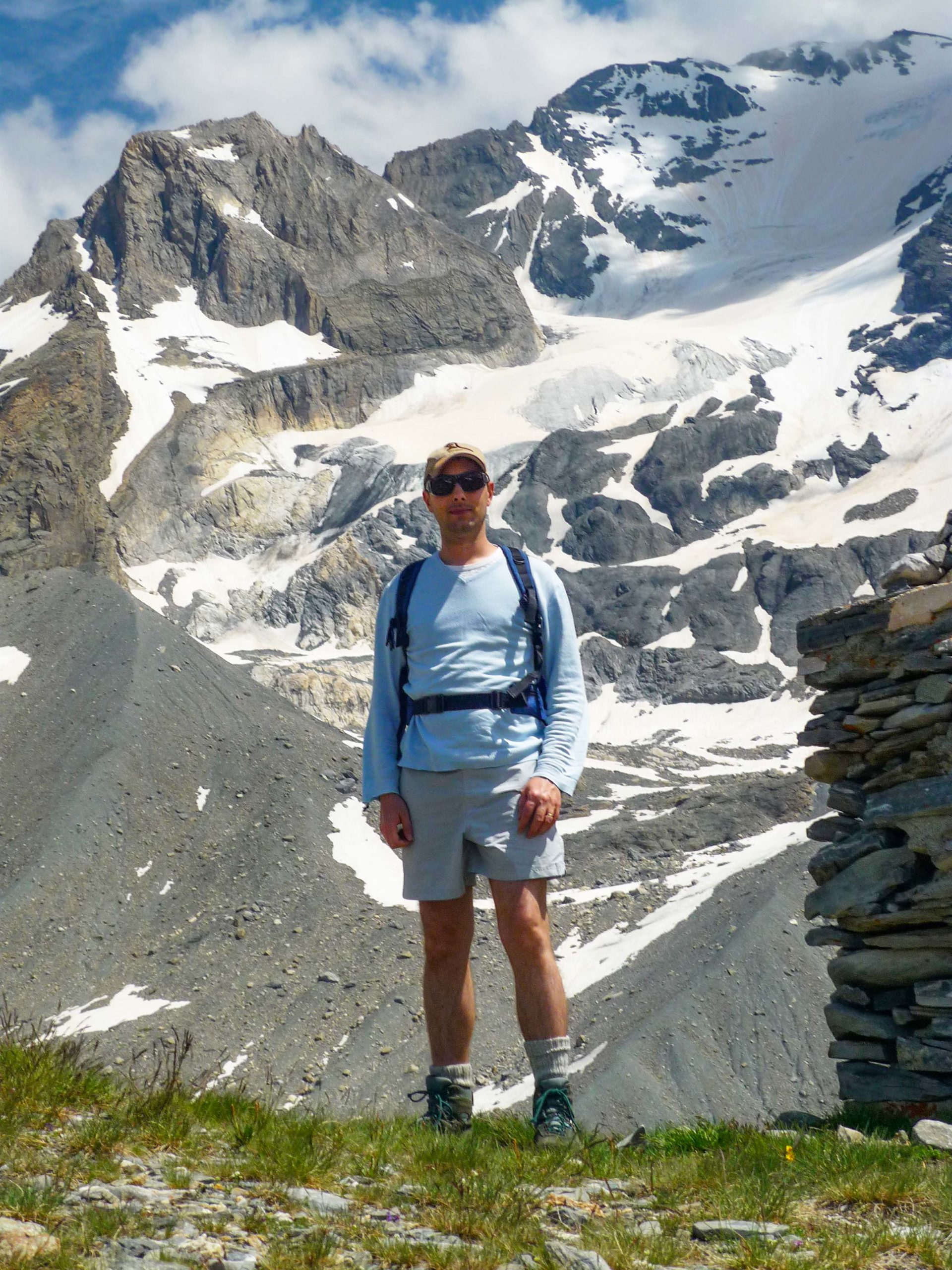
The French Alps Experience extends beyond physical exertion.
Hiking here connects travellers to rural traditions and regional identity.
Alpine pastures still produce cheeses such as Beaufort.
Seasonal transhumance sees herds moved to higher meadows in summer.
Trail signage often includes geological or historical context, transforming a simple walk into a quiet lesson in place.
Encounters along the path are understated but meaningful — a brief greeting exchanged between hikers, a shared table in a refuge, a moment of collective admiration at a viewpoint.
In the French Alps, walking becomes participation in a living heritage.
Conclusion: The Enduring French Alps Experience
To explore the French Alps is to move through layers of history — geological upheaval, scientific curiosity, mountaineering ambition, wartime resilience and environmental protection.
From the granite drama of Mont Blanc to the protected valleys of the Vanoise and the limestone plateaux of the Vercors, each landscape contributes to a broader narrative.
The French Alps Experience is not defined solely by altitude or distance covered.
It is defined by connection — to heritage, to craftsmanship, and to a landscape that continues to inspire respect.
These mountains remain breathtaking.
More importantly, they remain alive.