La Roche-sur-Foron is one of those Haute-Savoie towns many travellers pass without ever really noticing.
Set between Annecy, Geneva and the Arve Valley leading towards Chamonix and Mont Blanc, this small historic town occupies a strategic position in the French Alps. You may even have driven past it on the motorway on your way to the mountains, without realising that one of Haute-Savoie’s most fascinating old towns was just a few minutes away.
And that would be a pity.
La Roche may not have the fame of Annecy, the international pull of Geneva or the dramatic setting of Chamonix, but it has something different: a remarkably well-preserved medieval centre, old stone houses, narrow streets, historic towers and a quiet Savoyard atmosphere that rewards slow wandering.
Often described as one of the most historic towns in Haute-Savoie, La Roche-sur-Foron deserves more than a quick glance from the road. Next time you are in the region, stop for an hour or two — or longer if you can. You may be surprised by how much history, charm and Alpine character are packed into this discreet little town.
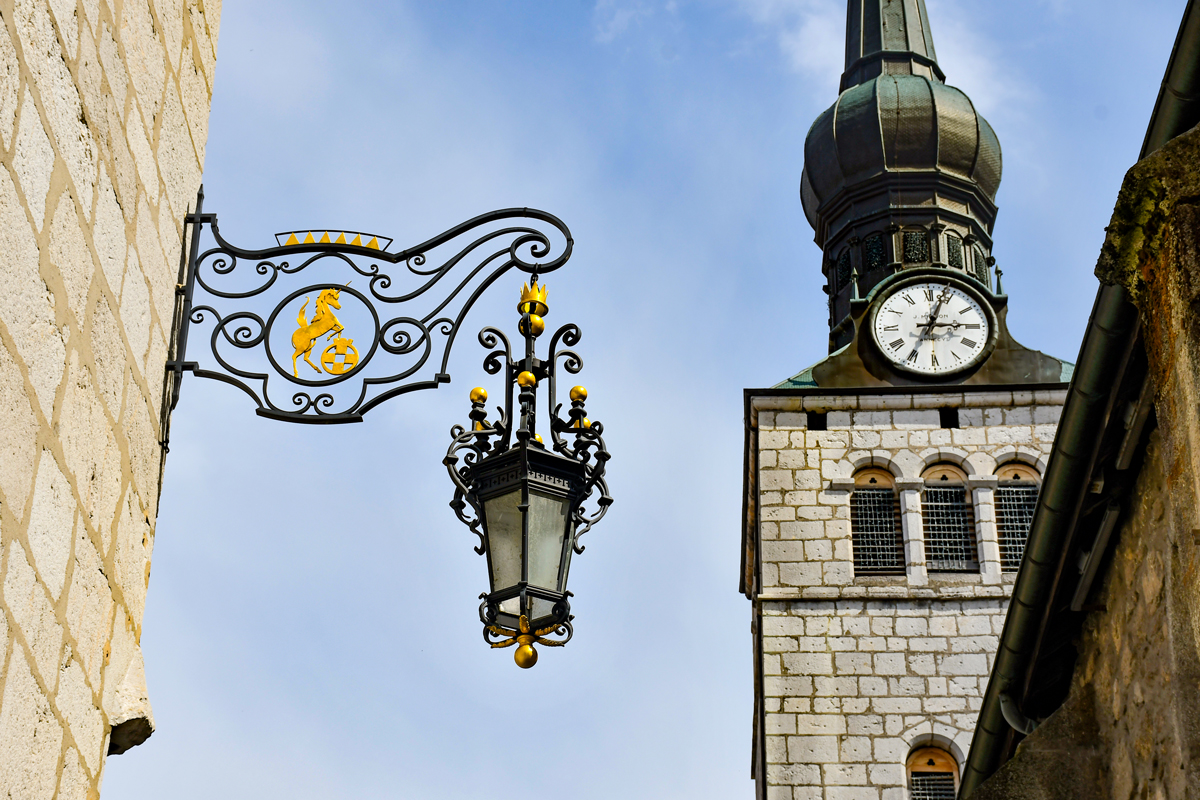
A wrought-iron lamp post © French Moments
Why You Should Stop at La Roche-sur-Foron
When we moved to the Annecy region, I first heard of La Roche-sur-Foron as a practical little town of around 11,000 inhabitants, set at the meeting point of the roads between Geneva, Annecy and the Arve Valley.
In other words, I did not immediately imagine a place full of historic charm.
To me, it sounded like one of those towns you pass on the way to somewhere more famous: Annecy for the lake, Geneva for the international city, or Chamonix for Mont Blanc. You may even have bypassed La Roche-sur-Foron on the motorway without giving it a second thought.
And yet, that would be a mistake.
It was only when I started reading local tourist brochures that I realised how important the town’s position had been since the Middle Ages. La Roche-sur-Foron was not just a convenient crossroads. Its strategic location helped make it an important historic centre in the old Savoyard world.
The old town still has a strong medieval character. Walk through its cobbled streets and you will find colourful houses, Renaissance façades, narrow passages, old gates, historic squares and stone buildings that quietly tell the story of a thousand years of local history.
One of the most surprising details is that in 1885, La Roche-sur-Foron became the first town in France to install electric street lighting powered by hydroelectricity. For a small Alpine town, that is quite a claim to fame — and a reminder that history is not always where you expect it.

The colourful façades of Rue des Fours © French Moments
Today, “La Roche”, as locals often call it, remains an important commercial centre for the Pays Rochois.
It is also home to Rochexpo, a major exhibition centre in Haute-Savoie, which gives the town a practical and economic role beyond its historic centre.
But for visitors, the real reward lies in the old streets.
La Roche-sur-Foron is listed among the Plus Beaux Détours de France, and the label suits it well. It is not a town that shouts for attention. It is a place to discover slowly, perhaps for an hour or two, between Geneva, Annecy and the Arve Valley.
Next time you are in the area, do not simply drive past. Stop, walk up into the old town, and let La Roche-sur-Foron surprise you.
Must-See Monuments and Sites in La Roche-sur-Foron
The old town of La Roche-sur-Foron is compact, which makes it ideal for a short visit. You can see many of its main historic sites in about an hour, although it is worth taking longer if you enjoy old streets, viewpoints and small architectural details.
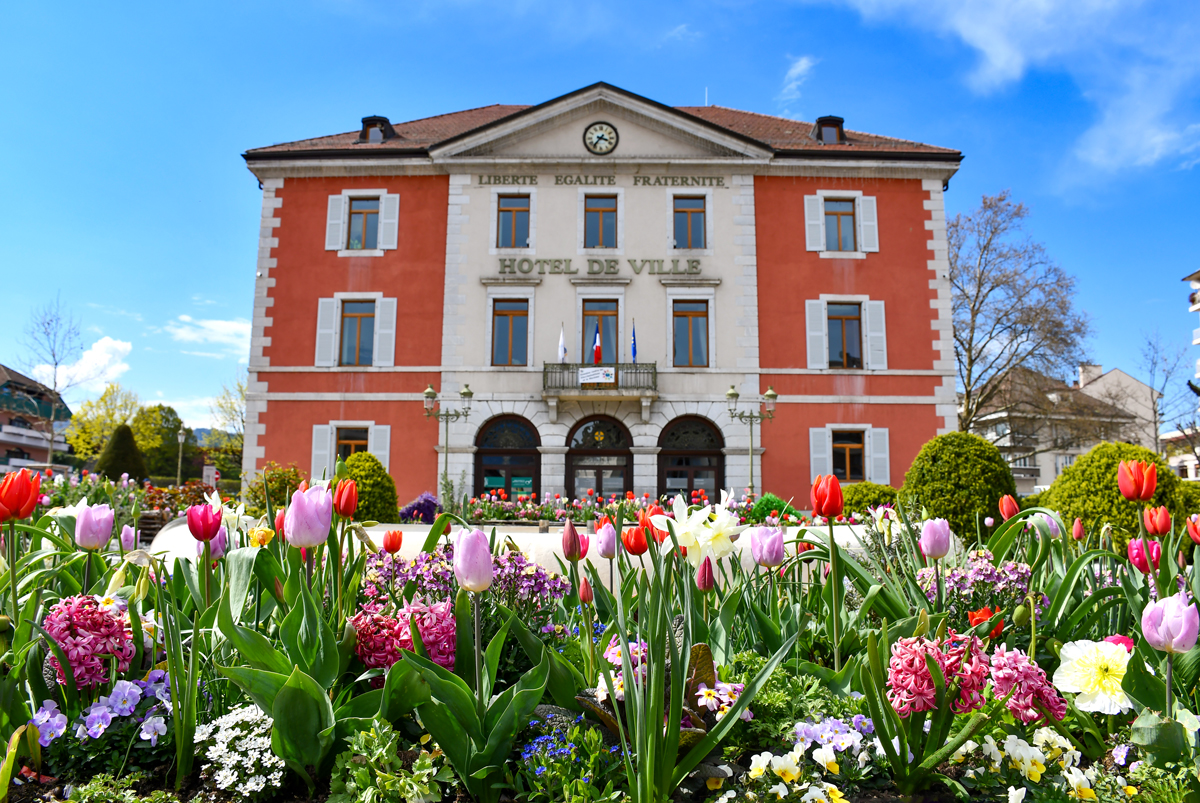
The town-hall (Hôtel de Ville) on Place de la République © French Moments
A good starting point is the area around the Town Hall, or Hôtel de Ville. From there, make your way towards the upper part of the old town and the remains of the castle.
The Pont Neuf

Pont-Neuf © French Moments
Pont Neuf, view of the old town © French Moments
The Pont Neuf is one of the best places to appreciate the setting of La Roche. The bridge spans the deep valley of the Foron, with the old town rising steeply above it.
From here, the view is wonderfully picturesque. Old houses cling to the slope, the town seems to climb towards the rocky promontory, and in the distance you can see the bell tower of the church. It is a good reminder that the historic town was not built at random: its position was defensive, strategic and closely linked to the shape of the land.
Rue Perrine
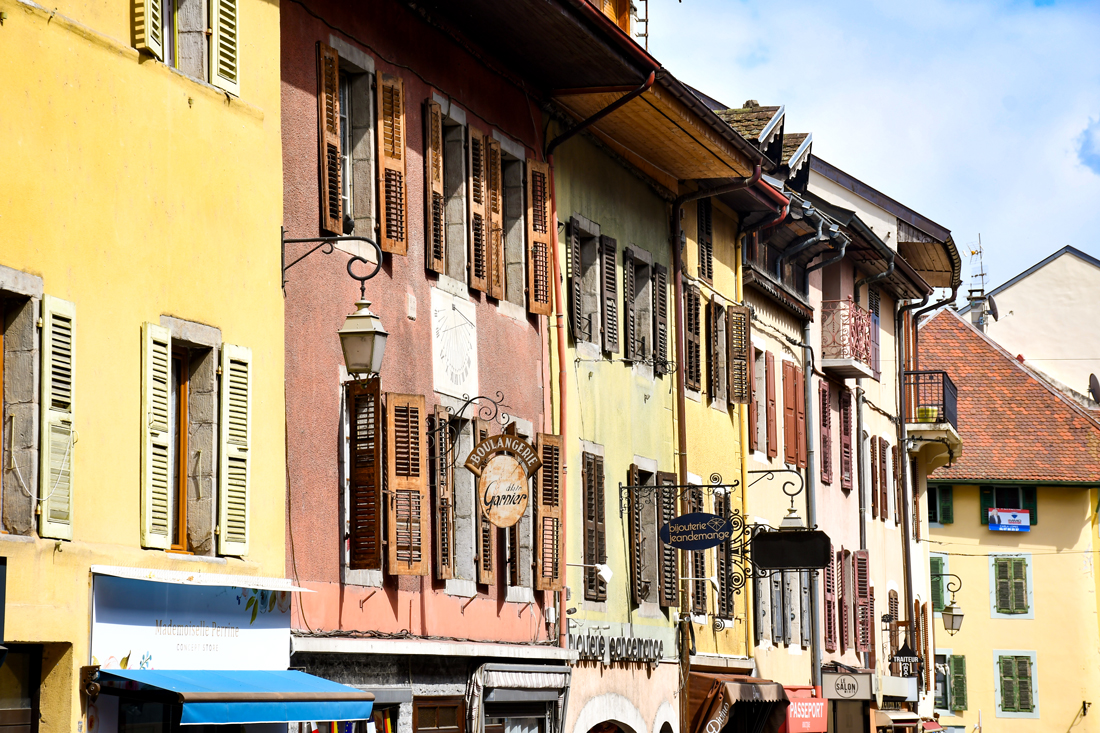
Rue Perrine: the colourful façades of La Roche-sur-Foron © French Moments
Rue Perrine is one of the most atmospheric streets in the old town. With its colourful façades, shops, bakeries, restaurants and traditional storefronts, it gives La Roche a lively and welcoming character.
The street has a slightly Italian feel, which is not entirely surprising. Before Savoy became part of France in 1860, the town belonged to the Kingdom of Sardinia, ruled by the House of Savoy. This Savoyard and Alpine identity is still visible in the architecture, colours and atmosphere of the historic centre.
Rue Perrine is also a good place to slow down. Look up at the façades, notice the shutters, the old signs, the stone details and the way the street gently leads you deeper into the medieval town.
Saint-Jean-Baptiste Church
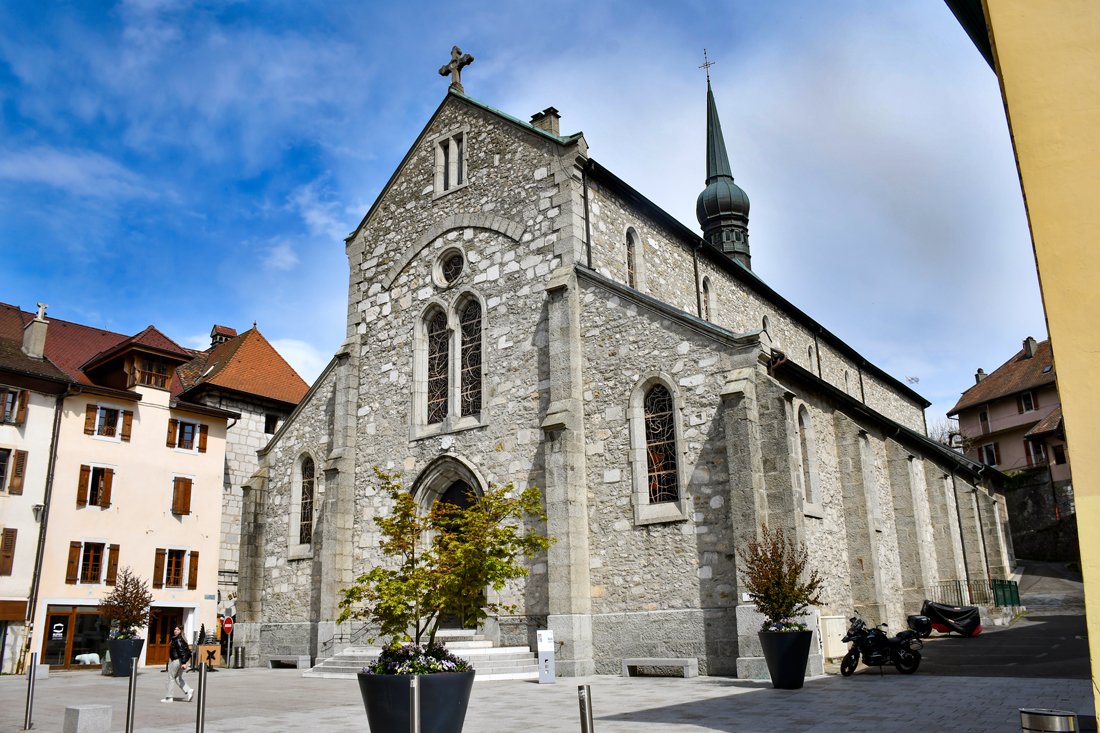
The church of La Roche-sur-Foron © French Moments
On the church square stands one of the key monuments of La Roche-sur-Foron: the Church of Saint-Jean-Baptiste.
The present building dates largely from the end of the 15th century. Its exterior walls, made of pale dressed stone, give the church a sober and solid appearance.
But the most distinctive feature is its Baroque onion-shaped steeple, which rises above the old town and can be seen from several viewpoints.

The onion-bulb tower of the church © French Moments
This kind of bell tower is one of those details that immediately places you in the Savoyard and Alpine world. It softens the silhouette of the church and gives the town a touch of character that is both elegant and familiar.
Passage de la Halle
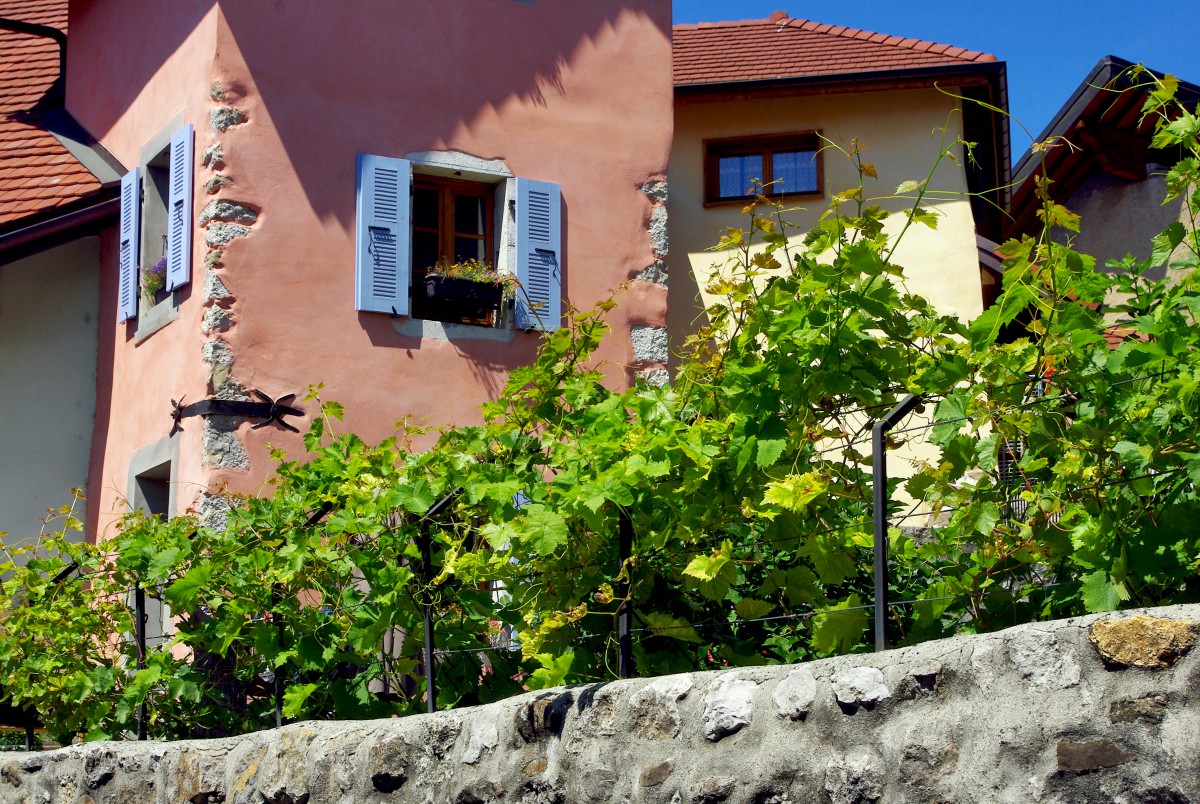
Rue de la Halle, La Roche-sur-Foron © French Moments
From the church, take Rue de l’Église and then turn right near the chevet, at the rear of the building. Here, the narrow Passage de la Halle takes you straight back into the atmosphere of the Middle Ages.
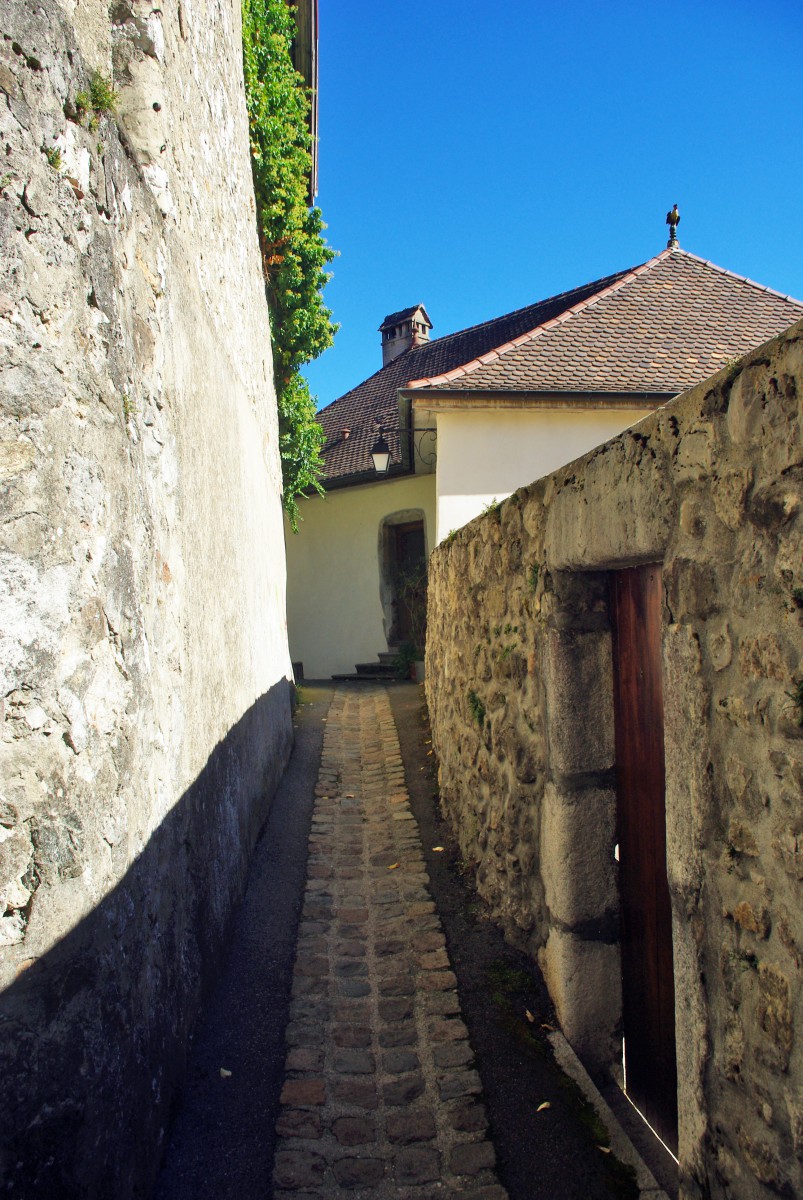
Passage de la Halle © French Moments
This little passage is one of the pleasures of exploring the historic town on foot. It is not grand or monumental, but it has the charm of old towns where the most memorable corners are sometimes found between two better-known sites.
Continue along Rue du Plain-Château to reach the upper part of the historic town.
The Plain-Château District
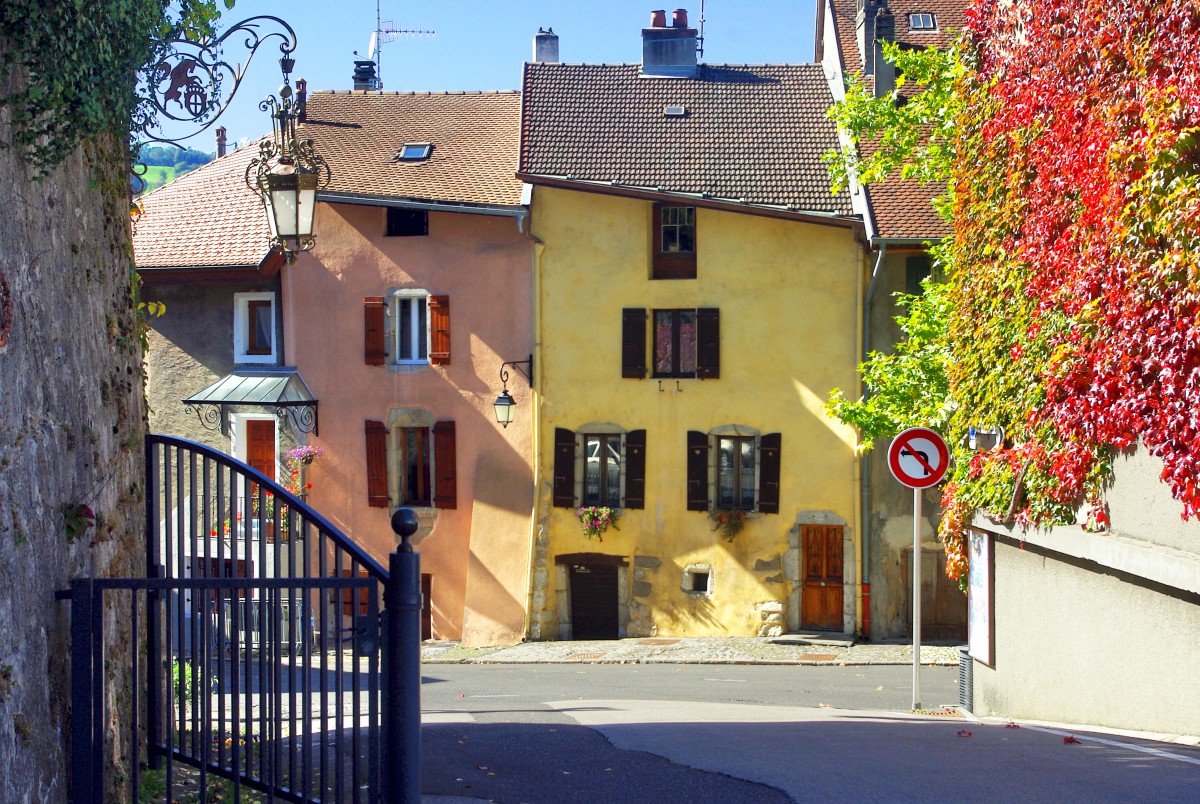
District of the Plain Château © French Moments
The Plain-Château district occupies the upper part of the old town, within the former limits of the castle. Set on the rocky promontory, it is one of the most historic areas of La Roche-sur-Foron.
This small district includes several important sites: the Tower of the Counts of Geneva, the remains of the former castle of La Roche, the Château du Saix and the Château de l’Échelle with its gardens.

Porte Falquet © French Moments
It is here that the defensive role of the town becomes most obvious. From this elevated position, La Roche-sur-Foron controlled routes towards the Arve Valley, Geneva, Annecy and the surrounding mountain areas.
The Castle of La Roche
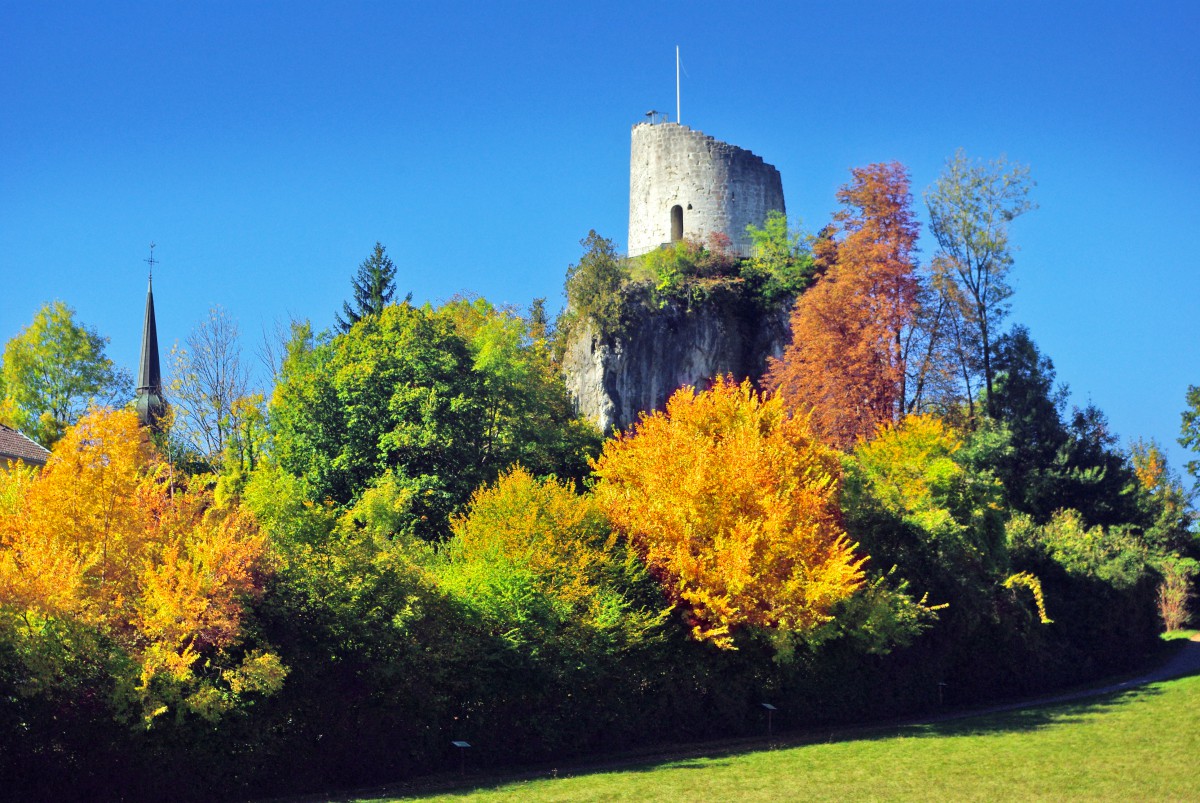
The ruined castle of La Roche © French Moments
Firmly anchored on an enormous rock, the castle of La Roche dates back to the 13th century. It once formed a powerful medieval stronghold overlooking the Foron Valley.
Today, only one major tower remains: the Tour des Comtes de Genève, or Tower of the Counts of Geneva. This tower served as the keep of the castle and is one of the most emblematic monuments in La Roche-sur-Foron.
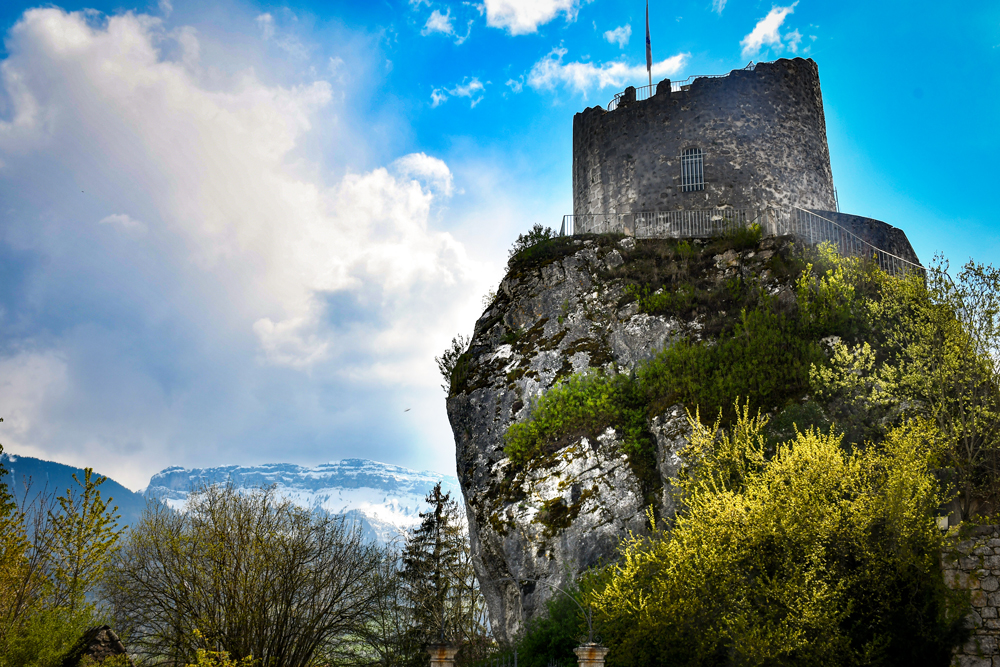
The medieval castle of the Counts of Geneva © French Moments
It was also one of the first circular keeps built in Savoy, which makes it especially interesting from an architectural point of view. Depending on opening times, visitors may be able to climb to the top of the tower by ascending 137 steps. It is worth checking current access before planning your visit.
From the top, the view helps explain why the castle was built here. You can see the old town, the valley, the surrounding hills and, on a clear day, the wider Alpine landscape.
The Château de l’Échelle
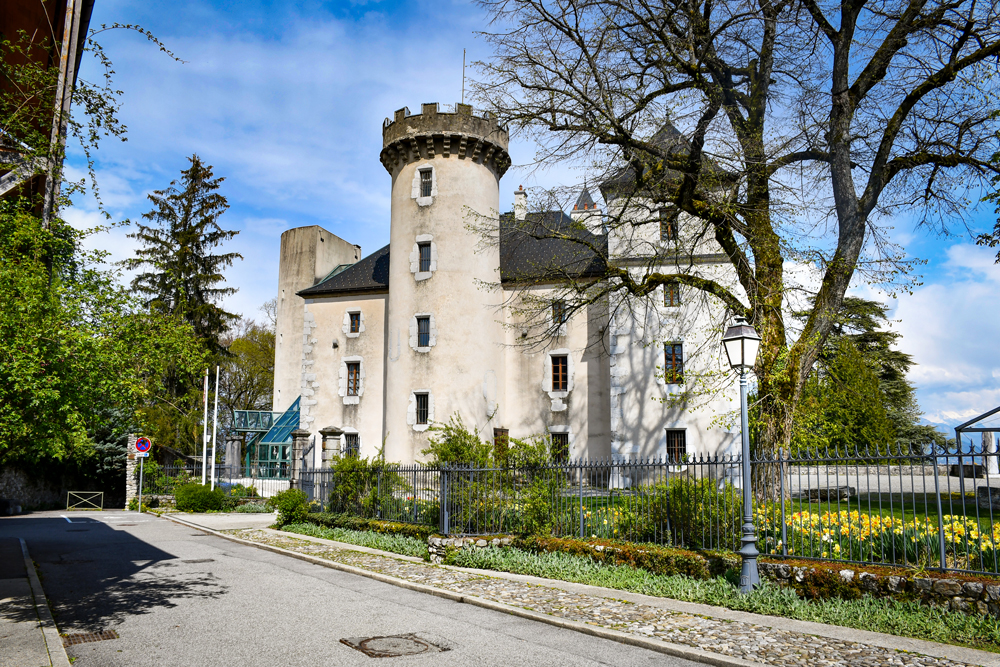
Château de l'Echelle © French Moments
The Château de l’Échelle is an old fortified house dating from the 14th century. With its two crenellated towers, it has retained a strong medieval character.
The manor was built at the edge of the cliff to guard the road coming from Bonneville and the Arve Valley. Its position is therefore not only picturesque, but also strategic.
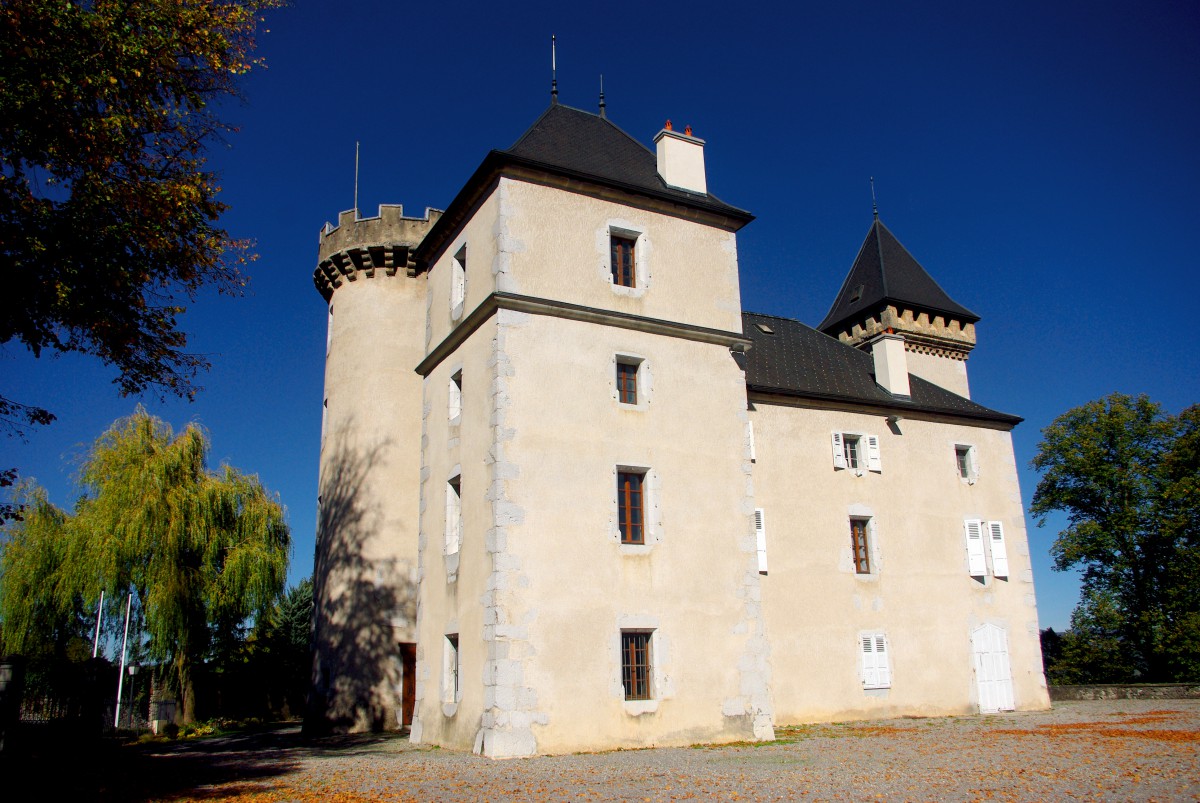
Château de l'Échelle © French Moments
Today, the Château de l’Échelle belongs to the municipality and has been converted into a cultural centre. It is another example of how the town has preserved its heritage while giving old buildings a new role.
The Park of the Château de l’Échelle
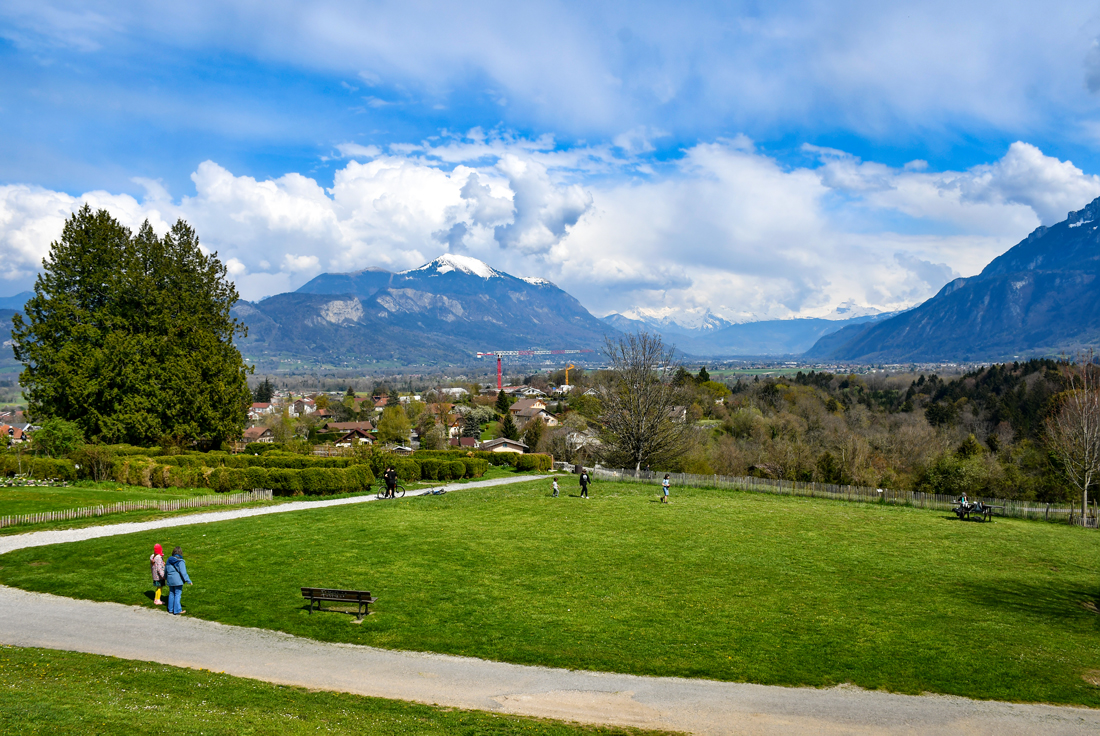
Parc du château de l'Echelle and the view © French Moments
Formerly the gardens of the Château de l’Échelle, the Parc de l’Échelle is now open to the public. Covering around seven hectares, it is a pleasant green space above the town and one of the best places to enjoy the wider landscape.
The park is known locally for its floral displays, but its views are just as memorable. To the east, the panorama opens over the Arve Valley, between Le Môle and the Grand Bargy. In the distance, on a clear day, you may also see higher snowy summits such as the Dents Blanches, Grand Mont Ruan and Mont Buet.
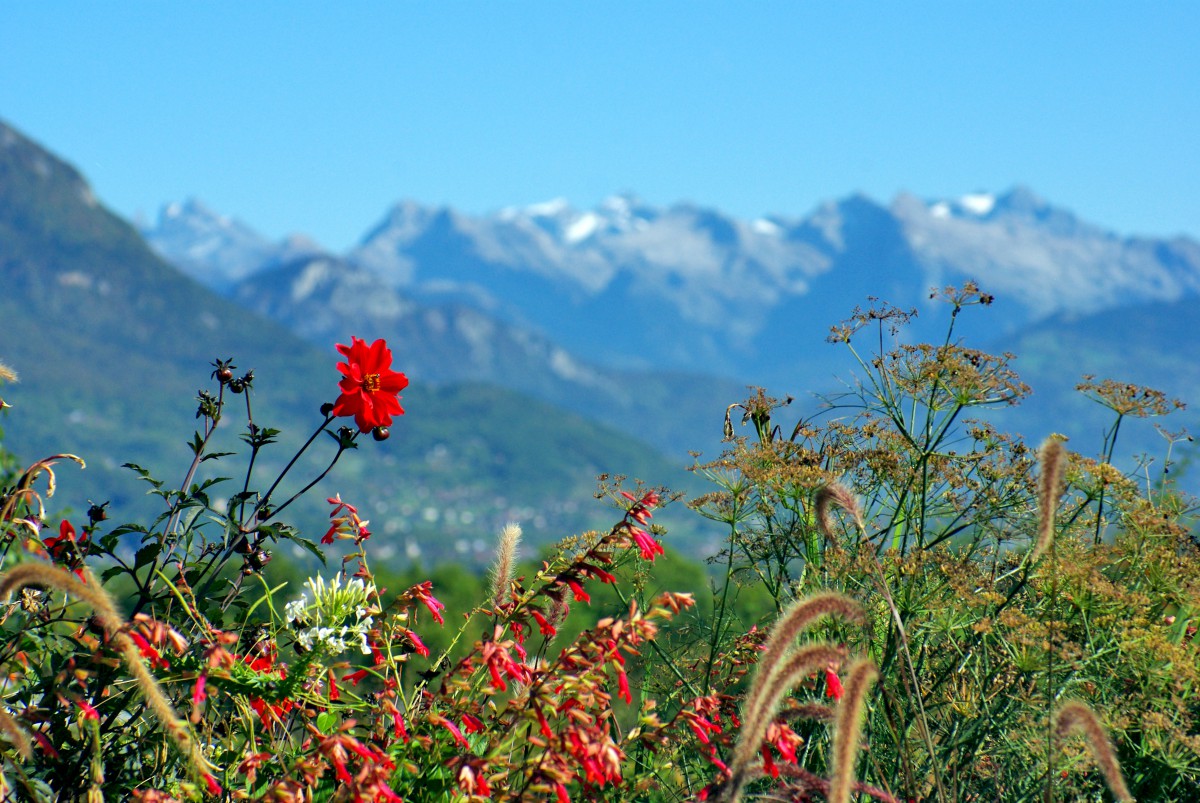
View of the Alps from the Parc du Château de l'Échelle © French Moments
To the west, the Jura Mountains can also be visible in good weather, especially La Dôle.
This is one of the places where La Roche-sur-Foron’s geography becomes beautifully clear. The town is not only historic; it is also perfectly placed between lake, valley, mountains and routes of passage.
The Château du Saix

Château du Saix © French Moments
The Château du Saix is another old fortified house in the upper town. Dating from the 12th century, it was built on the cliff to defend the northern and north-eastern sides of La Roche-sur-Foron.
Unlike the Château de l’Échelle, the Château du Saix is private and not open to visitors. Even so, it contributes to the medieval atmosphere of the Plain-Château district and reminds us how densely fortified this small town once was.
Rampe du Crétet and Rue du Silence
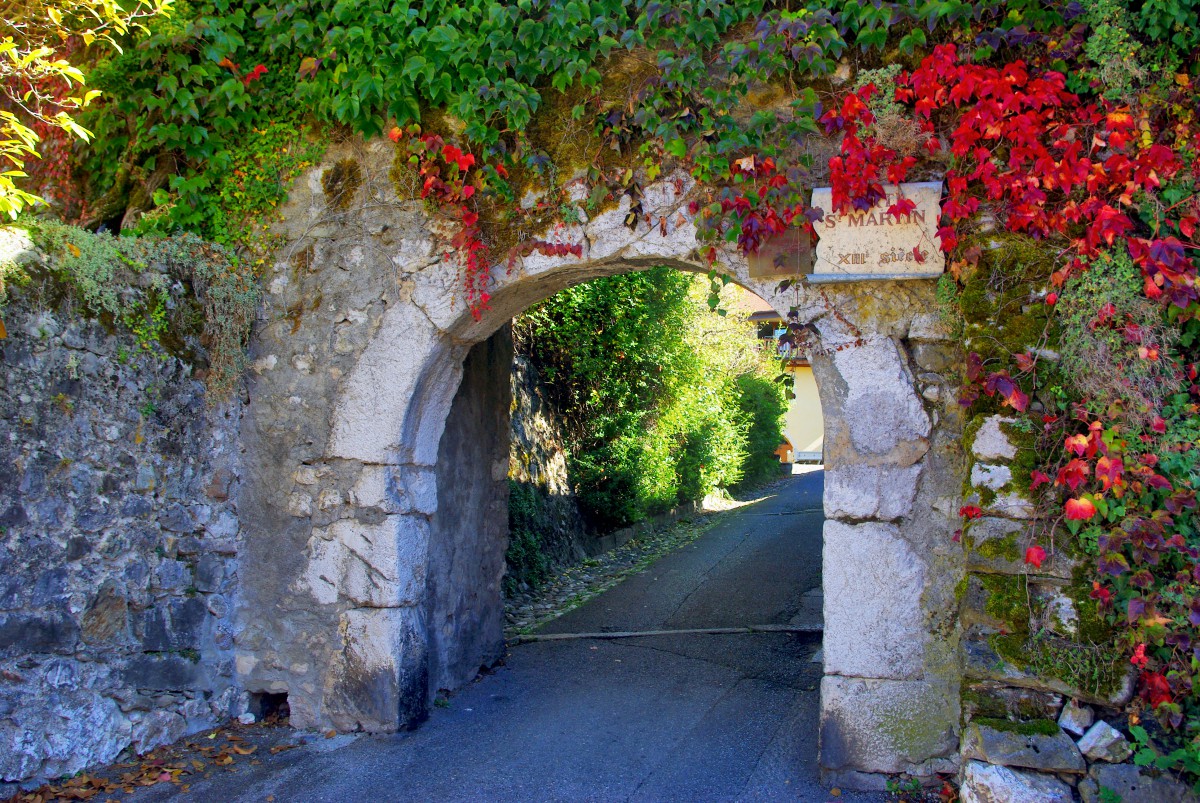
The St. Martin Gate (13th c) © French Moments
From the upper town, go down the steep Rampe du Crétet, passing under the arch of the old 13th-century Porte Saint-Martin. This gate is one of the surviving traces of the medieval defences of La Roche-sur-Foron.
Turn left into Rue des Remparts, which leads towards one of the most charming streets in the old town: Rue du Silence.
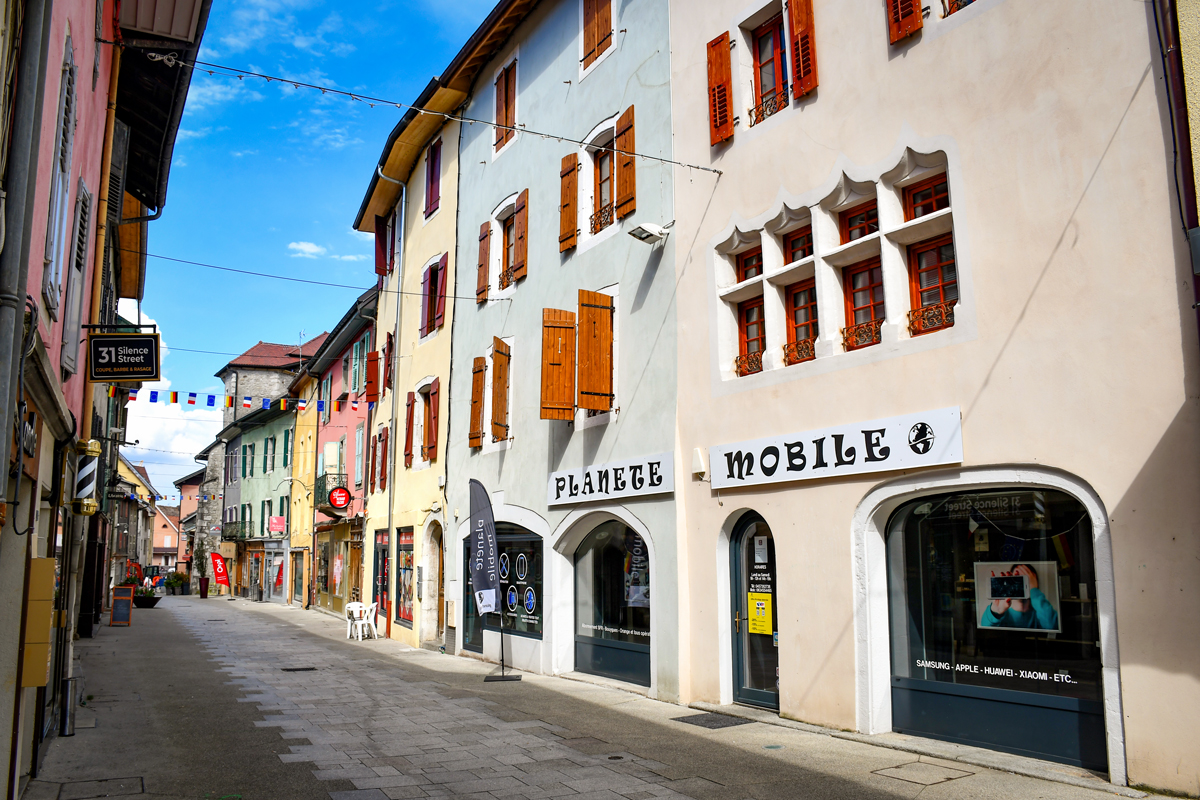
The shopping street of Rue de Silence © French Moments
With its coloured houses and Renaissance atmosphere, Rue du Silence is a fitting final stage in a walk through La Roche-sur-Foron. The name itself is wonderfully evocative. Whether the street is truly silent may depend on the time of day, but it certainly has the quiet charm of a place that has seen many centuries pass.
From here, you soon reach Place de la République. The Town Hall is just at the end of the square, bringing the walk neatly back to where it began.
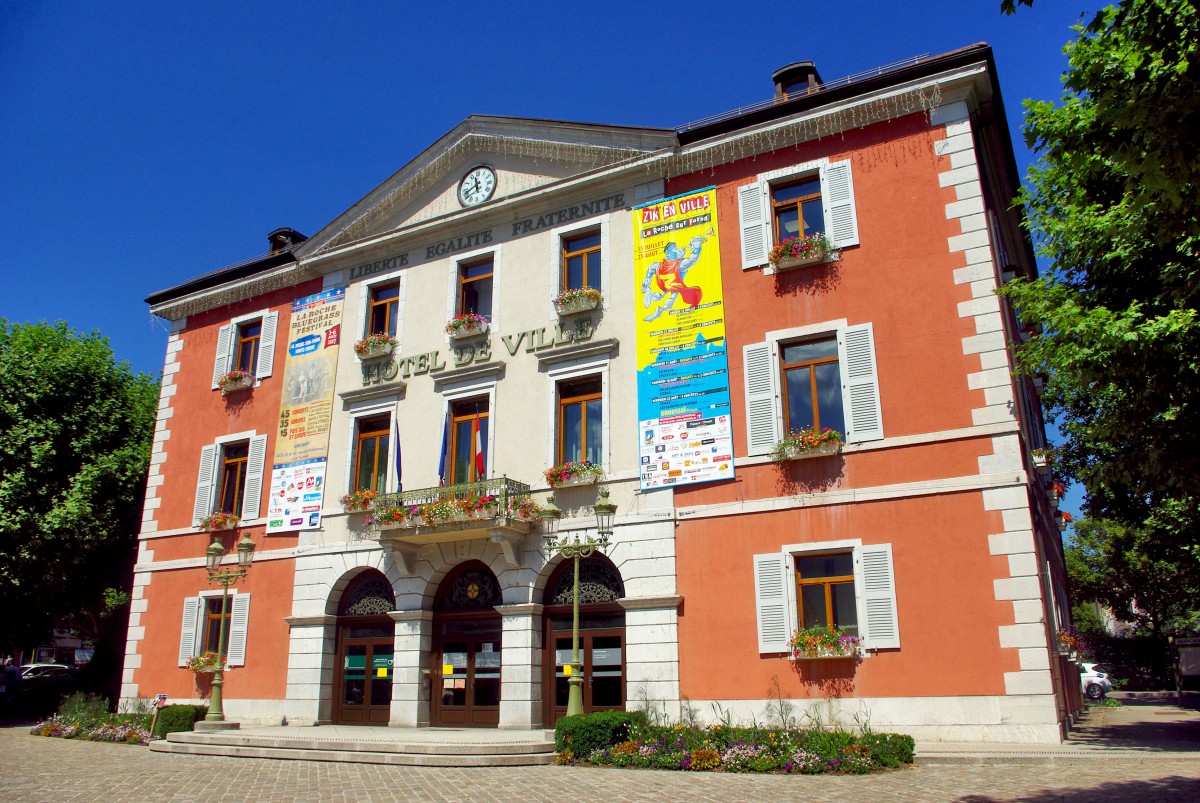
City-Hall of La Roche-sur-Foron © French Moments
How to Get to La Roche-sur-Foron and Practical Tips
La Roche-sur-Foron is very easy to reach, which is one of the reasons it makes such a good stop between Geneva, Annecy and the Arve Valley.
By Road
By car, La Roche-sur-Foron sits at the crossroads of several important routes in Haute-Savoie. It is roughly 28 km from Geneva via the A40, 38 km from Annecy via the A410, and about 60 km from Chamonix-Mont-Blanc via the A40.
This makes the town a convenient place to break a journey, especially if you are travelling between Geneva, Annecy, Cluses, Sallanches or the Mont Blanc area.
Parking is usually easiest around the lower part of the town, especially near the Hôtel de Ville. From there, you can walk up into the old town and follow the historic route towards the castle district.

The old town of La Roche-sur-Foron © French Moments
By Train
La Roche-sur-Foron is also accessible by train. The station has connections towards Annemasse, Annecy, Cluses and Saint-Gervais-les-Bains, making it possible to visit without a car if you are already staying in the region.
The railway is especially useful if you want to combine La Roche-sur-Foron with other places in Haute-Savoie, such as Annecy, Bonneville or the Arve Valley.
Best Time to Visit La Roche-sur-Foron
My favourite season for visiting the medieval town is summer, when the town is lively and the tourist office often organises guided tours, cultural events and musical festivals.
La Roche is also known for its floral displays and has received the “3 flowers” label in the Villes et Villages Fleuris scheme. In summer, this adds colour to the old streets and squares.
Autumn is another lovely time to visit. The main monuments, old houses and castle district are surrounded by trees turning gold, orange and red, giving the town a softer and more nostalgic atmosphere.
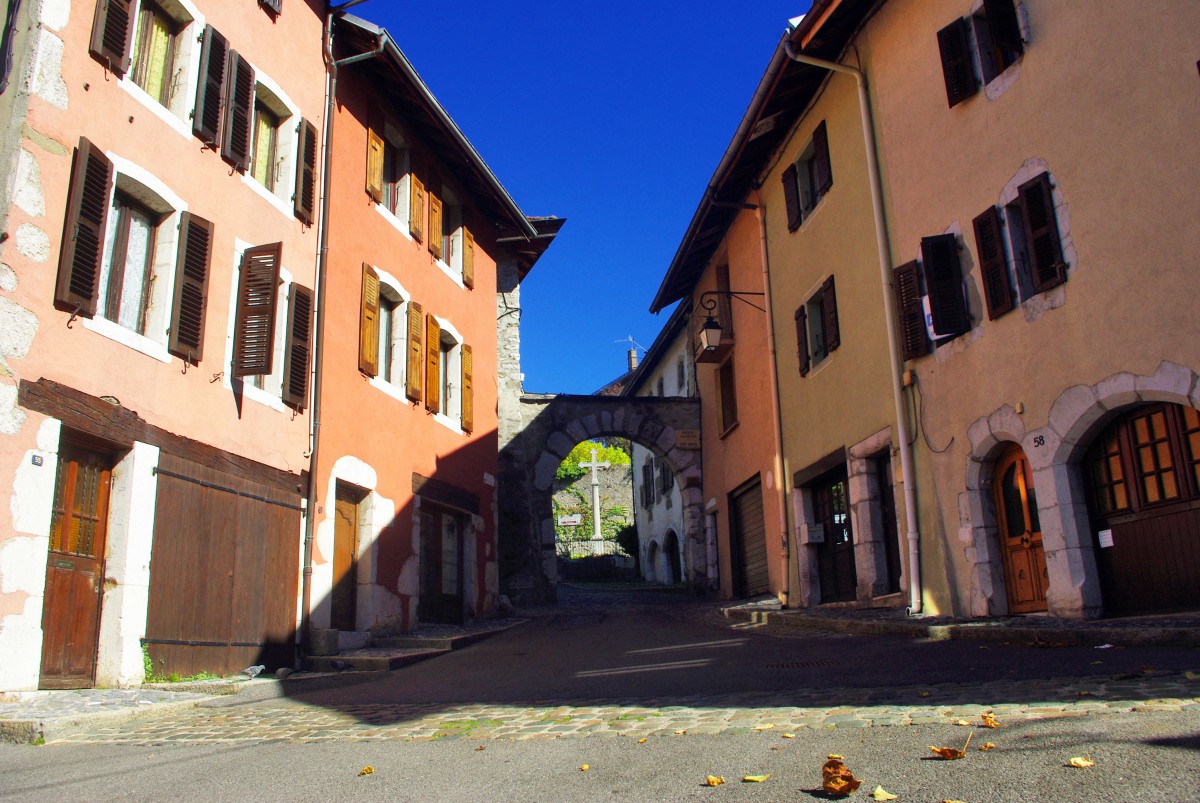
The old town centre of La Roche-sur-Foron © French Moments
Where to Enjoy the Best Views of La Roche-sur-Foron
If you want fine views of La Roche-sur-Foron, its church, towers and historic centre, there are several good options.
One of the easiest is to take the D2 road that climbs towards Thorens-Glières. From this road, you can look back towards the town and see La Roche-sur-Foron set against the surrounding hills and mountains.
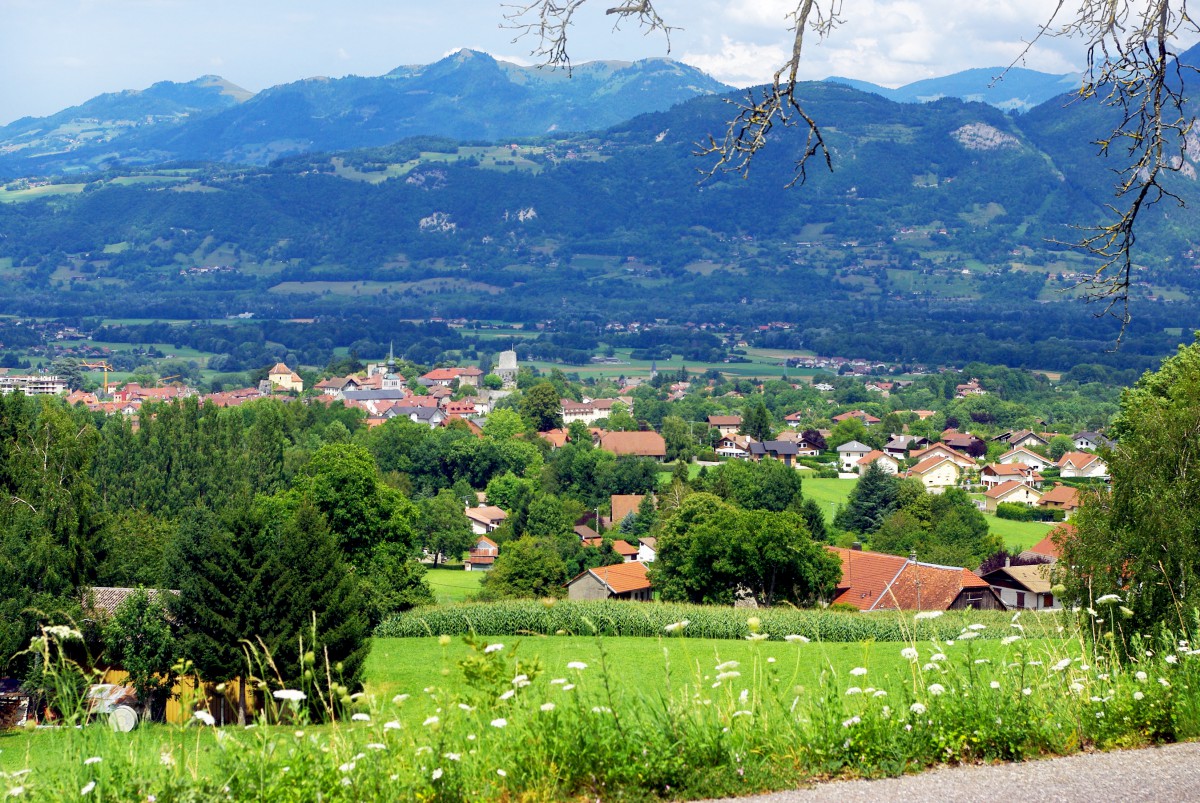
General view of La Roche-sur-Foron from the Route de Thorens © French Moments
For a more panoramic view, climb Le Môle. From the summit, the outlook over the Arve Valley, Bonneville, the surrounding mountains and the Pays Rochois is superb. It is one of the best places to understand the geography of this part of Haute-Savoie.
Another excellent viewpoint is the old site of Faucigny. From the ruins of the castle, you can enjoy a wide view over the region of La Roche-sur-Foron and the surrounding countryside. It is also a good way to connect the town with the wider history of the Faucigny.
Where to Stay in La Roche-sur-Foron
La Roche-sur-Foron can be a practical base if you want to explore this part of Haute-Savoie without staying in a busier destination such as Annecy, Geneva or Chamonix.
The town offers a small selection of hotels, apartments and guest accommodation, with further options in the surrounding area. It can work well for visitors who want to discover the Pays Rochois, the Arve Valley, Bonneville, the Plateau des Bornes, the Salève, Annecy or even Geneva.
If accommodation in La Roche-sur-Foron itself is limited for your dates, you can also look at nearby towns such as Bonneville, Annemasse, Saint-Pierre-en-Faucigny, Annecy or Geneva, depending on your itinerary.
Browse the map below to compare available accommodation in and around La Roche-sur-Foron.