
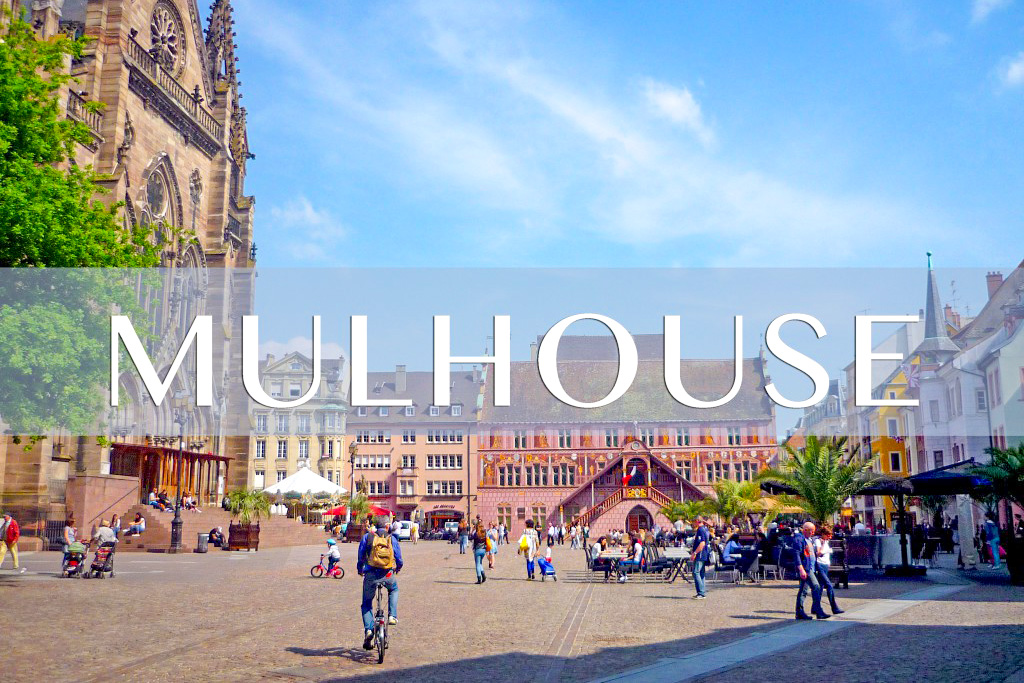


Mulhouse is not always the first place that comes to mind when planning a trip to Alsace.
Most visitors dream first of Strasbourg, Colmar, Riquewihr, or a wine village surrounded by vineyards where the storks appear to be posing for the postcard.
And yet, Mulhouse is well worth a stop.
Located in southern Alsace, close to Switzerland, Germany, the Sundgau and the Vosges, the city has a personality all of its own.
It may be less “picture-postcard Alsace”, but it is also far more surprising than many people imagine.
Mulhouse is a city of history, museums, textiles, industry, popular traditions and contrasts.
In short, it is not a city that reveals itself at first glance. But once you take the time to discover it, Mulhouse has plenty to tell.
Why visit Mulhouse in Alsace?
To visit Mulhouse is to discover another side of Alsace.
Here, the scenery is not all half-timbered houses and wine cellars.
Mulhouse has its own character: more urban, more industrial, sometimes more discreet, but also extremely rich.
This is a city that long looked towards Switzerland, developed through the textile industry, saw powerful industrial families rise to prominence, and still preserves a very distinctive heritage today.
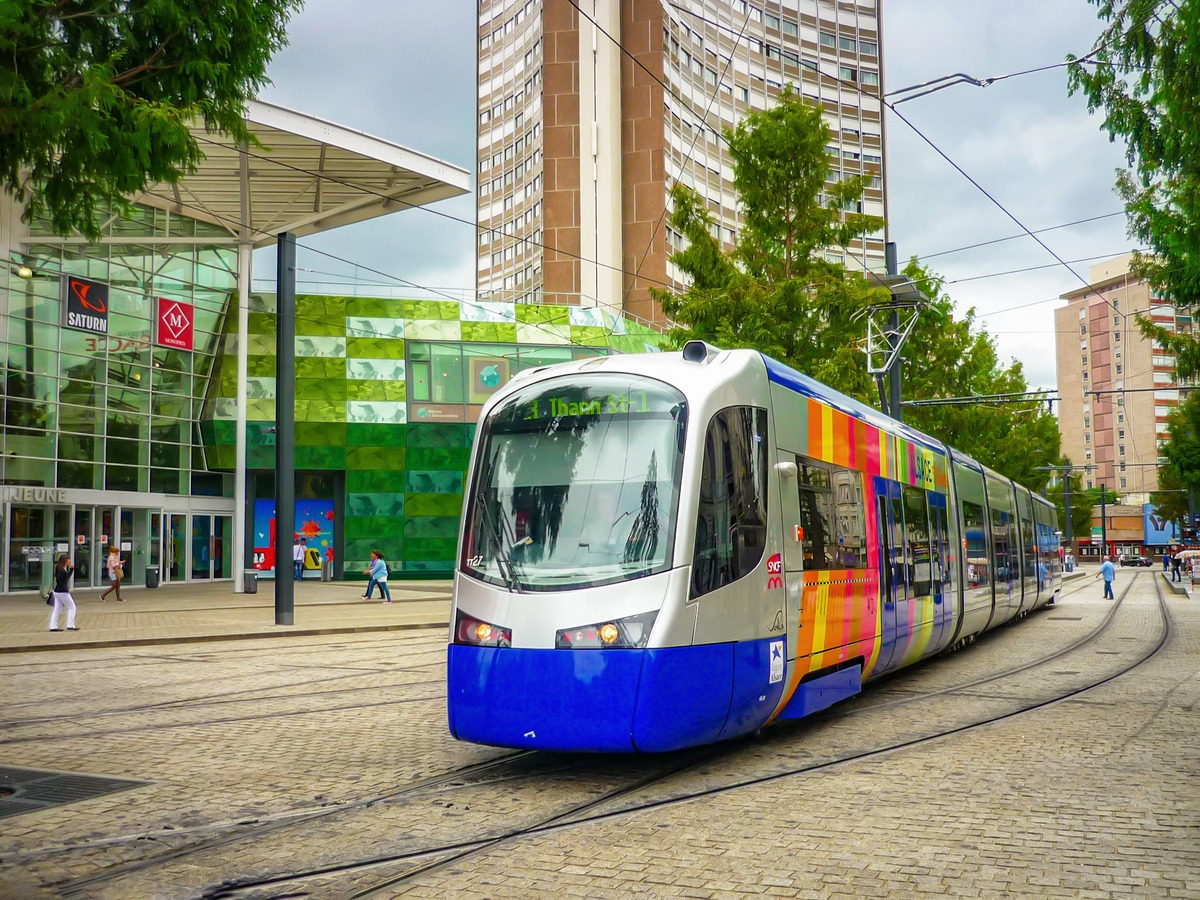
Tramway at Mulhouse © French Moments
People come here for its technical museums, among the most famous in Europe. They also come for its historic centre, the Place de la Réunion, its elegant residential districts on the heights, its Christmas traditions and the many excursions that can be made from the city.
And let’s be honest: Mulhouse is often underestimated. Which means you can still visit it without feeling as though you are following a tourist procession at forced-march pace. For that alone, it deserves a few bonus points.
Mulhouse, a city with a truly distinctive history
Mulhouse has a unique story within the Alsatian landscape.
Before becoming French in 1798, the city was an autonomous republic allied with the Swiss Confederation.
This past partly explains its particular character, somewhere between Alsace, Switzerland and the Germanic world. Mulhouse has never been quite like other towns in the region, and it sometimes seems rather proud of the fact.
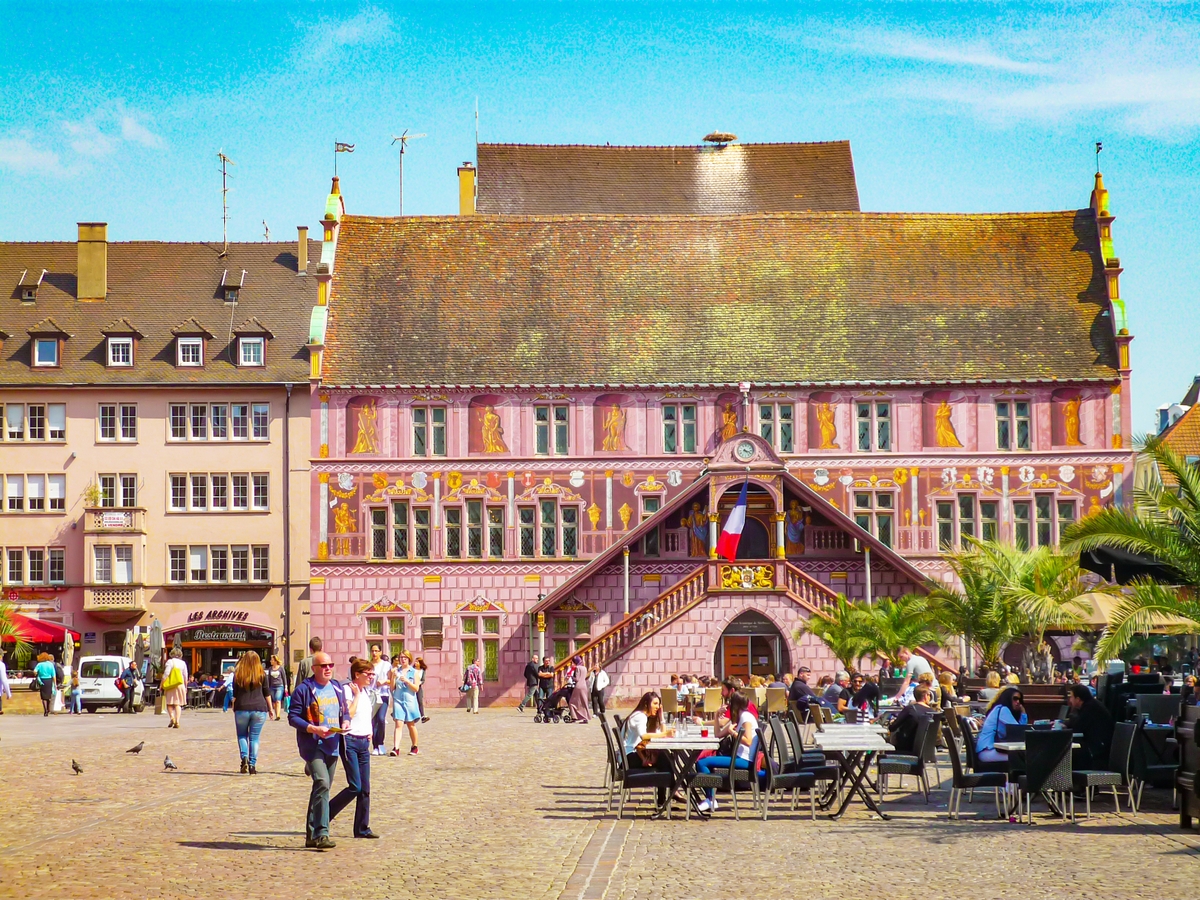
Place de la Réunion, Mulhouse © French Moments
From the 18th century onwards, it became a major industrial centre, particularly thanks to textile printing. Factories developed, fortunes were made, and whole districts were transformed.
Mulhouse was then nicknamed the “French Manchester”, which is still more flattering than “the city where it rains all the time”, although Manchester certainly has many other qualities.
This industrial history has left a deep mark on the city. It explains its museums, its architecture, its workers’ housing estate, the grand villas of the Rebberg and its textile identity, which is still visible today, especially during the Christmas season.
What to see in the historic centre of Mulhouse
The historic centre of Mulhouse is not huge. So do not expect a medieval maze on the scale of Strasbourg, or a “Little Venice” like Colmar. But it does have genuine charm, especially around the Place de la Réunion.
This is the historic heart of the city, and the place where you best understand the identity of Mulhouse.
The Place de la Réunion
The Place de la Réunion is the one spot you really should not miss in Mulhouse.
It brings together several of the city’s emblematic monuments: the Temple Saint-Étienne, the old Town Hall with its decorated façade, the Hallebardier Fountain and the colourful houses surrounding the square. The whole ensemble forms a harmonious, lively setting, with an almost Swiss feel in places.
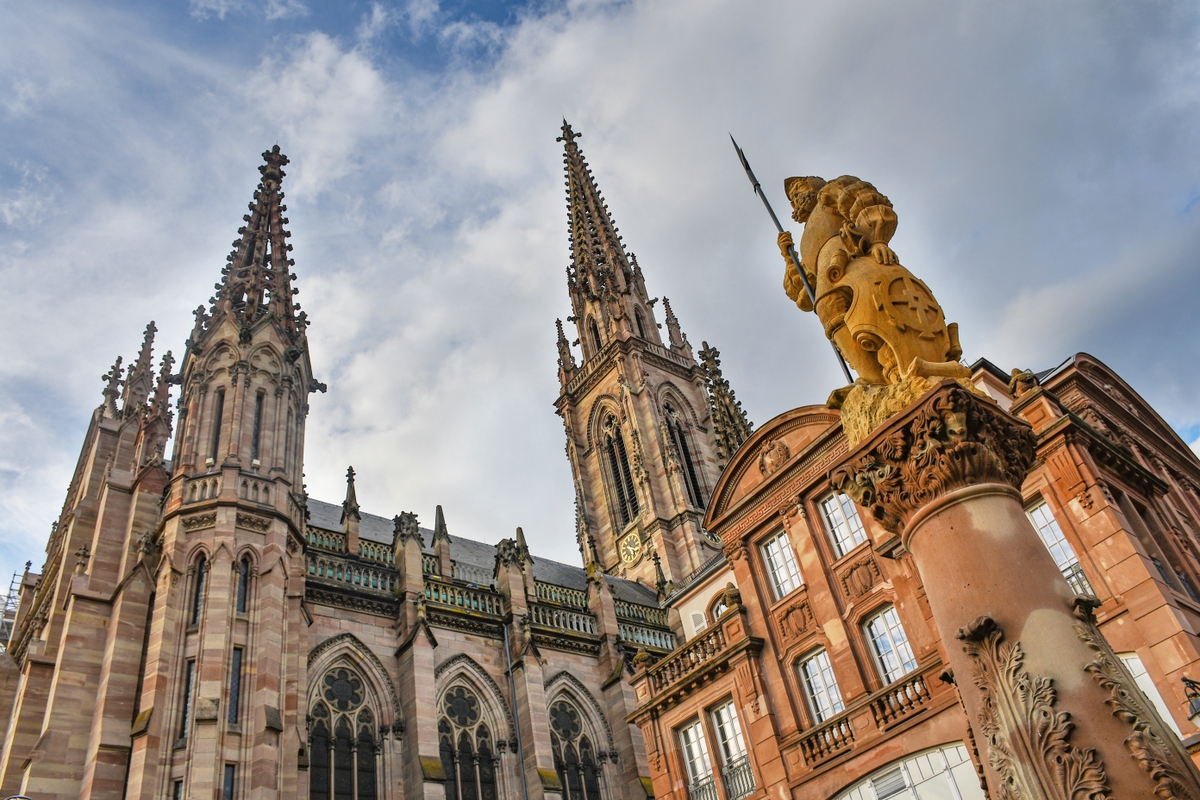
Place de la Réunion, Mulhouse © French Moments
On fine days, the terraces give the square a pleasant atmosphere. You can stop here for a coffee, admire the façades, watch the comings and goings of the town centre, or simply enjoy the moment. It may not be Place Stanislas in Nancy — allow me this little Lorraine infidelity — but it has real personality.
It is also an excellent starting point for exploring the little streets of old Mulhouse.
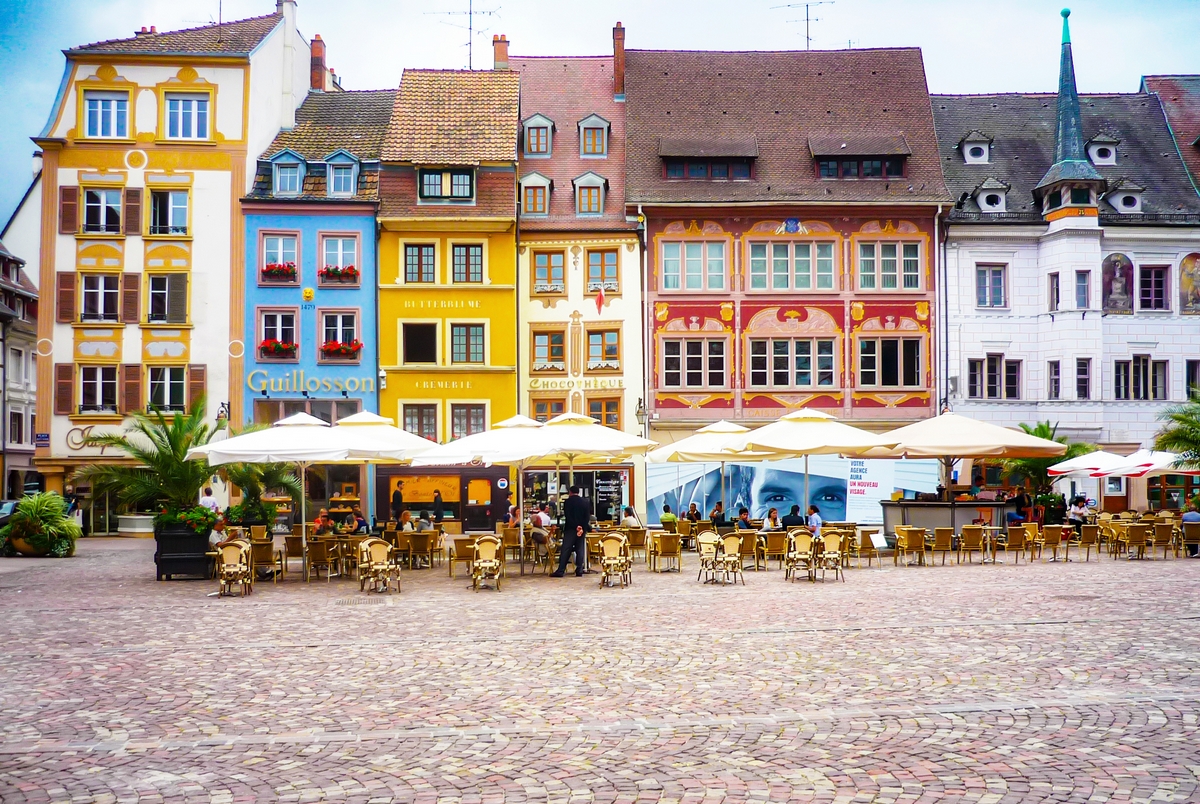
Place de la Réunion © French Moments
The Bollwerk and the streets of the old town
Among the medieval remains still visible today, the Bollwerk Tower is one of the symbols of Mulhouse. It reminds us that the city was once fortified.
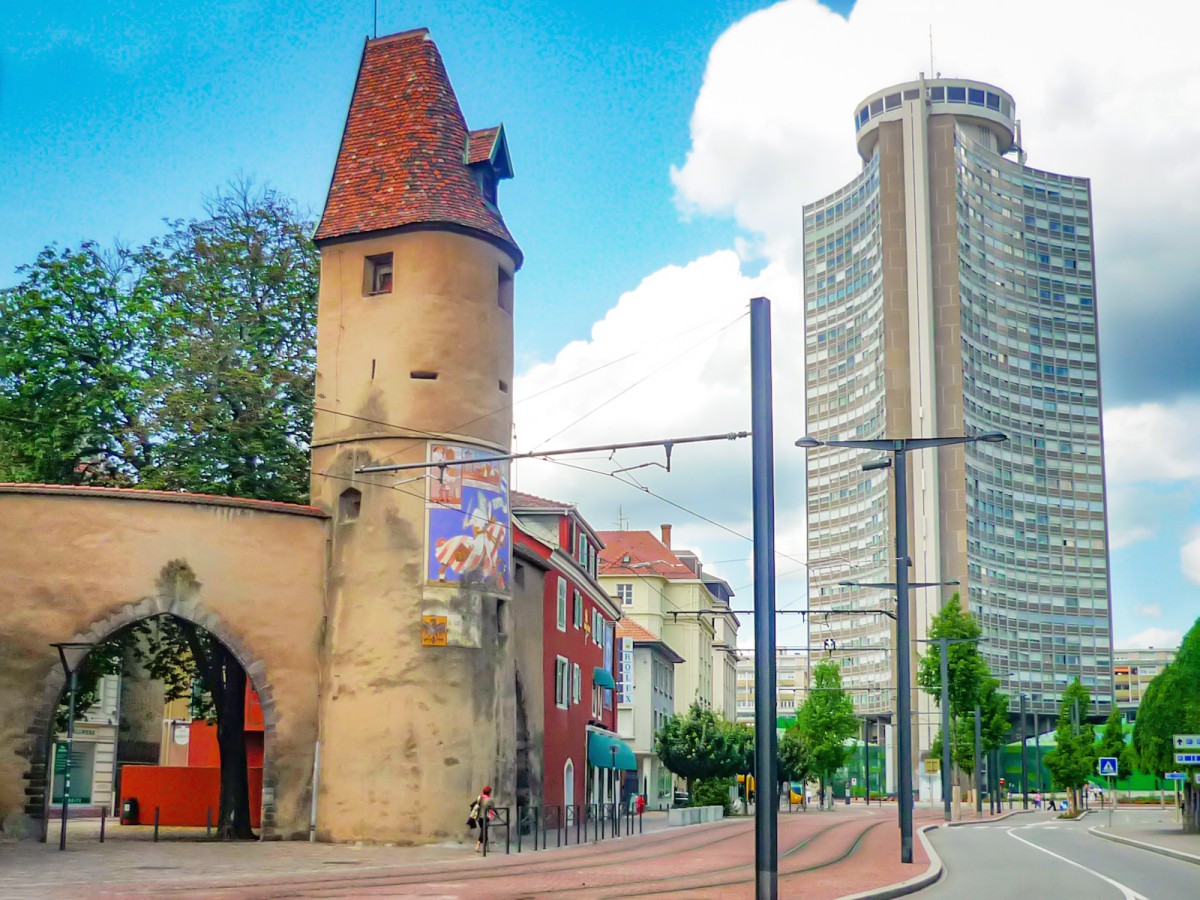
Bollwerk Tower © French Moments
Around the centre, a few old streets still preserve something of the atmosphere of old Mulhouse, with their shops, colourful façades and sometimes discreet details.
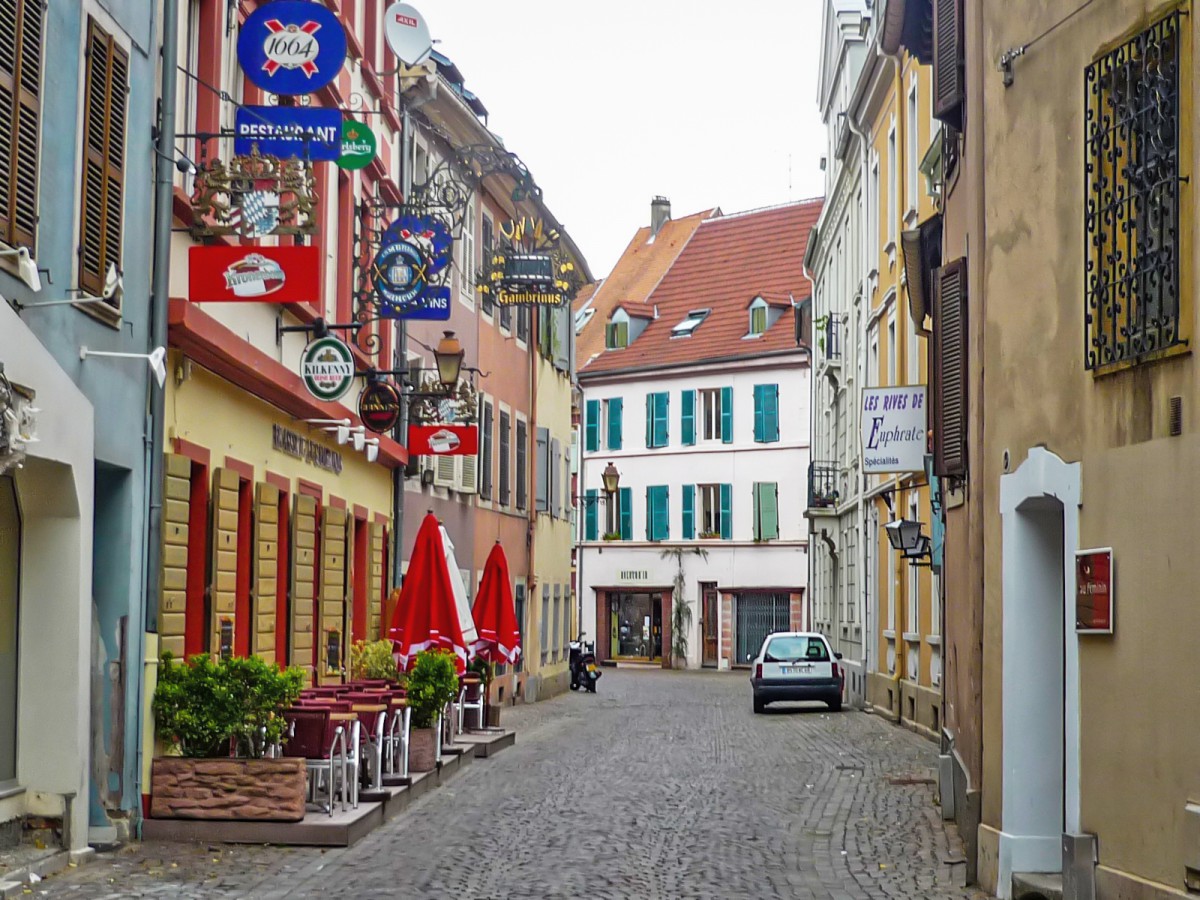
Rue des Franciscains © French Moments
The old centre is easy to explore on foot. In half a day, you can already see the essentials: the Place de la Réunion, the Temple Saint-Étienne, the old Town Hall, the Bollwerk and a few shopping streets.
Mulhouse, capital of technical museums
This is probably what gives Mulhouse much of its tourist reputation: its museums.
The city is often described as the European capital of technical museums, and this is not just an empty phrase. Here, fans of cars, trains, electricity, textiles and industrial heritage will find plenty to keep them busy.
And even if you are not especially passionate about locomotives or gleaming engines, these museums are well worth visiting. They reveal an important part of French and European industrial history.
The Cité de l’Automobile
The Cité de l’Automobile is one of the great must-see attractions in Mulhouse. It houses the famous Schlumpf Collection, with vintage cars, prestigious models and an impressive collection of Bugattis.

Museums in Mulhouse - Cité de l'Automobile © French Moments
It is the kind of museum where you walk in thinking, “I’m not especially interested in cars,” and come out having photographed ten bonnets, three grilles and a Bugatti as if you were secretly preparing for a historic rally.
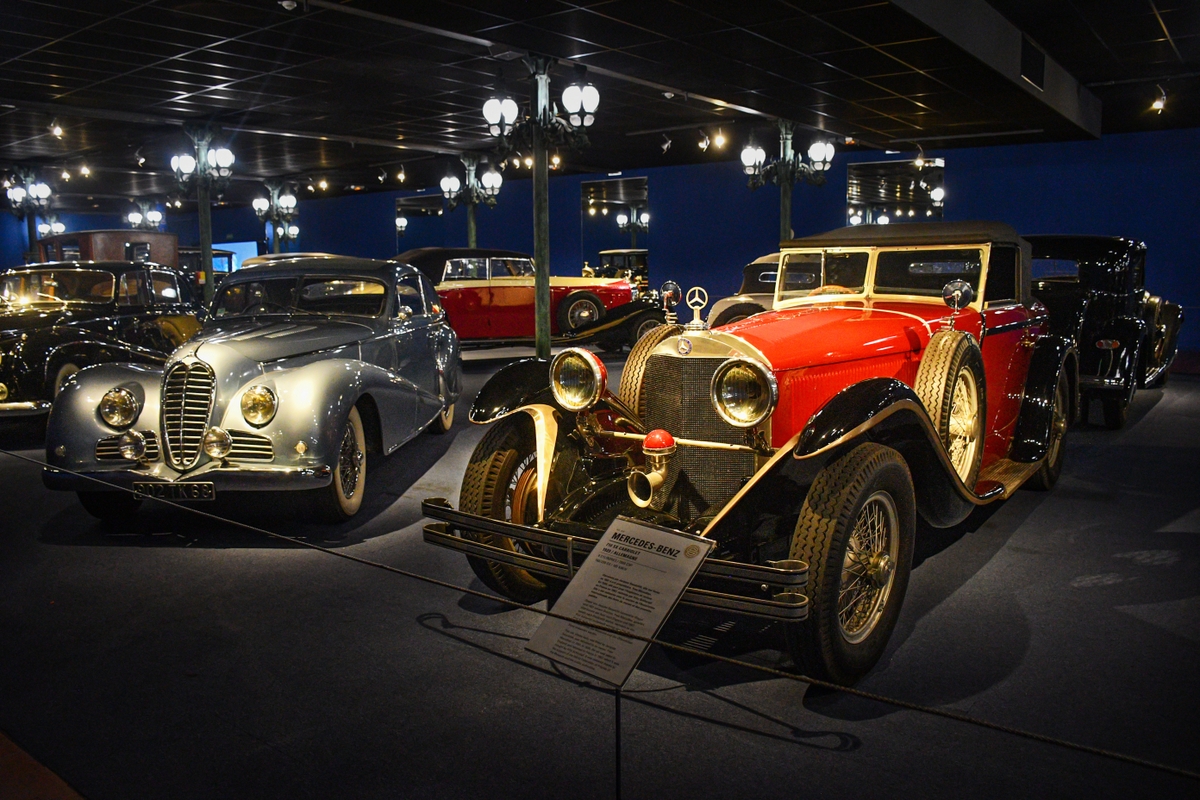
Musée de l'automobile © French Moments
The displays help visitors understand the evolution of the motor car, but also the fascination of an age with mechanics, luxury, speed and progress.
The Cité du Train and the other museums
Another major museum in Mulhouse is the Cité du Train. It is an impressive place dedicated to the history of the railway. Locomotives, carriages, travel settings, official trains and the world of railway workers: the museum allows you to travel through several eras of French rail history.

Cité du Train © French Moments
There are also other fascinating places to visit, such as the Musée Electropolis, dedicated to electricity, and the Musée de l’Impression sur Étoffes, which recalls the importance of textiles in the history of Mulhouse.
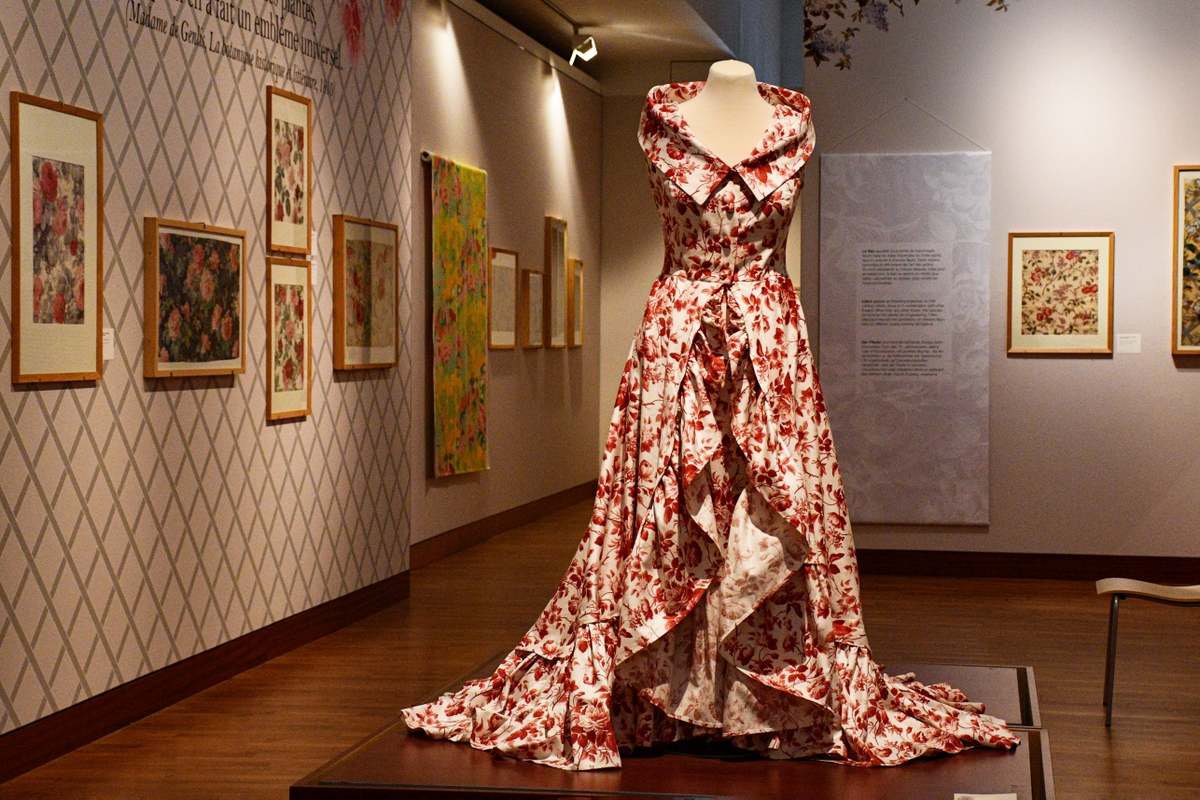
Musée de l'impression sur étoffes © French Moments
If you enjoy museums, allow enough time. Mulhouse can easily fill an entire weekend with its major collections alone.
What to do in Mulhouse throughout the seasons
Mulhouse is not only a city of museums and heritage. It also lives to the rhythm of its events.
The Mulhouse Christmas Market
The Mulhouse Christmas Market is one of the most original in Alsace, because it highlights the city’s textile identity. Every year, a special Christmas fabric is created to decorate the streets, façades and chalets.
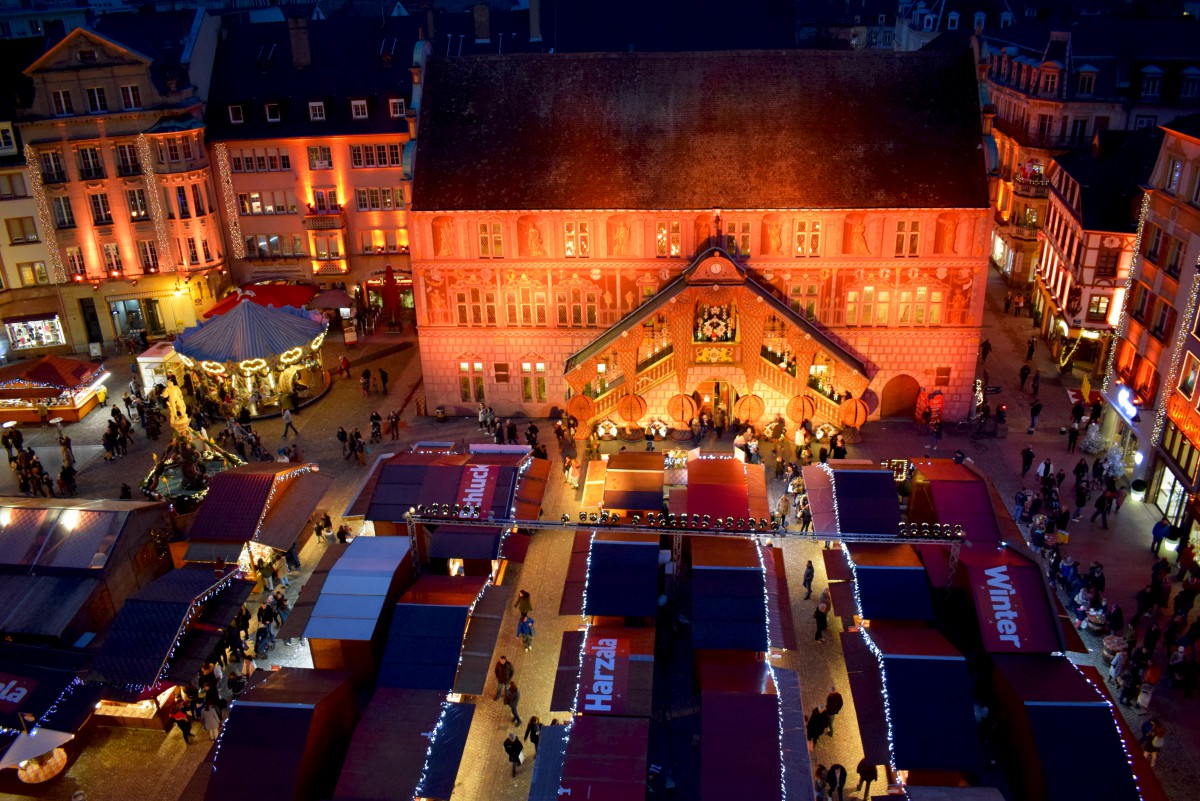
Mulhouse christmas market © French Moments
Around the Place de la Réunion, the atmosphere becomes especially warm and festive.
The lights, decorations and smells of mulled wine transform the historic centre.
And as always in Alsace at Christmas, it is wise to leave a little room in your stomach. You never know when a bredala might suddenly appear.
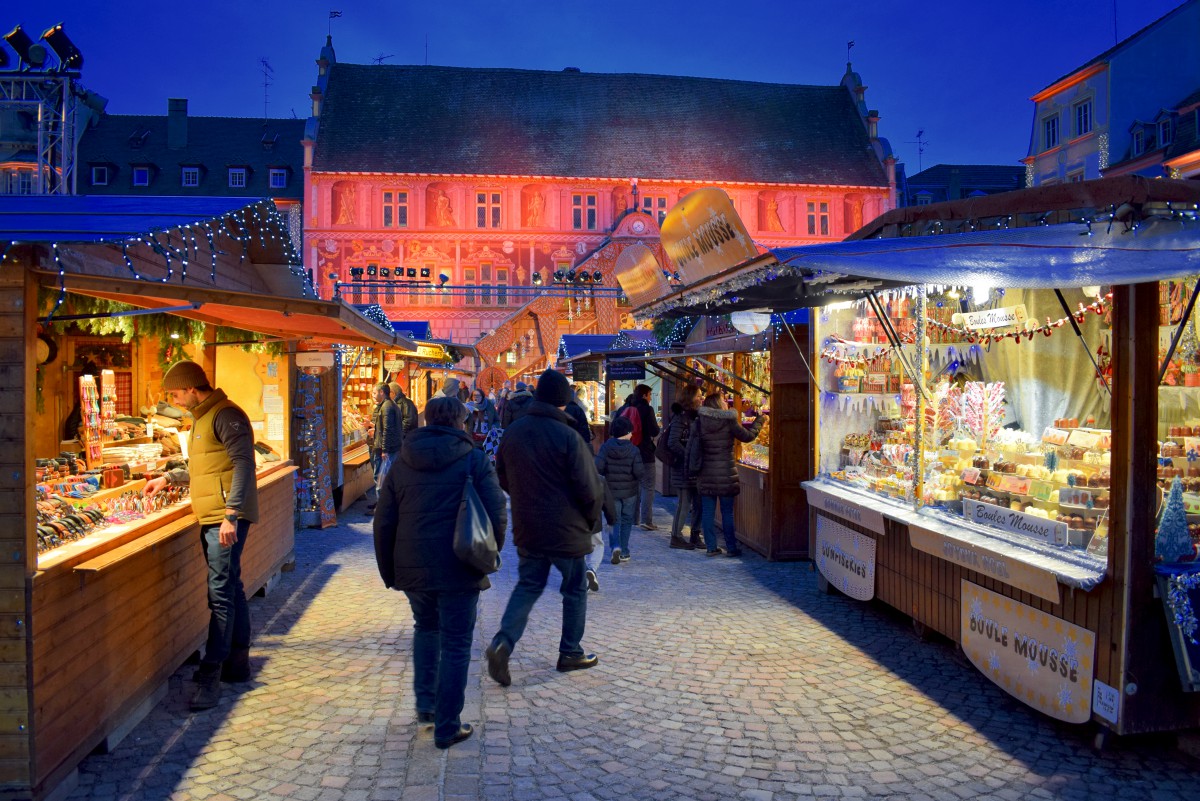
Mulhouse Christmas Market on place de la Réunion © French Moments
The Mulhouse Carnival
Another important tradition is the Mulhouse Carnival. Less well known to visitors than the Christmas markets, it is nevertheless part of the city’s festive identity.

Fastnach - Mulhouse Carnival © French Moments
Parades, costumes, music and a popular atmosphere remind us that Mulhouse is not only a city of museums. It is also a city that likes to gather, celebrate and make a bit of noise when required.
Exploring the districts of Mulhouse
To understand Mulhouse better, you also need to step outside the historic centre.
The Rebberg, the elegant balcony of the city
South of the city centre, the Rebberg offers a completely different face of Mulhouse. This residential district on the heights is known for its beautiful villas, tree-lined streets and views over the city.

View of Mulhouse from the Rebberg © French Moments
This is the more bourgeois, greener and more discreet side of Mulhouse. Here, you discover another consequence of the city’s industrial boom: the great families who made their fortunes also built fine residences, often surrounded by gardens.
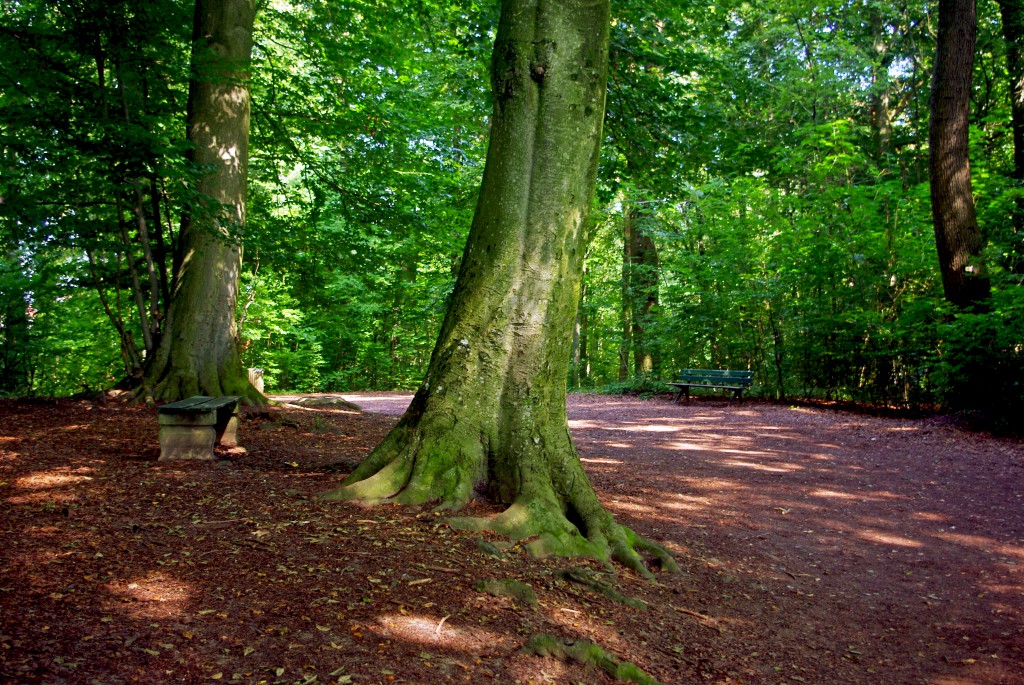
Tannenwald Forest in Mulhouse © French Moments
A walk through the Rebberg allows you to gain a little height — in every sense of the phrase.
The Cité Ouvrière of Mulhouse
In contrast to the villas of the Rebberg, the Cité Ouvrière tells another story: that of workers and 19th-century social housing.
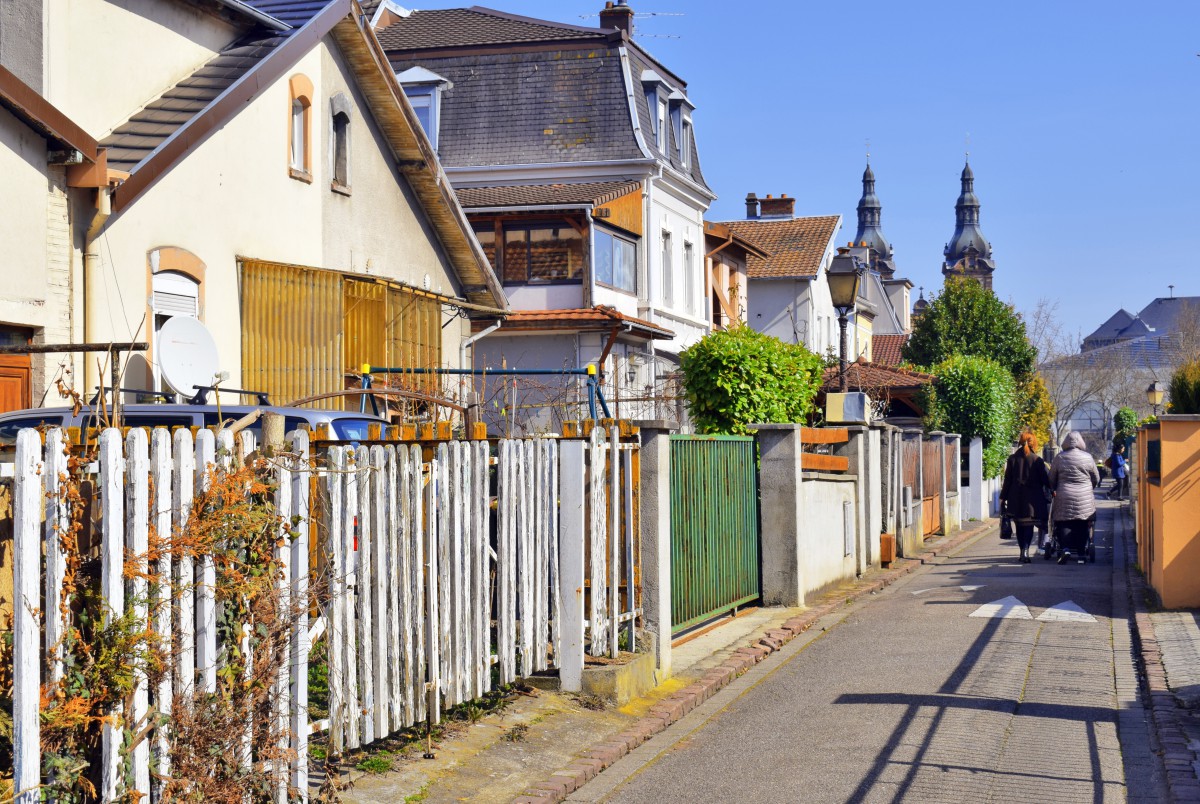
Cité ouvrière © French Moments
This district is very interesting for understanding the industrial history of Mulhouse from a human perspective. Behind the factories, the great families and the prestigious collections, there were also thousands of workers, families, streets, houses and everyday lives.
The Cité Ouvrière therefore adds an important dimension to any visit to Mulhouse.
What to see around Mulhouse
One of the great advantages of Mulhouse is its location.
The city makes an excellent base for exploring southern Alsace and the surrounding regions.
From Mulhouse, you can easily reach the Sundgau, the Alsace Wine Route, the Route des Crêtes, the Écomusée d’Alsace, the Parc du Petit Prince, Thann, Basel and even the Black Forest in Germany.
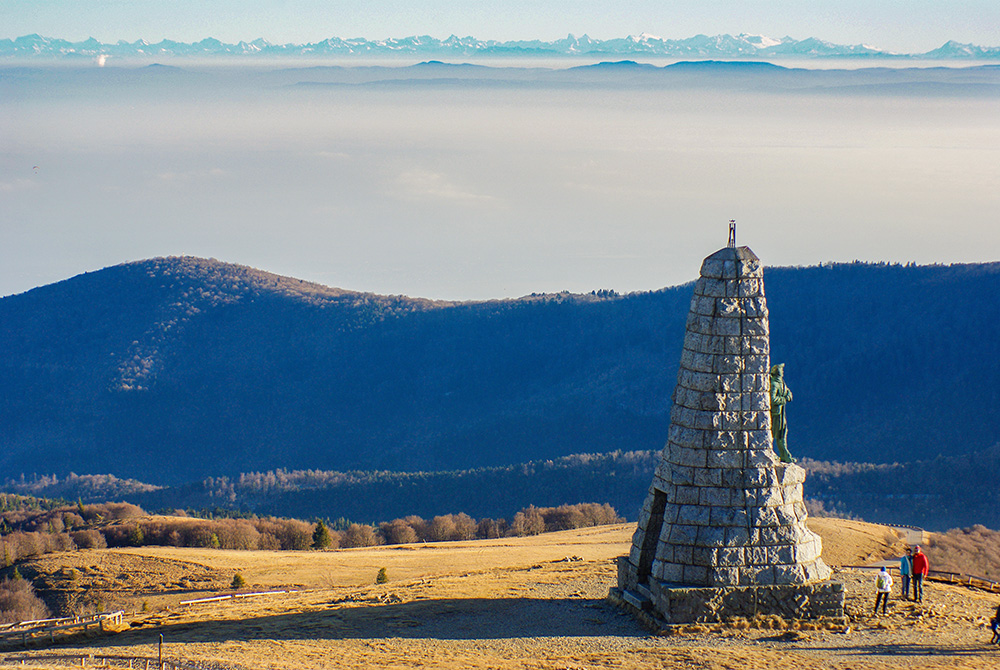
Grand Ballon and the Alps © French Moments
Mulhouse is a crossroads city, very convenient for exploring the area. And if you enjoy mixing heritage, nature, villages, museums and cross-border excursions, it is extremely well placed.
In just a few kilometres, you can move from an historic Alsatian square to a Sundgau village, from a technical museum to a Vosges summit, or from a Christmas market to a Swiss escape. Which, let’s admit it, gives the programme a certain elegance.
How long should you spend visiting Mulhouse?
It all depends on your interests.
For a quick first discovery of Mulhouse, half a day is enough to see the Place de la Réunion, the historic centre and the Bollwerk.
For a more complete visit, allow a full day: the morning in the centre, then the afternoon in one of the major museums.
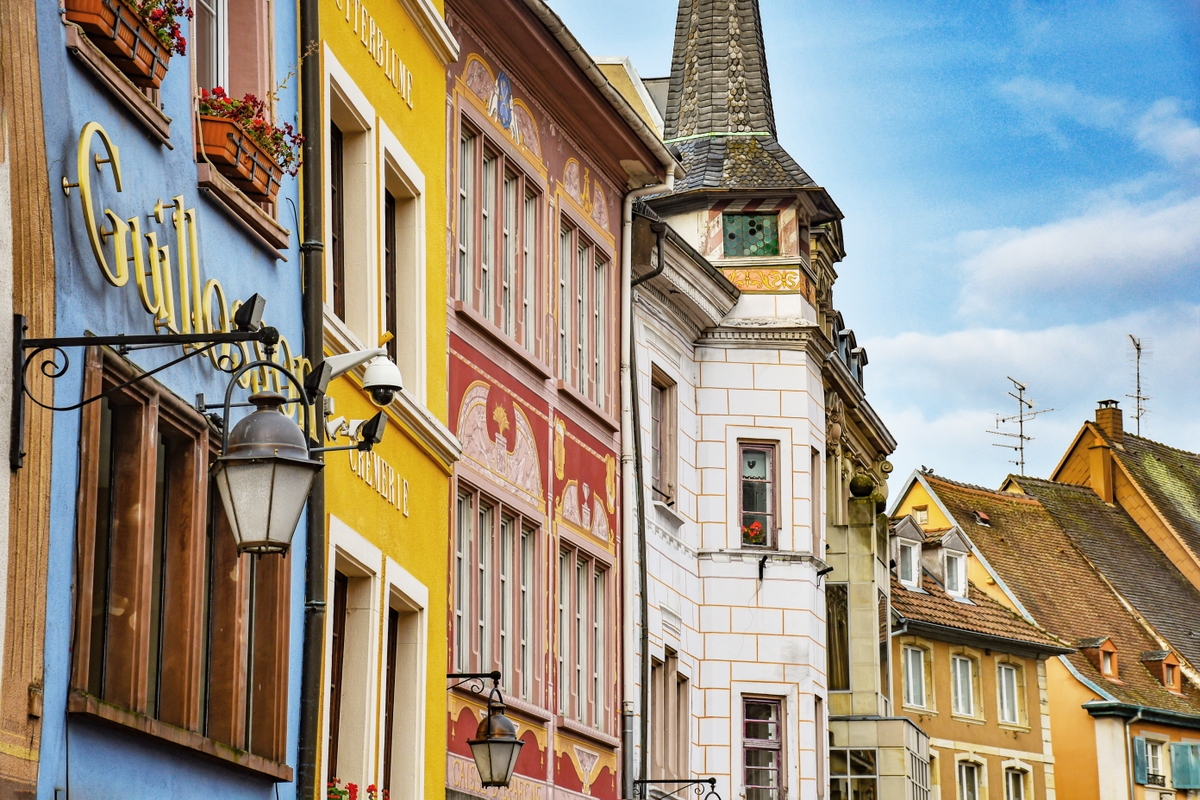
Place de la Réunion © French Moments
To really enjoy Mulhouse and its surroundings, two or three days are preferable. You can visit one or two museums, explore the Rebberg or the Cité Ouvrière, then devote a day to sites around Mulhouse.
If you come at Christmas, add a little extra time to enjoy the atmosphere of the market. In Alsace, Christmas magic is not something to be rushed. And besides, walking quickly with a glass of mulled wine in hand is never a good strategy.
Staying in Mulhouse
During my stay in Mulhouse, I stayed at a comfortable hotel right in the heart of the city: La Maison Hôtel Mulhouse-Centre. In no time at all, I found myself on the Place de la Réunion, the historic epicentre of the city.
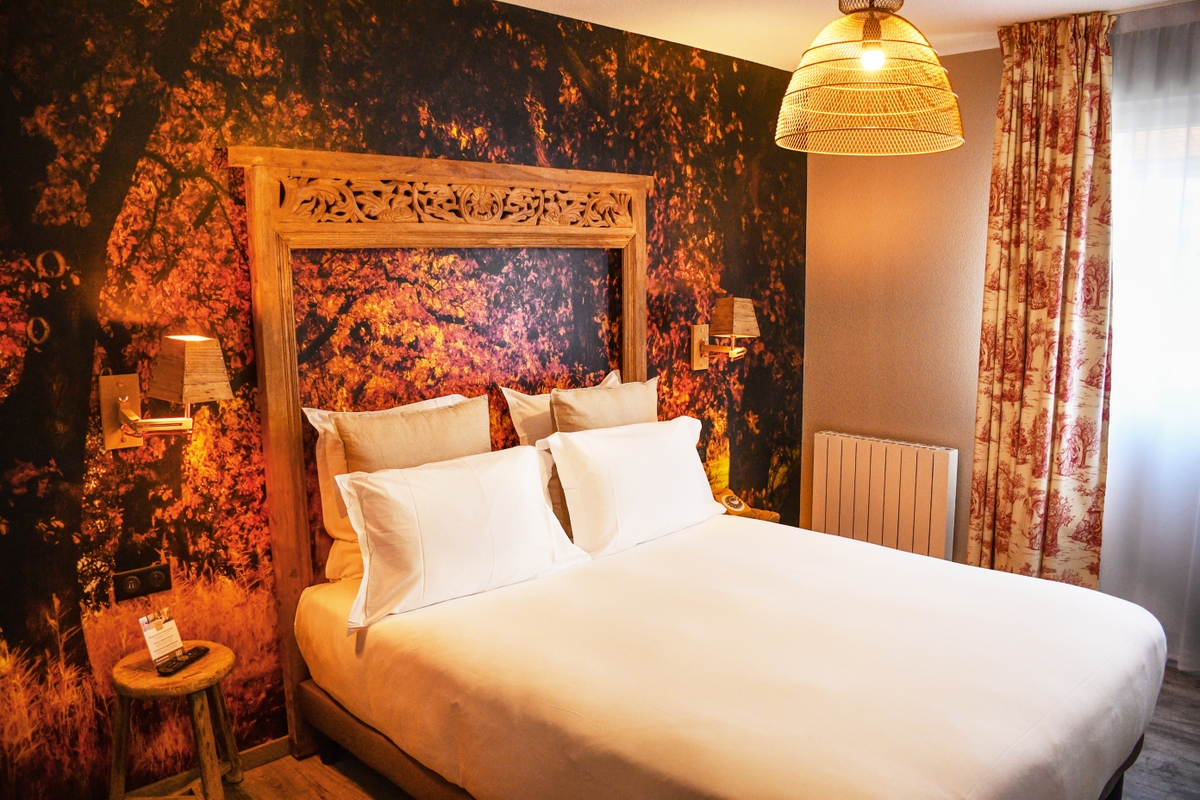
Maison Hotel Mulhouse Centre © French Moments
The hotel occupies a modern building with 70 rooms offering all the comfort expected from an establishment in its category.
To organise your accommodation, click on this link, which will take you to a list of hotels. You can also browse the map below:
My thoughts on Mulhouse
Mulhouse is not necessarily the easiest Alsatian city to fall in love with at first sight.
It does not have the romantic scenery of Colmar, nor the monumental power of Strasbourg. It has something else: a strong history, a rare industrial identity, exceptional museums, an appealing historic centre and an ideal location for exploring southern Alsace.
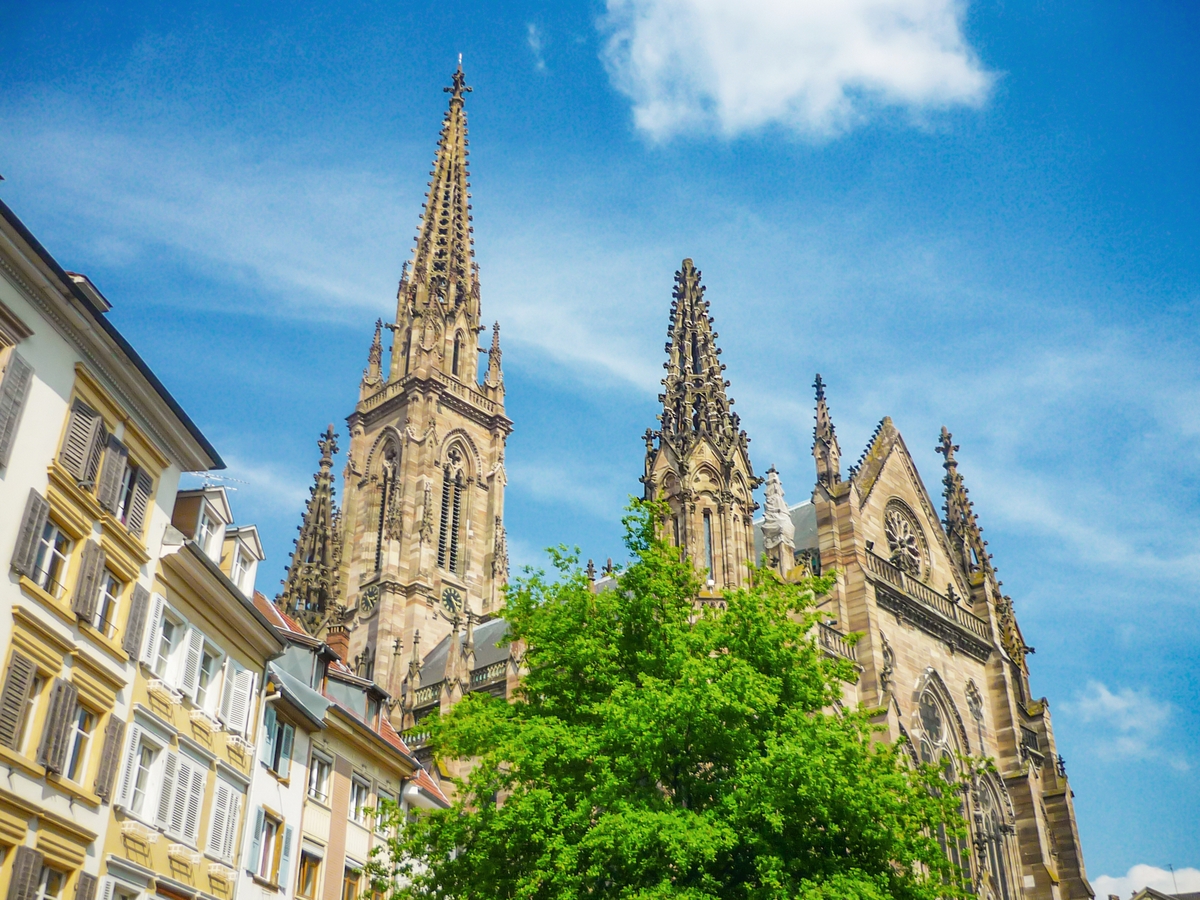
Mulhouse Old Town - Temple Saint-Etienne © French Moments
It is a city of contrasts. Popular and bourgeois. Industrial and green. Alsatian and a little Swiss. Technical and textile. Discreet, but not boring.
You simply need to give it a chance.
So, if you are passing through southern Alsace, do not cross Mulhouse too quickly. Stop on the Place de la Réunion, step inside a museum, climb up towards the Rebberg, explore the surrounding area… and let the city surprise you.
Mulhouse may not be the Alsatian postcard you expected. But that is precisely why it is worth the detour.
[…] such as Strasbourg and Colmar. Yet, many guidebooks bypass Alsace’s second-largest city, Mulhouse. Maybe this is due to its reputation of having been an industrial city in the past (as it […]