


The Ossuary of Saint-Maclou (Aître Saint-Maclou) is one of the strangest landmarks to visit in Rouen. This unique courtyard surrounded by four wings of half-timbered and stone houses was once a cemetery built for the Great Plague.
What is the Ossuary of Saint-Maclou in Rouen?
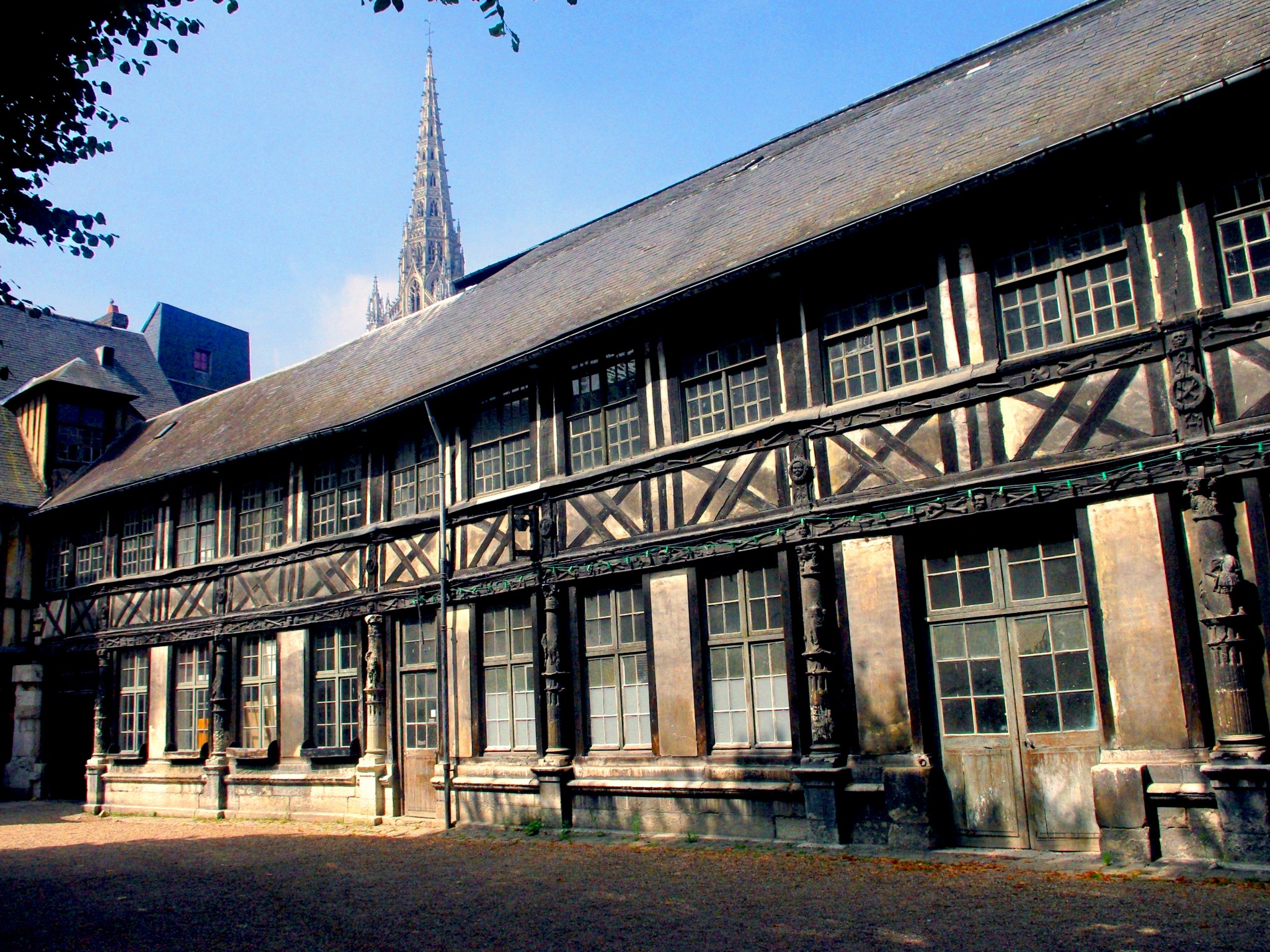
The Aître Saint-Maclou is situated not far from the St. Maclou church at number 186, rue Martainville.
Aître is not a word frequently used in French. It derives from Latin ‘Atrium’ meaning a central square enclose at the entrance of a Roman villa (and later at the entrance of a church). During the Middle-Ages, it was synonymous with cemetery.
To place the ossuary in context, one must recall the Great Plague of 1348. As in most European cities, many of the townsfolk died during the plague. It was estimated that three-fourths of the parish were killed by the plague. The cemetery around the church of Saint Maclou became too small to house all the dead. A new cemetery was then needed. Hence, victims of the plague were buried on this site in large communal graves.
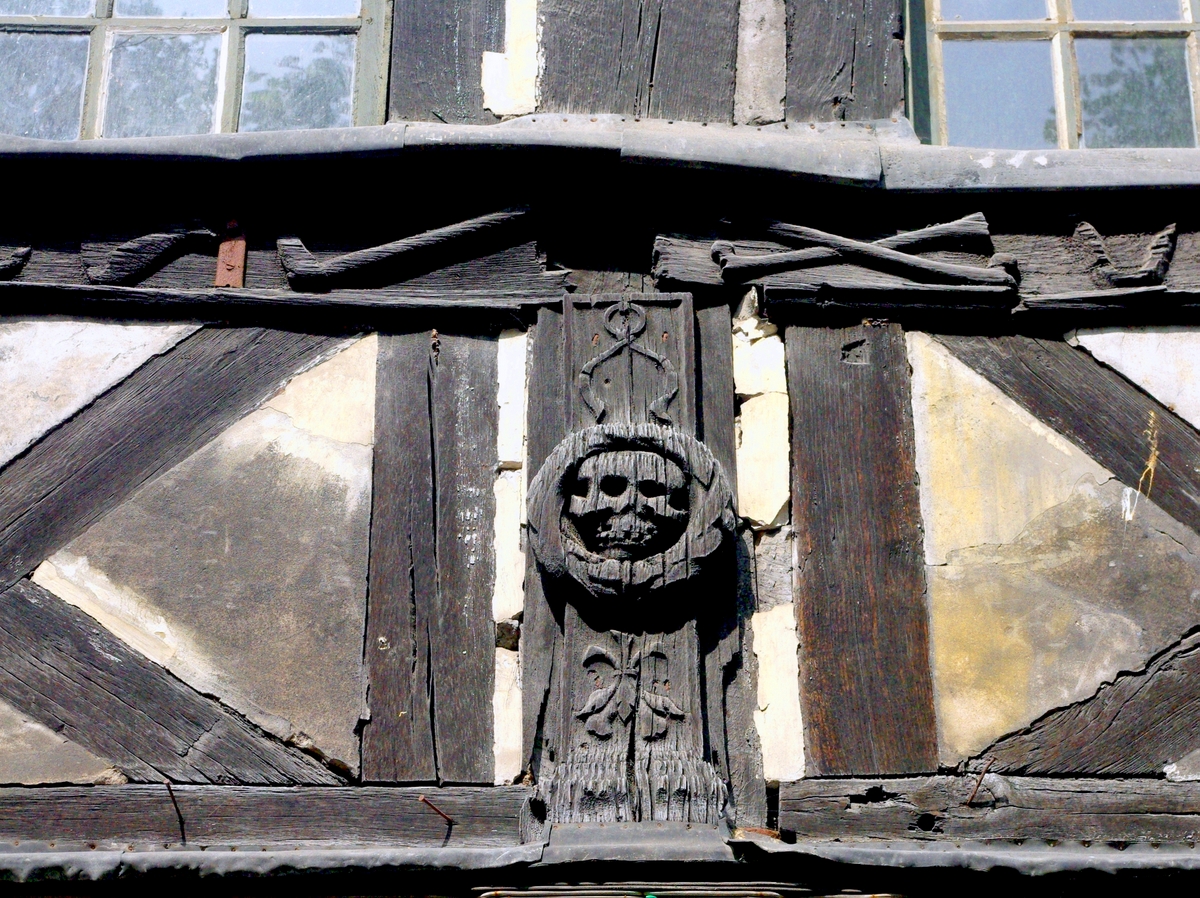
The ossuary comprises of four half-timbered galleries that surround an inner courtyard. Three of the galleries that surround the cemetery date back to the 16th century and served as an ossuary during a later plague. The decorations reflect their original purpose: skulls, crossbones, gravediggers’ tools and objects… On the columns is a representation of Death leading Life in a “danse macabre”.
A cat skeleton found in one of the ossuary walls is displayed in a glass case near the entrance. It is believed that it was a black cat – the incarnation of the Devil – which was plastered (maybe alive!) into the walls as an act of superstition to repel evil spirits.
The fourth gallery, built in the 17th century, was only used as a school. From the 18th century, burials in town centres were forbidden and cemeteries inside any town centre were dismantled. The former ossuary was kept standing and now houses the regional school of fine arts.
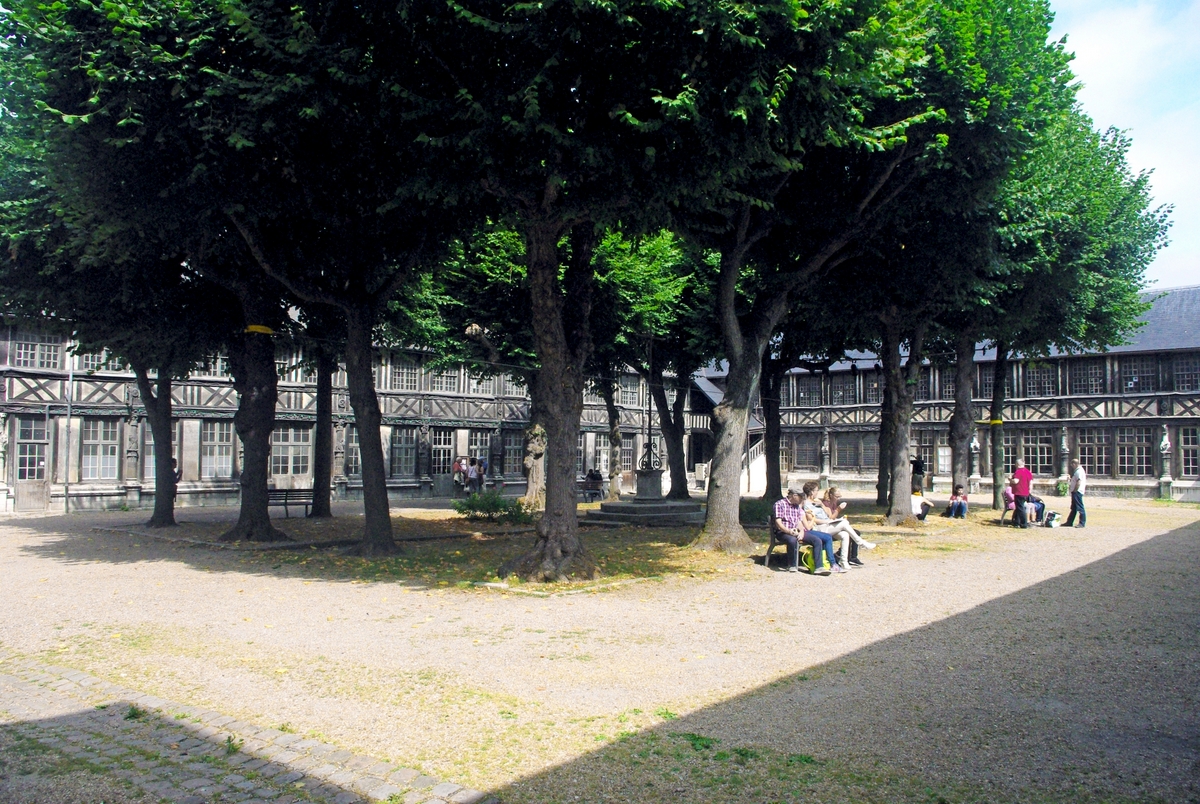
Access to the inner courtyard is free. The Aître Saint-Maclou is open every day from 8am to 6pm (extended to 7pm in the Summer).

I visited this around 2008, and highly recommend being there. I was going to say “seeing it”, but it isn’t a place to look at as much as it is to let history enter you. Just now I’m reading The Black Death by Thomas Asbridge, and you don’t have to read that, but having an understanding of that horror is needed.
There’s a lot to see in old Rouen, and it’s best if you can stay a day or more. The ossuary takes a bit of finding, but only 15 or 20 minutes of quiet reflection if that’s all the time you have.
Considering the depth and breadth of its history, Rouen is underrated as a destination!
Thank you, Kathleen — that’s beautifully put. Rouen really is one of those places where history feels very close, sometimes almost uncomfortably so. And I completely agree: for a city with such depth, beauty and drama, it remains surprisingly underrated.